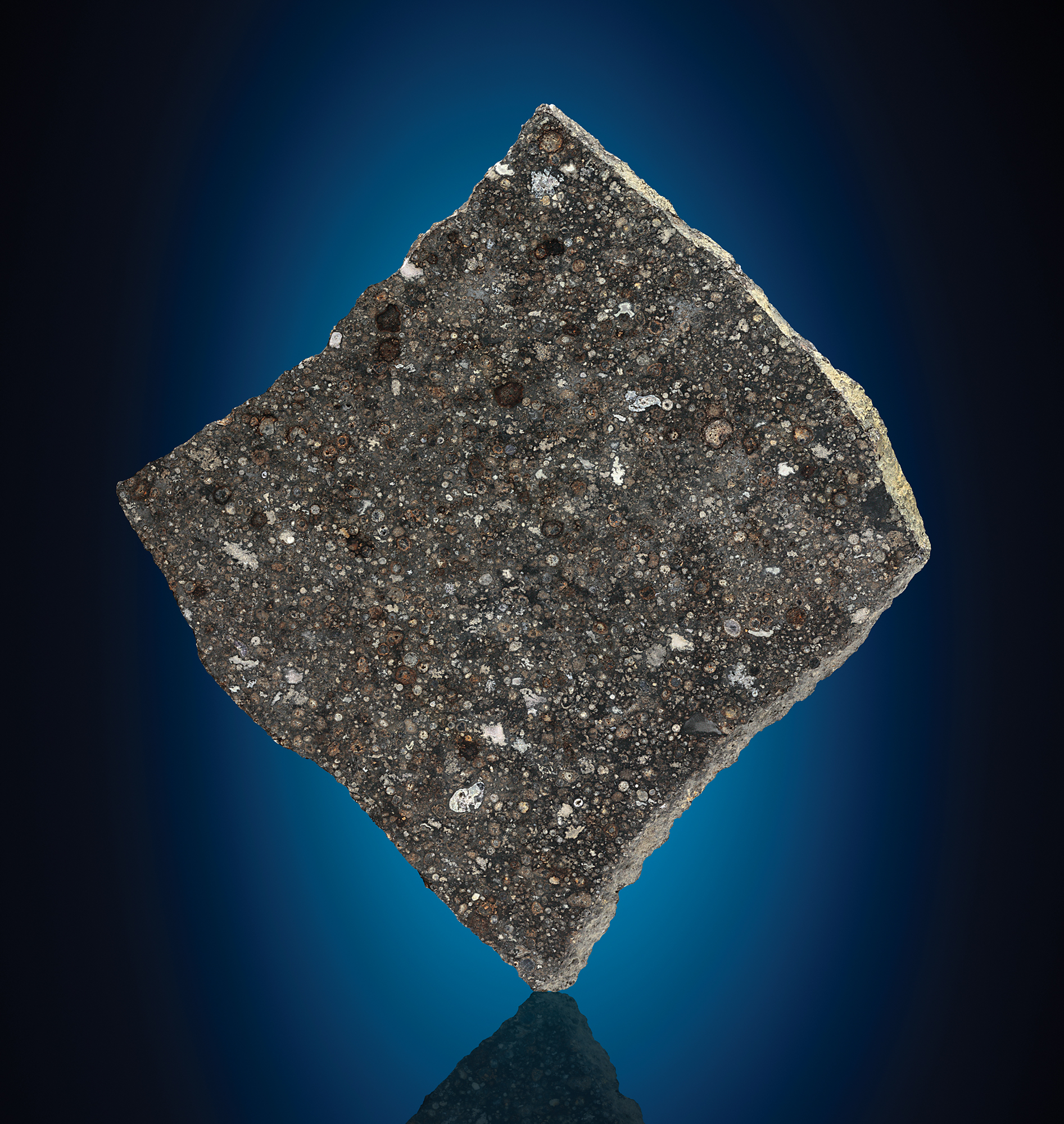
Carbonaceous chondrite (CV3)
Chihuahua, Mexico
98 mm x 98 mm x 3 mm
101.9 grams
There is no debate—Allende is the most studied meteorite in the world. Over 14,000 peer reviewed scientific papers have been written about Allende and here offered is a superior partial slice of this renowned meteorite.
The Allende meteorite shower occurred on February 8, 1969 near Chihuahua, Mexico. The white CAIs (calcium-aluminum inclusions) in evidence are among the first substances to have condensed out of the gaseous nebula from which our solar system originated. Scientists believe CAIs were created during the explosion of a supernova long prior to the formation of our solar system! In effect, the white inclusions seen here are aggregates of true 'stardust.' Providing insight into the early history of our solar system, Allende is among the few meteorites to contain such particles.
Brimming with a galaxy of inclusions 4.6 billion years old, this select specimen features the oldest material we can see and touch.
From the Philip C. Mani Collection of Meteorites, Fort Worth, Texas.

