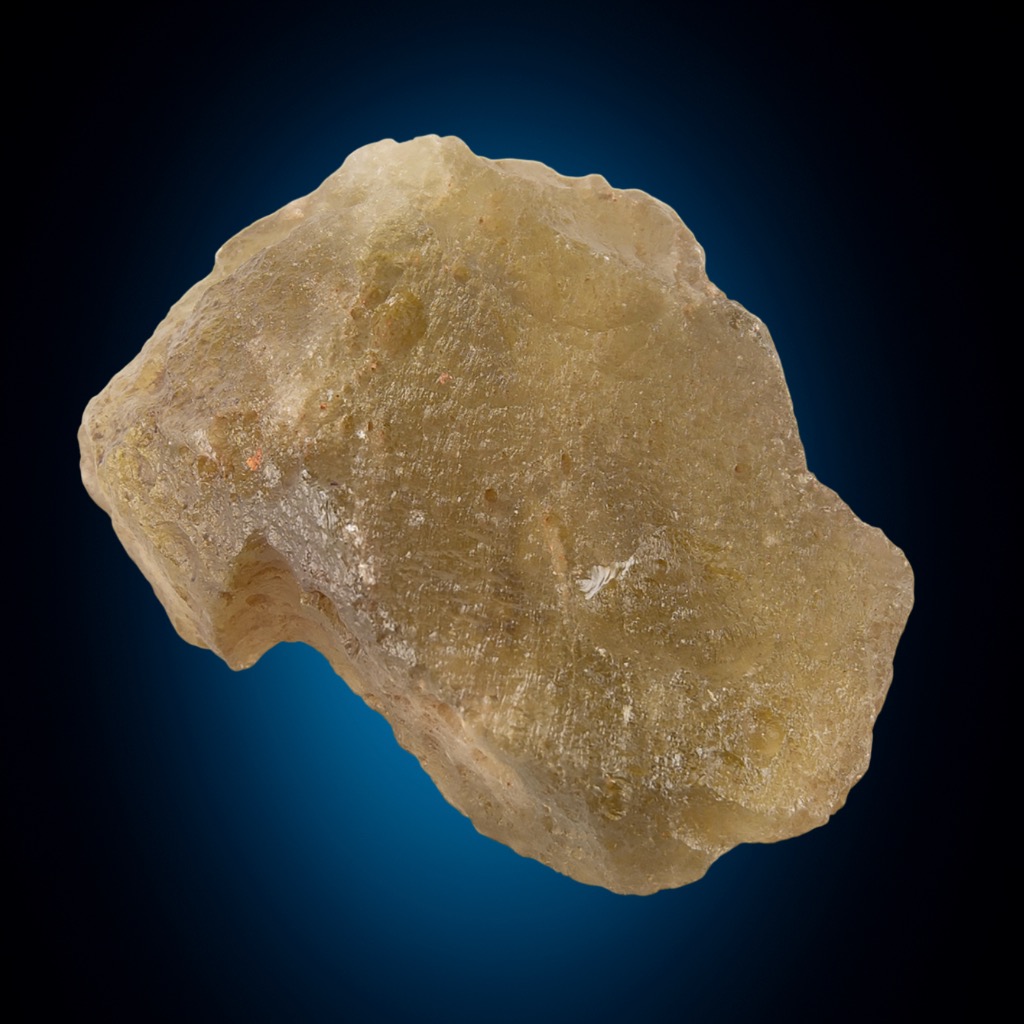
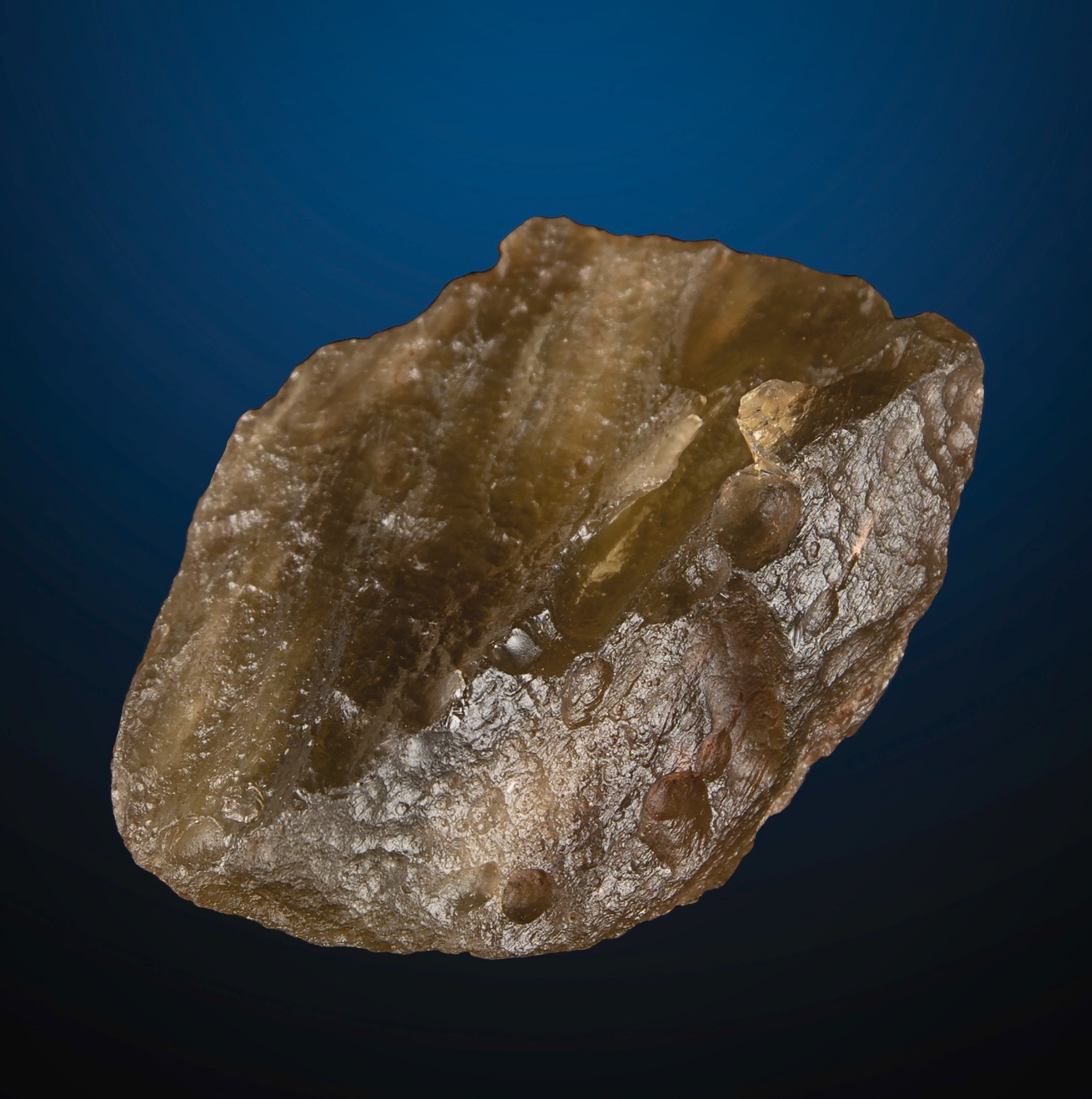
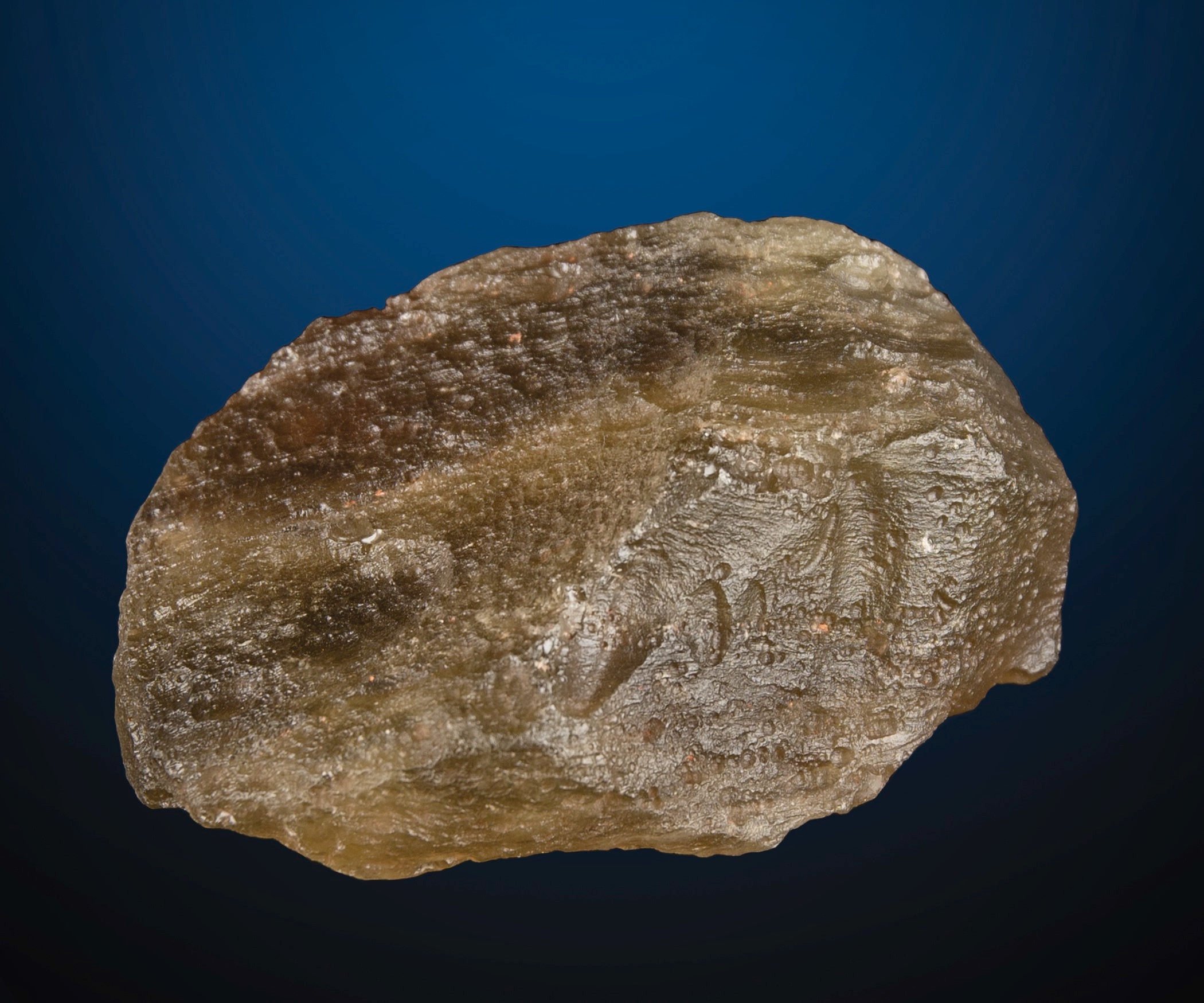
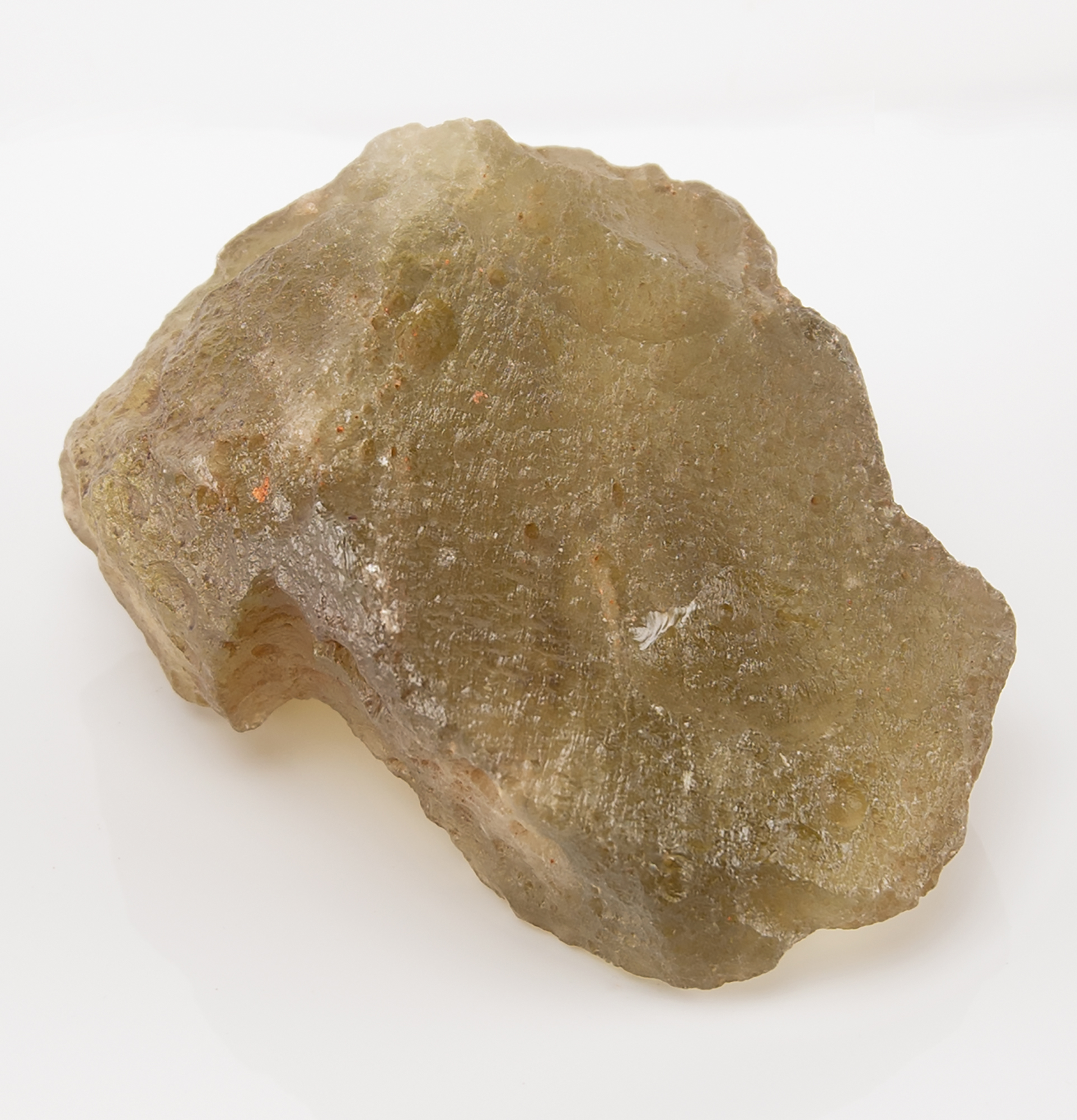
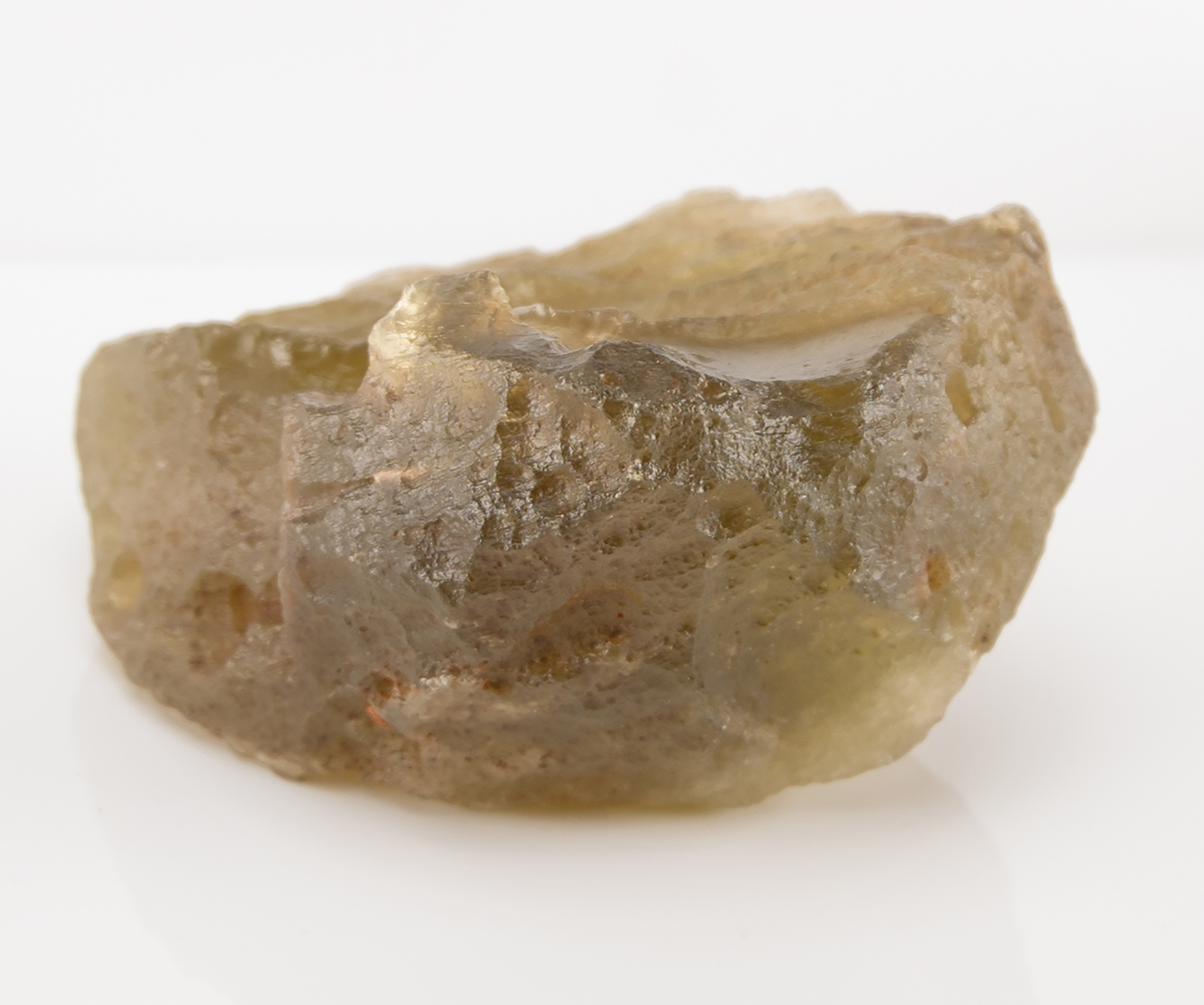
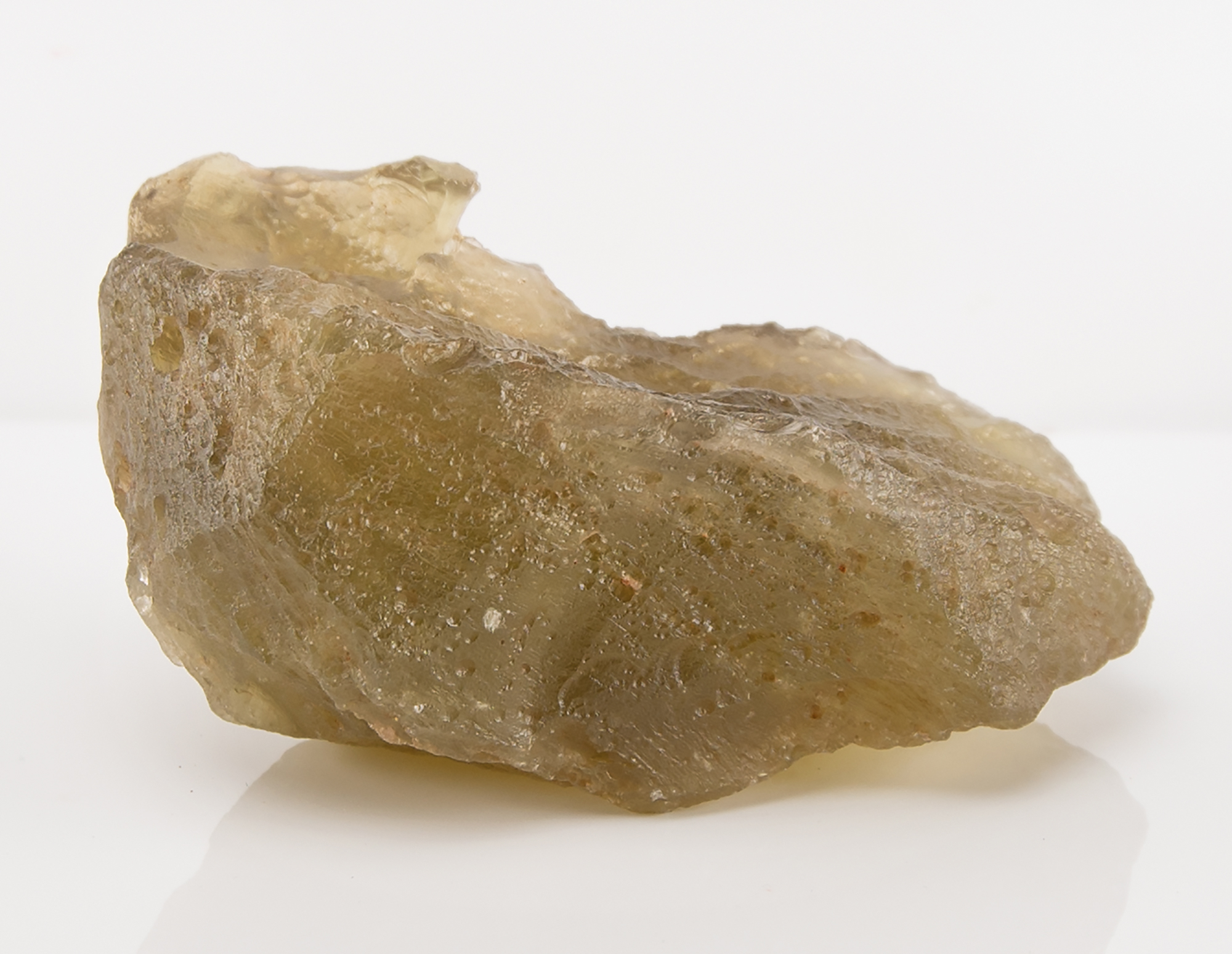
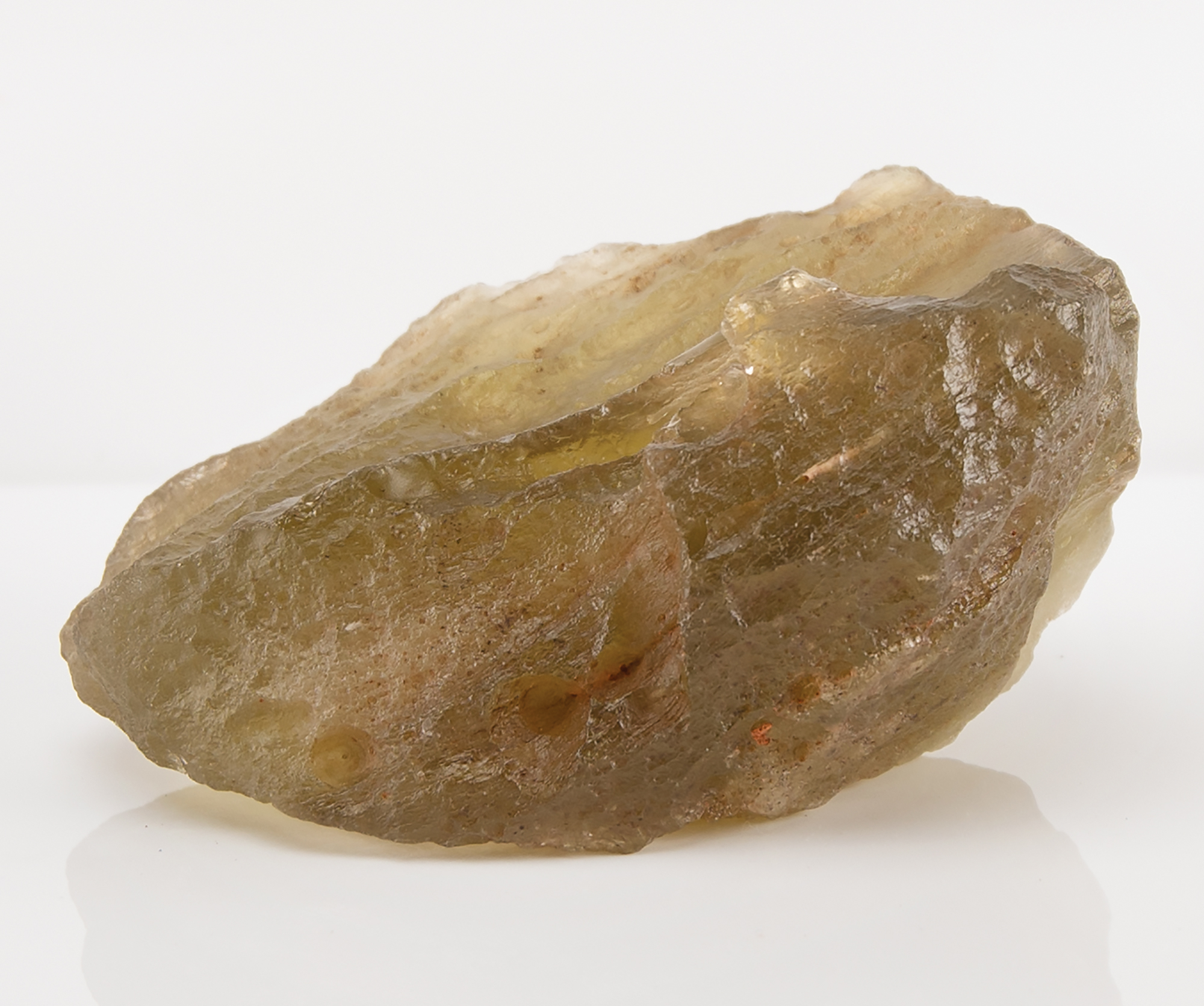
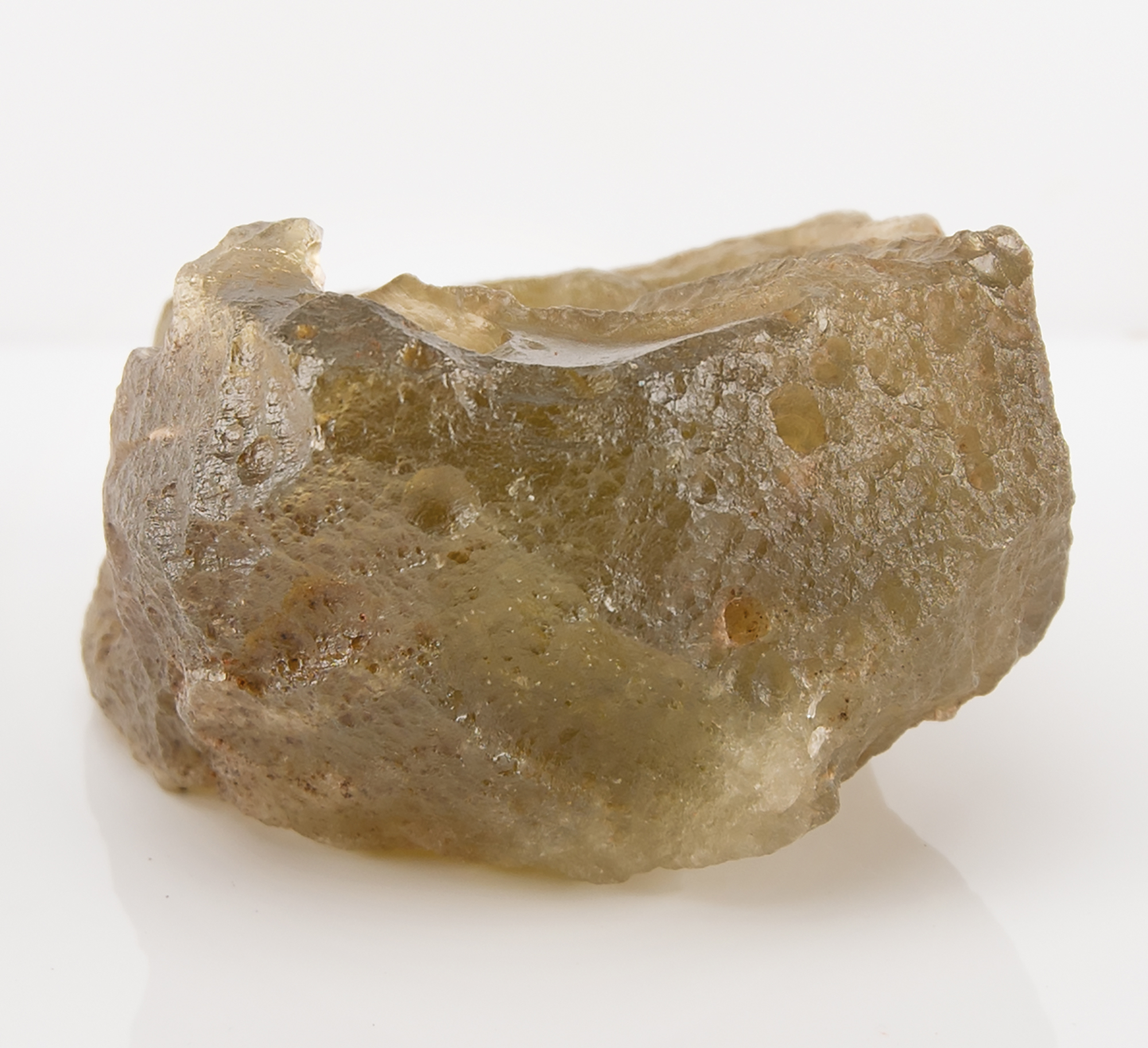
Libyan Desert Glass impactite
125 mm x 92 mm x 62 mm
686 grams
Even featured in King Tutankhamun’s jewelry, Libyan Desert Glass is a rare and mysterious natural glass with a history stretching back millions of years. Formed over 26 million years ago, this striking yellowish-green to golden-hued glass is found scattered across the vast expanse of the Sahara Desert, specifically in the remote border region between Libya and Egypt. Its origin is linked to a powerful cosmic event—most likely a massive meteorite impact or airburst explosion—that superheated the desert sands, melting and fusing them into a glassy substance. The result is a collection of uniquely shaped fragments, varying in size, texture, color and translucency.
Libyan Desert Glass carries with it the story of an ancient celestial collision and the relentless power of Earth’s extreme heat and pressure. This material is notably pure, composed of nearly 98% silica, making it one of the most pristine natural glasses known to science. The exact details of its formation continue to intrigue researchers, fueling debates about whether it was created by a direct impact or the intense thermal radiation from an airburst event.
Beyond its scientific significance, Libyan Desert Glass has captivated human civilizations for millennia. Perhaps the most famous example of its use is the carved scarab centerpiece in King Tutankhamun’s pectoral, a testament to its value among royalty. Even today, this enigmatic material is sought after by collectors, historians, and those fascinated by its extraterrestrial connections. Whether studied for its origins or admired for its beauty, Libyan Desert Glass remains one of Earth’s most extraordinary natural wonders, a tangible link between our planet and the cosmos.

