Sold For $17,500
*Includes Buyers Premium
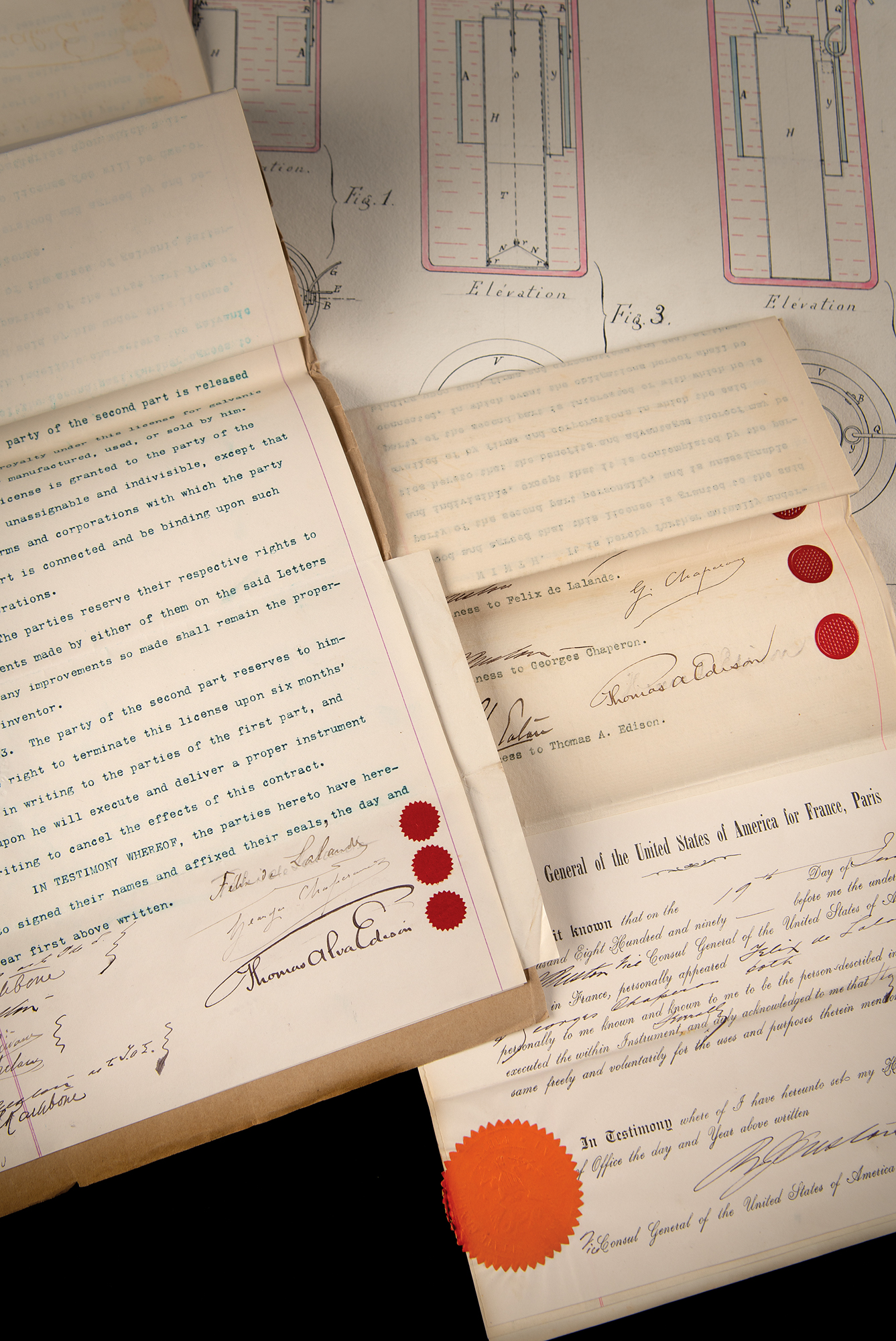
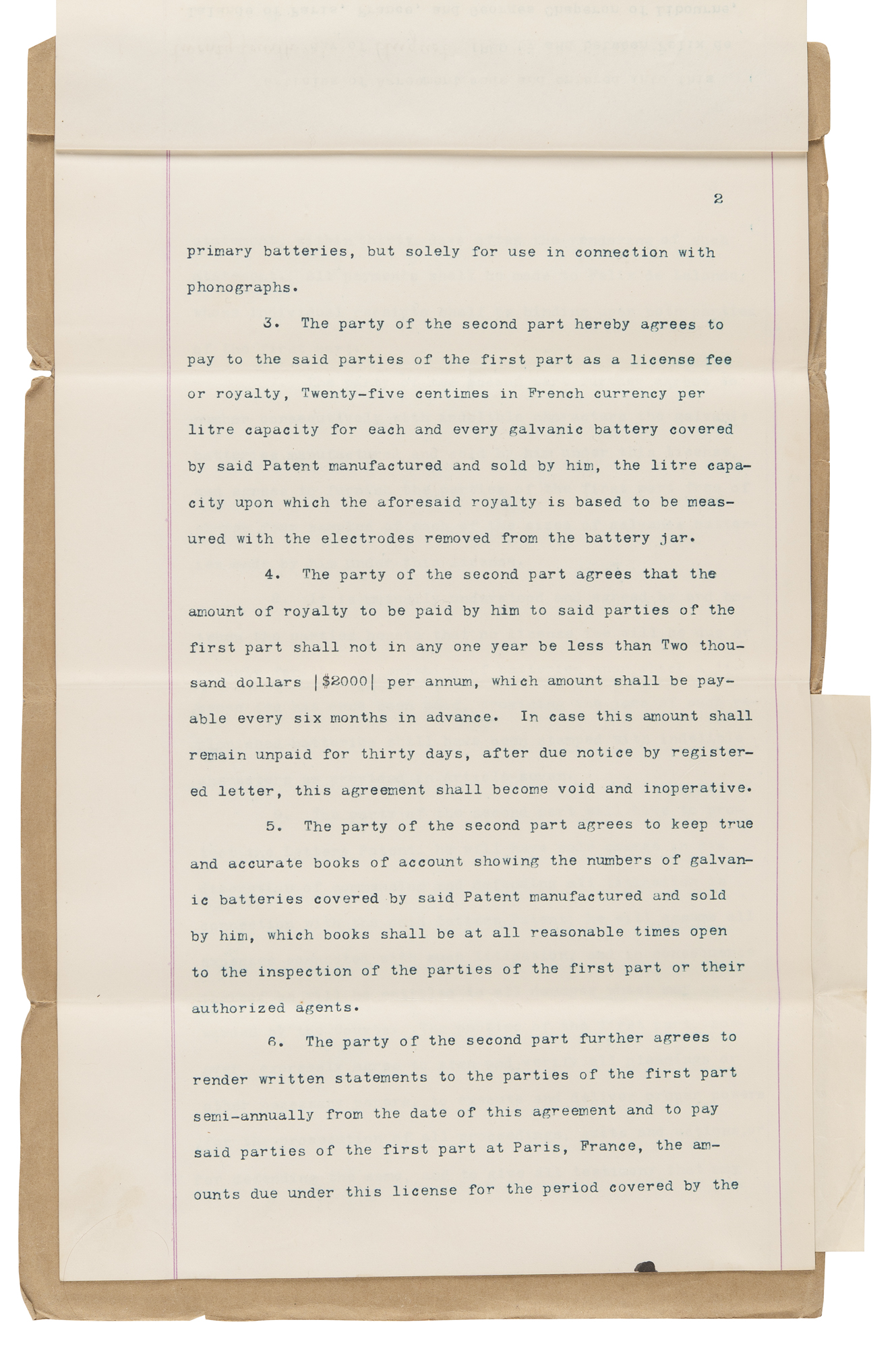
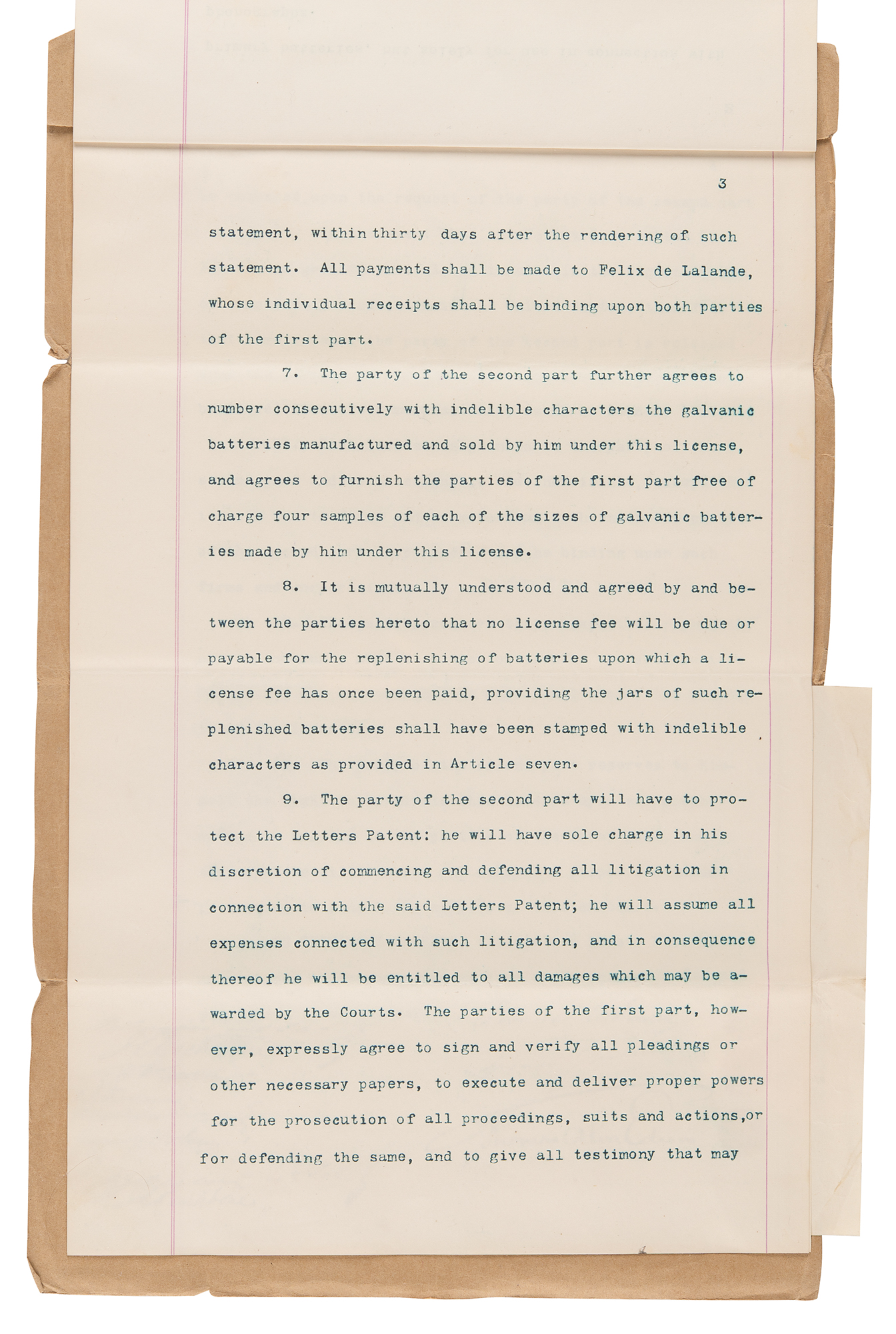
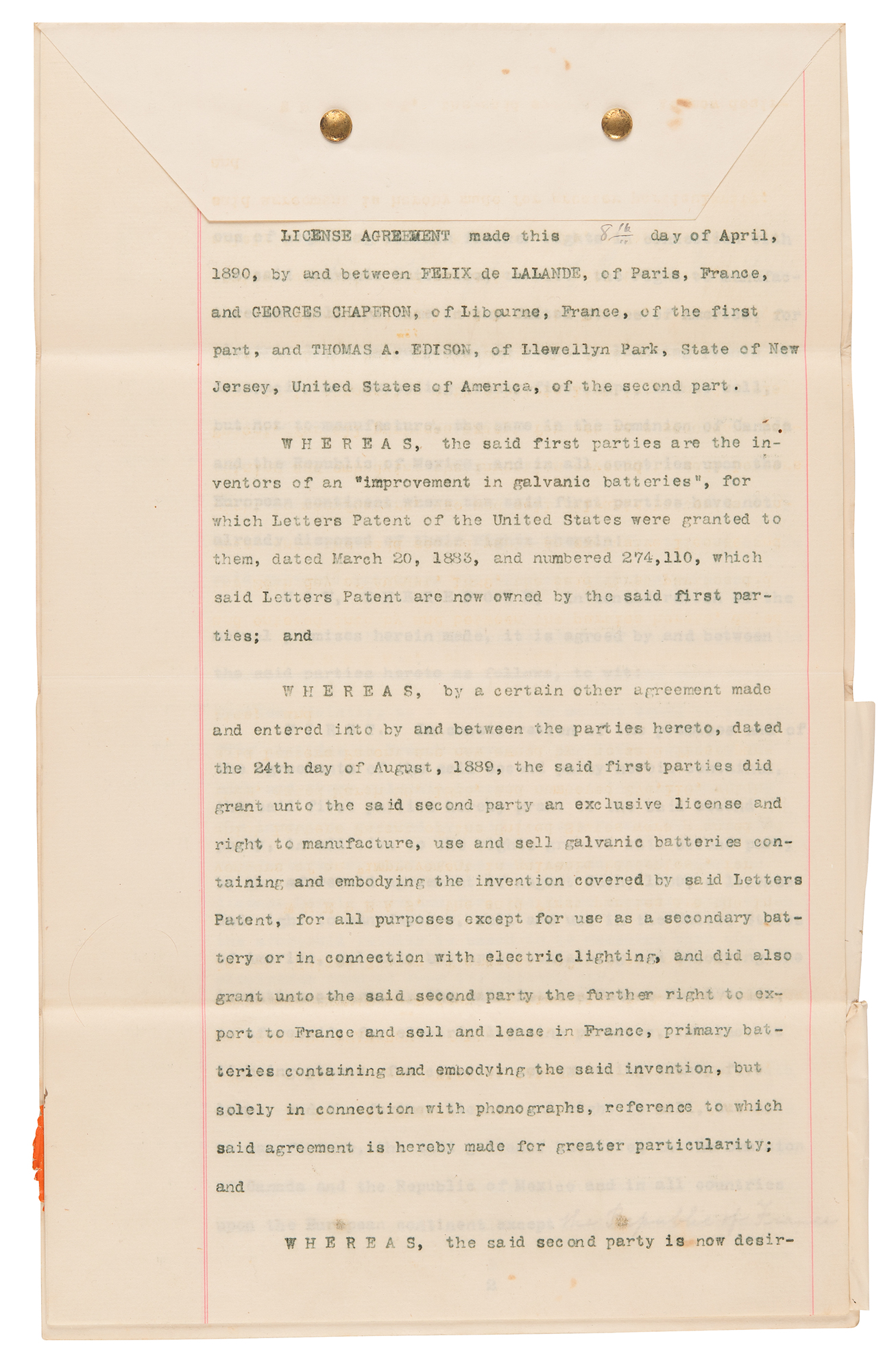
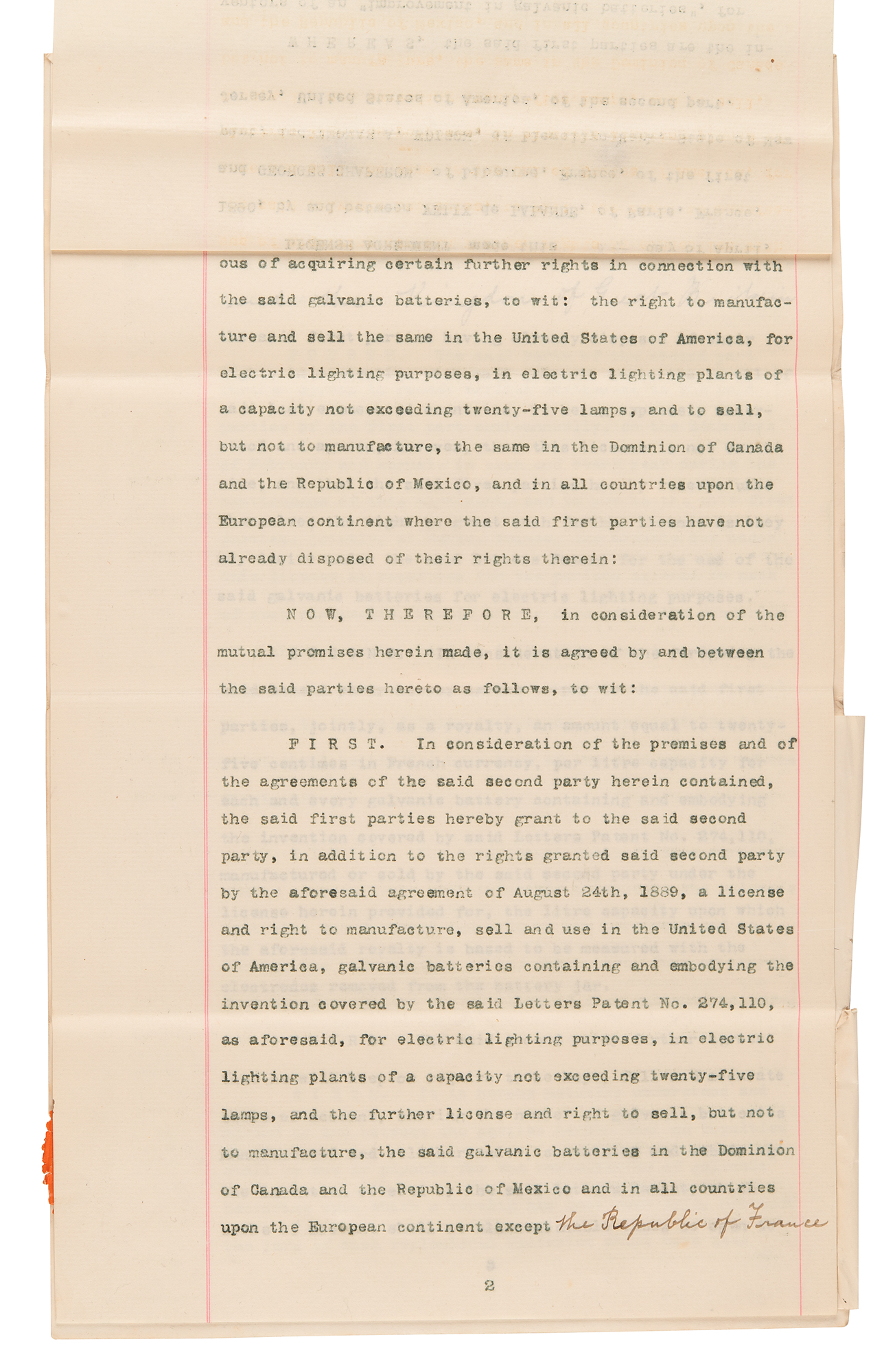
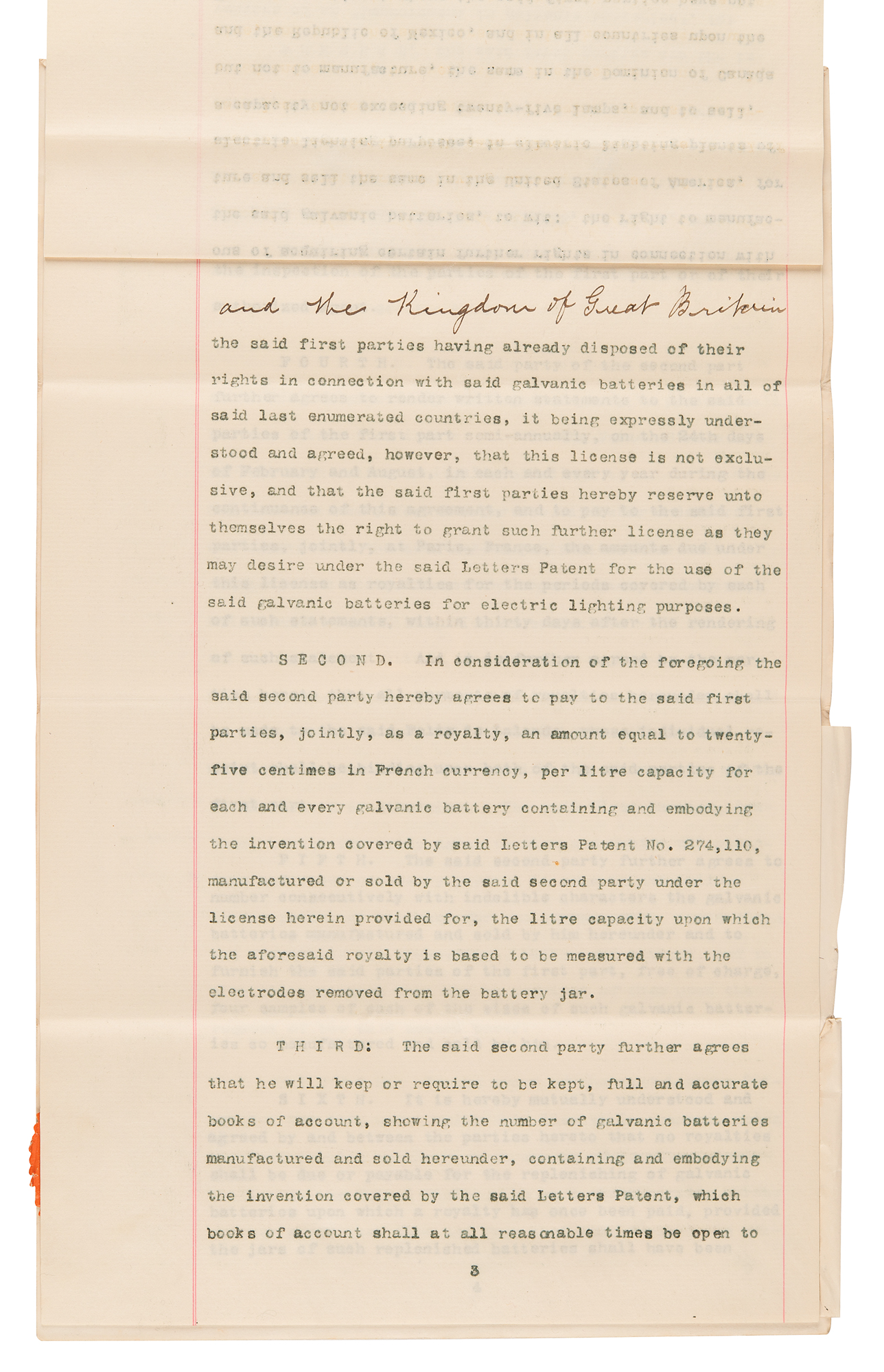
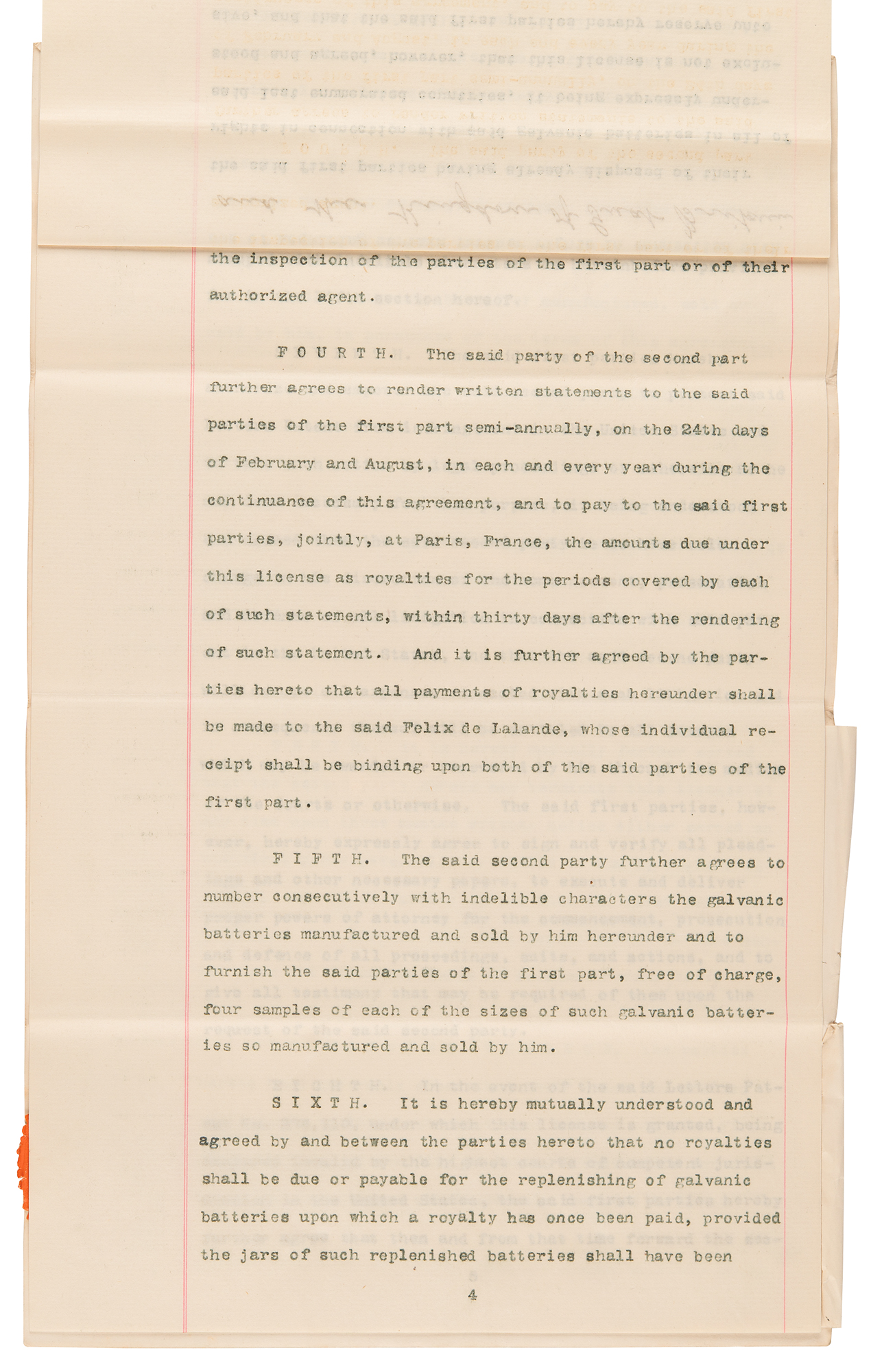
Exceptional archive of documents relating to the development of electric batteries by Felix Lalande and Georges Chaperon, and further improved by Thomas Edison, highlighted by two licensing agreements allowing Edison to manufacture the Lalande–Chaperon batteries for use in connection with two of his greatest inventions: the phonograph and the electric light.
The Lalande–Chaperon cell, developed in the 1880s by French scientists Félix de Lalande and Georges Chaperon, was patented in the United States on March 20, 1883 (U.S. Patent No. 274110). This groundbreaking primary battery used zinc and copper oxide electrodes with an alkaline electrolyte, offering high efficiency and long life. Its innovative design attracted the attention of Thomas Edison, who recognized its potential for powering his inventions. In 1889 and 1890, Edison entered into licensing agreements with Lalande and Chaperon, securing exclusive rights to manufacture and sell the batteries in the United States—initially for use with his phonograph and later expanded to include electric lighting in small-scale installations. Edison would make improvements to the Lalande–Chaperon cell by replacing the powdered copper oxide with copper oxide briquettes, marketing it as the 'Edison-Lalande Battery.'
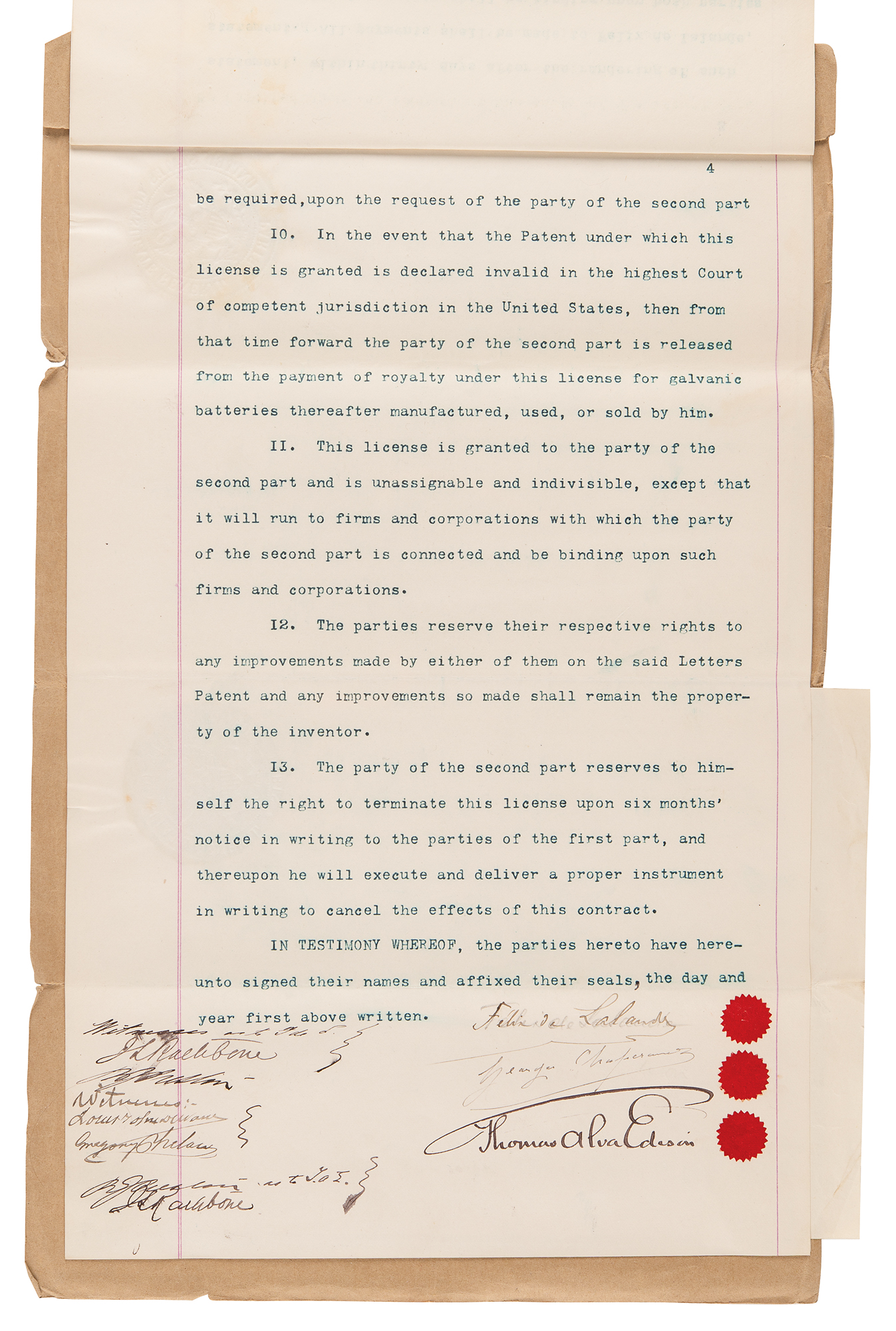
These agreements, signed by all three inventors, underscore Edison's strategic interest in battery technology as essential to the commercialization of his electric innovations, and they reflect the global collaboration that helped shape the future of electrical power.
The archive includes:
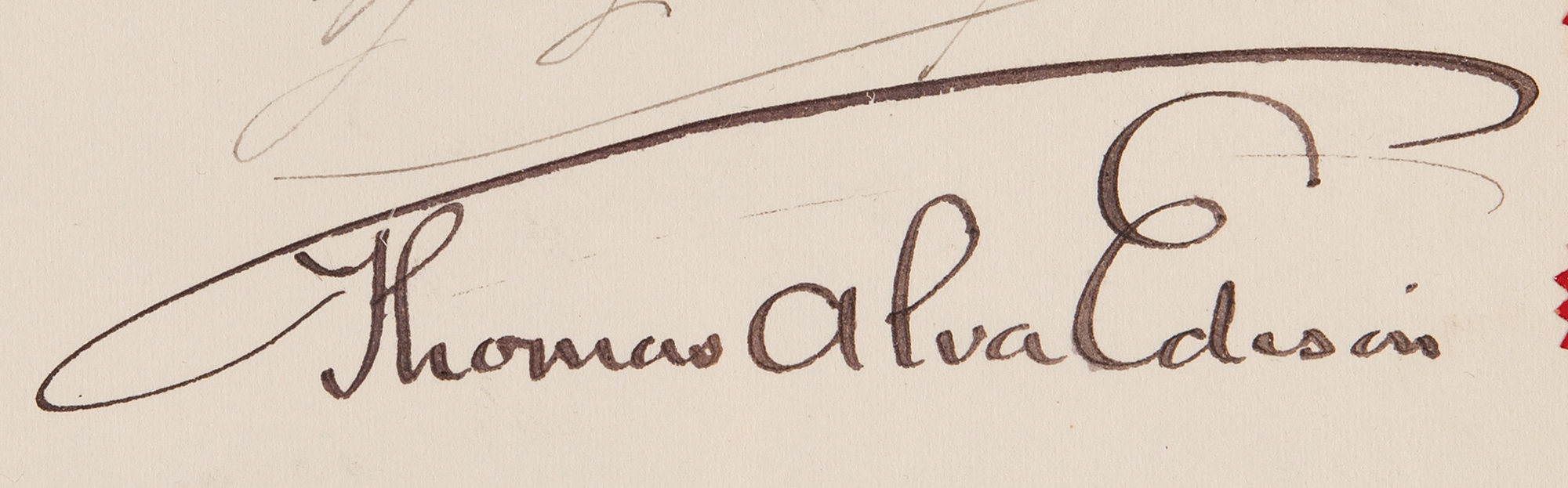
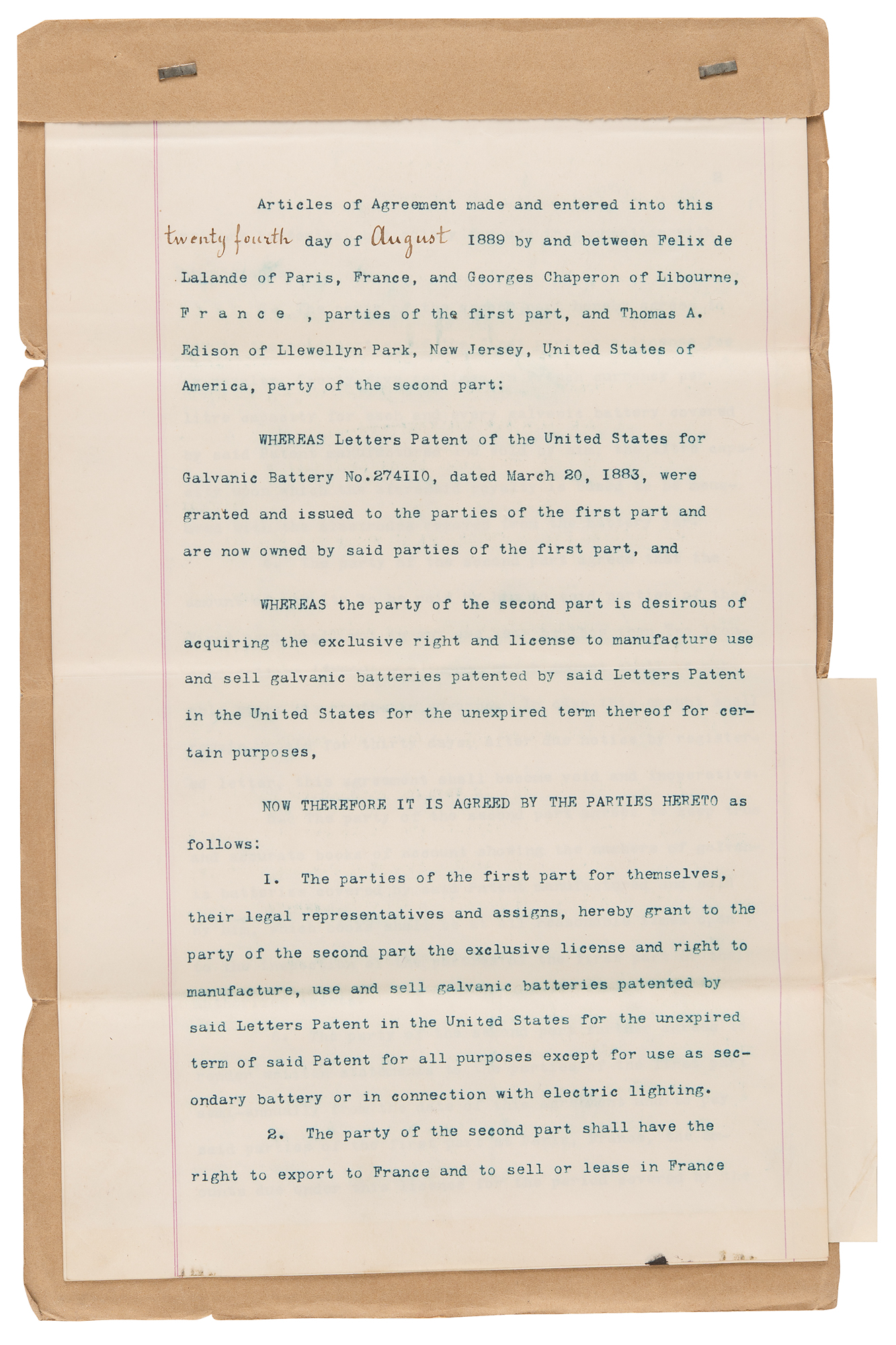
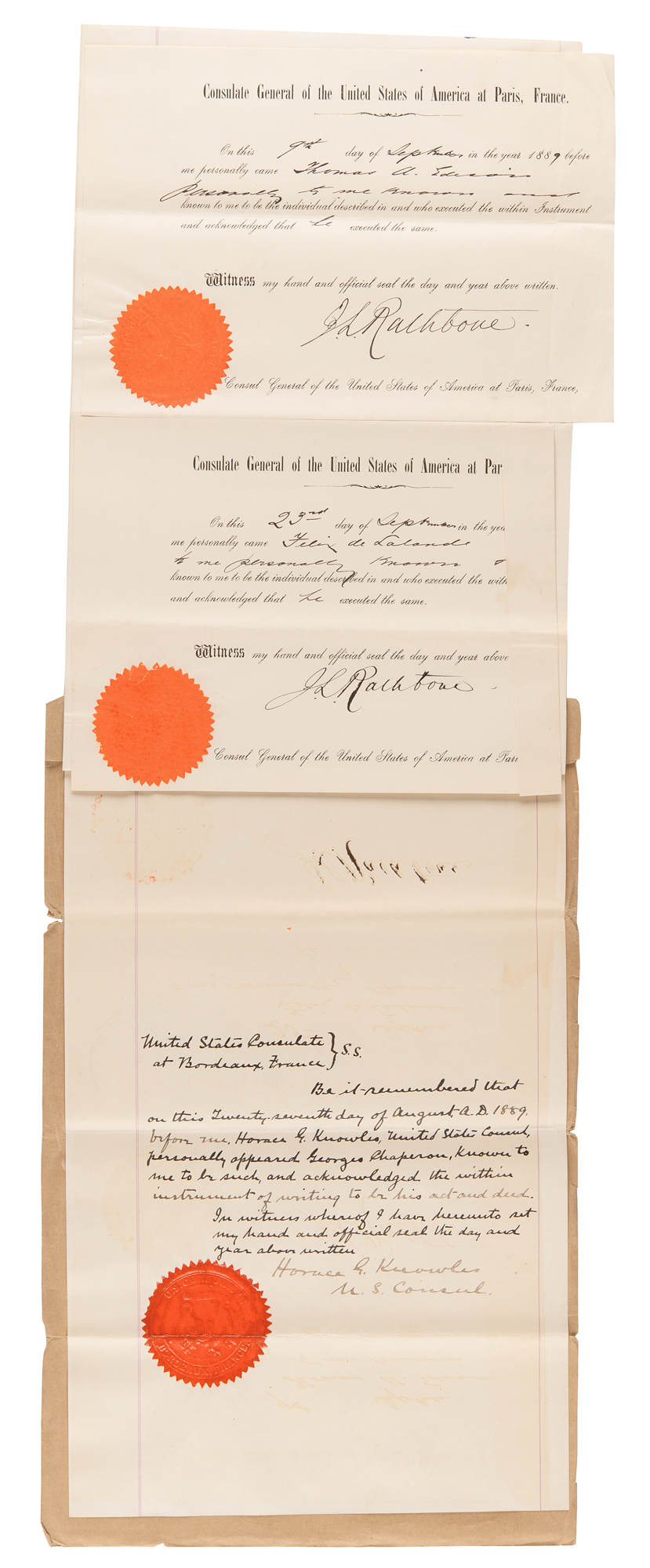
DS signed "Thomas Alva Edison," "Felix de Lalande," and "George Chaperon," four pages, 8 x 13, August 24, 1889. By this agreement, Edison acquires "the exclusive right and license to manufacture, use and sell galvanic batteries patented by said Letters Patent in the United States…for all purposes except for use as secondary battery or in connection with electric lighting." Edison also receives the right to export to France "primary batteries, but solely for use in connection with phonographs." Affixed are three documents from the US Consulate General at Paris, certifying that Chaperon signed on August 27th; Edison signed on September 9th; and Lalande signed on September 23rd. Notably, Edison had visited Paris to attend the 1889 World's Fair, which included a pavilion exhibiting his recent inventions—namely, an improved phonograph. Includes a contemporary French translation in an unknown hand.
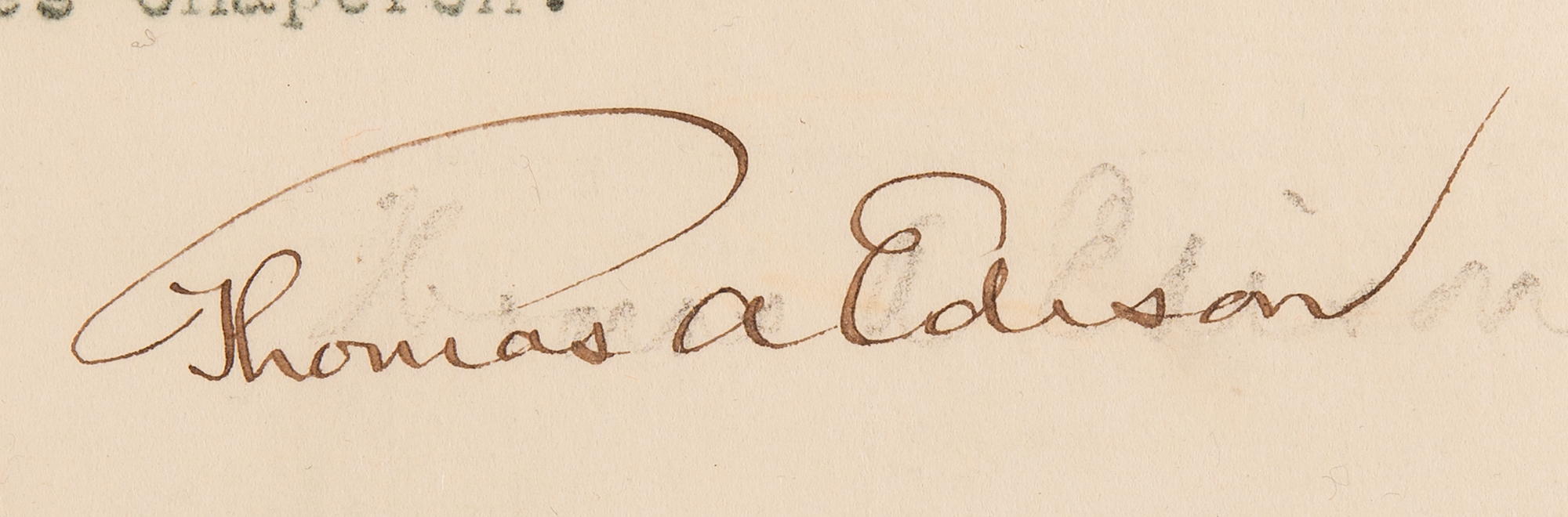
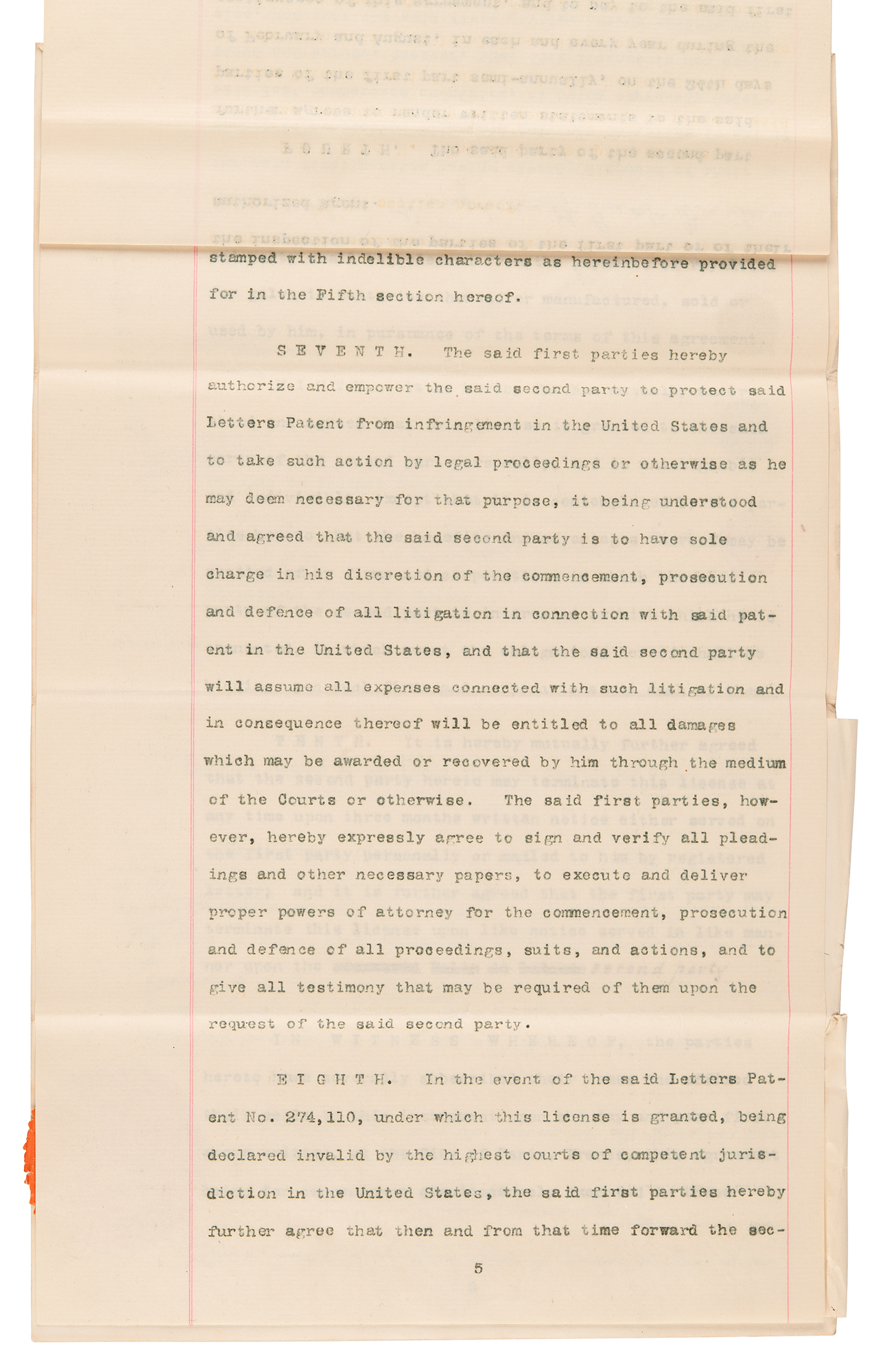
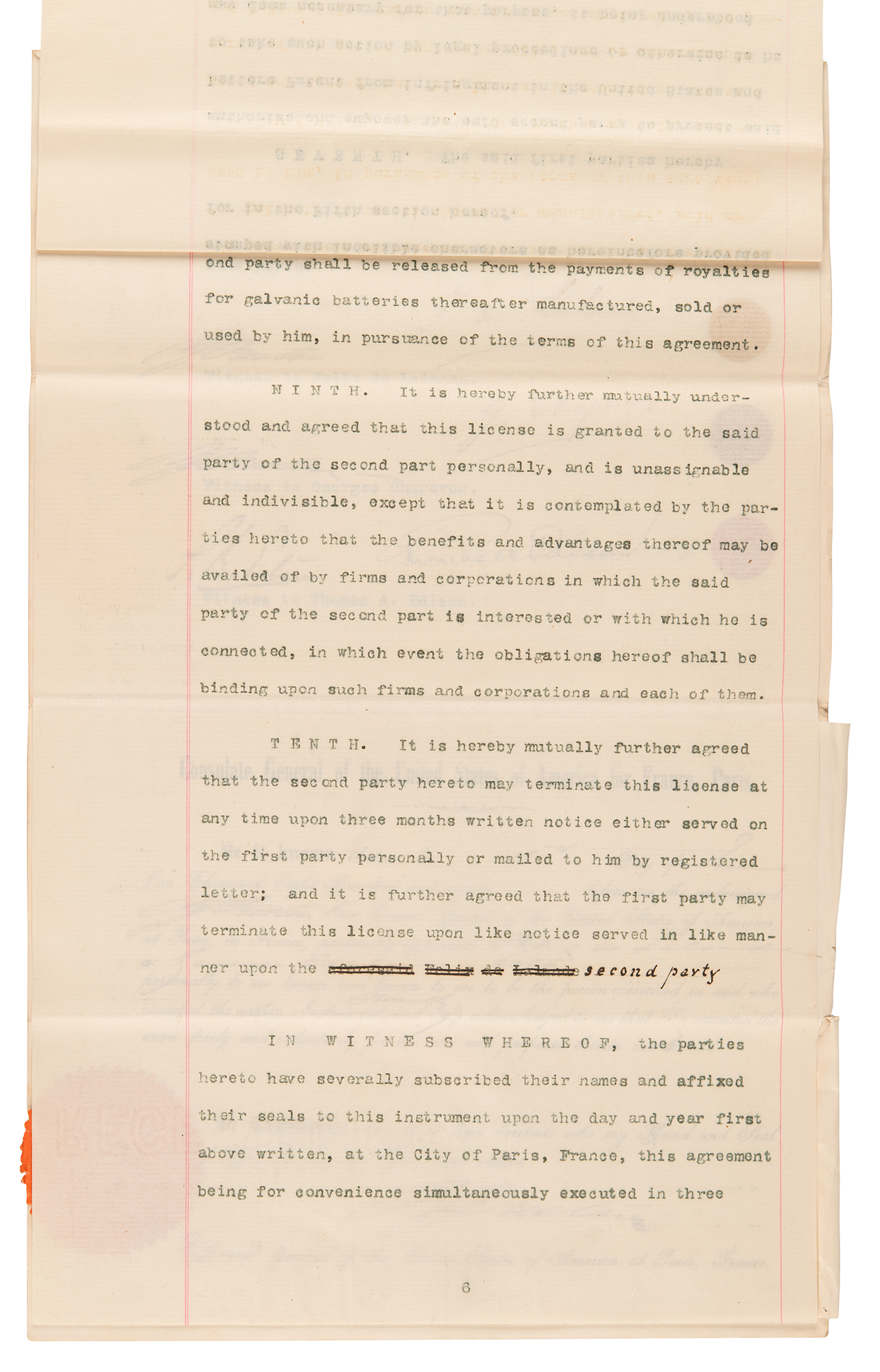
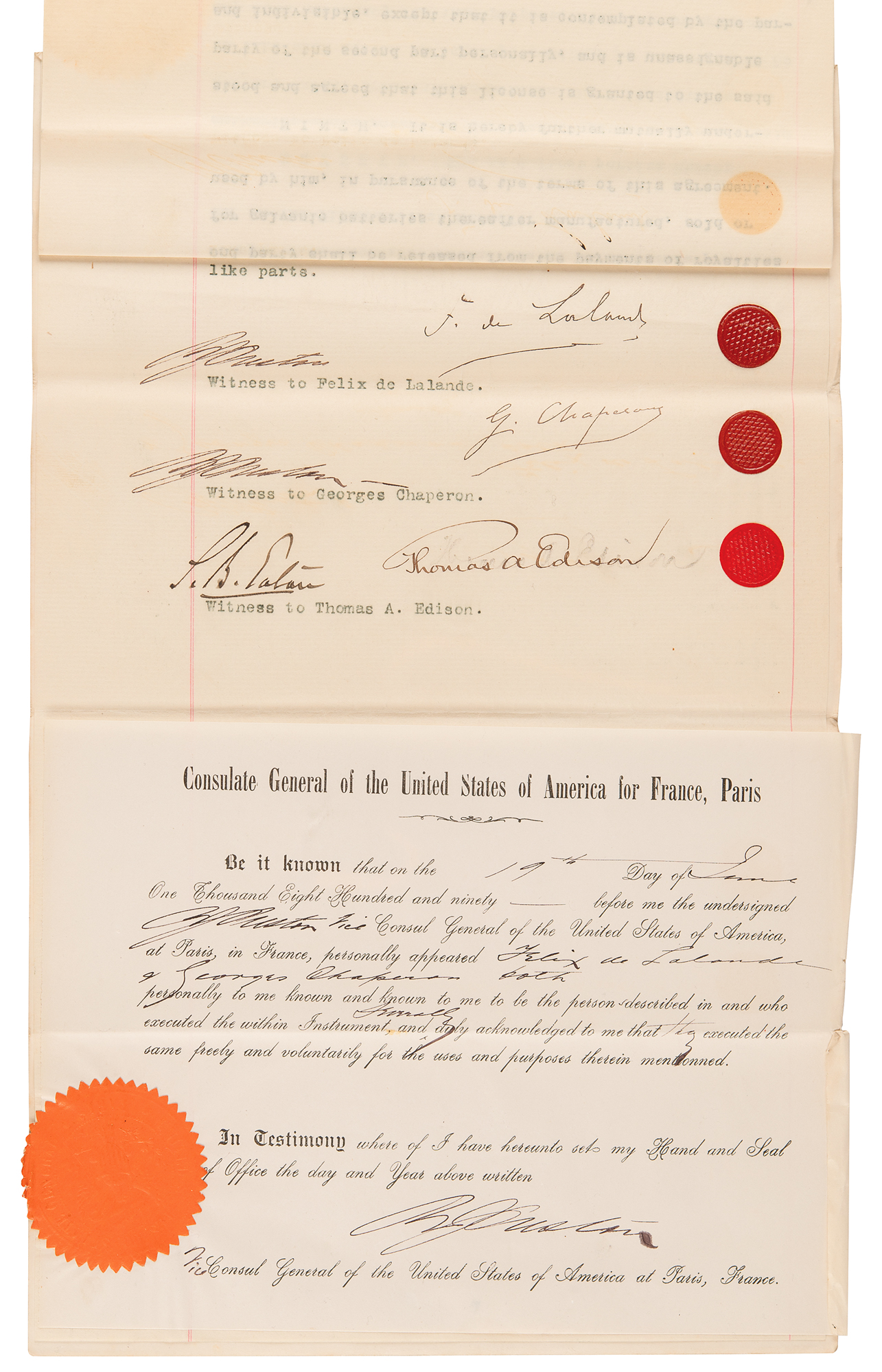
DS signed "Thomas A. Edison," "F. de Lalande," and "G. Chaperon," seven pages, 8 x 13, April 8, 1890. By this agreement, Edison extends his rights to manufacture and sell galvanic batteries in the United States "for electric lighting purposes, in electric lighting plants of a capacity not exceeding twenty five lamps." Related rights are further extended to cover other countries in Europe and the Americas. Affixed is a document from the US Consulate General at Paris, certifying that Lalande and Chaperon signed on June 19, 1890; Edison evidently signed in April, before the contract was sent overseas. Includes a typescript translation of the contract into French, a letter to Lalande by Coudert Brothers lawyer Henry Cachard pertaining to the "new contract," and the mailing envelope in which they were enclosed, addressed to Lalande in Paris.
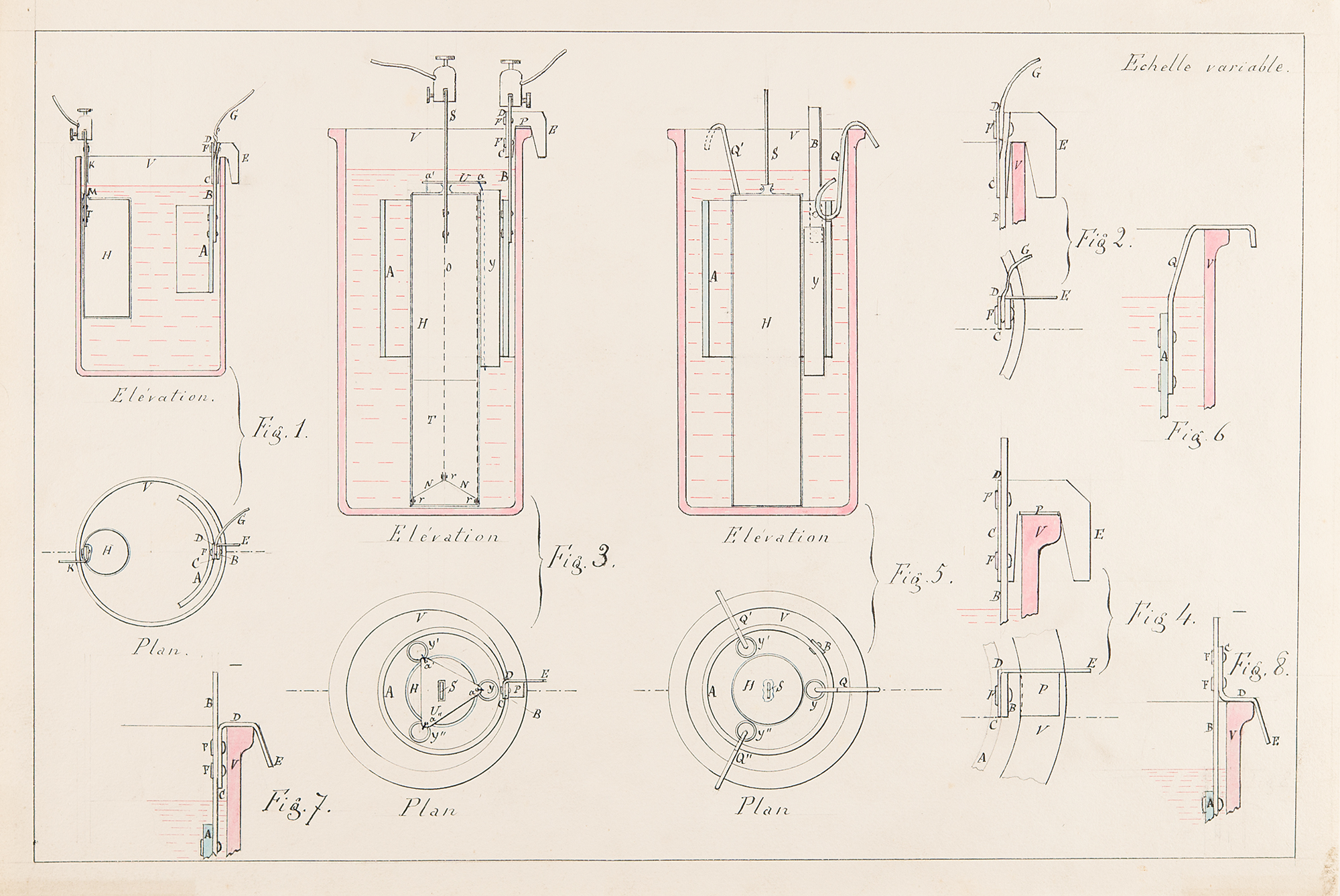
Original hand-drawn diagram of the Lalande-designed alkaline primary battery, one page, 18.25 x 12.5, featuring eight figures showing the batteries from in two views (sectional and top).
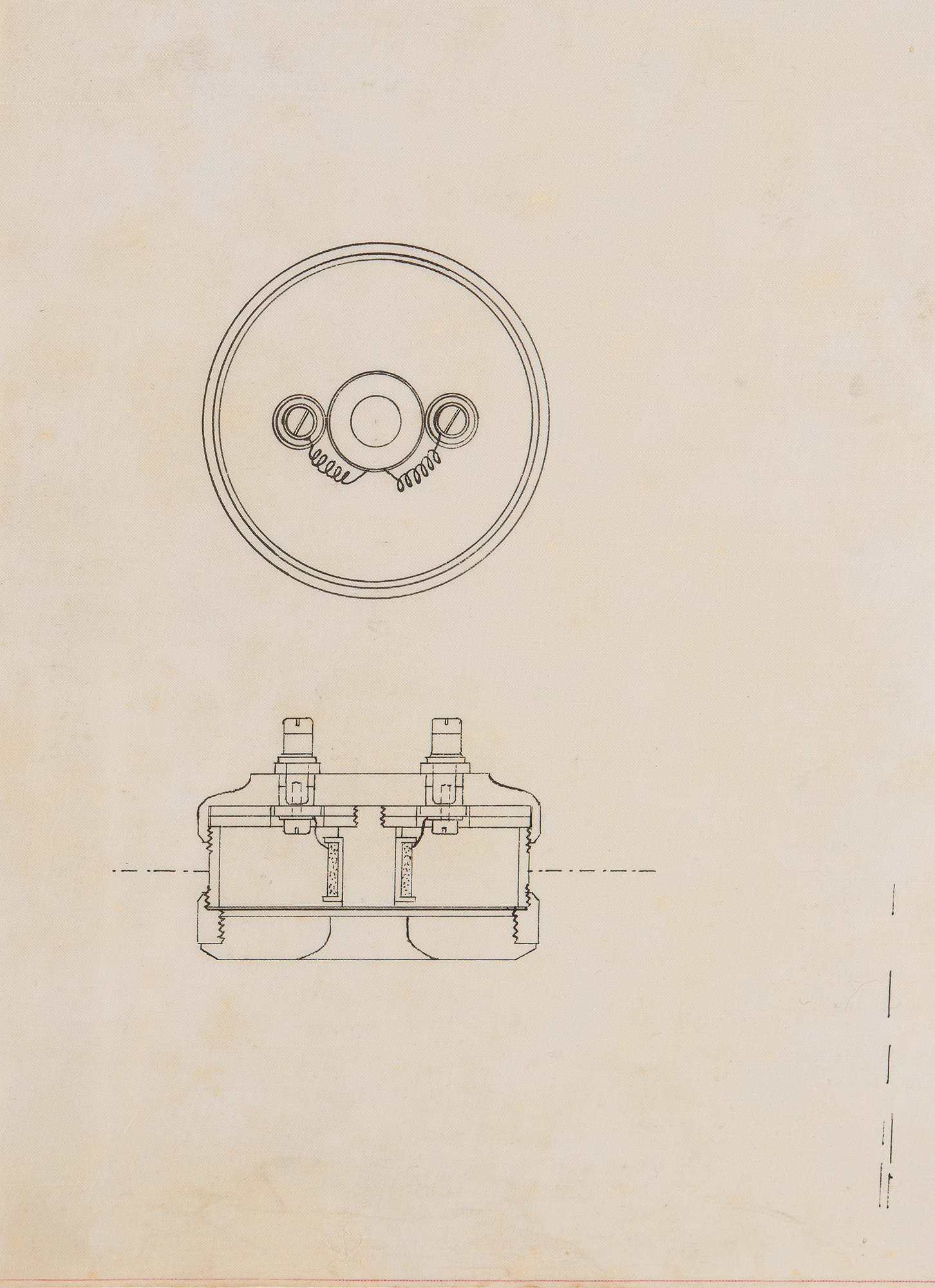
Original hand-drawn diagram showing the electrodes of a battery, one page, 7. x 9.5, featuring two views.
Printed "specification in support of a patent application for an electric battery system" in French, four pages on two adjoining sheets, 9 x 14, describing the use of copper oxide electrodes.
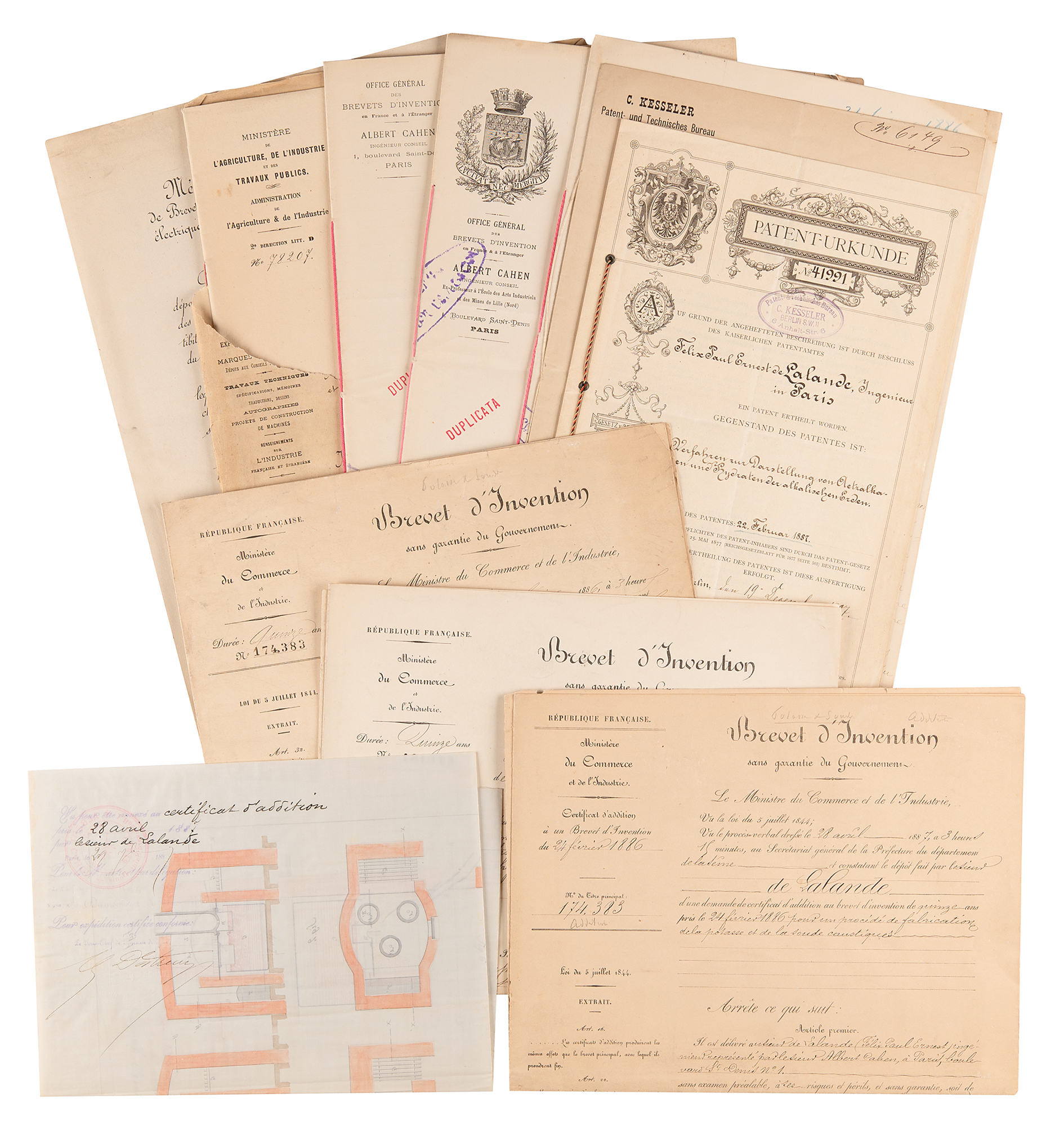
Eleven documents related to Lalande's applications for patents concerning processes for manufacturing potassium hydroxide—a key ingredient of the Lalande–Chaperon cell—including copies of patent applications, an original drawing, a German manuscript describing the process, and other related papers, dated from 1886–1887.
In overall fine condition.

