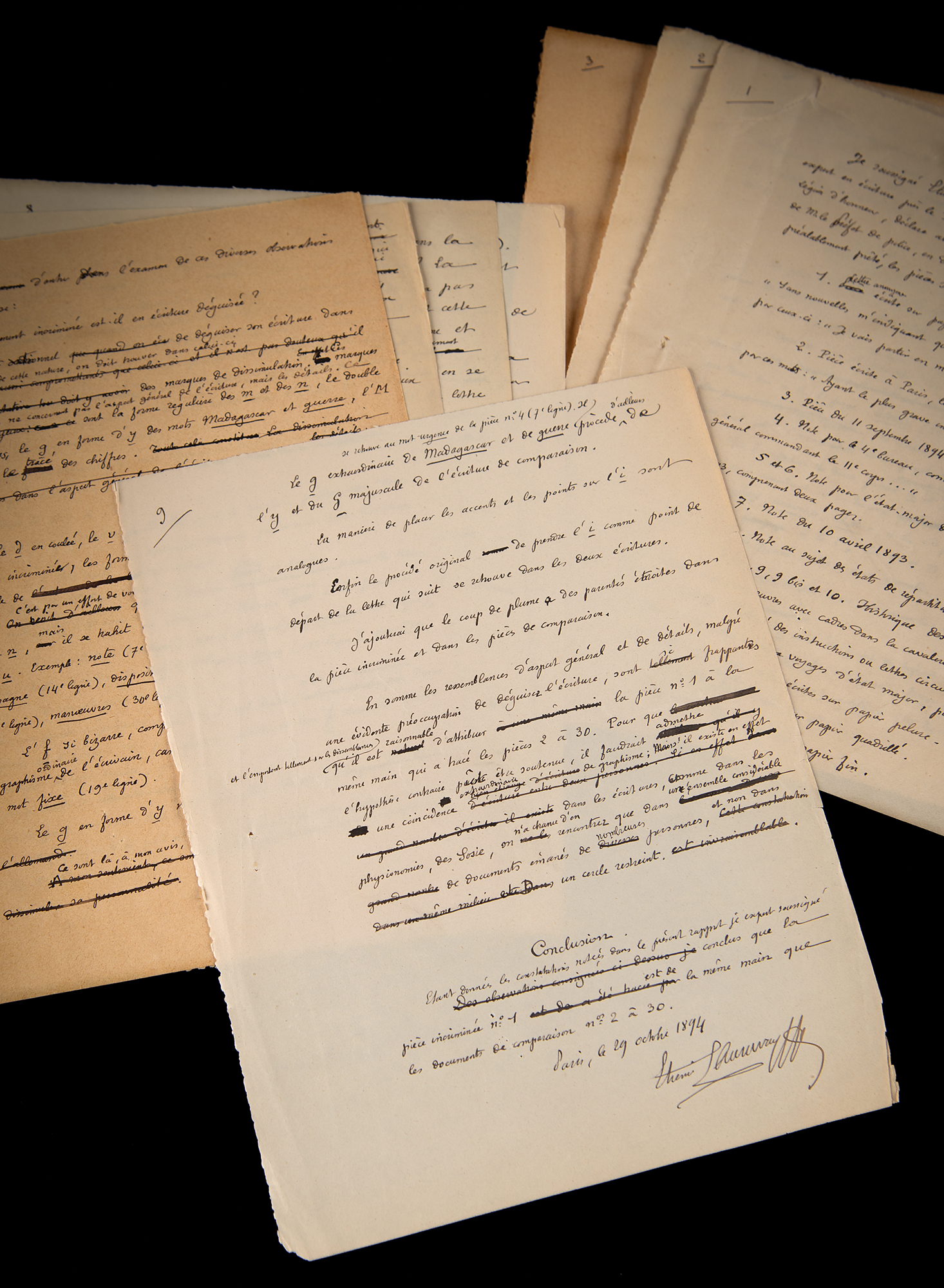
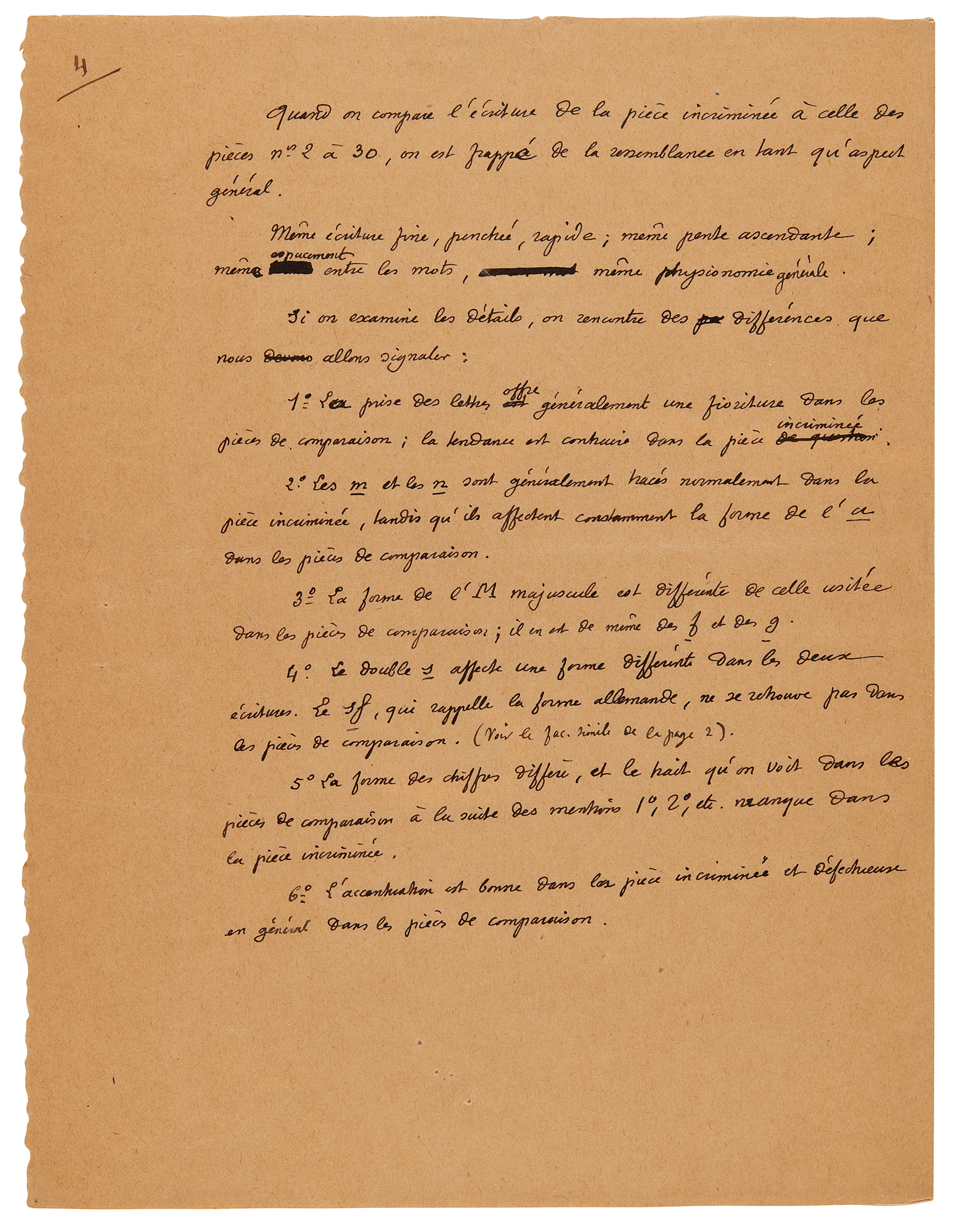
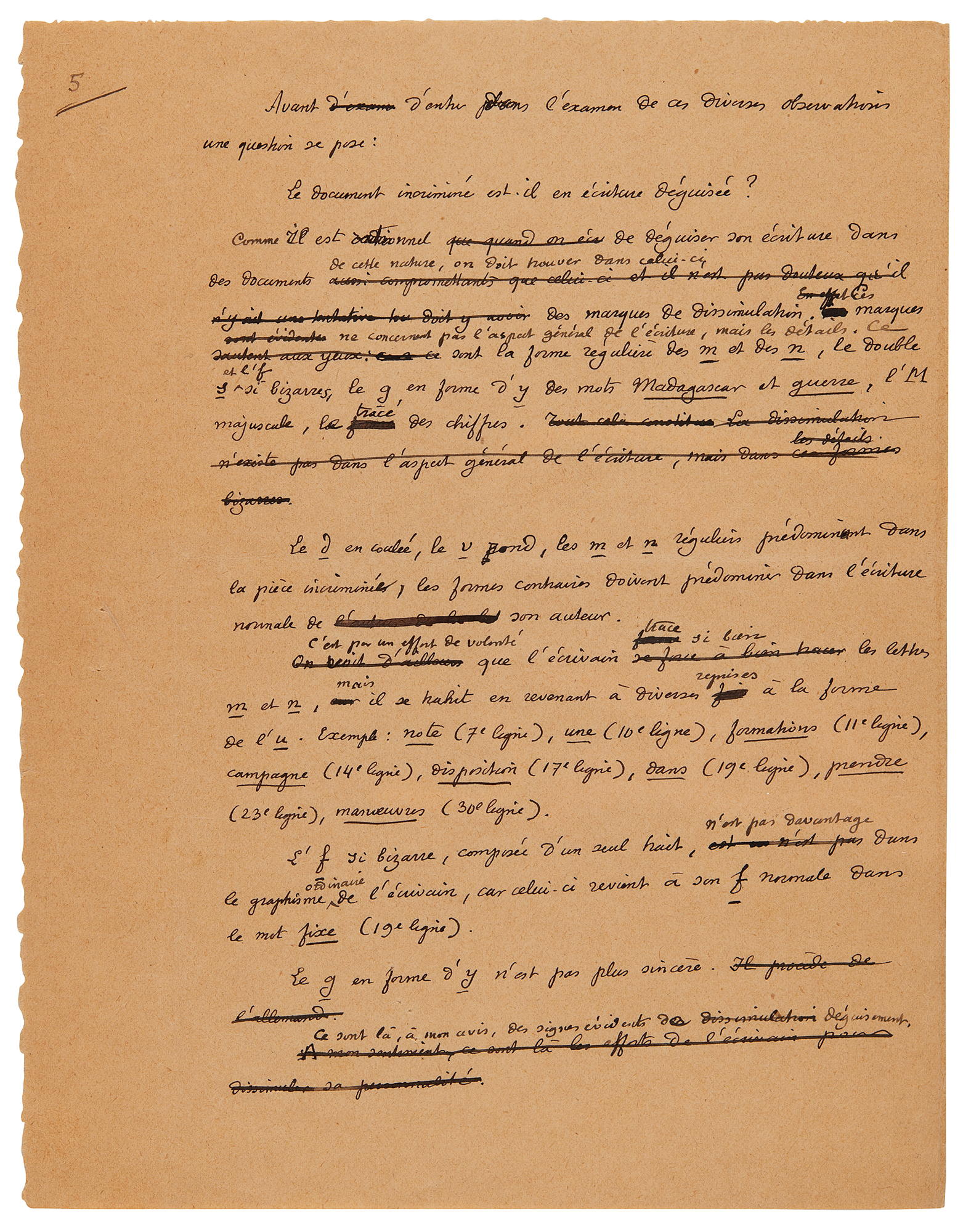
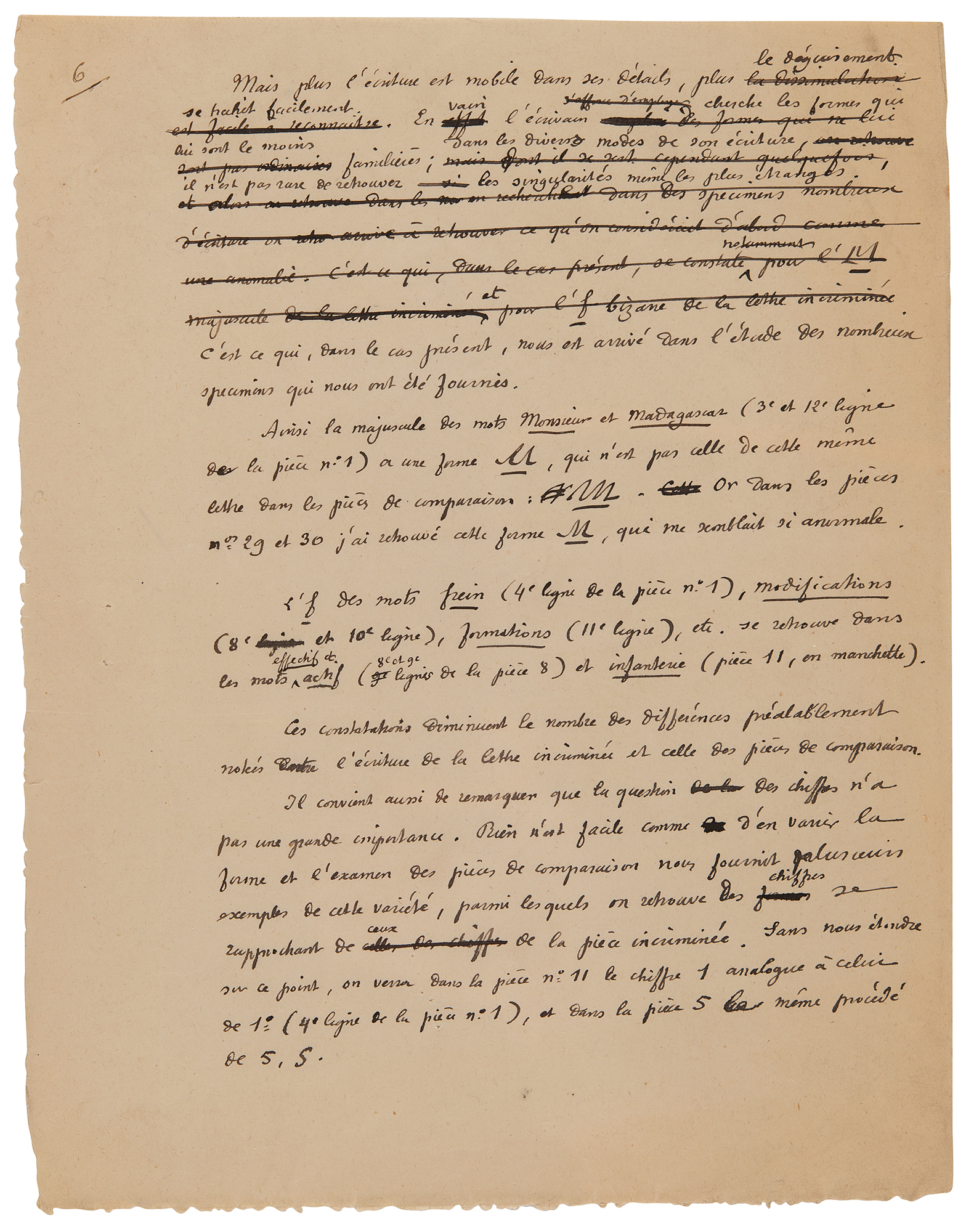
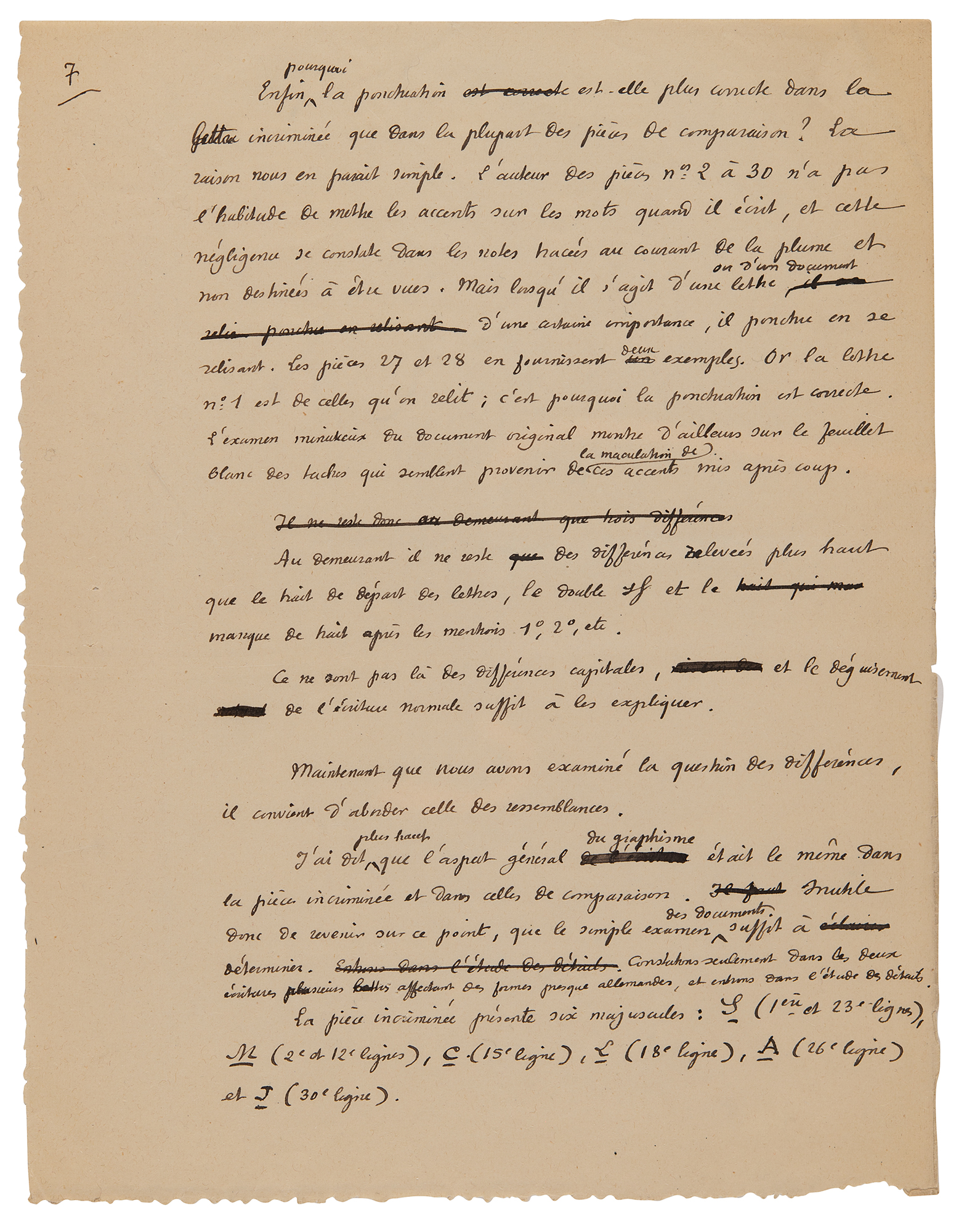
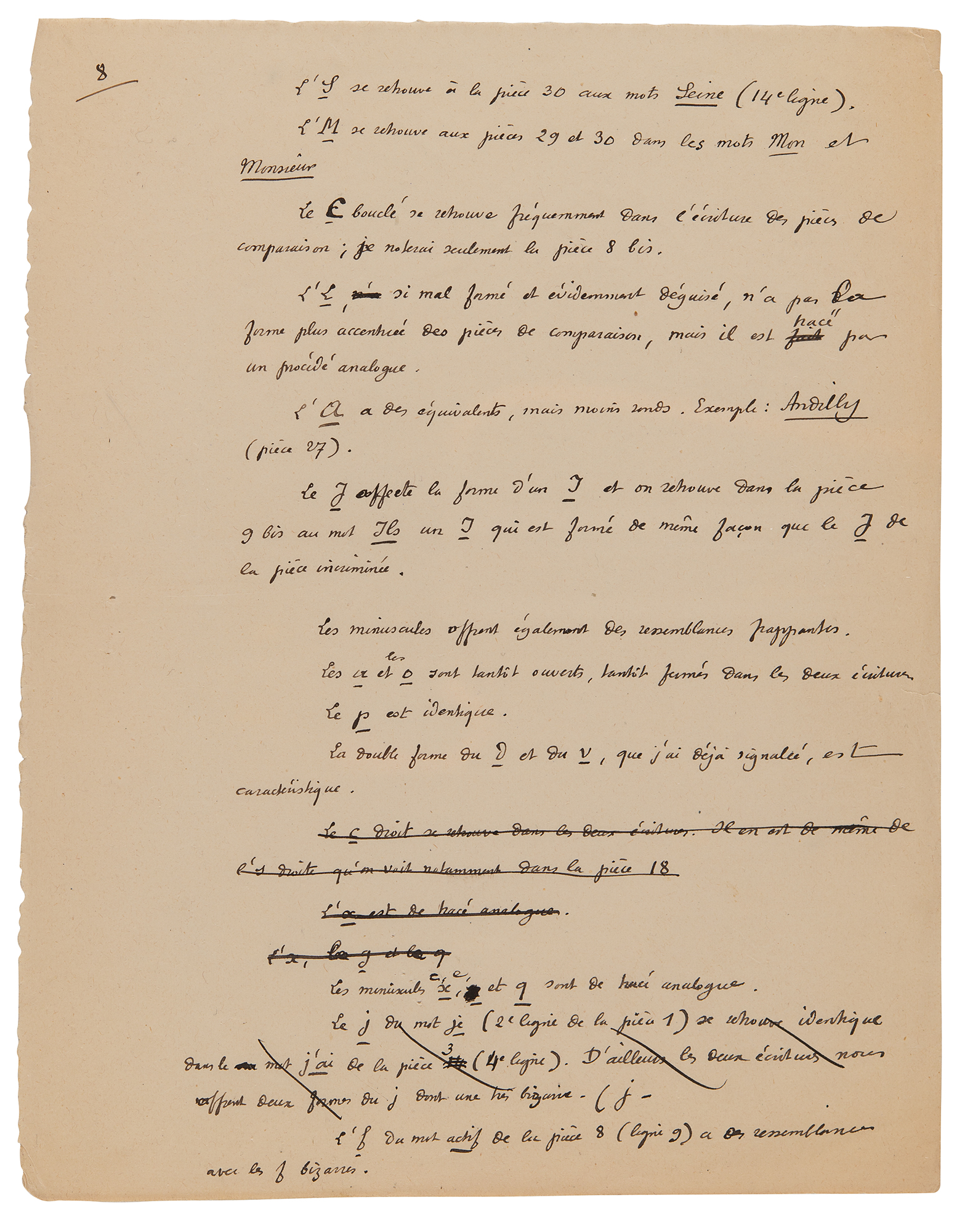
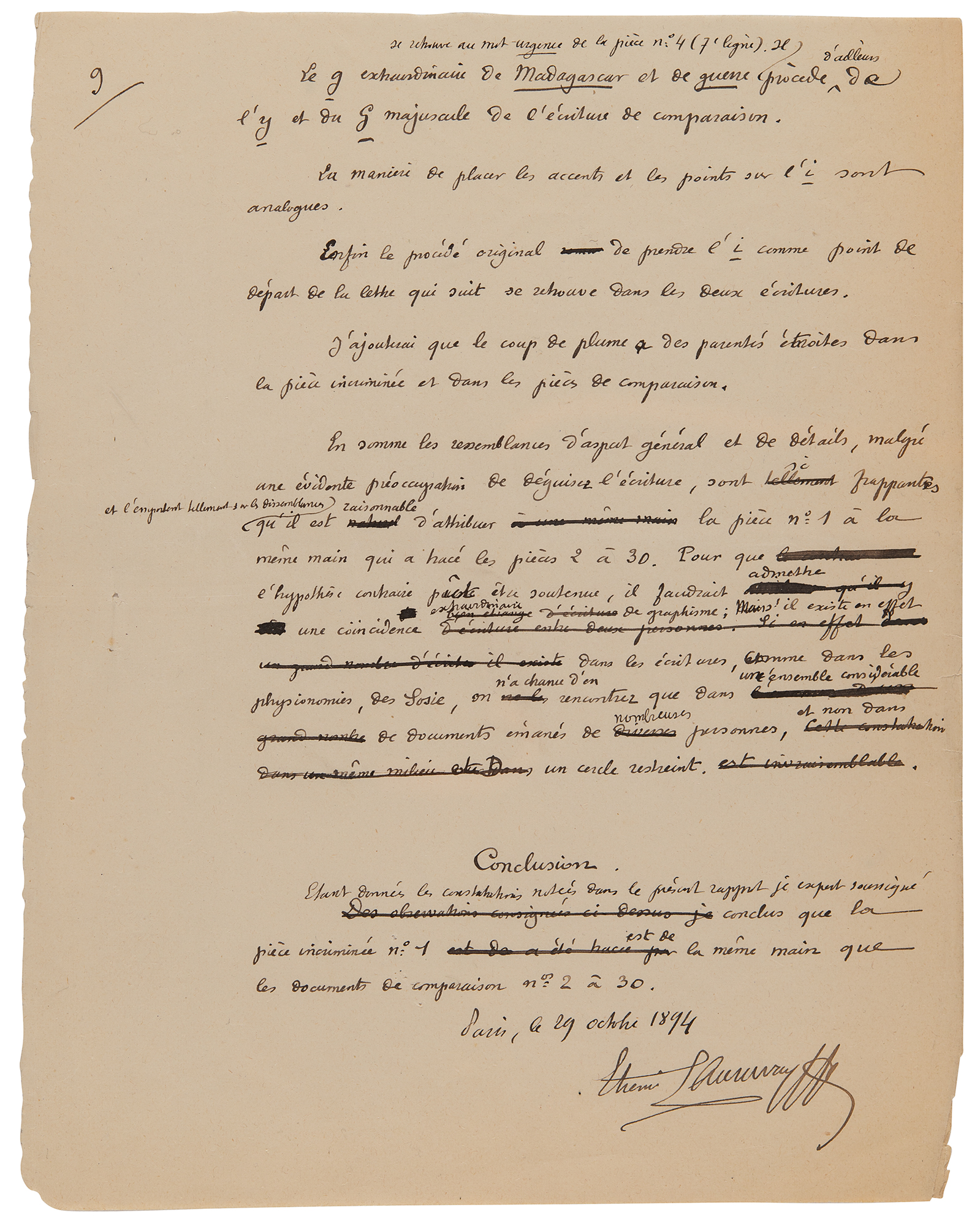
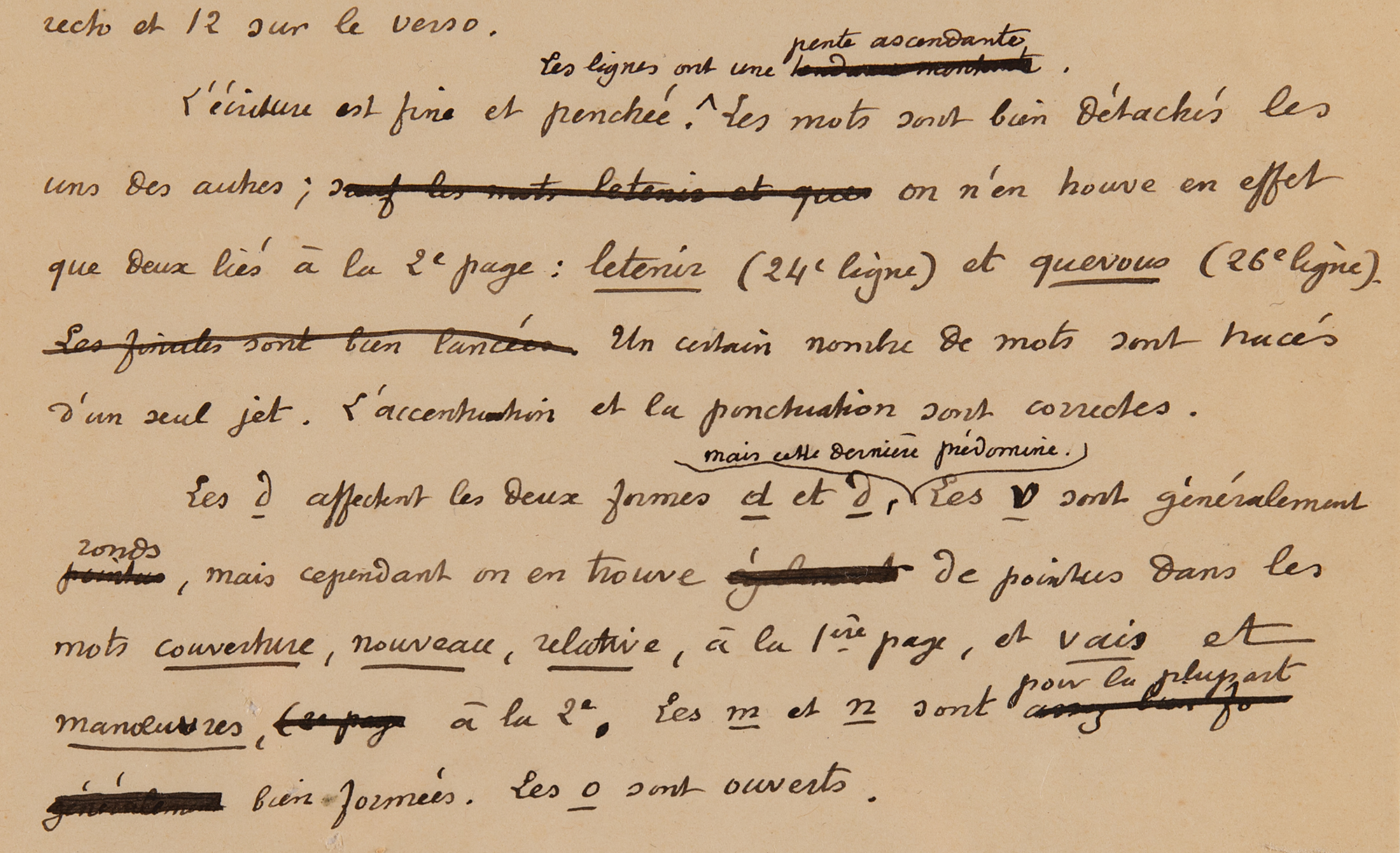
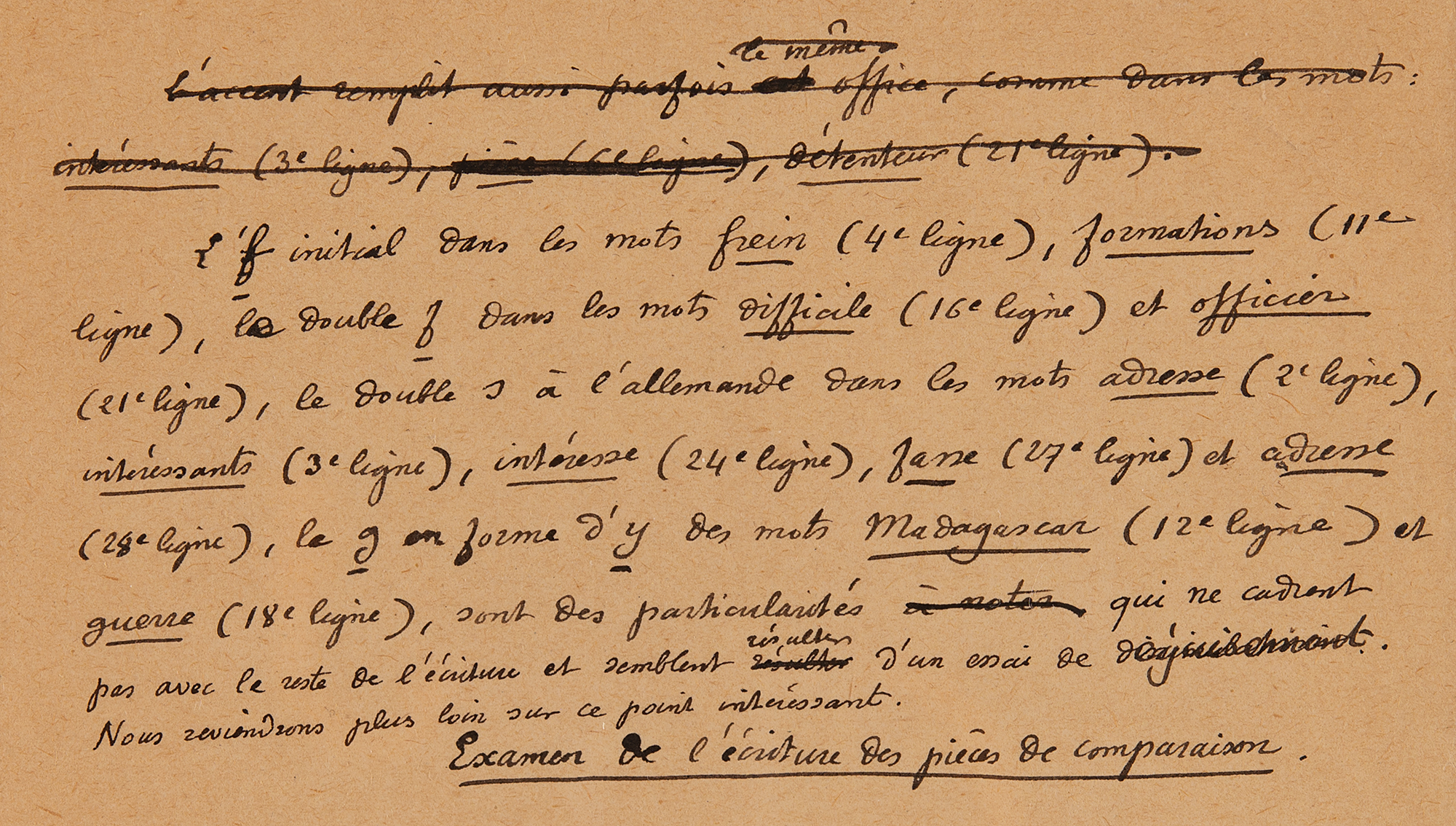
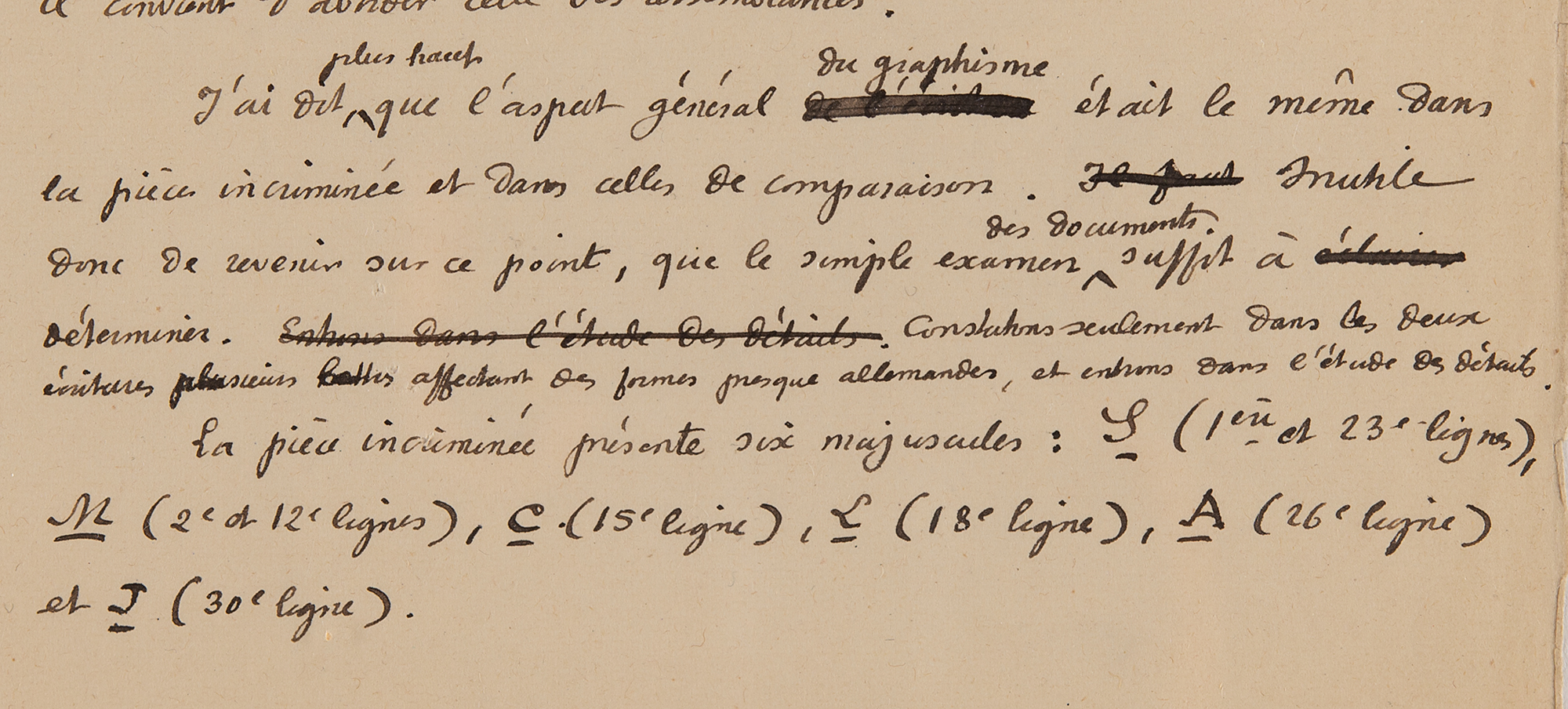
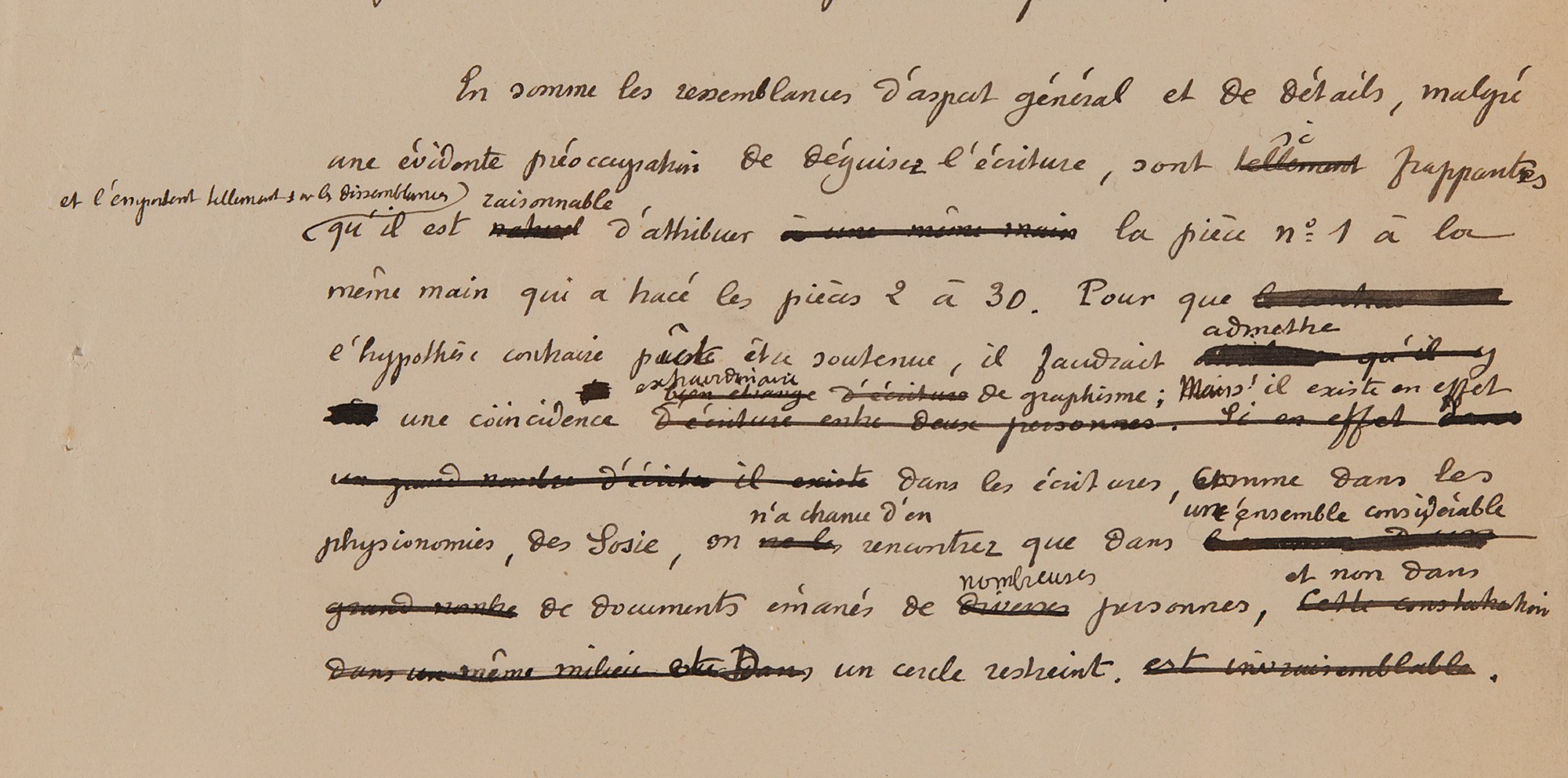
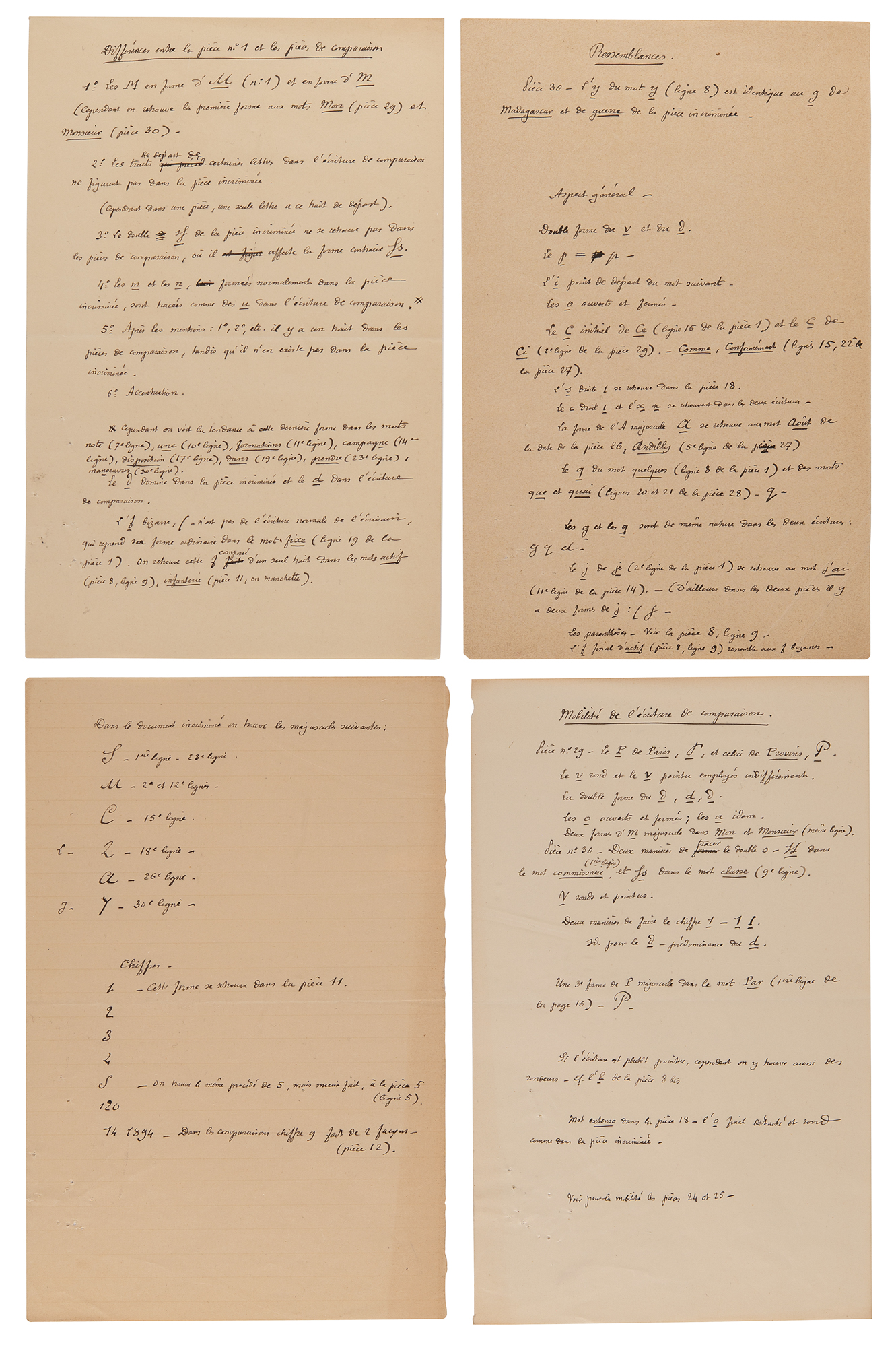
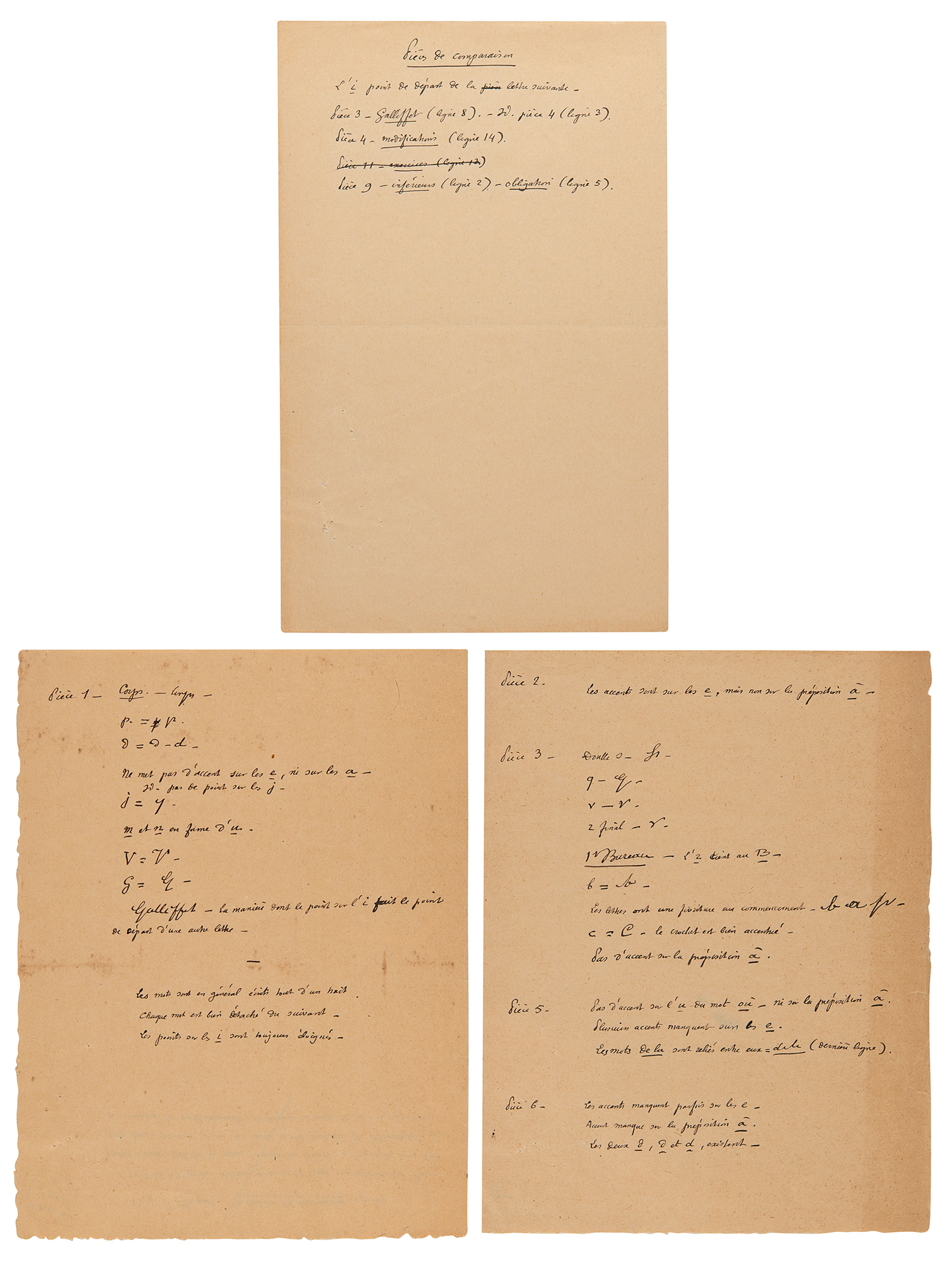
Collection of 16 pages of handwritten graphological notes made by handwriting expert Etienne Charavay during the early stages of the Dreyfus Affair. A major political and social scandal in late 19th-century France, the Dreyfus Affair centered on the wrongful conviction of Captain Alfred Dreyfus, a Jewish officer in the French Army, for treason. A handwritten document—the famed ‘bordereau’—was discovered in a wastebasket at the German embassy in Paris, suggesting a French officer was passing military secrets to Germany. To determine the author of the ‘bordereau,’ a series of five handwriting experts were brought in by the French War Council in 1894. As one of the experts selected, Charavay initially determined that the handwriting in the ‘bordereau’ was natural, fast, and spontaneous, and not a forgery. His opinion changed, however, after consulting with lead investigator and forensic pioneer Alphonse Bertillon, and Dreyfus was convicted.
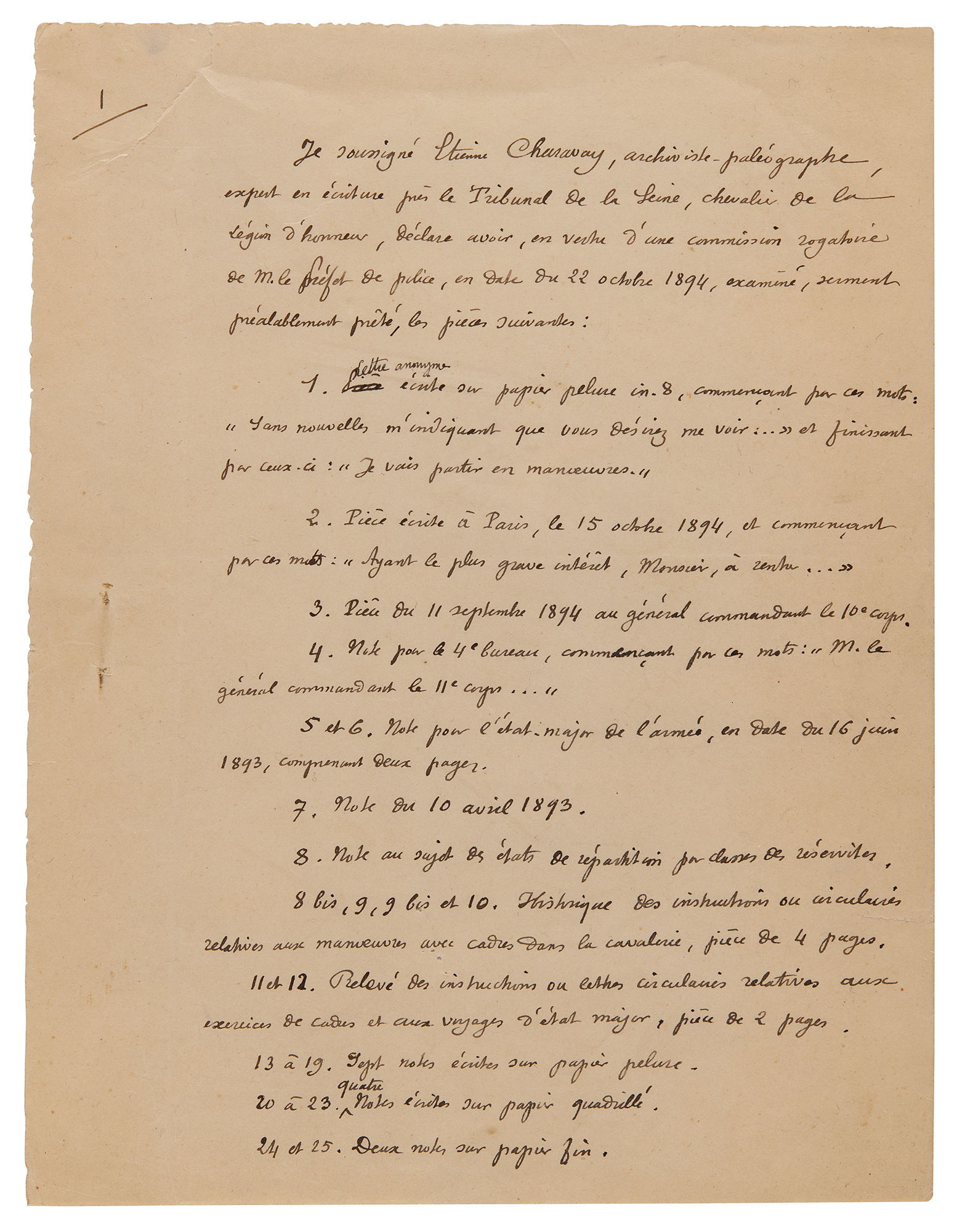
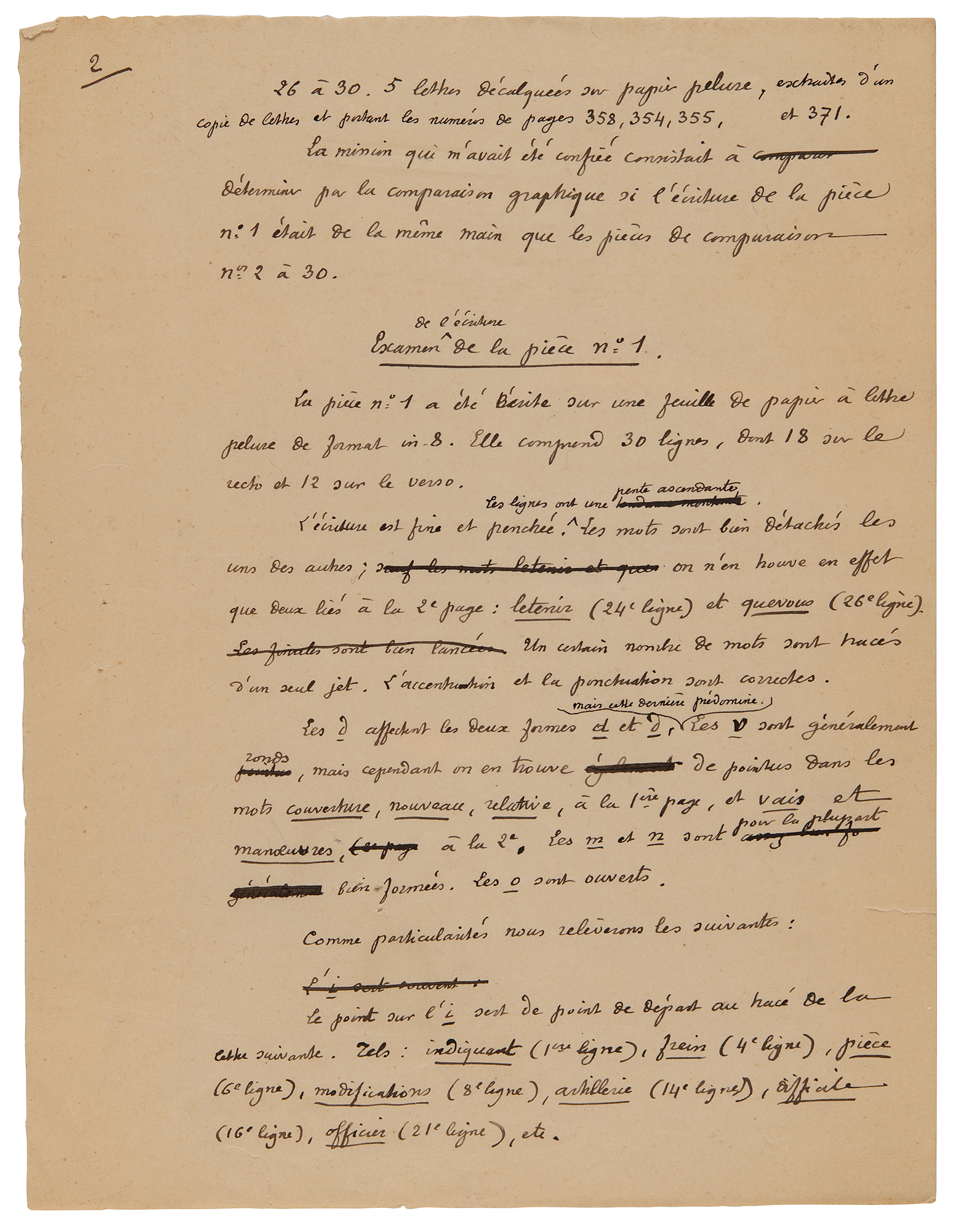
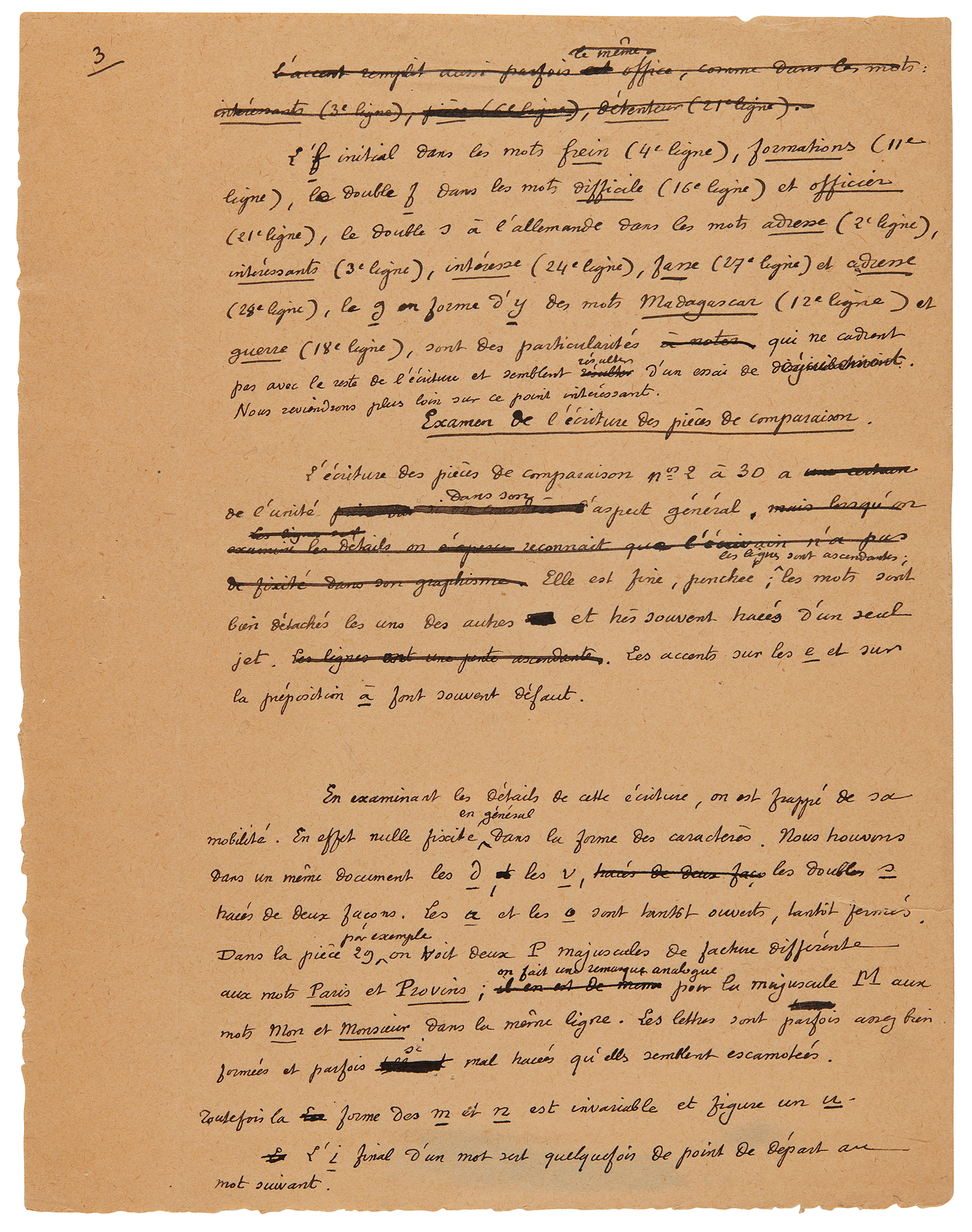
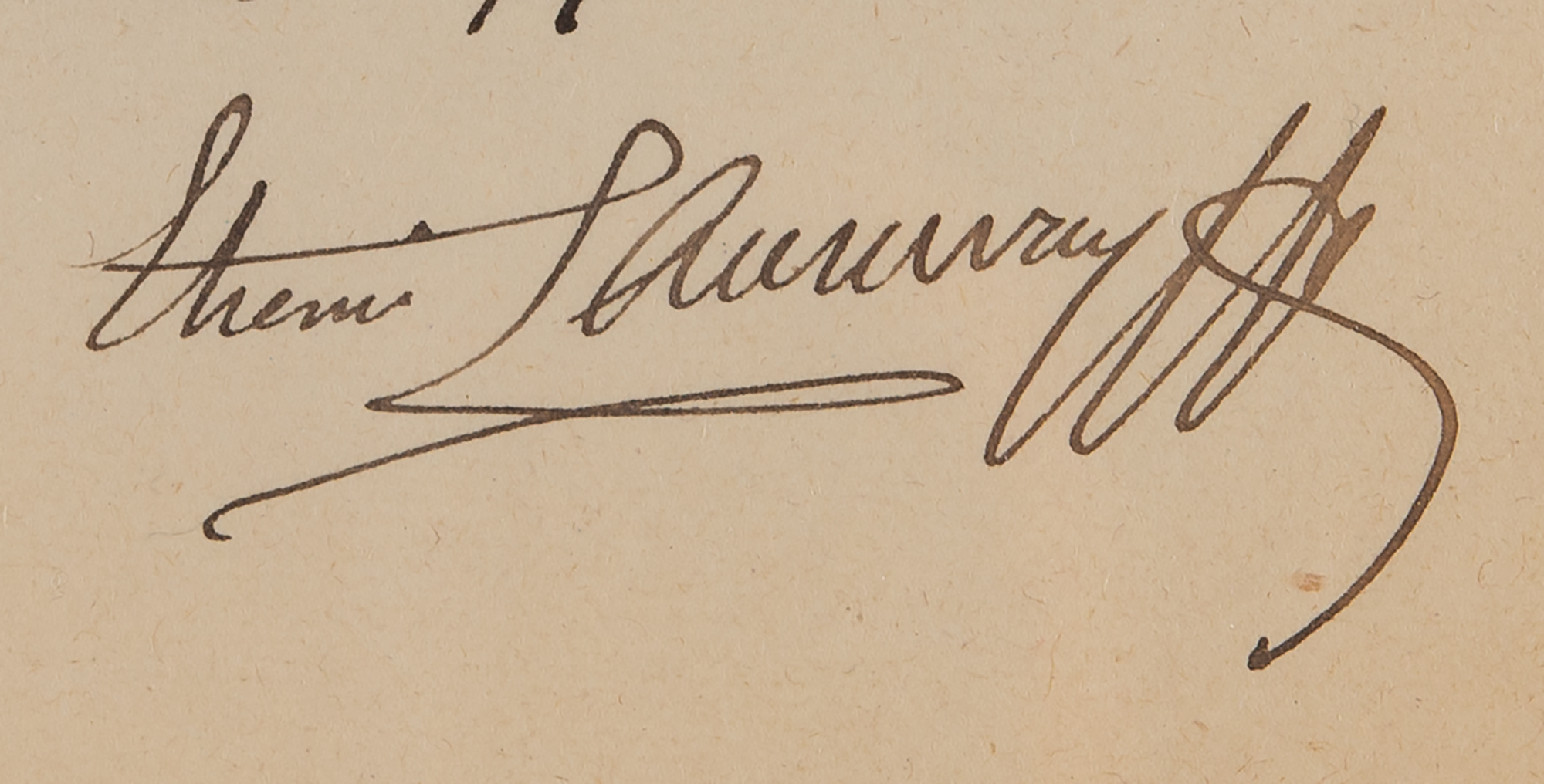
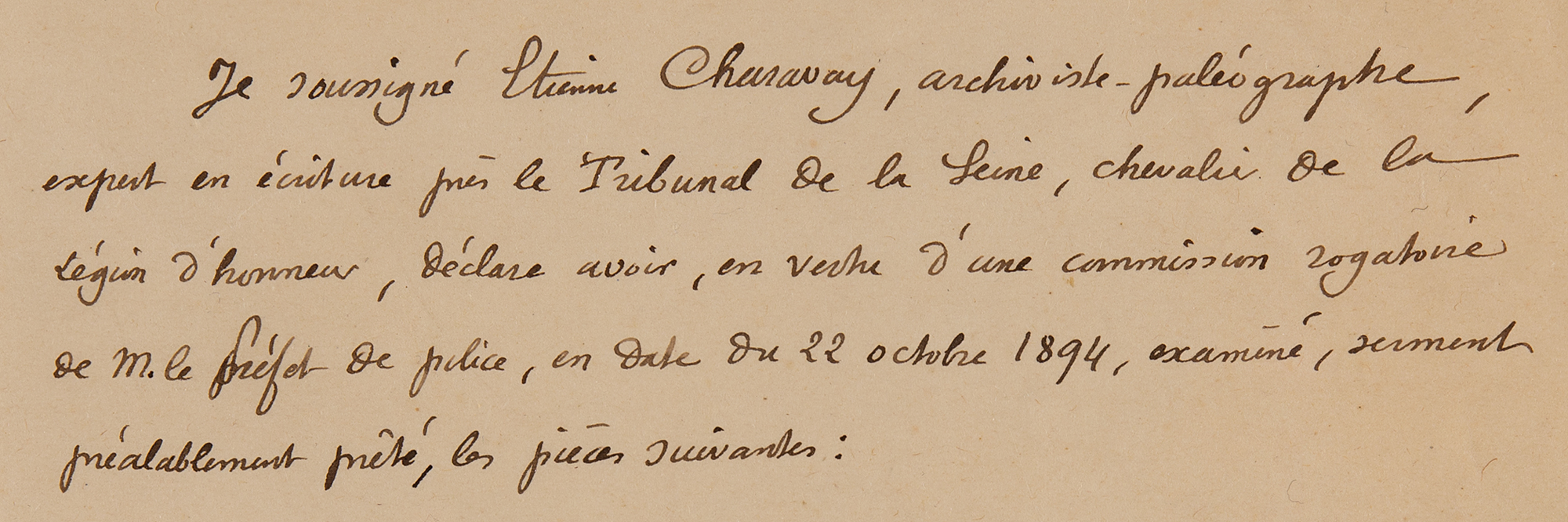
The lot contains a 9-page manuscript by Charavay, containing his detailed report that served as a side-by-side comparison of the anonymous bordereau and known handwriting samples of Captain Alfred Dreyfus. The untranslated report, in French, signed and dated at the conclusion, “Paris, a 29 octobre 1894, Etienne Charavay,” is penned neatly in crisp black ink on nine pages, each measuring 6 x 8. Included with the manuscript are an additional seven pages of handwritten notes by Charavay, penned in ink on pages ranging in size from 5.25 x 8.25 to 6 x 8, undated, which contain further graphological observations, with sections headed “Resemblances,” “Aspect general,” and “Differences entre la piece No. 1 et les pieces de comparaison.” A group of irregular cut slips with sparse notations is also included with the lot. In overall fine condition, with a few short edge tears.
After the discovery of the bordereau, Etienne Charavay was one of five handwriting experts summoned by the French military to determine its author. Charavay, a noted autograph collector and handwriting expert of the day, after analyzing the handwriting of the bordereau, deemed it quick, spontaneous, and natural, without any disguise. His comparison of the bordereau with Dreyfus’s own handwriting yielded no strong match. Charavay ultimately changed his opinion after a meeting with Alphonse Bertillon, the famed criminologist and inventor of the mug shot, who was serving as head of the Judicial Identification Service. Bertillon’s flawed evidence, autoforgery theory, and political influence were all contributing factors to one of the most infamous miscarriages of justice.
When Charavay took the stand, he switched stances and admitted that his first finding was a mistake and invalidated the initial conclusion. Charavay was quoted as saying: ‘I want to state that in 1894, deceived by a graphic resemblance, I made a mistake in attributing the piece known as the bordereau to the author of an anonymous writing that belonged to Captain Dreyfus. Having found a new writing element, I now recognize my error, and it is a great relief to my conscience to be able, in front of you, gentlemen, and especially in front of the one who was the victim of this mistake, to declare that I was wrong in 1894.’
Dreyfus was ultimately convicted and shipped to Devil’s Island, a remote and brutal penal colony in French Guiana, where he remained for nearly five years. Due to new evidence and intrepid Dreyfusard supporters like Emile Zola (whose open letter, ‘J'Accuse...!,’ in the L'Aurore newspaper caused a major stir in France), Dreyfus was granted a second trial in 1899, which resulted in another conviction and a 10-year sentence. Realizing political pressure and growing instability in France, President Émile Loubet granted Dreyfus a full pardon just weeks after the retrial in September 1899. The pardon freed him immediately, but it did not annul the guilty verdict—Dreyfus was still officially a convicted traitor. He was finally exonerated in 1906, and French Army Major Ferdinand Walsin Esterhazy, who was initially charged and acquitted after a controversial two-day trial, was later revealed to be the actual spy and author of the bordereau.

