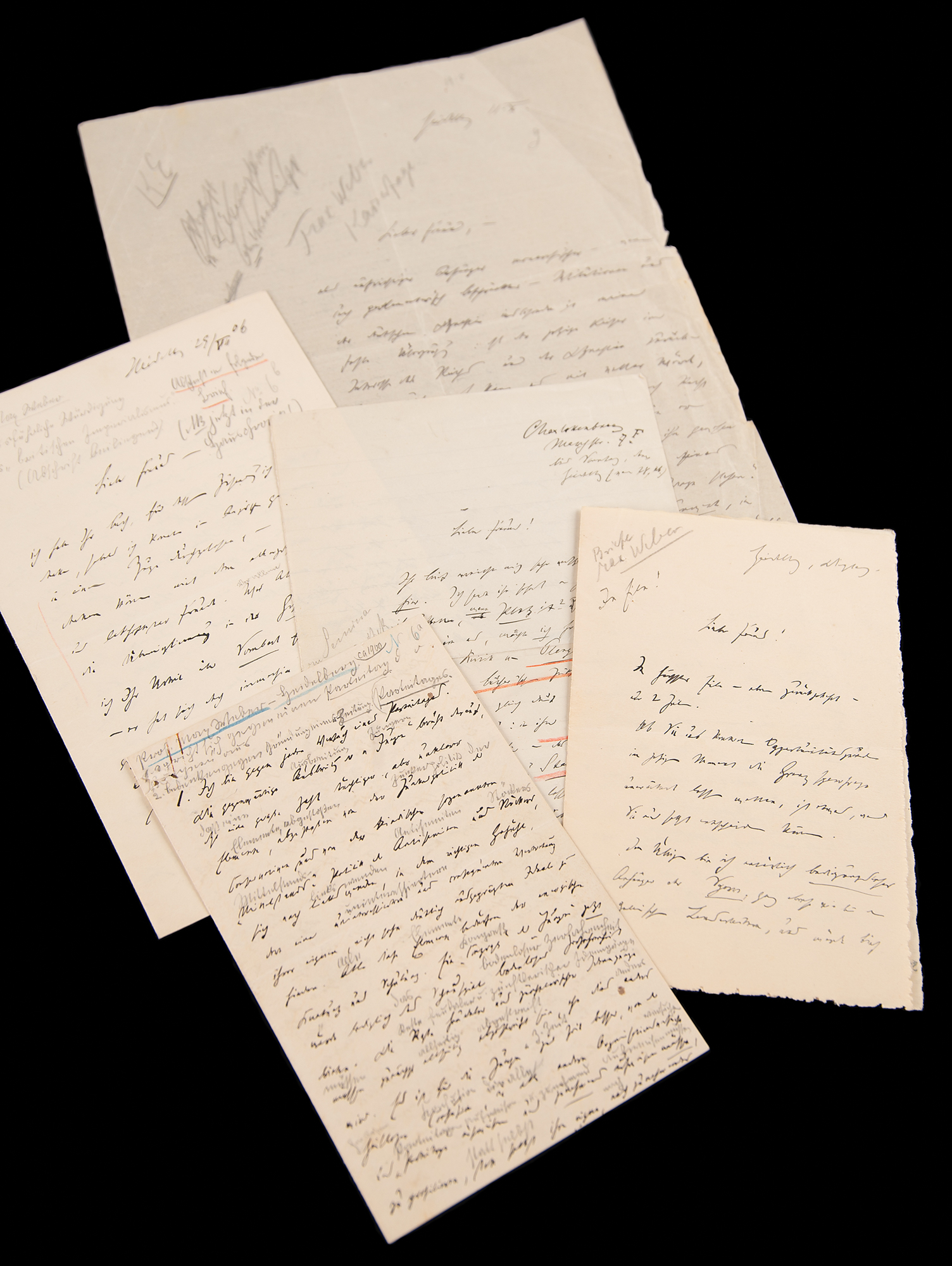
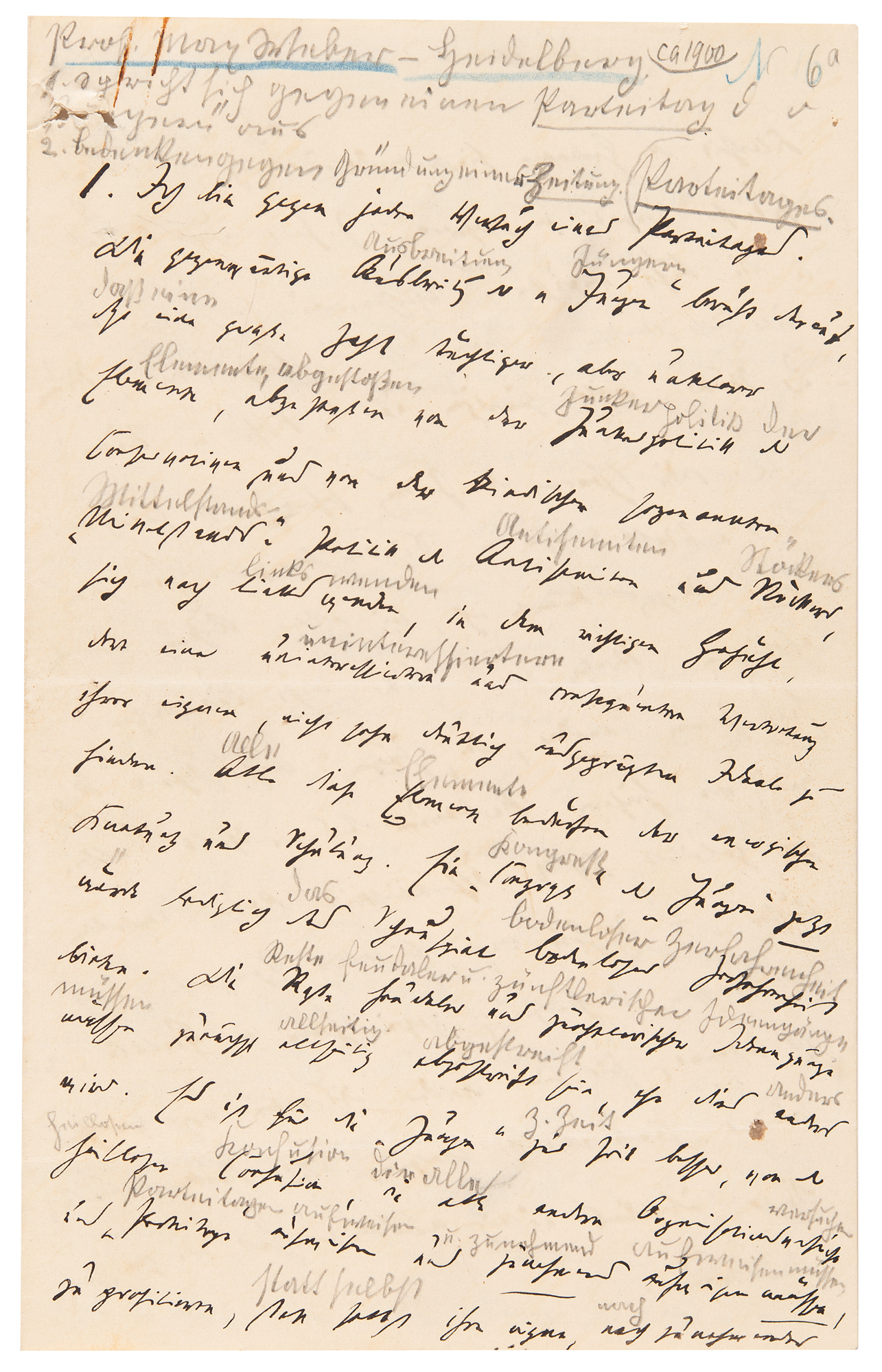
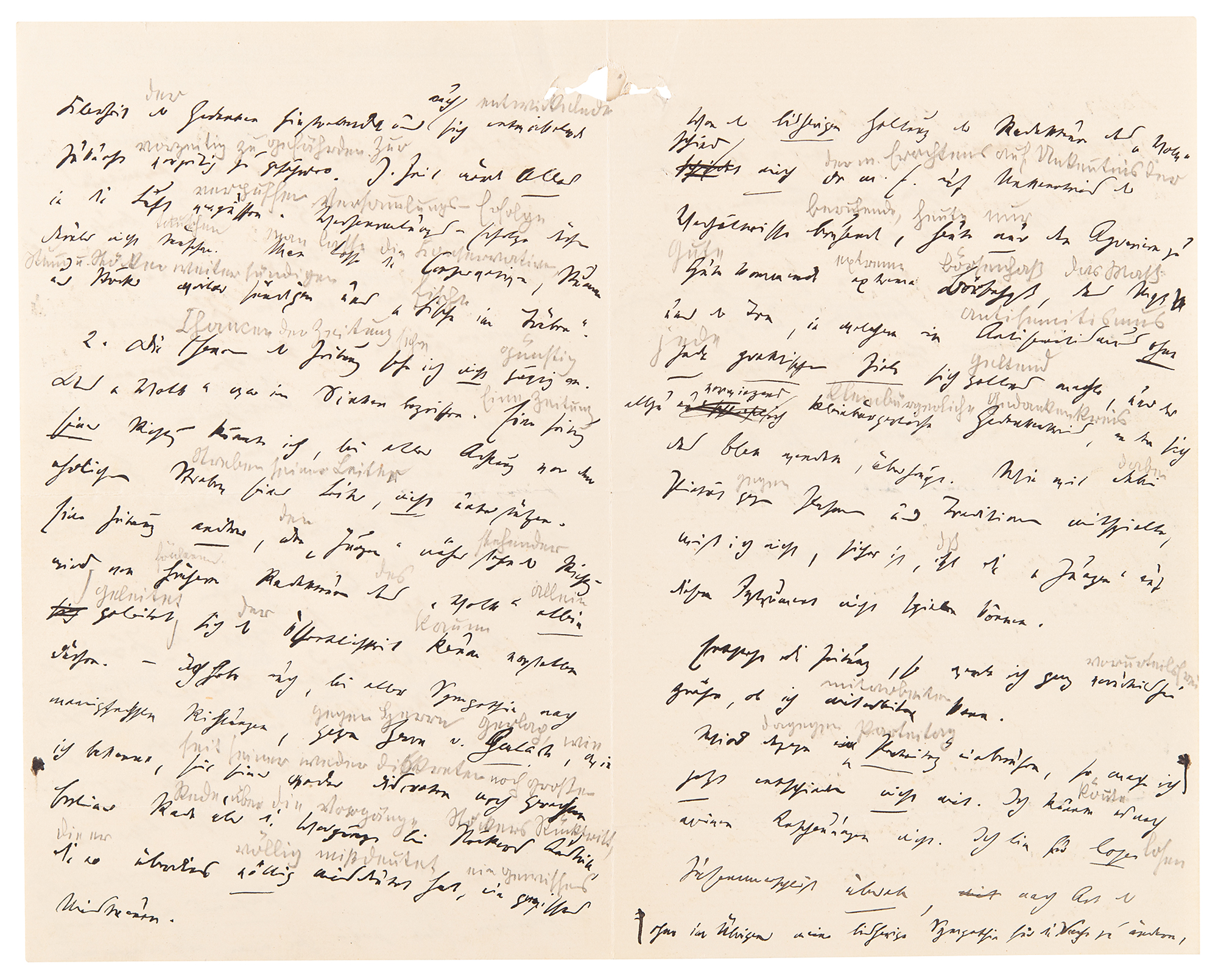
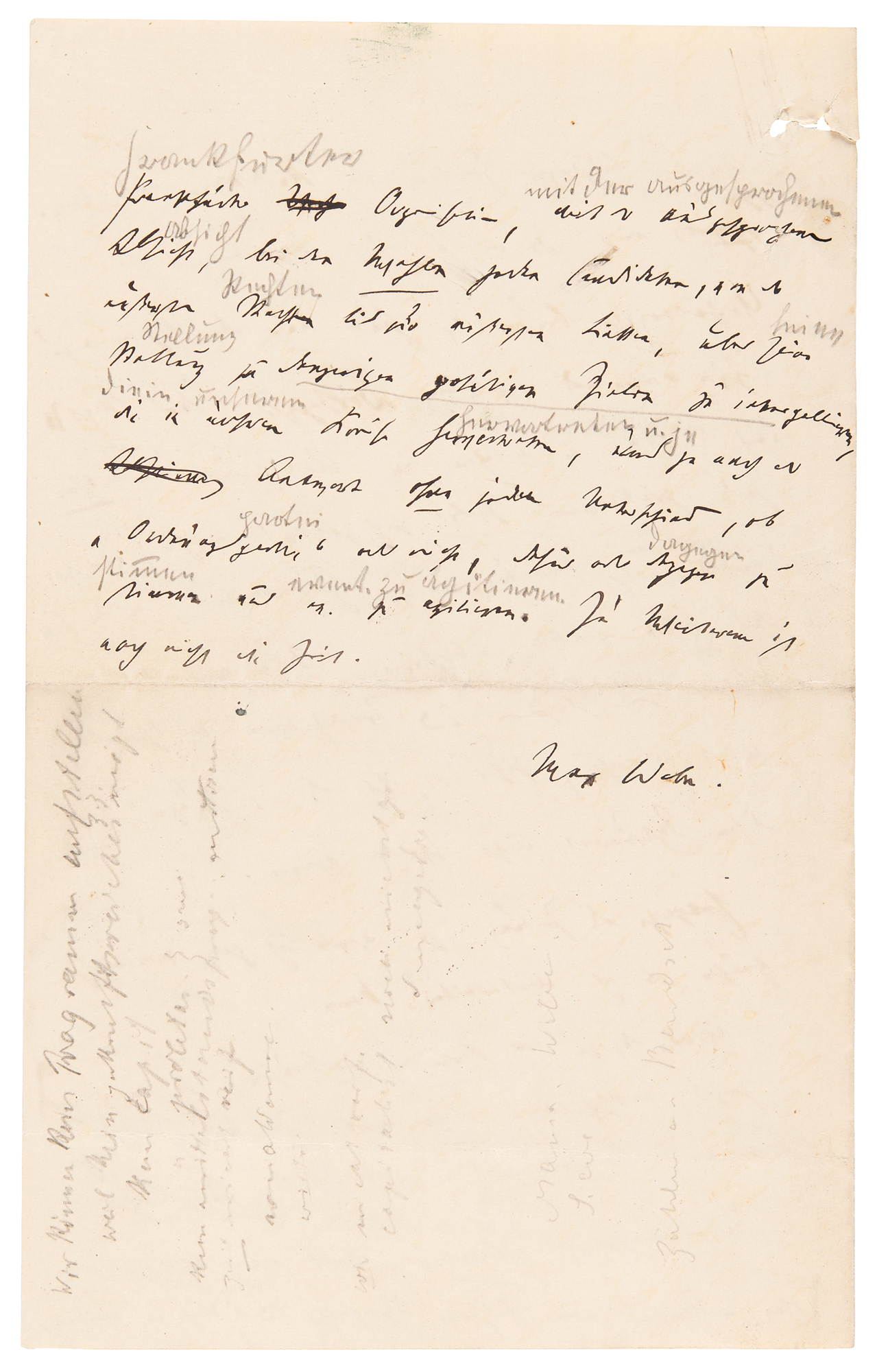
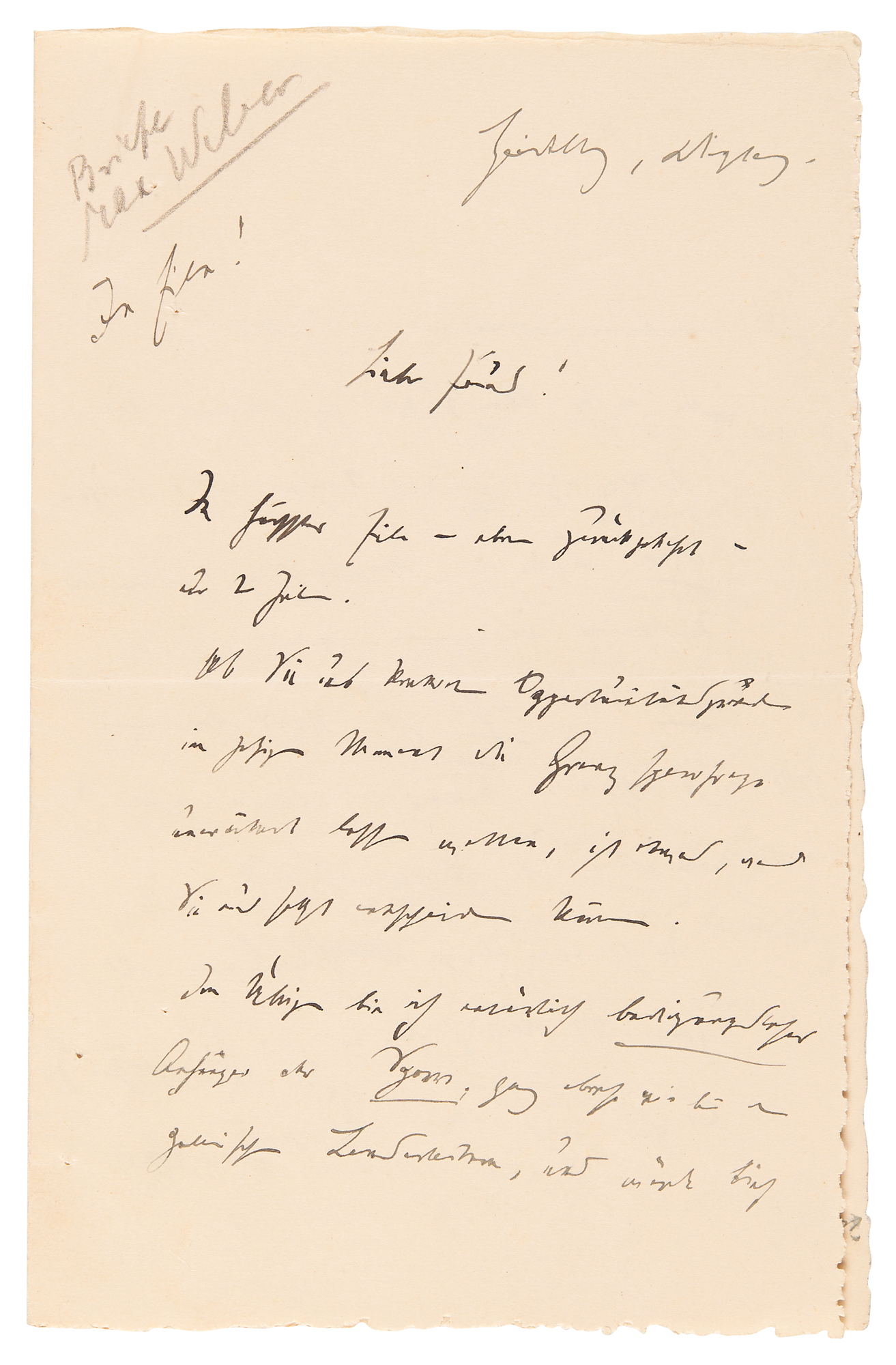
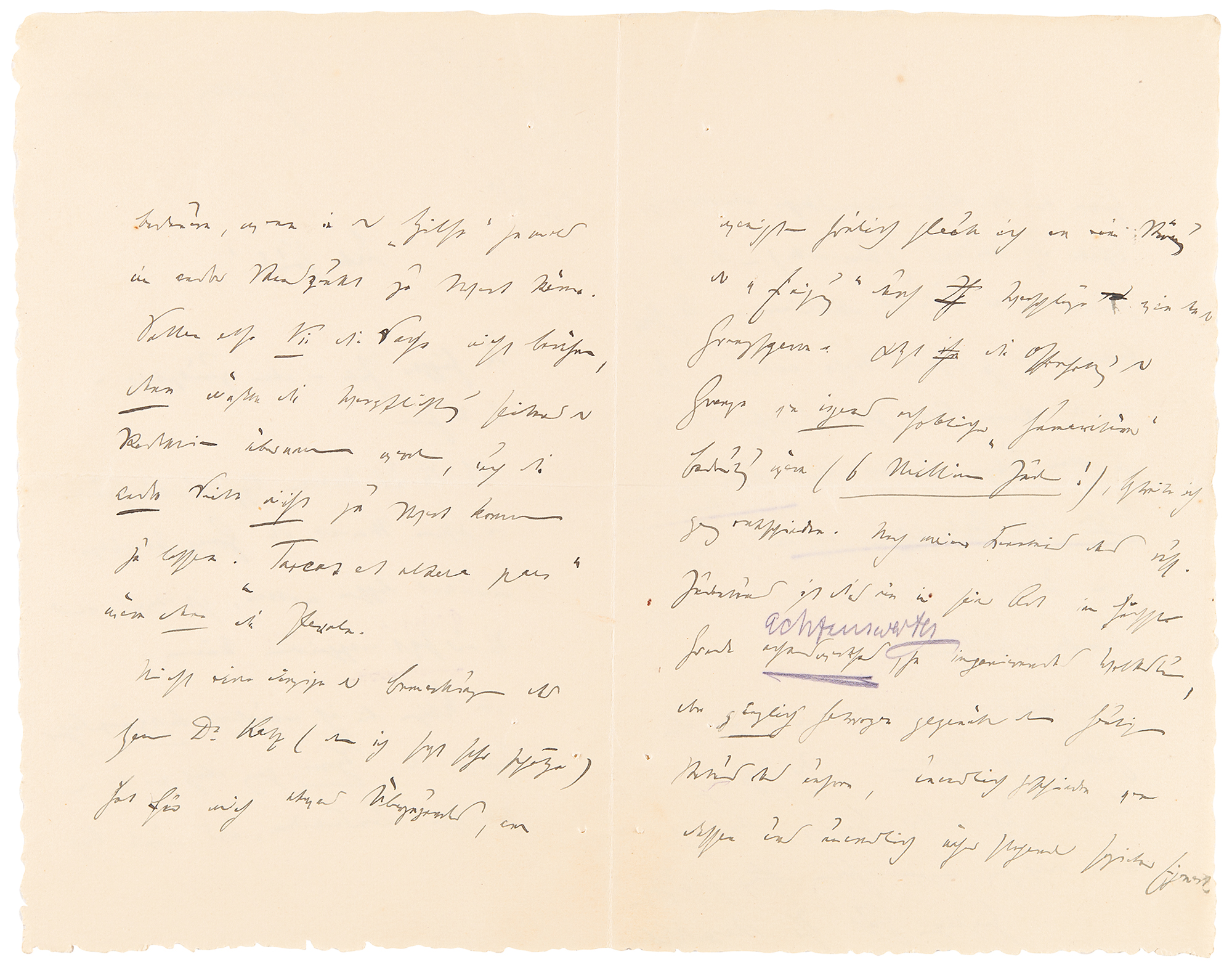
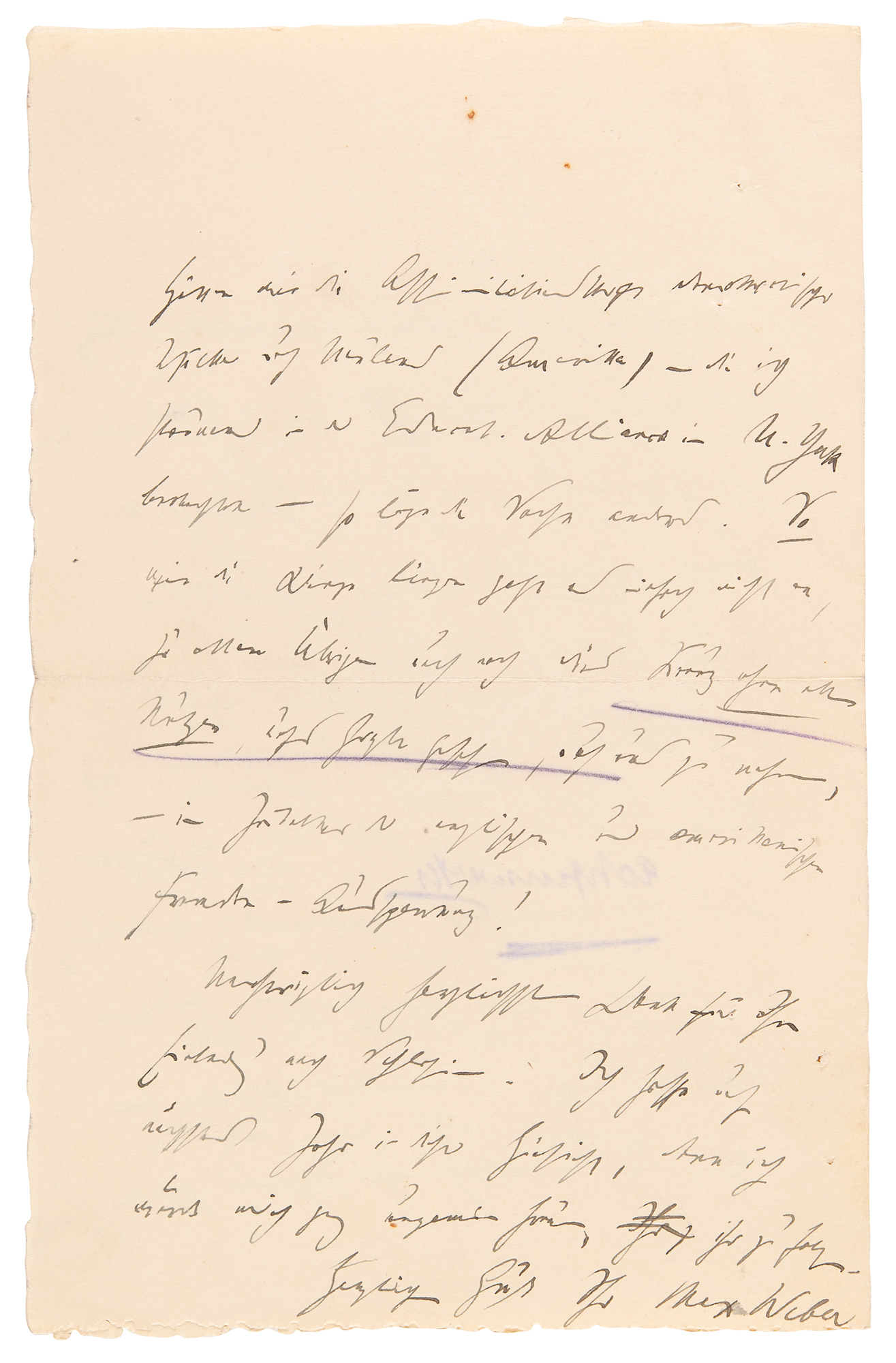
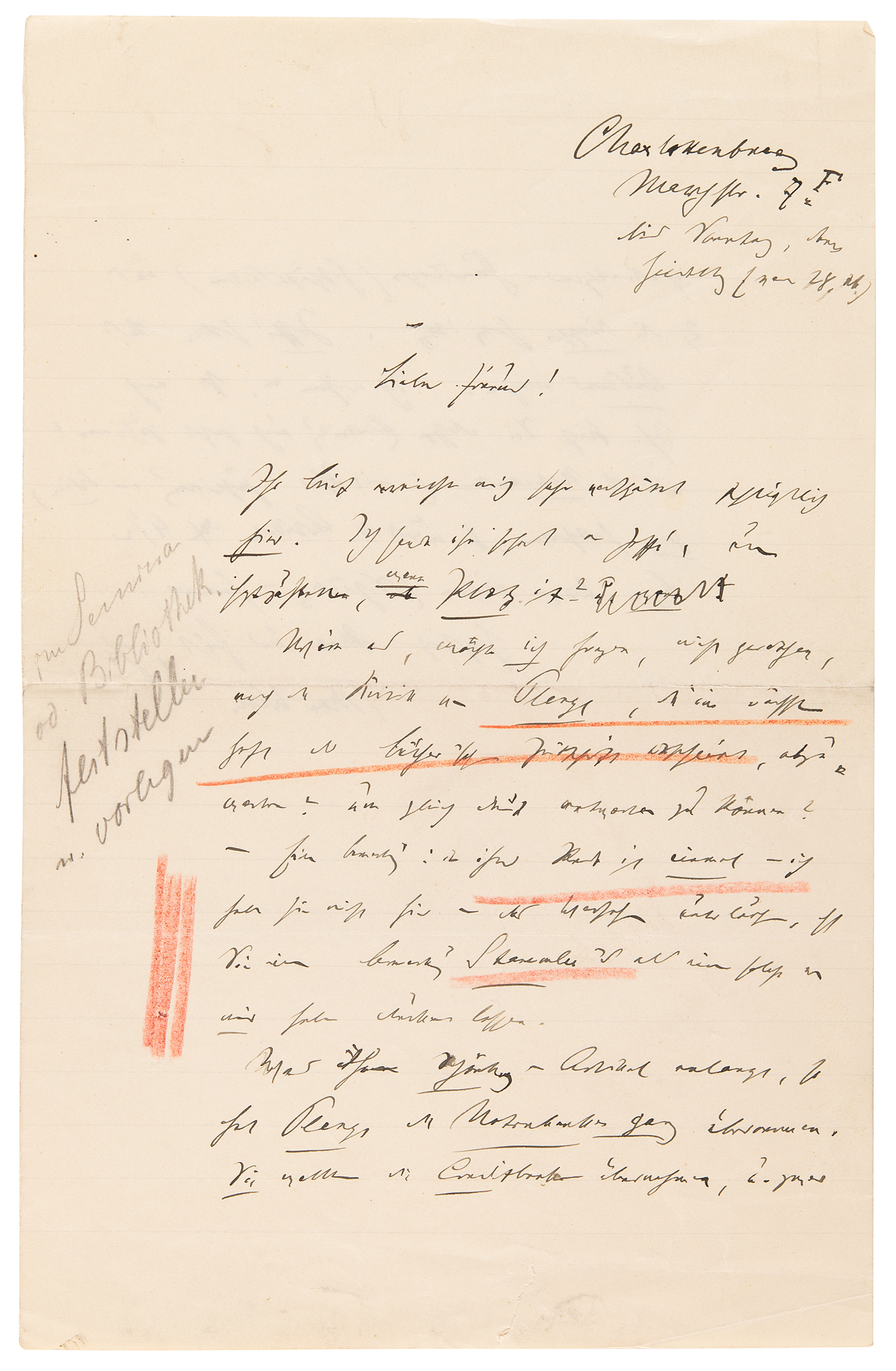
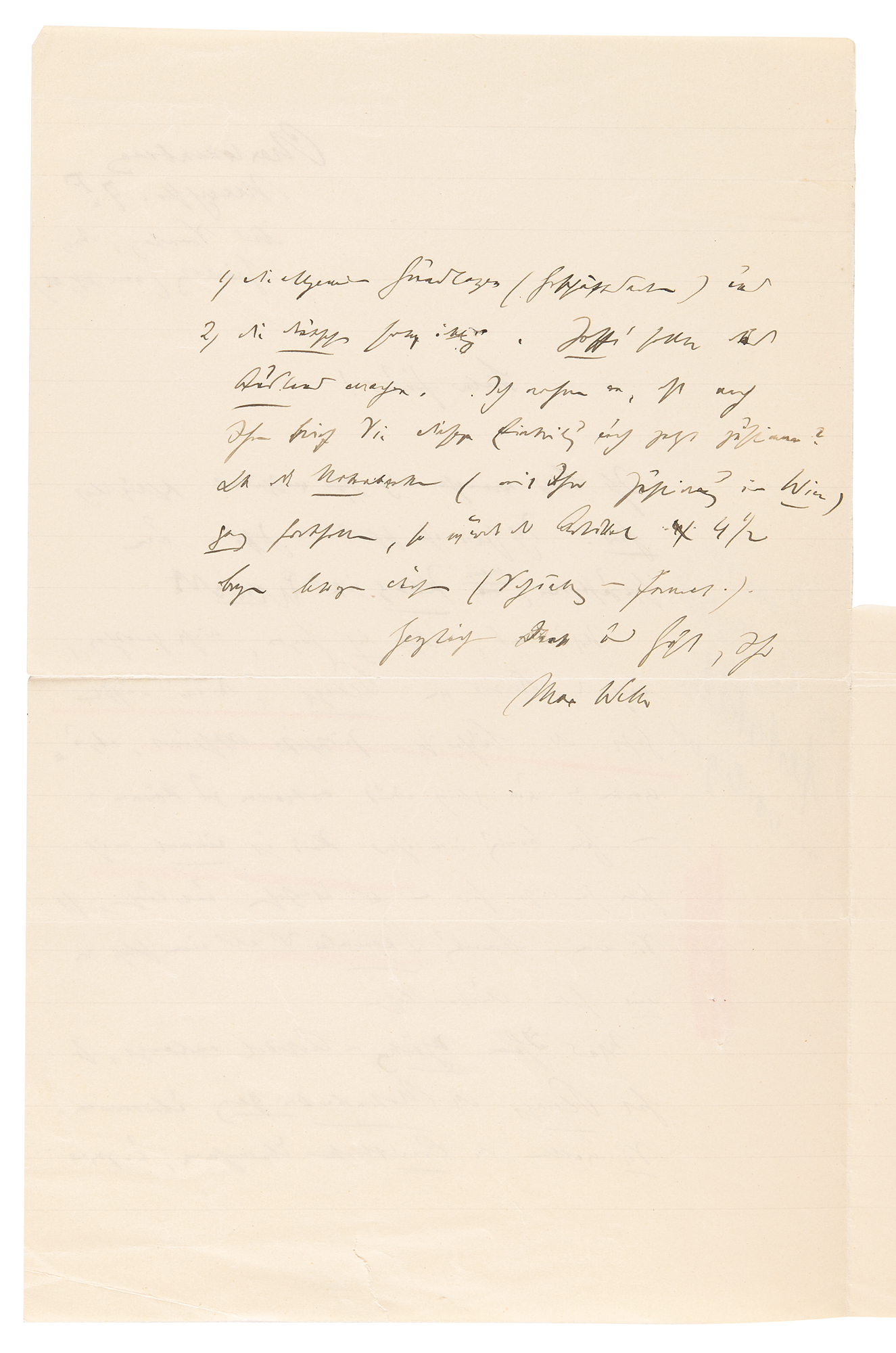
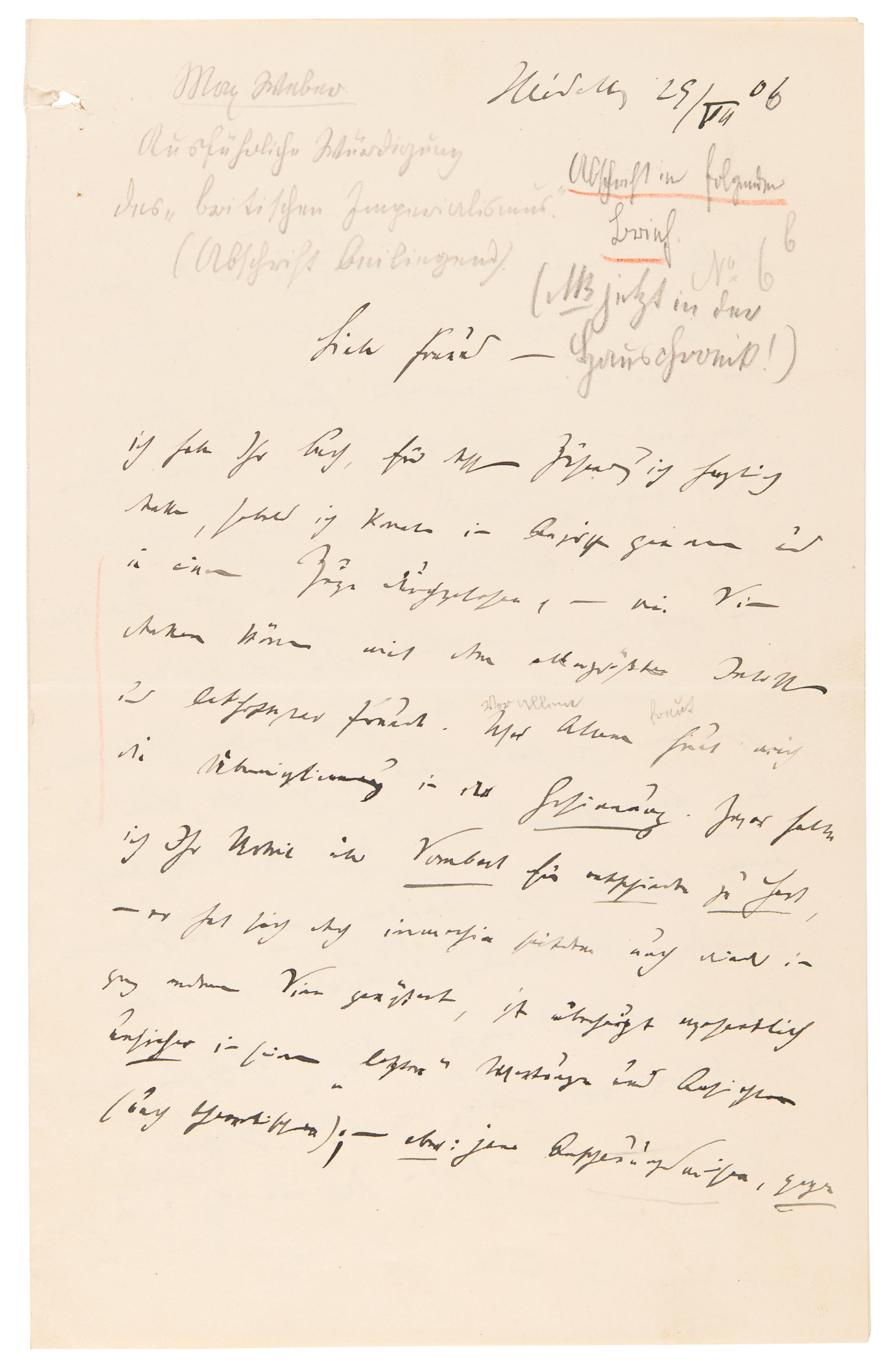
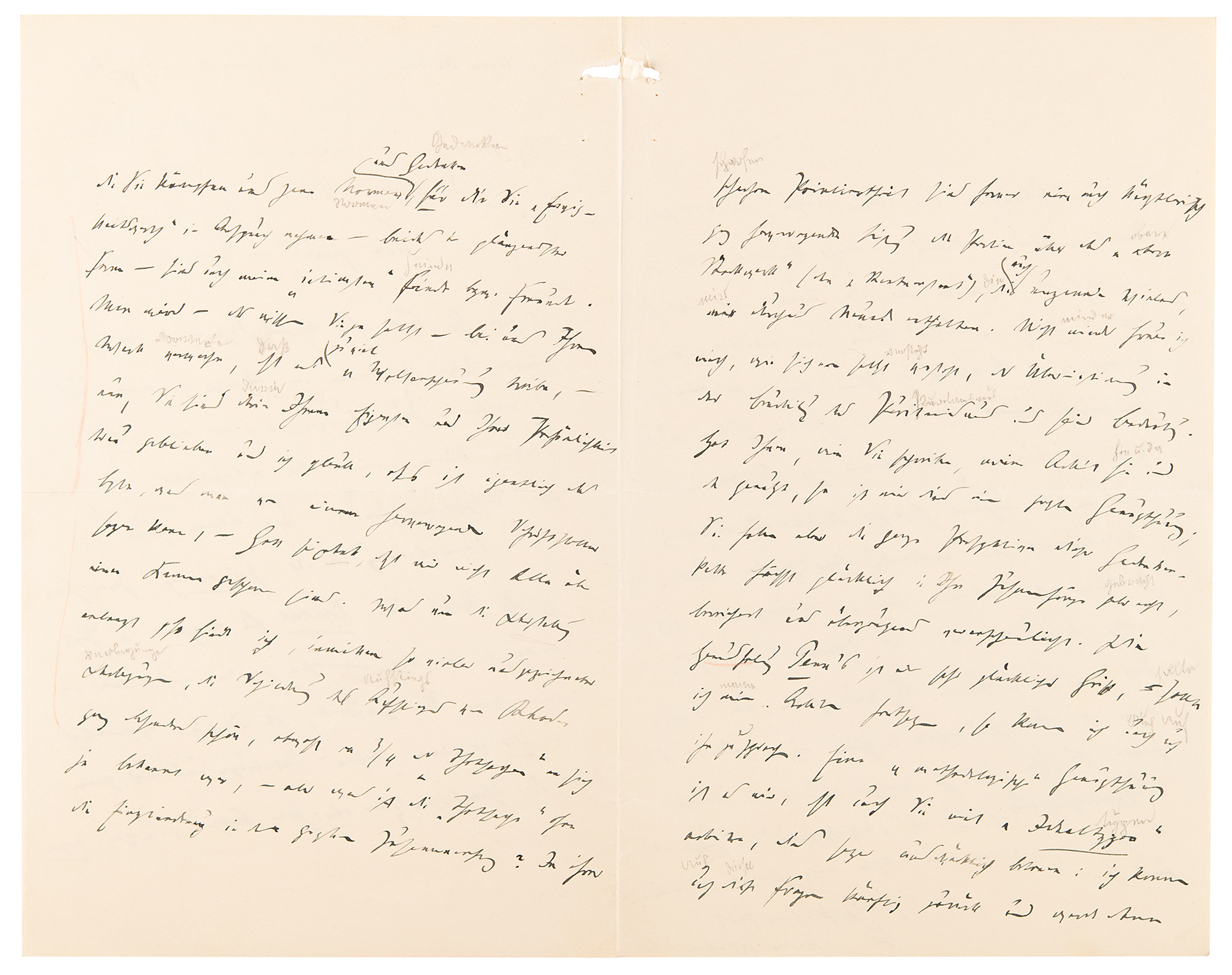
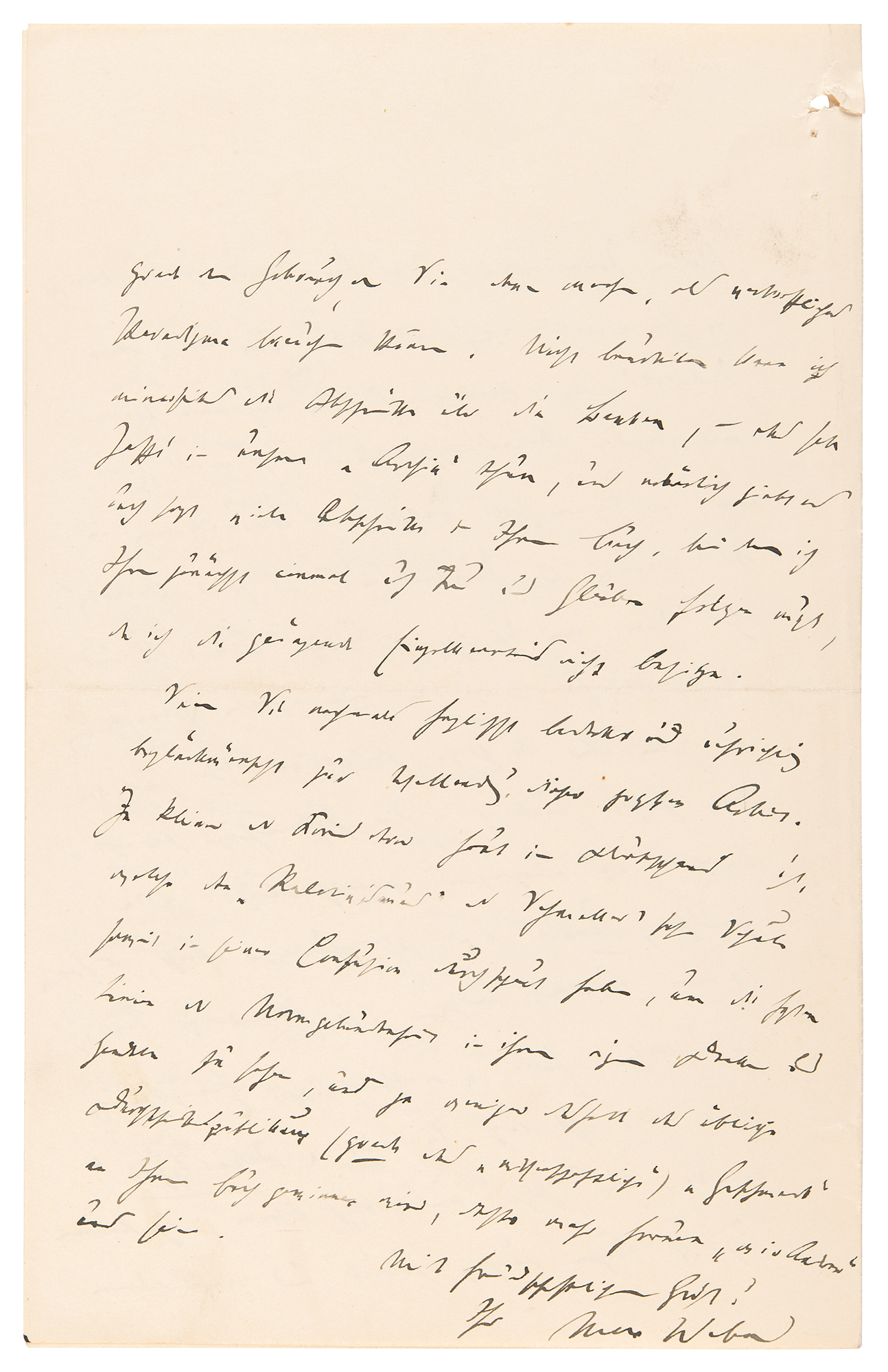
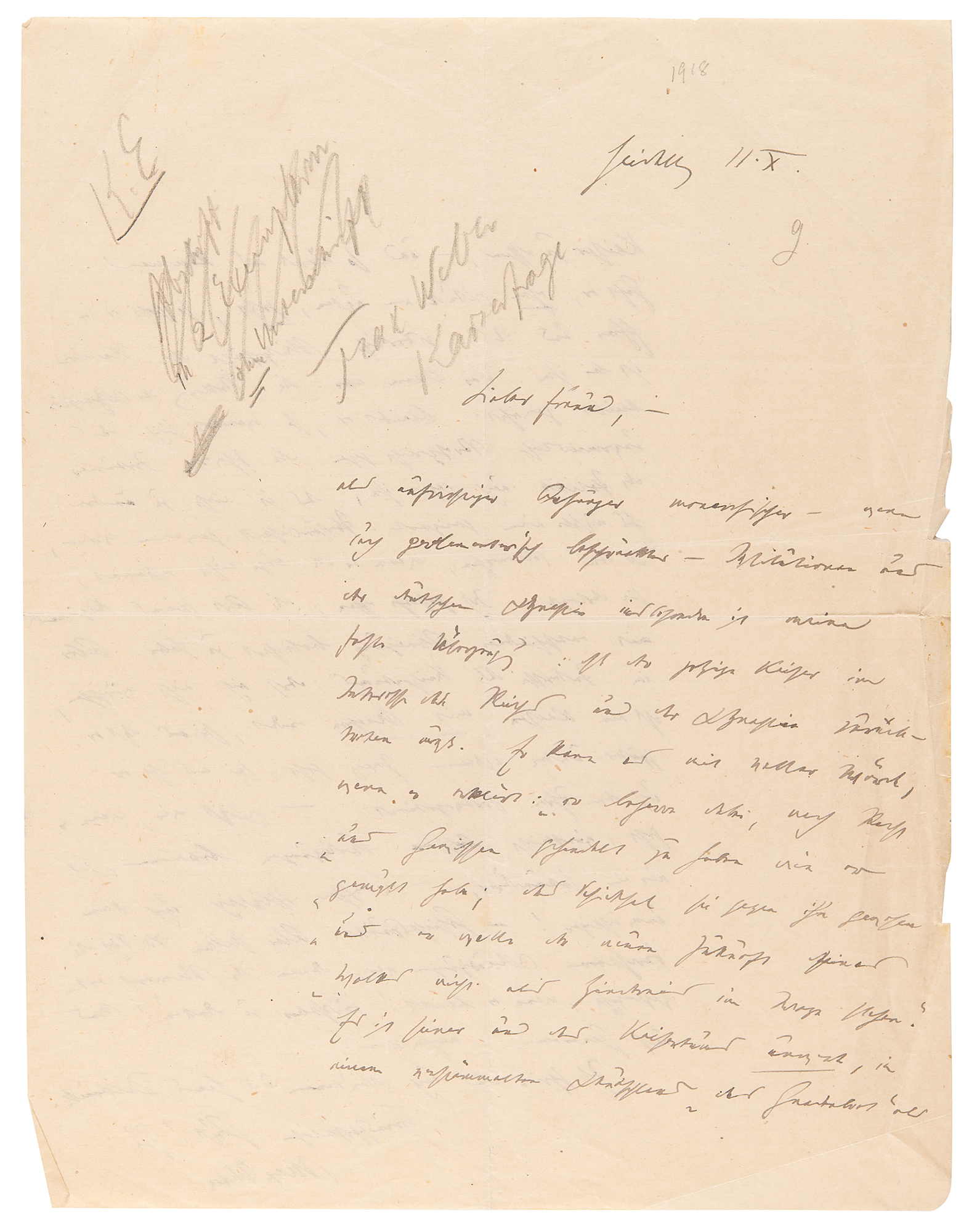
German sociologist, historian, jurist, and political economist (1864–1920) who was one of the central figures in the development of sociology. Archive of five ALSs in German, signed "Max Weber," totaling 15 pages on 9 sheets, 4.5 x 7 to 8.5 x 11, dated from 1900 to 1919. Extensive correspondence with the economist and politician Gerhard von Schulze-Gaevernitz (1864–1943), spanning about 18 years of German history. In these letters, Weber comments, among other things, on party congresses and border blockades, on Schulze-Gaevernitz’s 1906 publication British Imperialism and English Free Trade at the Beginning of the Twentieth Century, and, in the autumn of the final year of the war in 1918, on the question of Emperor Wilhelm II remaining as German Kaiser. In this significant letter, Weber writes (translated): "As a sincere supporter of monarchical—though constitutionally limited—institutions, and of the German dynasty in particular, I am firmly convinced that the present Kaiser must abdicate in the interest of the Reich and the dynasty. He can do so with full dignity if he declares: ‘He has acted according to his duty and conscience; fate has turned against him, and he does not wish to stand in the way of a new future for his people.’
It is unworthy of him and the institution of the Kaisership to remain as emperor in a mutilated Germany, surviving on ‘charity’—and that is what will happen. If he steps down now, voluntarily and without external pressure, he leaves with honor, and the chivalrous sympathy of the nation is with him. Most importantly, the position of the dynasty remains intact.
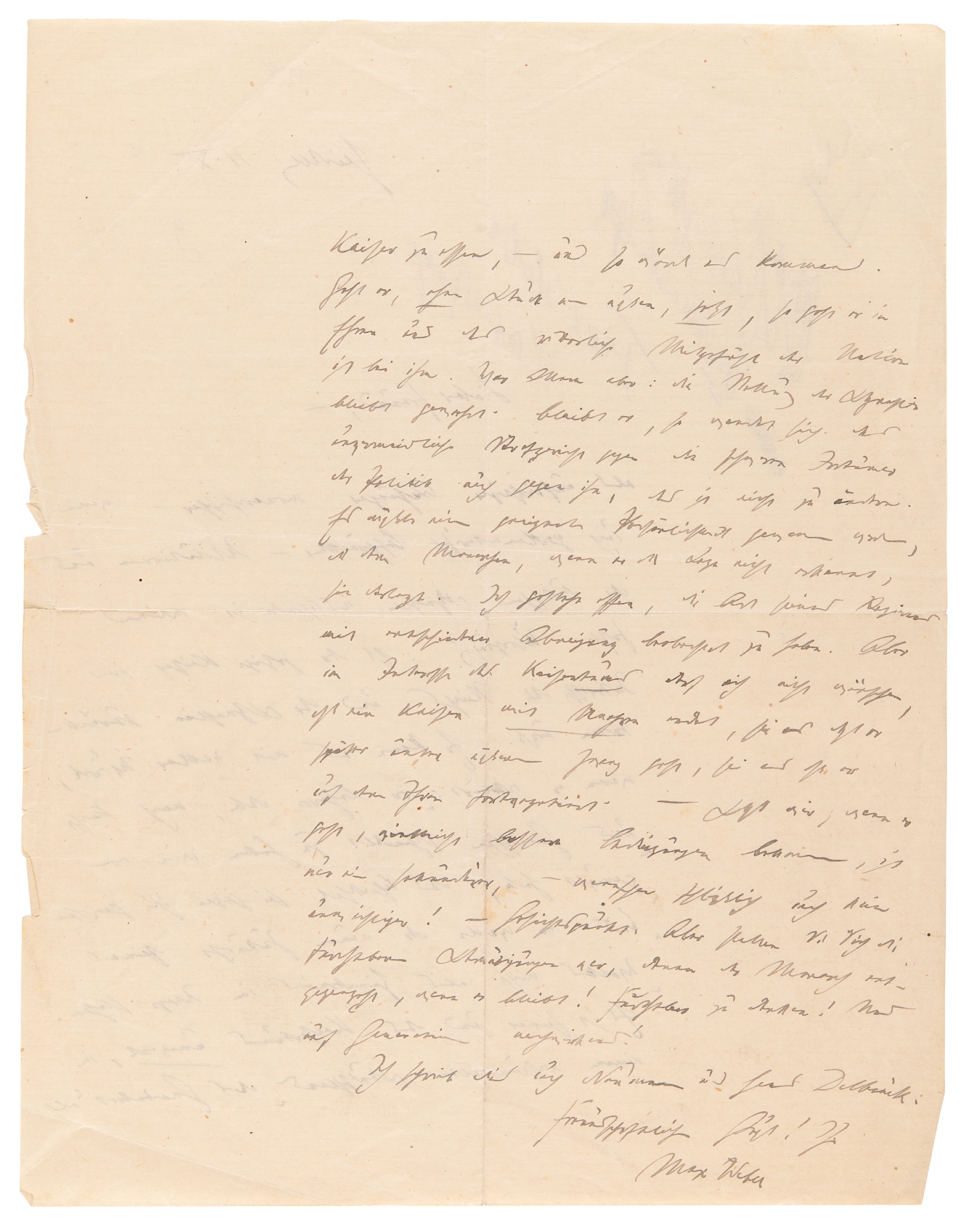
If he stays, the inevitable reckoning for the severe errors of policy will also fall upon him—this cannot be avoided. A suitable person must be found to explain the situation to the monarch, should he fail to recognize it himself.
I confess openly, I have watched his style of governance with resolute disapproval. But in the interest of the Kaisership, I cannot wish for an emperor to end in dishonor, whether he is later forced to leave under external pressure, or whether he continues to vegetate on the throne.
That, should he abdicate, we might obtain better terms, is only a secondary—though ultimately not insignificant!—consideration. But imagine the dreadful humiliations the monarch will face if he remains! It is terrifying to contemplate! And it will affect generations to come! I have written the same to Neumann and Hans Delbrück." In overall very good to fine condition.

