


Sold For $40,514
*Includes Buyers Premium
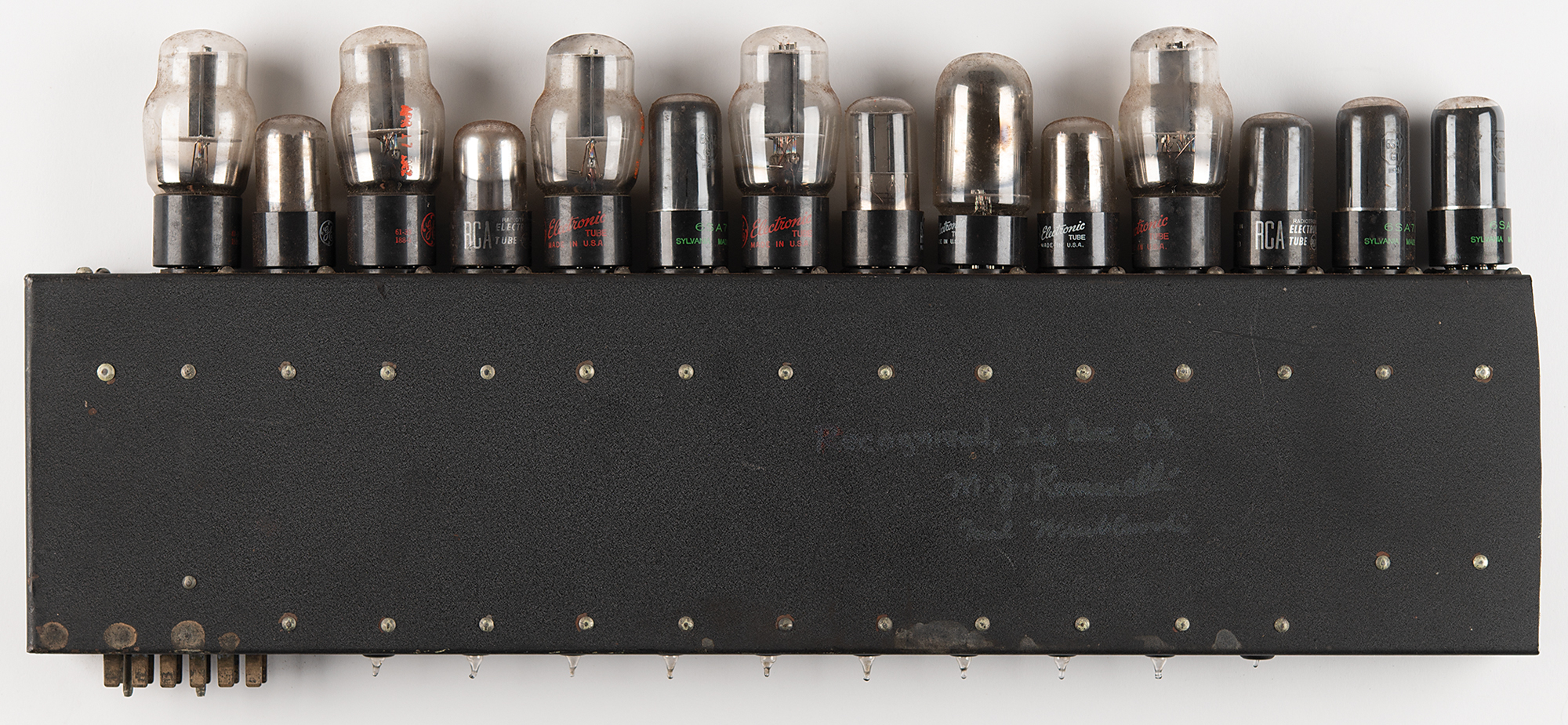
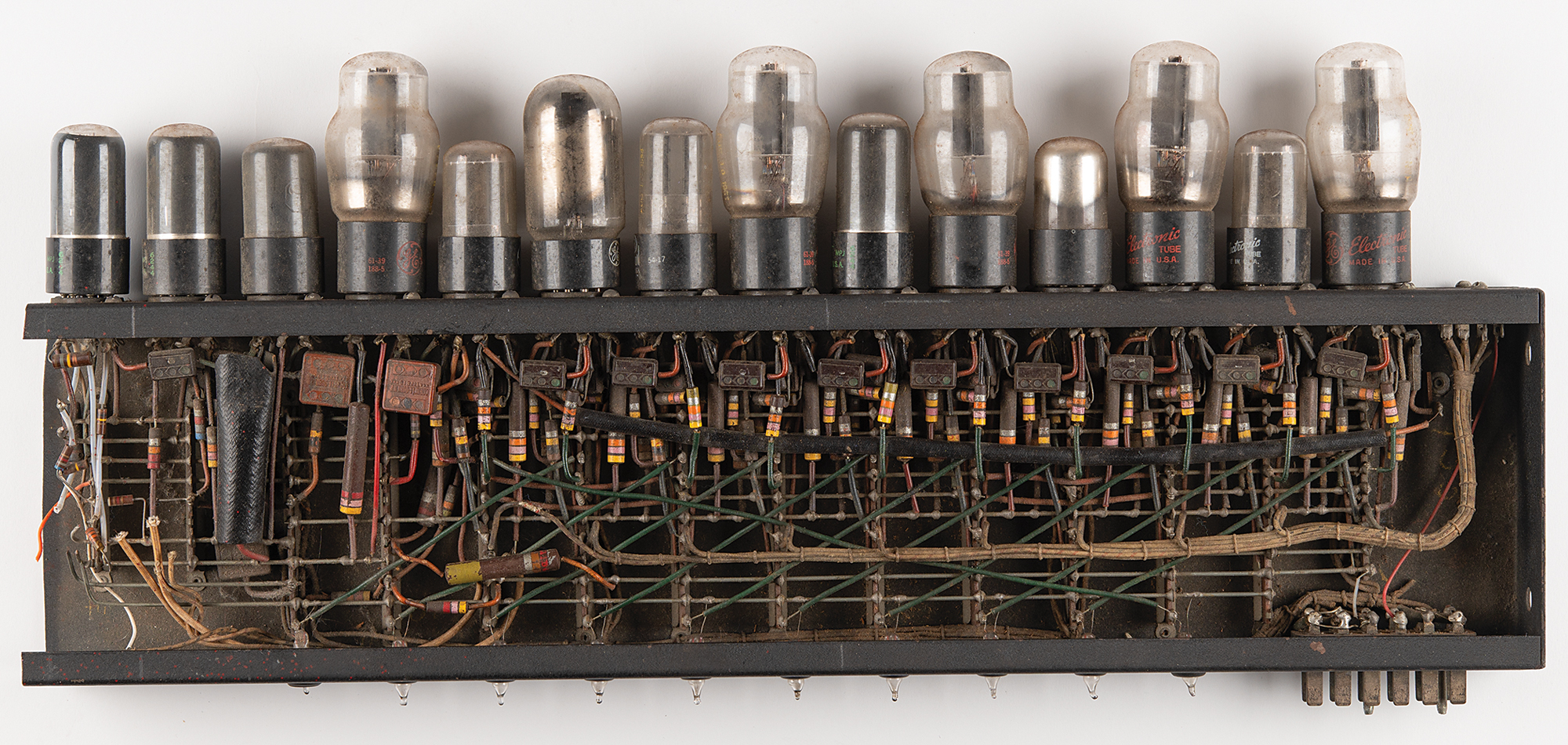
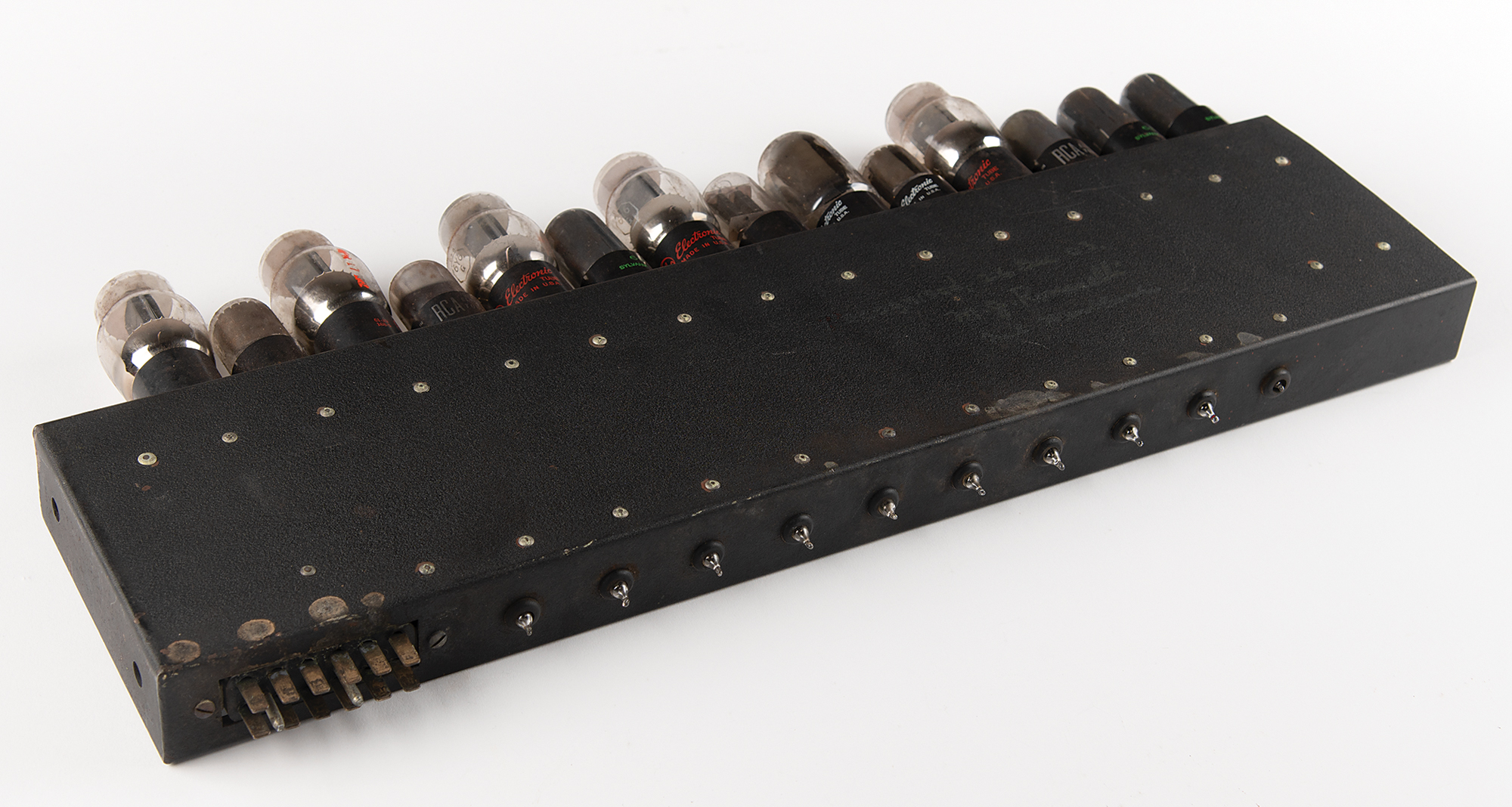
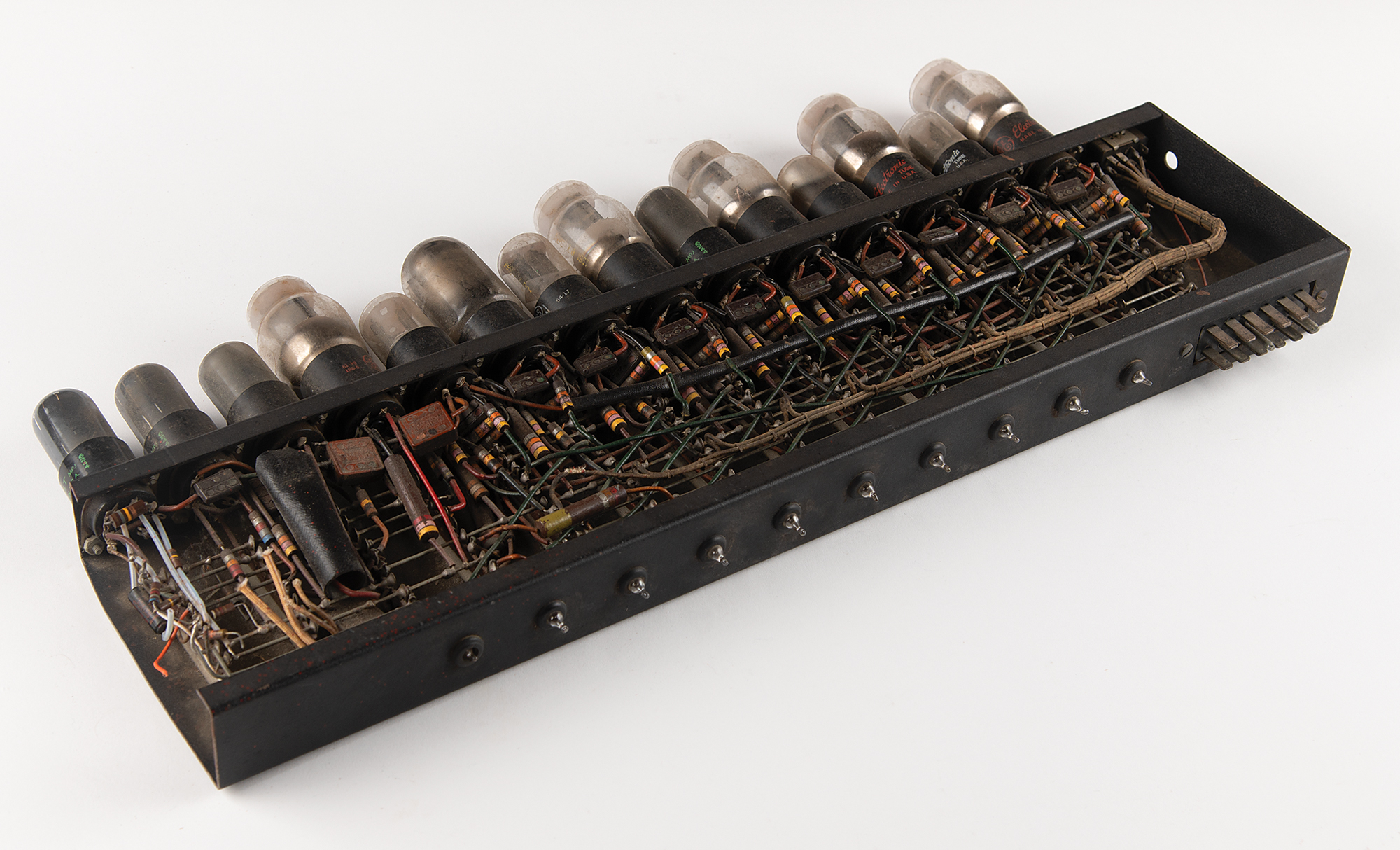
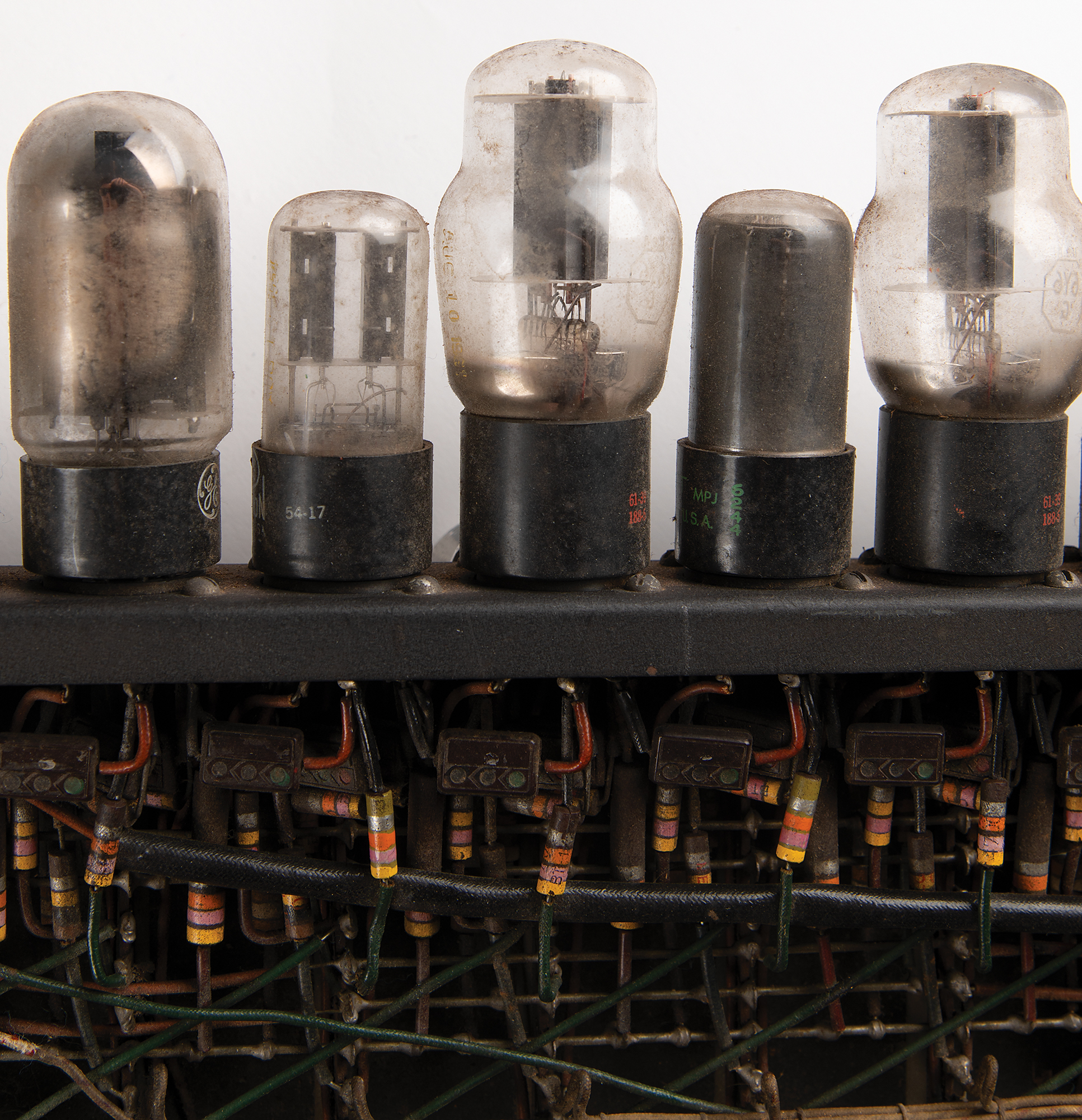
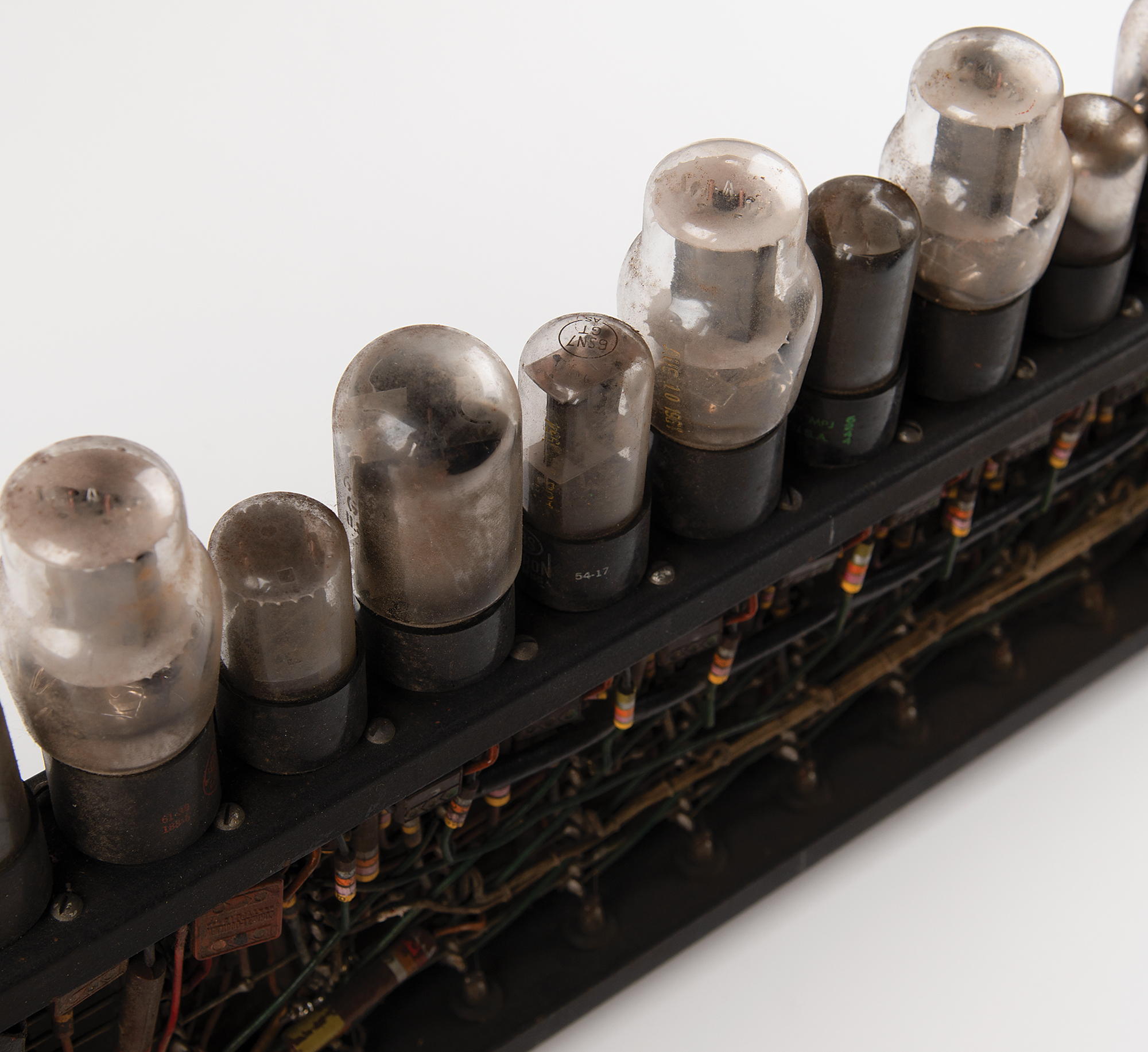
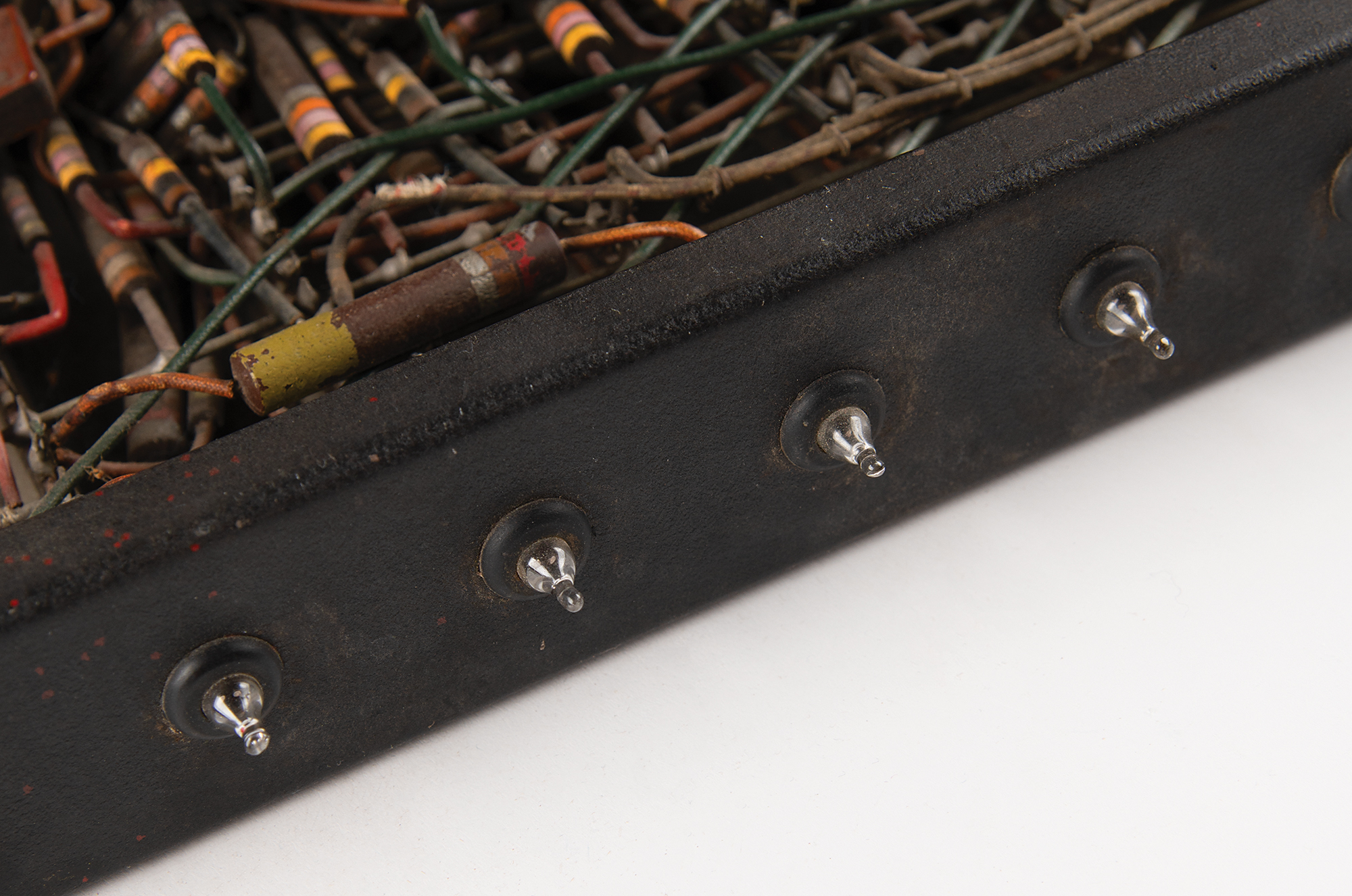
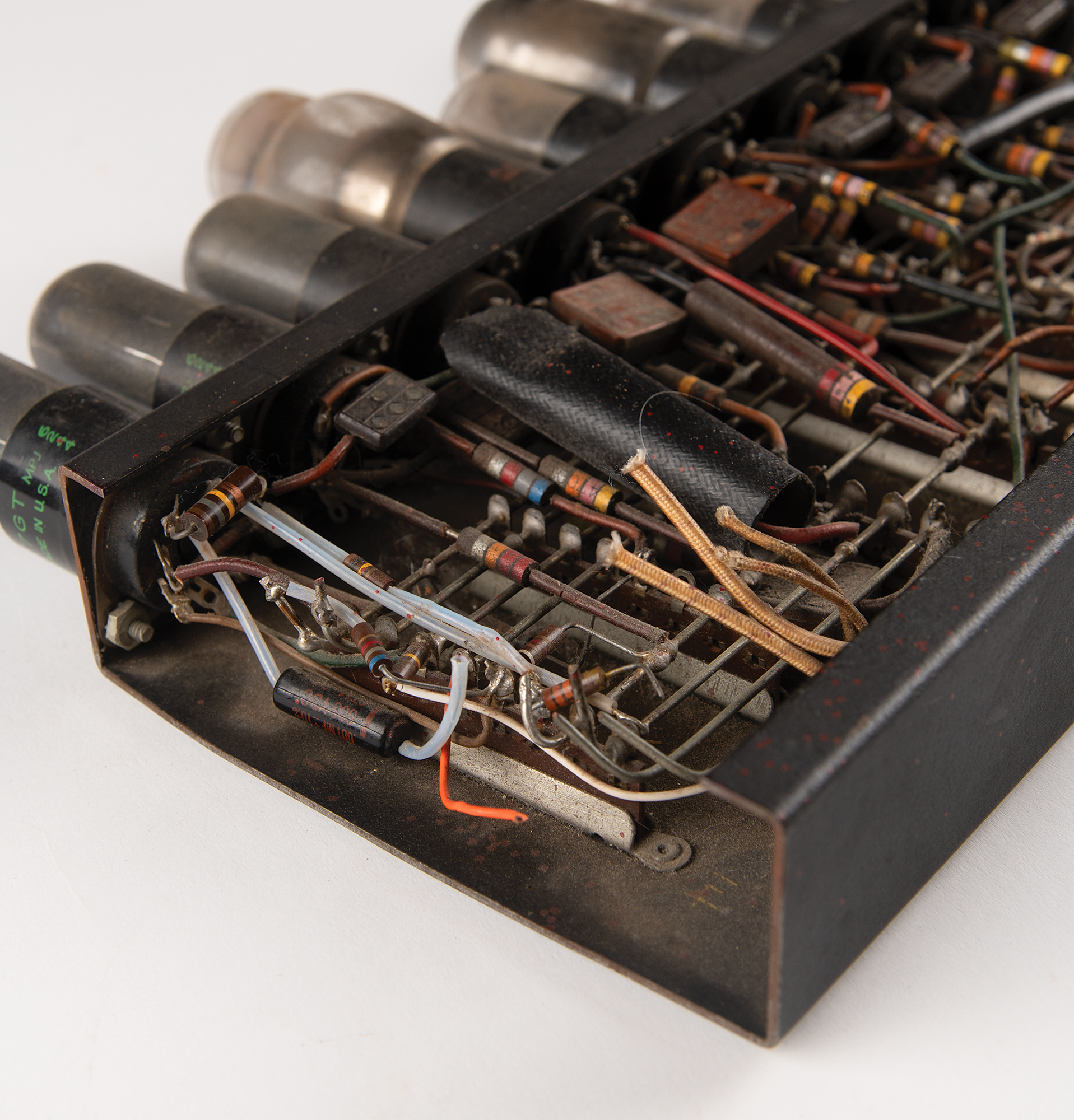
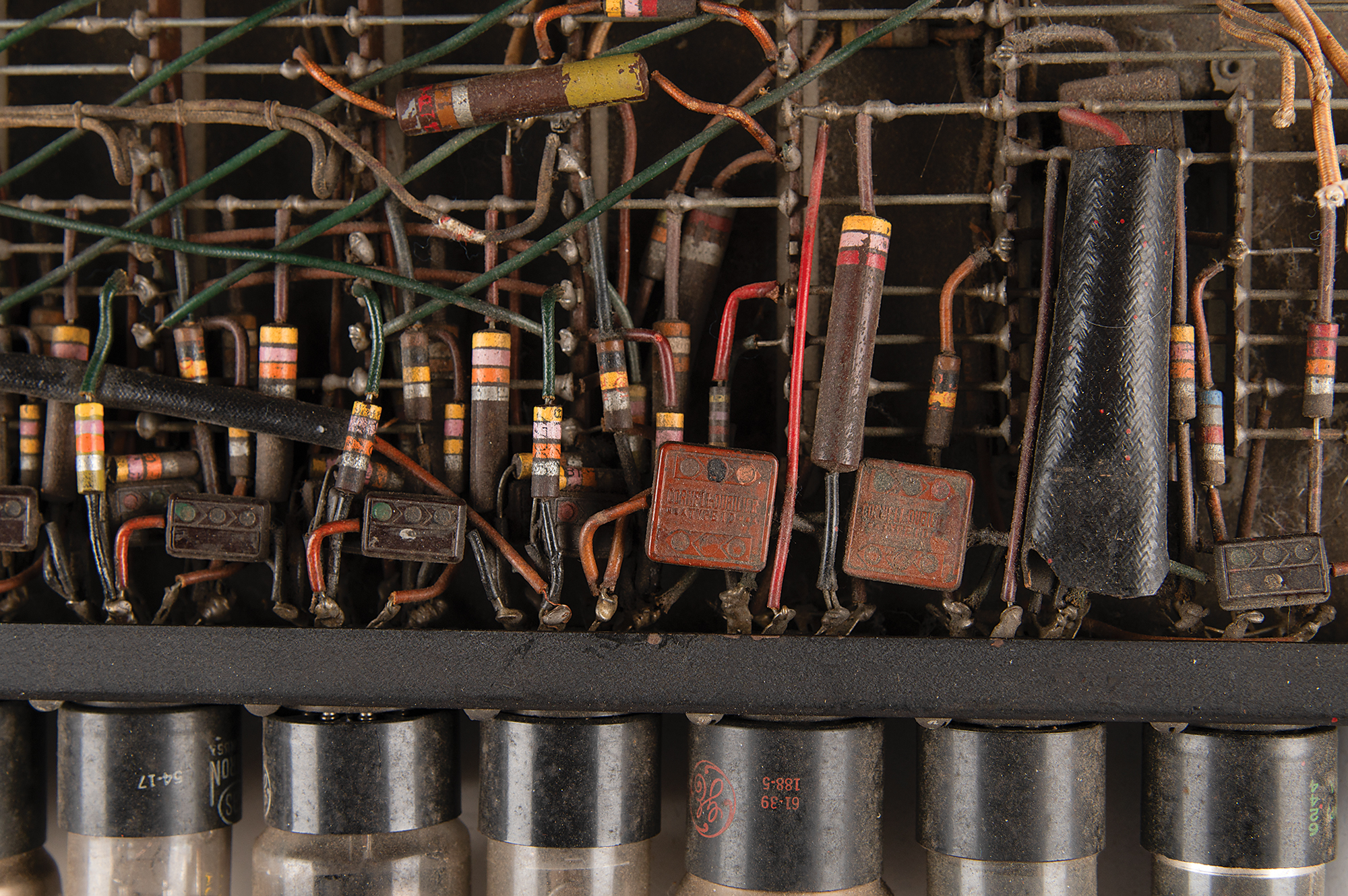
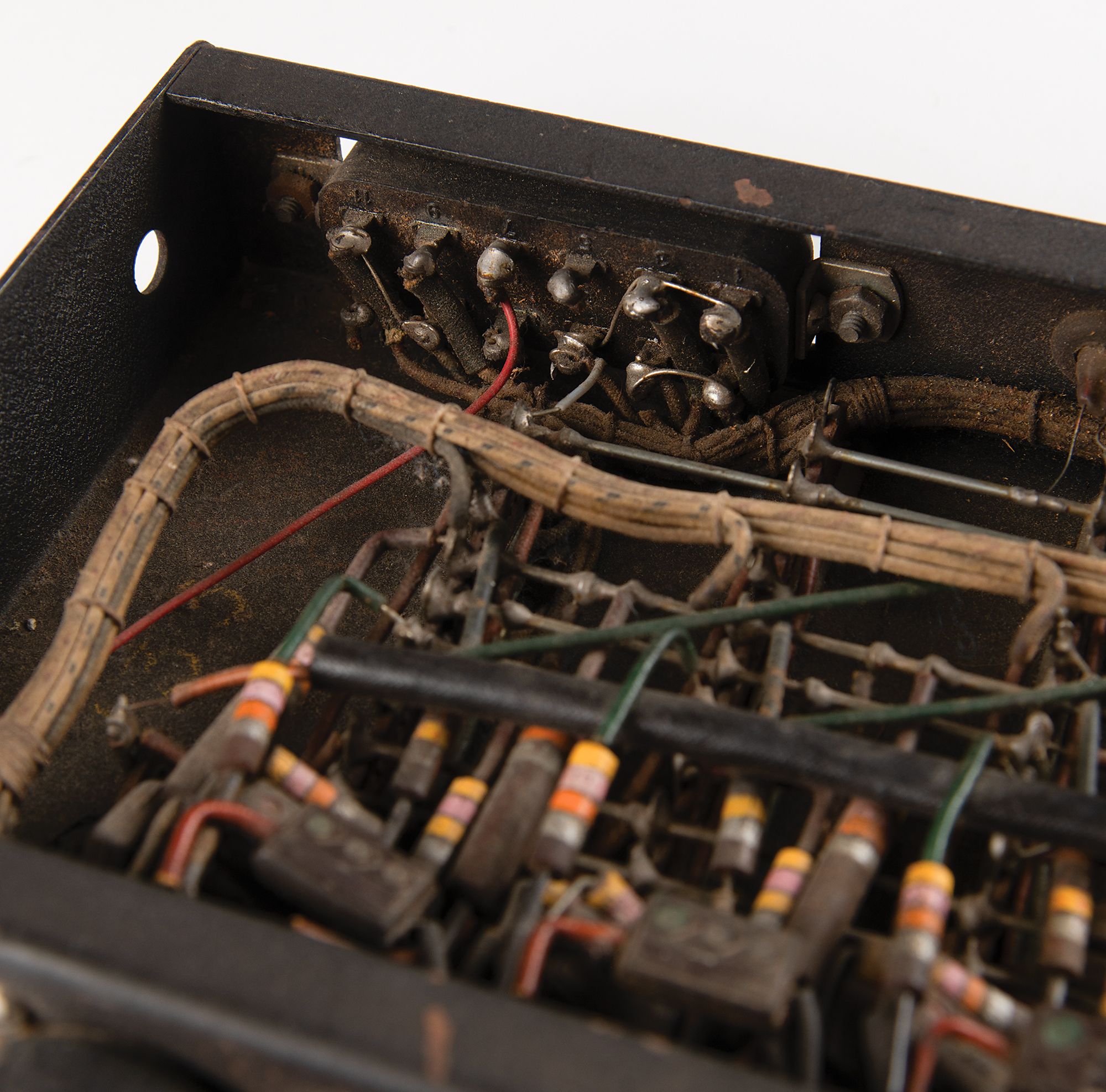
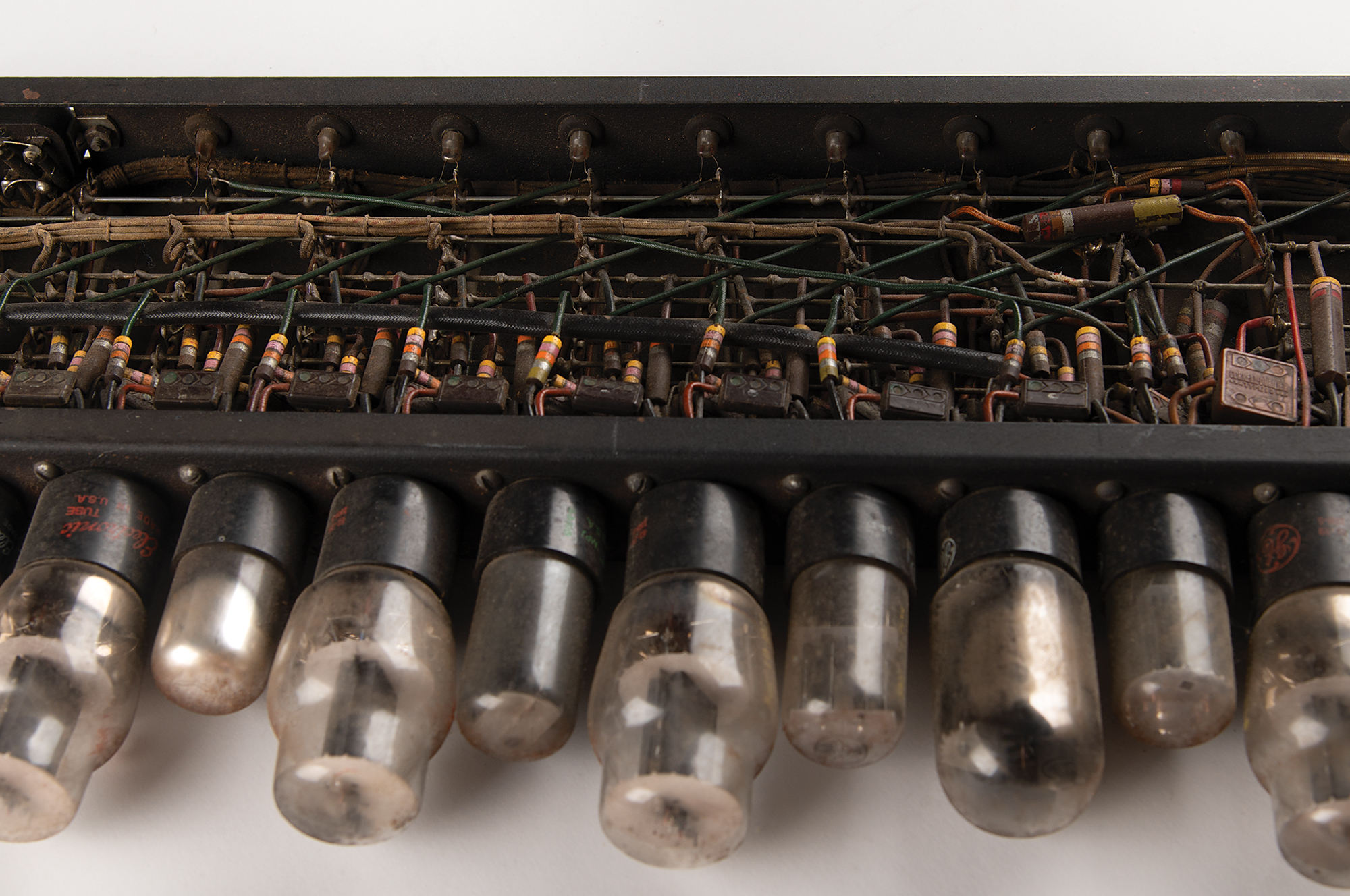
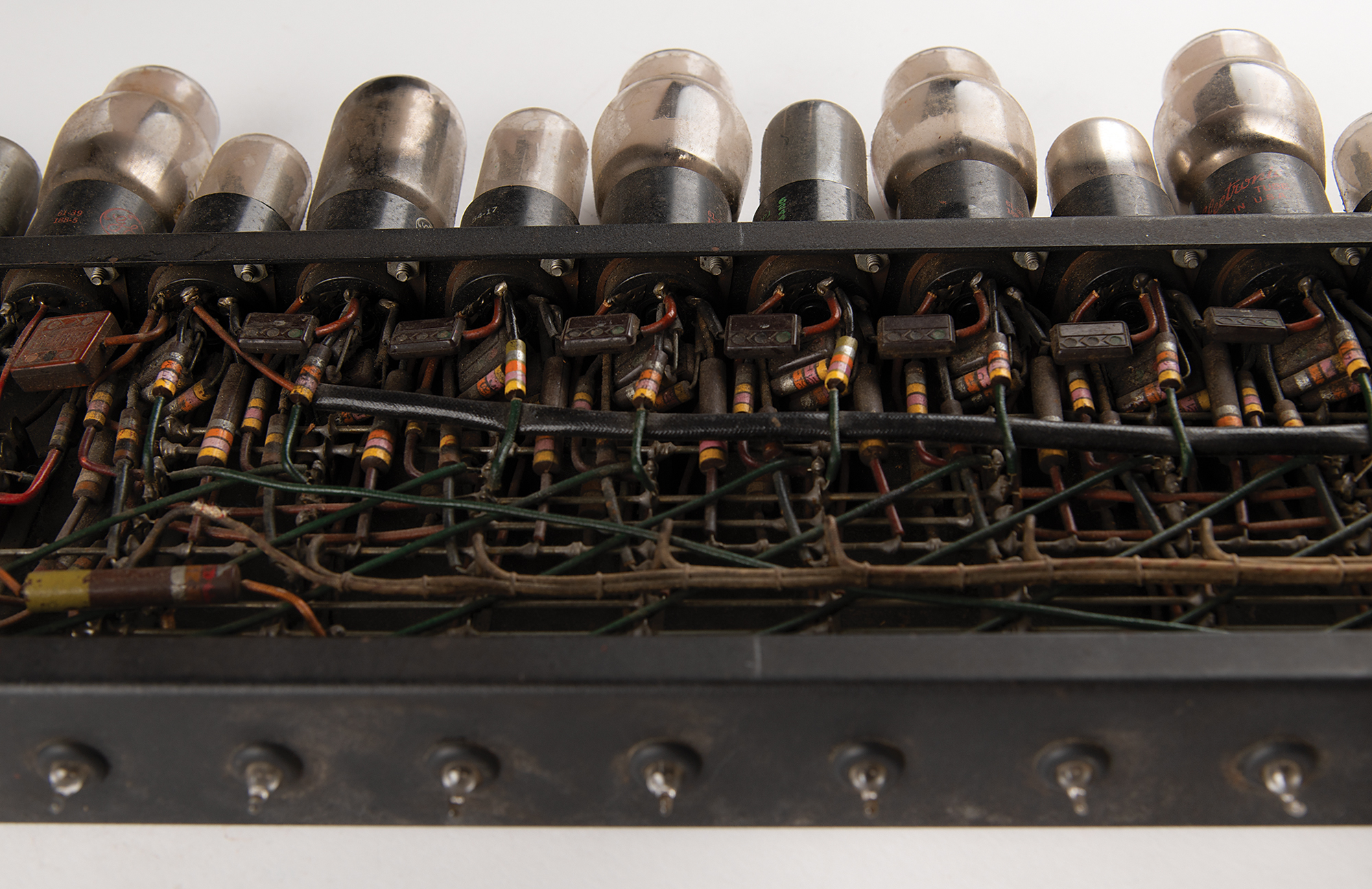
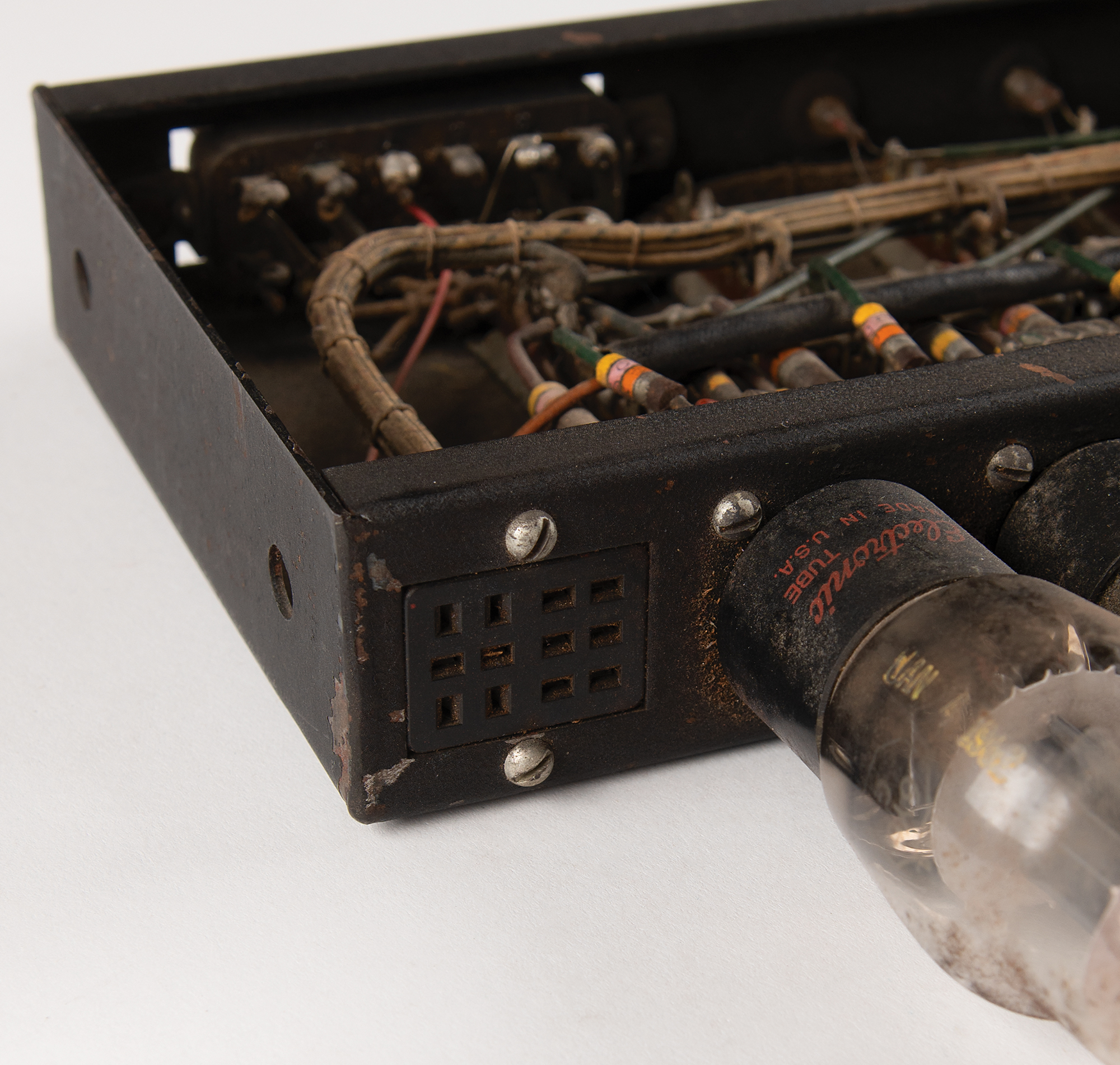
Historical section of a ten-position ‘Decade or Ring Counter’ from the ENIAC (Electronic Numerical Integrator and Computer), the first programmable, electronic, general-purpose digital computer, which was first put to work for practical purposes on December 10, 1945. The counter section, 23˝ x 10˝ x 1.75˝, consists of a pulse former circuit and a ten-stage ring decimal counter, which was used in conjunction with panel switches to allow program transceiver units to repeat control operations. The top section features a total of 14 tubes made by companies like Sylvania, RCA, and General Electric, and the back panel is signed and certified in faded felt tip by ENIAC engineer Melvin Wrublewski and Computer Division Chief Michael J. Romanelli, both of the United States Army's Ballistic Research Laboratory (BRL) at the Aberdeen Proving Ground in Aberdeen, Maryland, where the ENIAC was transferred to in 1947. In fine condition.
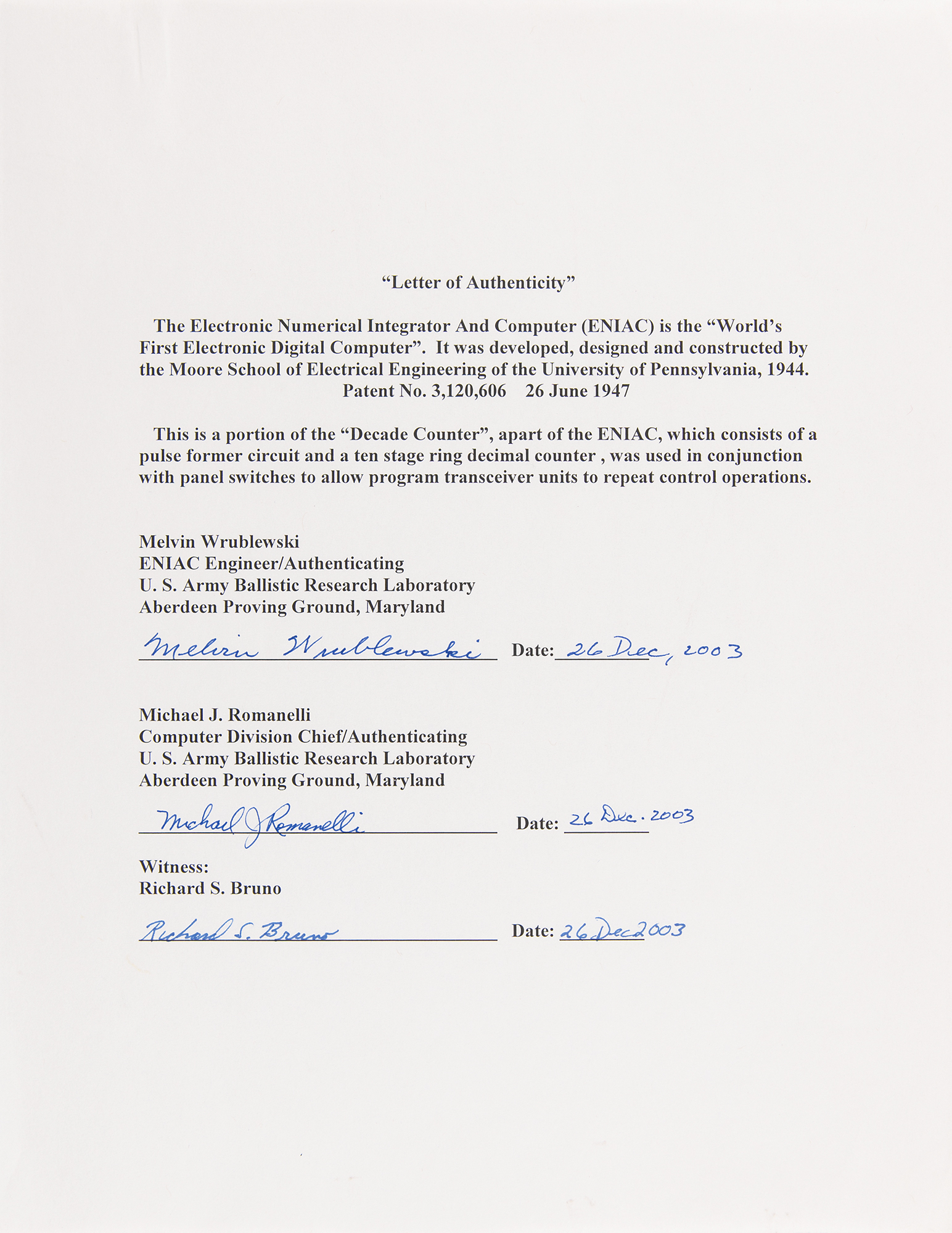
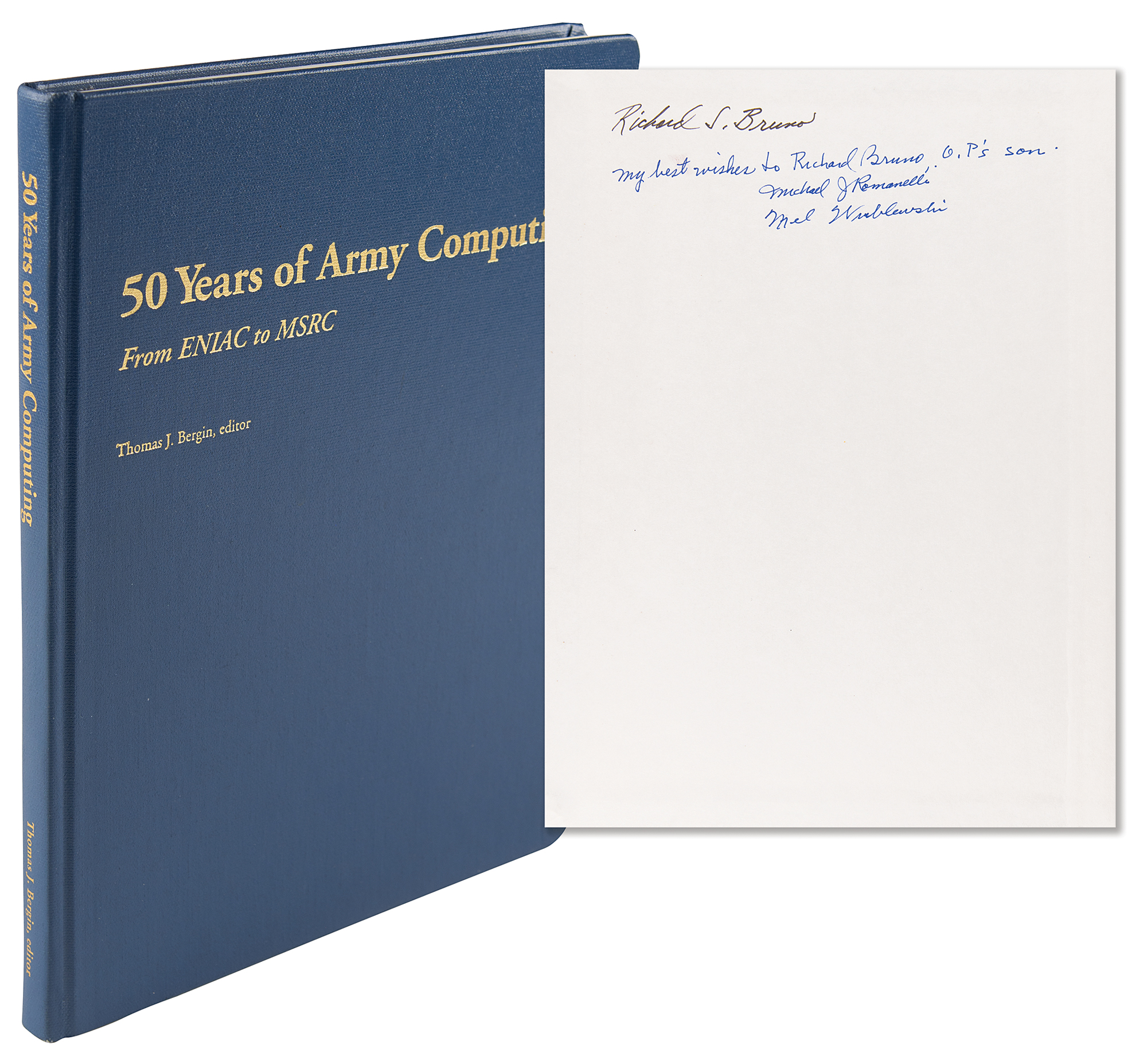
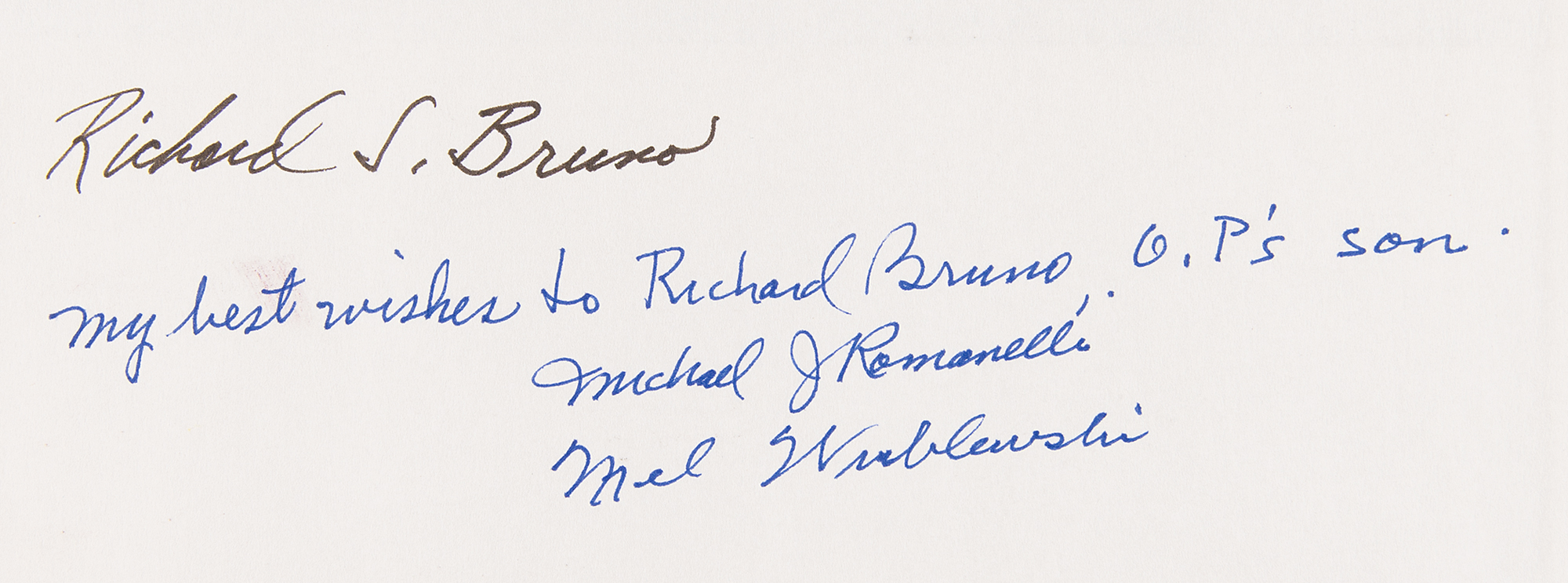
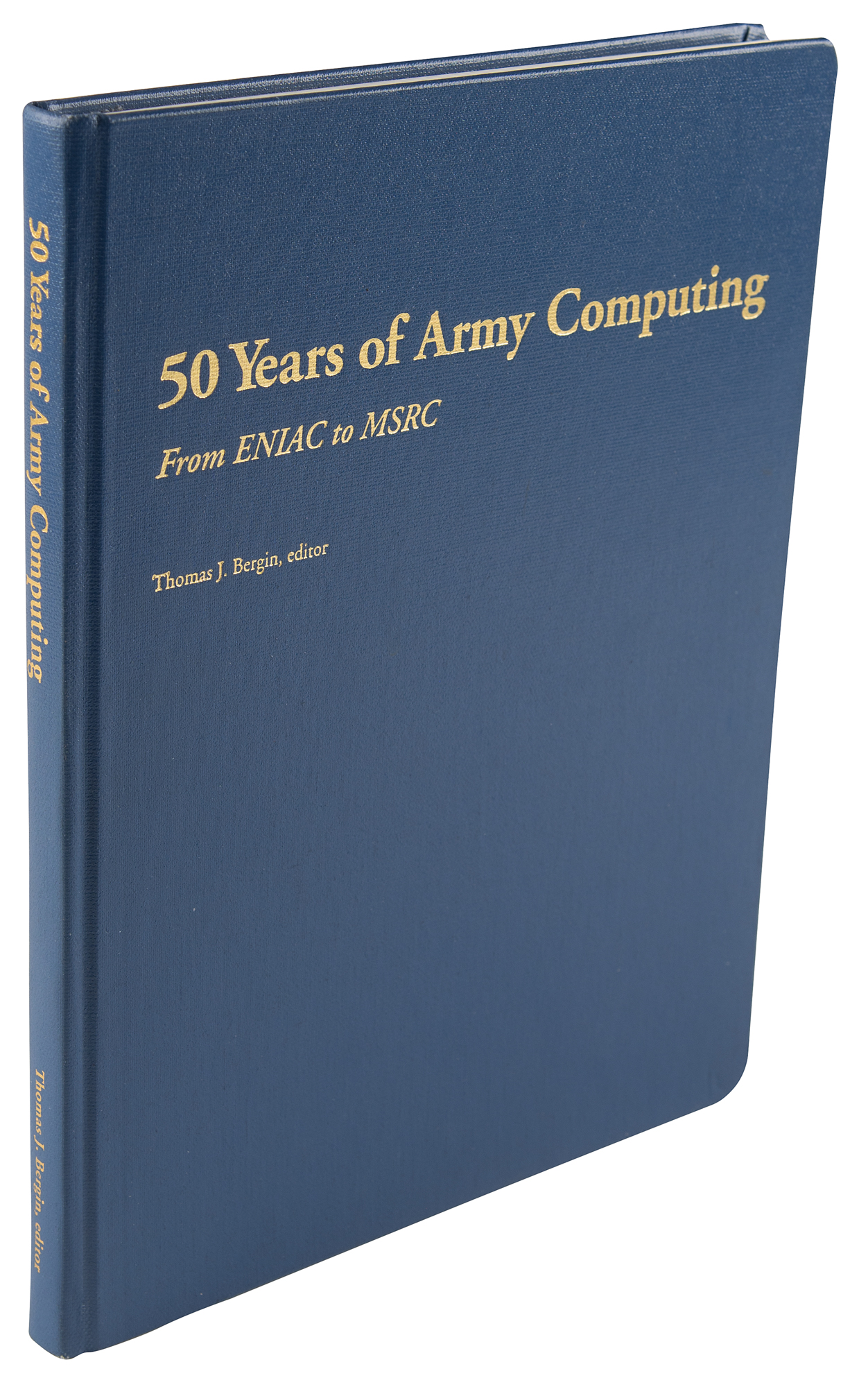
Accompanied by a letter of authenticity signed by Wrublewski, Romanelli, and witness Richard Bruno, and a hardcover copy of the book ‘50 Years of Army Computing: From ENIAC to MSRC,’ edited by Thomas J. Bergin, (September 2000), which is signed on the front pastedown by Wrublewski, Romanelli, and Bruno.
Developed during World War II and designed by John Mauchly and J. Presper Eckert at the University of Pennsylvania's Moore School of Electrical Engineering, the ENIAC was commissioned by the U.S. Army to calculate artillery firing tables and to perform computations on a range of numerical and scientific problems. It was powered up on July 29, 1947, and was in continuous operation until 11:45 p.m. on October 2, 1955, when it was retired in favor of the more efficient EDVAC and ORDVAC computers. During its run, the ENIAC demonstrated the potential of electronic computing with its combination of full, Turing-complete programmability and unprecedented electronic speed. A technological breakthrough, the ENIAC answered myriad complex problems that previously took hours or days, in mere seconds. Marking the shift from mechanical to electronic computing, the ENIAC influenced future machines, enabled the digital revolution, and transformed science, warfare, and society as we know it.

