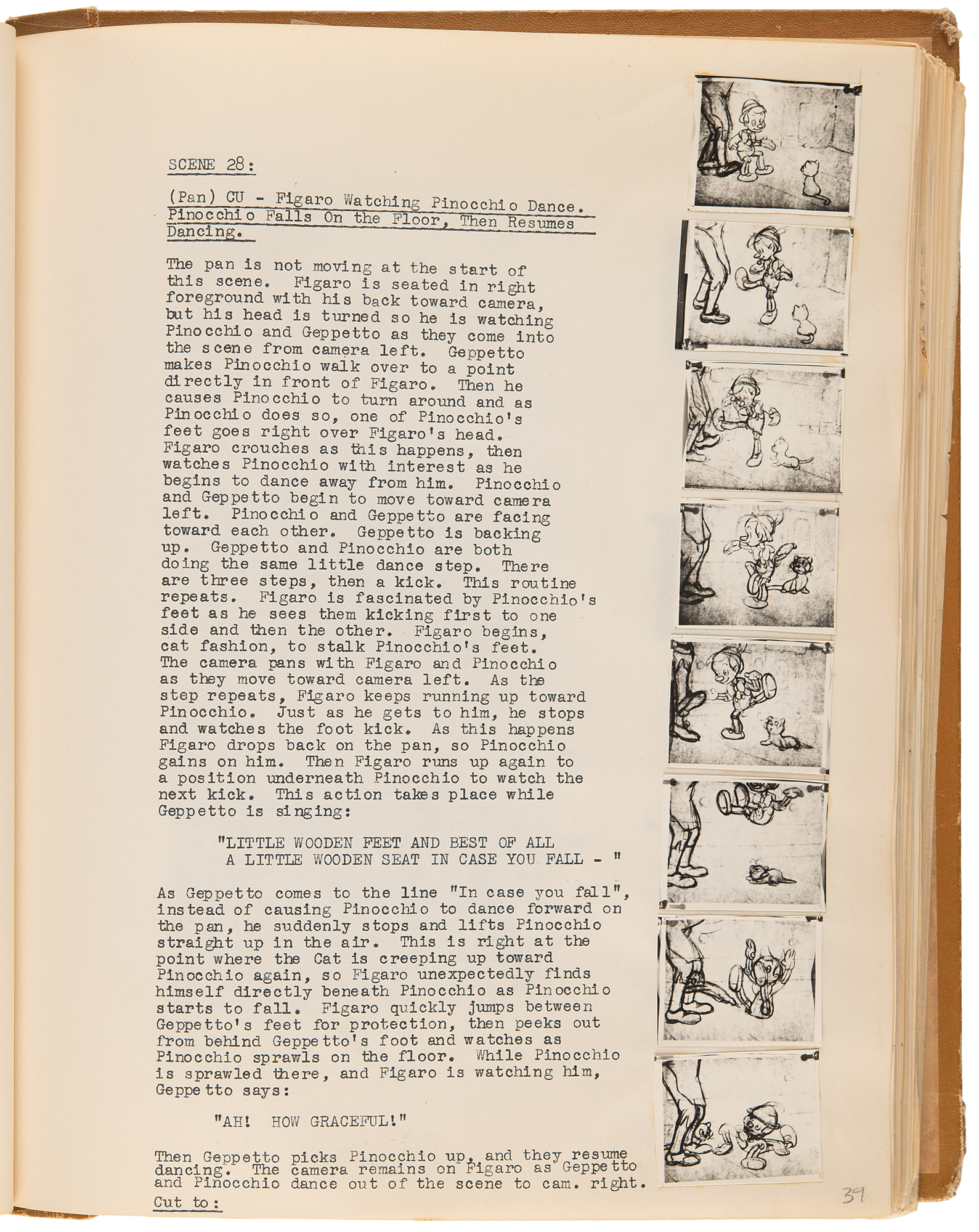
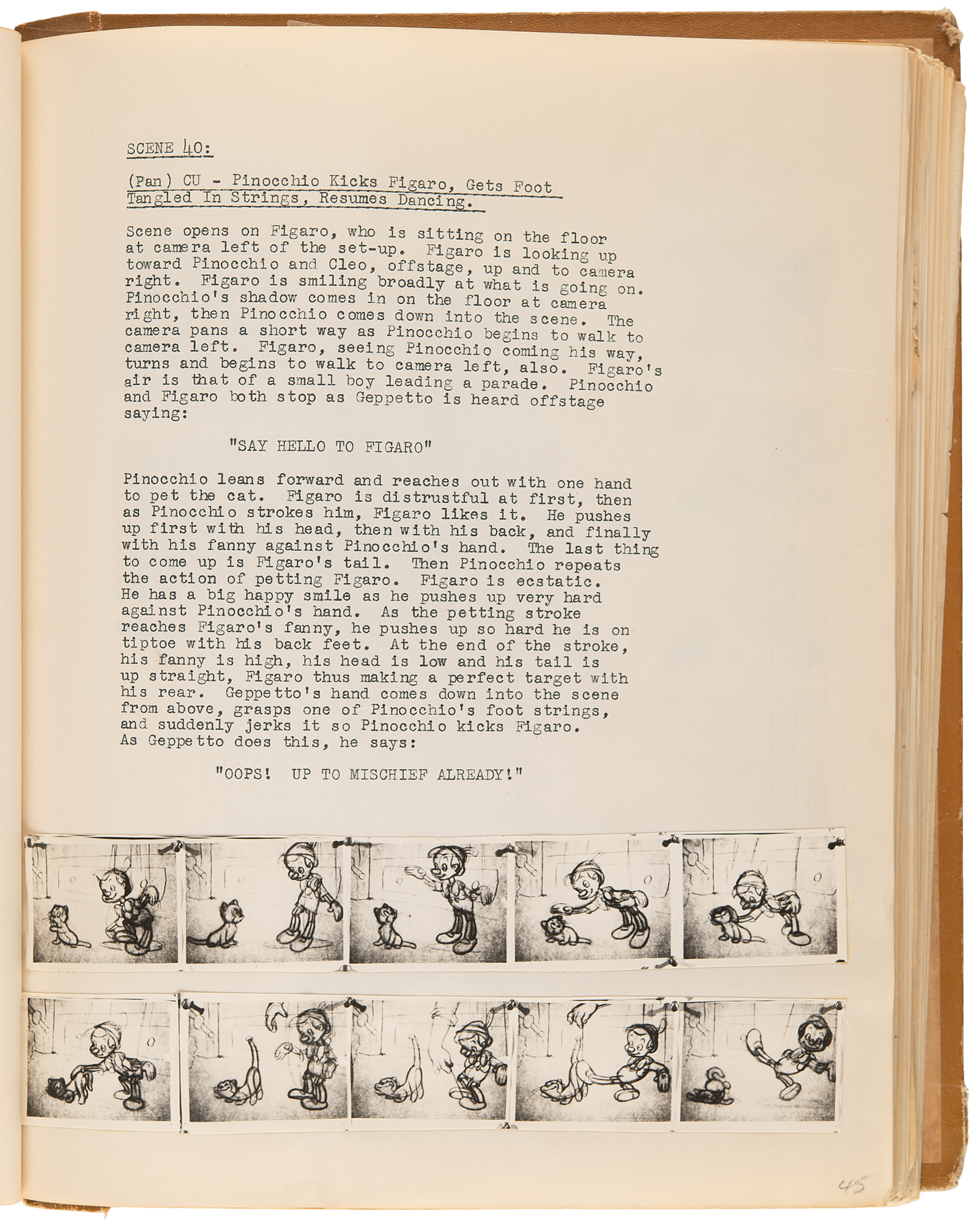
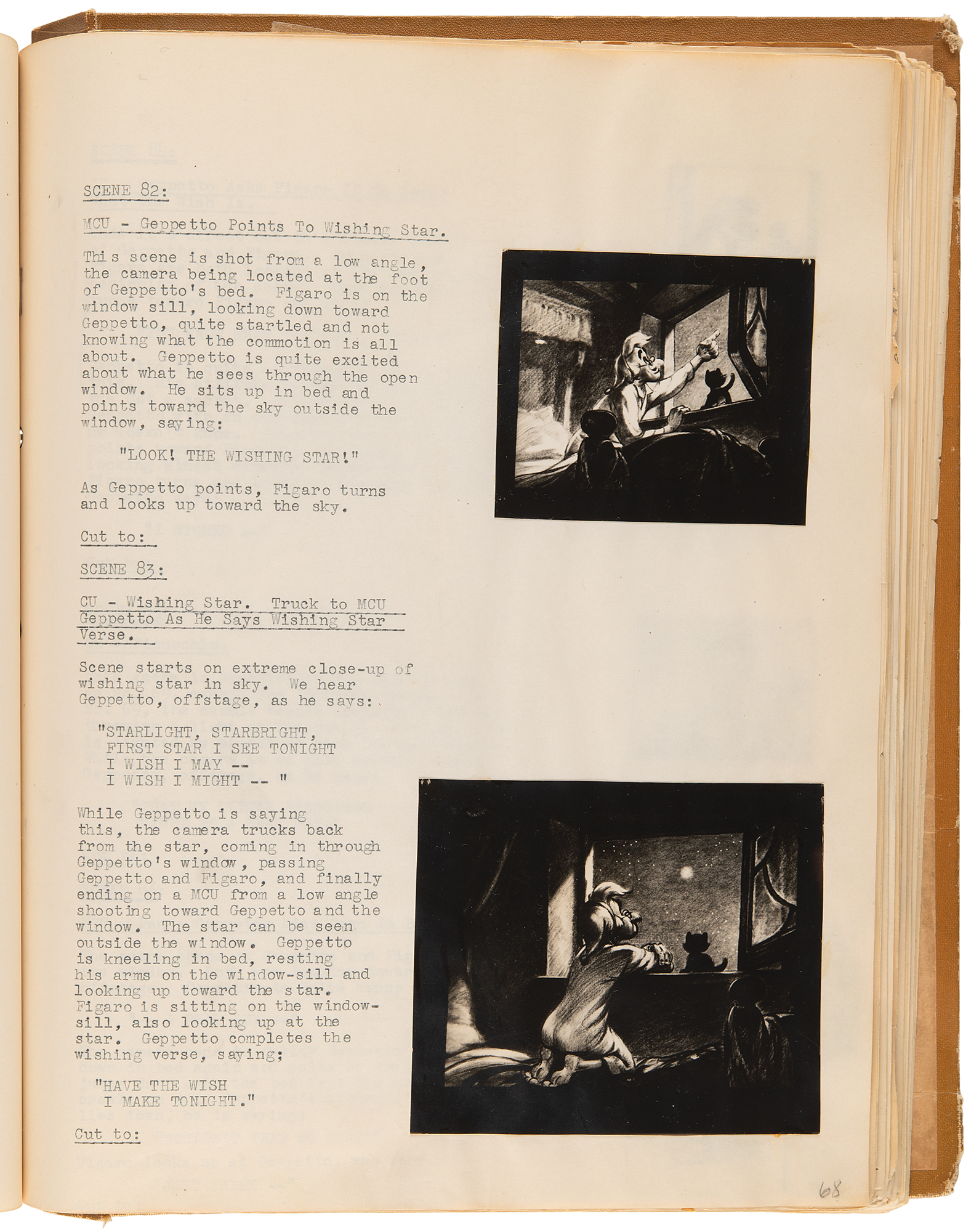
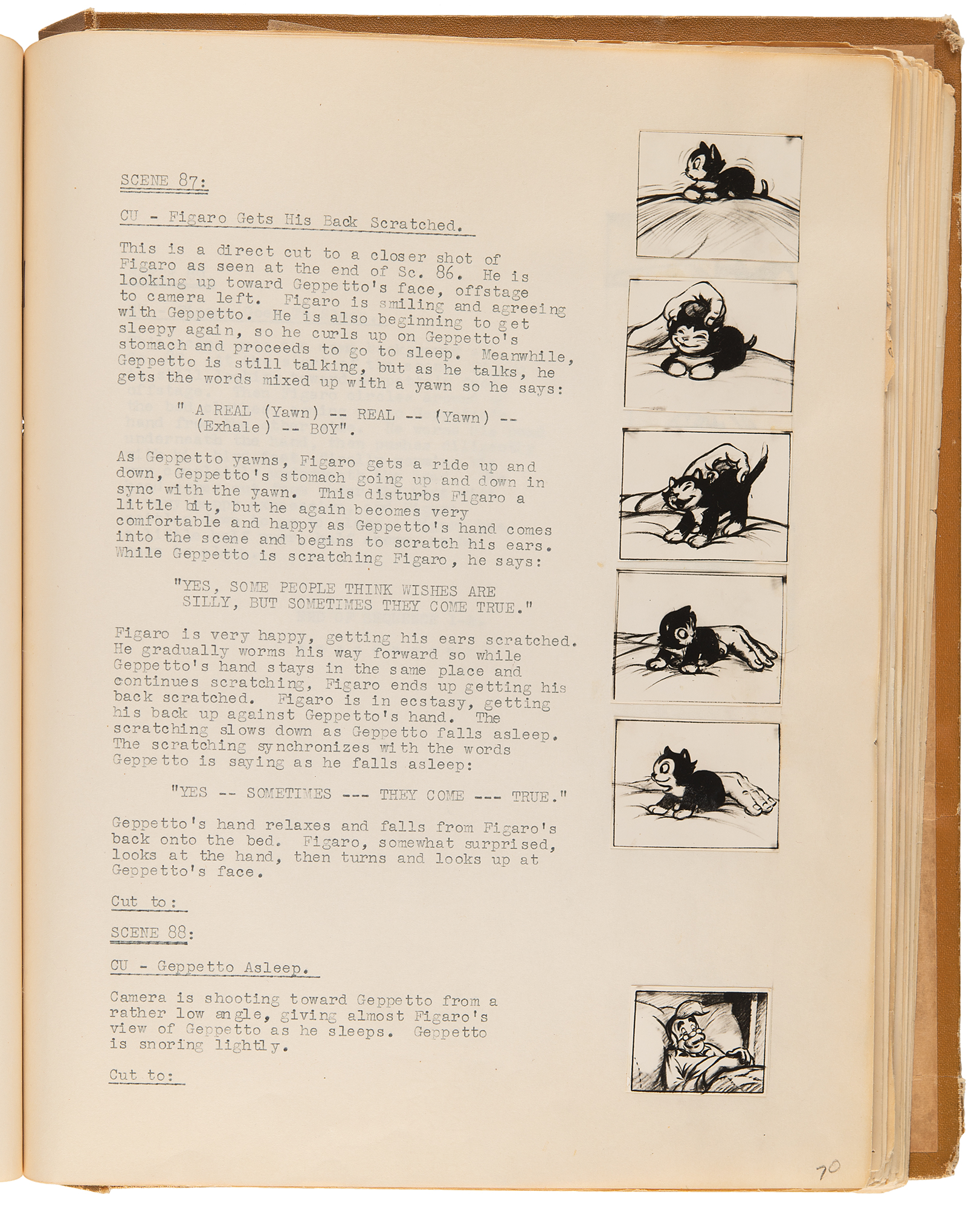
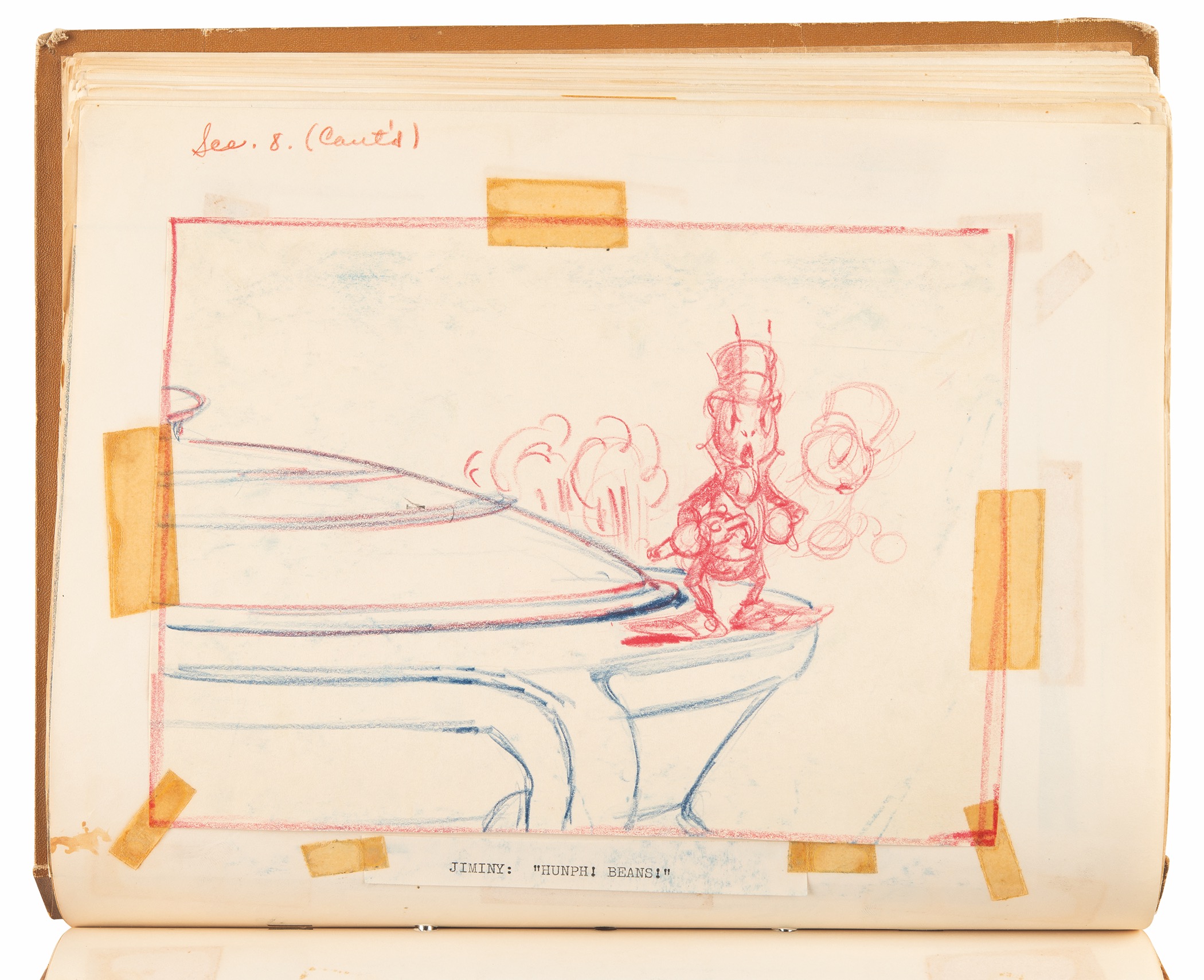
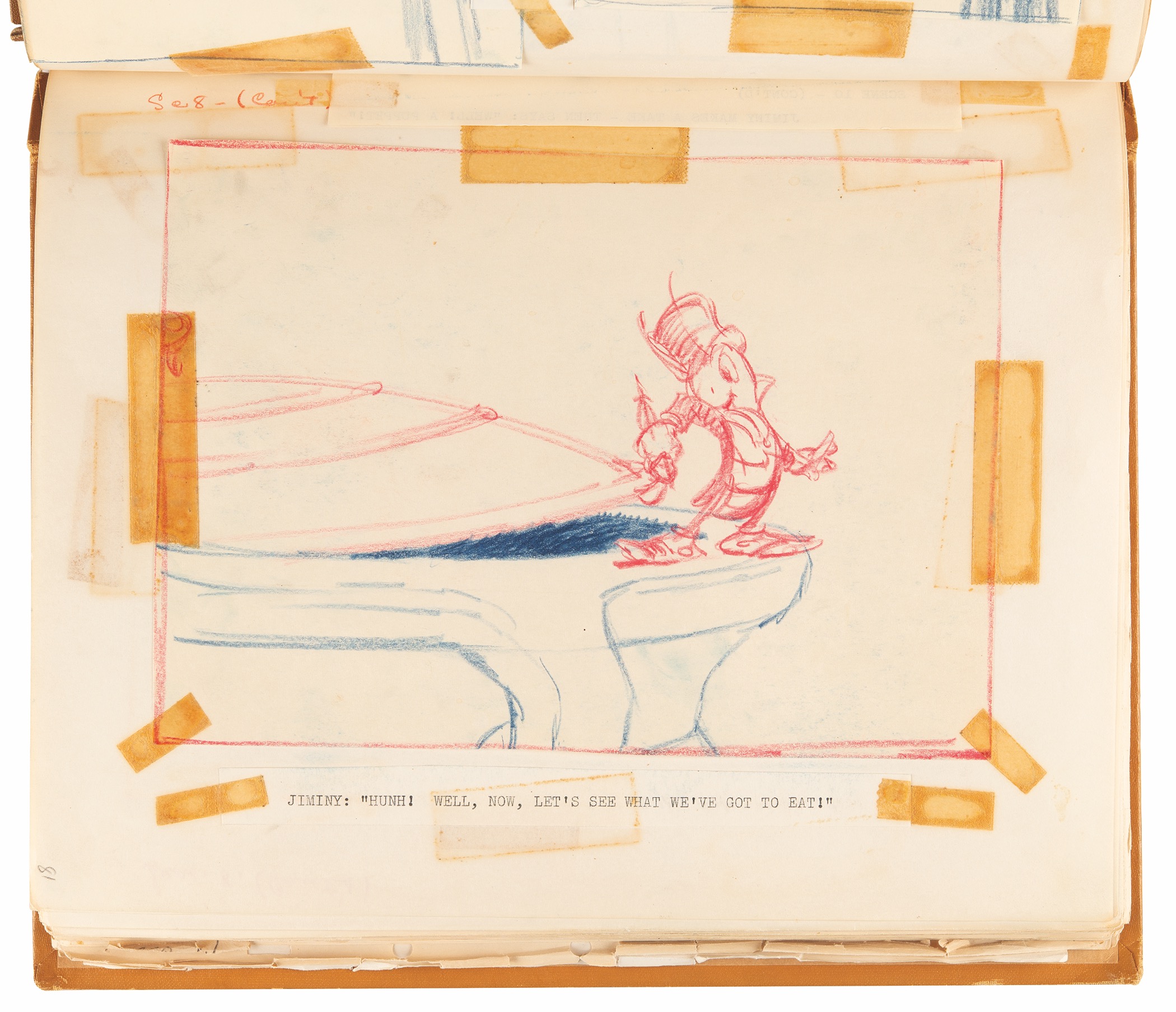
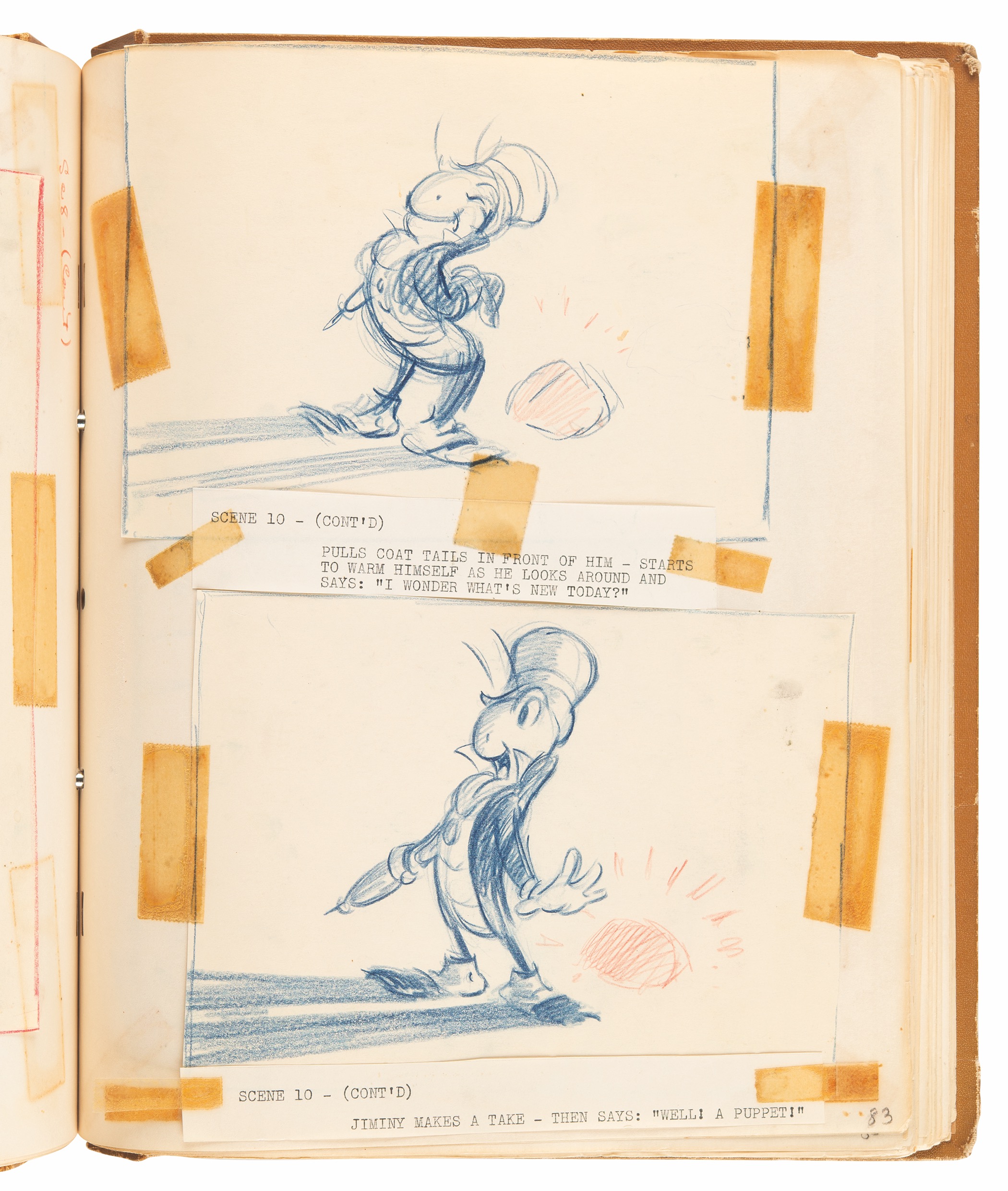
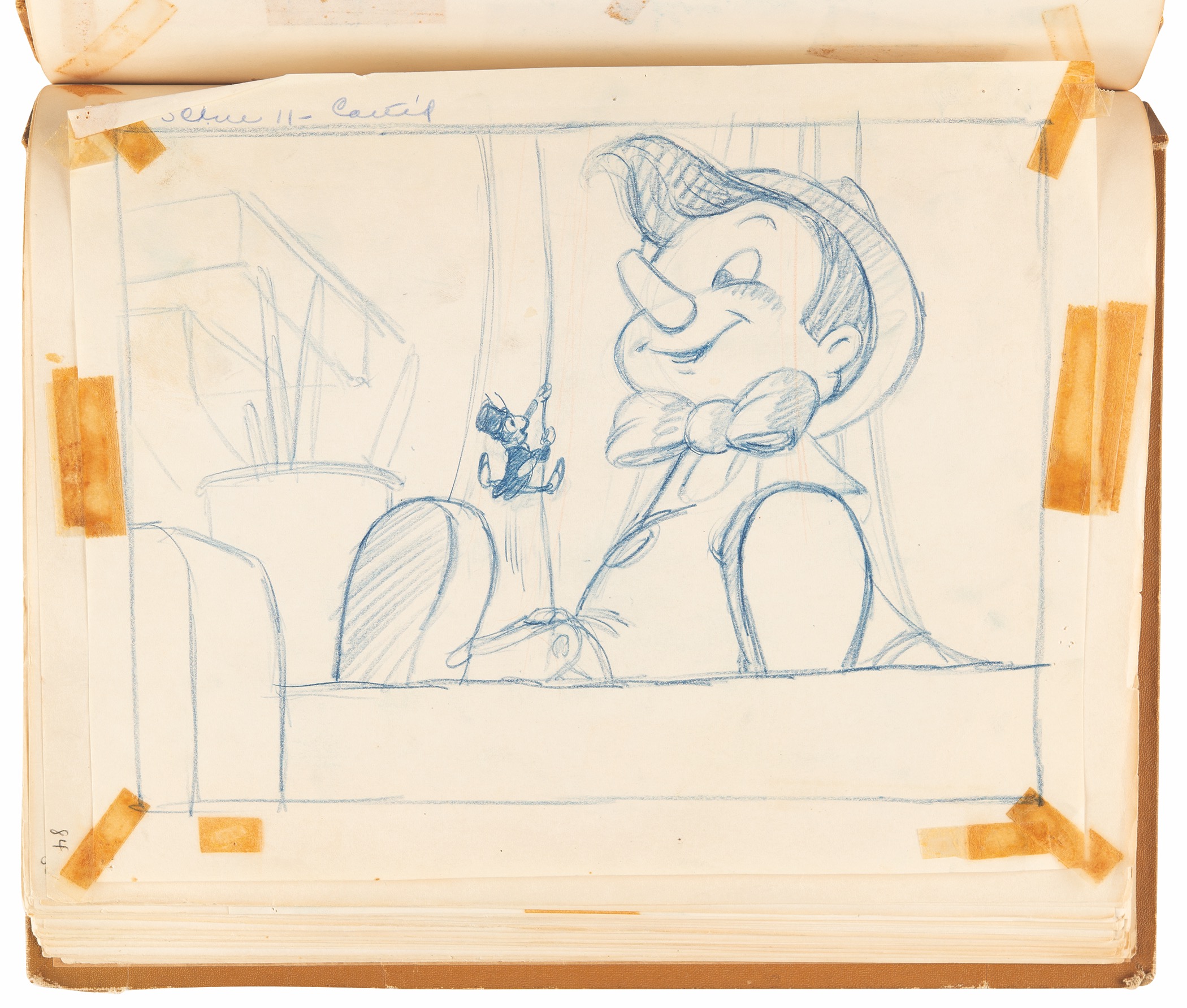
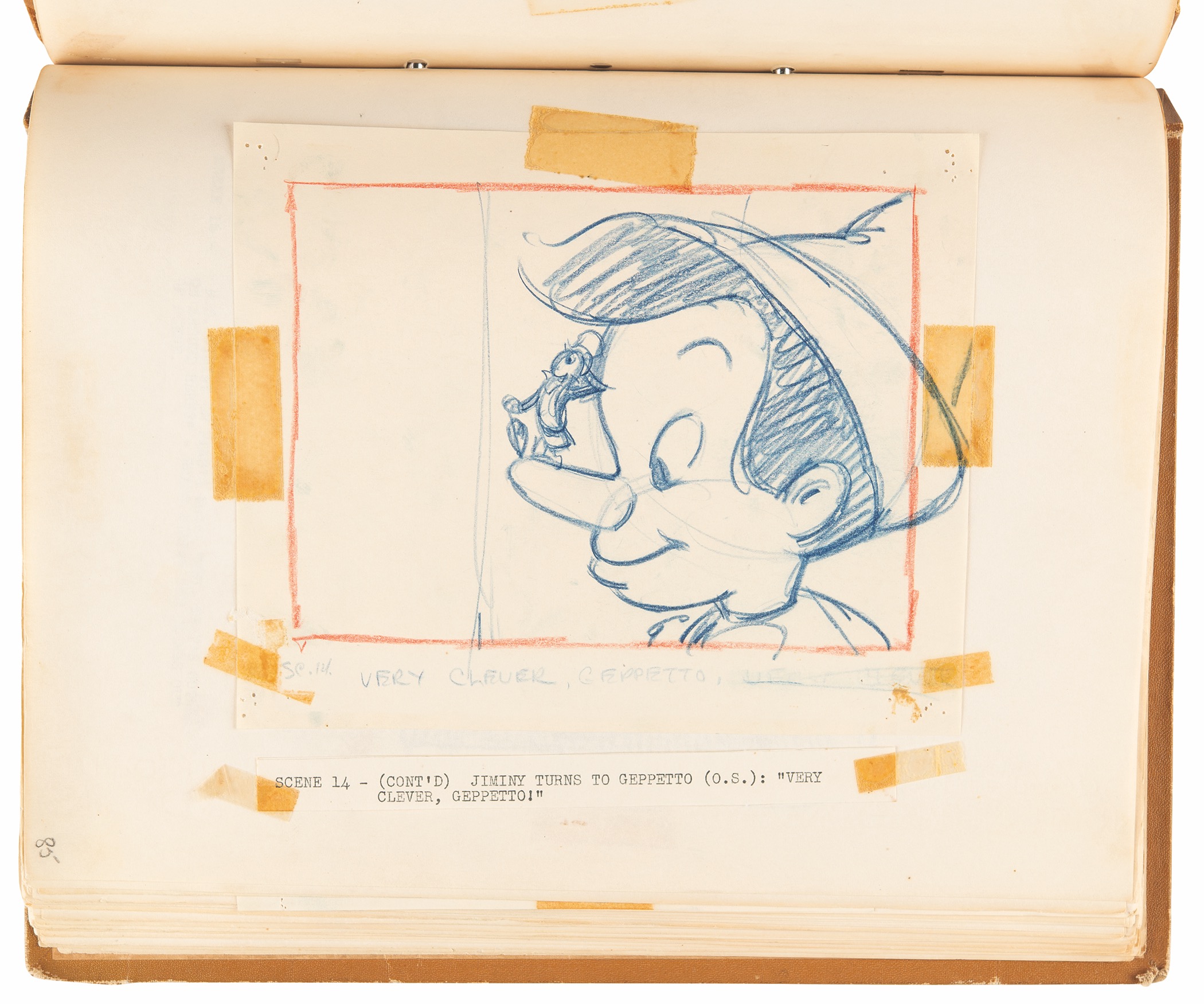
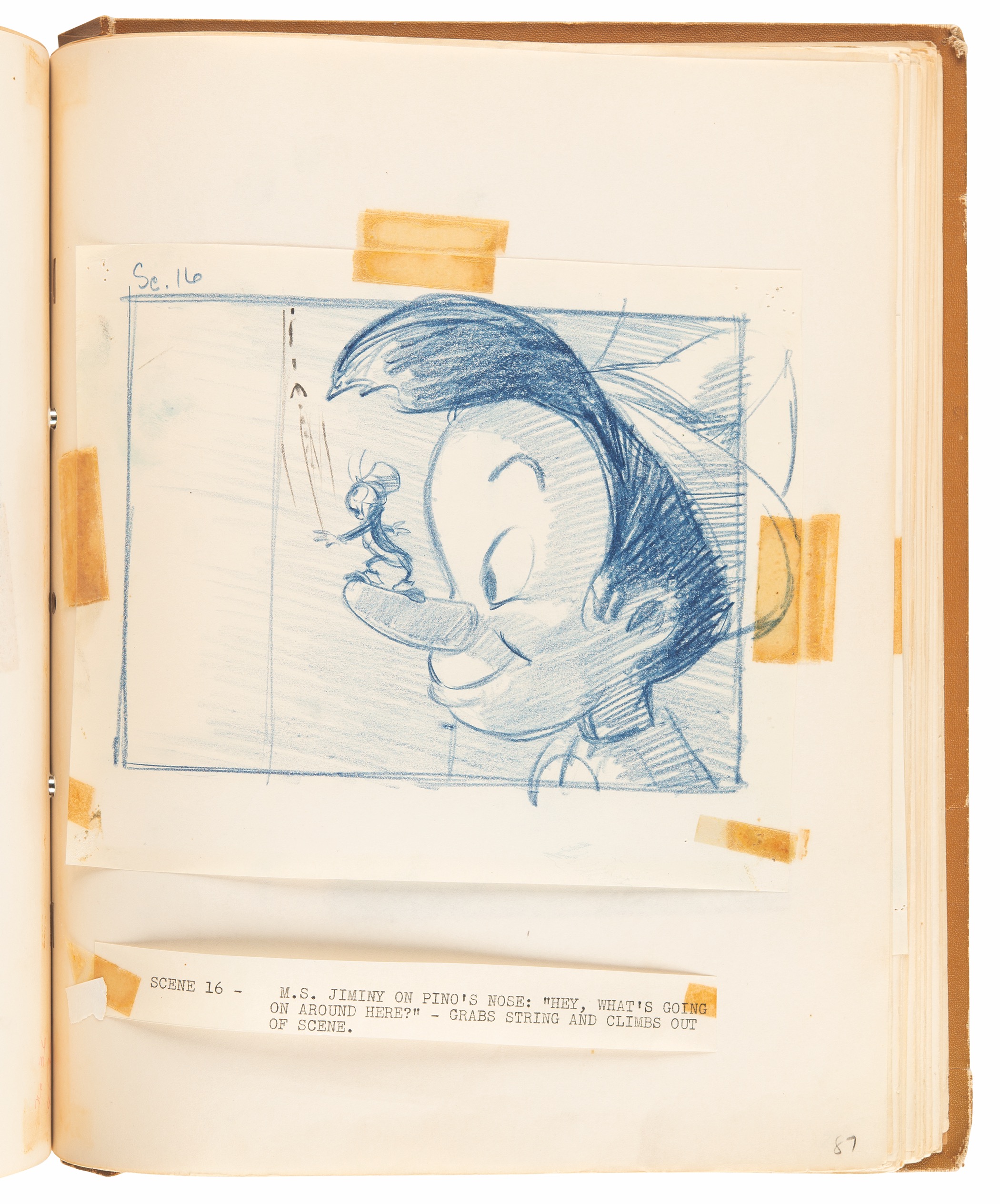
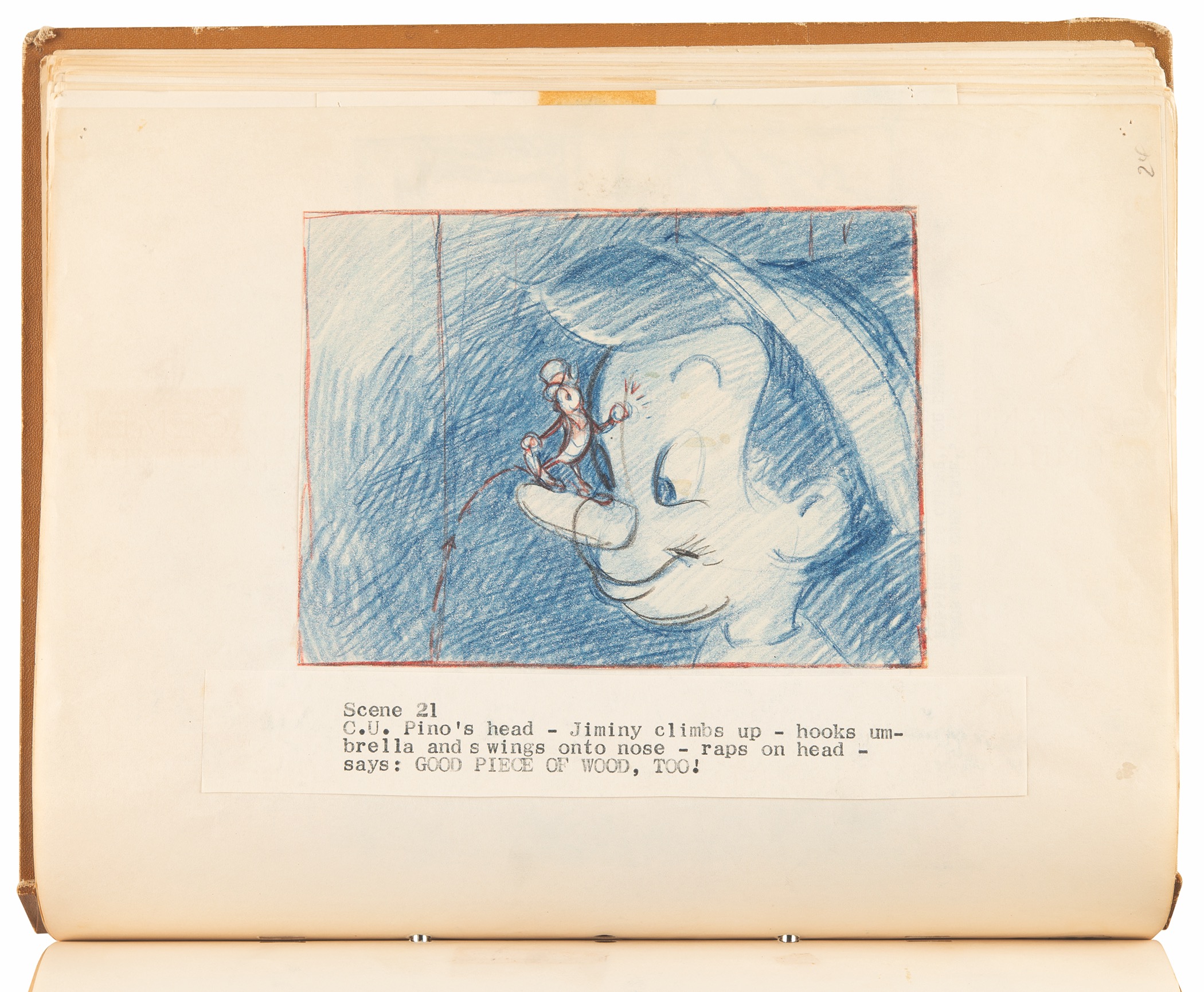
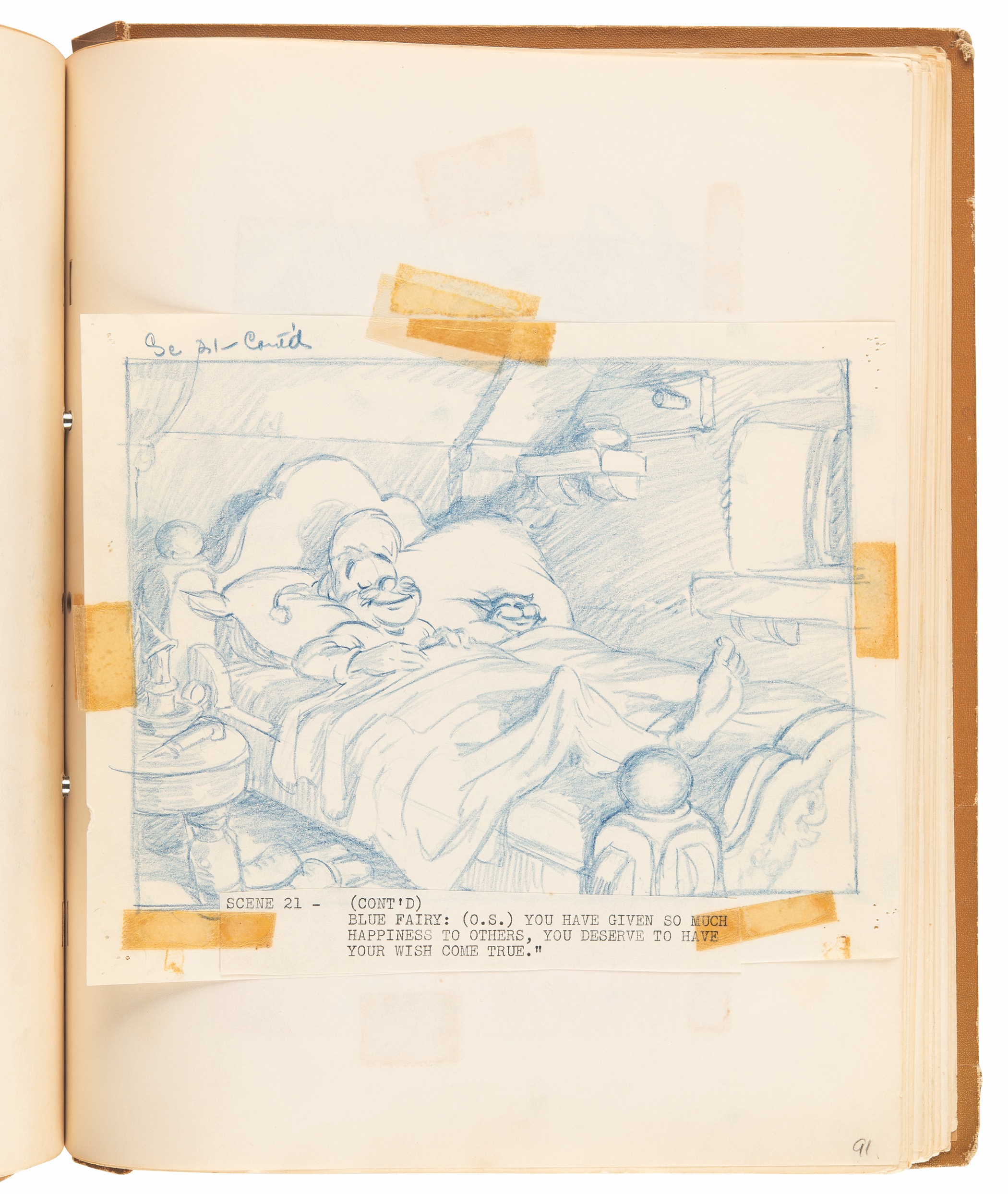
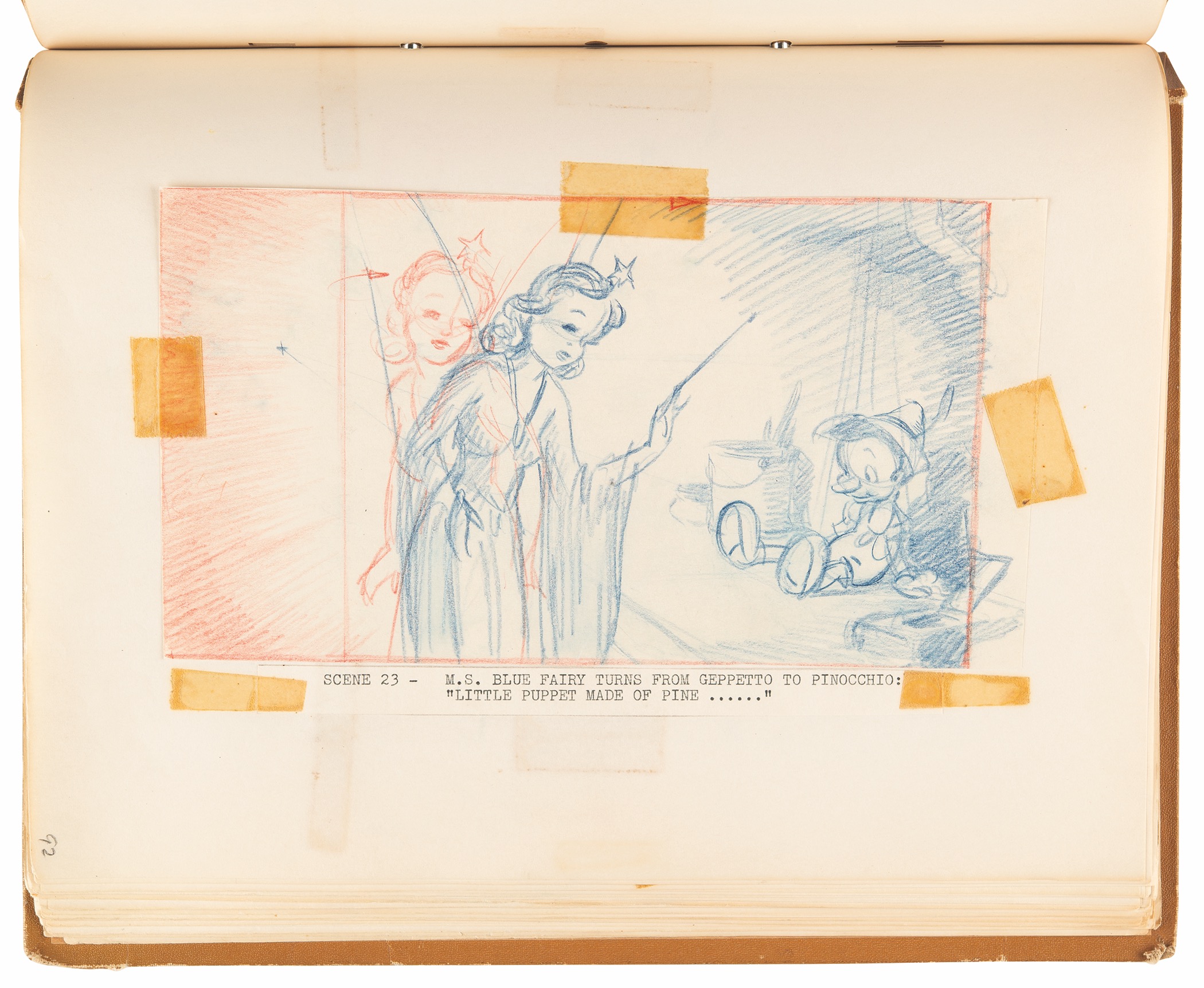
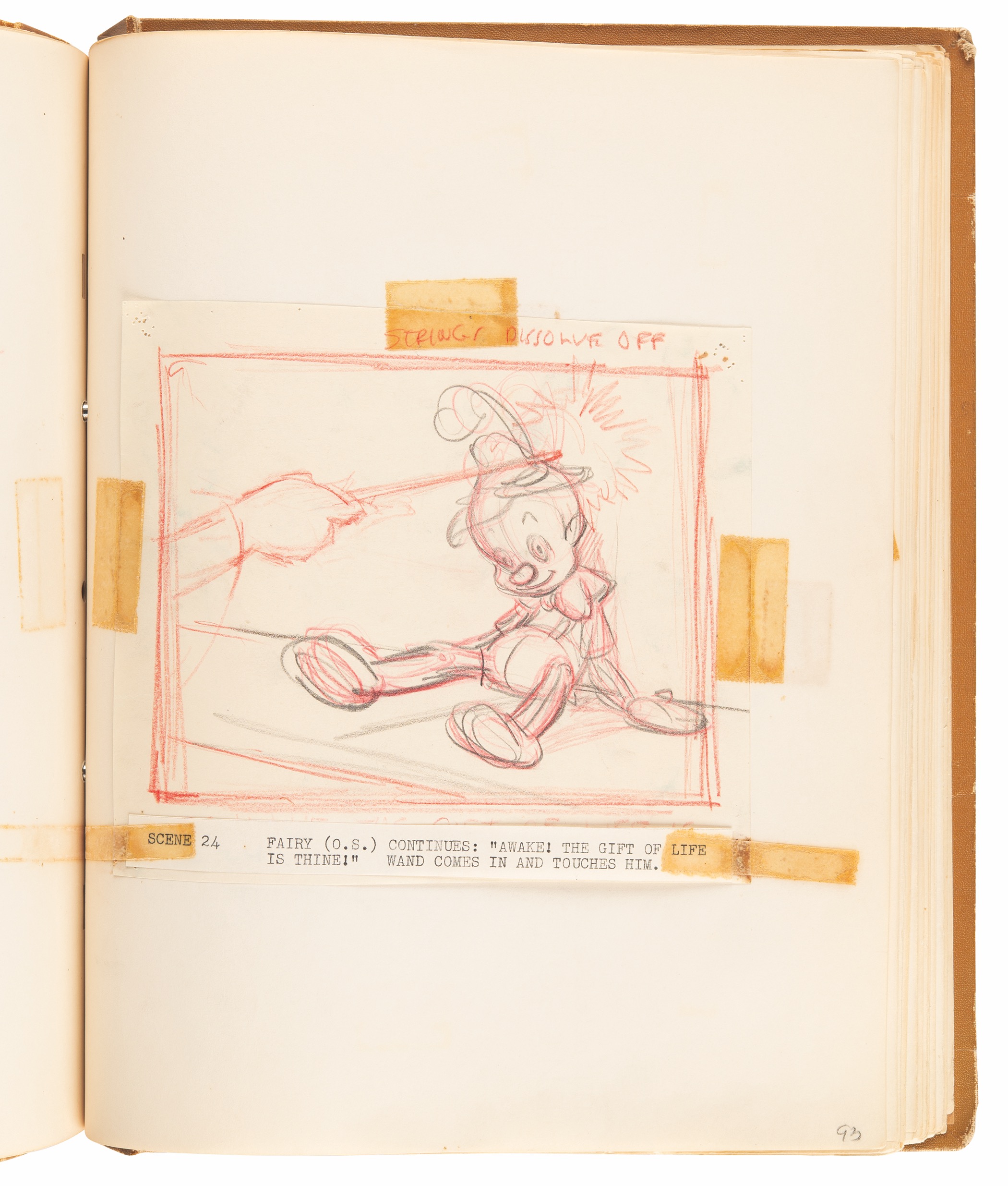
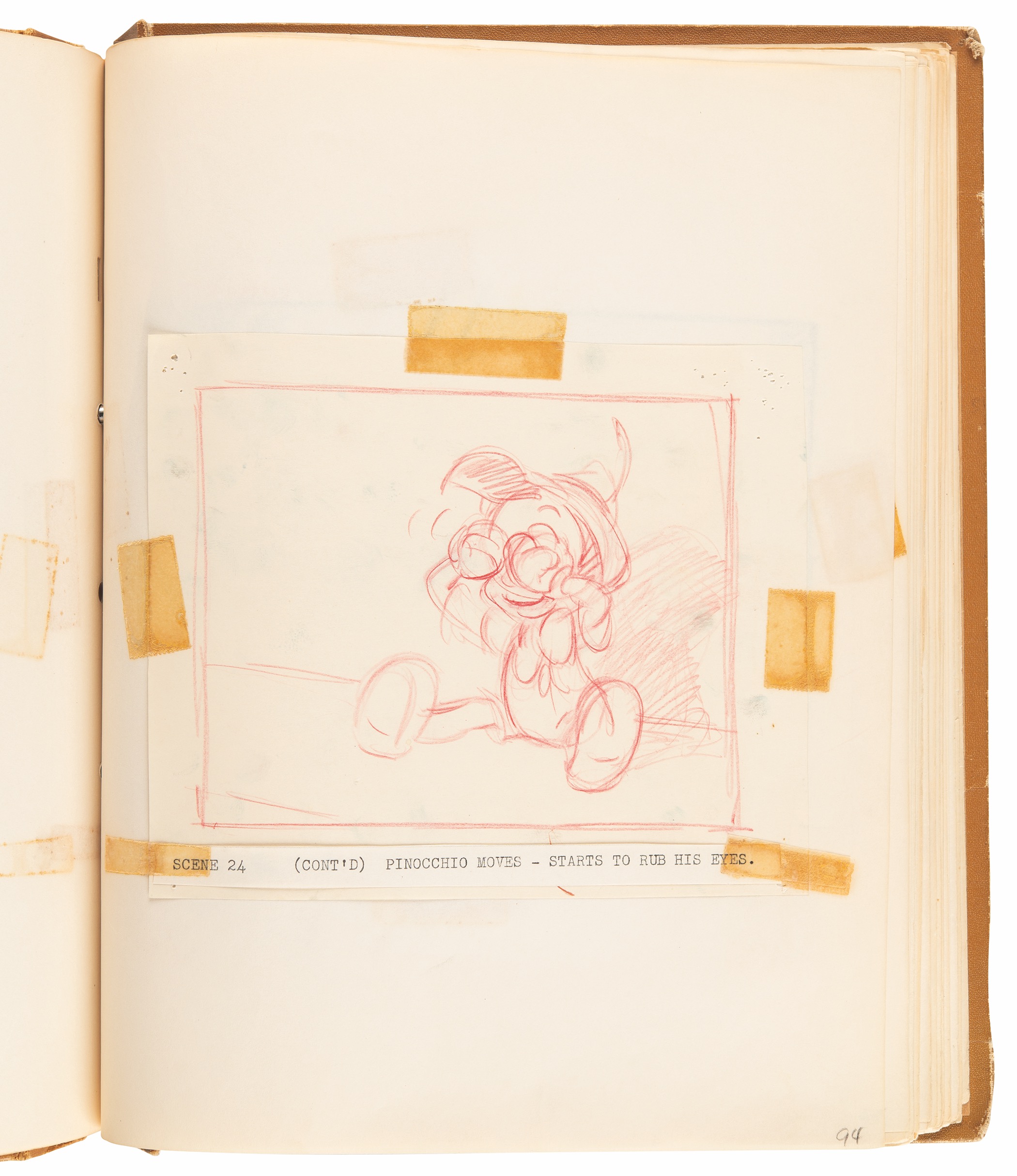
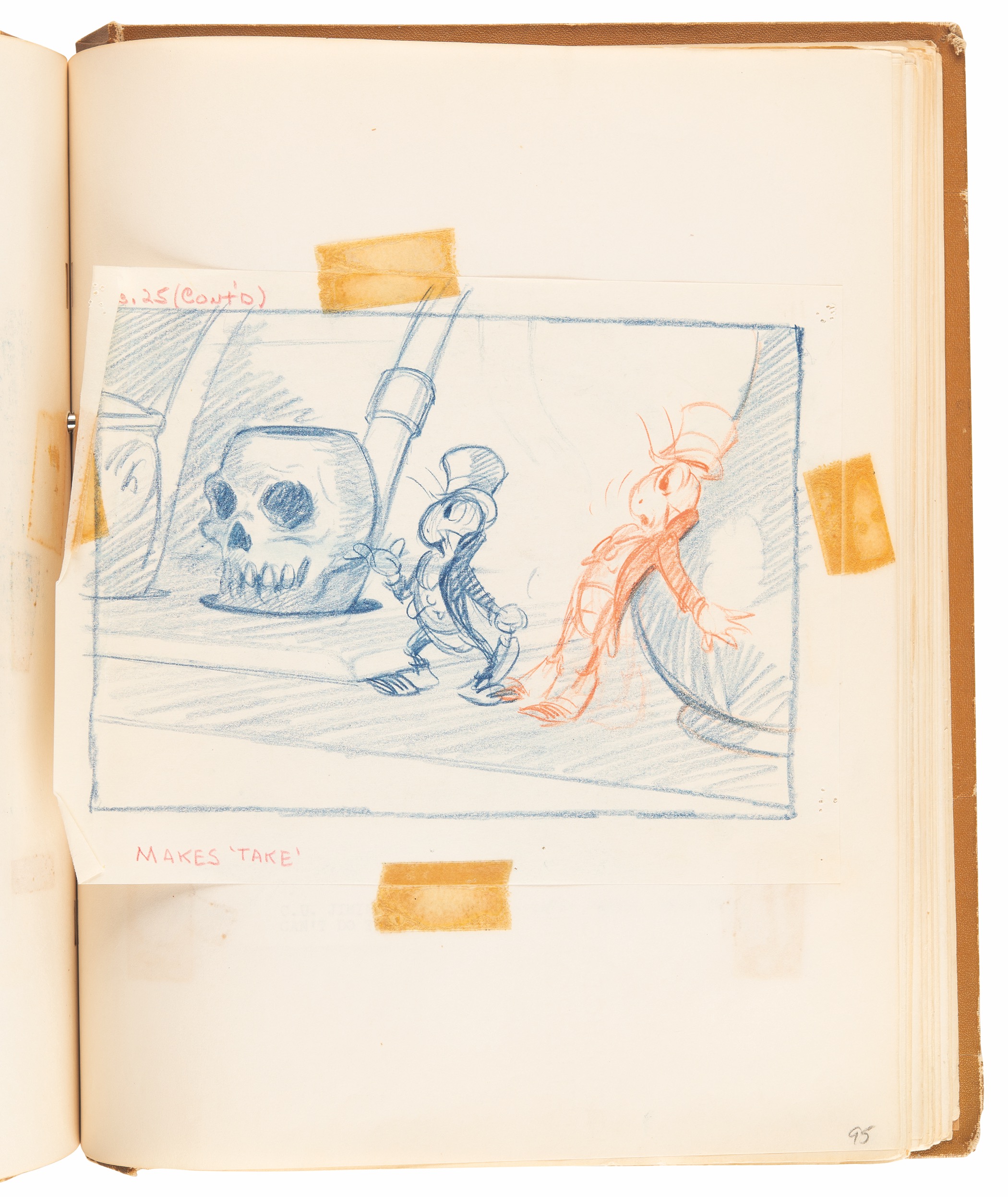
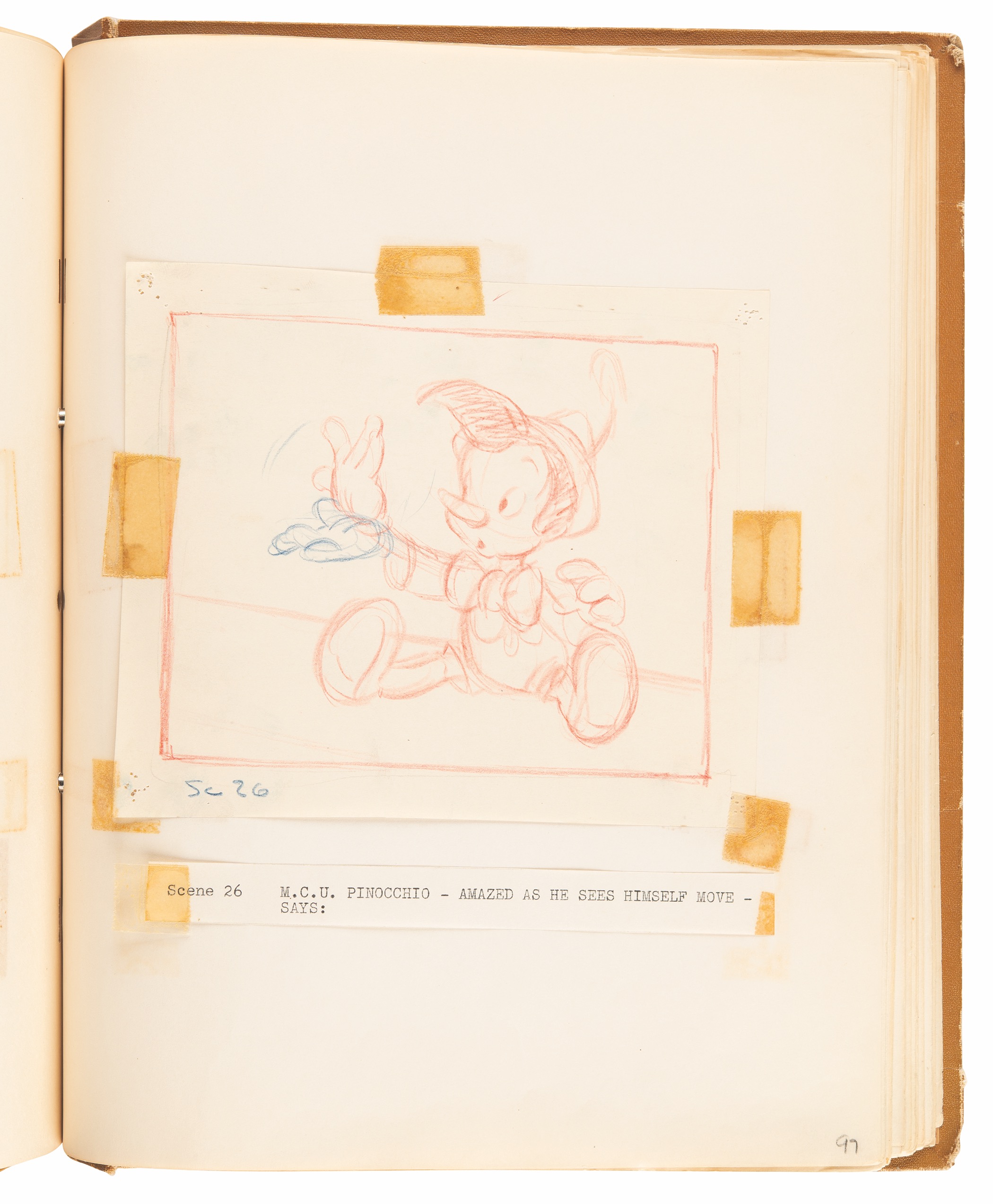
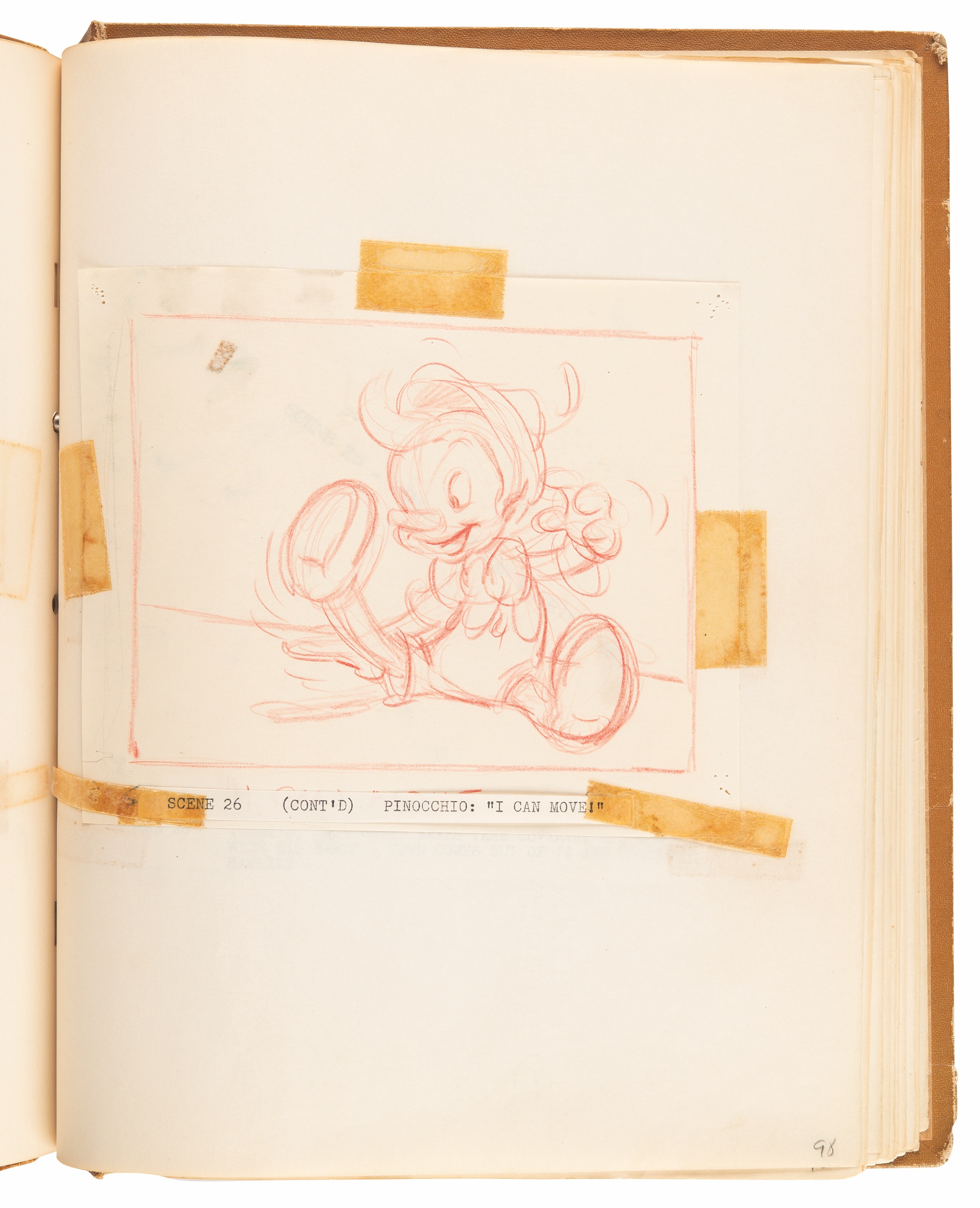
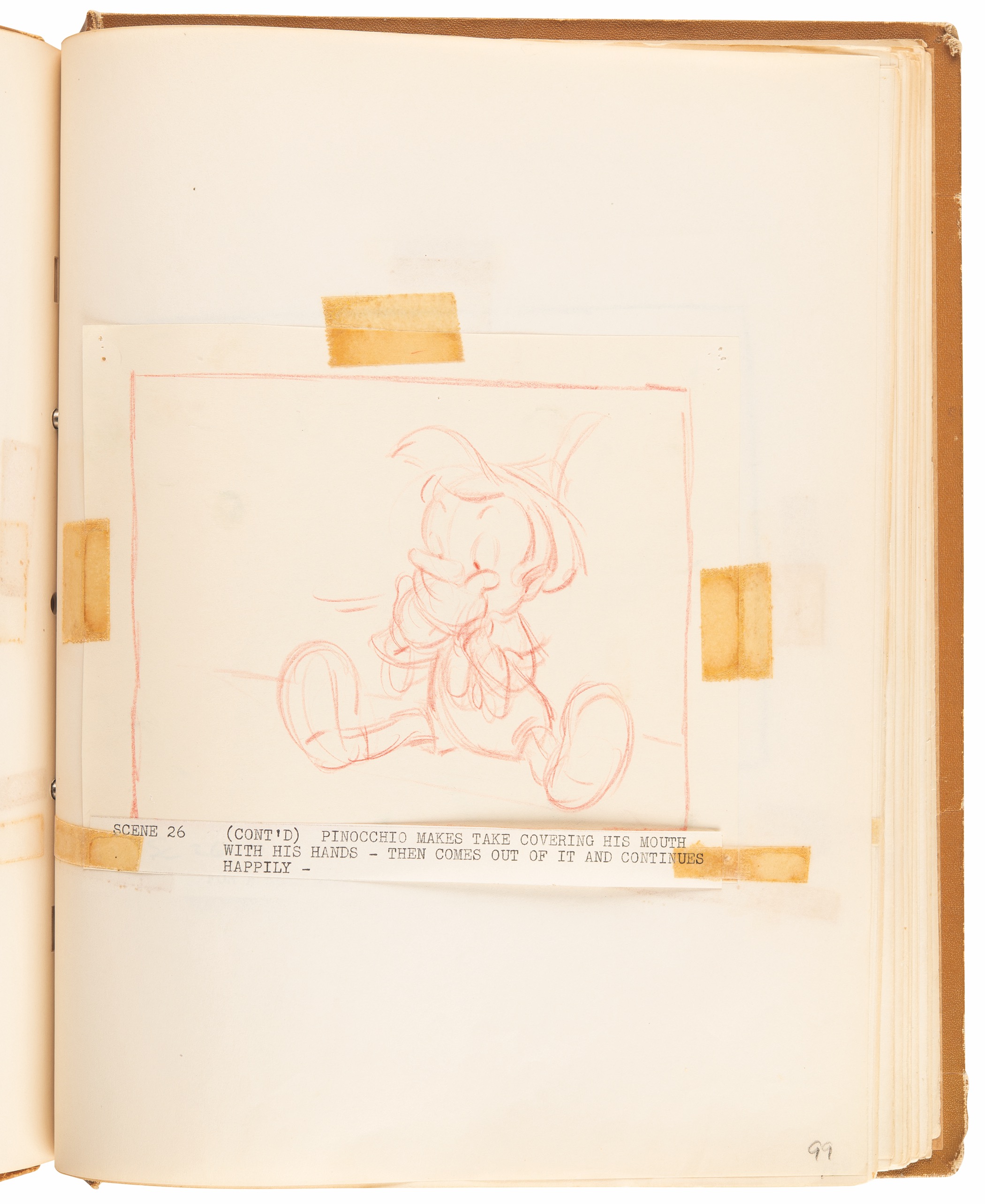
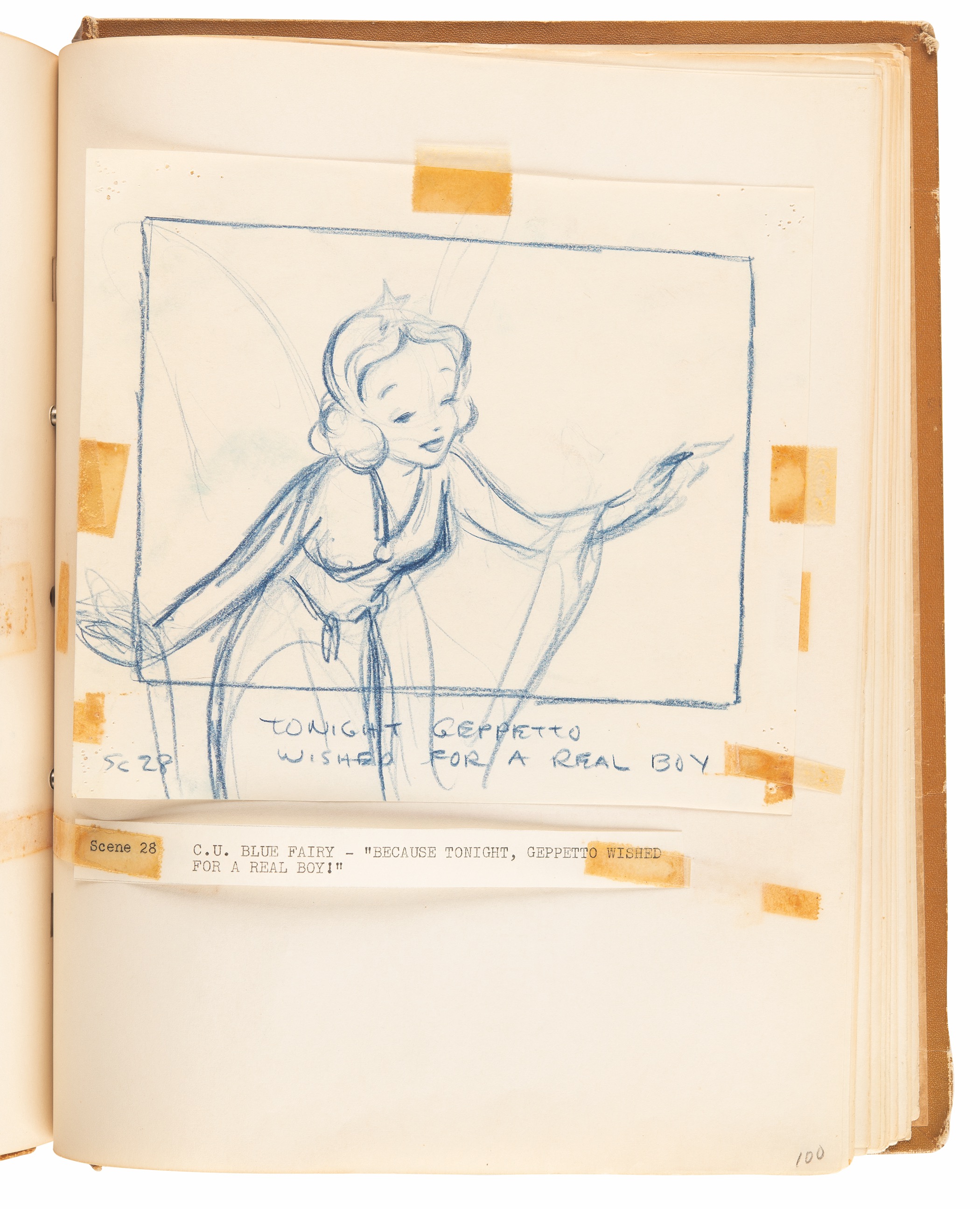
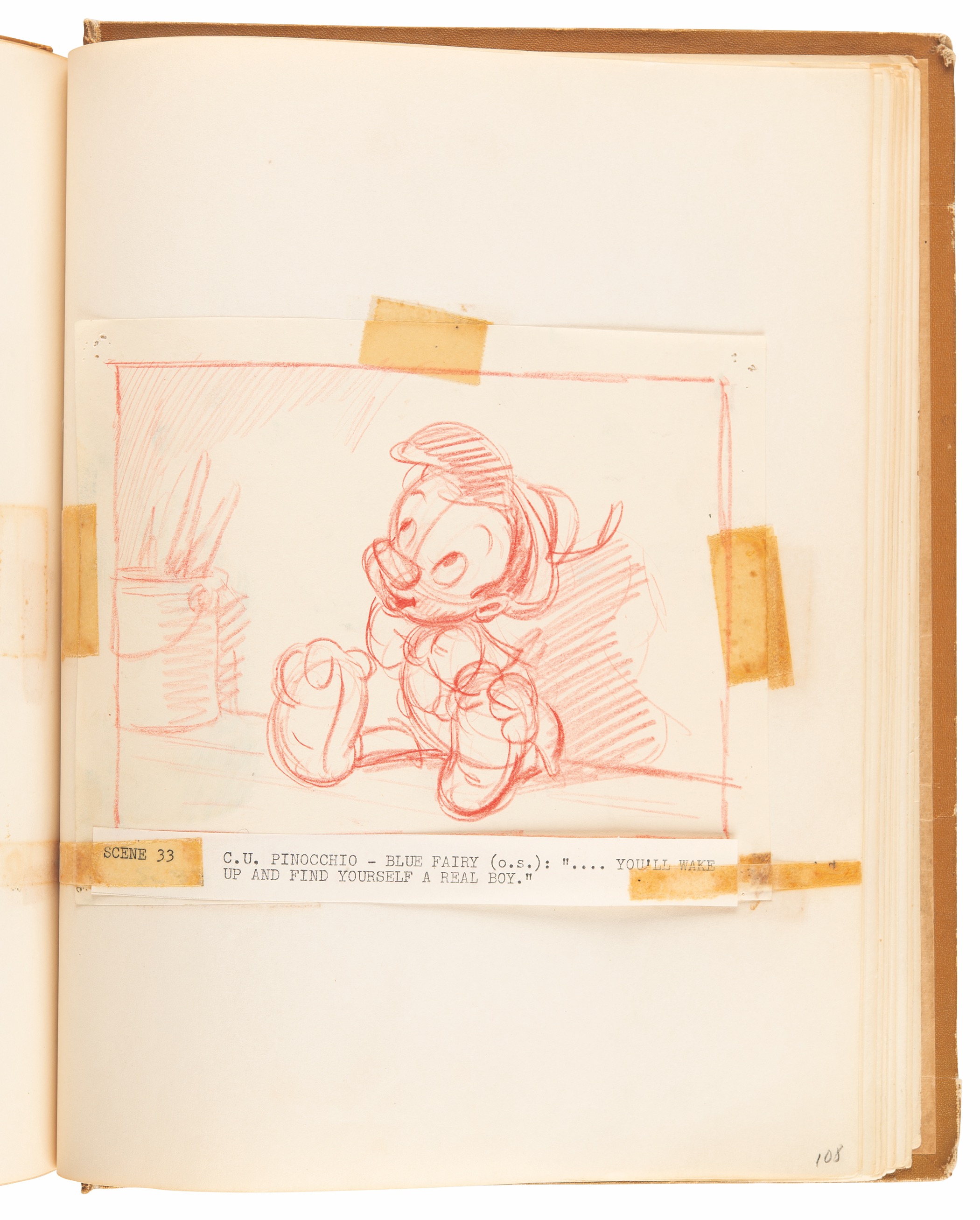
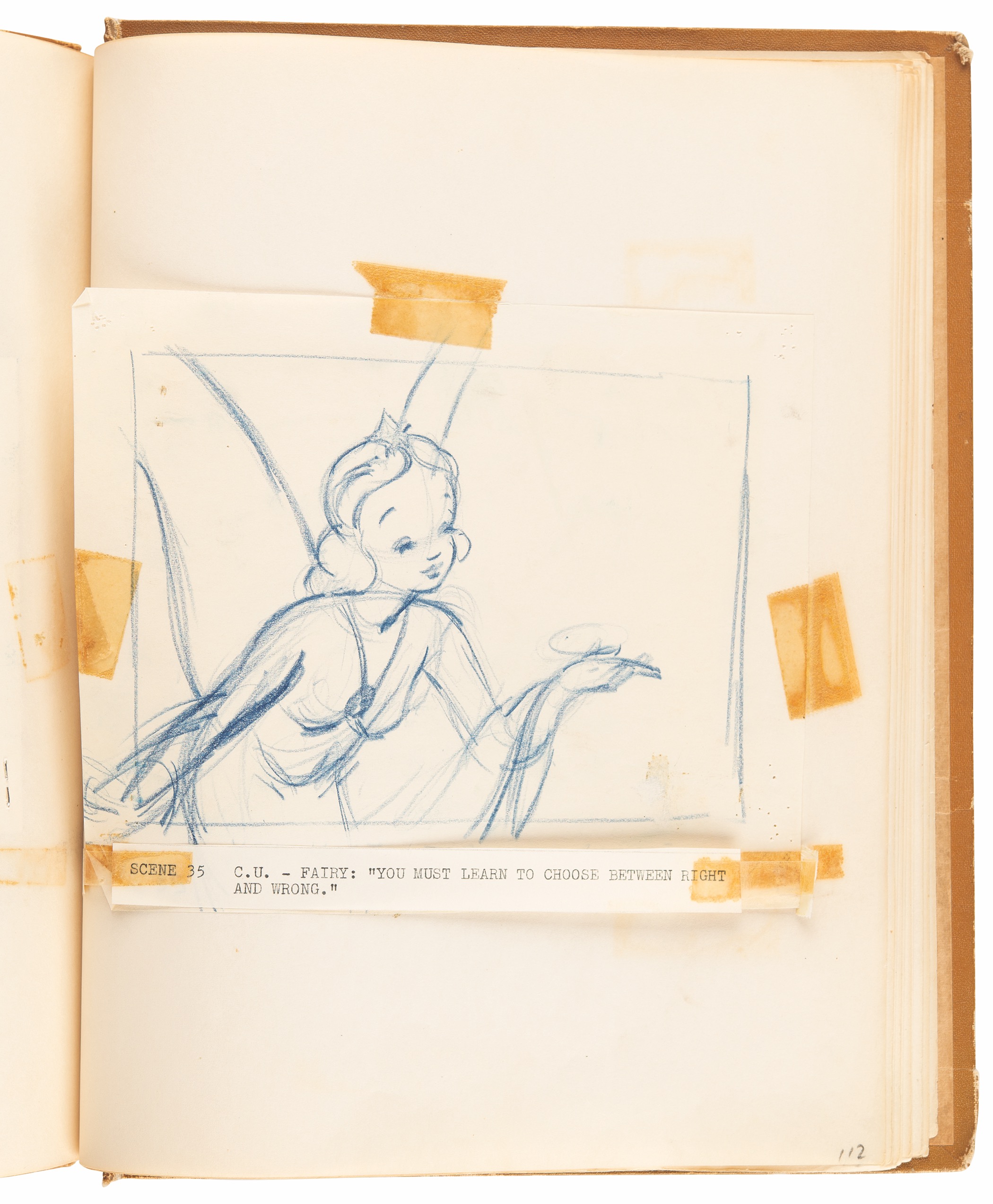
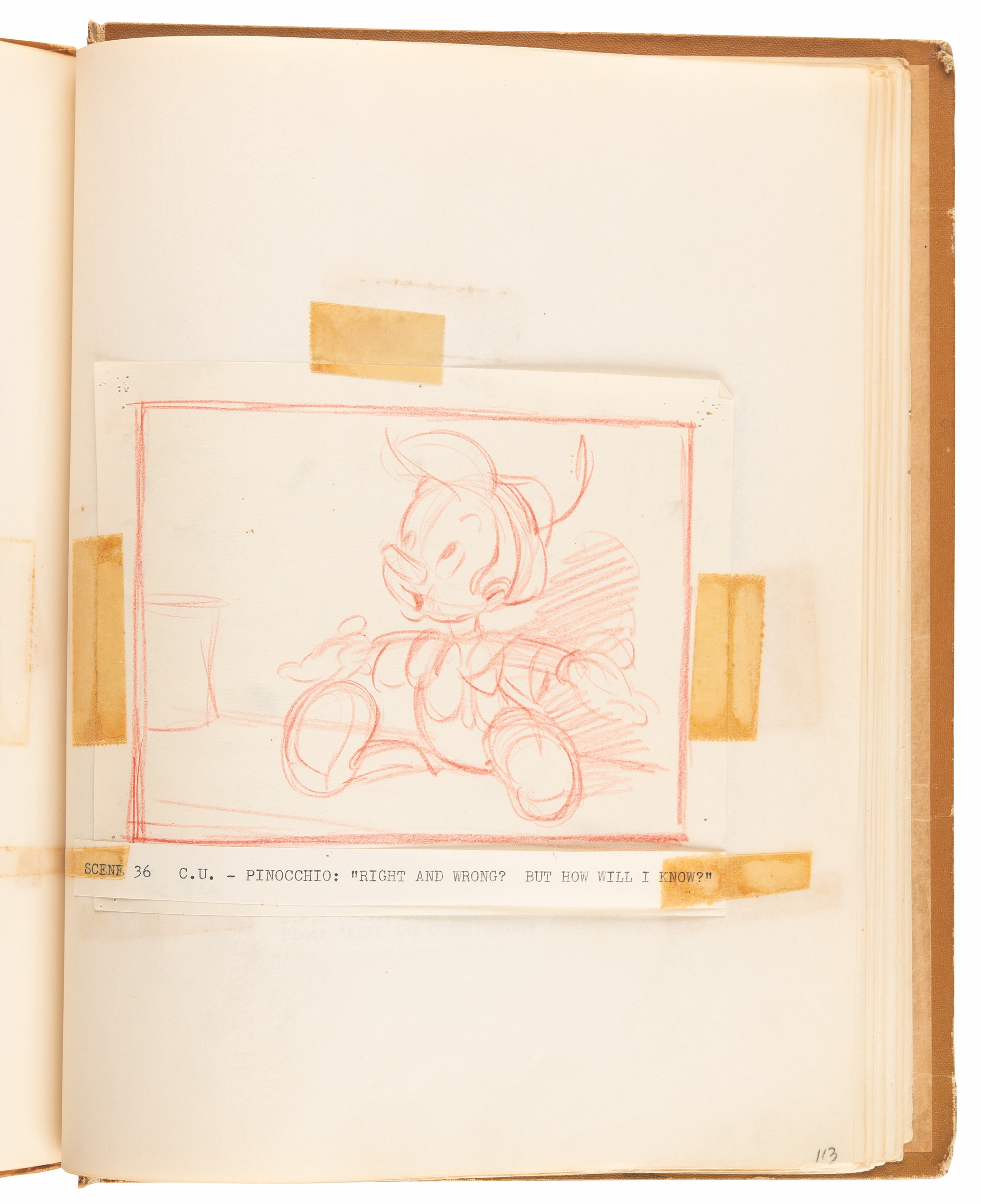
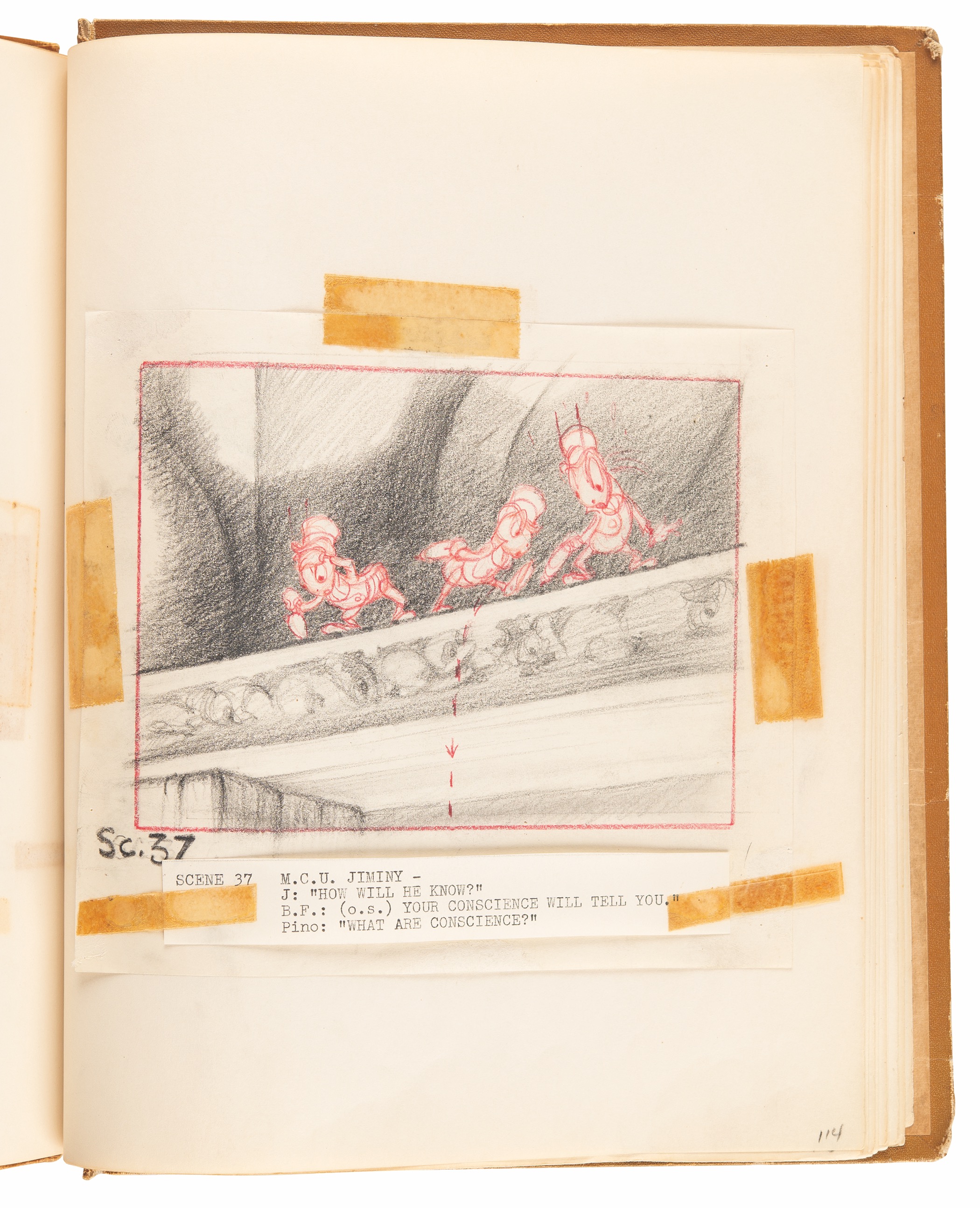
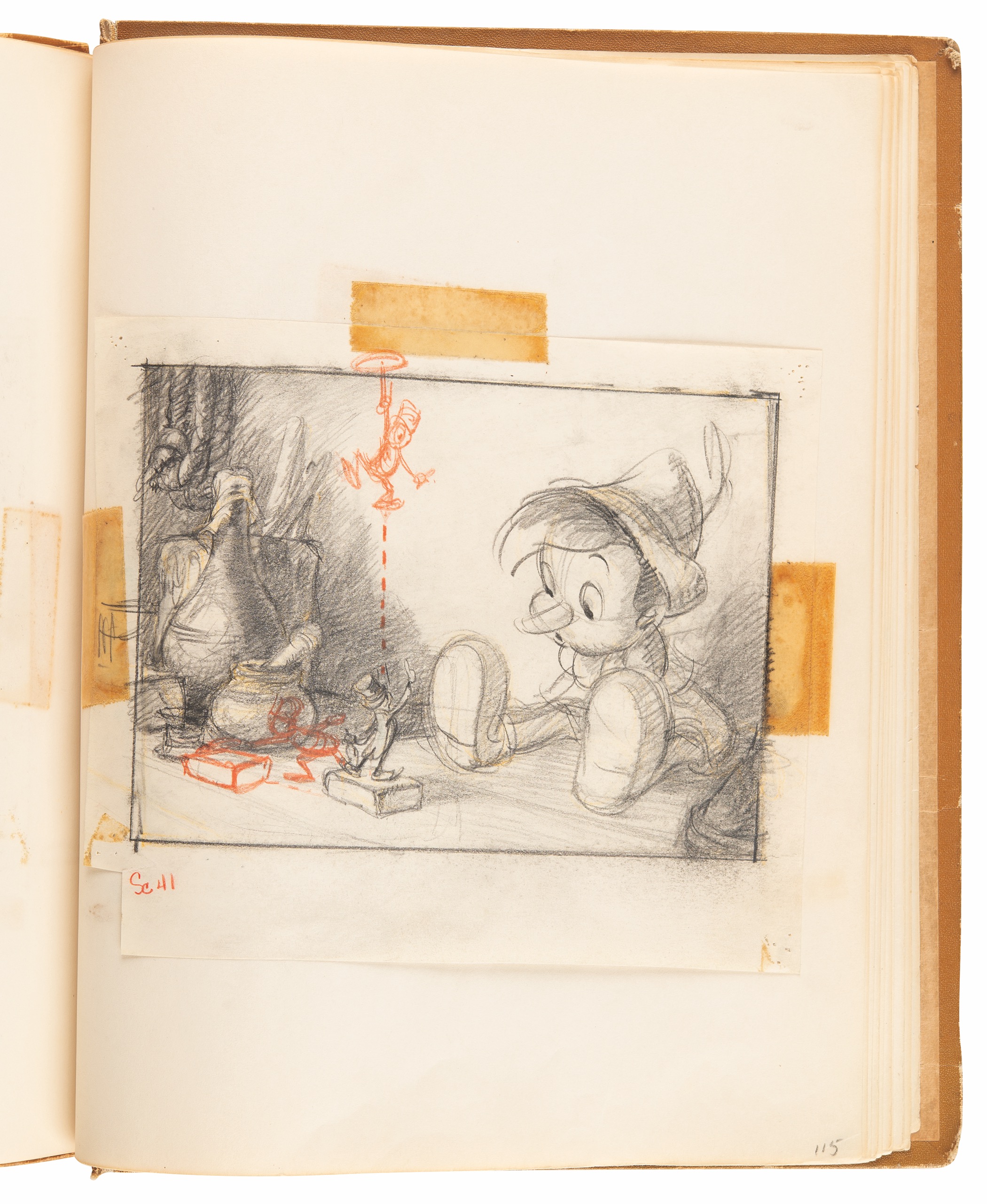
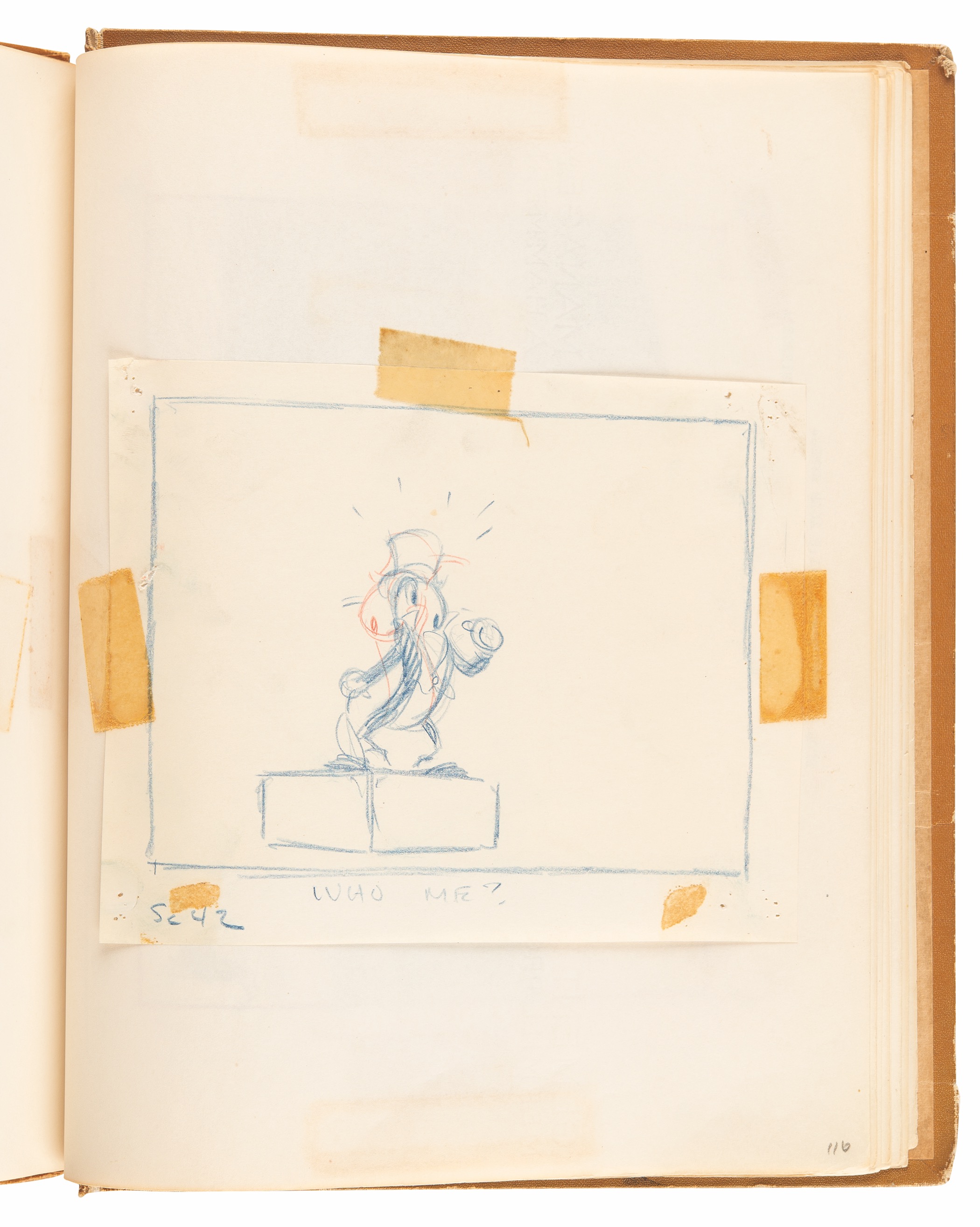
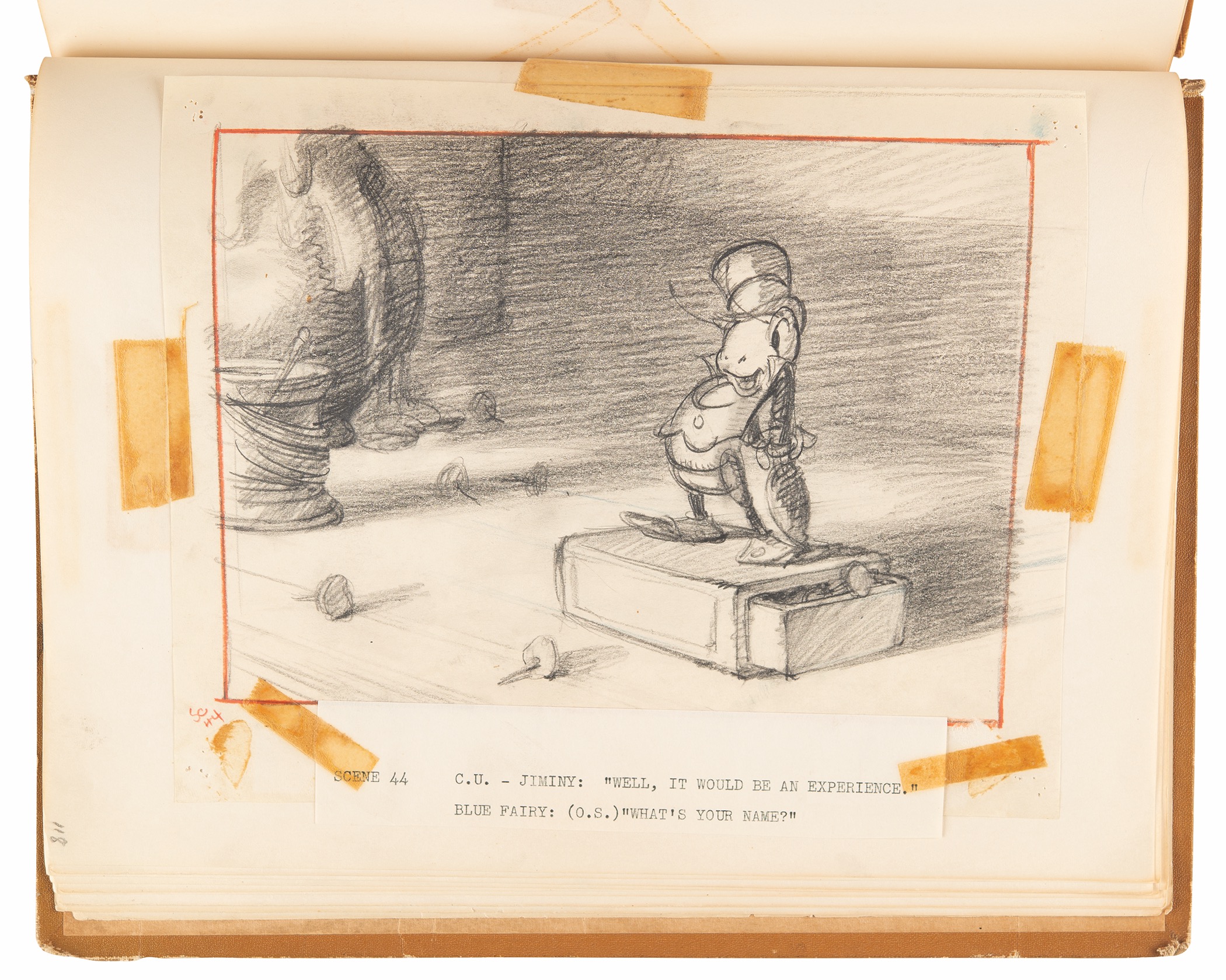
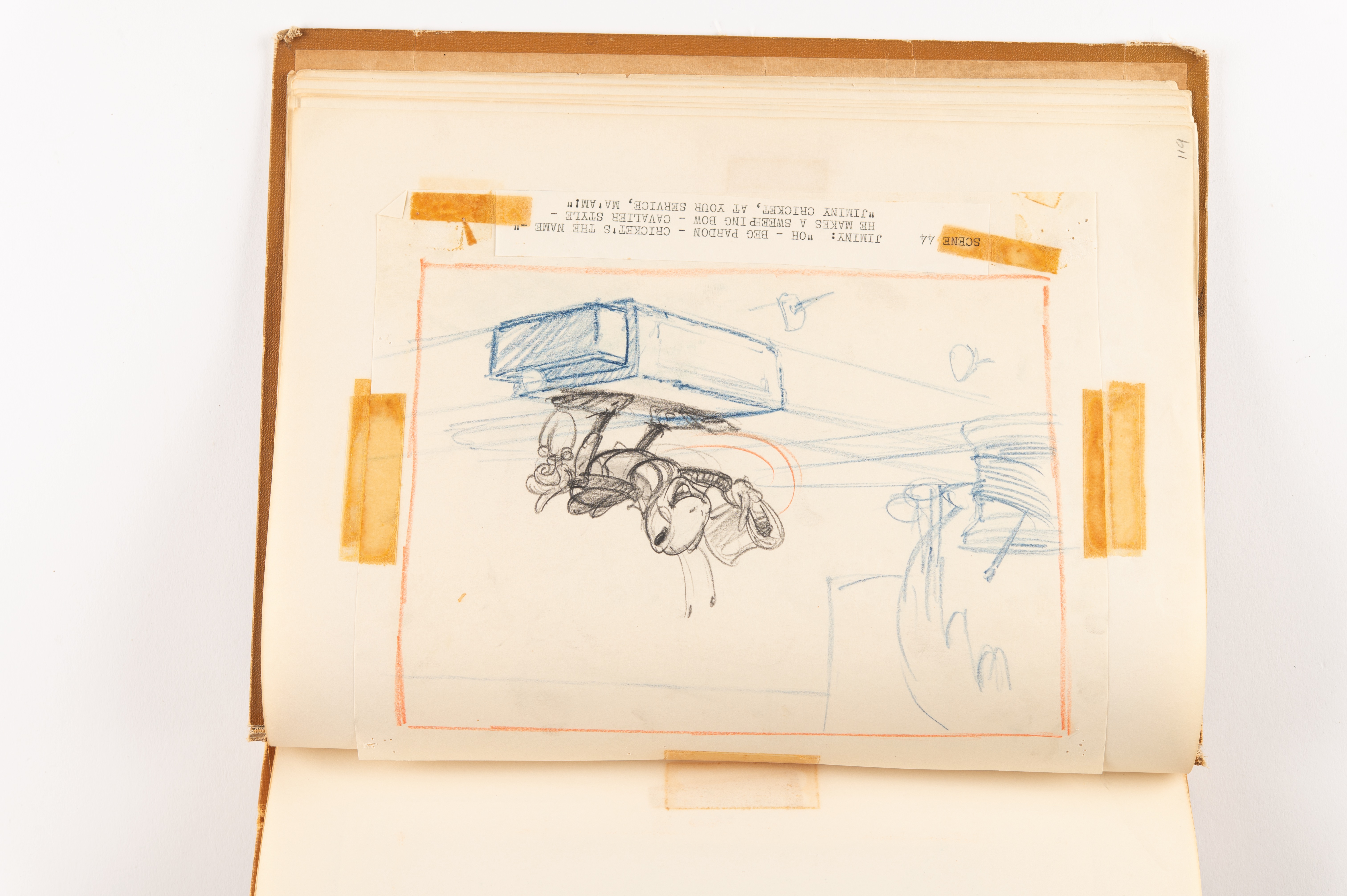
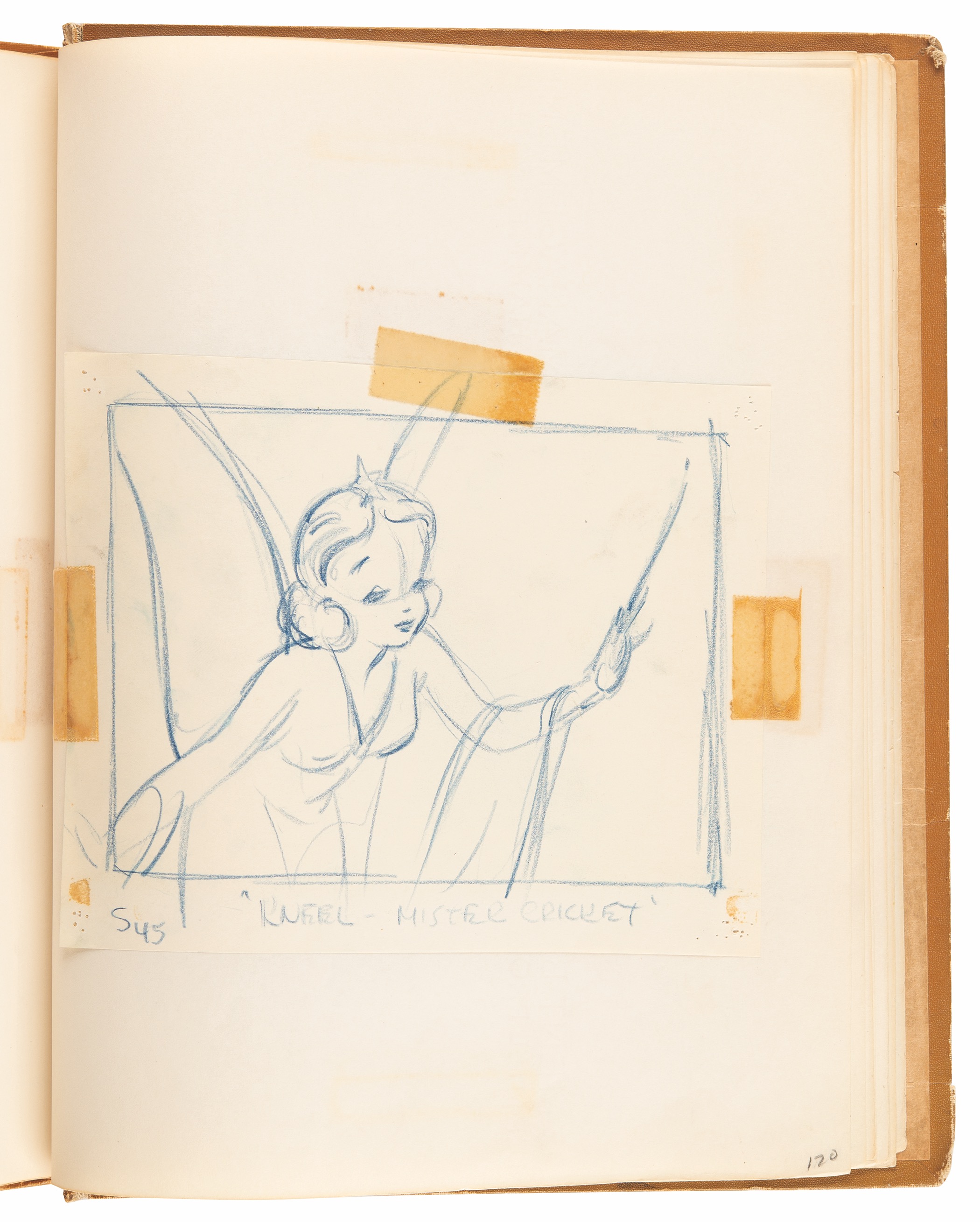
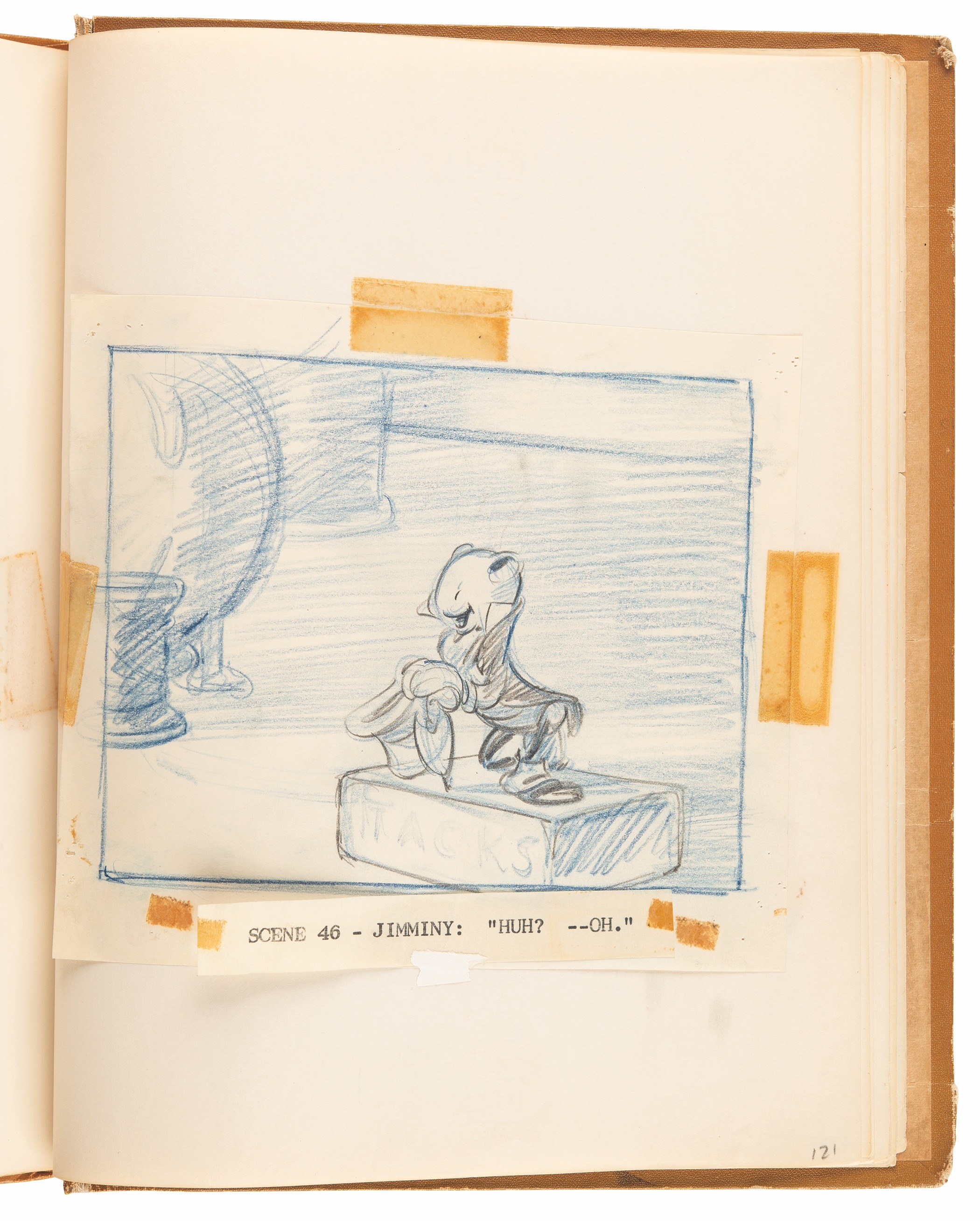
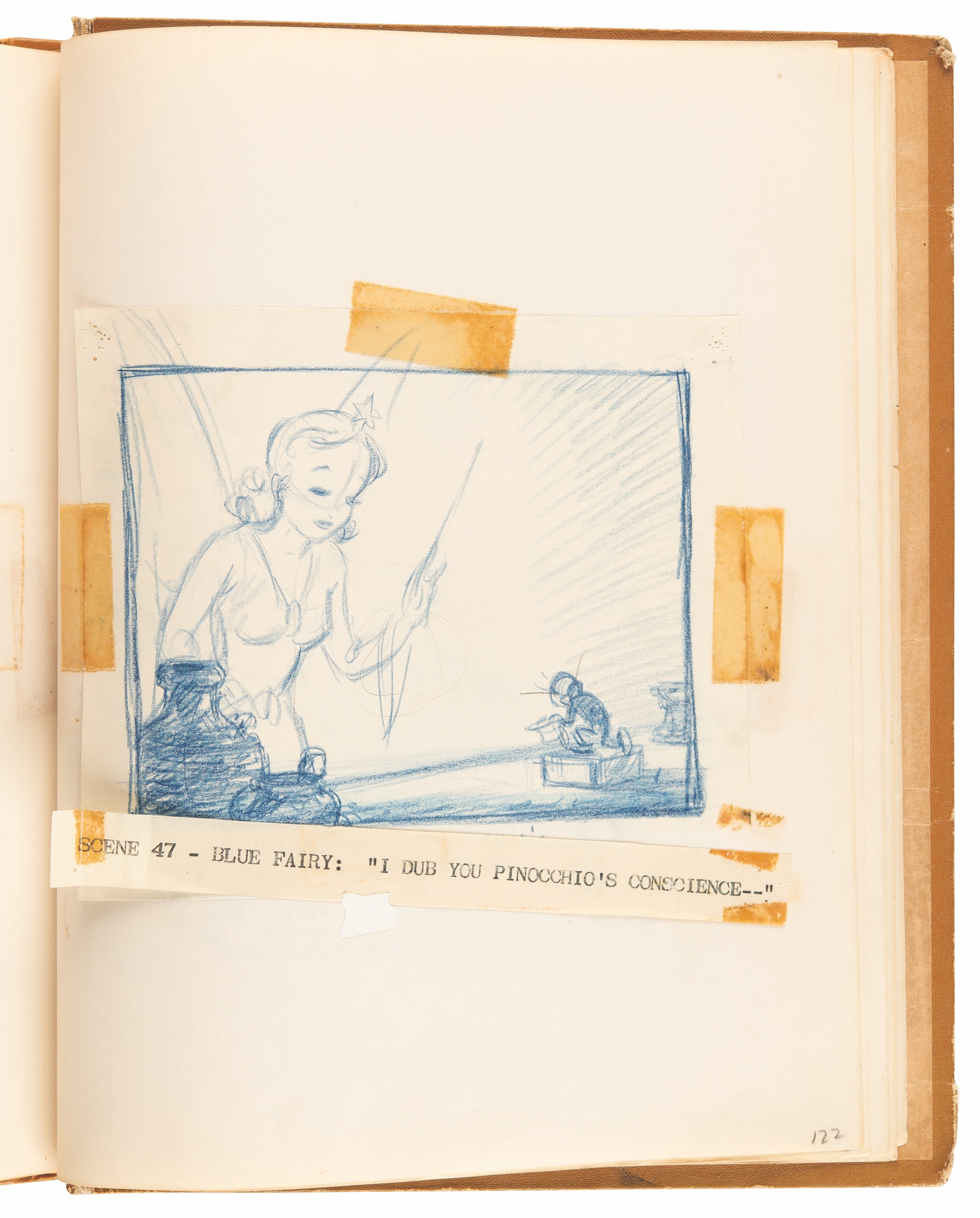
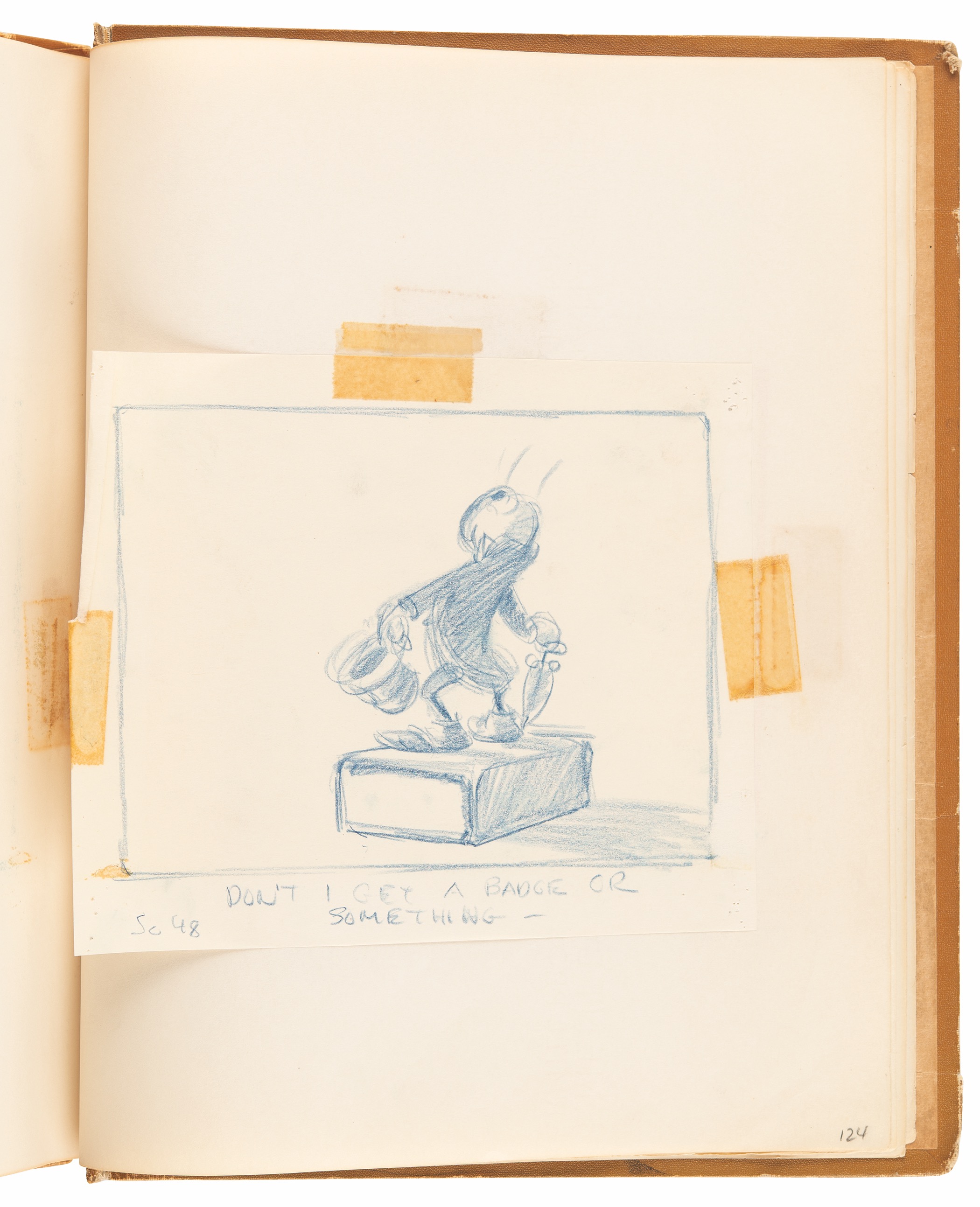
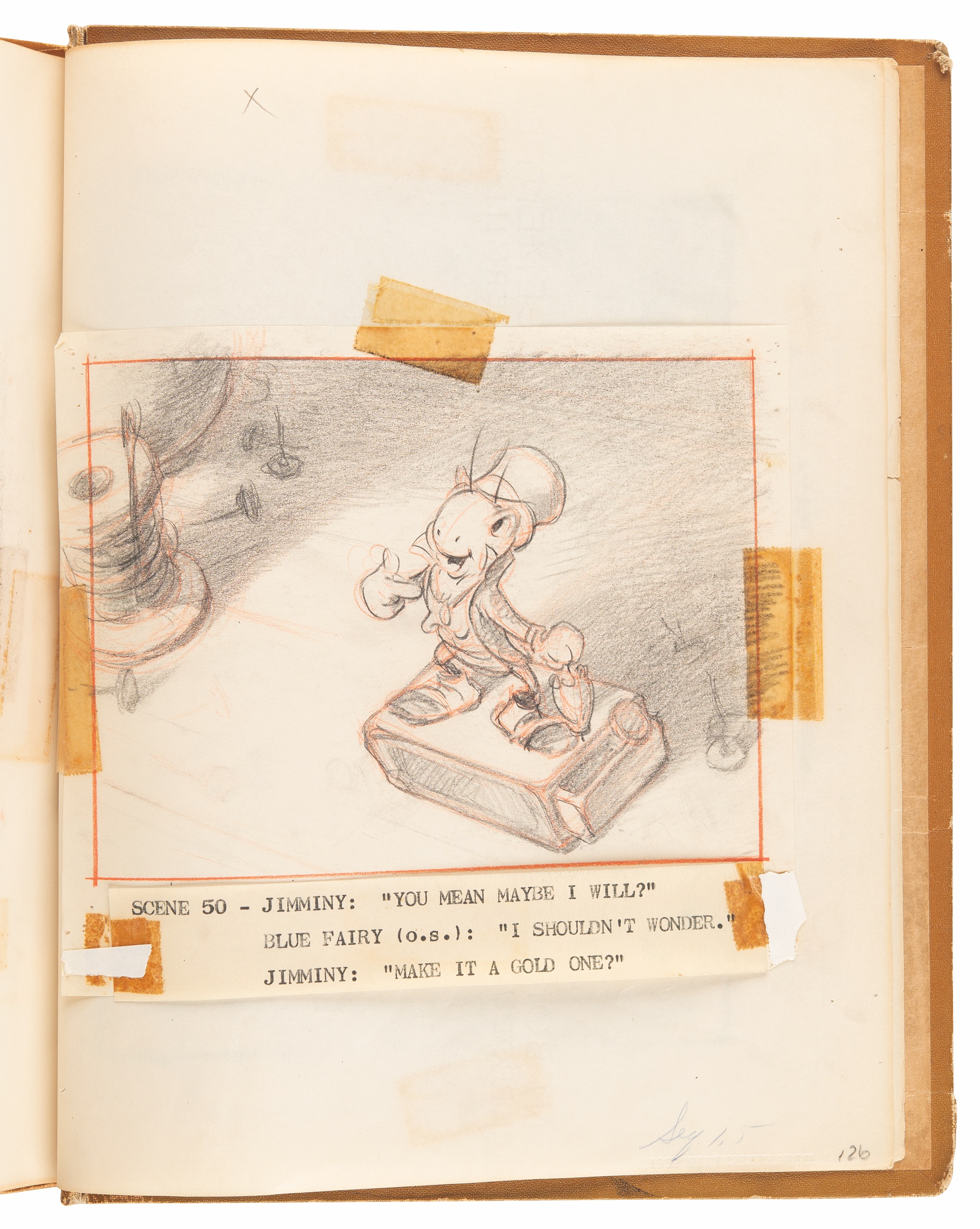
Original circa 1939 Disney Director's ‘Continuity Sketch Book’ for the Oscar-winning 1940 classic Pinocchio, the studio’s second animated feature film, which was used by sequence and supervising directors to strategically order the film’s opening 18 minutes, concluding with the moment that the Blue Fairy says, “Now remember, Pinocchio, be a good boy.” The sketchbook contains a total of 113 pages, which include 48 original preliminary storyboard drawings and nearly 200 photographic storyboard images that provide unprecedented insight into the meticulous planning of one of Disney’s most iconic films.
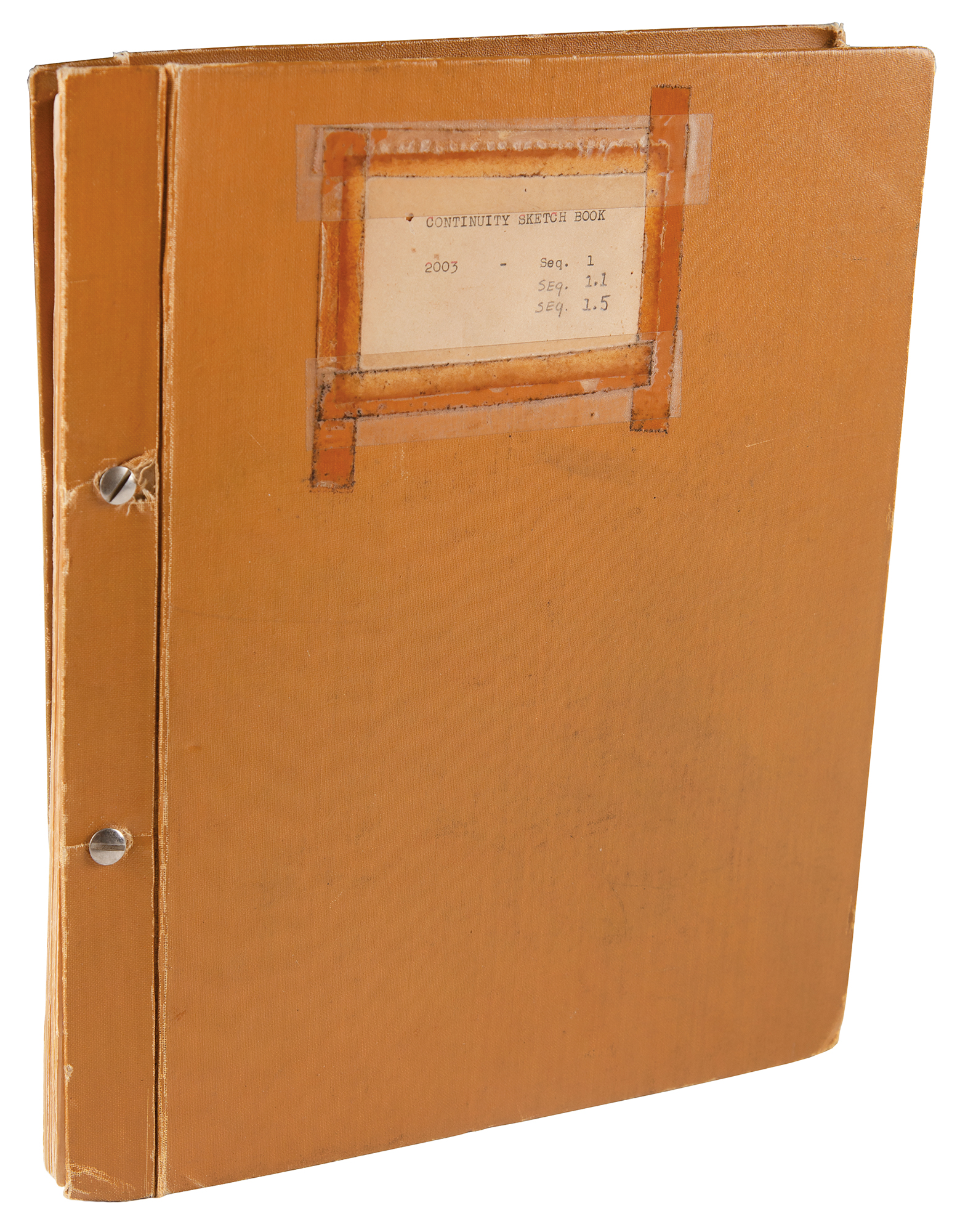
The book is presented as a rivet-bound binder with beige boards, 10.5˝ x 12.5˝, the front of which bears an affixed title label, “Continuity Sketch Book, 2003 - Seq. 1, Seq. 1.1, Seq. 1.5.” The book is essentially divided into three sections: Sequence 1 (pgs. 1-22, scenes 1-17), Sequence 1.1 (pgs. 25-71, scenes 1-89), and Sequence 1.5 (pgs. 73-127, with two pages marked 115, and pages 3, 13, and 24 also found in this section; this sequence focuses on scenes numbered from 2 to 51, though not all scenes accounted for). To classify their ongoing animation projects, Disney numbered their feature-length films in the 2000s and their studio’s shorts in the 1000s. Snow White was 2001, Bambi was 2002, and Pinocchio was 2003; when early script problems with Bambi proved intractable, Walt Disney decided to move forward with development for Pinocchio.
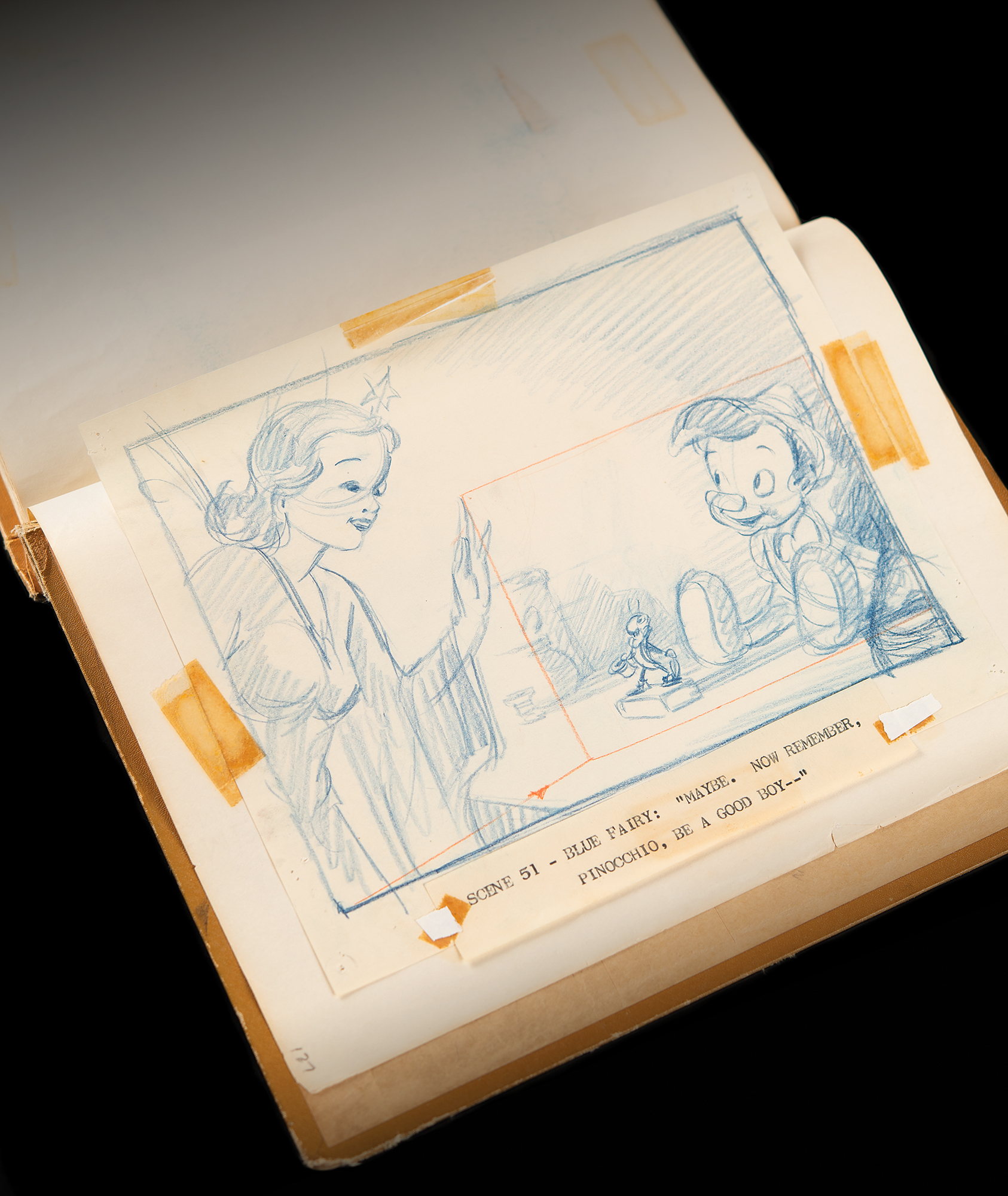
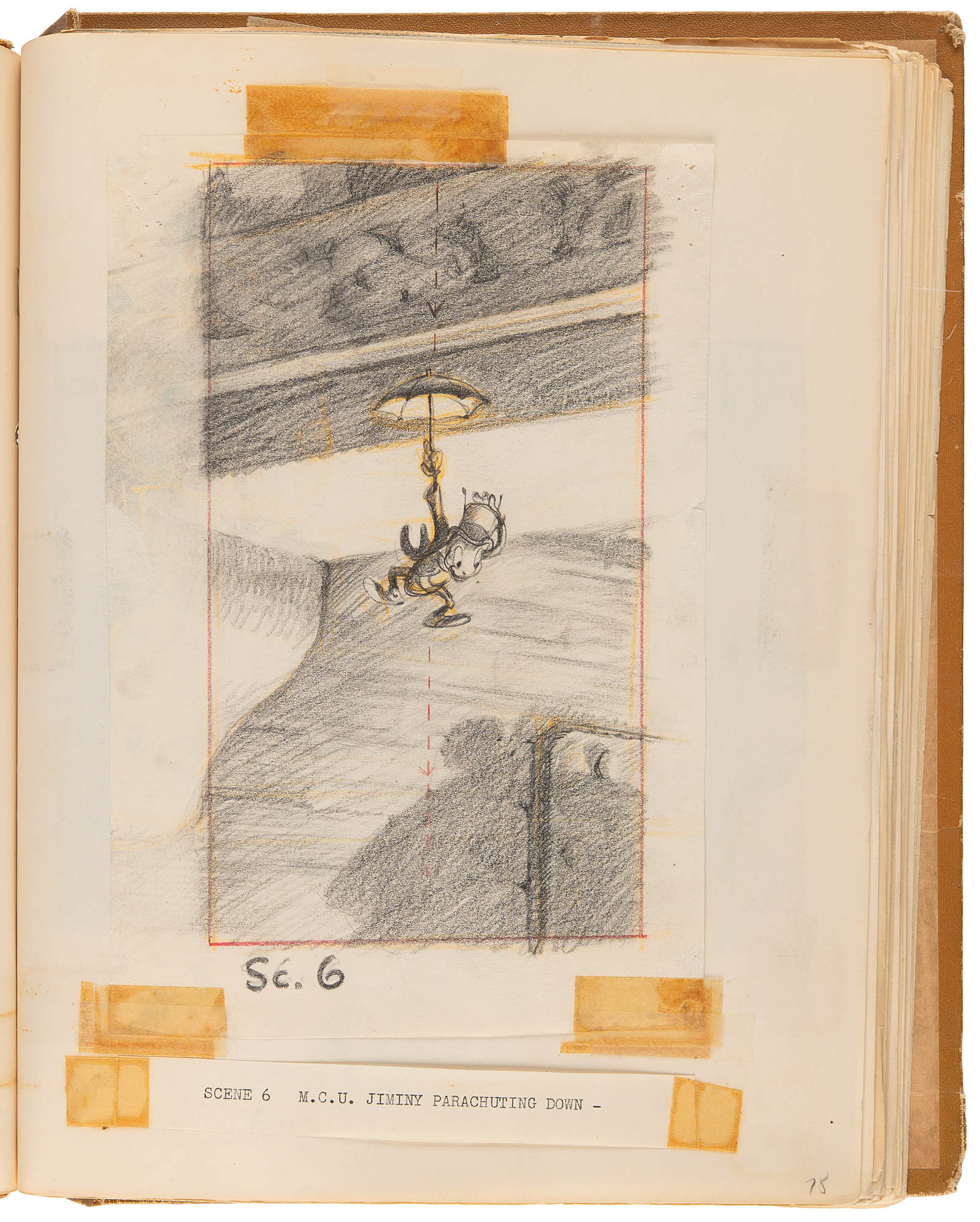
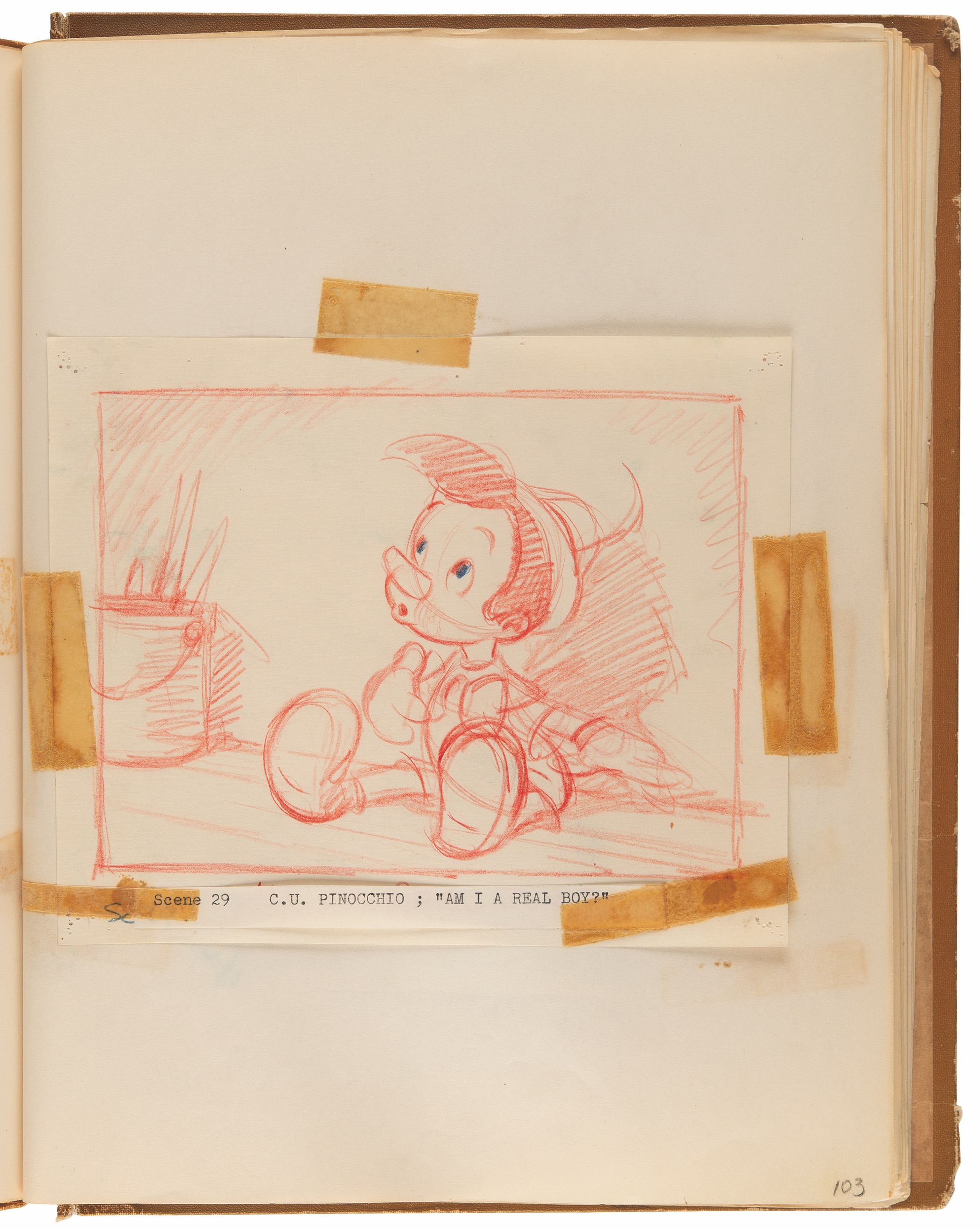
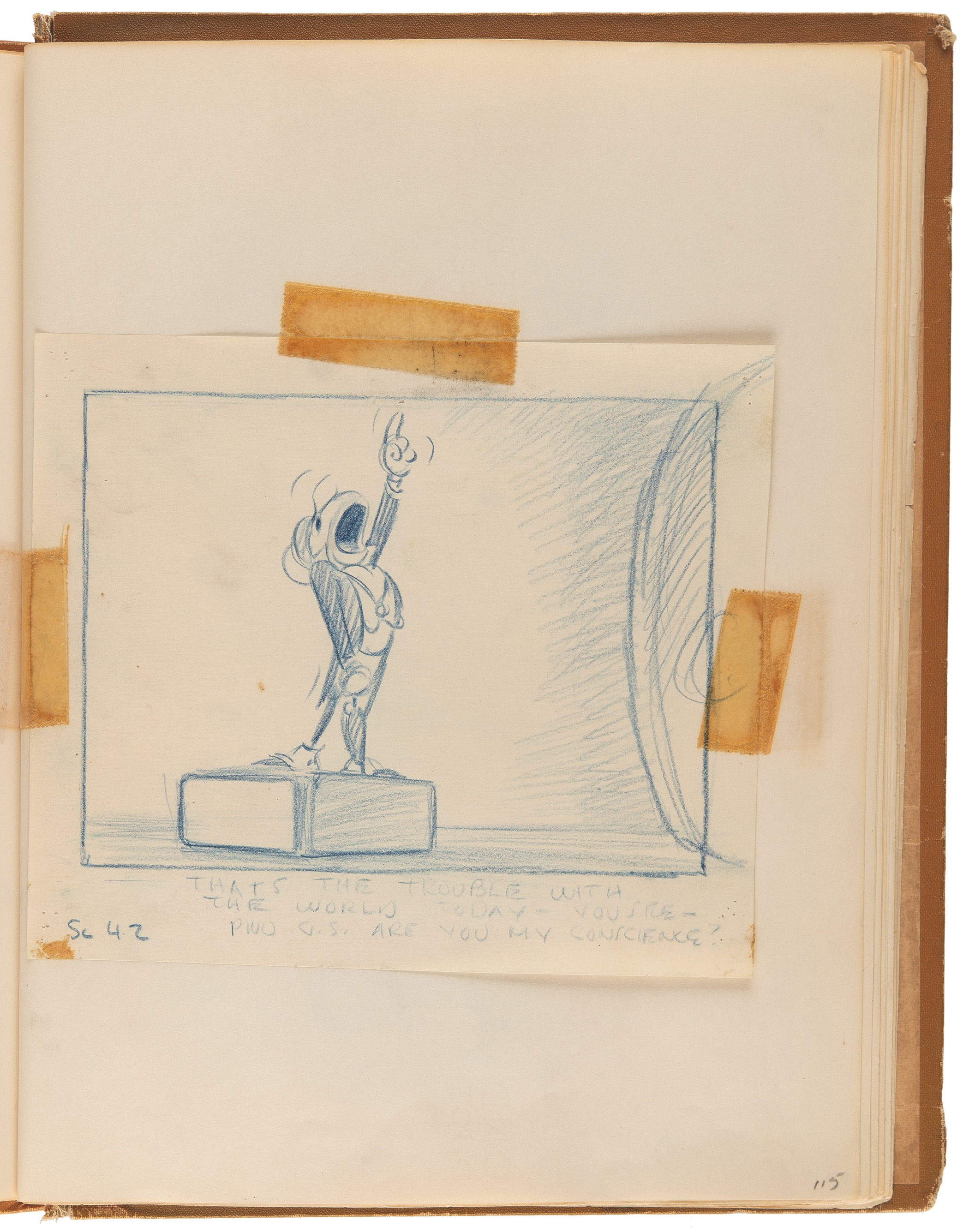
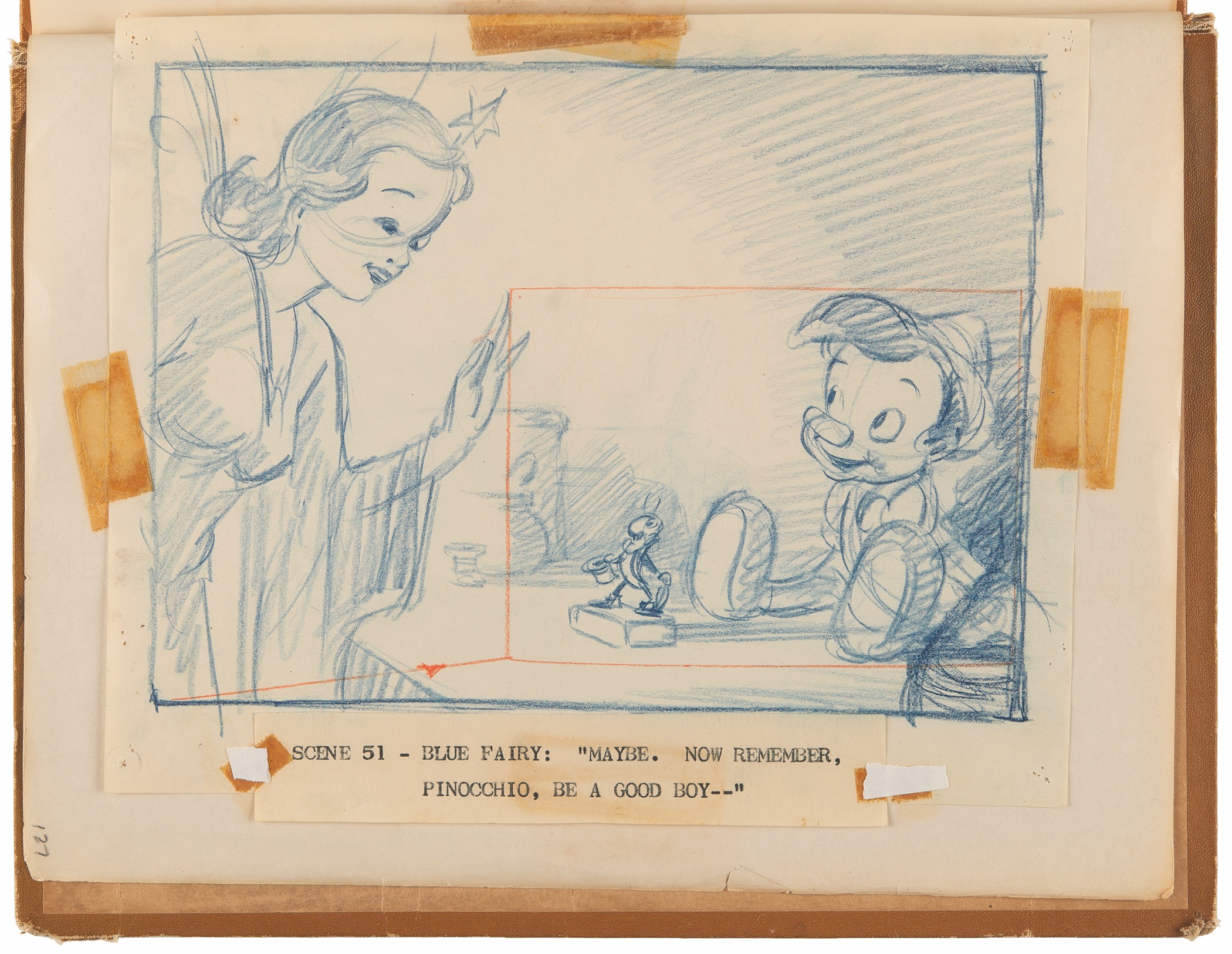
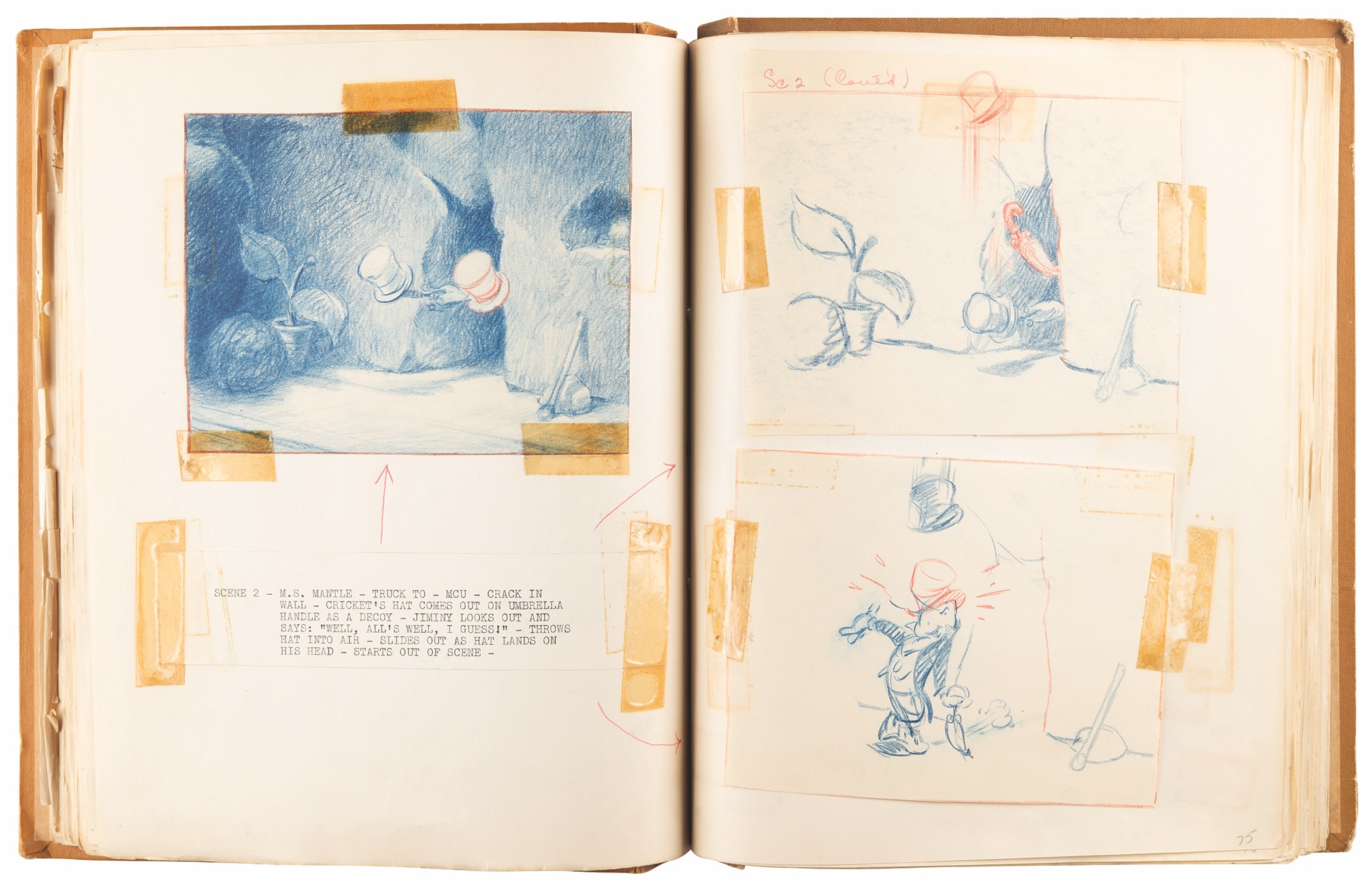
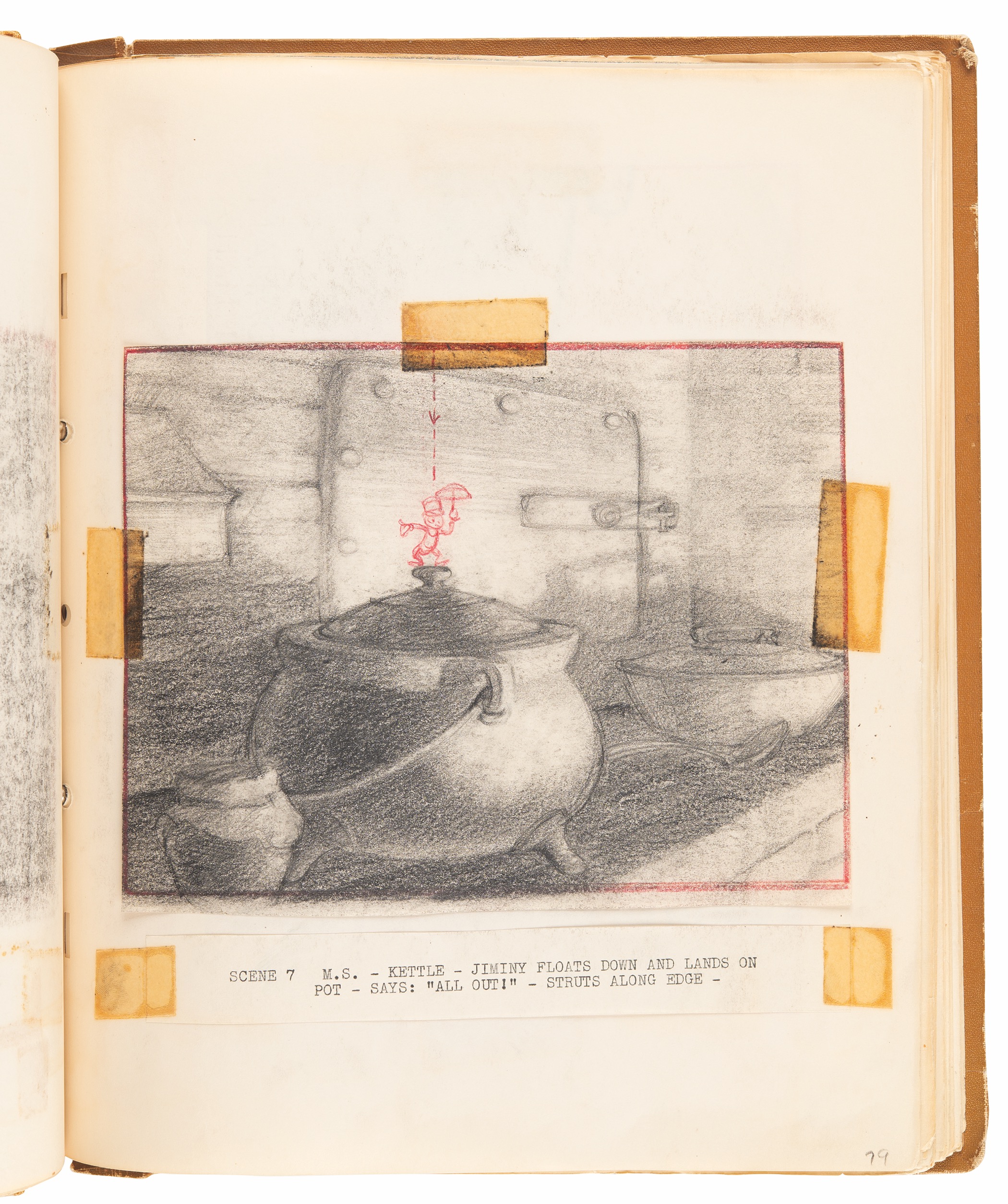
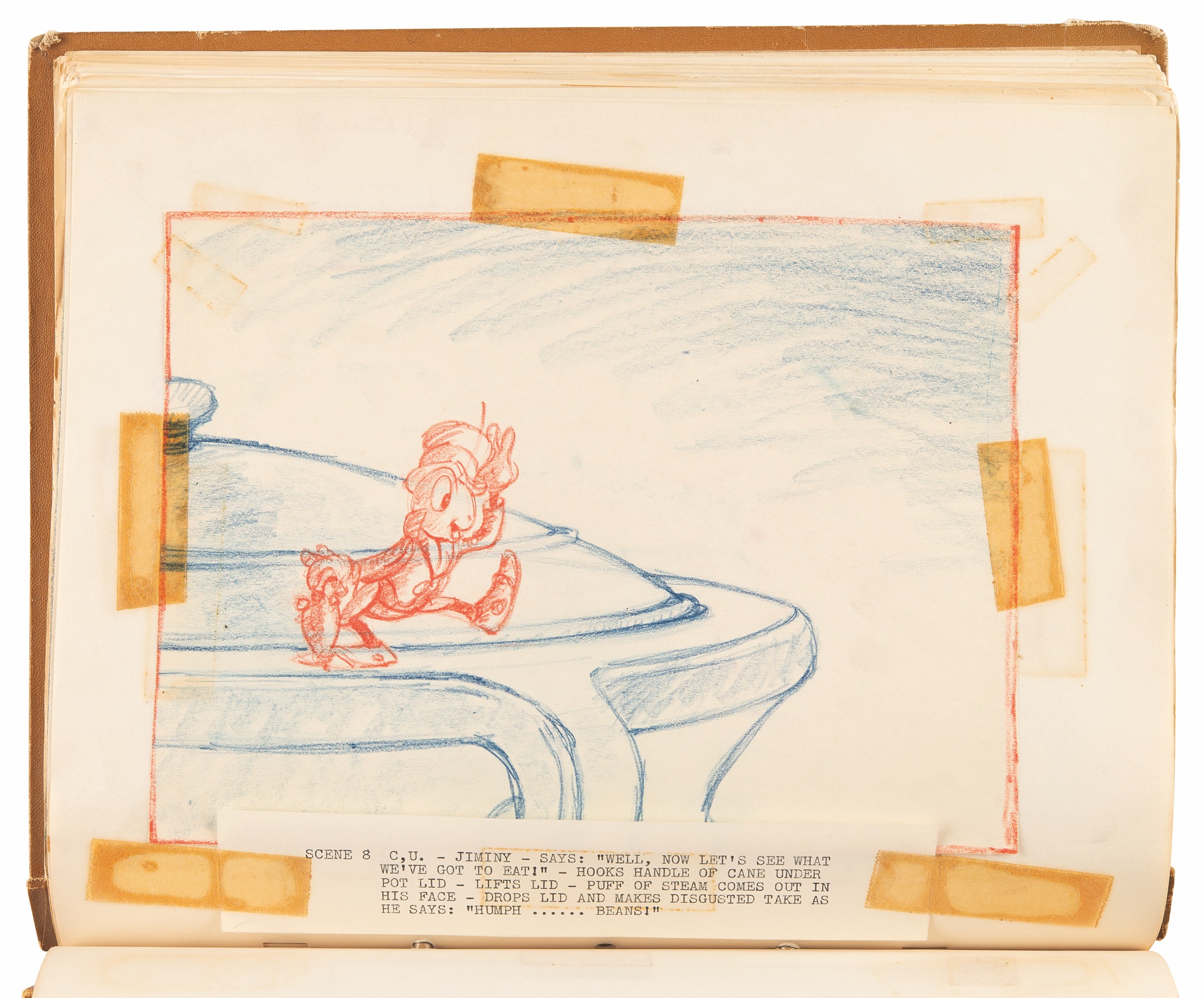
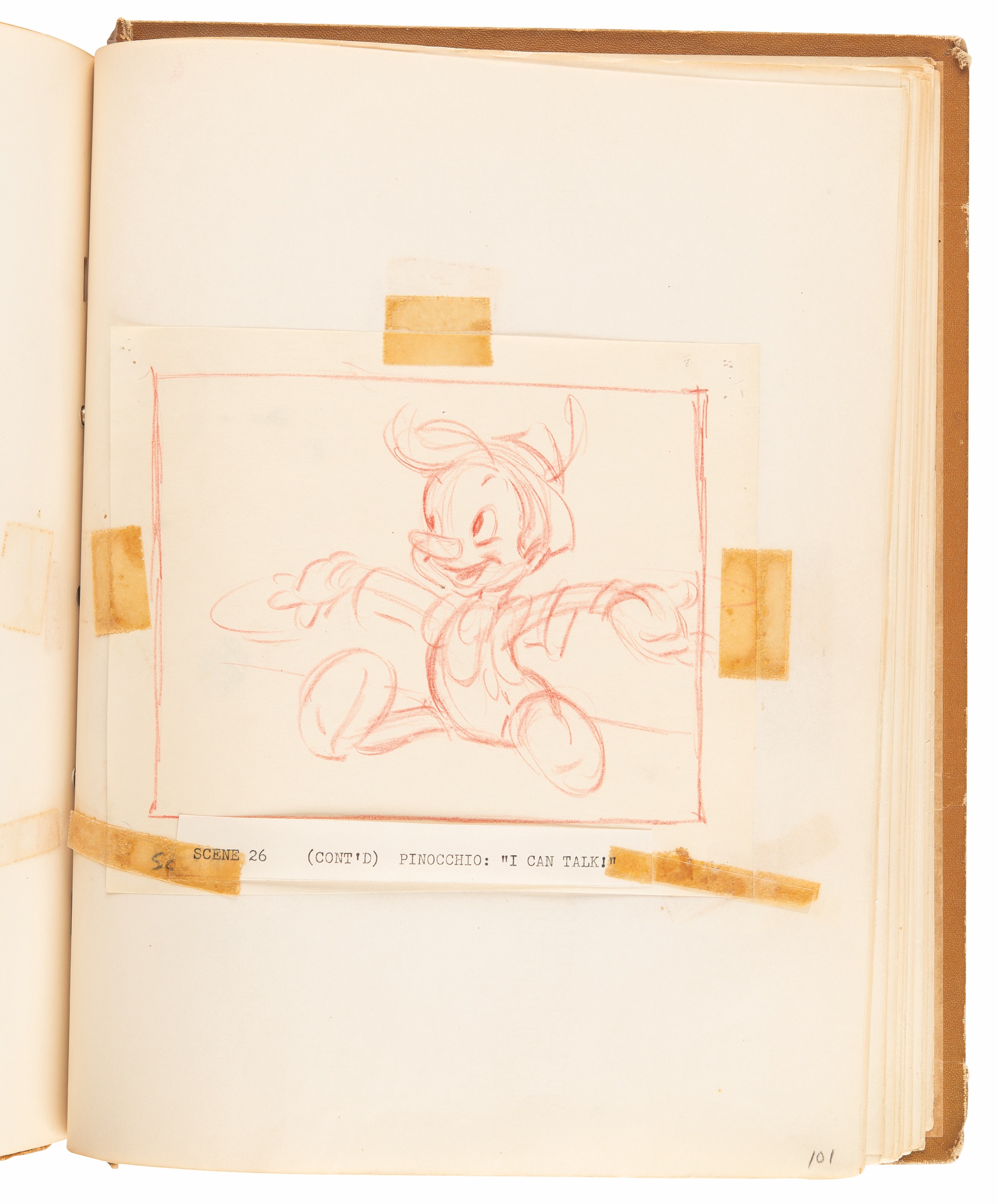
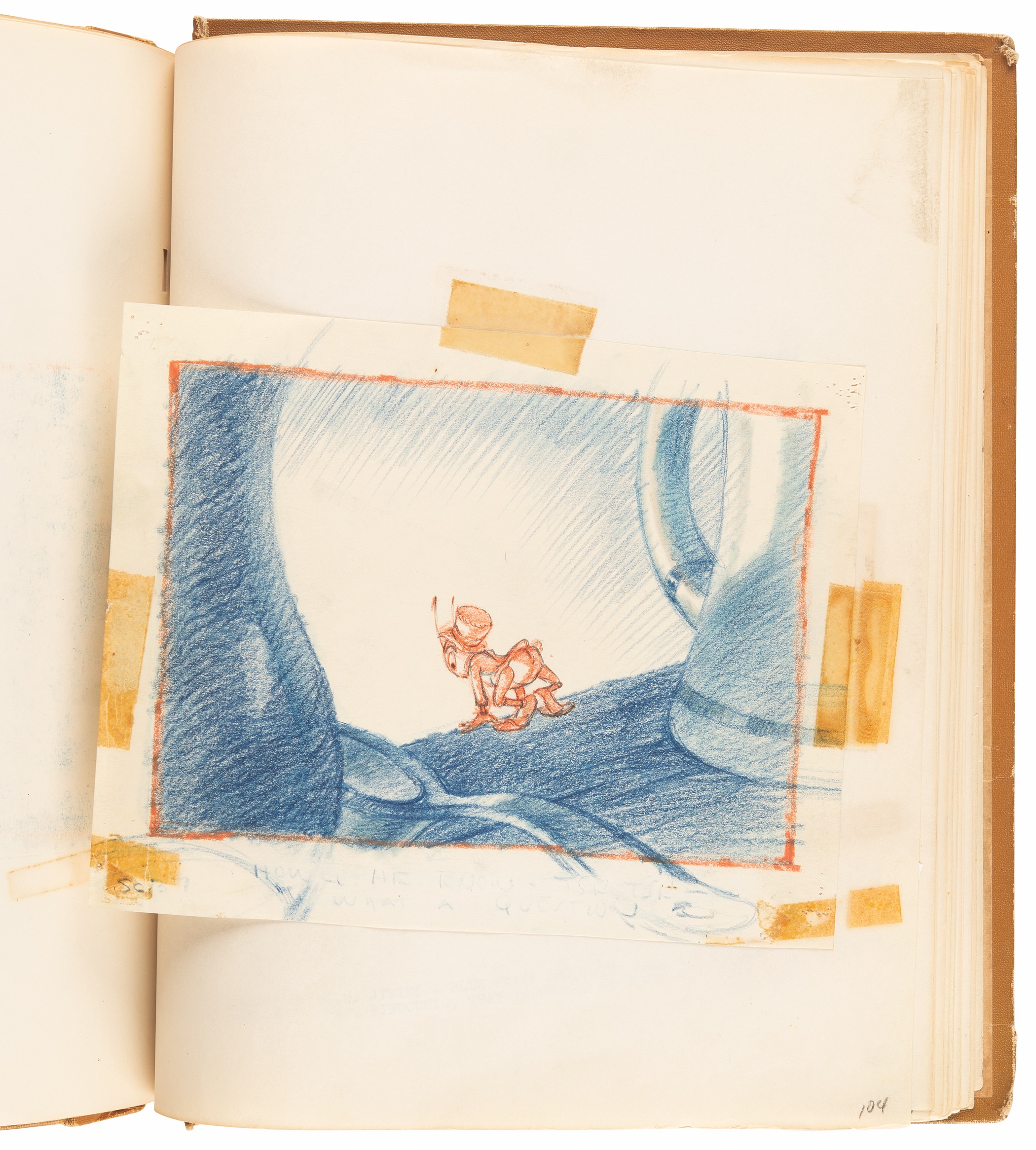
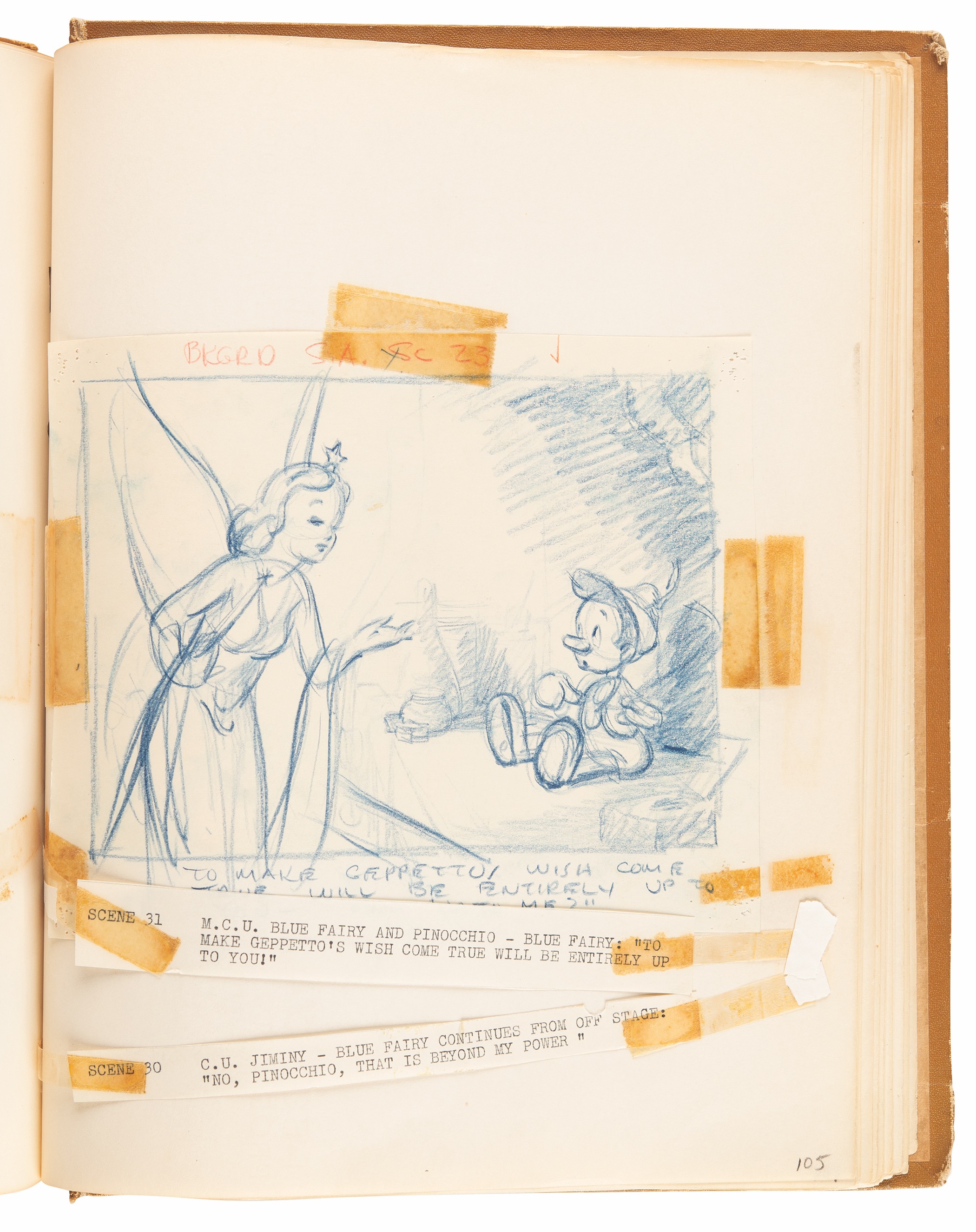
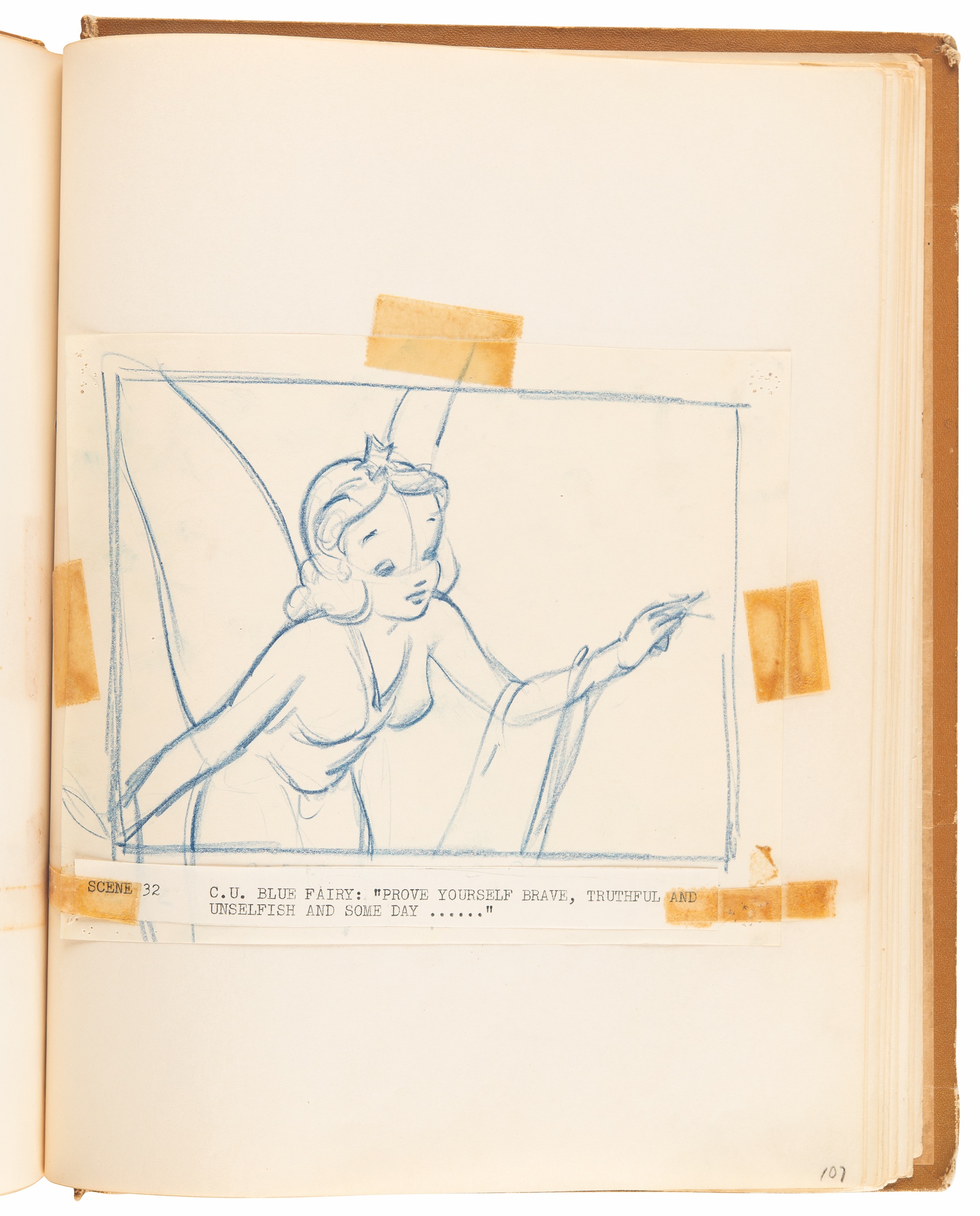
The sketchbook’s 47 original drawings, accomplished in graphite and colored pencil on animation paper ranging in size from 6.5˝ x 5˝ to 12˝ x 10˝, are all located in the section marked Sequence 1.5, which contains individual character sketches of Jiminy Cricket (21), Pinocchio (9), and the Blue Fairy (5). The section also contains several multi-character sketches, such as Pinocchio and Jiminy Cricket (5), Pinocchio and the Blue Fairy (3), Jiminy Cricket and the Blue Fairy, Geppetto and Figaro, and a wonderful drawing of Pinocchio, Jiminy Cricket, and the Blue Fairy (Scene 51, page 127), which represents the final page of the sketchbook. The drawings are pictured on pages 3, 13, 24, 74-75, 78-81, 83-85, 87, 91-95, 97-101, 103-105, 107-109, 112-116, and 118-127.
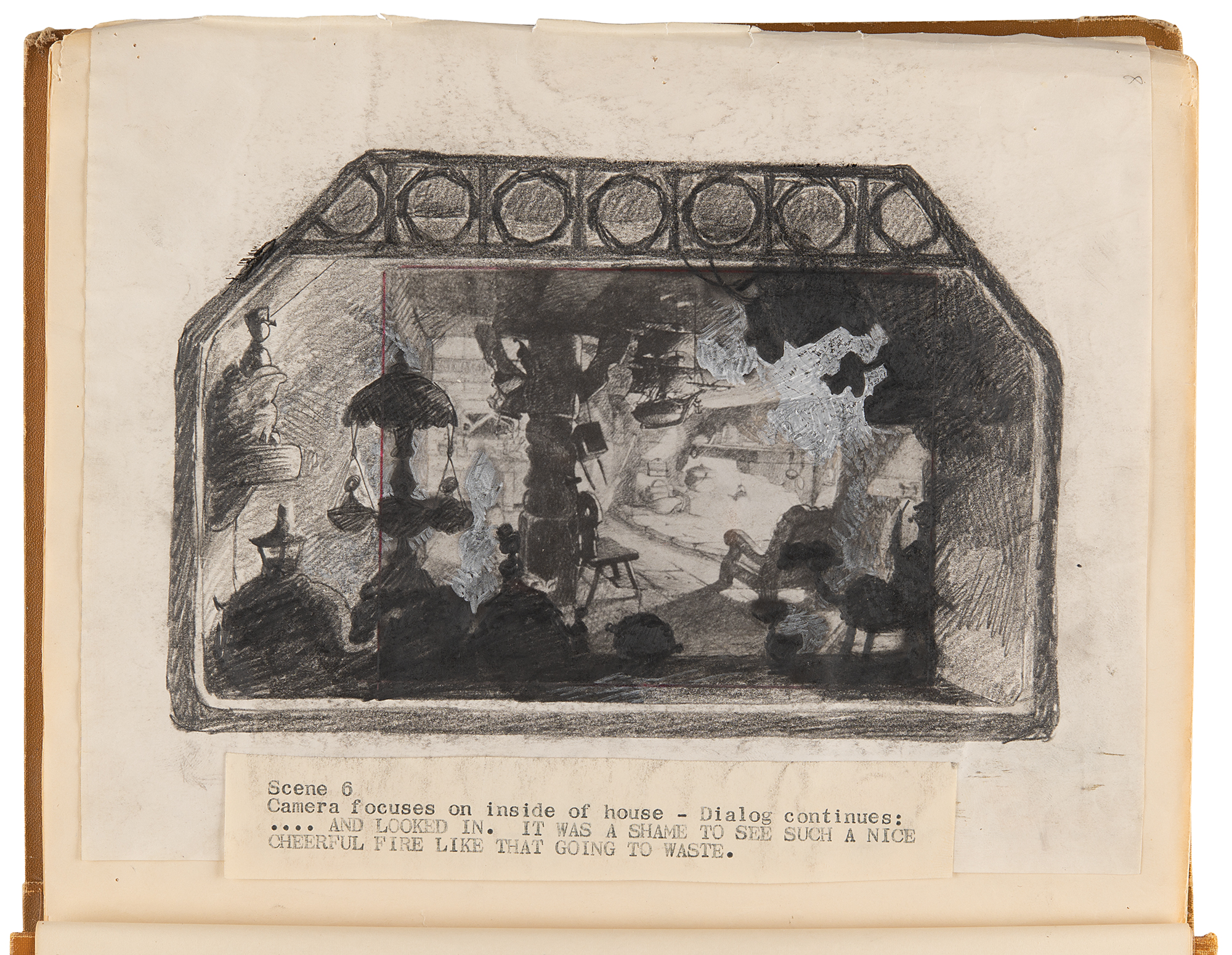
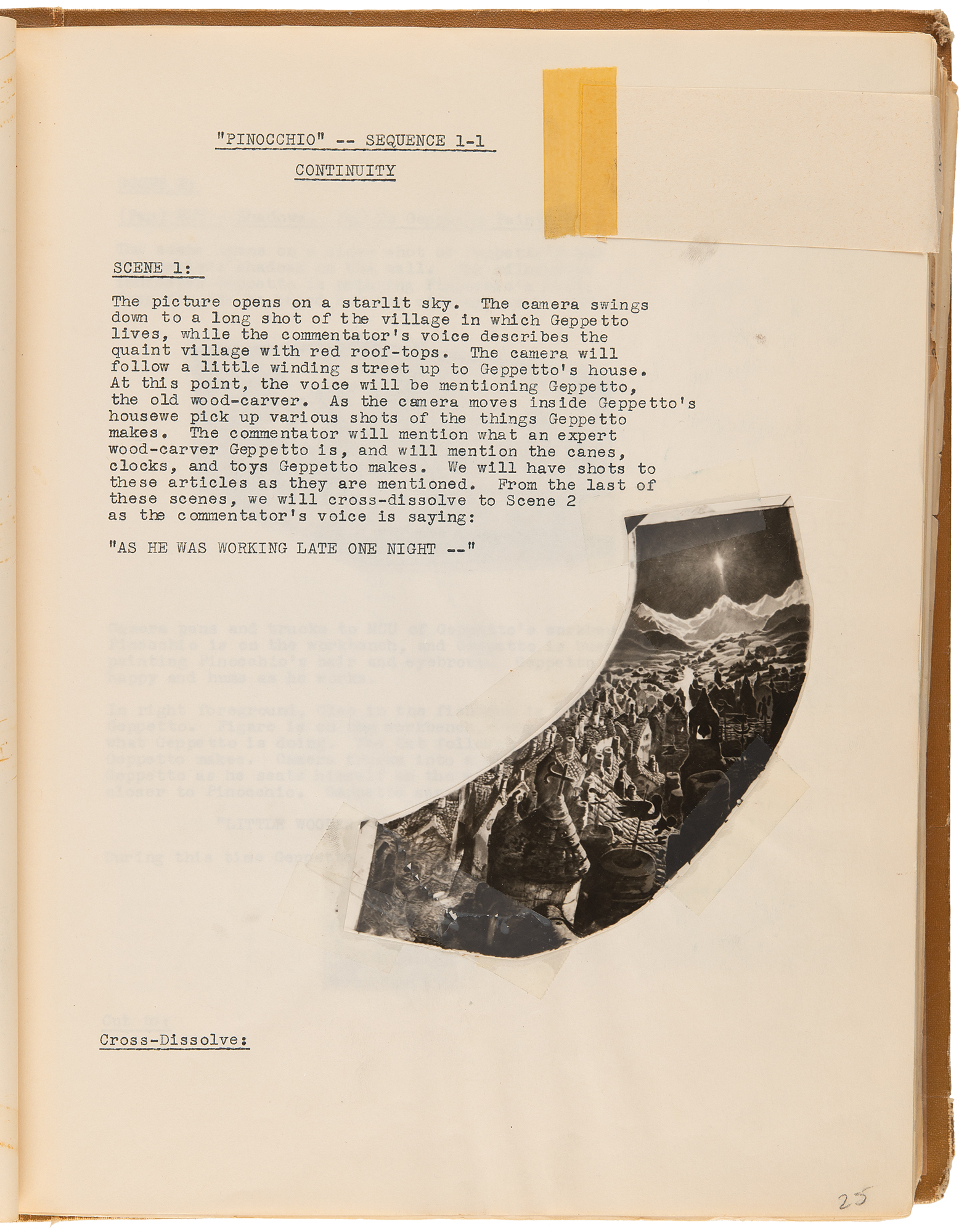
In addition to the sketches, the book contains 193 original photographic storyboard images, ranging in size from 1.5˝ x 1.25˝ to 6.75˝ x 5.25˝, with a handful hand-embellished in graphite or ink, most notably Scene 6 (page 8), with the caption reading: “Camera focus on inside of house – Dialog continues: …. And looked in. It was a shame to see such a nice cheerful fire like that going to waste.” An artist has added a detailed frame to the main image of Geppetto's workshop, which has also been touched up in ink and graphite.
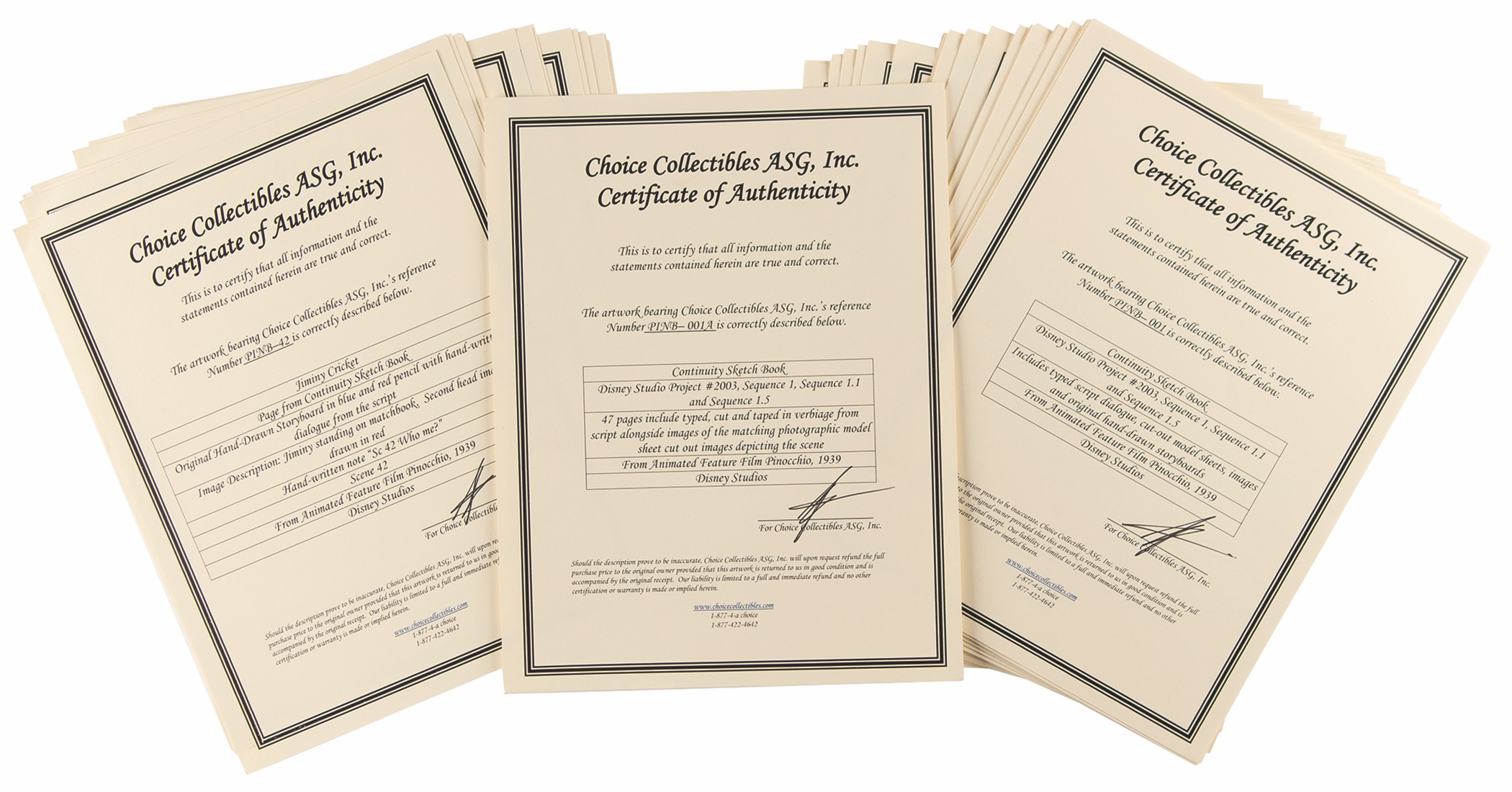
The majority of the pages contain typed captions (some affixed with tape) that feature dialogue or scene descriptions, including several moments forever ingrained in cinematic history. Highlighted captions include: Scene 1, page 1 (“Long shot – Pinocchio book set-up – Cricket is singing the ‘Wishing’ song”); Scene 83, page 68 (“Scene starts on extreme close-up of wishing star in sky. We hear Geppetto, offstage, as he says: ‘Starlight, starbright, first star I see tonight, I wish I may –, I wish I might…have the wish I make tonight”); Scenes 84 and 85, page 69 (“Geppetto and Figaro are both looking at the star at the beginning of the scene. Then Geppetto turns toward Figaro and says: ‘You know what I wished, Figaro?’… ‘I wished –’…‘That my little Pinocchio might be a real boy.’”); and Scene 29, page 103 (“C.U. Pinocchio; ‘Am I a real boy?’”). In fine condition, with some wear to binder boards, and several of the tape-affixed captions are becoming loose; the book is missing pages 10, 11, 12, 23, 76, 77, 82, 86, 89, 90, 102, 106, 110, and 117, and page 62 is missing its three photo storyboard images (scenes 68-70). Accompanied by numerous certificates of authenticity from Choice Collectibles ASG.
Given the sketch book’s role as a visual story outline for Pinocchio’s integral opening set-up, its narrative importance remains indisputable, as does its introductory animation style, which transitioned into a world of realism that forever changed the look and feel of animated feature films overnight. The influence of renowned Disney animator Freddie Moore is also readily apparent in the 10 rare early drawings of The Blue Fairy, who bears a noted resemblance to the original Disney princess, Snow White. Disney artists were still trying to perfect a more human ‘princess look,’ and as Animation Director on Pinocchio, Moore was instrumental in achieving the final depiction. A staggering relic of animation history, whose historical importance to the art of movie-making is undeniable—its availability to collectors signals an event not to be missed.

