Sold For $3,376
*Includes Buyers Premium
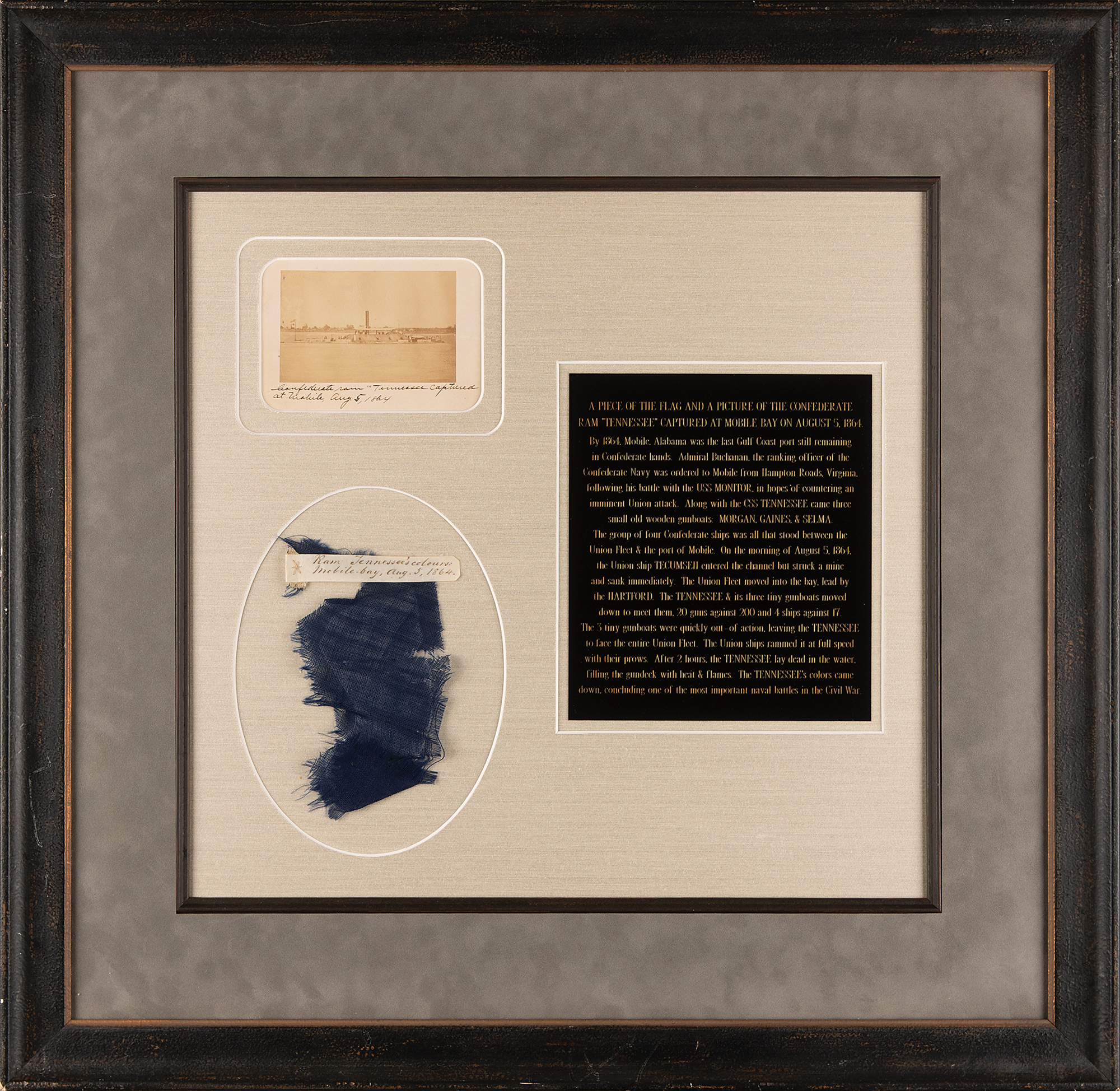
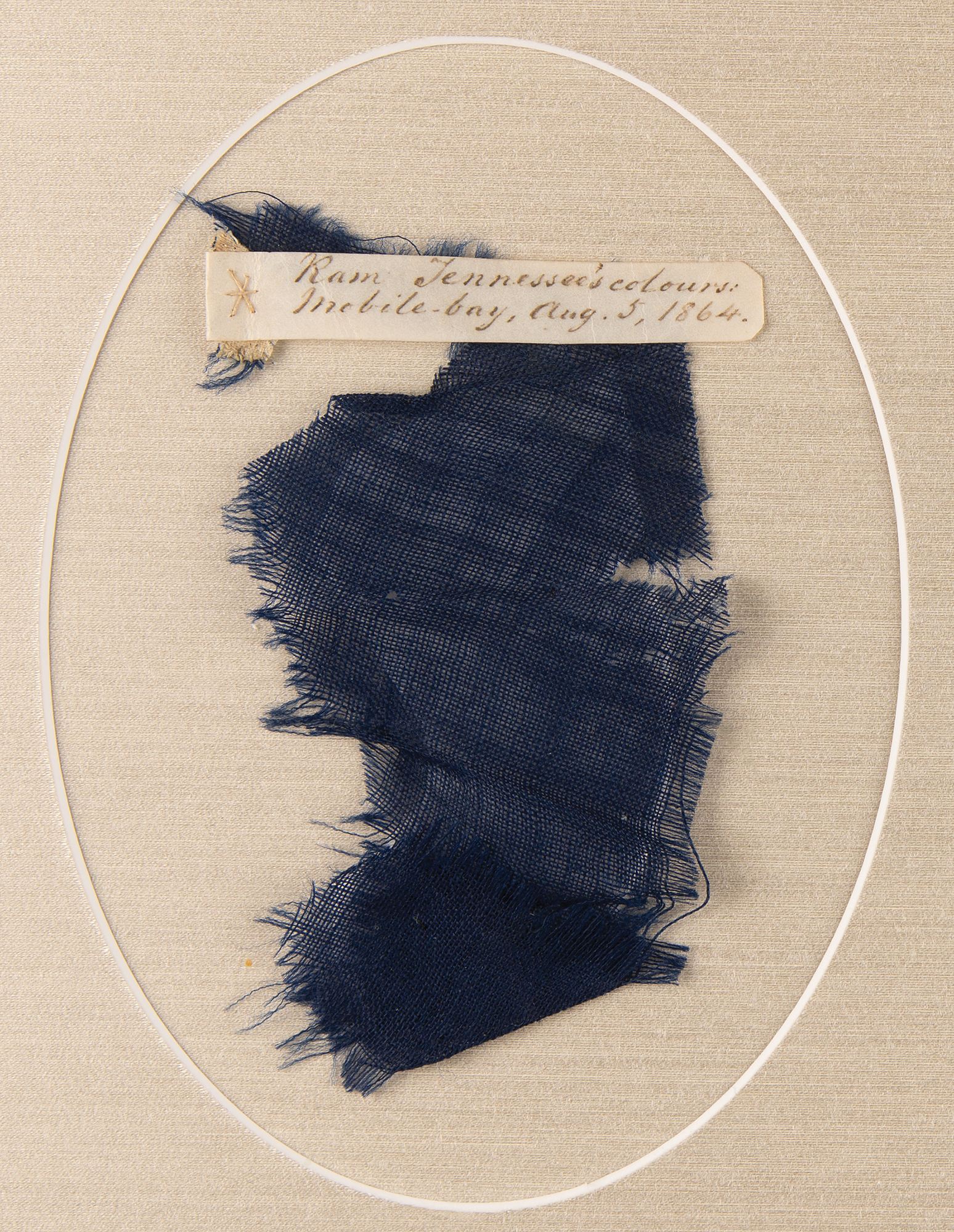
Historic swatch of blue fabric removed from the flag of the CSS Tennessee, a Confederate Navy casemate ironclad ram that served as the flagship of Admiral Franklin Buchanan, commander of the Mobile Squadron, during the Civil War. The Tennessee was captured in 1864 by the Union Navy during the Battle of Mobile Bay and then participated in the Union's subsequent Siege of Fort Morgan.
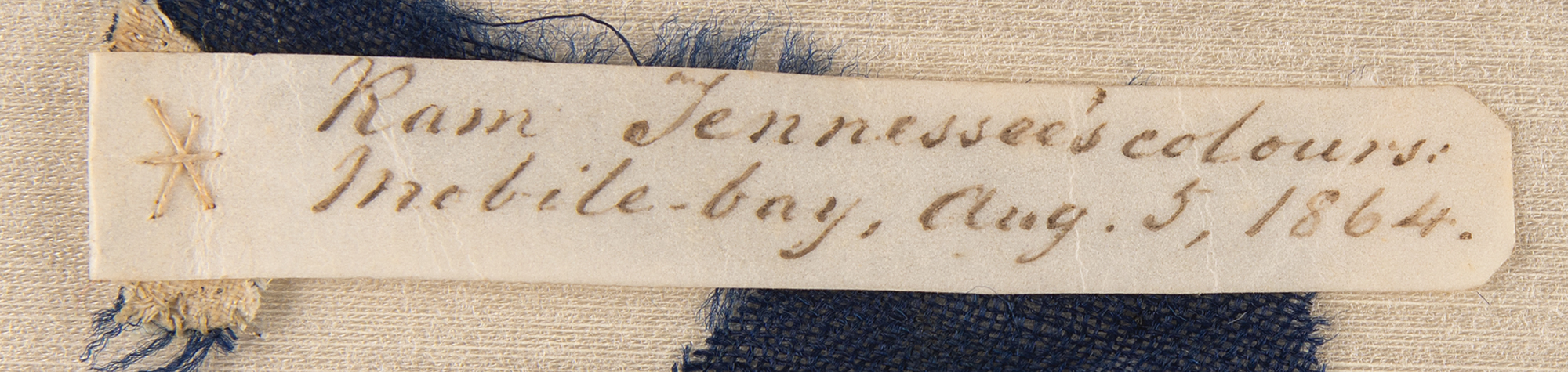
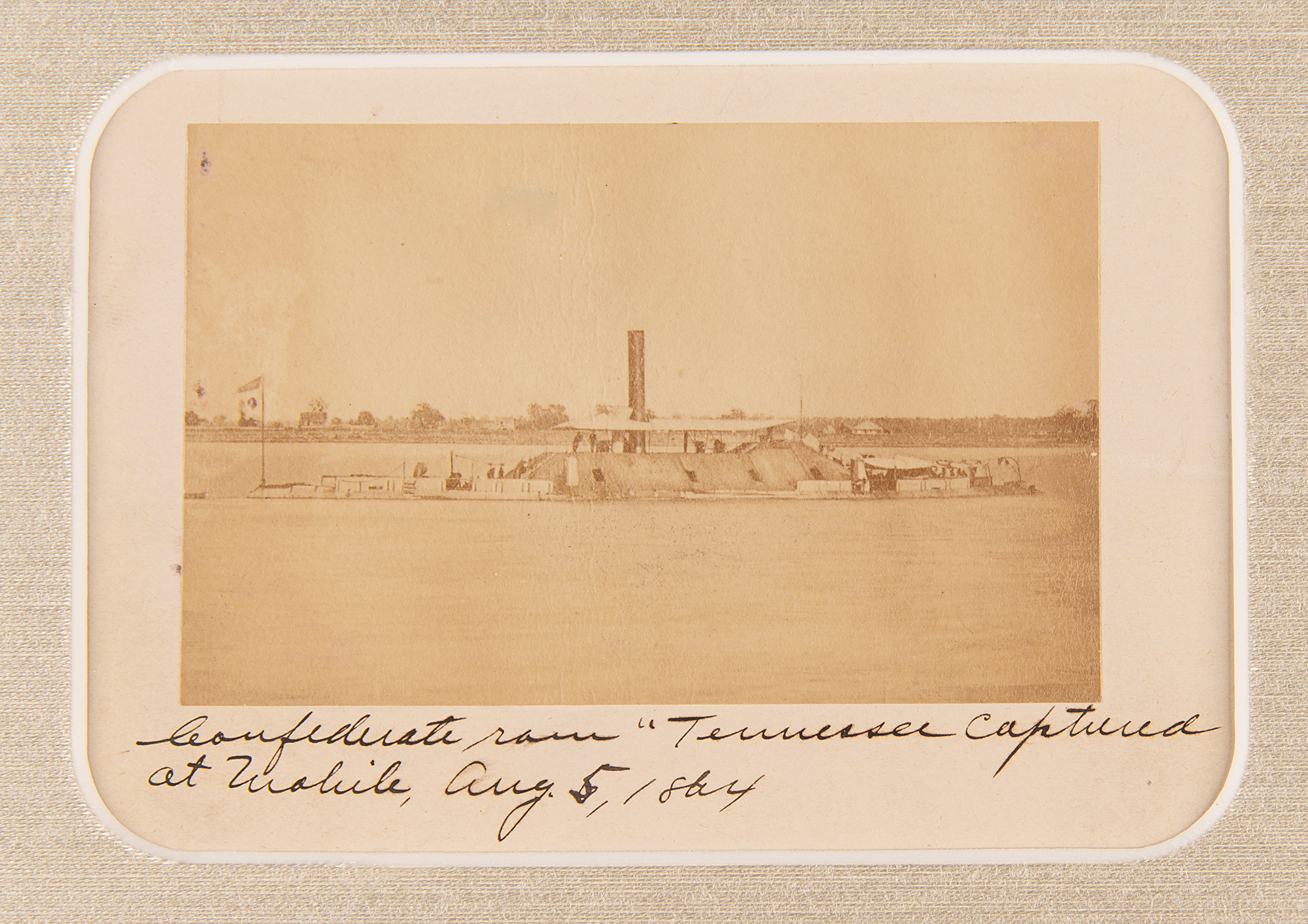
The large swatch approximately measures 3.5˝ x 6.5˝ and is accompanied by a period handwritten slip, “Ram Tennessee’s colours; Mobile-bay, Aug. 5, 1864,” and an original 5˝ x 3.5˝ contemporary photo of the seized vessel, which is annotated below, “Confederate ram ‘Tennessee’ captured at Mobile, Aug. 5, 1864.” The items are archivally matted and framed with an engraved plaque to an overall size of 25.75˝ x 25˝. In fine condition. Accompanied by a certificate of authenticity from The Horse Soldier.
By 1864, Mobile, Alabama, was the last Gulf Coast port of any consequence remaining in Confederate hands. The only entrance to Mobile Bay was a channel running between Forts Morgan and Gaines, reduced to a width of 150 yards by Confederate mines and obstructions. Such a Southern strategy forced Admiral Farragut to place his eighteen-ship force within easy range of Fort Morgan's heavy guns. Embarked in the flagship USS Hartford just outside Mobile Bay, Farragut scrutinized the forts and other bay defenses, sending in small boats by night to chart obstructions and mines.
Admiral Buchanan, the ranking officer of the Confederate Navy, was ordered to Mobile from Hampton Roads, Virginia, following his battle with the USS Monitor. He began to frantically work to organize a fleet in hopes of countering the imminent Union attack. The monitor CSS Tennessee had been floated downriver to receive armor. Along with the monitor came three small old wooden gunboats: Morgan, Gaines, and Selma. The group of four Confederate ships was all that stood between the Union Fleet and the port of Mobile.
On the morning of August 5, 1864, the Federal fleet, led by the monitor Tecumseh, entered the channel. Abreast of Fort Morgan, Tecumseh veered from its course and dashed at Tennessee. When just 100 yards from Tennessee, Tecumseh ran into a mine that exploded and ripped out its bottom. The ship sank almost instantly; its stern rising out of the water so that the propeller was seen turning in the air as it slipped beneath the waves. The battle line broke, and ships backed up on one another. With fire from Fort Morgan raining upon them, they tangled in the channel. Then Farragut lashed in the rigging of the Hartford, ‘damned the torpedoes,’ and moved into the bay at full speed.
Tennessee and its three tiny gunboats moved down to meet them, 20 guns against 200, and four ships against seventeen. Morgan, Gaines, and Selma were quickly out of action, leaving Tennessee to stand alone against the entire Union fleet. Farragut's ships converged upon the great ironclad, firing broadsides and ramming it at full speed with their prows. After two hours, Tennessee was dead in the water, its steering gone and stack shot away, filling the gun-deck with suffocating heat and flames. Only then did the wounded Admiral Buchanan give the order to surrender. When the Tennessee’s colors finally came down, it marked the conclusion of one of the most important battles in the Civil War.
The Collection of Dr. Joseph Matheu.

