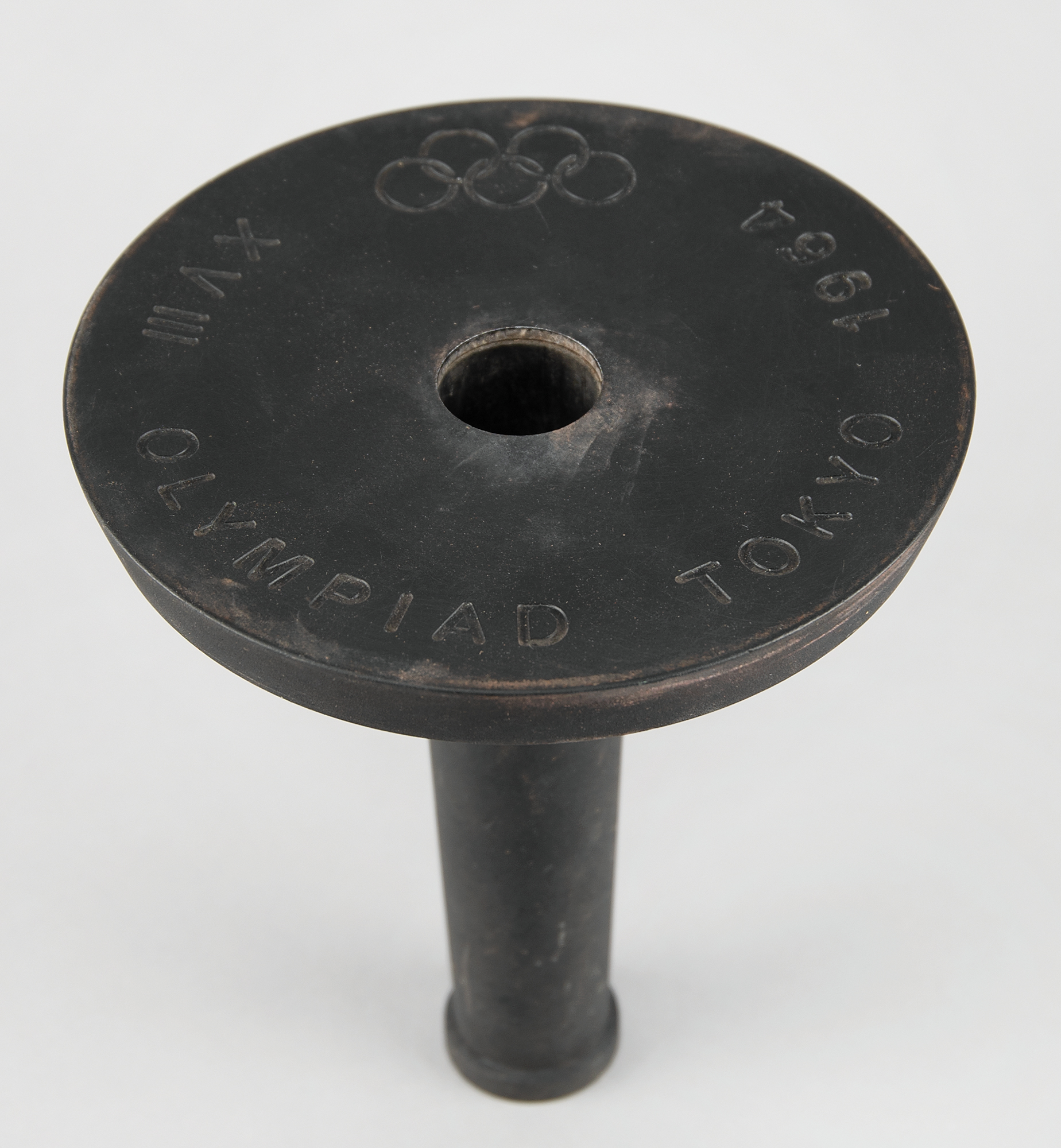
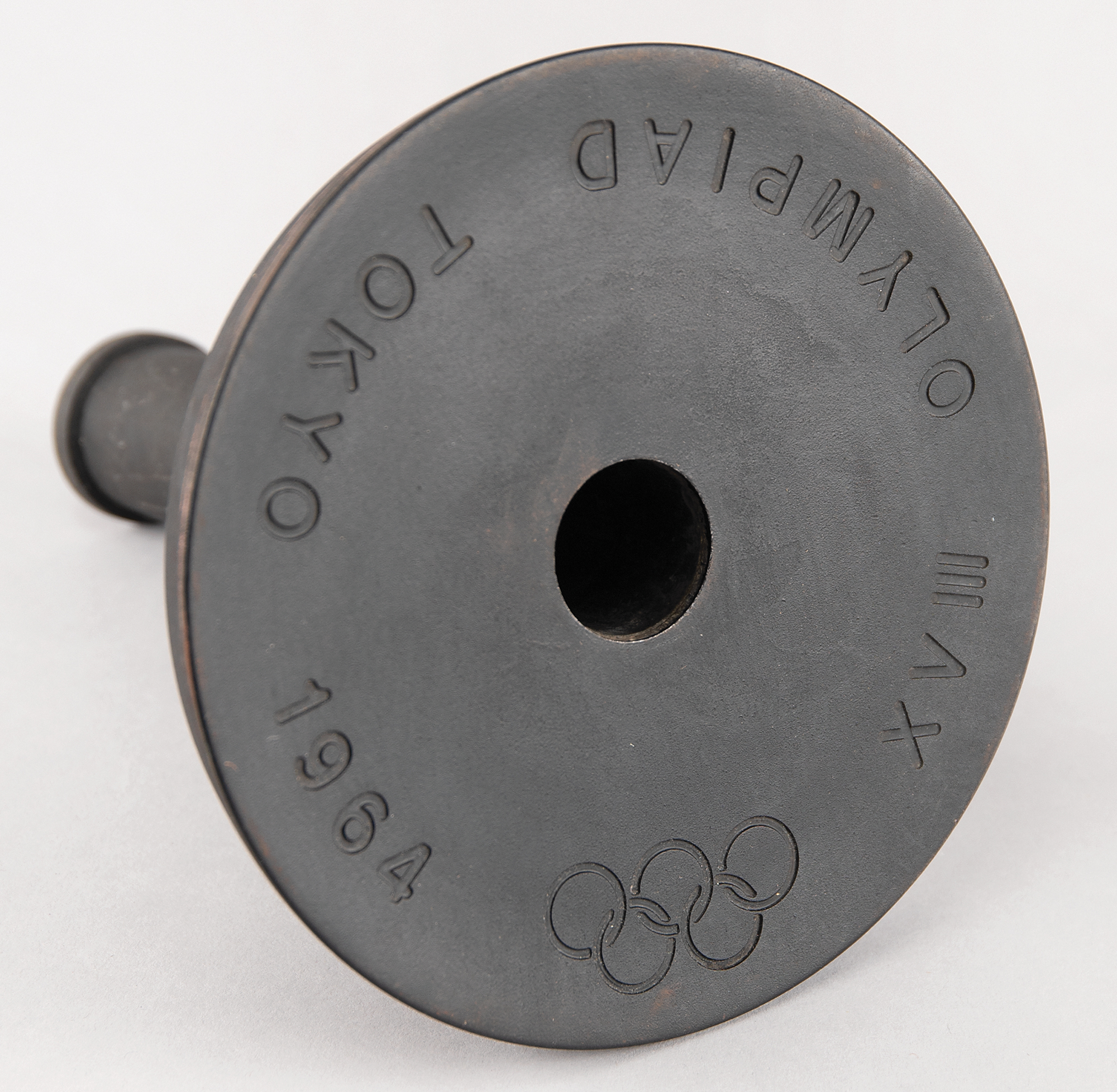
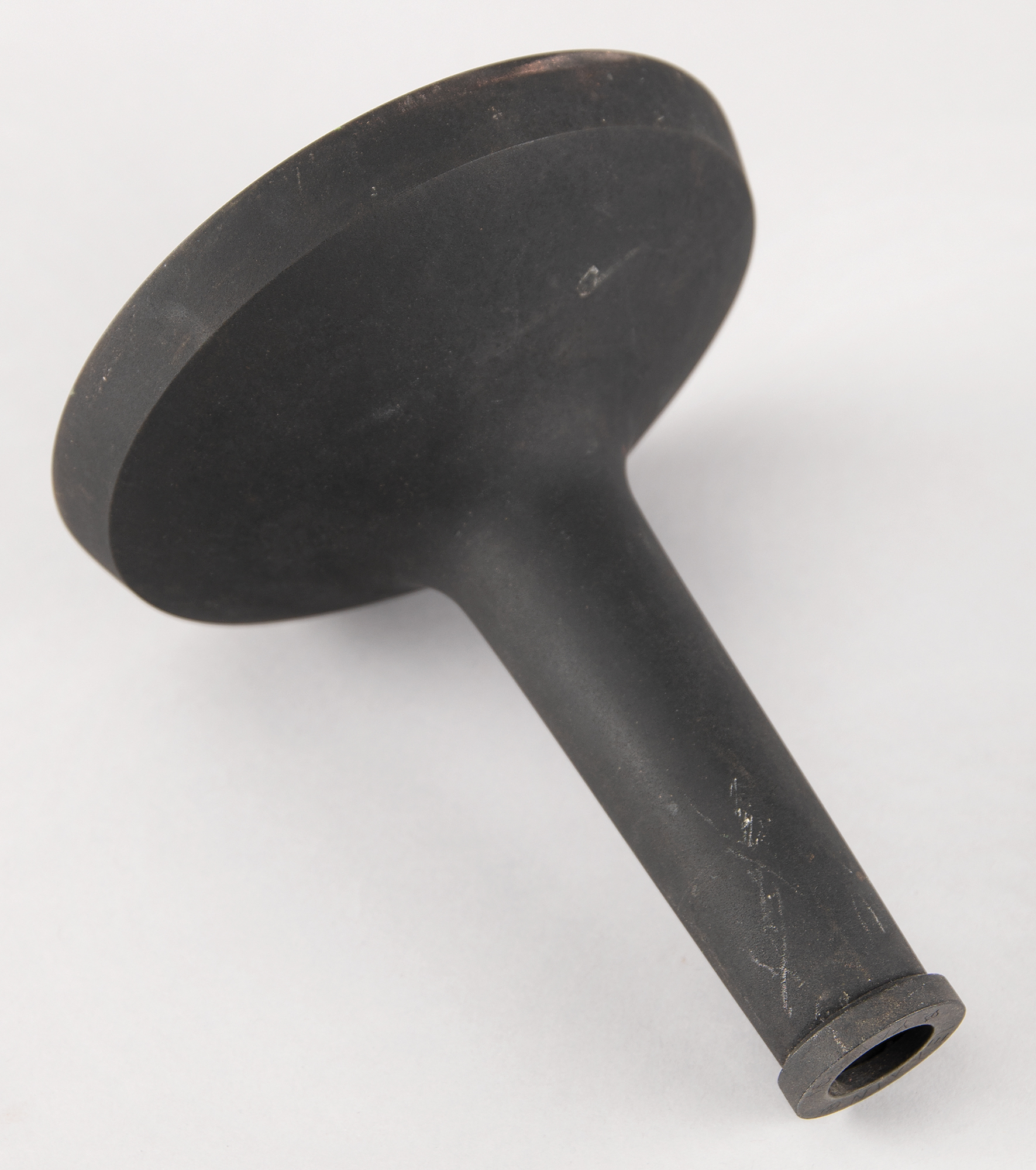
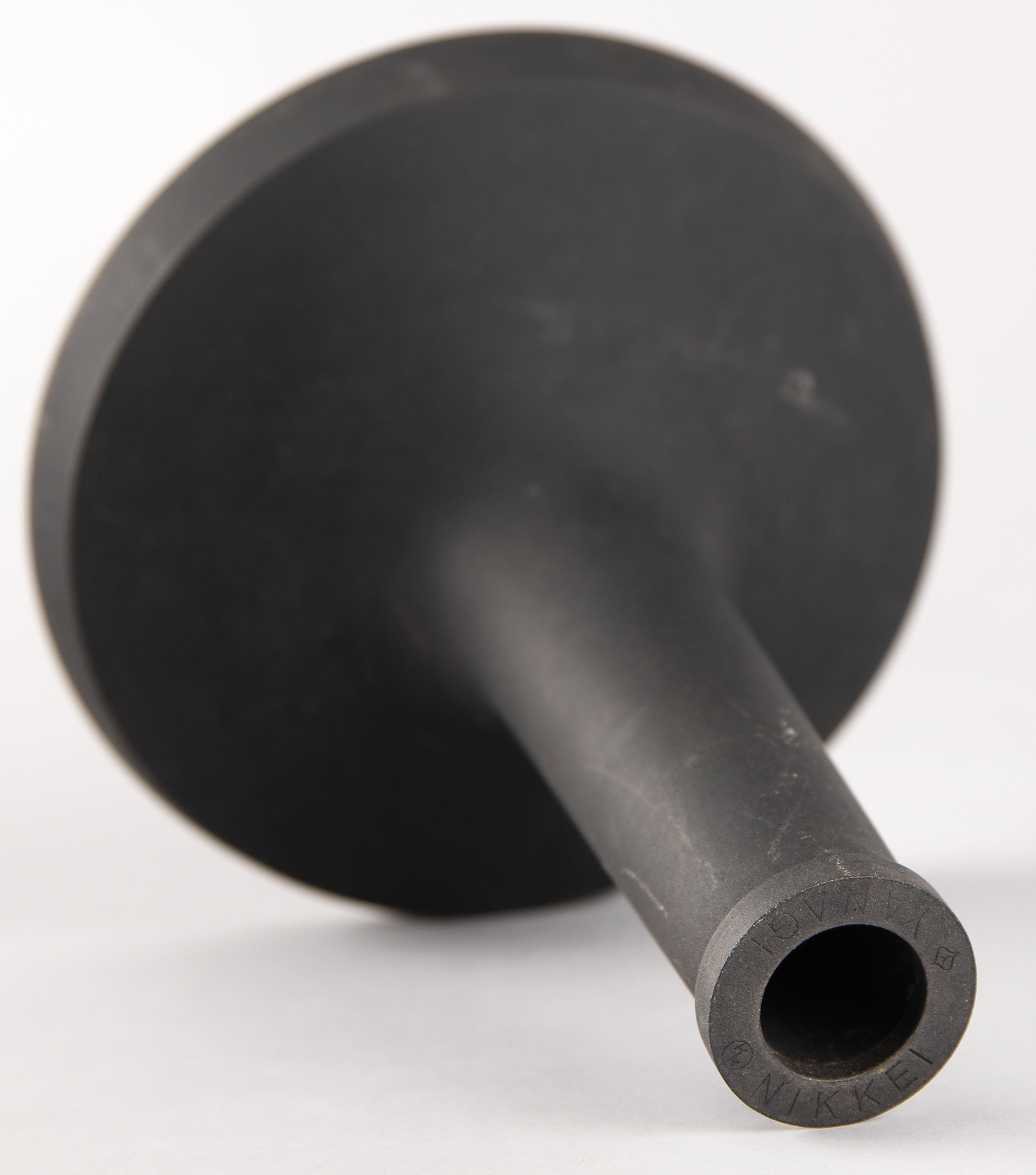
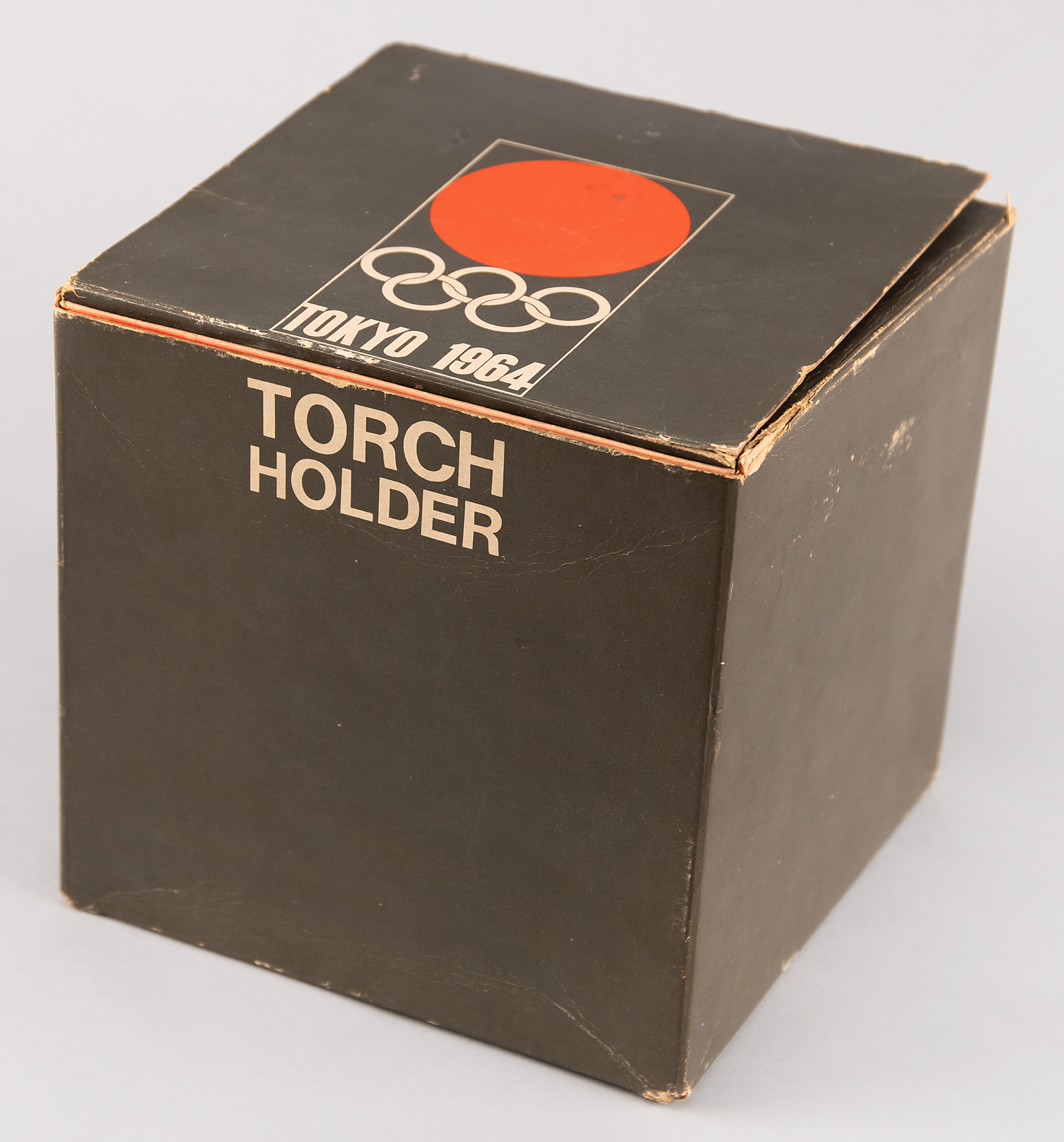
Official 1964 Tokyo Olympics torch handle, composed of blackened aluminum alloy, measuring 7.5″ in height and 6.75″ in width. Manufactured by Nippon Light Metal Co., the bowl is engraved "XVII Olympiad Tokyo 1964" with a set of Olympic rings, and the underside of the handle is marked: “Nikkei Yanagi.” The bowl bears wear to the edges and scattered scuffs and marks. Accompanied by its original ‘Torch Holder’ box, which features scattered wear and scuffing, with one of the box flaps detached and another missing.
The Olympic flame was carried for 51 days by 870 runners for 26,065 kilometers. Designed on the principle of the coal-mine safety lamp, the Tokyo Olympic torch was filled with priming powder and fumigant, a two-component ignition material that needed to be wind- and rain-resistant, and which could both easily ignite and extinguish. Its effect was similar to that of a flare, and it proved a safe and reliable instrument throughout its hemisphere-trotting relay. Although a typhoon and various plane issues caused a one-day delay late in the schedule, the triumphant final relay by Yoshinori Sakai through Tokyo's National Olympic Stadium on October 10, 1964, served as a defining moment for a still-healing postwar Japan.

