Sold For $1,250
*Includes Buyers Premium
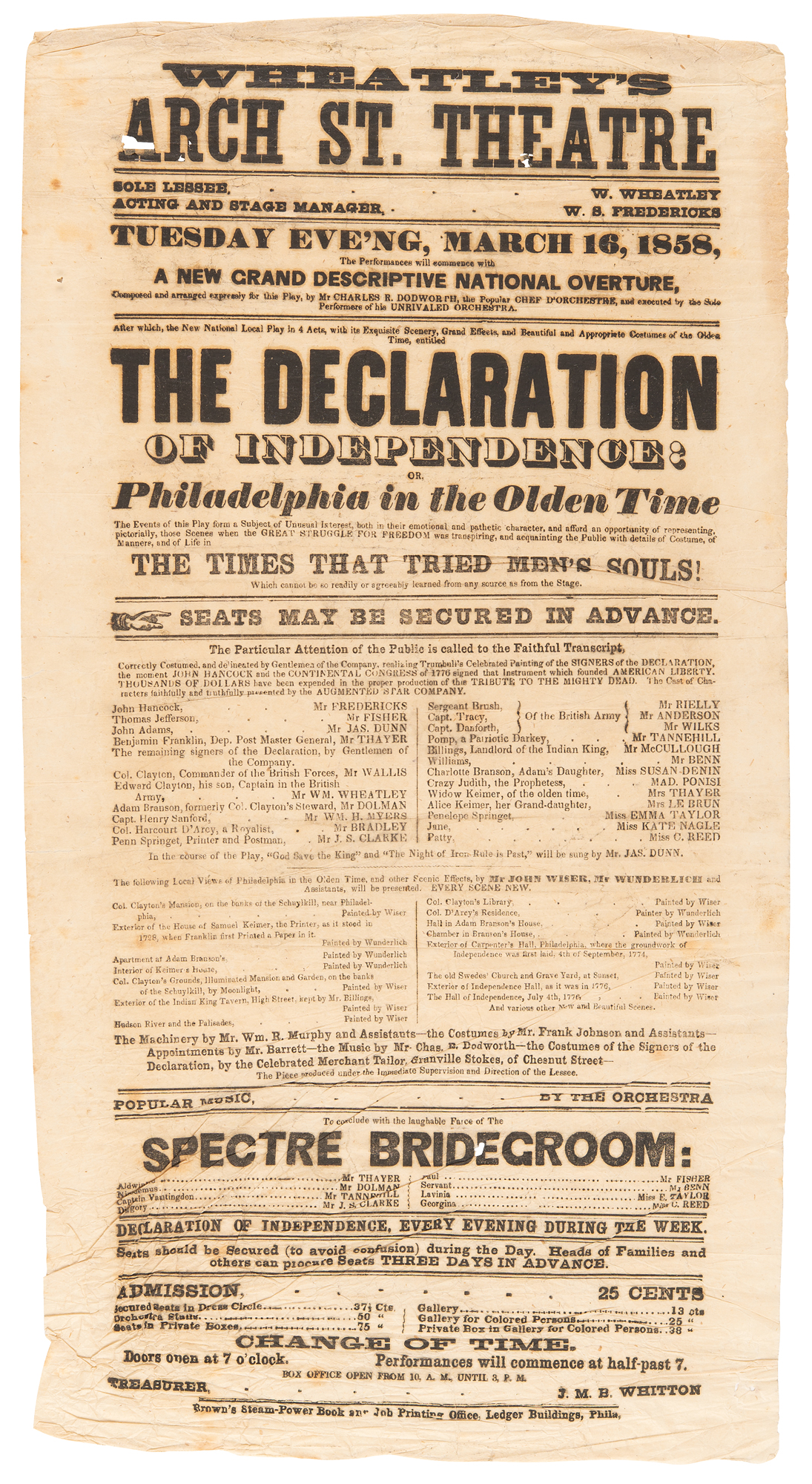
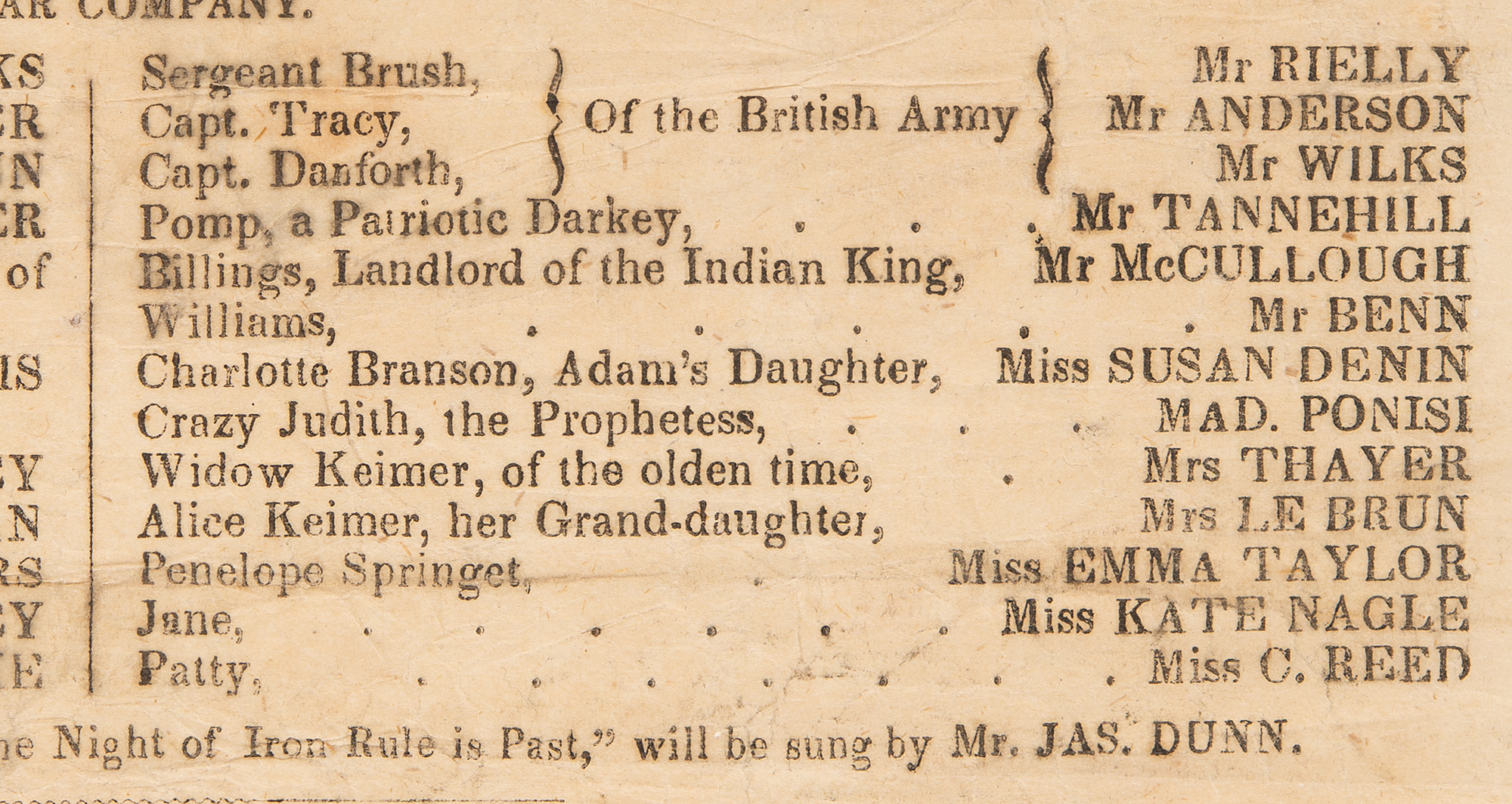
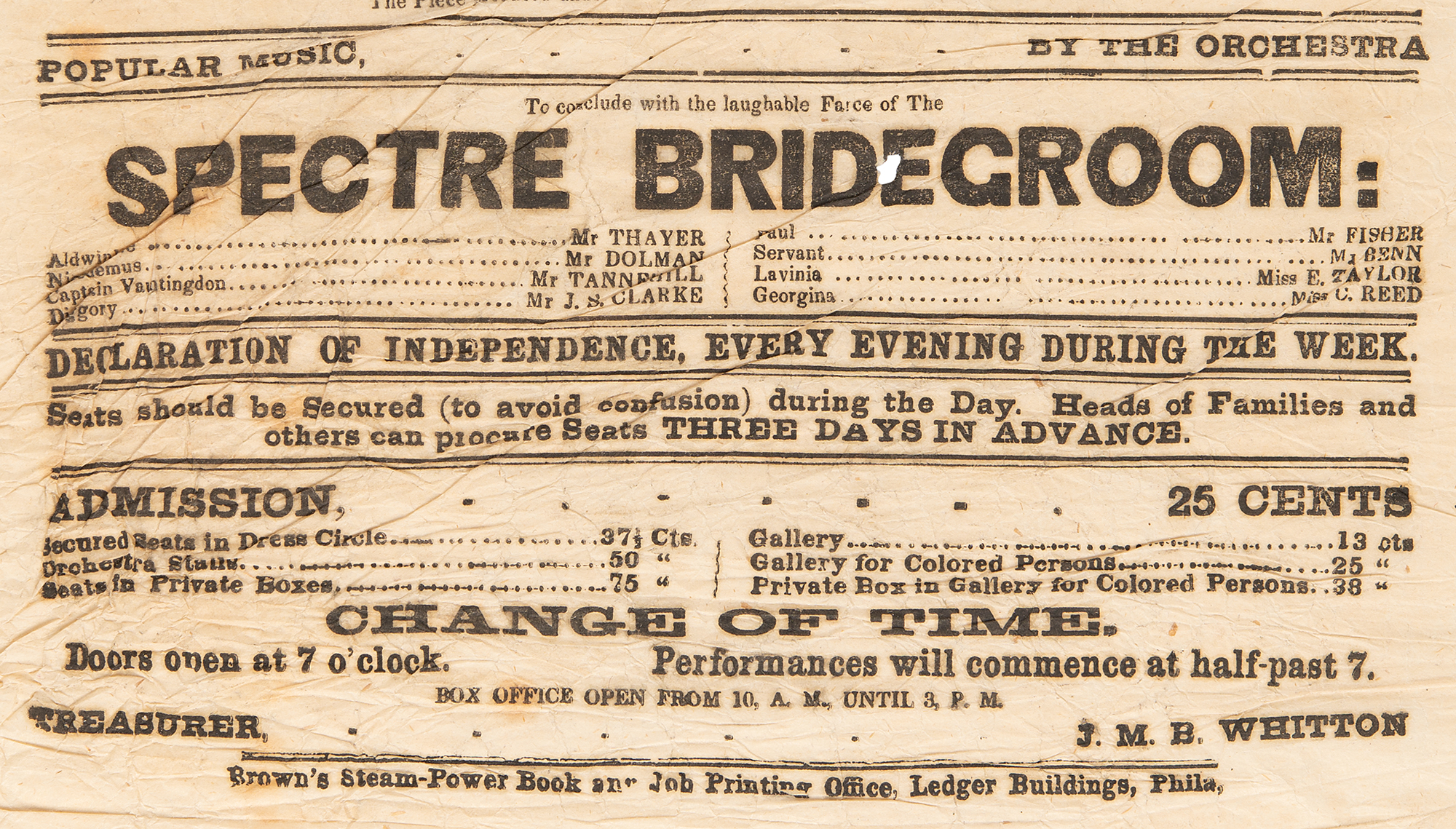
Rare original broadsheet for a performance of the play “The Declaration of Independence: Philadelphia in the Olden Time,” at Wheatley's Arch Street Theatre in Philadelphia, Pennsylvania, on March 16, 1858, which featured a 19-year-old John Wilkes Booth appearing in the small role of Captain Danforth. The play, which ran from March 8th to March 19th and retold the signing of the Declaration of Independence, featured actors and actresses performing as figures like John Hancock, Thomas Jefferson, John Adams, Benjamin Franklin, and others. In the cast list, Booth is billed as “Mr. Wilks” for the part of “Capt. Danforth.” Booth was billed as “Mr. Wilks” almost exclusively during his apprentice season of 1858, although a month earlier, when he appeared as Richmond to his brother-in-law John Sleeper Clarke's Richard III in an excerpt from that play, he was billed as “Mr. Wilks Booth.” Booth performed in dozens of plays at Wheatley's Arch Street Theatre in Philadelphia from August 15, 1857, through June 19, 1858.
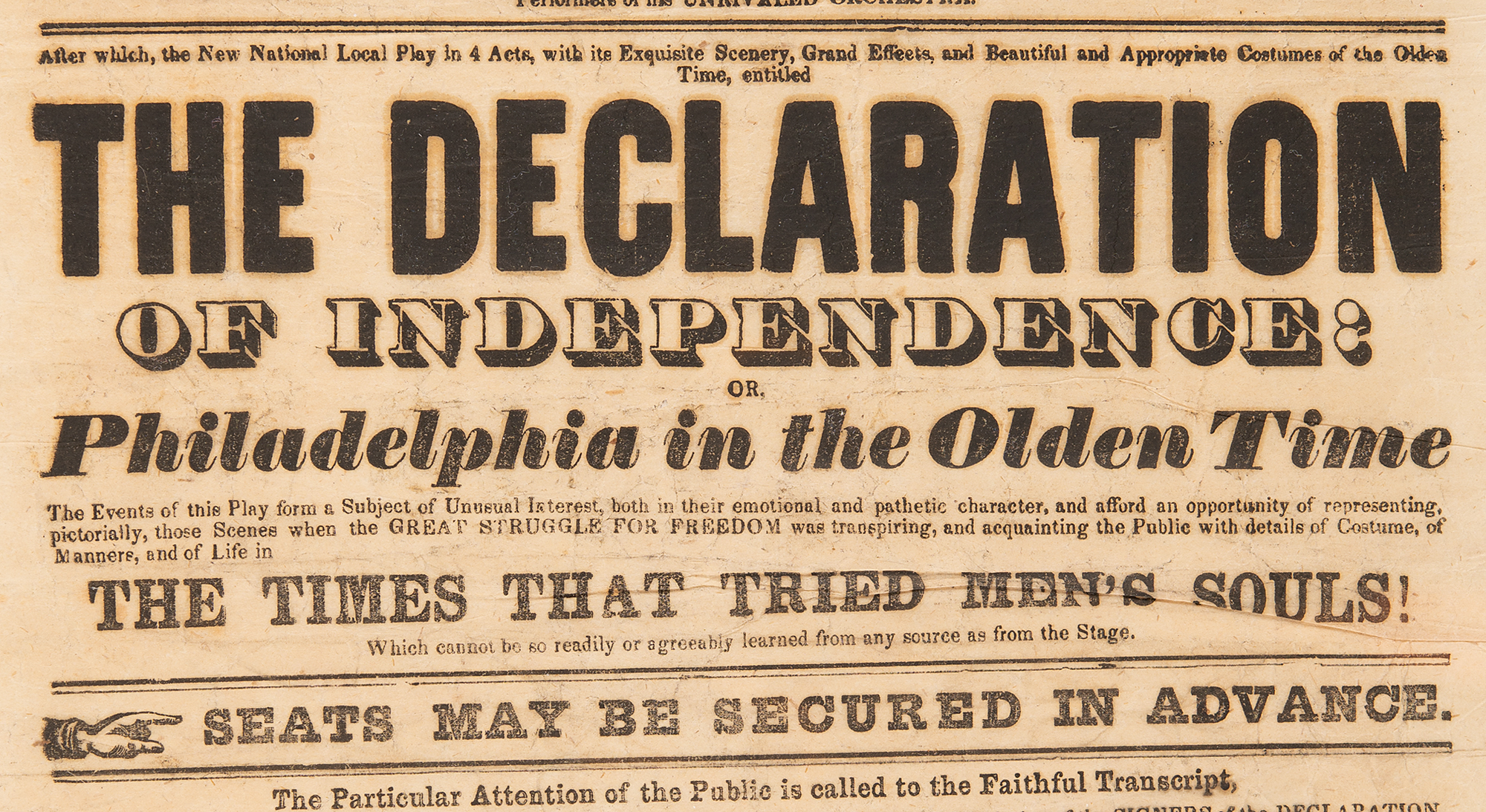
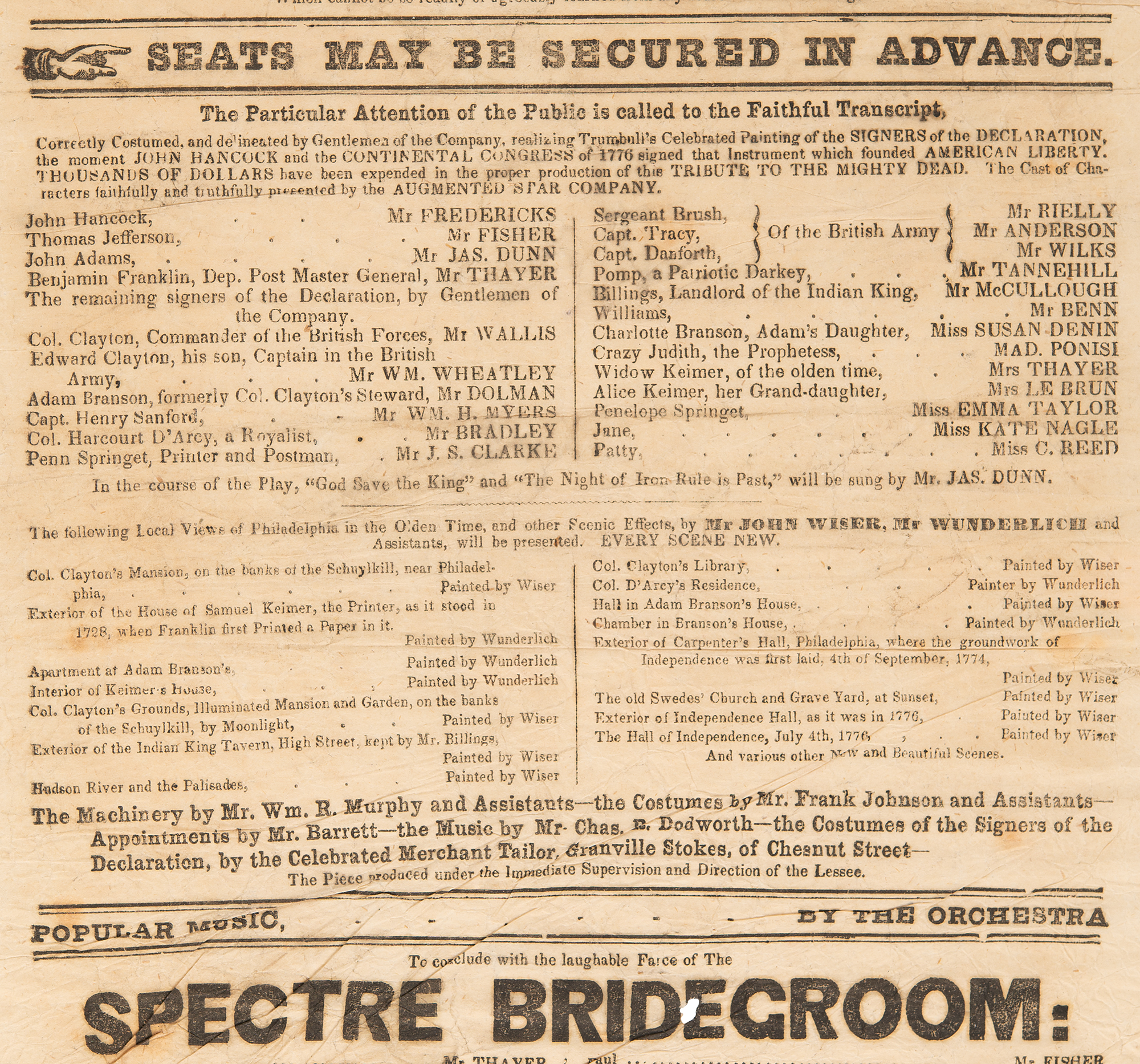
The broadside reads, in part: “The Events of this Play form a Subject of Unusual Interest, both in their emotional and pathetic character, and afford an opportunity of representing pictorially, those Scens when the Great Struggle for Freedom was transpiring, and acquainting the Public with details of Costume, of Manners, and of Life in The Times That Tried Men’s Souls!” and “The Particular Attention of the Public is called to the Faithful Transcript, Correctly Costumed, and delineated by Gentlemen of the Company, realising Trumbull’s Celebrated Painting of the Signers of the Declaration, the moment John Hancock and the Continental Congress of 1776 signed that Instrument which founded American Liberty. Thousands of Dollars have been expended in the proper production of this Tribute to the Mighty Dead. The Cast of Characters faithfully and truthfully presented by the Augmented Star Company.”
Also appearing in the Declaration of Independence is Booth’s brother-in-law, John Sleeper Clarke, who is billed as “Mr. J. S. Clarke” in the role of Penn Springet, Printer and Postman.” Clarke is also listed as “Diggory” in the afterpiece, Spectre Bridegroom. In very good to fine condition, with light creasing, and scattered small areas of paper loss.
John Wilkes Booth always wanted to be famous—and he achieved that immortal notoriety, though not in the way he originally envisioned. Booth is rightly notorious for assassinating Abraham Lincoln, but it's sometimes forgotten that he was already a well-known actor.
Booth made his debut on stage at age 18 in 1855. Growing in popularity, he performed in 83 plays in 1858: among them were William Wallace and Brutus, having as their theme the killing or overthrow of an unjust ruler. Booth said that of all Shakespearean characters, his favorite role was Brutus, the slayer of a tyrant. In 1863, Booth performed for the first time at Ford's Theatre in Washington, taking the lead in The Marble Heart. Among his admiring audience was President Abraham Lincoln himself. Upon shooting Lincoln at Ford's Theater two years later, Booth reportedly borrowed from Brutus and shouted 'sic semper tyrannis'—'thus always to tyrants.'
Booth was a firm white supremacist and showed an almost obsessive interest in the Civil War. Like many Confederate sympathizers, he viewed Lincoln as a tyrant and feared the war would transform America into a nation of racial equality—a reality that offended Booth so deeply that he threw away not only his career but ultimately his life to try and prevent its arrival.

