Sold For $795
*Includes Buyers Premium
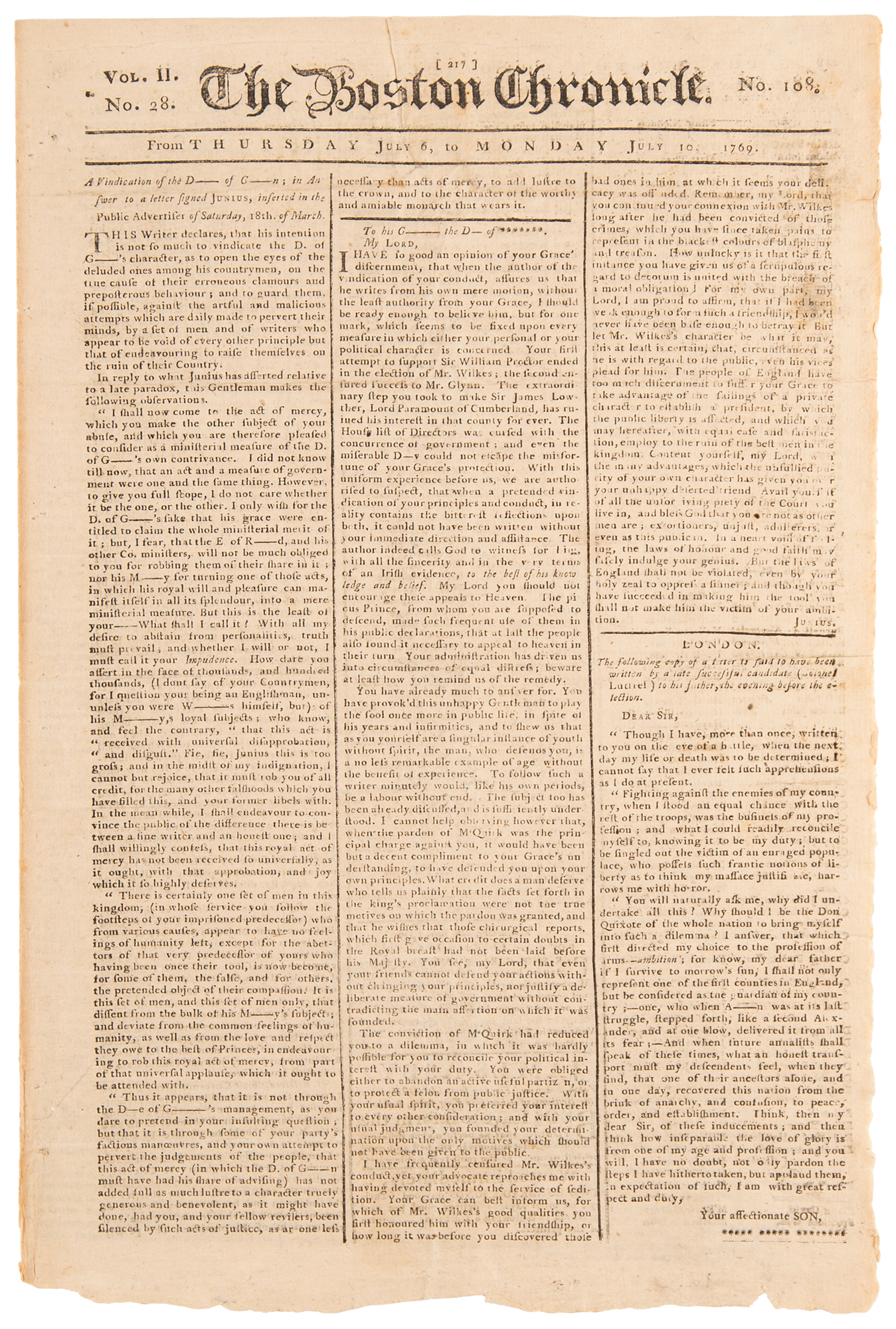
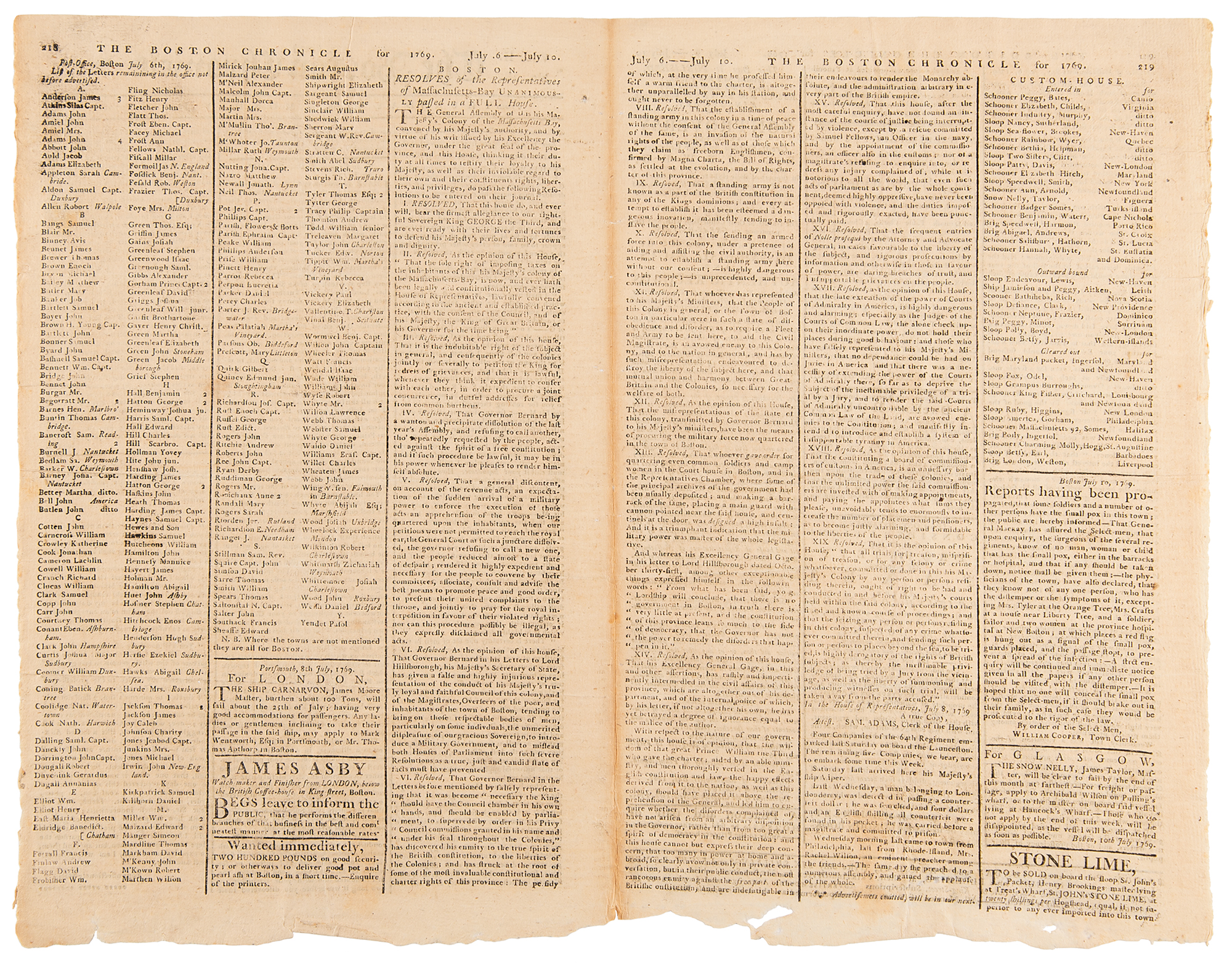
Complete issue of the Boston Chronicle from July 10, 1769, 9.75 x 14.75, four pages, with the full text of resolves passed by the Massachusetts Bay House of Representatives on July 8th, addressed to King George III, complaining of abuses by Governor Francis Bernard, taxation, and the development of a standing army stationed in Boston—all matters that escalated tensions in the years leading up to the American Revolution. In part: "Resolved, That this House do, and ever will bear the firmest allegiance to our rightful Sovereign, King George the Third; and are ever ready, with their lives and fortunes, to defend his Majesty's person, family, crown and dignity…
Resolved, As the opinion of this House, 'that the sole right of imposing taxes on the inhabitants of this, his Majesty's colony of the Massachusetts Bay, is now, and ever hath been, legally and constitutionally vested in the House of Representatives, lawfully convened, according to the ancient and established practice, with the consent of the Council, and of his Majesty, the King of Great Britain, or his Governor for the time being'…
Resolved, As the opinion of this House, that it is the indubitable right the subjects in general, and consequently of the colonists, jointly or severally to petition the King for redress of grievances; and that it is lawful, whenever they think it expedient, to confer with each other, in order to procure a joint concurrence, in dutiful addresses, for relief from common burthens…
Resolved, That Governor Bernard, by a wanton and precipitate dissolution of the last year's Assembly, and refusing to call another, though repeatedly requested by the people, acted against the spirit of a free constitution; and if such procedure be lawful, it may be in his power, whenever he pleases, to render himself absolute…
Resolved, That a general discontent, on account of the revenue acts, an expectation of the sudden arrival of a military power, to enforce the execution of those acts, an apprehension of the troops being quartered upon the inhabitants, when our petitions were not permitted to reach the royal ear, the General Court, at such a juncture, dissolved, the Governor refusing to call a new one, and the people, reduced almost to a state of despair, rendered it highly expedient and necessary for the people to convene by their committees, associate, consult and advise the best means to promote peace and good order; to present their united complaints to the throne, and jointly to pray for the royal interposition in favor of their violated rights. Nor can this procedure possibly be illegal, as they expressly disclaimed all governmental acts…
Resolved, That the establishment of a standing army, in this colony, in a time of peace, without the consent of the Genera) Assembly of the same, is an invasion of the natural rights of the people, as well as of those which they claim as free born Englishmen, confirmed by Magna Charta, the Bill of Rights, as settled at the evolution, and by the charter of this province…
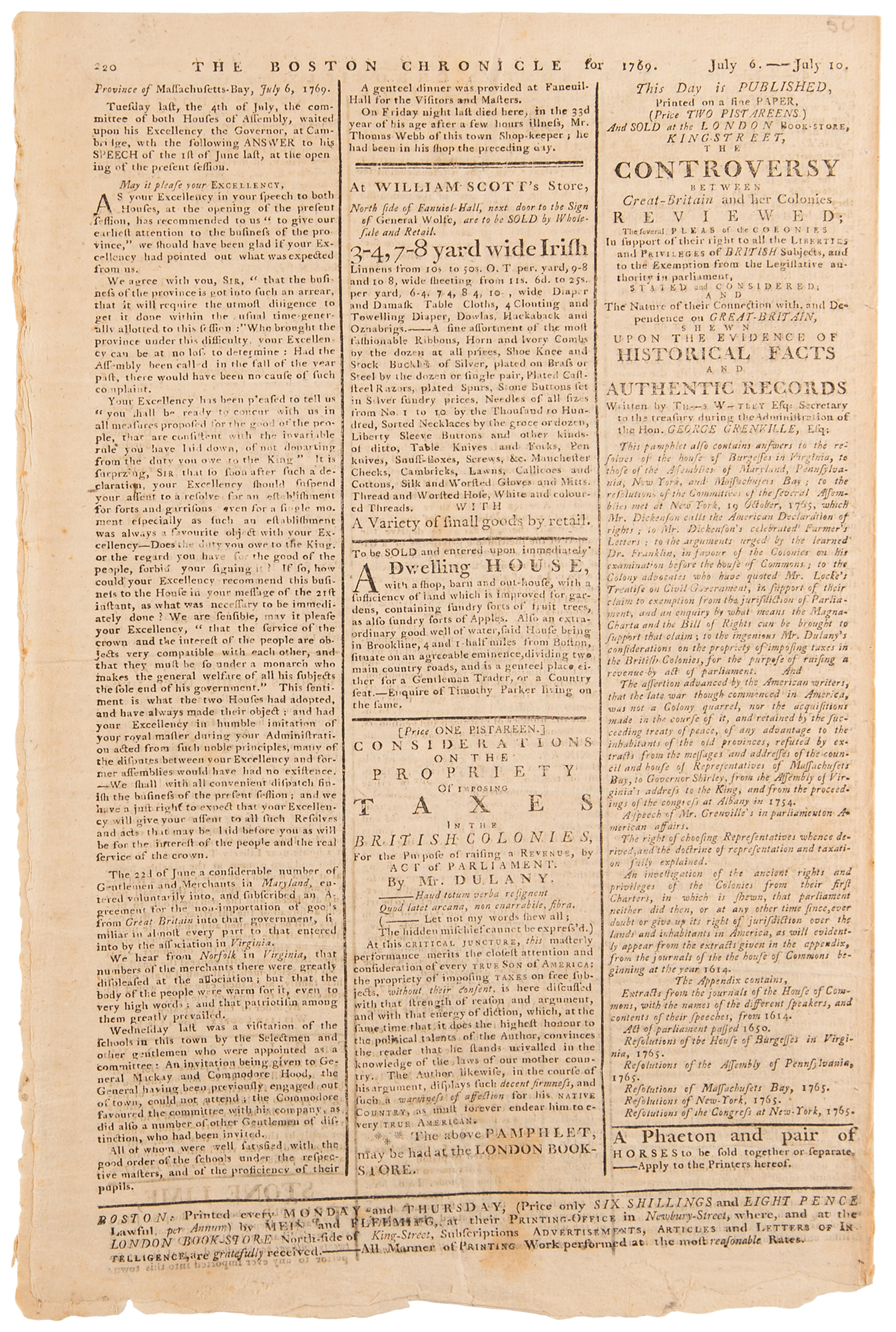
Resolved, That a standing army is not known as a part of the British constitution, in any of the King's dominions; and every attempt to establish it has been esteemed a dangerous innovation, manifestly tending to inslave the people." The resolves are signed in print by Samuel Adams as Clerk of the House. Newly published pamphlets on the subjects of "The Propriety of Imposing Taxes in the British Colonies" and "The Controversy between Great Britain and her Colonies" are advertised on the last page. In very good to fine condition, with minor paper loss along the bottom edge.

