Sold For $24,865
*Includes Buyers Premium
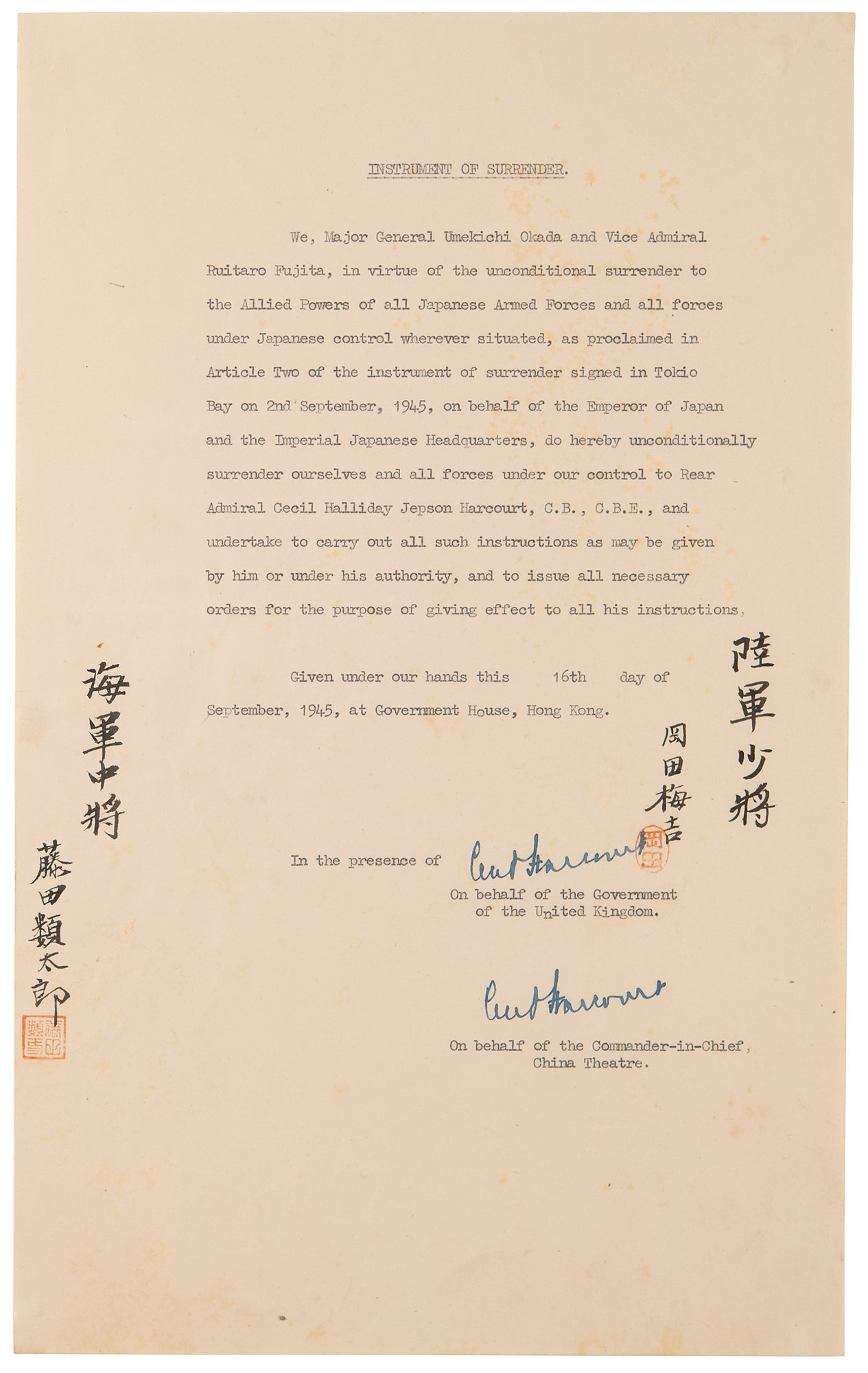
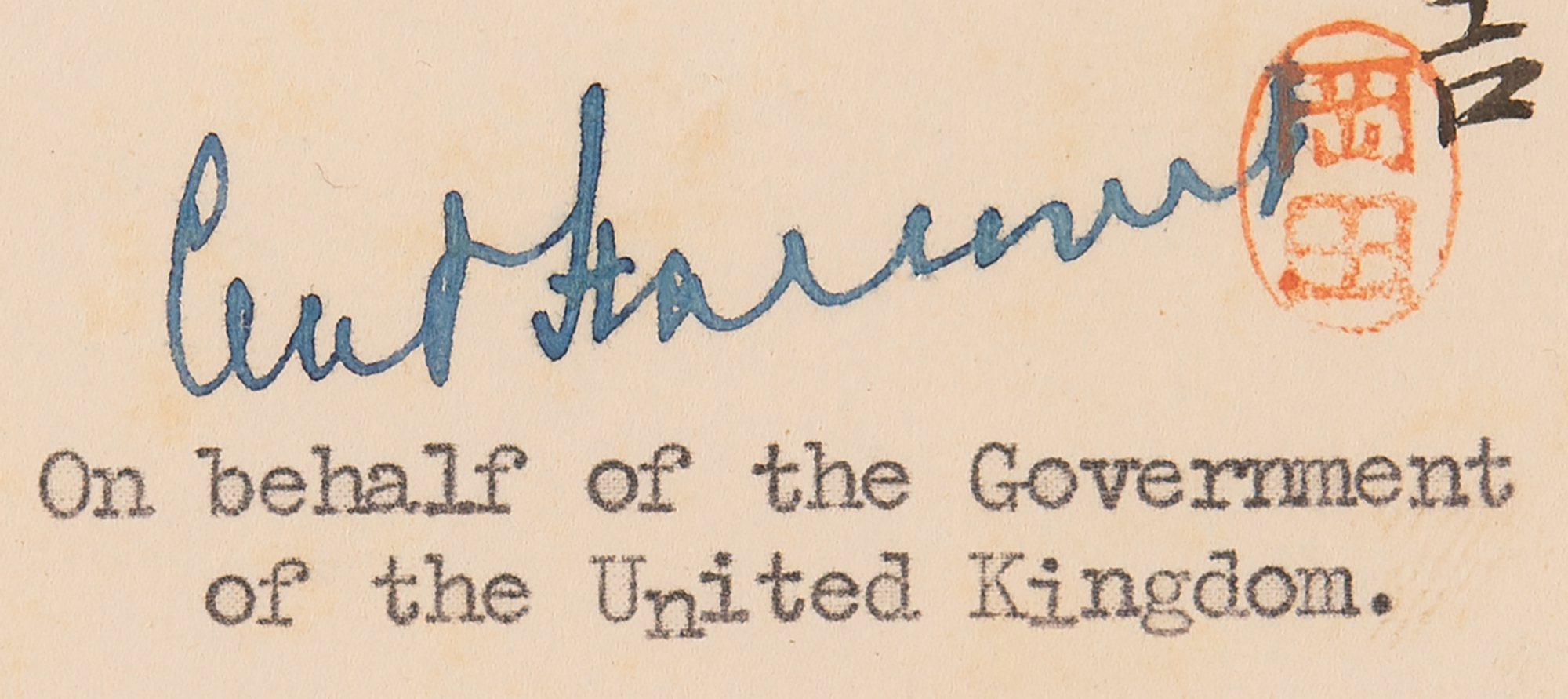
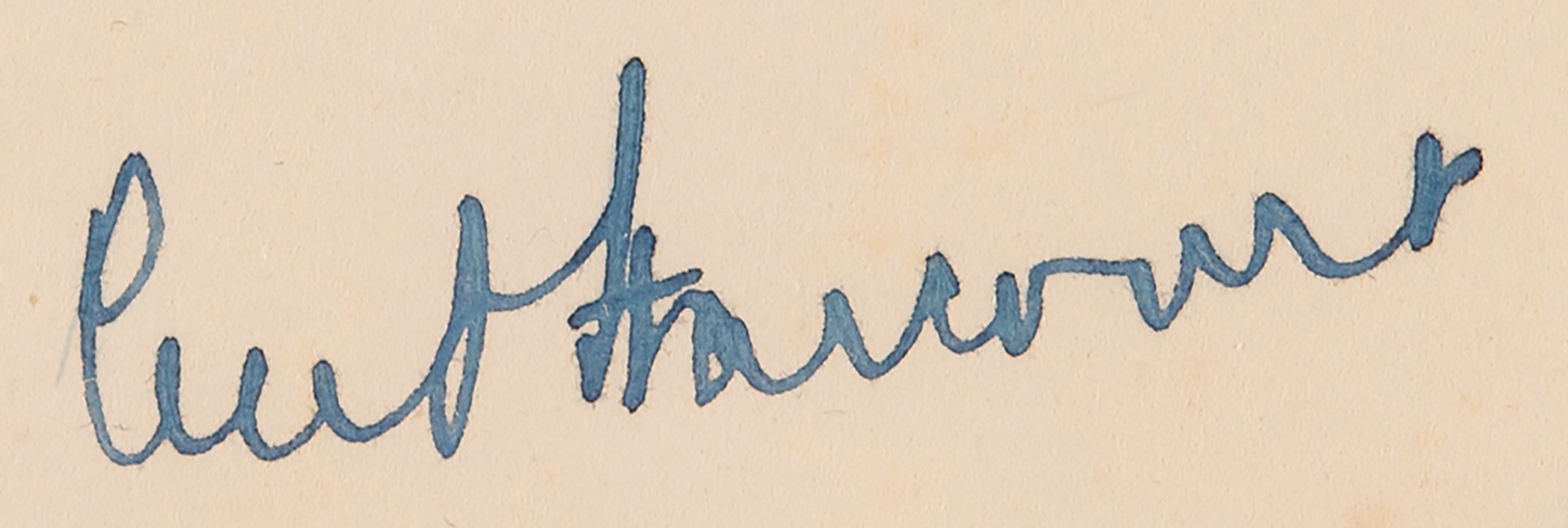
Historic DS, signed “Cecil Harcourt,” "Umekichi Okada," and "Ruitaro Fujita," one page, 8.25 x 13.25, September 16, 1945. Contemporary copy of the "Instrument of Surrender" representing Japan's formal surrender of Hong Kong to Rear Admiral Sir Cecil Harcourt, signed by the three original signatories. In full: "We, Major General Umekichi Okada and Vice Admiral Ruitaro Fujita, in virtue of the unconditional surrender to the Allied Powers of all Japanese Armed Forces and all forces under Japanese control wherever situated, as proclaimed in Article Two of the instrument of surrender signed in Tokio Bay on 2nd September, 1945, on behalf of the Emperor of Japan and the Imperial Japanese Headquarters, do hereby unconditionally surrender ourselves and all forces under our control to Rear Admiral Cecil Halliday Jepson Harcourt, C.B., C.B.E., and undertake to carry out all such instructions as may be given by him or under his authority, and to issue all necessary orders for the purpose of giving effect to all his instructions." Signed twice at the conclusion by Cecil Harcourt on behalf of the government of the United Kingdom and the Commander-in-Chief, China Theatre, and signed and sealed in the margins by Major General Umekichi Okada and Vice Admiral Ruitaro Fujita. In very good to fine condition, with scattered light staining and creasing, and thin paper at corners due to prior mounting.
A small number of copies of this document were evidently signed at the surrender ceremony, which took place at the Government House, Hong Kong, on September 16, 1945. Another is held by the Imperial War Museum (HSR/V/8)—along with Admiral Fujita's ceremonial sword, presented to Harcourt at the surrender—and at least one other copy remains in private hands.
On December 8, 1941, Japan invaded the British colony of Hong Kong, coinciding with the attack on Pearl Harbor. The colony fell after 18 days of fierce resistance, ushering in a brutal three-and-a-half-year Japanese occupation marked by widespread atrocities, starvation, forced deportations, and the deaths of approximately 10,000 civilians and prisoners of war. Japan’s surrender following the bombings of Hiroshima and Nagasaki led to the swift reestablishment of British control. Franklin Gimson, the colonial secretary, declared himself acting governor upon his release from internment on August 16th. Rear Admiral Cecil Harcourt arrived in Victoria Harbour with the British Pacific Cruiser Squadron on August 30th, and a formal surrender ceremony took place at Government House on September 16, 1945. Harcourt then served as the de facto governor of Hong Kong, as commander-in-chief and head of the military administration, until May 1946.

