Sold For $795
*Includes Buyers Premium
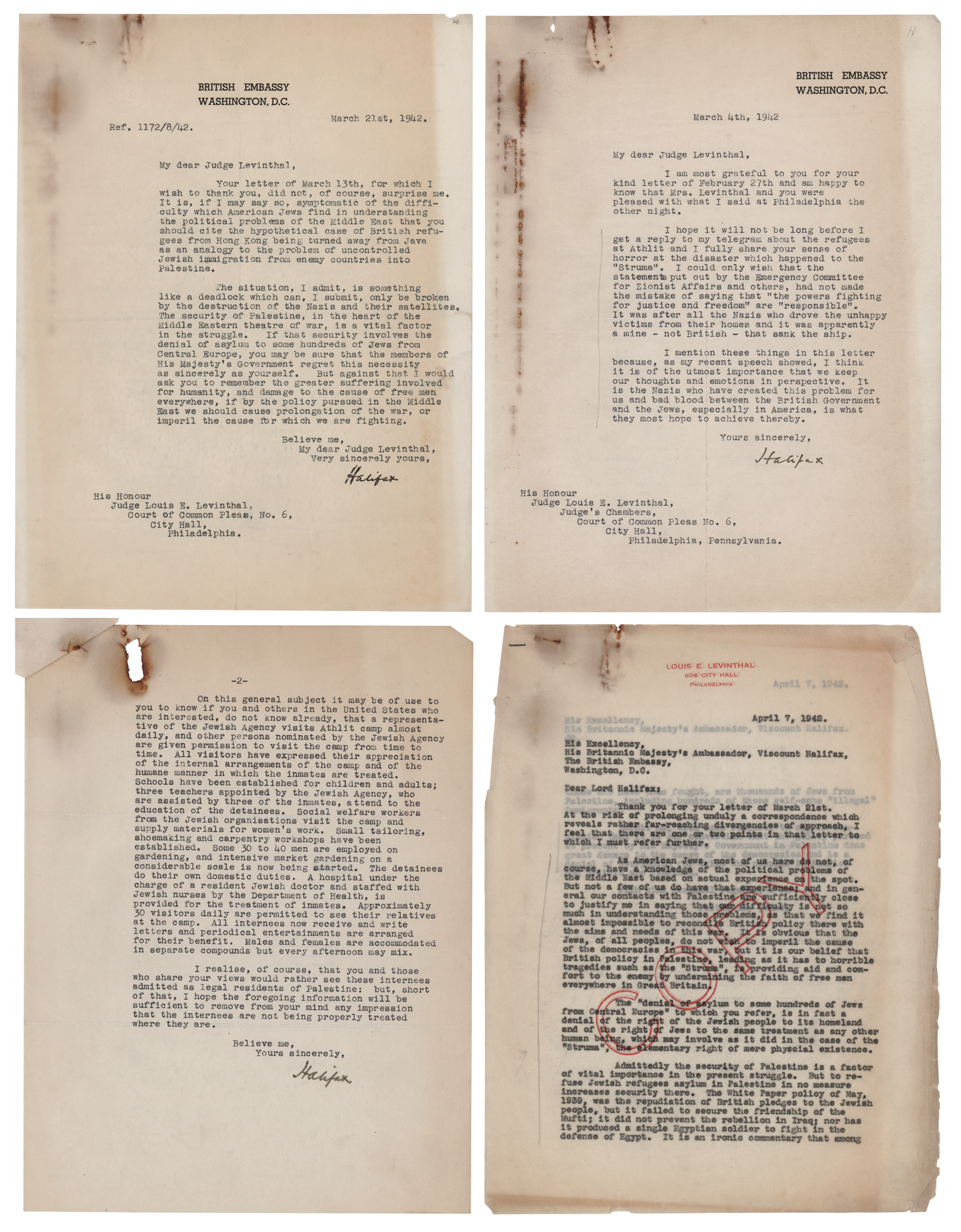
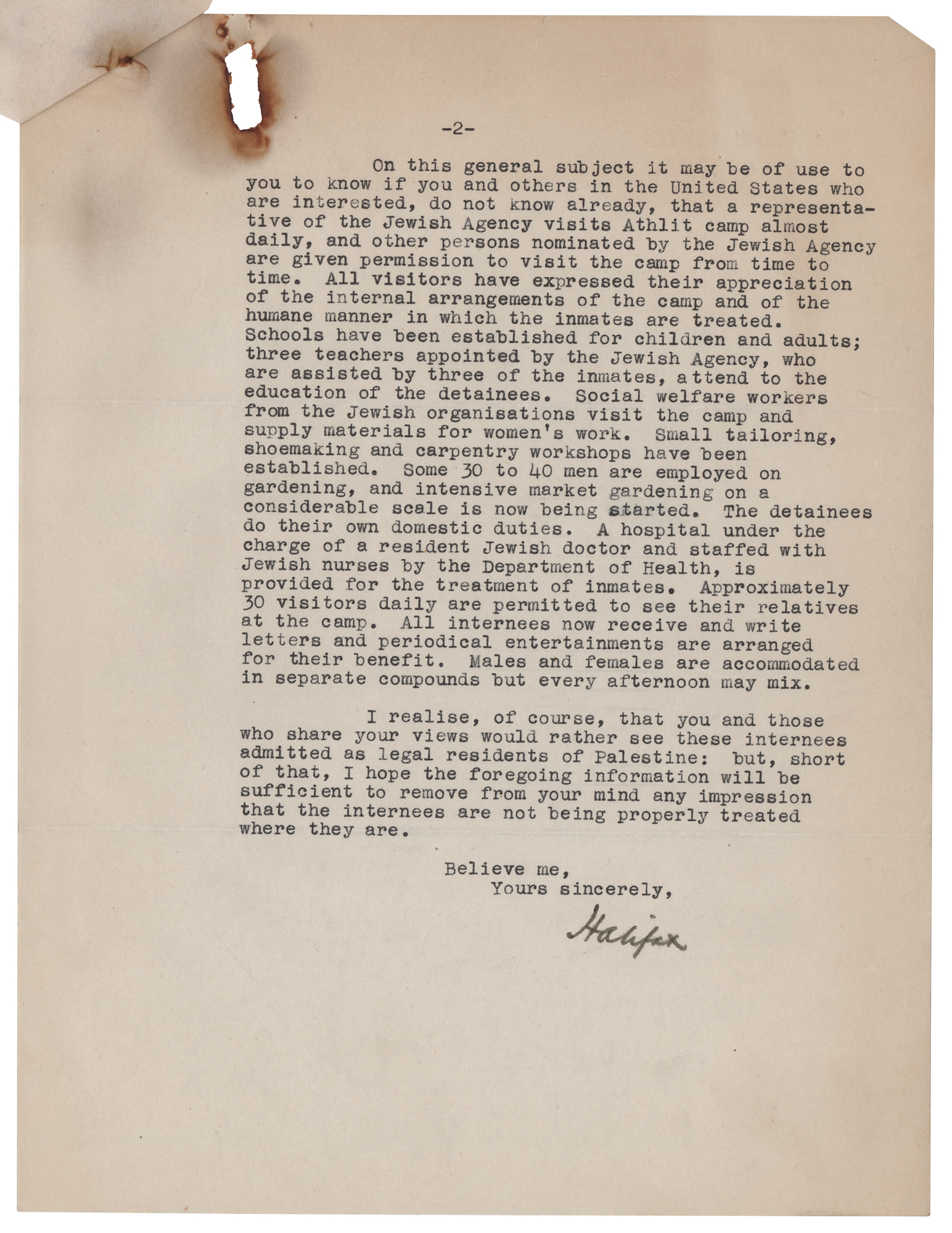
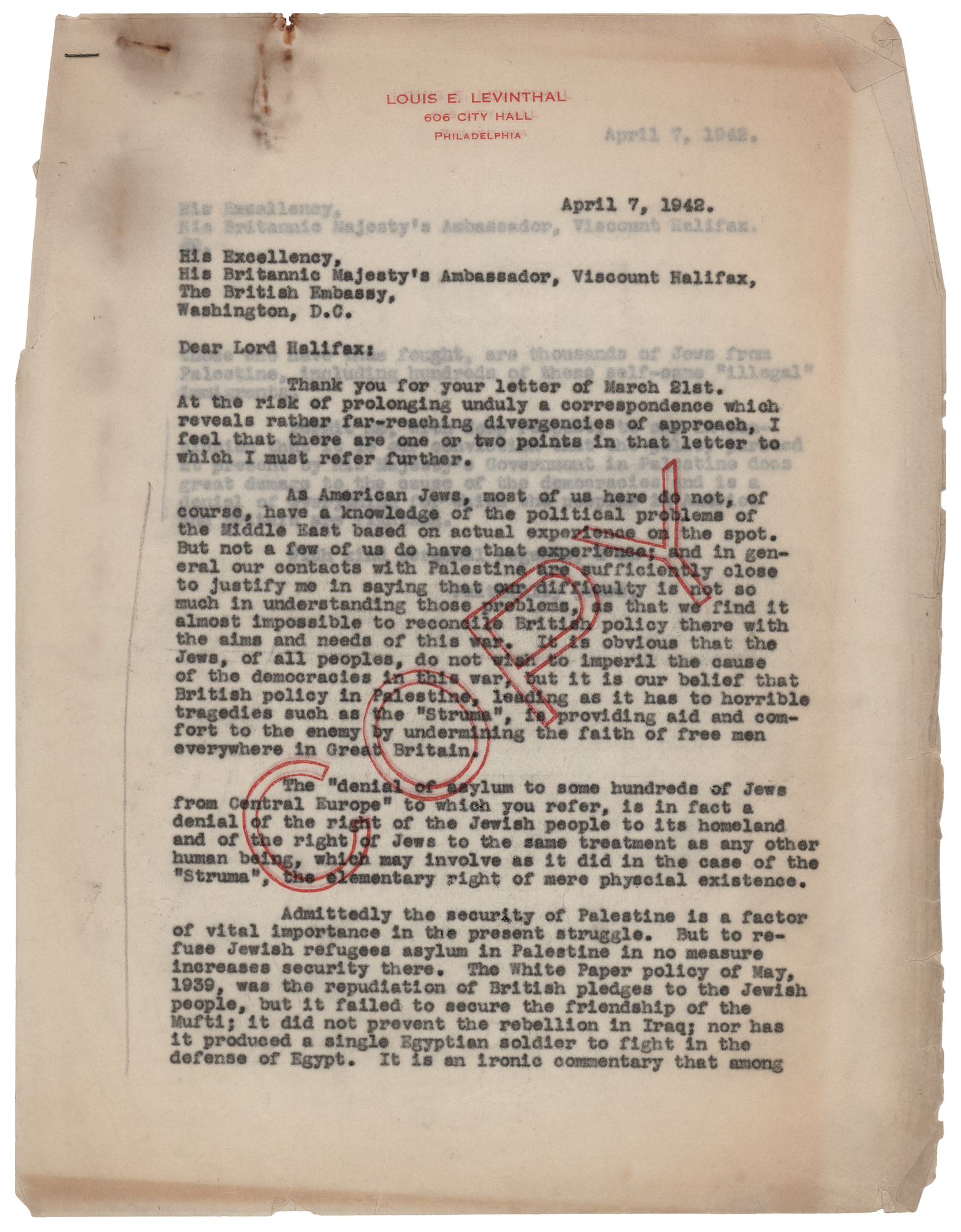
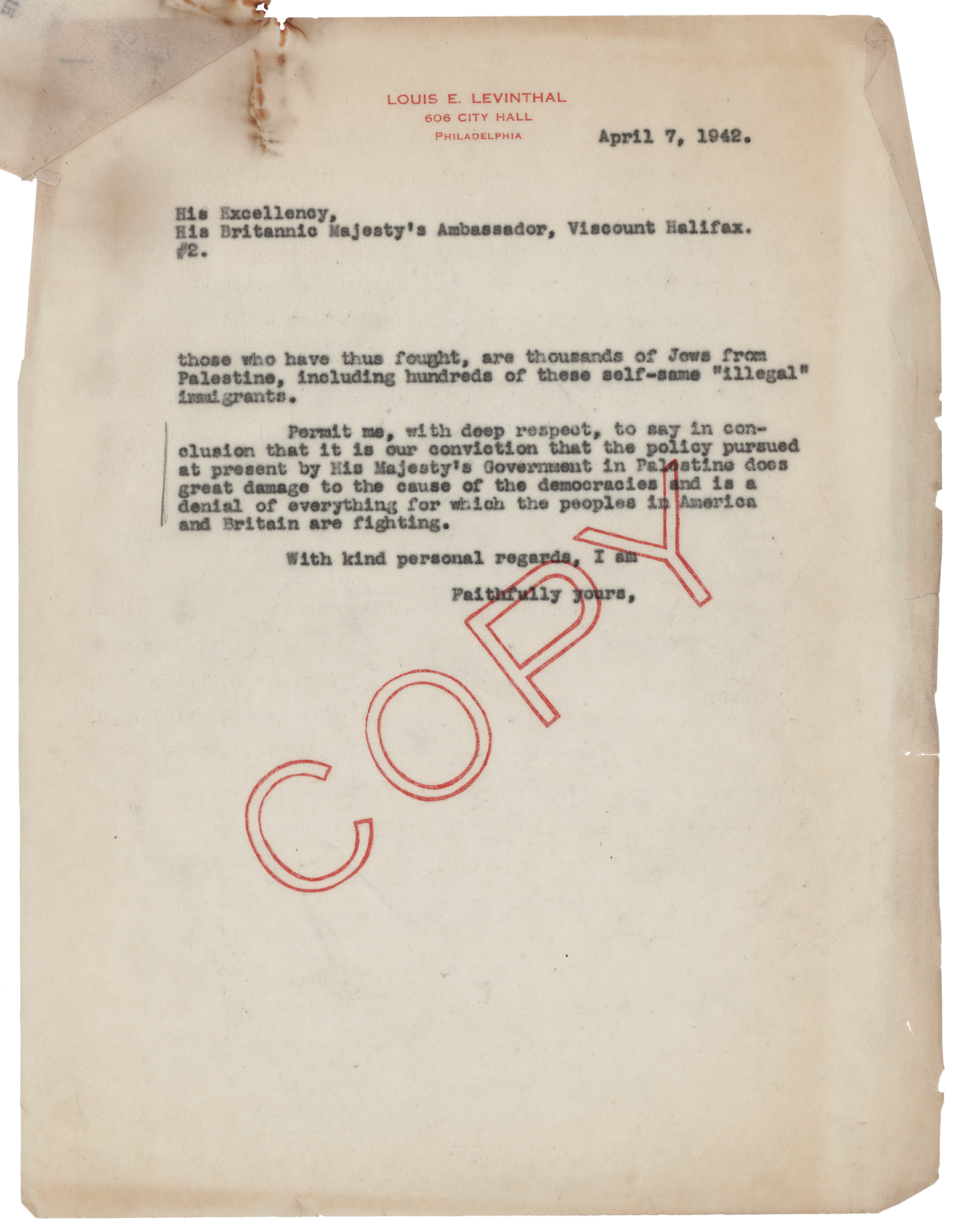
Senior British Conservative politician of the 1930s (1881–1959) who held several senior ministerial posts during this time, most notably those of Viceroy of India from 1925 to 1931 and of Foreign Secretary between 1938 and 1940; on Neville Chamberlain's resignation early in May 1940, Halifax effectively declined the position of Prime Minister as he felt that Churchill would be a more suitable war leader. Three World War II–dated TLSs signed "Halifax," totaling four pages, 8 x 10.5, British Embassy letterhead, March–May 1942. Halifax writes to Judge Louis E. Levinthal, commenting on the fate of Jewish refugees during World War II. Excerpts are as follows:
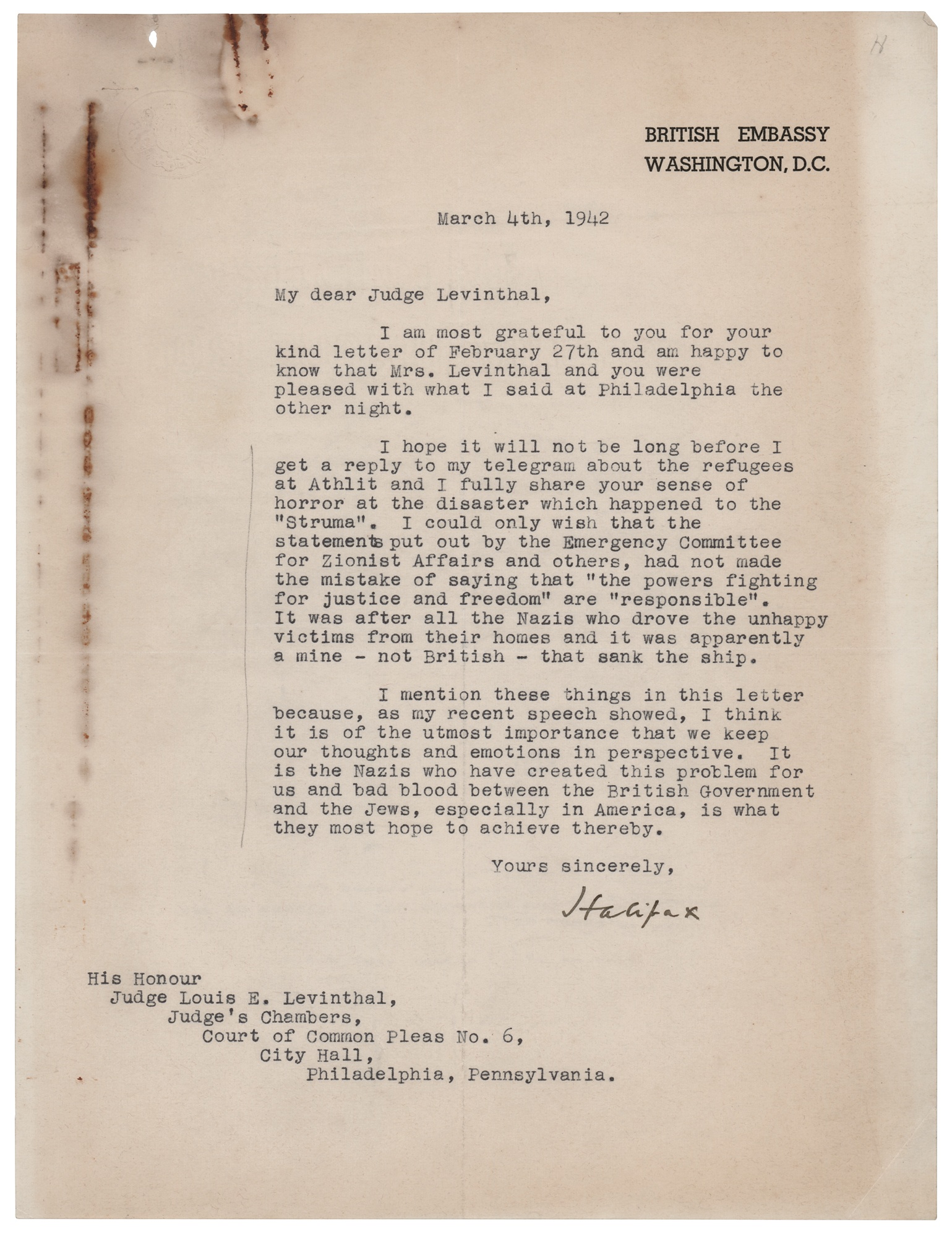
March 4, 1942: "I hope it will not be long before I get a reply to my telegram about the refugees at Athlit and I fully share your sense of horror at the disaster which happened to the 'Sturma.' I could only wish that the statements put out by the Emergency Committee for Zionist Affairs and others, had not made the mistake of saying that 'the powers fighting for justice and freedom' are 'responsible.' It was after all the Nazis who drove the unhappy victims from their homes and it was apparently a mine—not British—that sank the ship…It is the Nazis who have created this problem for us and bad blood between the British Government and the Jews, especially in America, is what they most hope to achieve thereby."
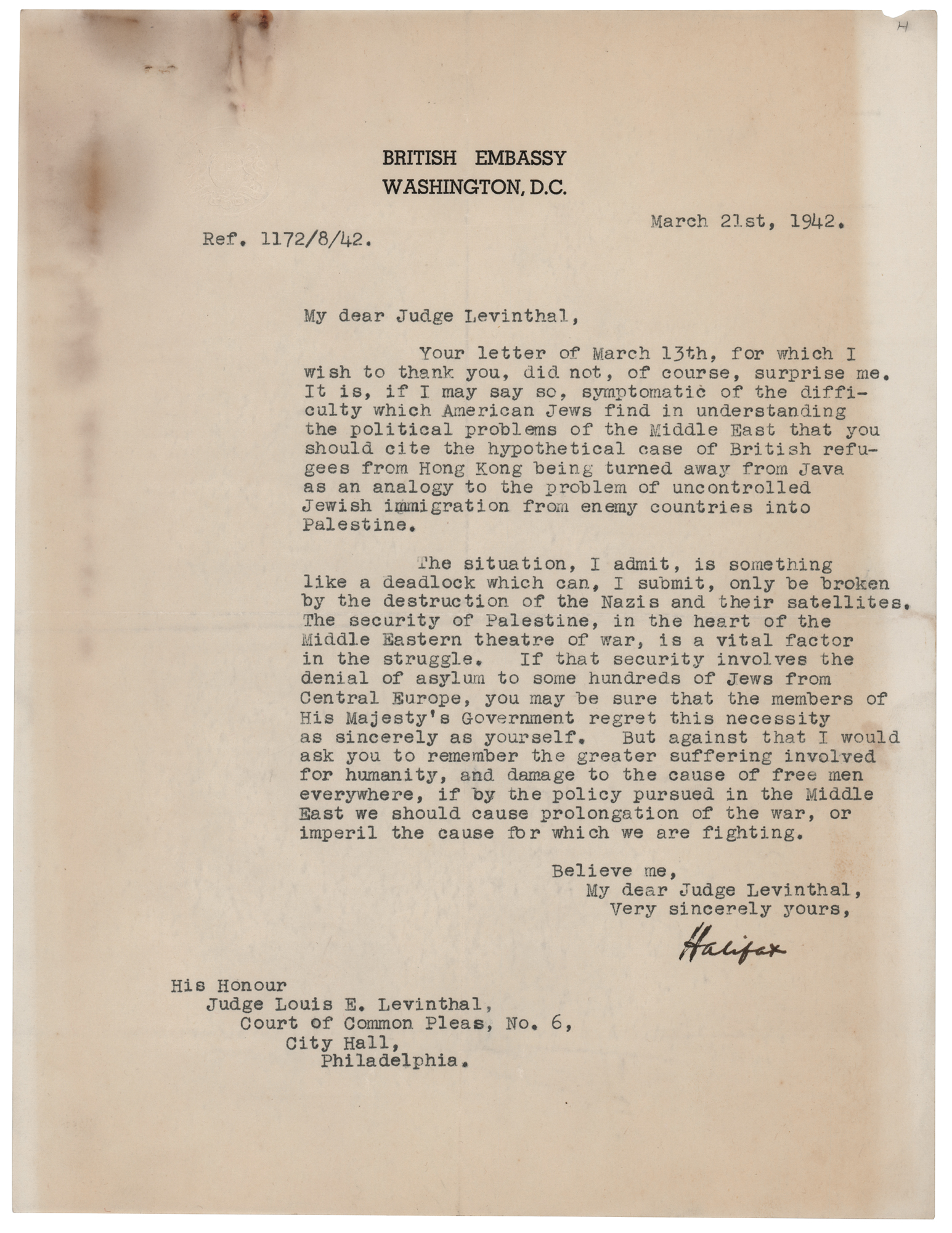
March 21, 1942: "Your letter of March 13th, for which I wish to thank you, did not, of course surprise me. It is, if I may say so, symptomatic of the difficulty which American Jews find in understanding the political problems of the Middle East that you should cite the hypothetical case of British refugees from Hong Kong being turned away from Java as an analogy to the problem of uncontrolled Jewish immigration from enemy countries into Palestine. The situation, I admit, is something like a deadlock which can, I submit, only be broken by the destruction of the Nazis and their satellites. The security of Palestine, in the heart of the Middle Eastern theatre of war, is a vital factor in the struggle. If that security involves the denial of asylum to some hundreds of Jews from Central Europe, you may be sure that the members of His Majesty's Government regret this necessity as sincerely as yourself. But against that I would ask you to remember the greater suffering involved for humanity, and damage to the cause of free men everywhere, if by the policy pursued in the Middle East we should cause prolongation of the war, or imperil the cause for which we are fighting."
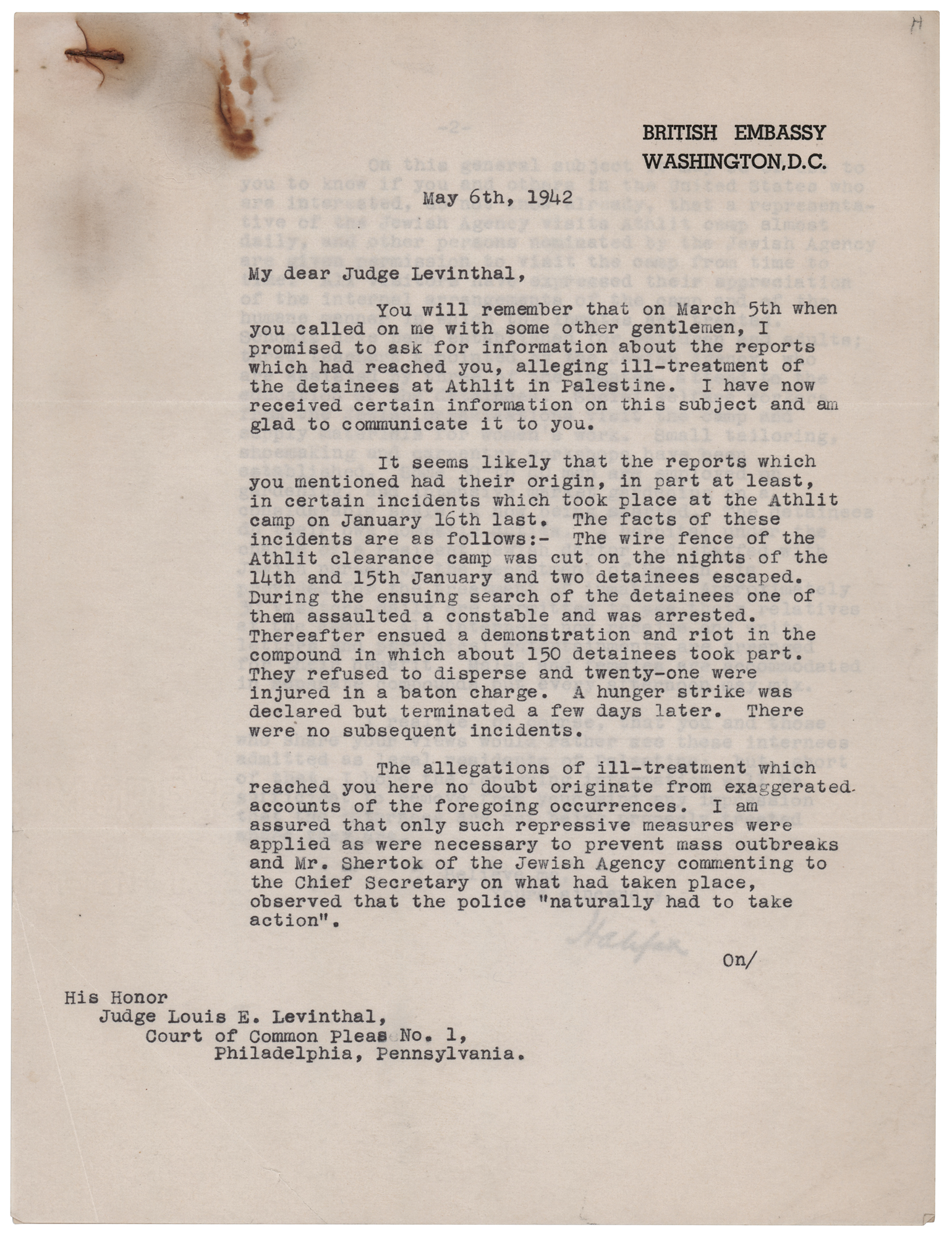
May 6, 1942: "I promised to ask for information about the reports which had reached you, alleging ill-treatment of the detainees at Athlit in Palestine. I have not received certain information on this subject…It seems likely that the reports which you mentioned had their origin, in part at least, in certain incidents which took place at the Athlit camp on January 16th last…The wire fence of the Athlist clearance camp was cut on the nights of the 14th and 15th January and two detainees escaped. During the ensuing search of the detainees one of them assaulted a constable and was arrested. Thereafter ensued a demonstration and riot in the compound in which about 150 detainees took part. They refused to disperse and twenty-one were injured in a baton charge. A hunger strike was declared but terminated a few days later. There were no subsequent incidents. The allegations of ill-treatment which reached you here no doubt originate from exaggerated accounts of the foregoing occurrences." In overall very good to fine condition, with toning, edge wear, and rust stains. Accompanied by Levinthal's retained carbon copy of a letter to Halifax of April 7, 1942.

