Sold For $3,670
*Includes Buyers Premium
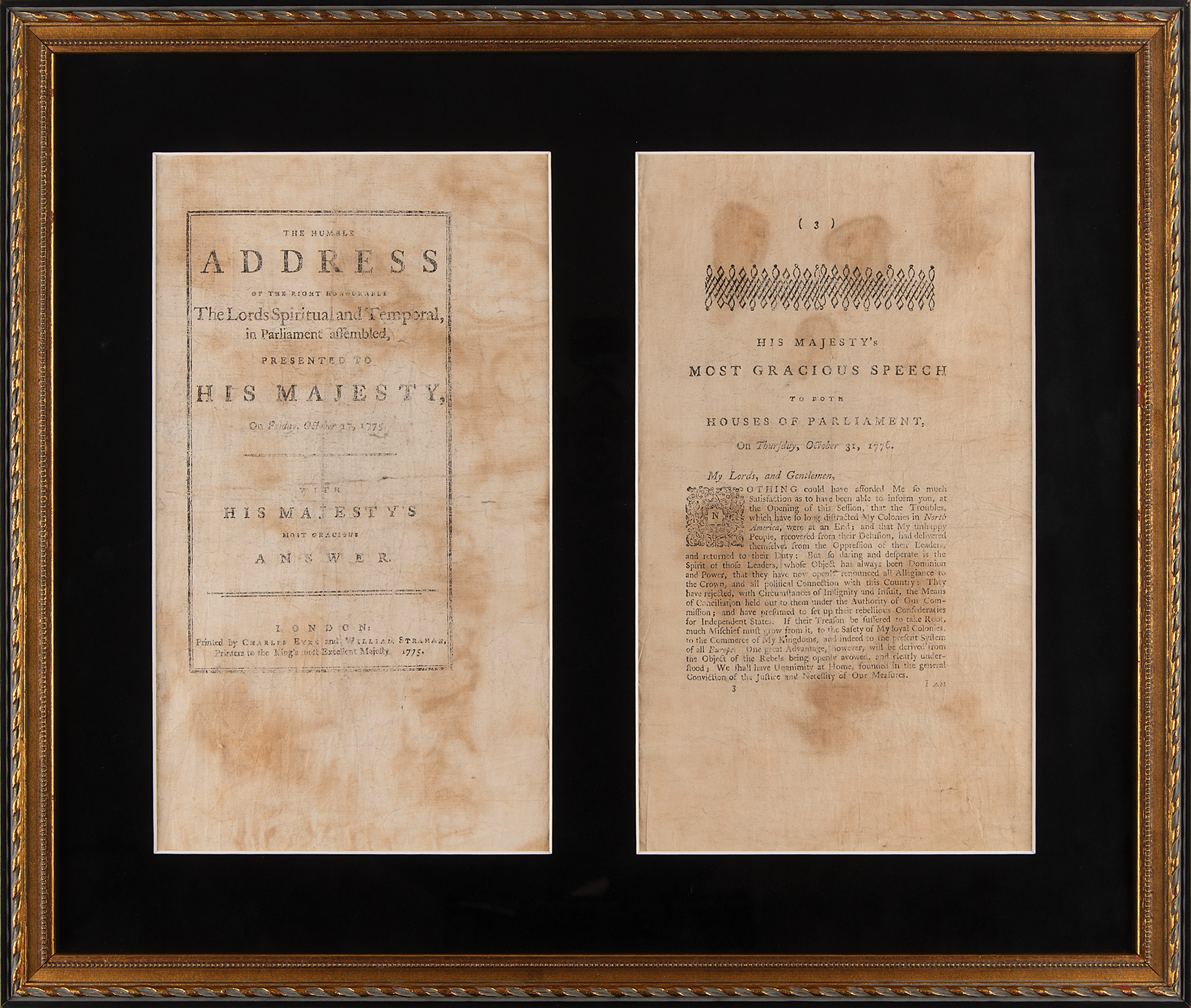
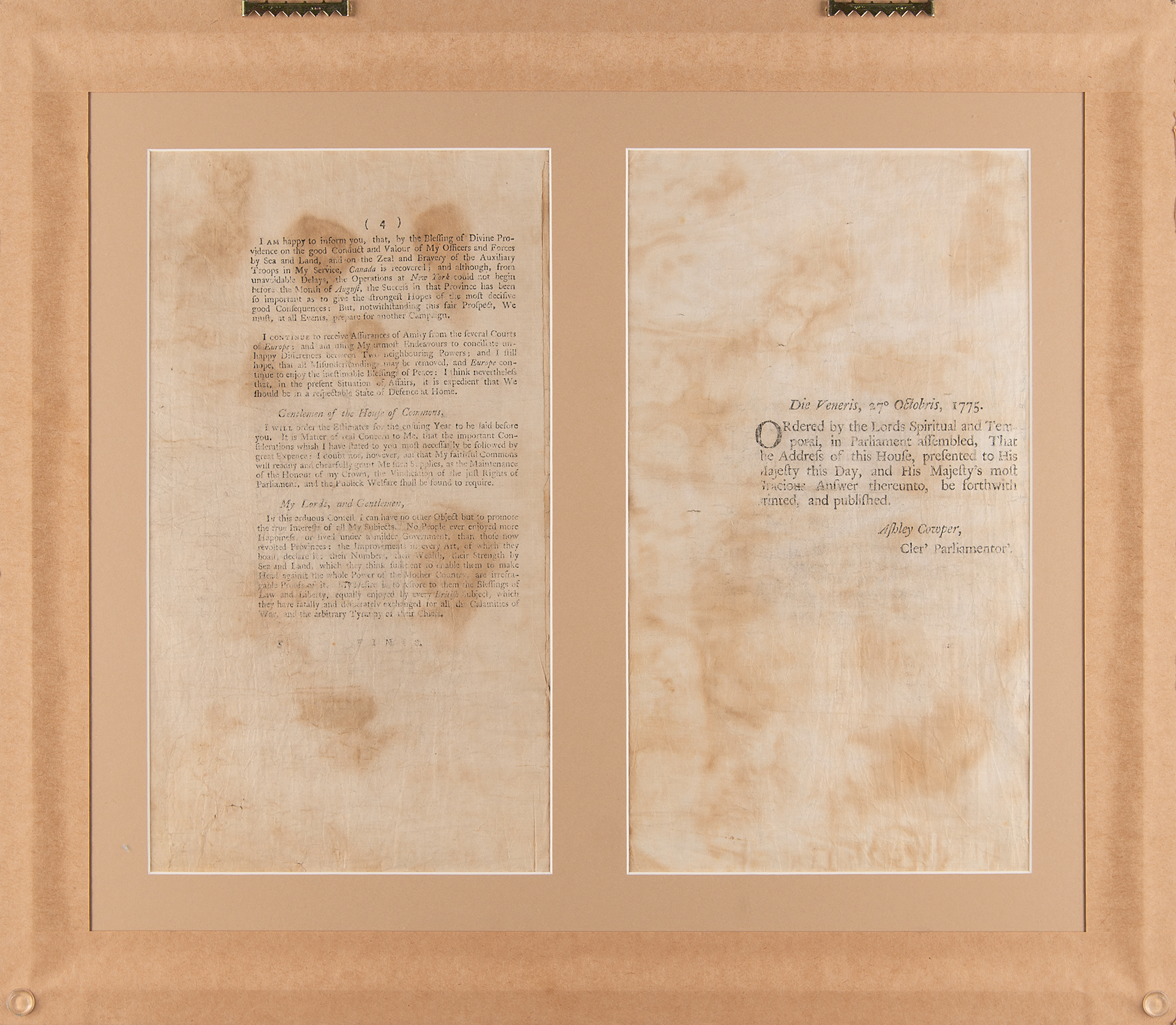
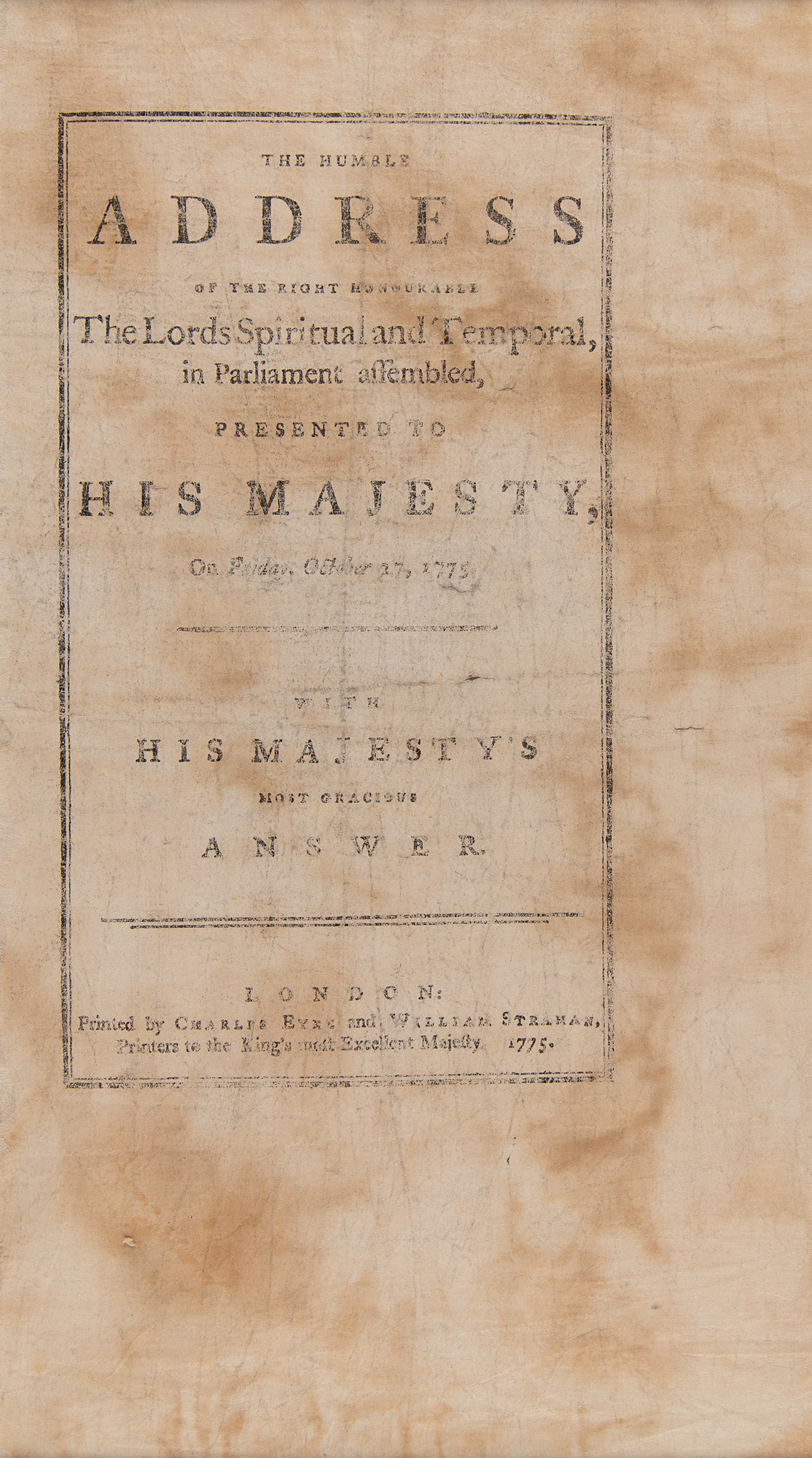
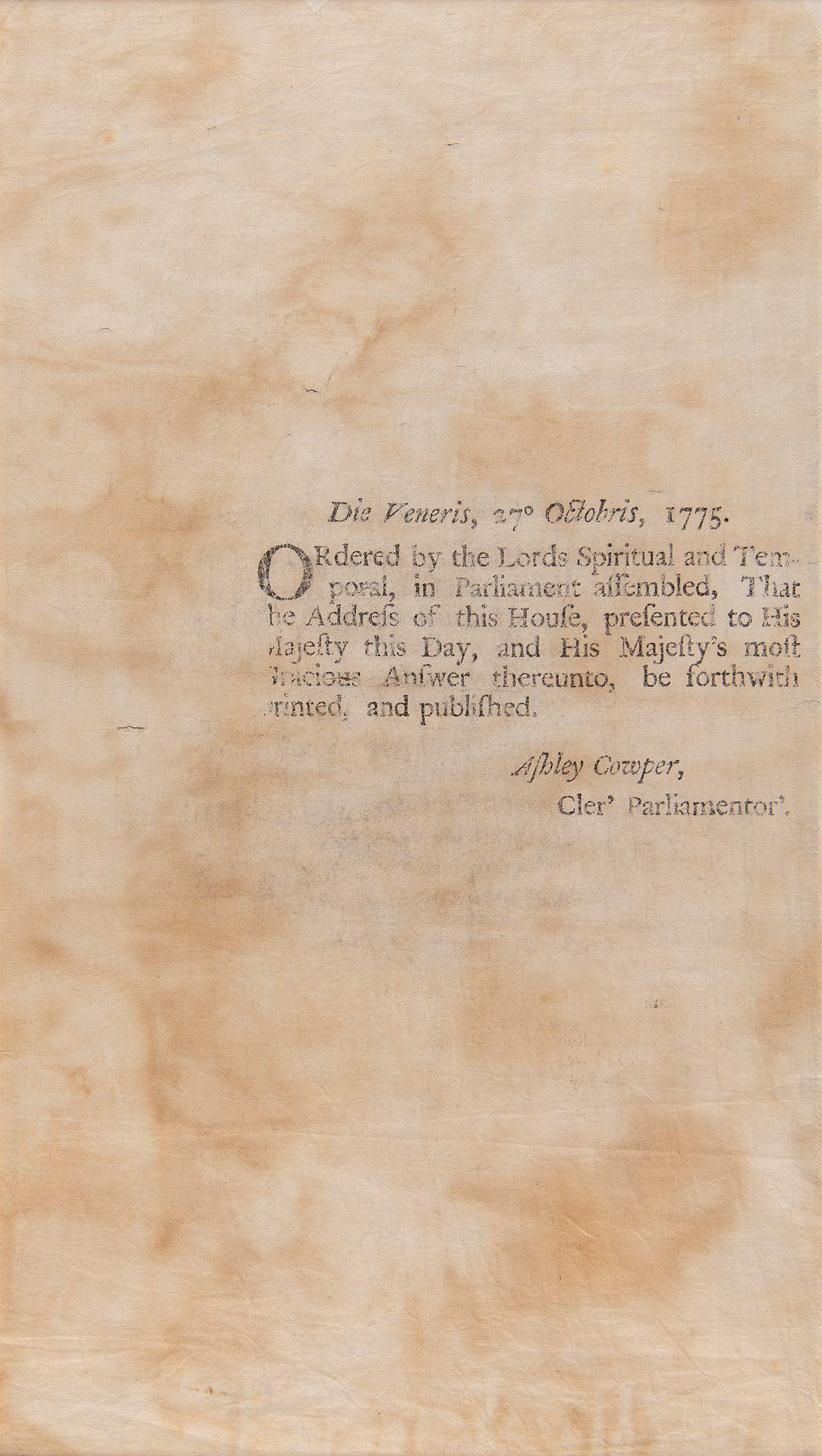
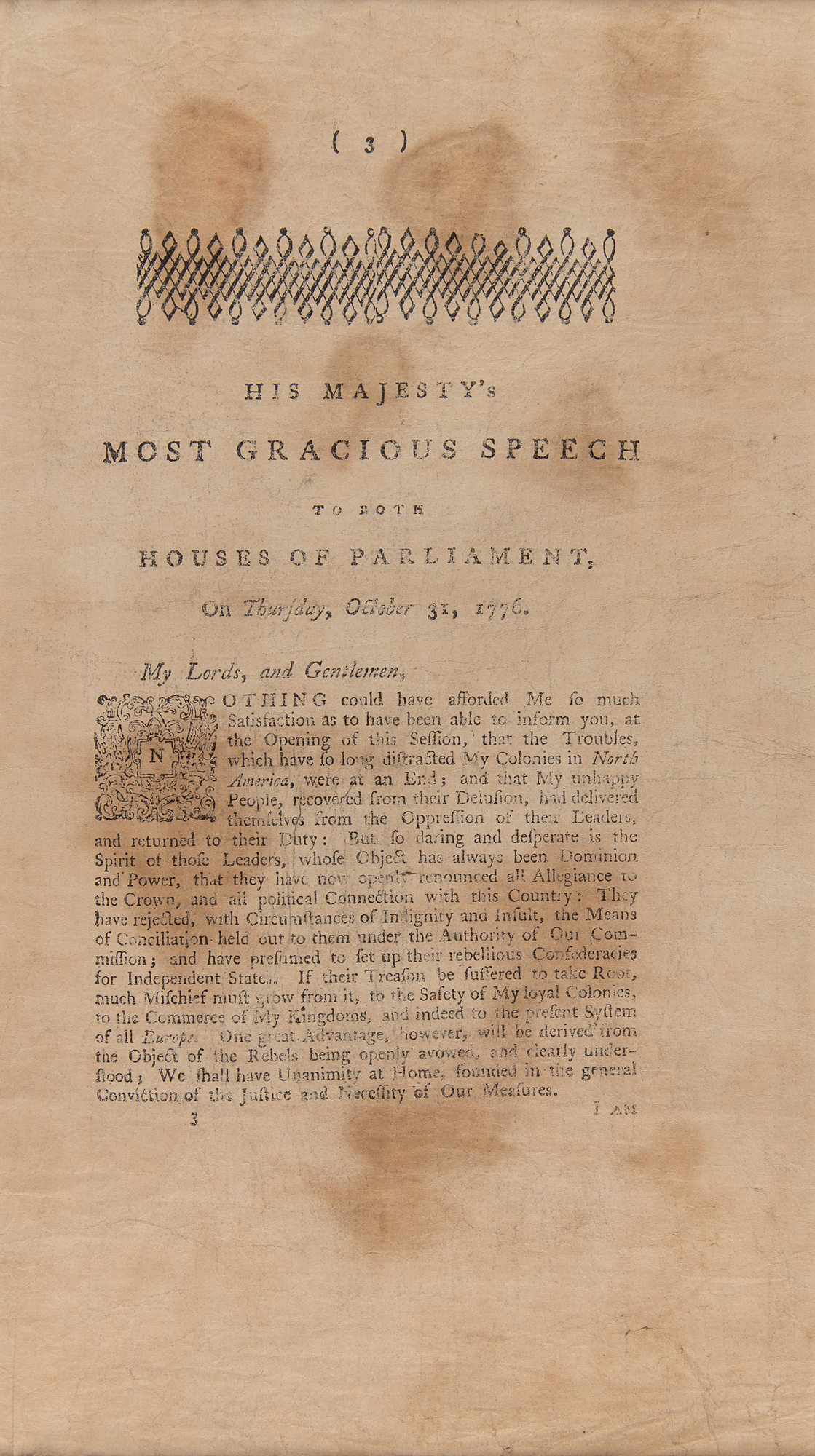
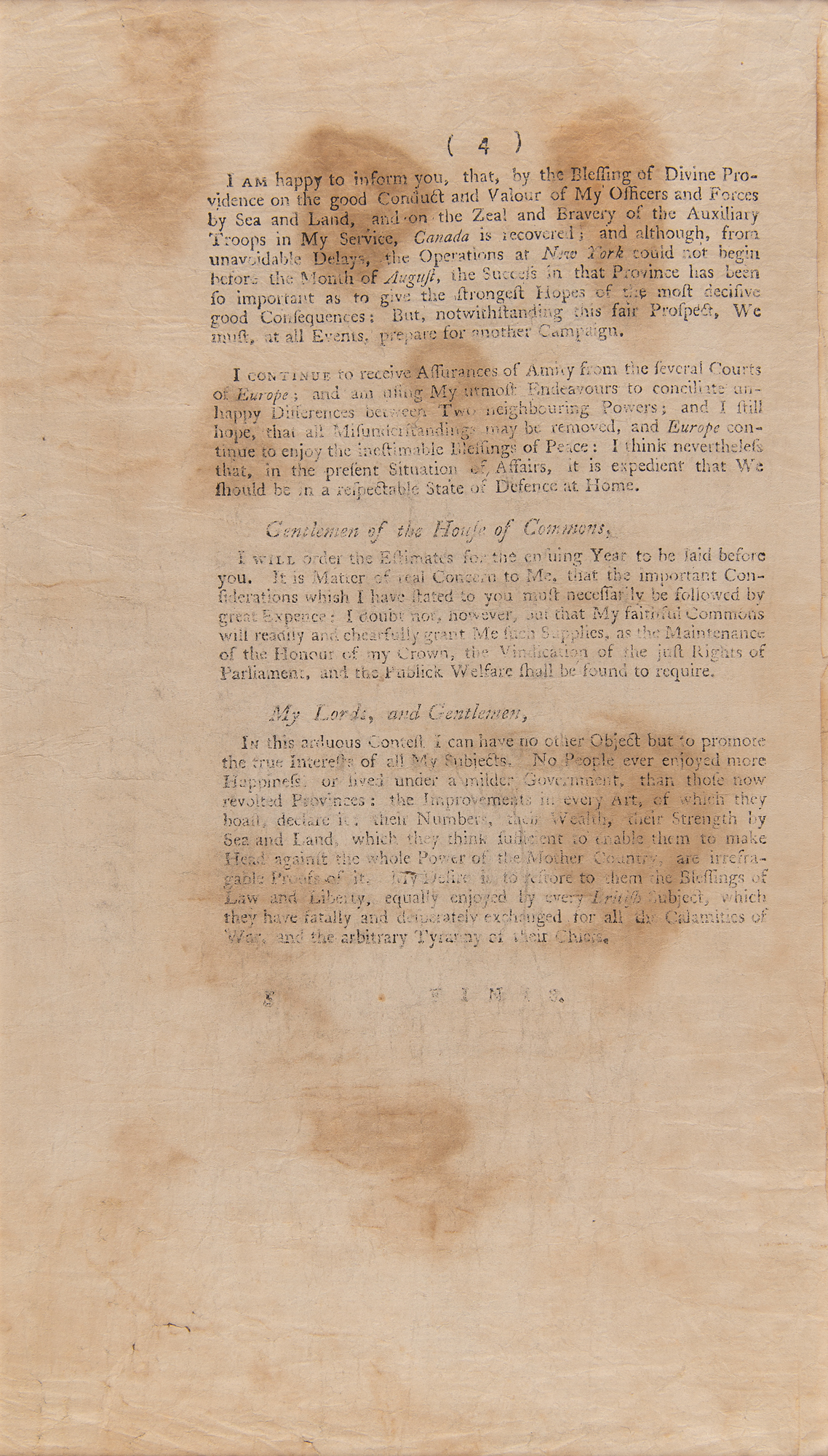
Very rare complete early Revolutionary War-dated printing of King George III's first response to the Declaration of Independence, "His Majesty’s Most Gracious Speech to Both Houses of Parliament, on Thursday, October 31, 1776," four total pages, 7.25 x 13, printed in London by Charles Eyre and William Strahan, Printers to the King’s most Excellent Majesty, 1776, with the cover sheet titled as “The Humble Address of the Right Honourable the Lords Spiritual & Temporal in Parliament Assembled, Presented to His Majesty, On Friday October 27, 1775 with His Majesty’s Most Gracious Answer.”
The speech, in part: “Nothing could have afforded Me so much Satisfaction as to have been able to inform you, at the Opening of this Session, that the Troubles, which have so long distracted My Colonies in North America, were at an End; and that My unhappy People, recovered from their Delusion, had delivered themselves from the Oppression of their Leaders, and returned to their Duty. But so daring and desperate is the Spirit of those Leaders, whose Object has always been Dominion and Power, that they have now openly renounced all Allegiance to the Crown, and all political Connection with this Country. They have rejected, with Circumstances of Indignity and Insult, the Means of Conciliation held out to them under the Authority of Our Commission: and have presumed to set up their rebellious Confederacies for Independent States. If their Treason be suffered to take Root, much Mischief must grow from it, to the Safety of My loyal Colonies, to the Commerce of My Kingdoms, and indeed to the present System of all Europe. One great Advantage, however, will be derived from the Object of the Rebels being openly avowed, and clearly understood. We shall have Unanimity at Home, founded in the general Conviction of the Justice and Necessity of Our Measures.
I am happy to Inform you, that, by the Blessing of Divine Providence on the good Conduct and Valour of My Officers and Forces by Sea and Land, and on the Zeal and Bravery of the Auxiliary Troops in My Service, Canada is recovered; and although, from unavoidable Delays, the Operations at New York could not begin before the Month of August, the Success in that Province has been so important as to give the strongest Hopes of the most decisive good Consequences. But, notwithstanding this fair Prospect, We must, at all Events, prepare for another Campaign.” Handsomely matted and framed to an overall size of 22 x 18.5; window to frame backing reveals the reverse sides. In very good to fine condition, with creasing and scattered staining.
In 1775, Philadelphia, the Second Continental Congress was in session at Independence Hall, and while support for Independence had become increasingly widespread, there was still a significant faction that was holding out. Chief among them was John Dickinson, a Pennsylvanian Quaker and pacifist, who refused to believe that war was the only way forward. On July 5, 1775, Dickinson, with the approval of the Second Continental Congress, penned the Olive Branch Petition, which was a direct appeal to King George III. Within the Olive Branch Petition, the Continental Congress expressed to King George III that the actions of Parliament and their British Ministers within the colonies had left the colonists with no choice but to arm themselves and defend themselves against tyranny. It was stressed that their anger was directed at Parliament, not King George III himself, to whom they were still loyal.
King George, however, refused to even read the Olive Branch Petition as he believed it to be insincere and instead penned his ‘Proclamation of Rebellion,’ which he read before Parliament on October 27, 1775. King George insisted that he was sympathetic to the many in the colonies who he was sure remained loyal to the crown, and wanted to avoid war at all costs. But he also said that those who remained loyal to him were likely afraid to speak up due to the ‘torrent of violence’ perpetrated by the traitors and that they would likely be forced to remain silent until ‘a sufficient force shall appear to support them.’

