
Sold For $368
*Includes Buyers Premium
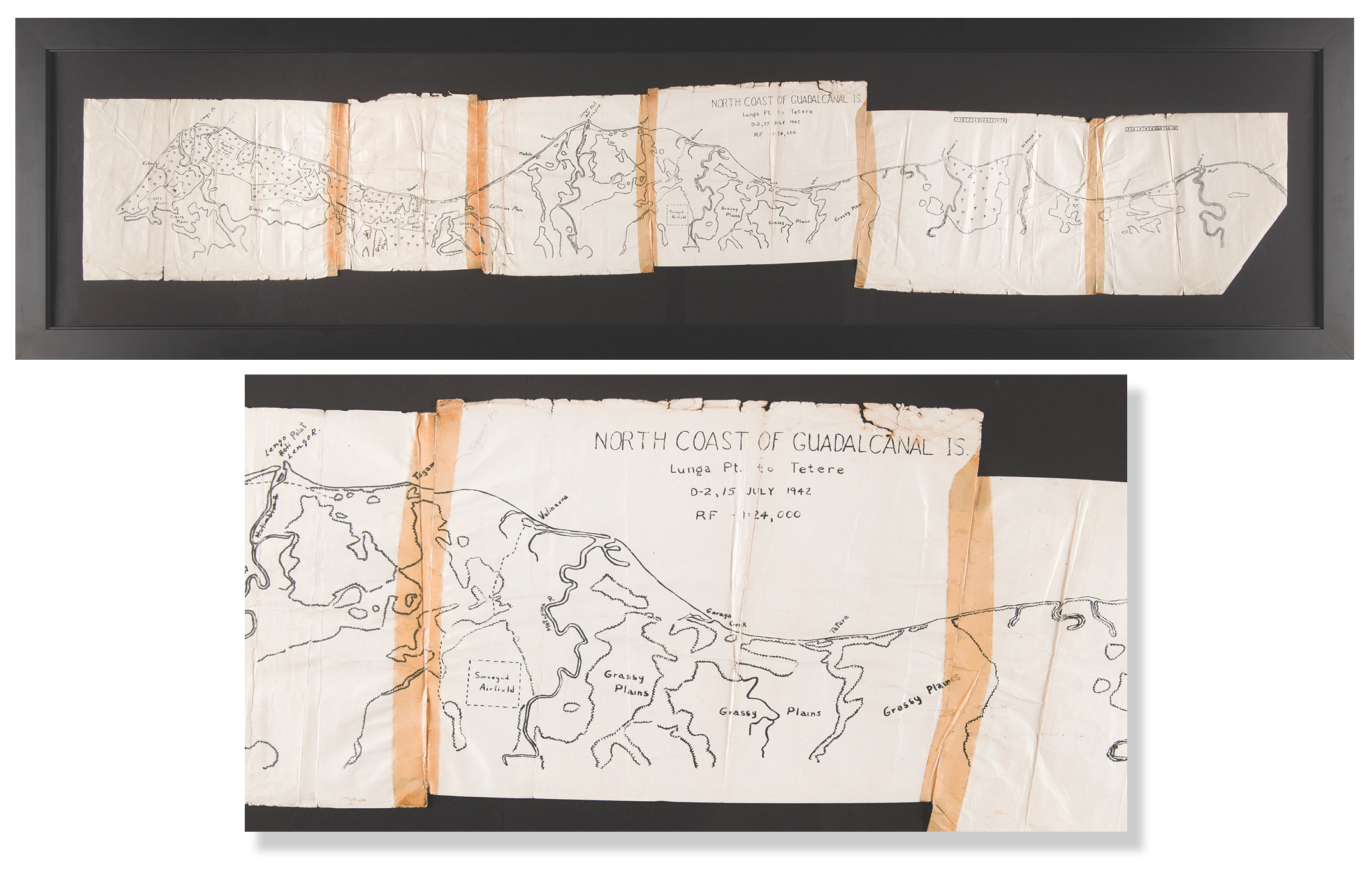
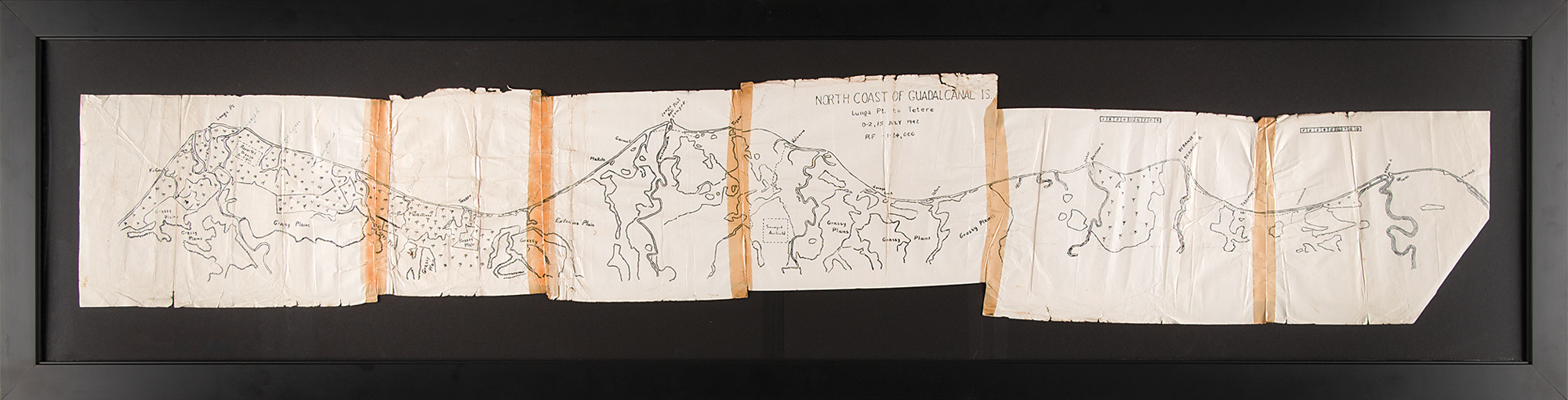
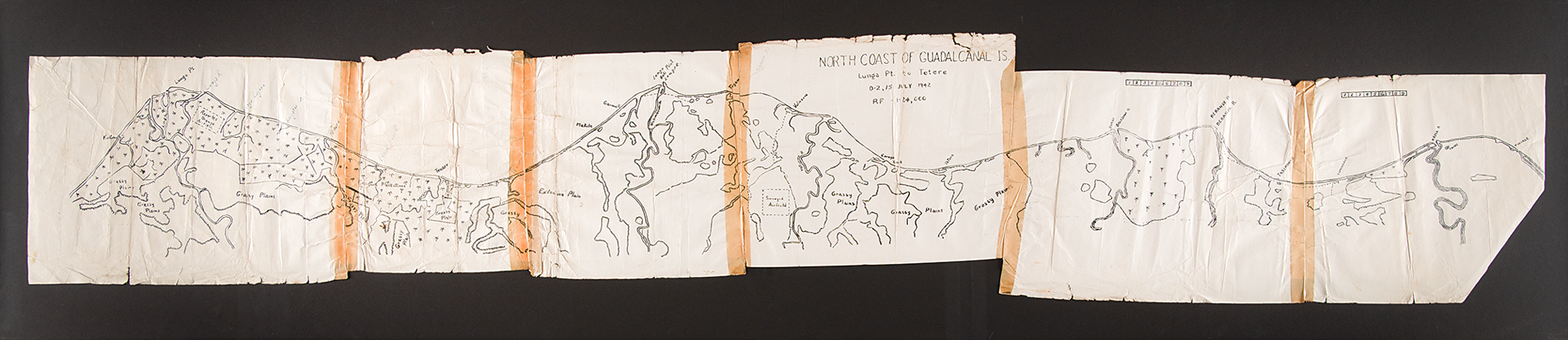
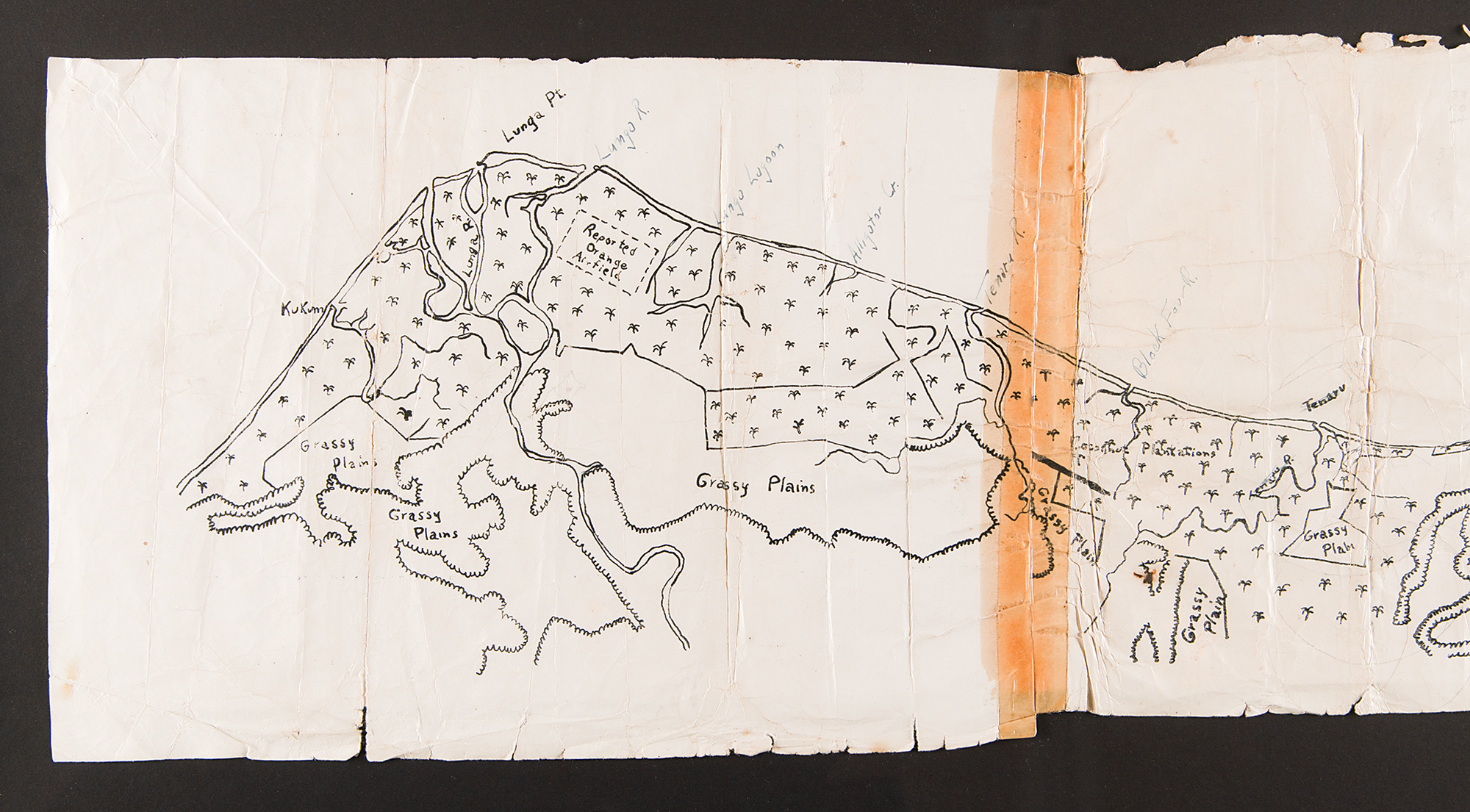
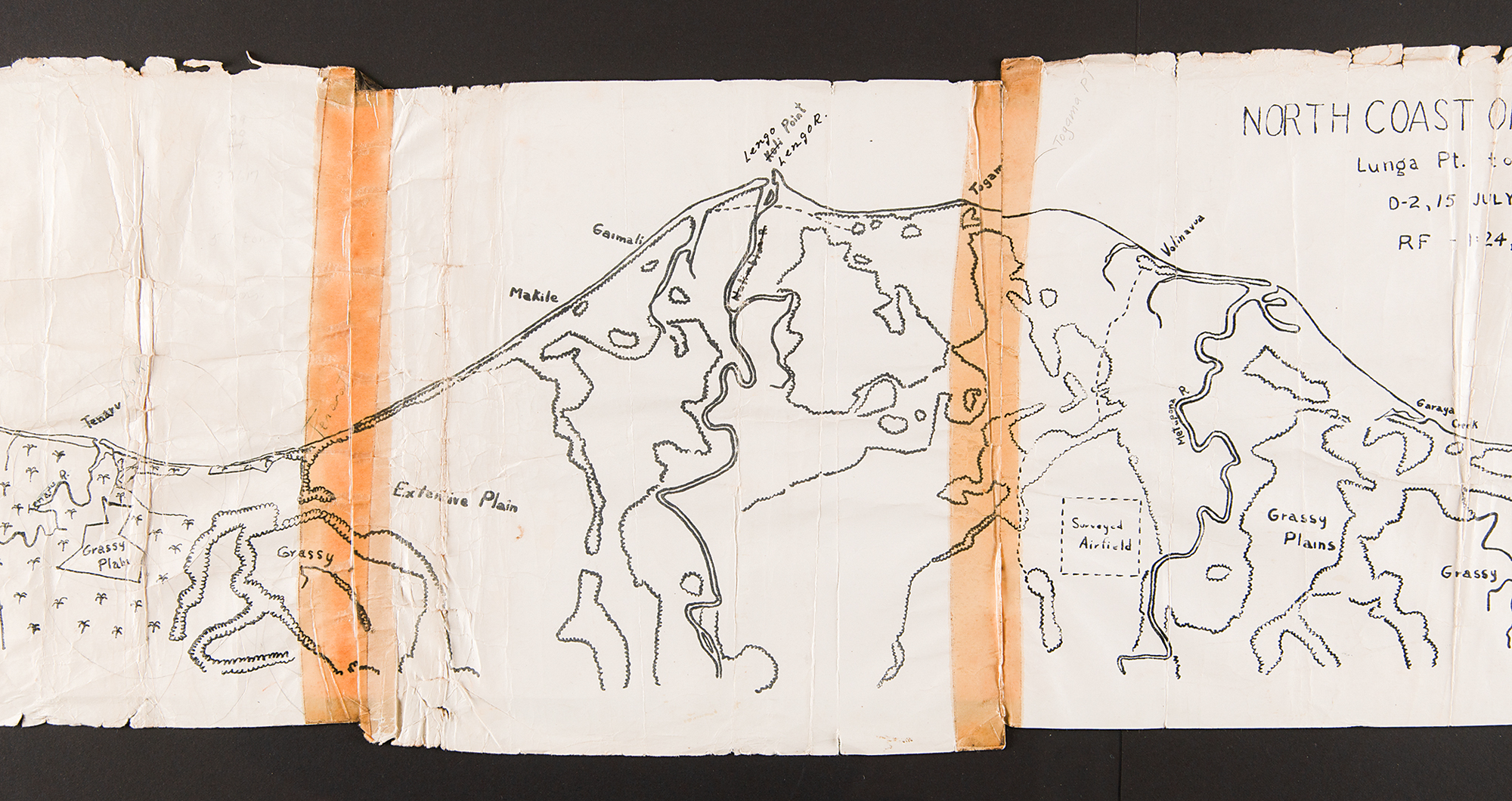
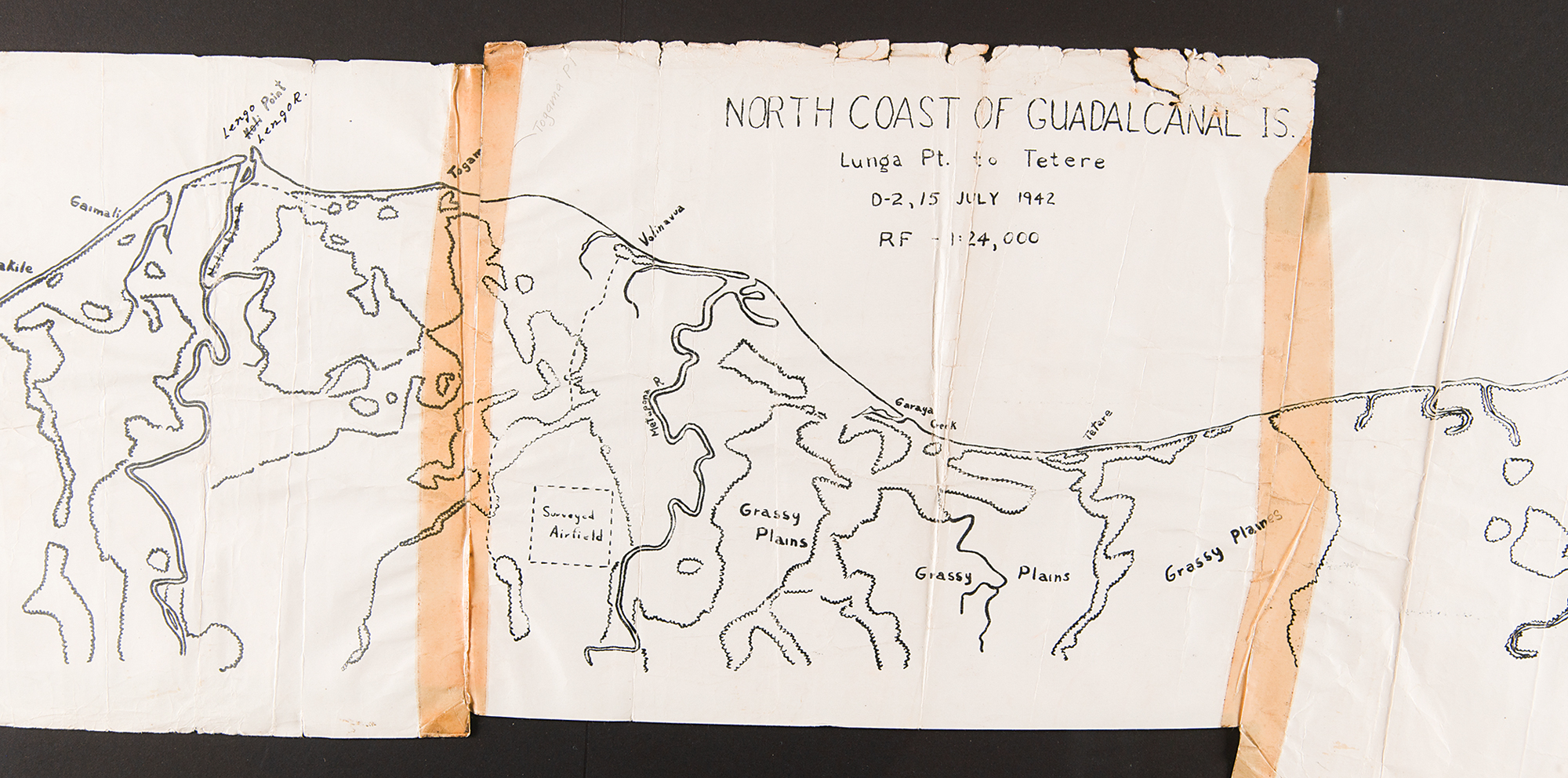
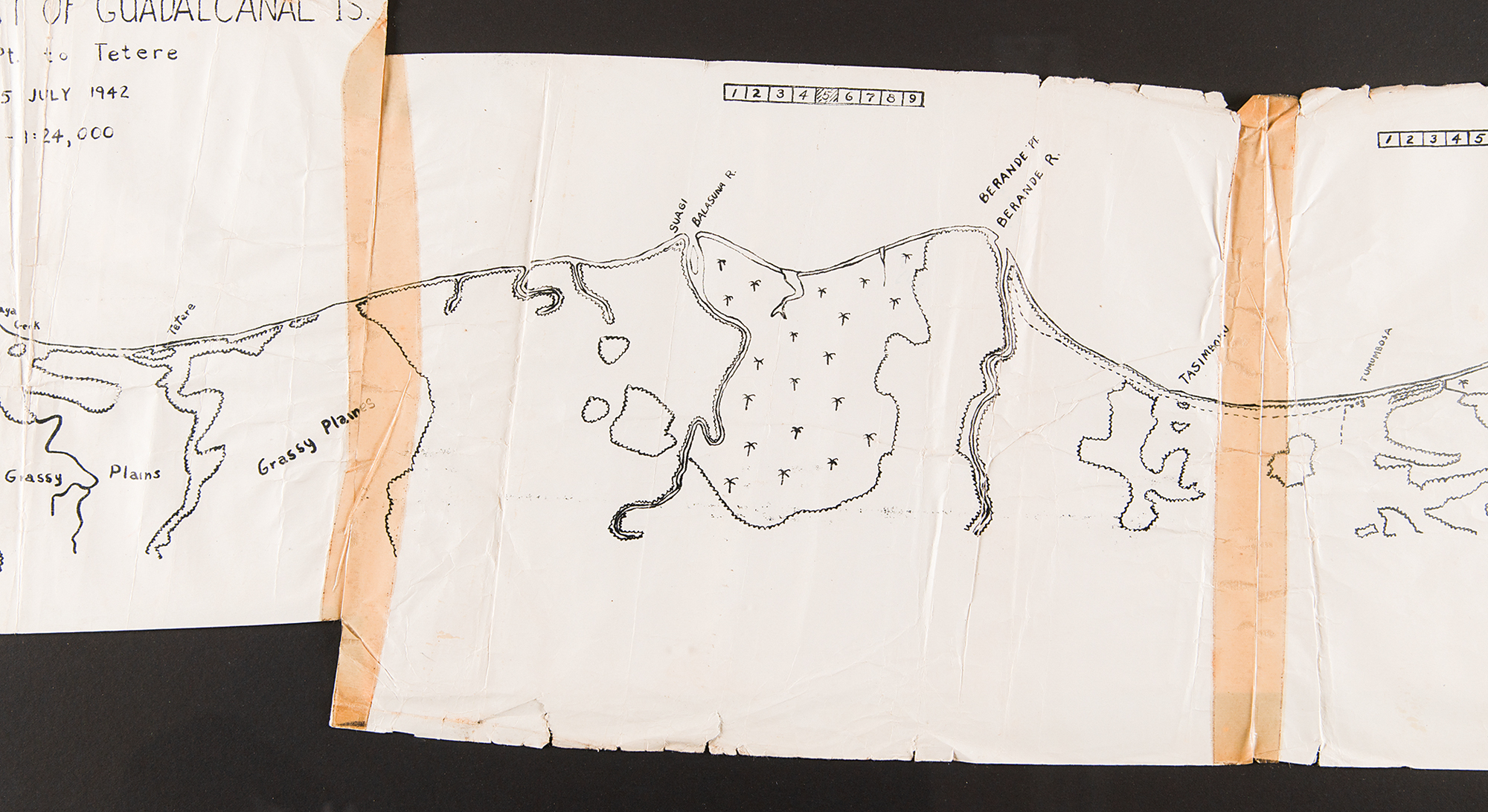
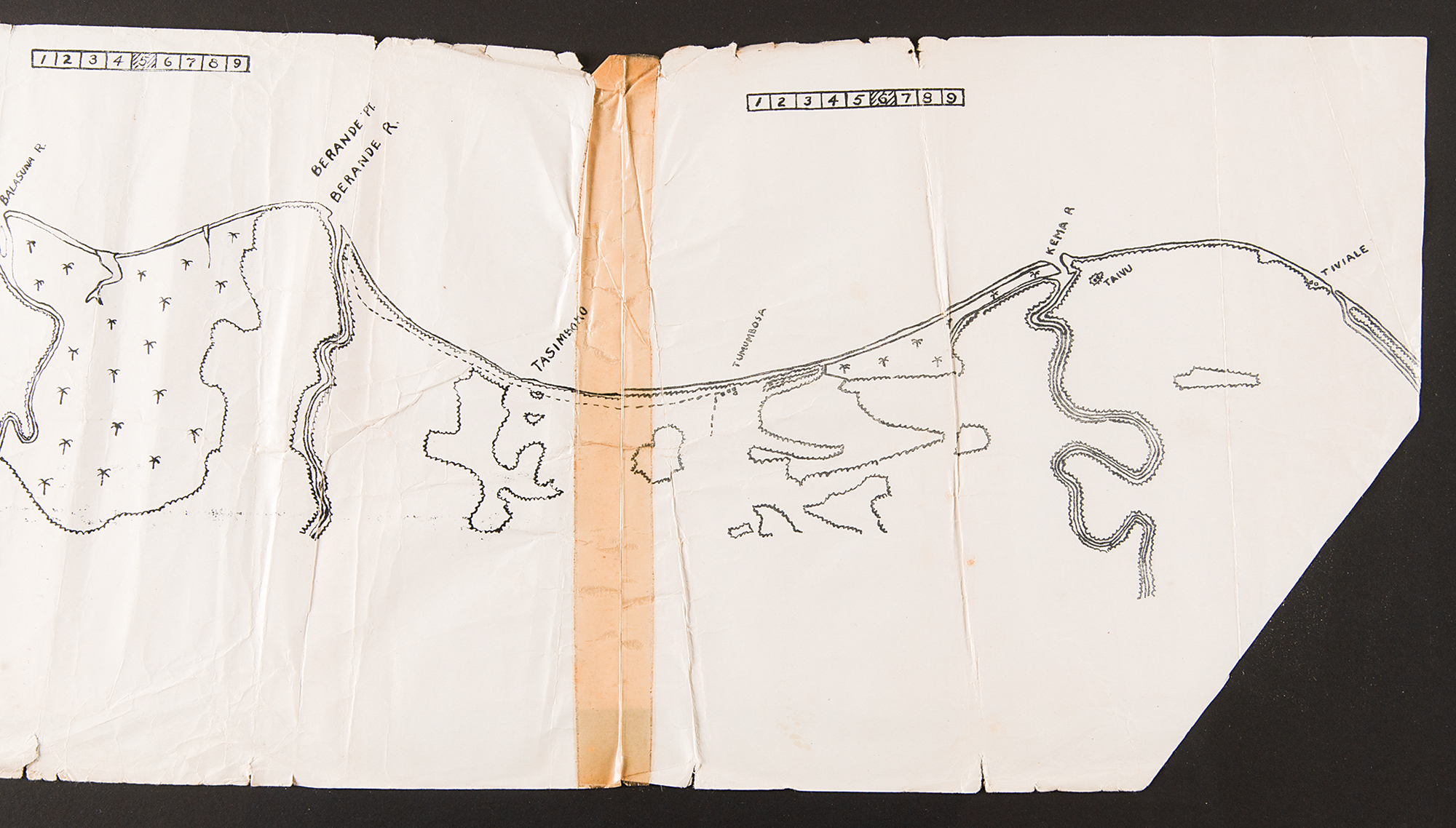
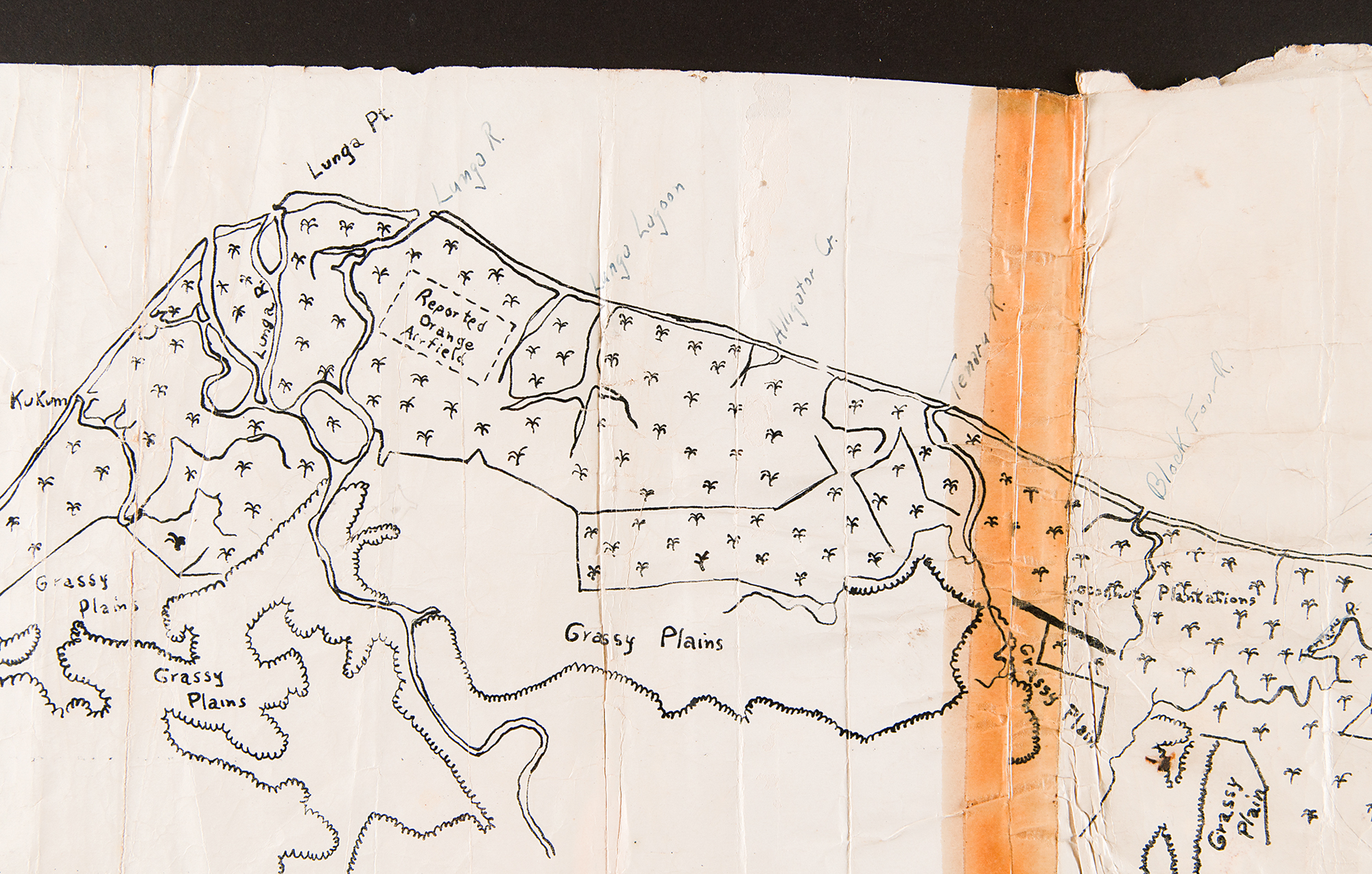
Historic World War II-dated United States battlefield map of the north coast of Guadalcanal in the Solomon Islands, the site of the Battle of Guadalcanal (code-named Operation Watchtower), the first major Allied land offensive against Japan during the war. Fought between August 7, 1942, and February 9, 1943, the conflict involved major land and naval battles on and surrounding the island of Guadalcanal. The lithographed strip map, 63˝ x 9.25˝, is entitled “North Coast of Guadalcanal Is., Lunga Pt. to Tetere, D-2, 15 July 1942, RF 1/24,000,” and contains six taped sections of the coastline of Guadalcanal that extends from Kukum in the west to Kema River in the east, and shows the littoral shoreline and nearly a half-mile inland. In addition to the preprinted landmarks, the map bears ink annotations for other points of interest, such as Kukum, Lunga Point, Lungo River, Lungo Lagoon, Alligator Creek, Tenaru River, Block Four River, Tenarout, and Lengo Point. Impressively framed to an overall size of 70˝ x 18˝. In good to very good condition, with extensive signs of use, including heavy overall creasing, edge tears, and paper loss, and old tape holding the sheets together.
The original map was prepared and hand-drawn by the 2nd Division mapmakers, hastily lithographed at a mapping station, and then issued to the 1st and 5th regiments of the 1st Marine Division. The map covers a broad coastal area with only a handful of place names and airfield locations; in fact, this map shows Henderson Field named as “reported Orange airfield.” Henderson, the center point of the campaign, was captured and named on August 12th, which suggests that this map may have been annotated between August 7th and 12th, as surely one would have named the primary base on the map.
This early battlefield map of the Guadalcanal littoral area shows the pivotal American landing sites between Koli Point and Lunga Point, which occurred on August 7th and 8th. In what was to become the first battle with Japanese forces in the Pacific Theatre, some 11,000 troops advanced and captured the Lunga Point airfield. Although the initial siege offered scant resistance, the Japanese high command soon sent reinforcements to the area, resulting in a long and bloody campaign. The withdrawal of the U.S. support fleet from offshore created enormous problems for the American defenders at Henderson Field, and reputations were won and lost in this testing ground over the five-month battle, with the Japanese finally withdrawing on December 28th. Guadalcanal was the first test for the new Marine regiments and divisions that were being hastily formed in the U.S. At Camp Pendleton, Quantico, and other military bases, Marines were being trained and assembled to fight the Island Hopping War that continued from August 1942 in Guadalcanal through to Okinawa in June 1945. Those campaigns, held across numerous islands, were some of the most ferocious battles in the history of the U.S. Marine forces.

