Sold For $14,980
*Includes Buyers Premium
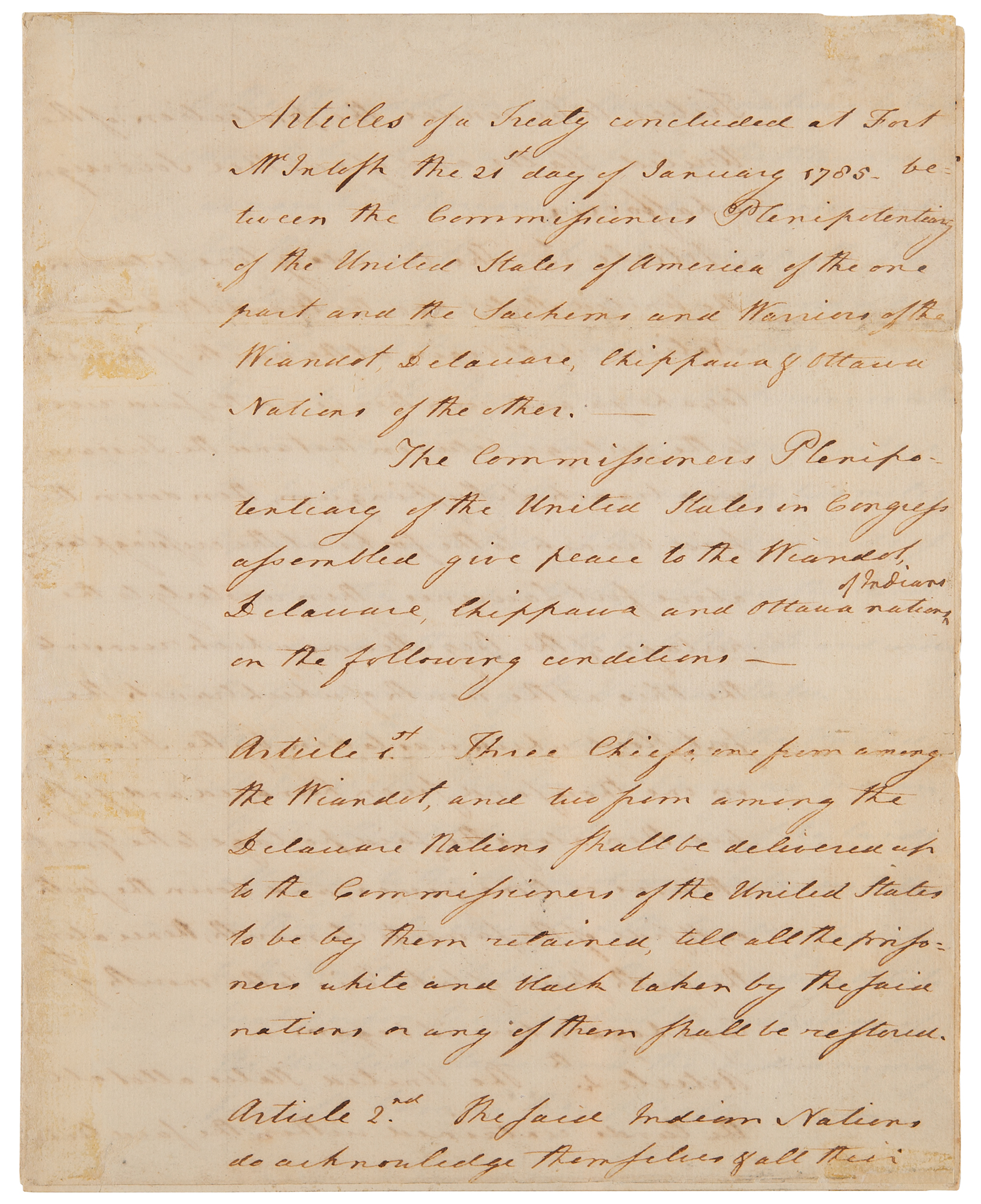
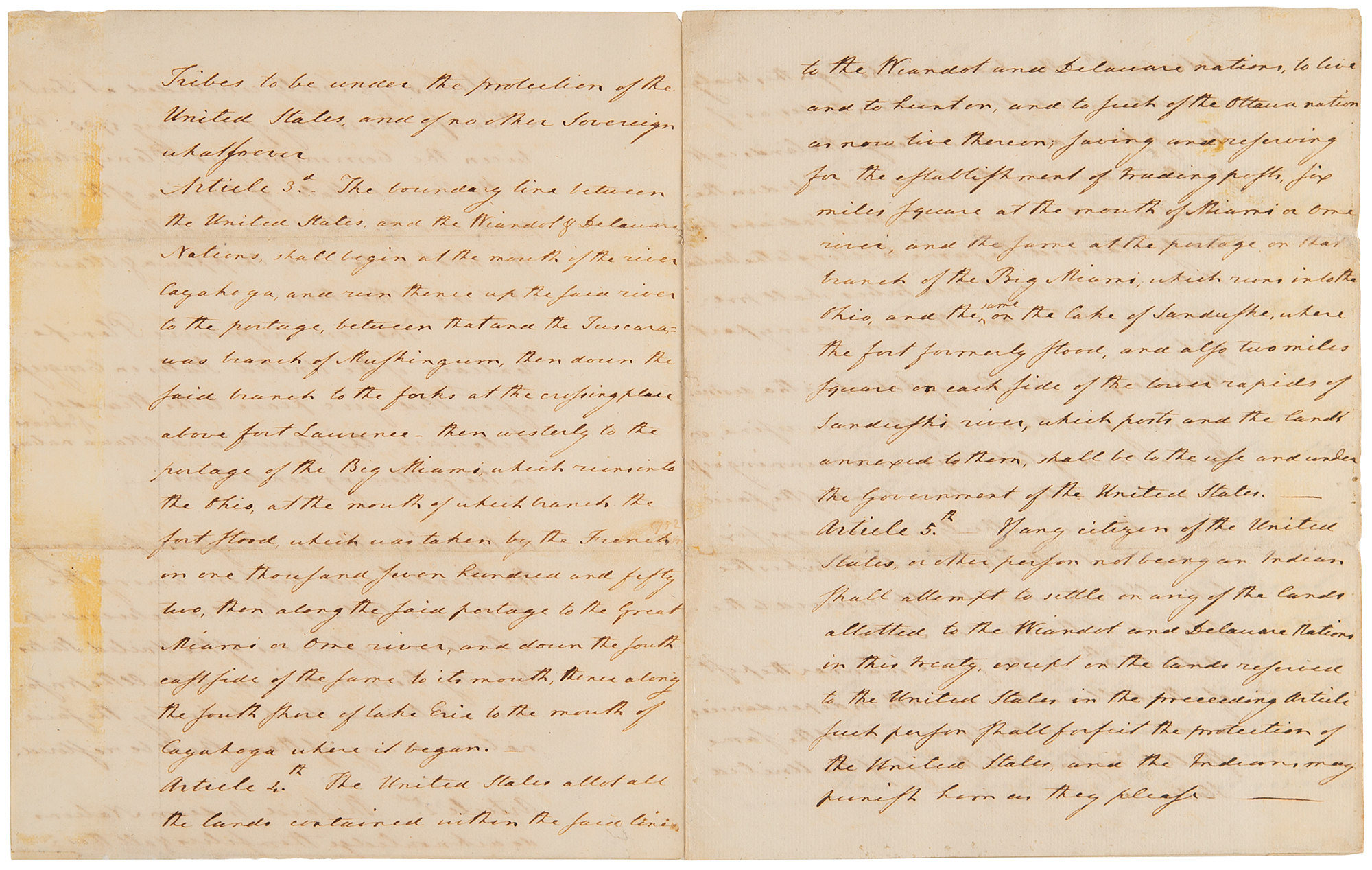
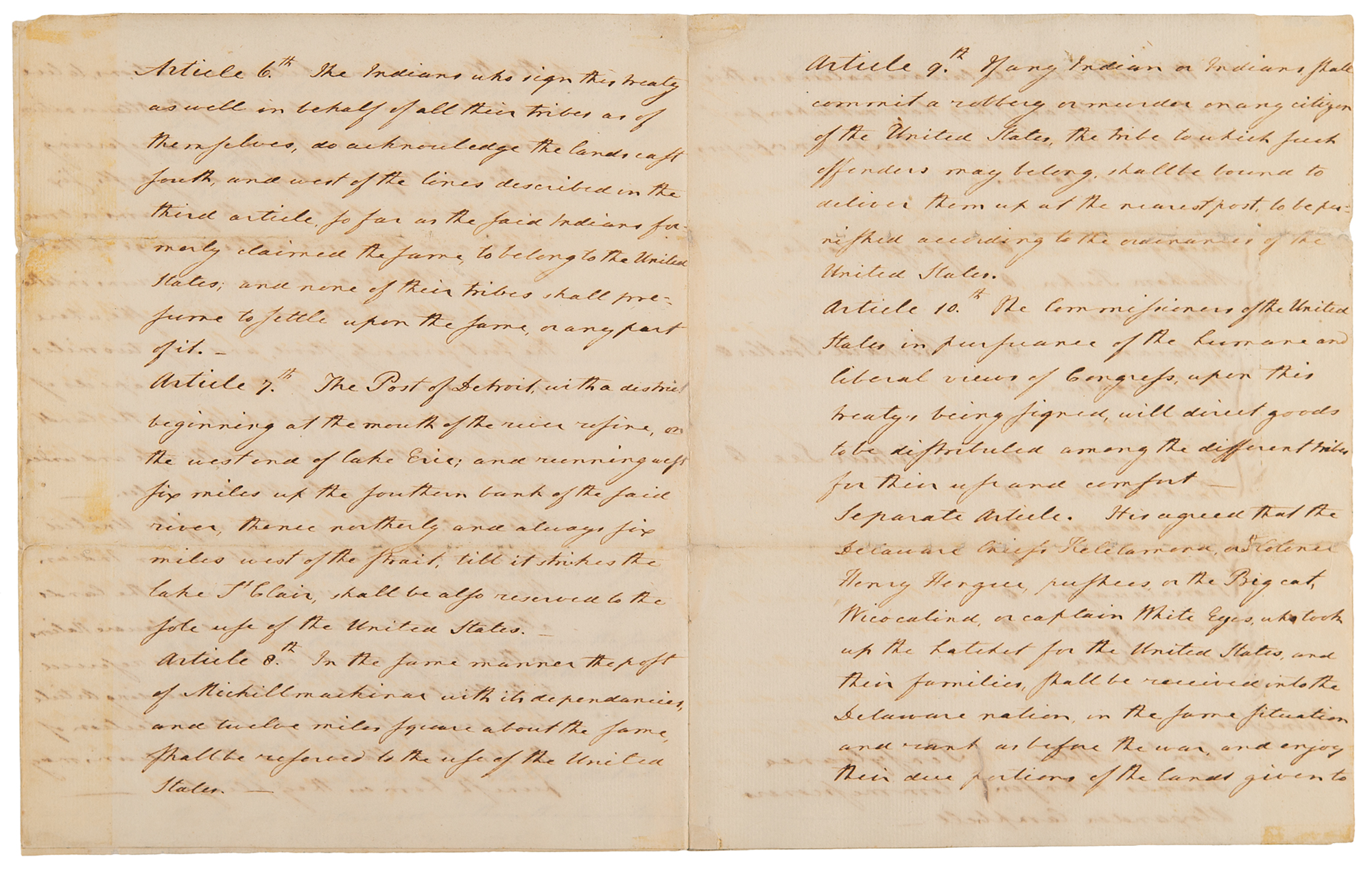
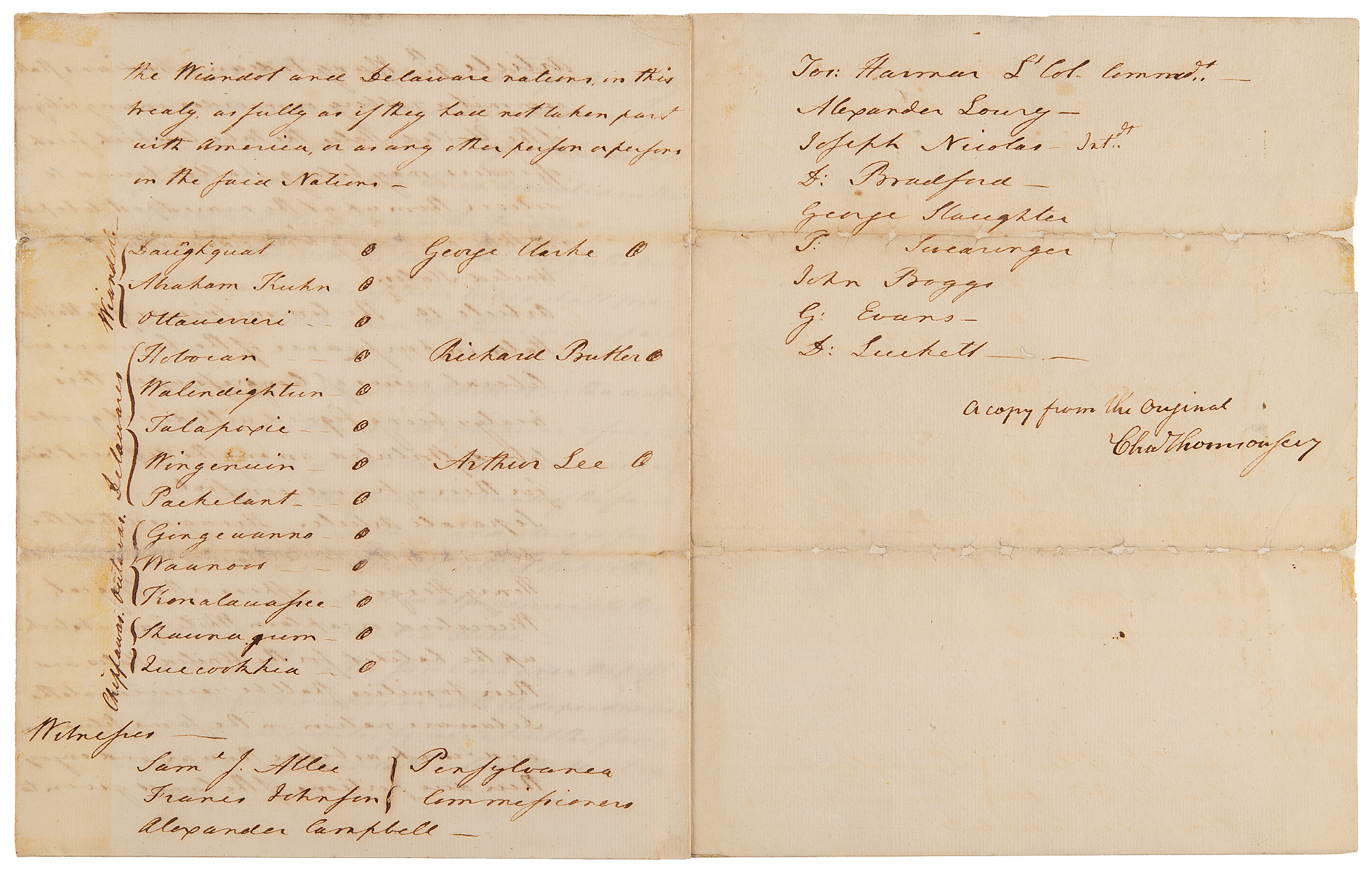
Patriot leader (1729–1824) in Philadelphia during the American Revolution and the secretary of the Continental Congress (1774–1789) throughout its existence; Thomson was the only person to sign the Dunlap Broadside of the Declaration alongside John Hancock. ADS signed "A copy of the original, Cha. Thomson, Sec'y," seven pages on four adjoining sheets, 7.25 x 9, no date [the original dated January 21, 1785]. Thomson writes out a copy of the Treaty of Fort McIntosh, an important agreement between the United States government and representatives of the Wyandotte, Delaware, Chippewa, and Ottawa nations of Native Americans. In small part: "The Commissioners Plenipotentiary of the United States in Congress assembled, give peace to the Wiandot, Delaware, Chippawa and Ottawa nations of Indians on the following conditions—Article 1st. Three chiefs, one from among the Wiandot, and two from among the Delaware nations, shall be delivered up to the Commissioners of the United States, to be by them retained, till all the prisoners, white and black, taken by the said nations or any of them shall be restored. Article 2nd. The said Indian Nations do acknowledge themselves and all their tribes to be under the protection of the United States and of no other sovereign whatsoever."
The treaty goes on to outline new boundaries set forth by the treaty, which carved a large Indian reservation out of land in Ohio (bounded in part by the Cuyahoga and Great Miami rivers) but otherwise ceded massive tracts of land to the United States—areas ranging from eastern and southern Ohio up to Detroit and the far north in the Great Lakes region, between Lake Superior, Huron, and Michigan. At the conclusion, Thomson pens the names of the Native American signers, the three American commissioners (George Rogers Clark, Richard Butler, and Arthur Lee), and several witnesses. In very good to fine condition, with archival repairs to the backs of the split folds.
In effect, the Treaty of Fort McIntosh marked the real beginning of westward expansion as it enabled the Confederation Congress to enact the Land Ordnance of 1785, which standardized a system by which settles could purchase titles to farmland in the undeveloped west—much of which was acquired via the treaty.

