Sold For $13,589
*Includes Buyers Premium
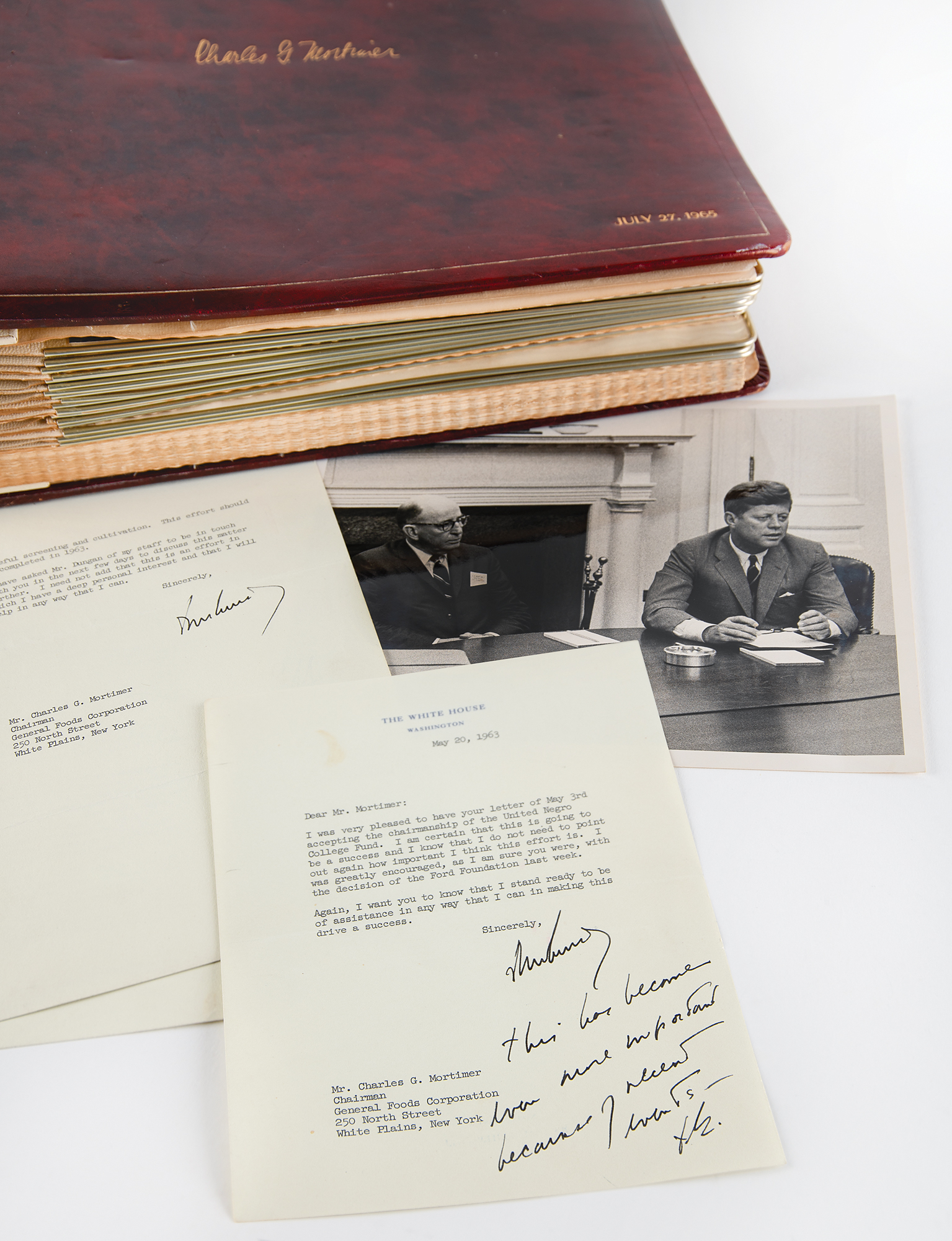
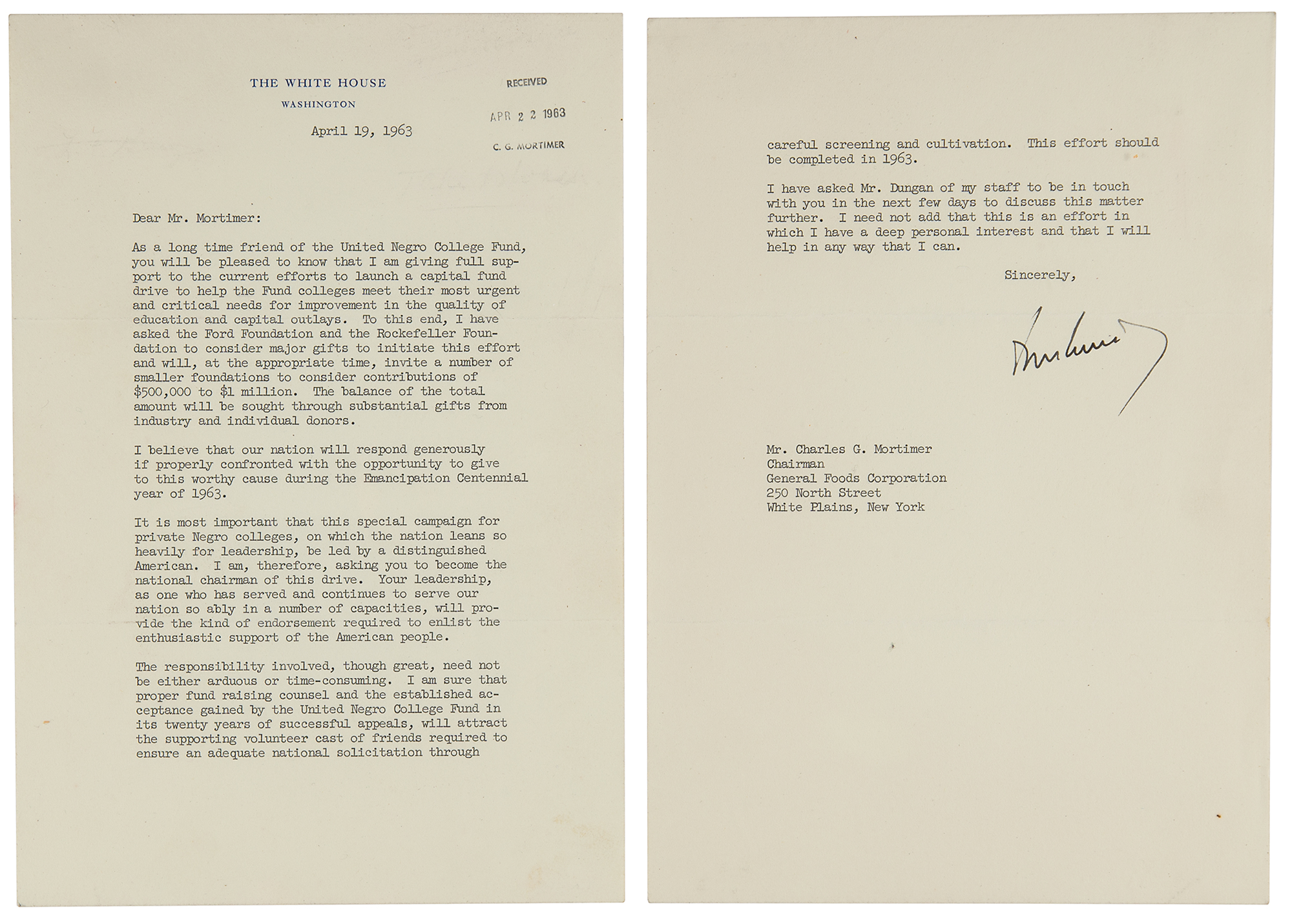
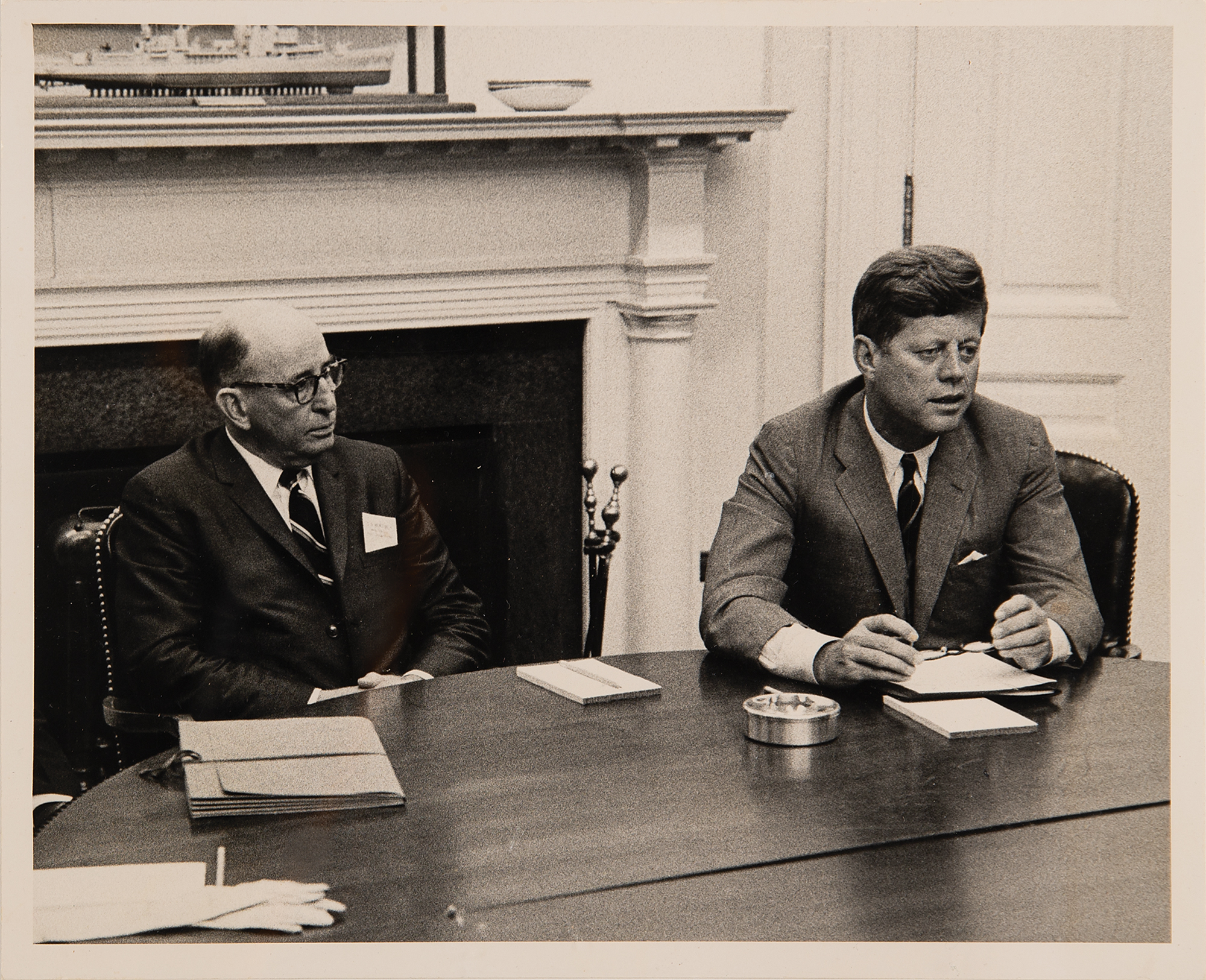
Two TLSs as president signed “John Kennedy,” both sent to Charles G. Mortimer, the chairman and CEO of the General Foods Corporation, who acquiesced to the president’s request that he become the chairman of the United Negro College Fund (UNCF), the nation's largest and most effective minority education organization, which provides scholarships for black students and general scholarship funds for 37 private historically black colleges and universities. The letters, three total pages, 7 x 10.25 and 6.75 x 8.75, typed on White House letterhead, read:
April 19, 1963: “As a long time friend of the United Negro College Fund, you will be pleased to know that I am giving full support to the current efforts to launch a capital fund drive to help the Fund colleges meet their most urgent and critical needs for improvement in the quality of education and capital outlays. To this end, I have asked the Ford Foundation and the Rockefeller Foundation to consider major gifts to initiate this effort and will, at the appropriate time, invite a number of smaller foundations to consider contributions of $500,000 to $1 million. The balance of the total amount will be sought through substantial gifts from industry and individual donors.
I believe that our nation will respond generously if properly confronted with the opportunity to give to this worthy cause during the Emancipation Centennial year of 1963.
It is most important that this special campaign for private Negro colleges, on which the nation leans so heavily for leadership, be led by a distinguished American. I am, therefore, asking you to become the national chairman of this drive. Your leadership, as one who has served and continues to serve our nation so ably in a number of capacities, will provide the kind of endorsement required to enlist the enthusiastic support of the American people.
The responsibility involved, though great, need not be either arduous or time-consuming. I am sure that proper fund raising counsel and the established acceptance gained by the United Negro College Fund in its twenty years of successful appeals, will attract the supporting volunteer cast of friends required to ensure an adequate national solicitation through careful screening and cultivation. This effort should be completed in 1963.
I have asked Mr. Dungan of my staff to be in touch with you in the next few days to discuss this matter further. I need not add that this is an effort in which I have a deep personal interest and that I will help in any way that I can.”
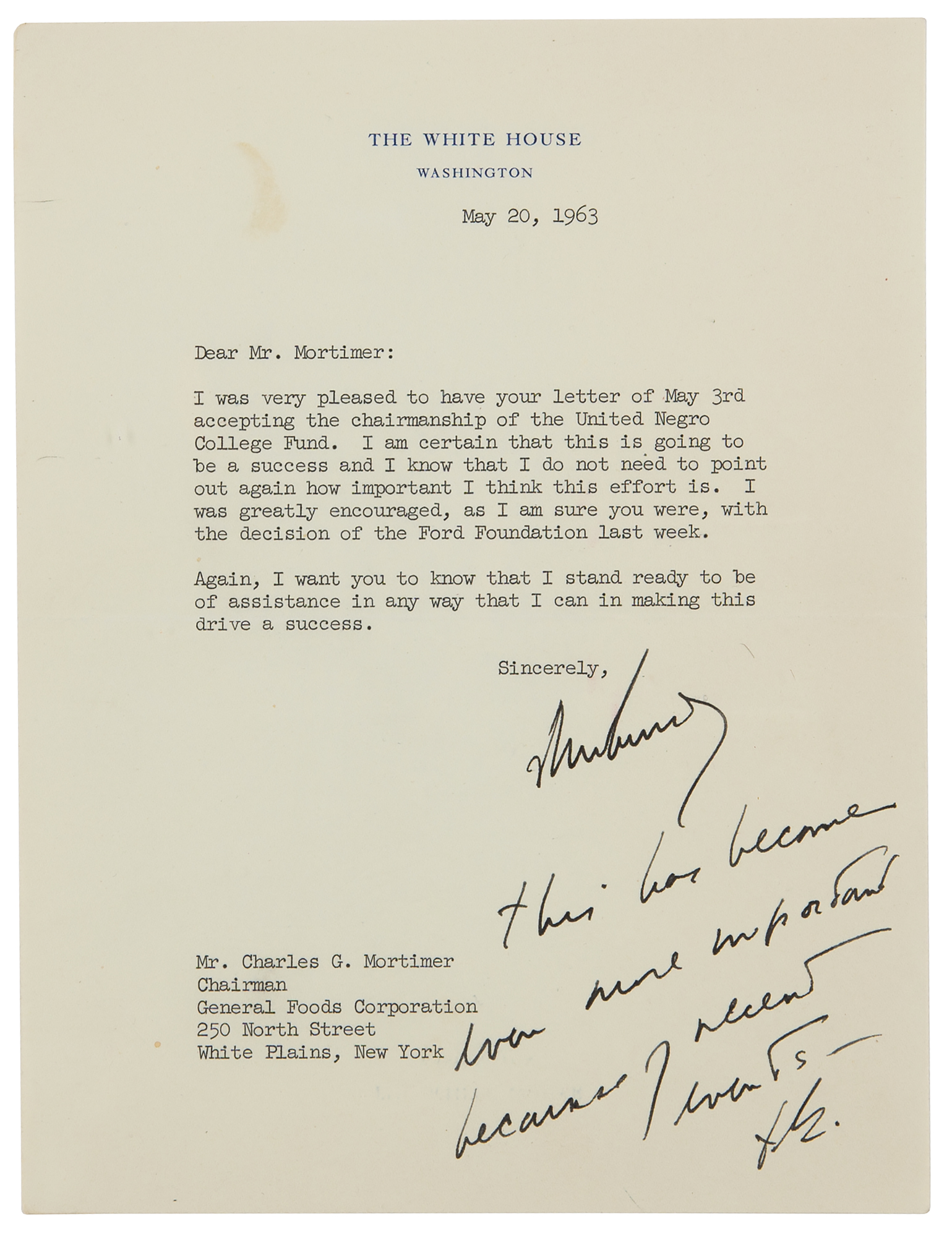
May 20, 1963: “I was very pleased to have your letter of May 3rd accepting the chairmanship of the United Negro College Fund. I am certain that this is going to be a success and I know that I do not need to point out again how important I think this effort is. I was greatly encouraged, as I am sure you were, with the decision of the Ford Foundation last week. Again, I want you to know that I stand ready to be of assistance in any way that I can in making this drive a success.” Kennedy signs with his initials, “JK,” after a handwritten postscript: “This has become even more important because of recent events.” Kennedy is assuredly referencing the Birmingham campaign, a movement led and organized in early 1963 by Martin Luther King, Jr. and the Southern Christian Leadership Conference (SCLC) to bring attention to the integration efforts of African Americans in Birmingham, Alabama.
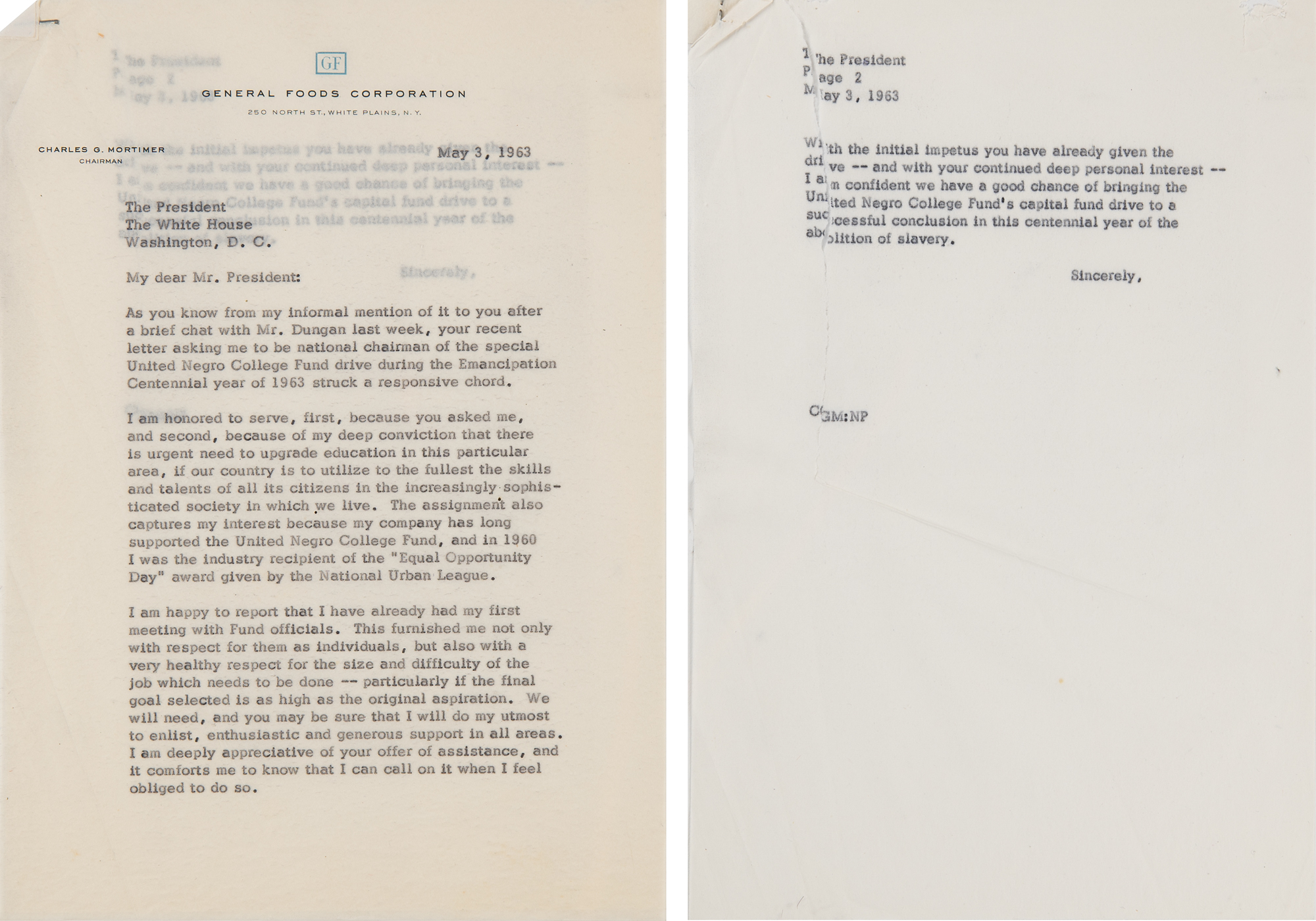
Includes a copy of Mortimer’s acceptance letter to Kennedy from May 3, 1963, which reads, in part: “I am honored to serve, first, because you asked me, and second, because of my deep conviction that there is urgent need to upgrade education in this particular area, if our country is to utilize to the fullest the skills and talents of all its citizens in the increasingly sophisticated society in which we live. The assignment also captures my interest because my company has long supported the United Negro College Fund, and in 1960 I was the industry recipient of the ‘Equal Opportunity Day’ award given by the National Urban League.
I am happy to report that I have already had my first meeting with Fund officials. This furnished me not only with respect for them as individuals, but also with a very healthy respect for the size and difficulty of the job which needs to be done particularly if the final goal selected is as high as the original aspiration. We will need, and you may be sure that I will do my utmost to enlist, enthusiastic and generous support in all areas. I am deeply appreciative of your offer of assistance, and it comforts me to know that I can call on it when I feel obliged to do so.” In overall fine condition.
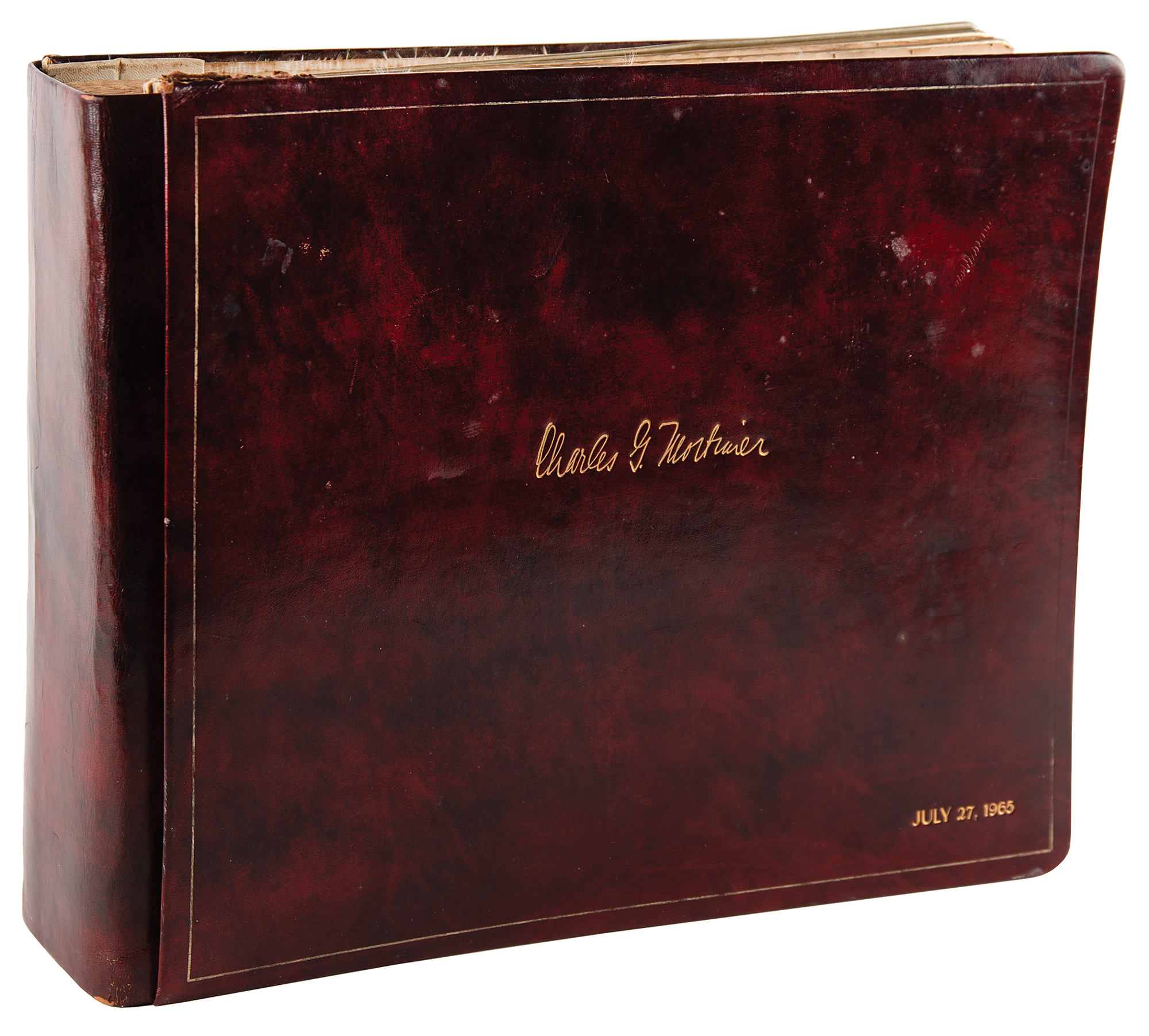
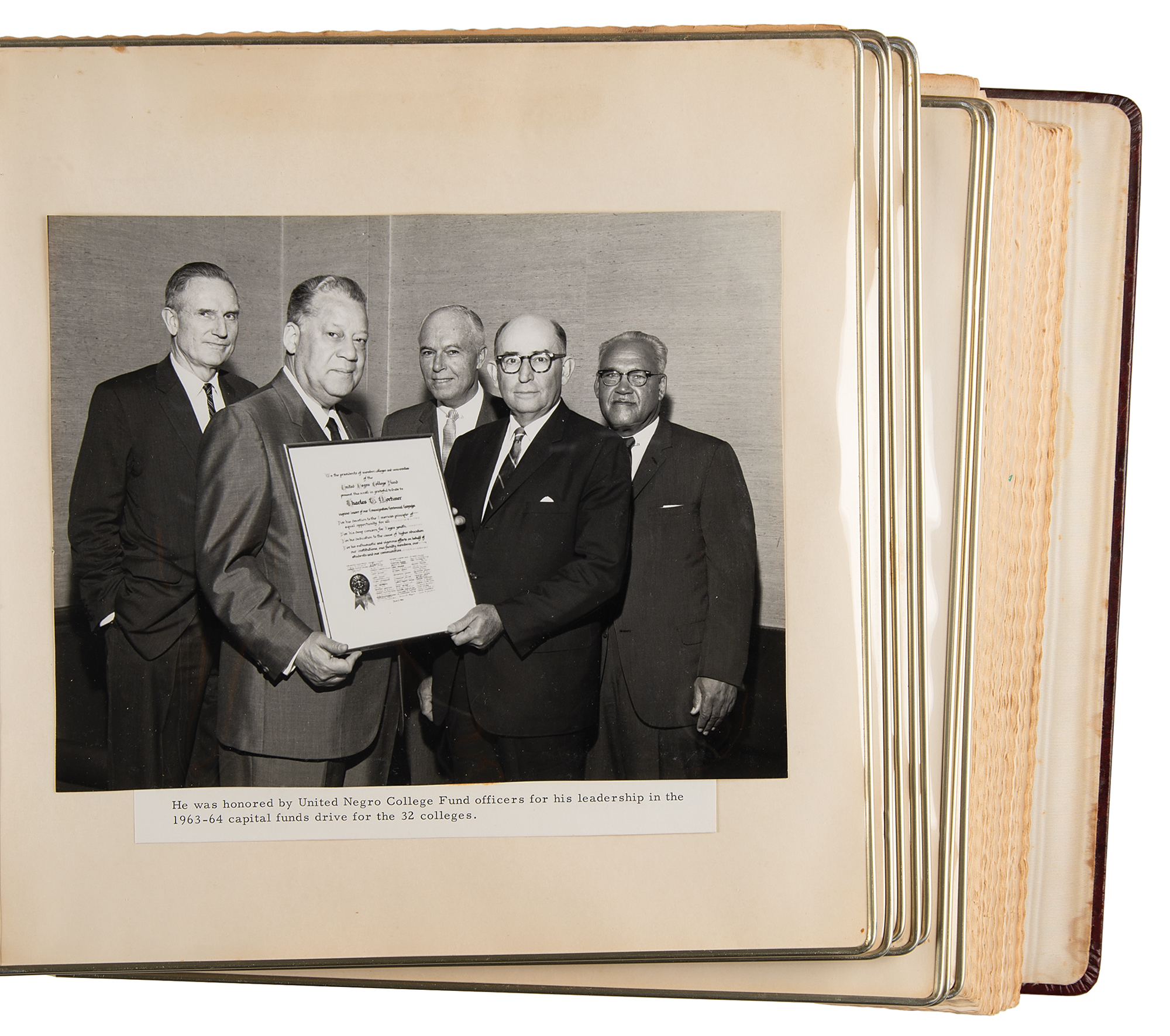
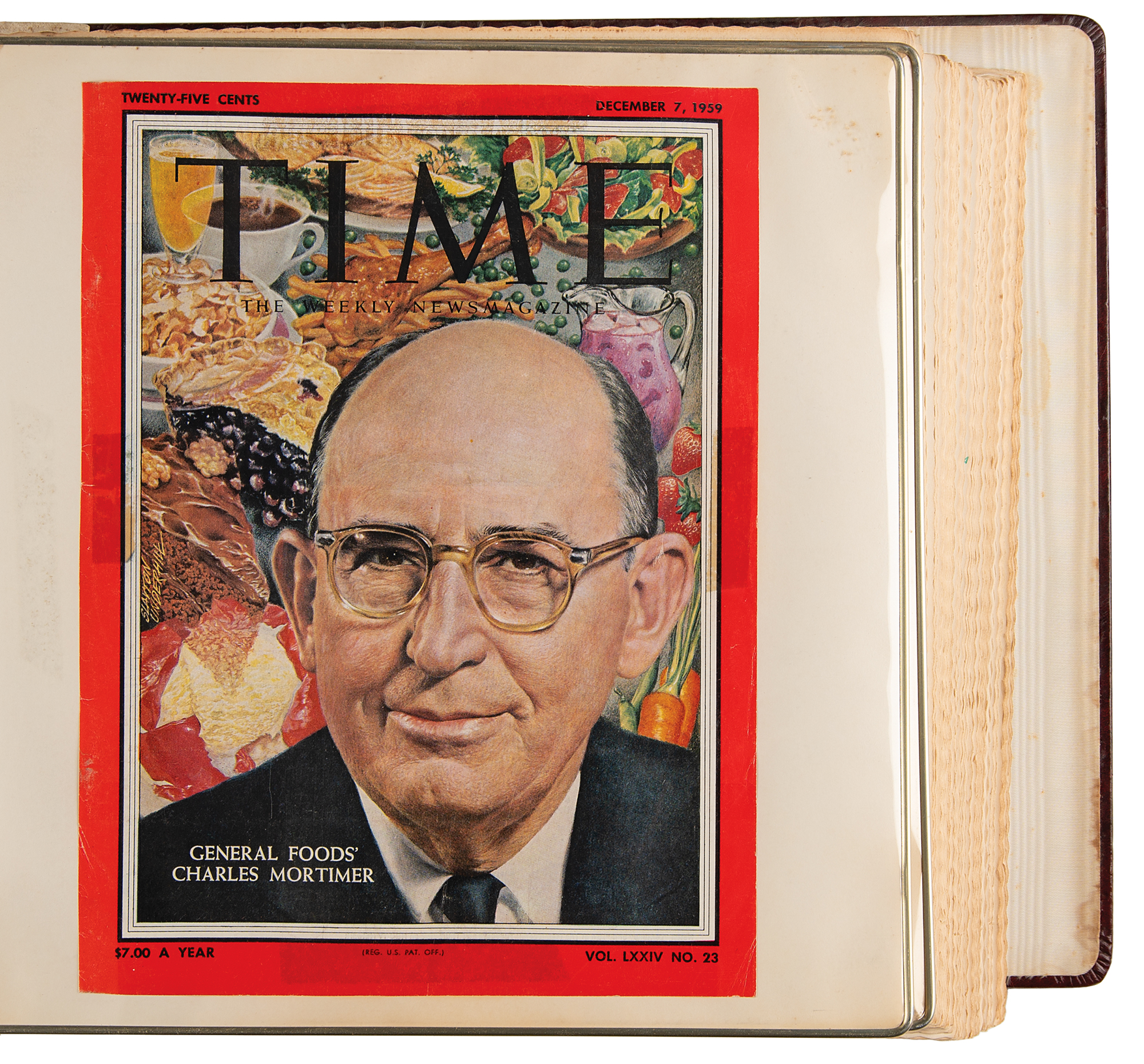
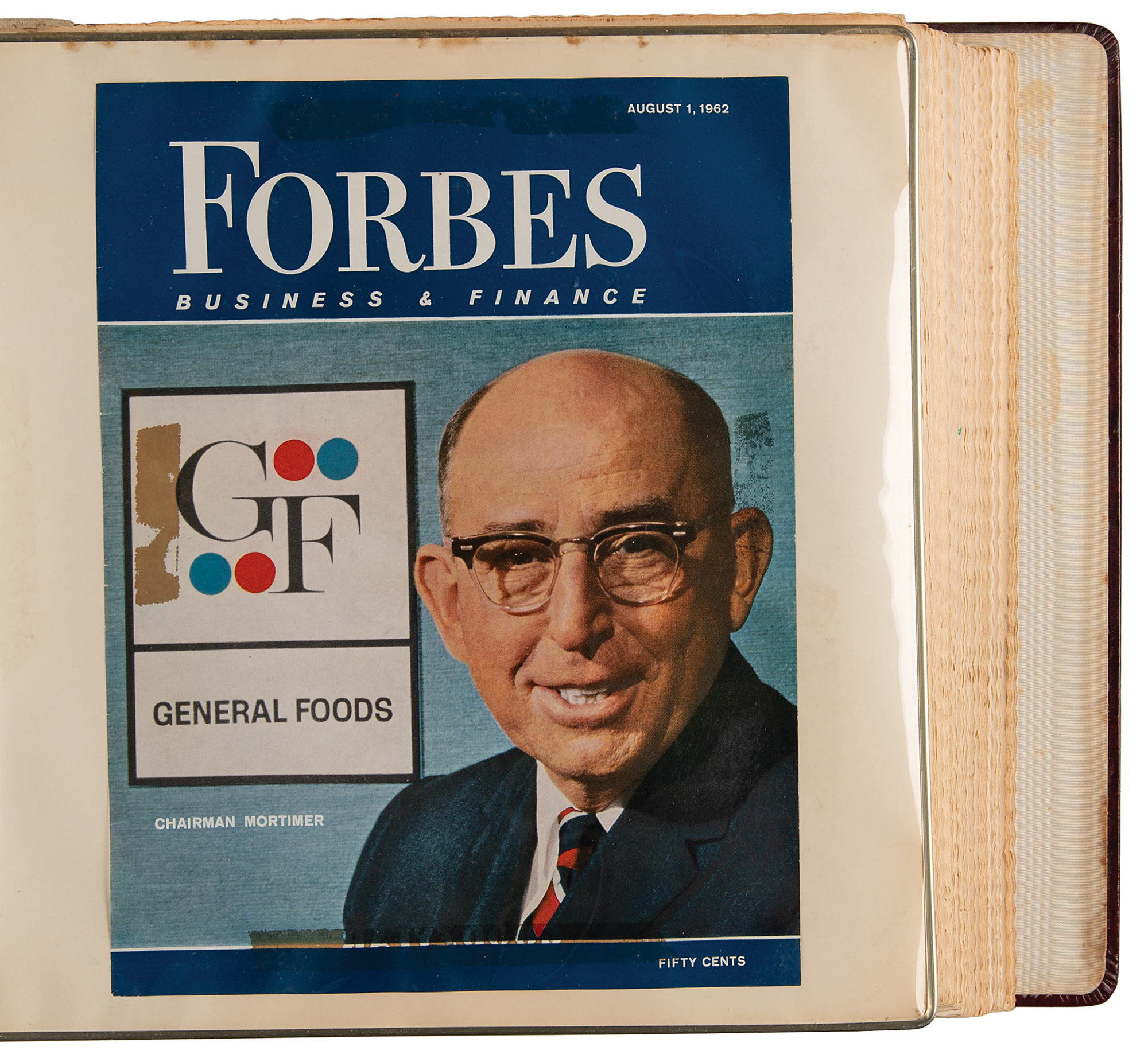
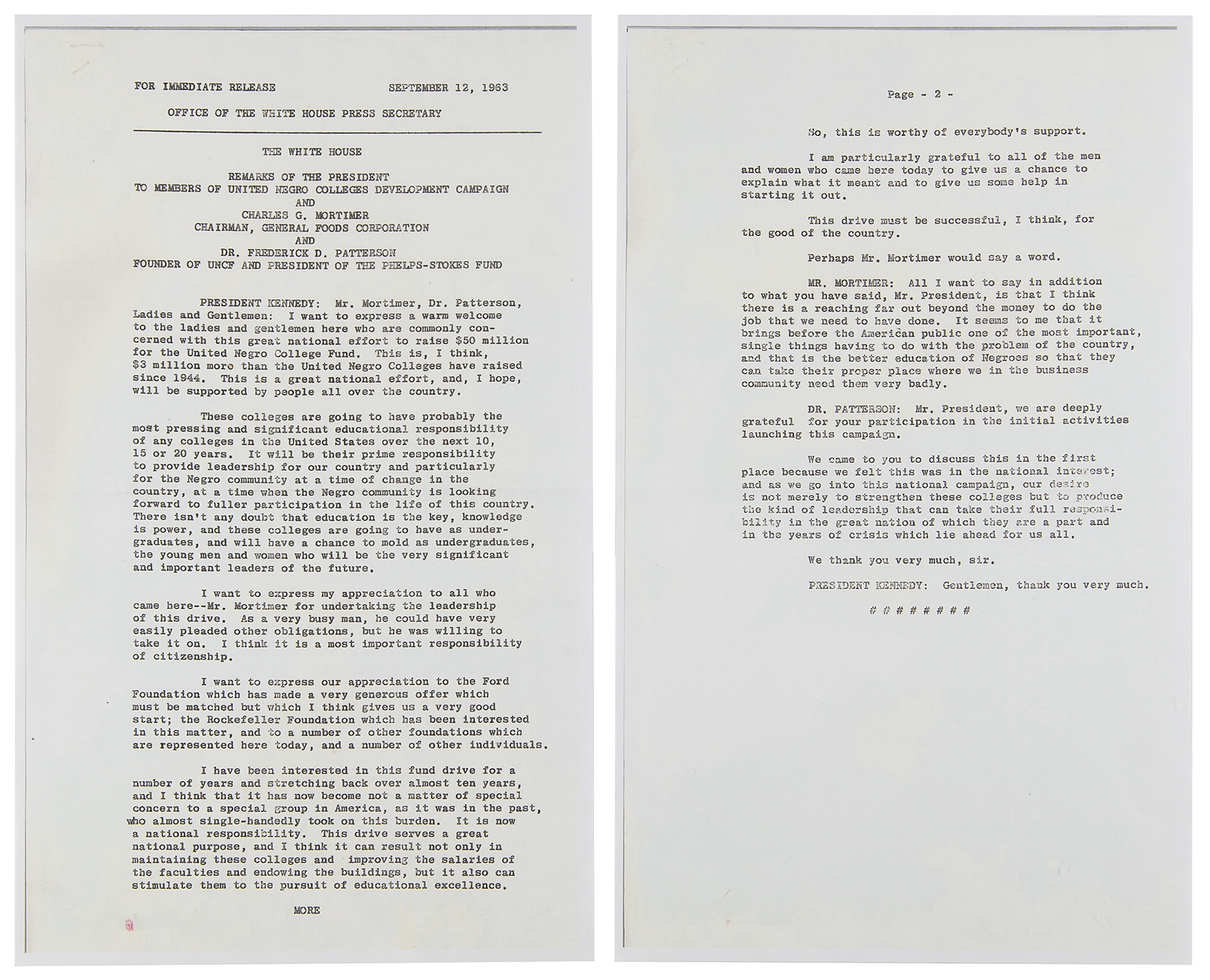
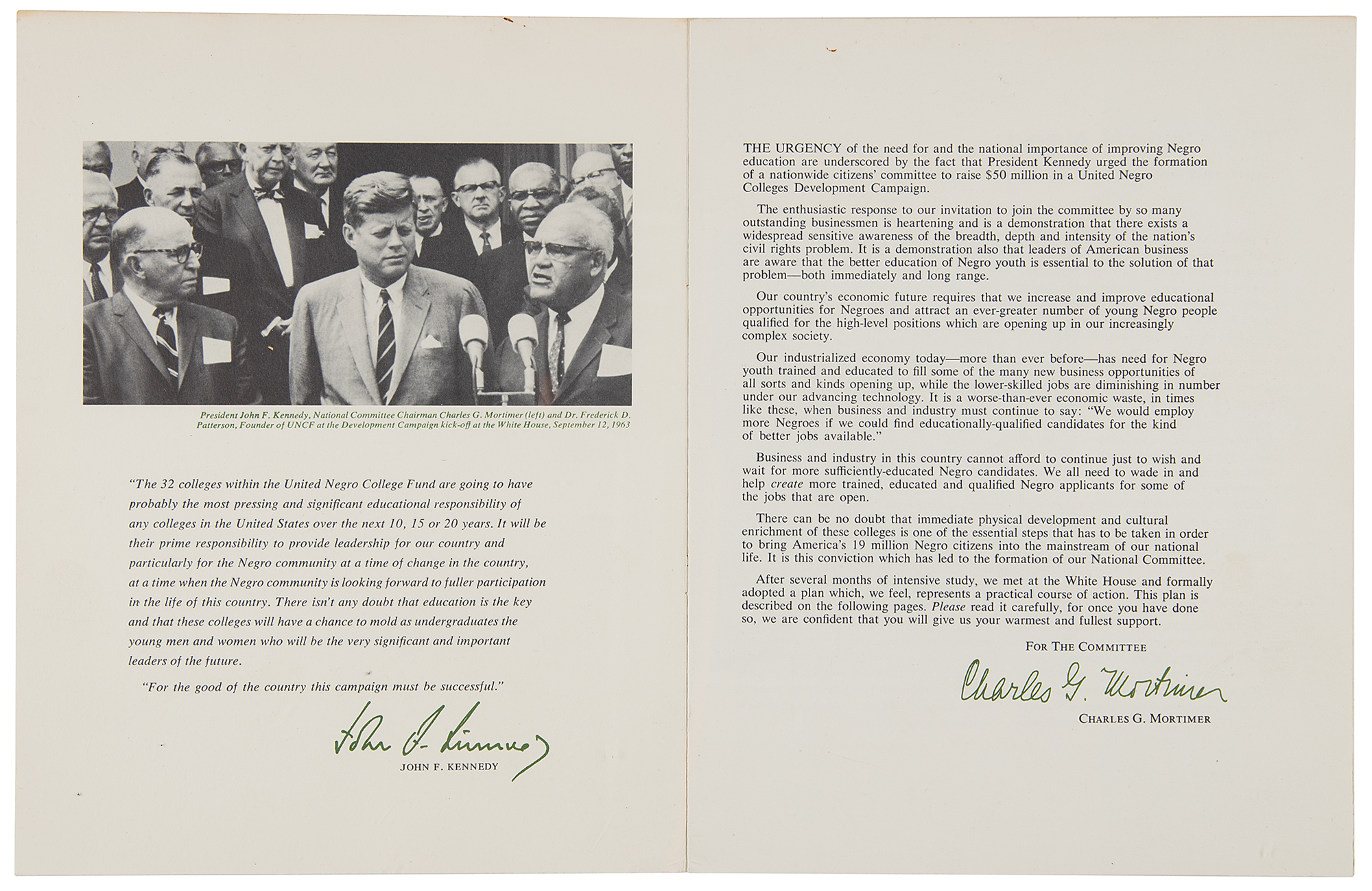
Accompanied by supporting documentation, both visual and printed, related to Mortimer’s acceptance of the position and the historic launch of the United Negro College Development Campaign, and Mortimer’s personal leather-bound retirement scrapbook, which contains copious photographs, articles, and keepsakes related to his prodigious career with General Foods and his lifelong support of education, youth and public service activities, American free trade, and the Civil Rights movement; among them are front covers from Time magazine (December 7, 1959) and Forbes magazine (August 1, 1962), which both depict Mortimer as the chairman of General Foods.
The UNCF was founded in 1944 by Frederick Patterson, President of the Tuskegee Institute, and Mary McLeod Bethune, an advisor to Franklin D. Roosevelt’s Administration, to provide a steady, consistent stream of funding to several small historically black colleges and universities scattered across the South. In 1944, the first annual fundraising effort generated $760,000, a sum worth about $15 million today. Thirteen years later, in May 1957, a Massachusetts Senator named John F. Kennedy became a key benefactor of the UNCF when he donated his Pulitzer Prize proceeds from his prize-winning book, Profiles in Courage.
Two years later, the organization earned another boost from Senator Kennedy when he spoke to its national convocation that year, which was held in Indianapolis on April 12, 1959. In his stirring speech, JFK remarked: ‘It is no exaggeration to say that there are few educational drives more important or of more vital significance than that of the United Negro College Fund…So let us raise both our sights and our standards. One era in the history of our Negro colleges is coming to an end. But another is just beginning. It will require more, not less, effort – greater, not smaller, expenditures – increased, not decreased, recognition from the American people.’

