.jpg)
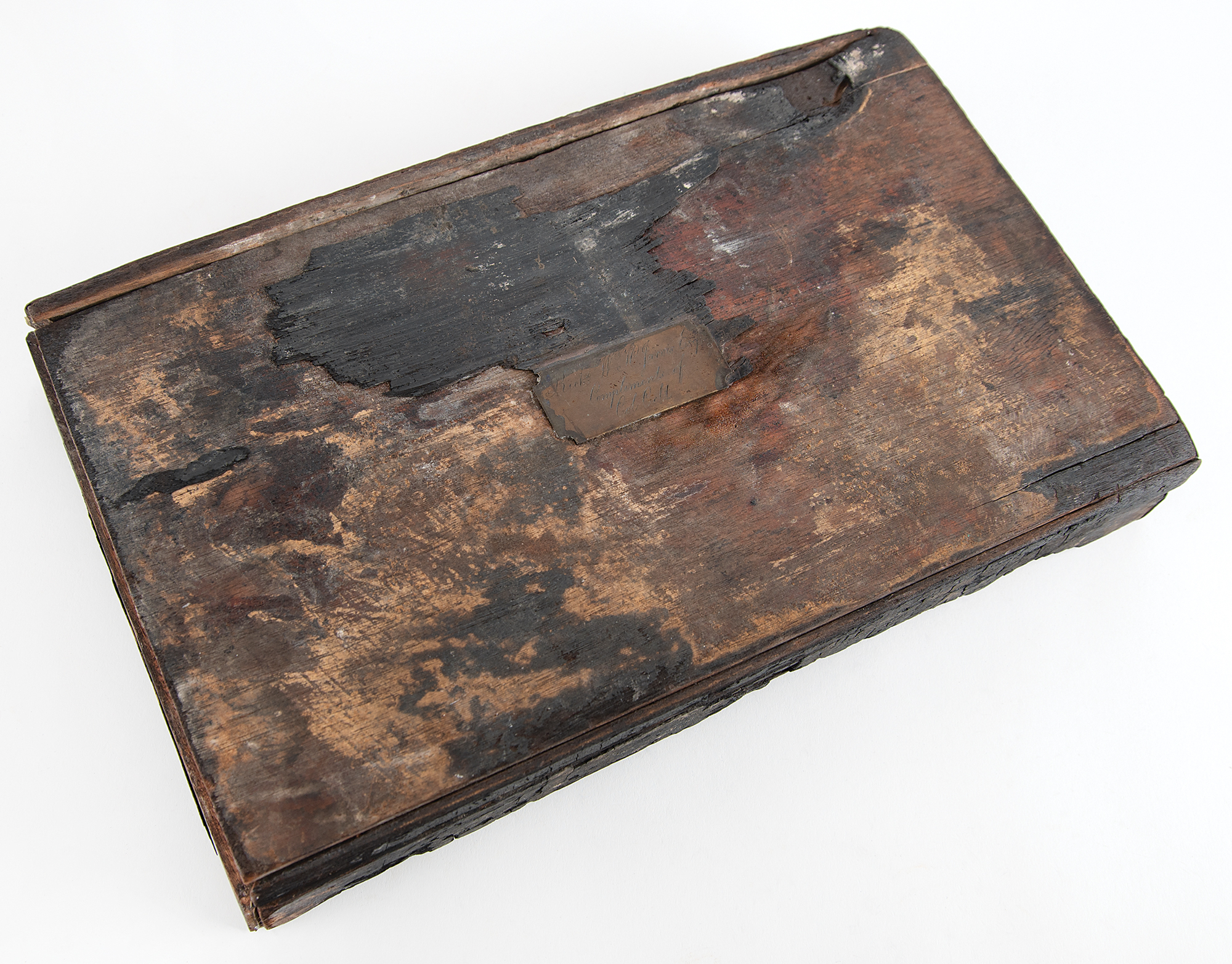
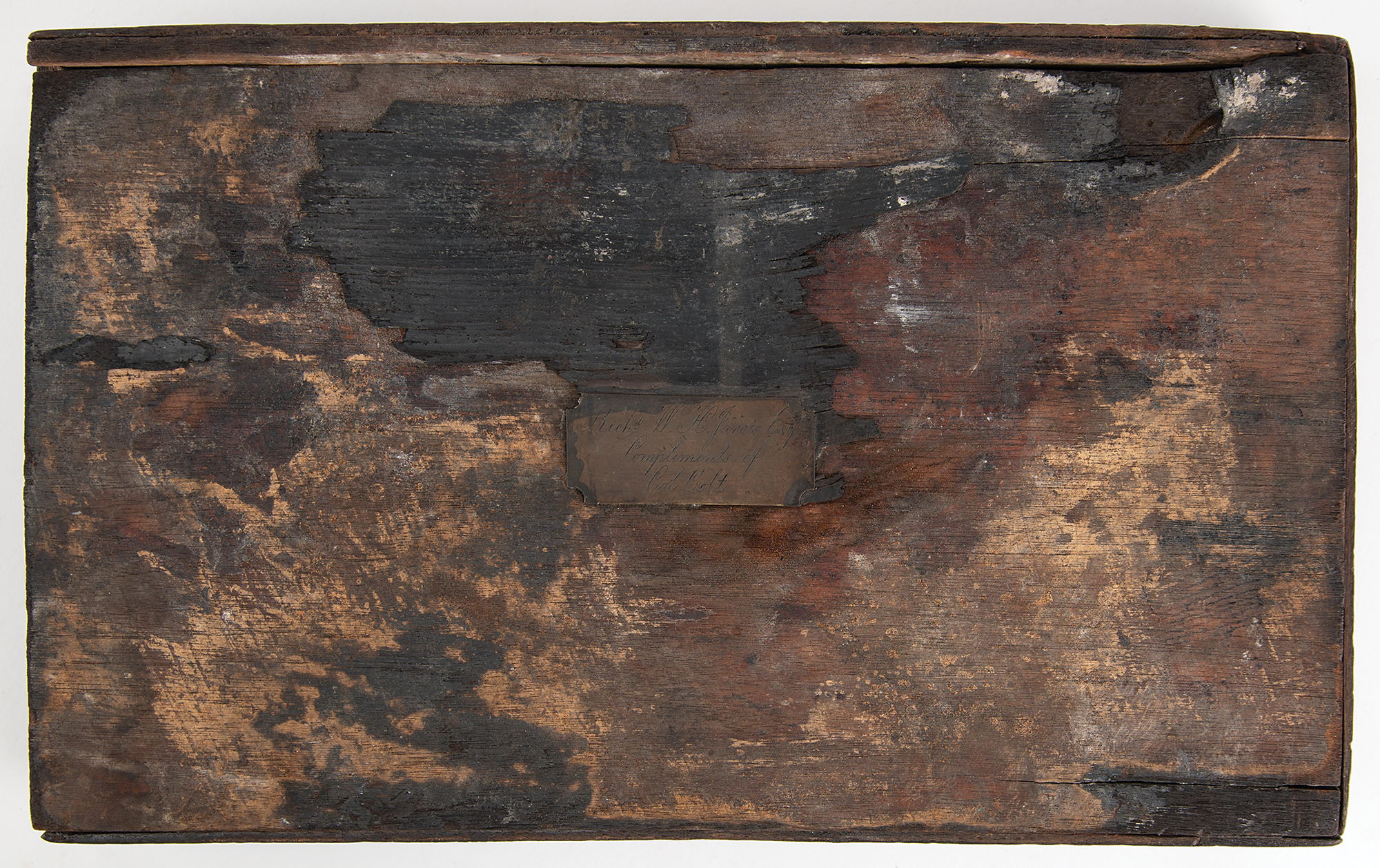
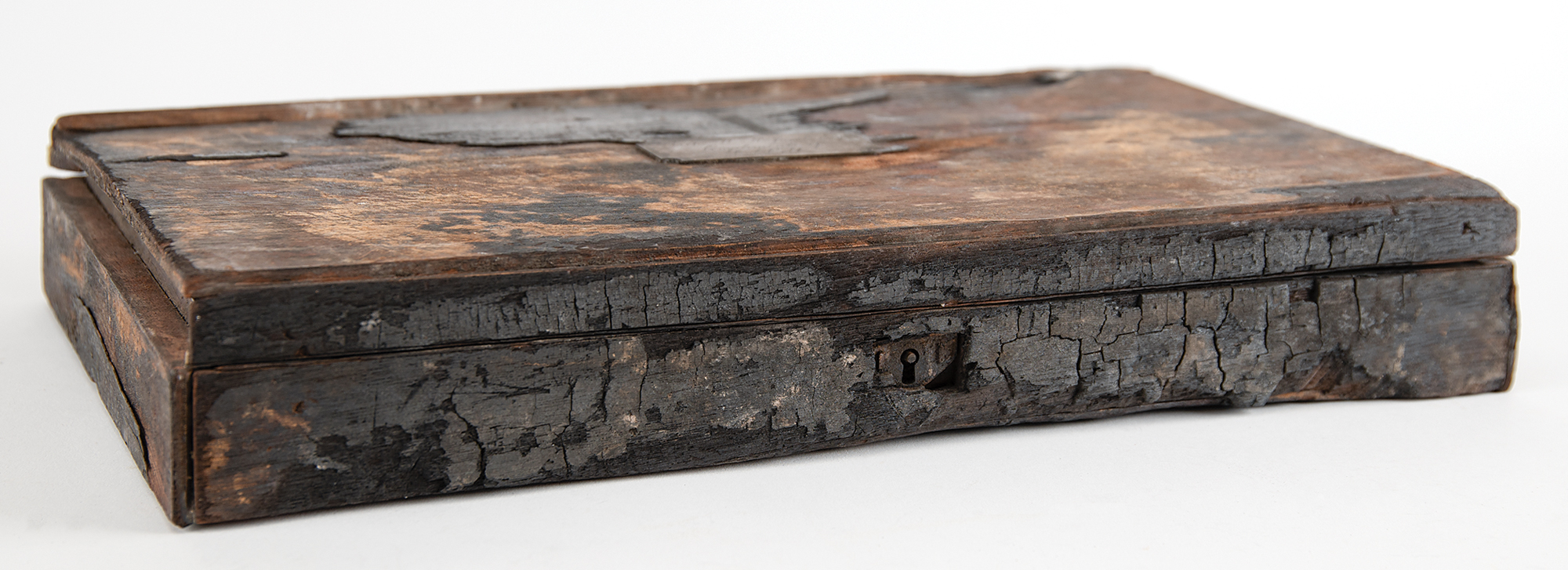
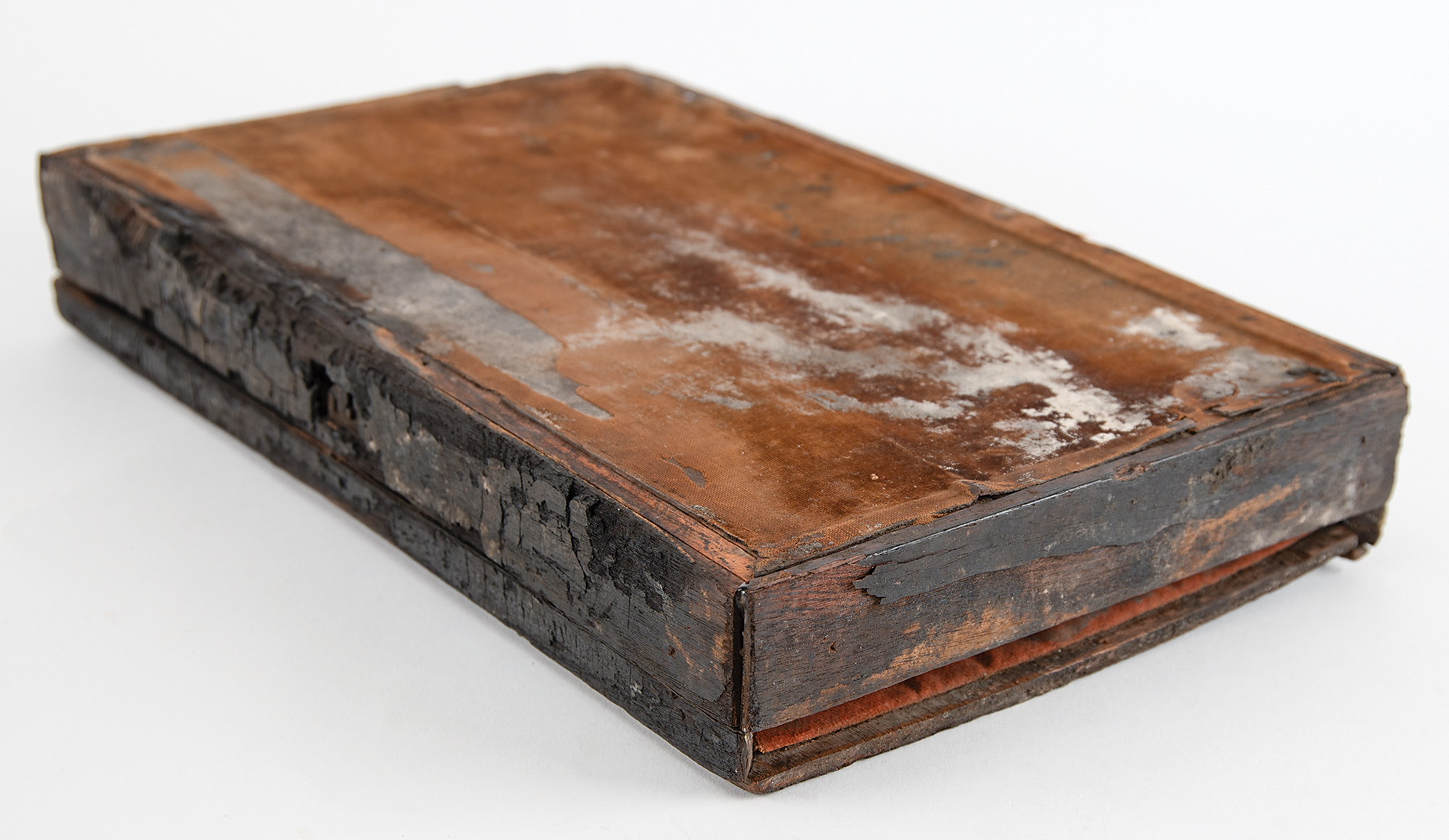
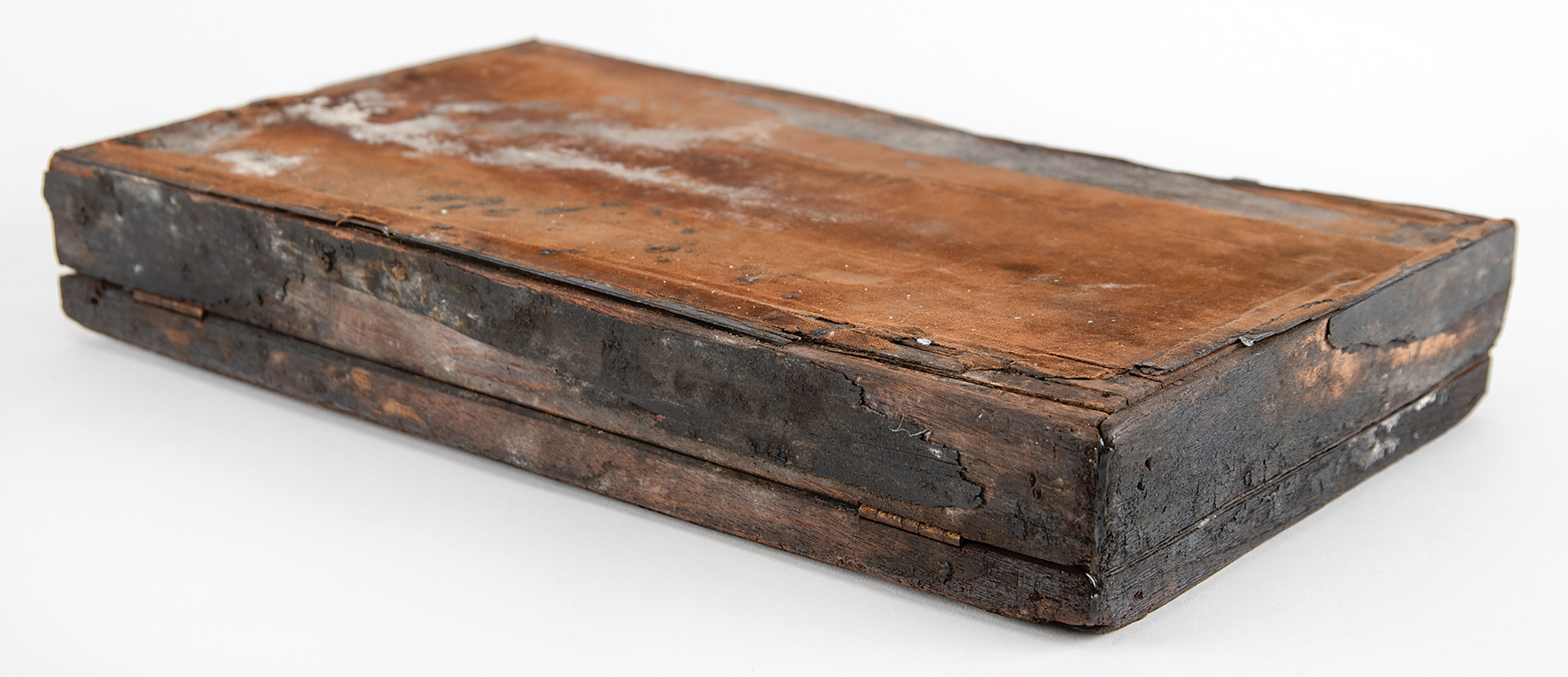
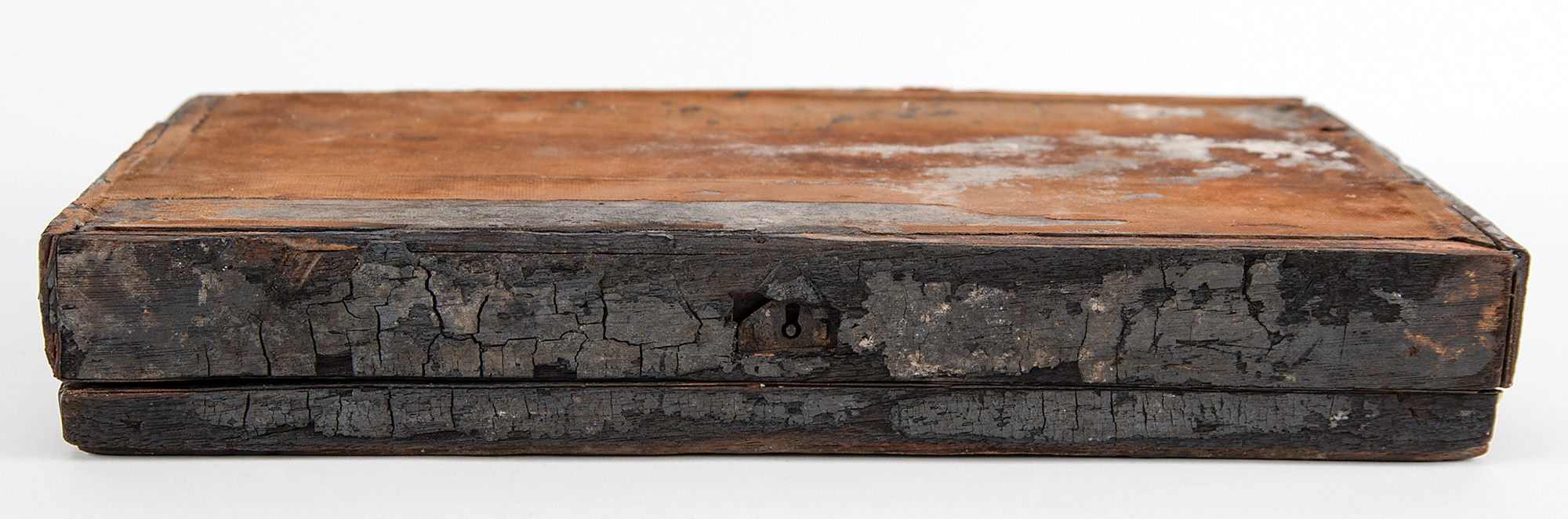
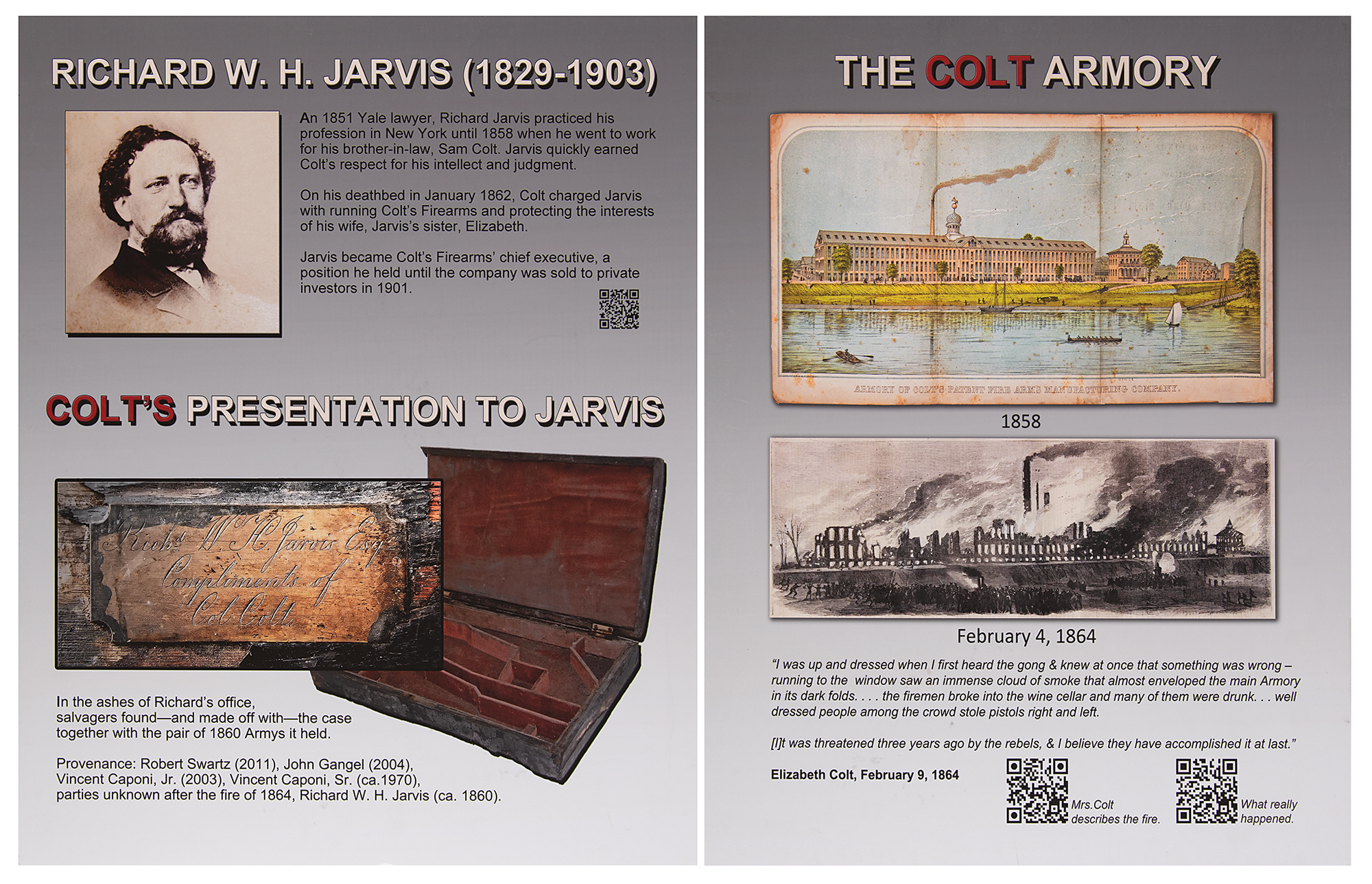
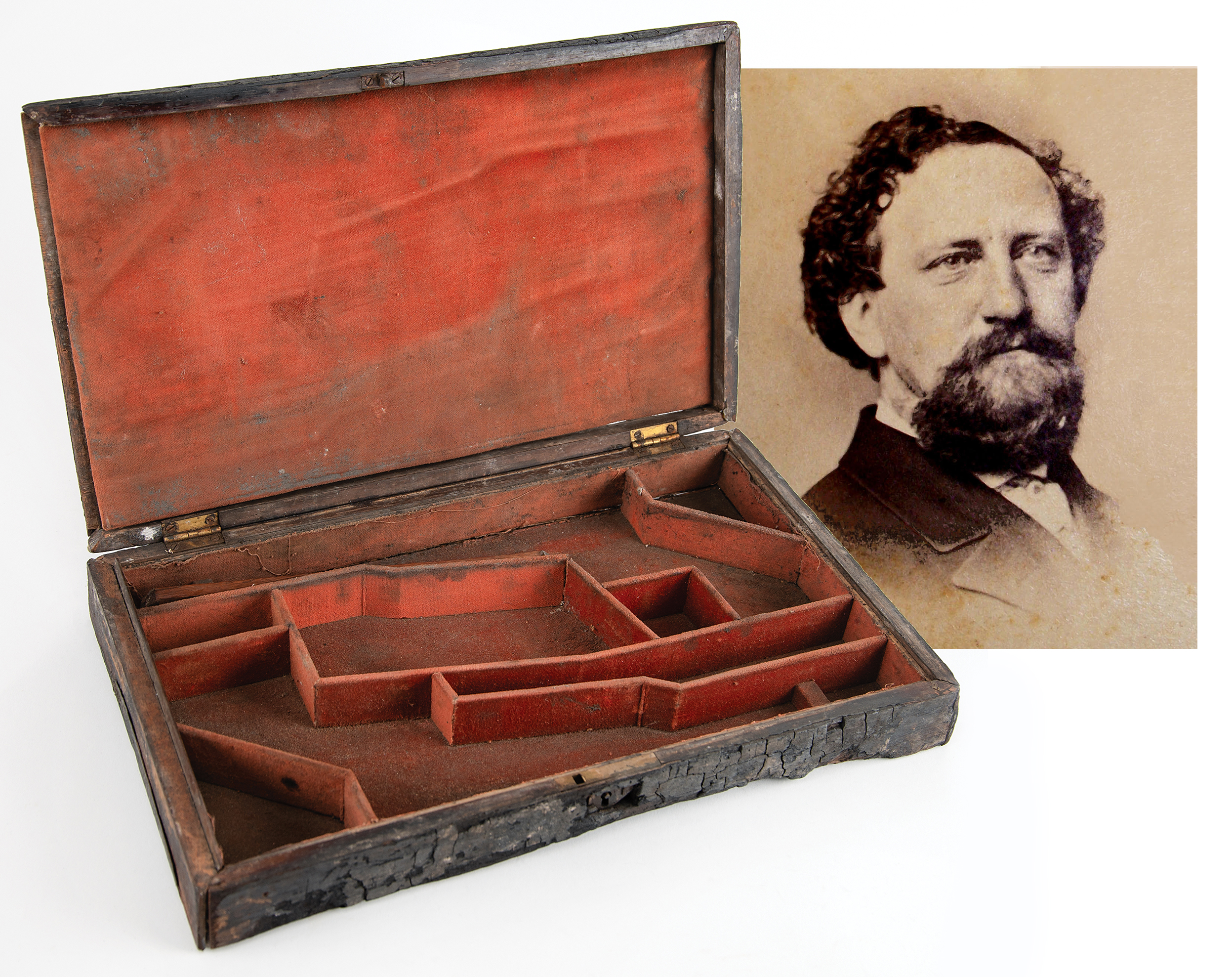
Historic Civil War-era gun case recovered from the charred ruins of the Colt's Manufacturing Company’s East Armory factory complex in Hartford, Connecticut, destroyed by fire on the morning of February 4, 1864. The wooden case, 15.75˝ x 2.5˝ x 9.75,˝ was presented by Samuel Colt to his brother-in-law, Richard Jarvis, circa 1861. It retains its original brass presentation plaque on the lid: “Rich’d W. H. Jarvis, Esq’re, Compliments of Col. Colt.” The case, which originally contained a pair of Colt Army Model 1860 revolvers, was recovered from the rubble of Jarvis’s office.
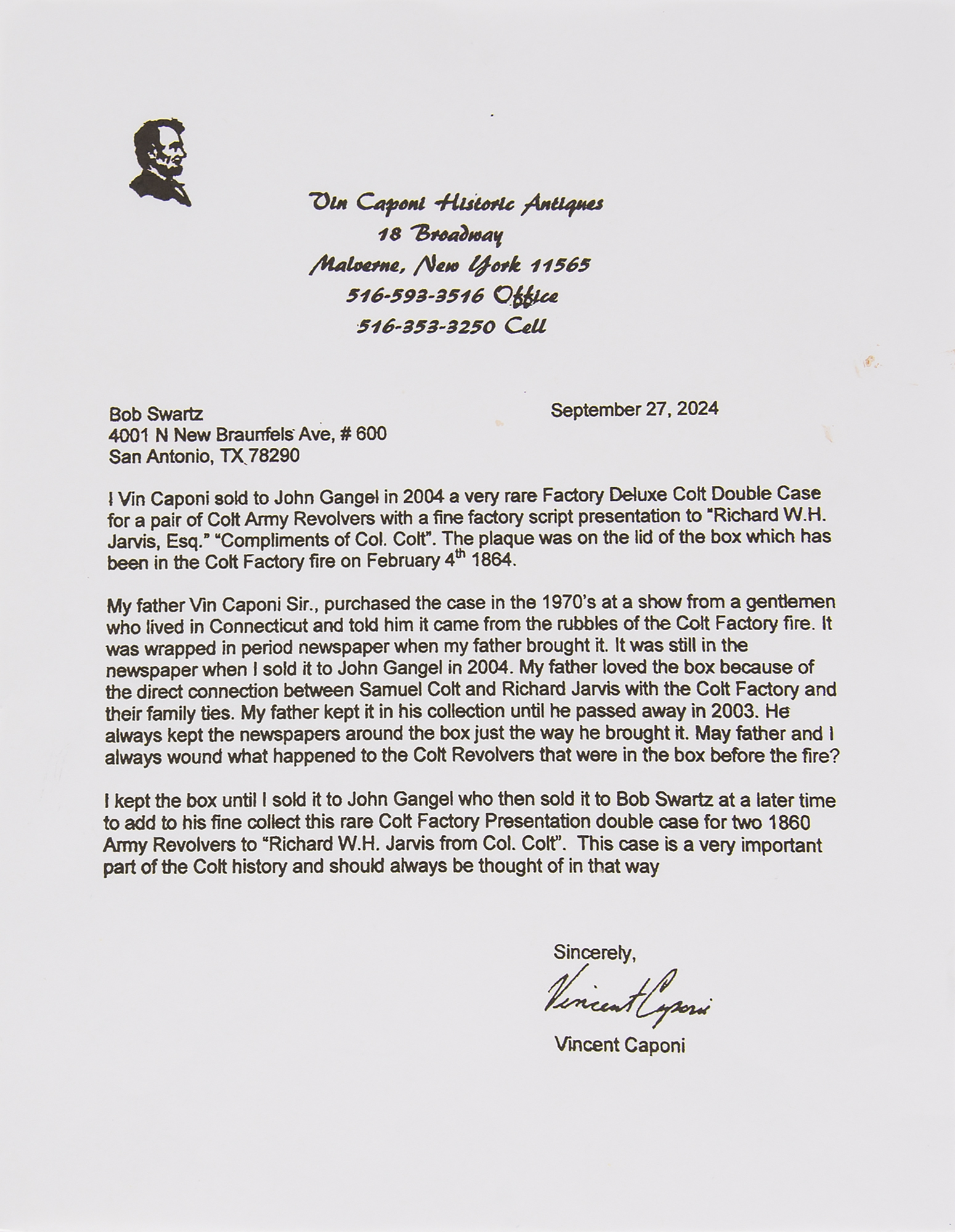
Accompanied by two foamcore presentation boards related to the gun case and the Colt Armory inferno, and a copy of a 2024 letter of provenance from Vincent Caponi, who writes: “My father, Vin Caponi, Sr., purchased the case in the 1970s at a show from a gentleman who lived in Connecticut and told him it came from the rubble of the Colt Factory fire.” Also referenced is an article by Robert Swartz, “The Fire of 1864 – What Really Happened,” available online at: https://www.discovercolt.com/colt_armory_fire_1864.html
Provenance: Robert Swartz (2011); John Gangel (2004); Vincent Caponi, Jr. (2003); Vincent Caponi, Sr. (ca. 1970); parties unknown after the 1864 fire; Richard Jarvis (circa 1861).
Although never officially confirmed, many researchers suspect that the start of the Colt Armory blaze was ignited by a Confederate spy intent on crippling the Union's army's largest private supplier of armaments. Samuel Colt’s widow, Elizabeth Jarvis Colt, certainly thought so. In a letter to her sister, Hetty Jarvis, dated February 6, 1864, she wrote: ‘There is scarcely a doubt in my mind but that it was the work of an incendiary – the place, the time, and the other suspicious circumstances make it almost a certainty to my mind – you know it was threatened three years ago by the rebels, & I believe they have accomplished it at last.’
Of the Confederate newspapers that reported the fire, none claimed credit for the destruction of the Colt Armory. Indeed, if apprehended the arsonist would be hanged as a spy. More than a month later, the Cleveland Morning Leader offered a theory. The article reported that a workman had come to the Armory with ‘a piteous story that he was a deserter from the rebels and was employed.’ Presumably, the culprit was not found, but some months later, set fire to the Springfield Arsenal, using the same m.o.
The timing and origin of the conflagration were suspicious. The fire, which broke out during the only half-hour of the day and night when, owing to a change in shifts, a watchman was not present on floor, began precisely where it might cause the greatest damage: at the juncture of the north and south wings of the Old Armory, where they connected to the ell that ran to the other buildings, and close to both the rifle and pistol shops.
Another victim of the conflagration was Colt’s office building, nerve center of the entire operation, which contained ledgers, journals, bills, notes, and correspondence; the tools of management, and many of Root's plans and drawings. It was also the headquarters for the company’s chief officers, such as Richard Jarvis, who was then the company’s vice president and CEO. By Wednesday, February 10th, six days after the fire, workers had cleared the offices of debris and rubble to ready the reconstruction effort. It was during the clean-up that the gun case was assuredly salvaged.

