Sold For $250
*Includes Buyers Premium
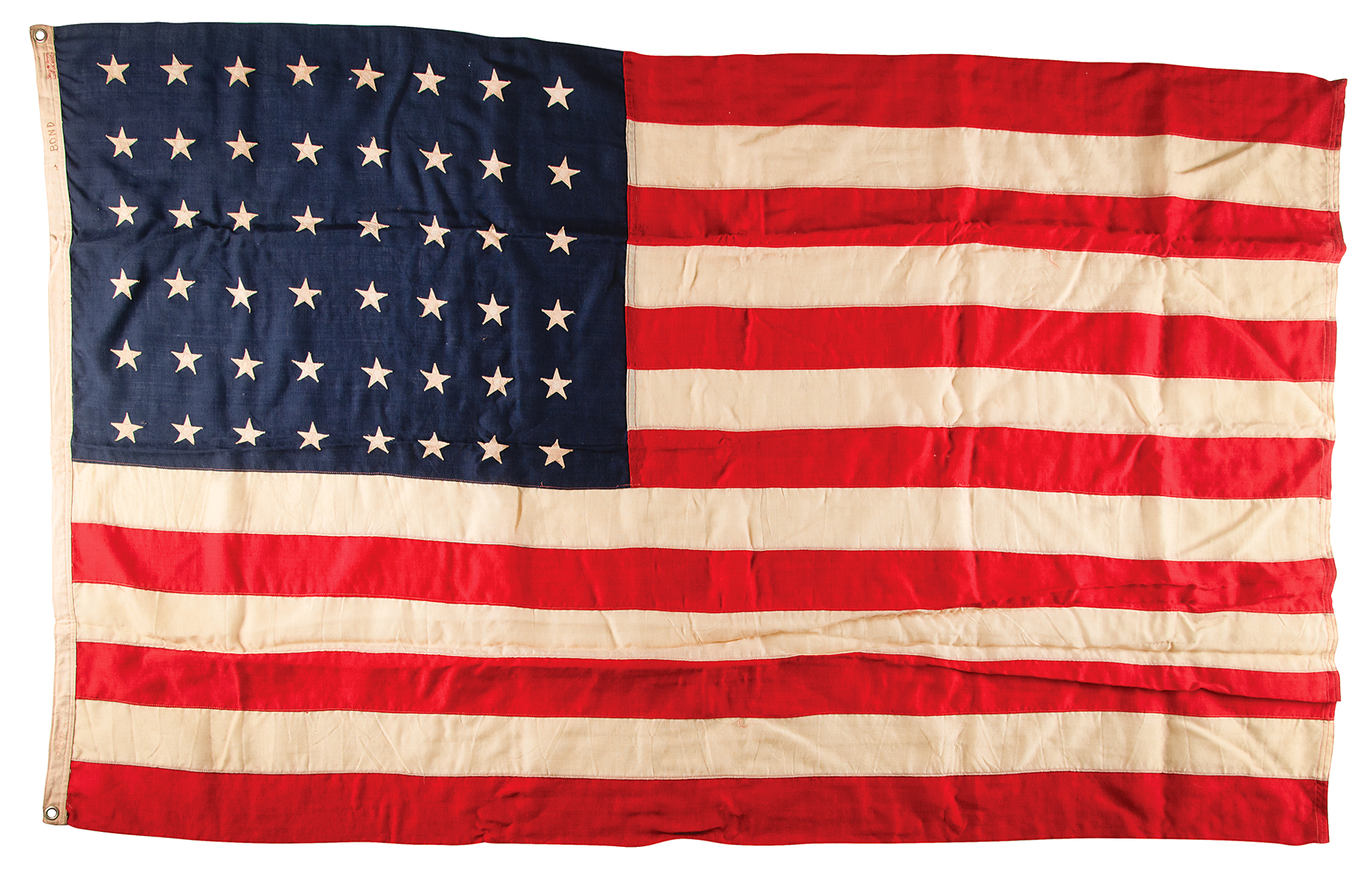
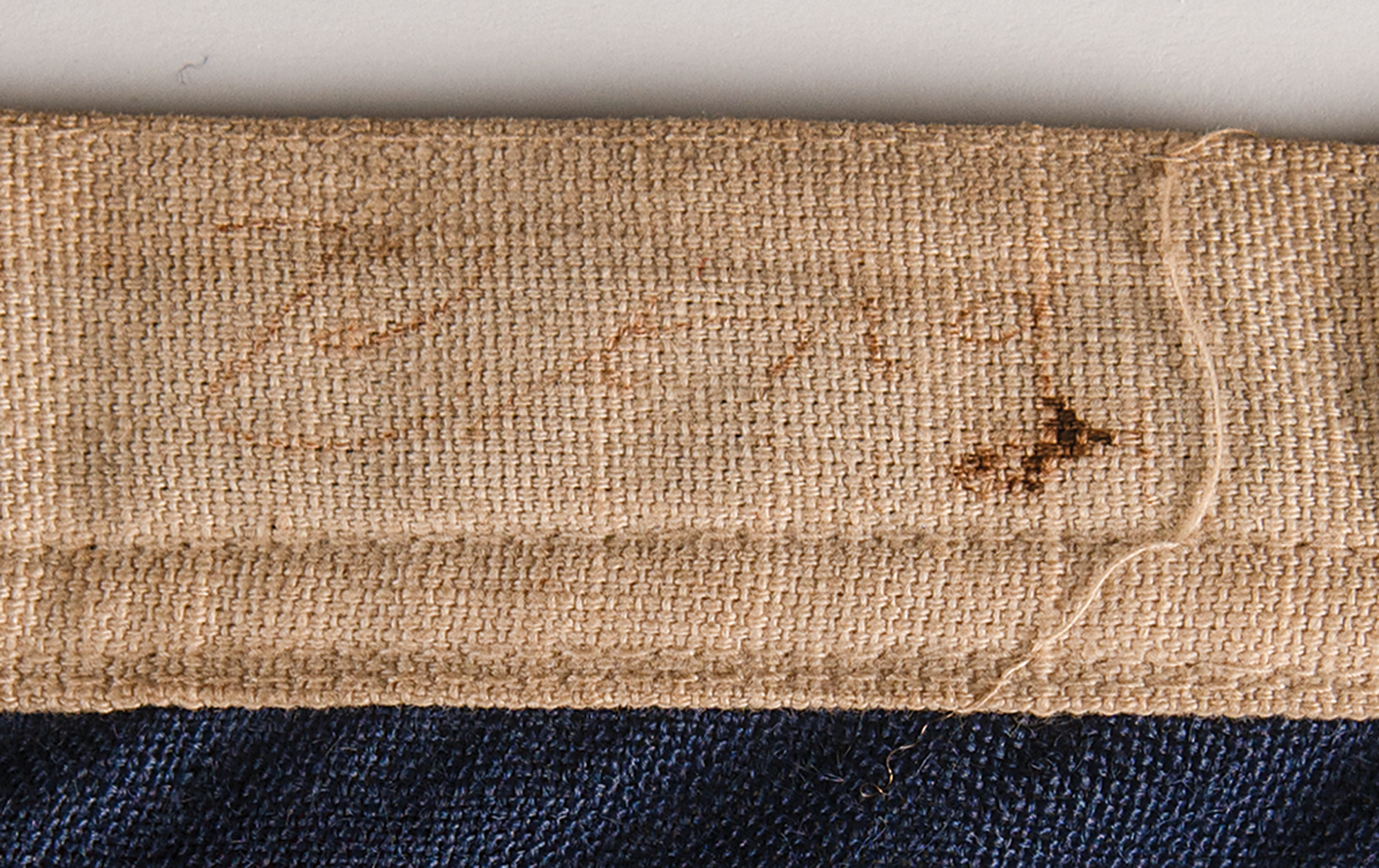
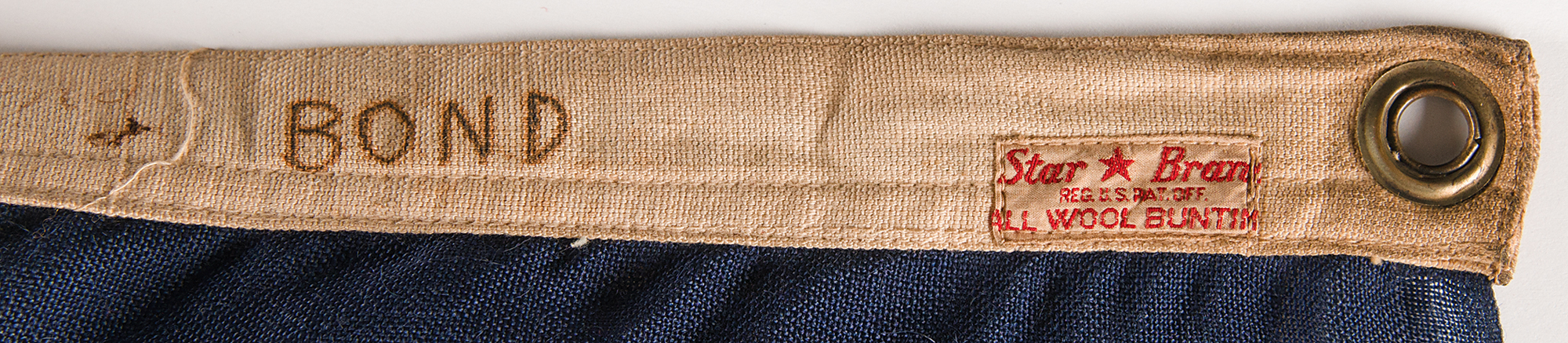
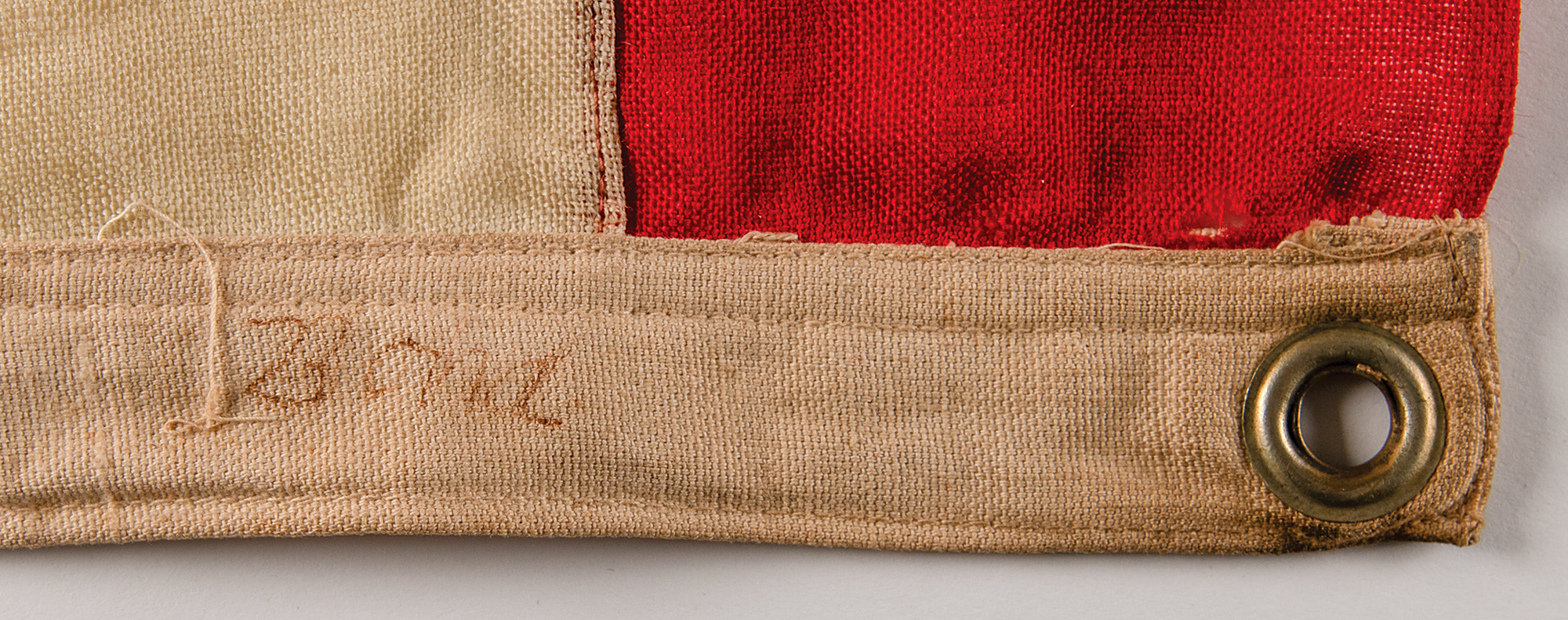
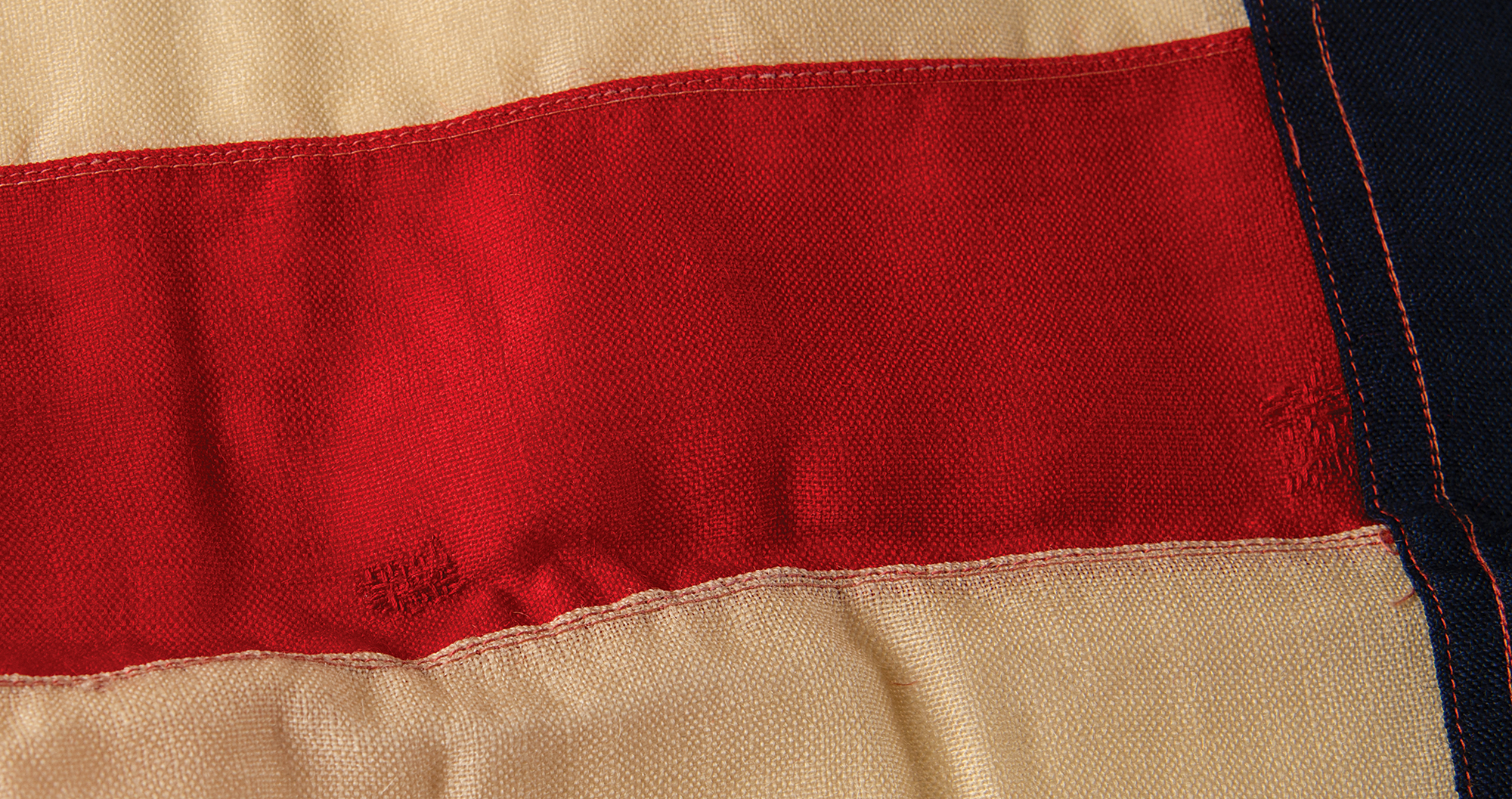
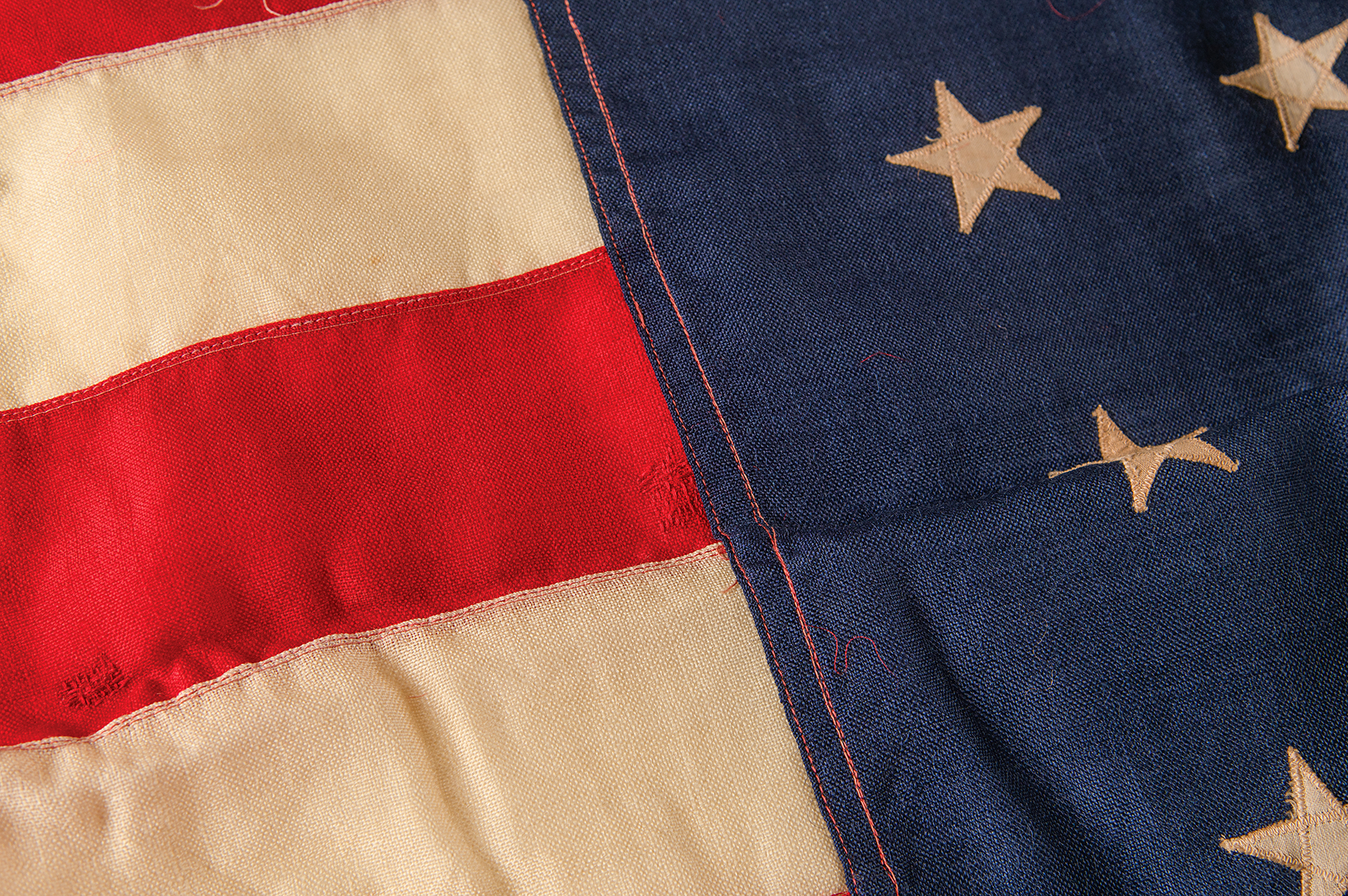
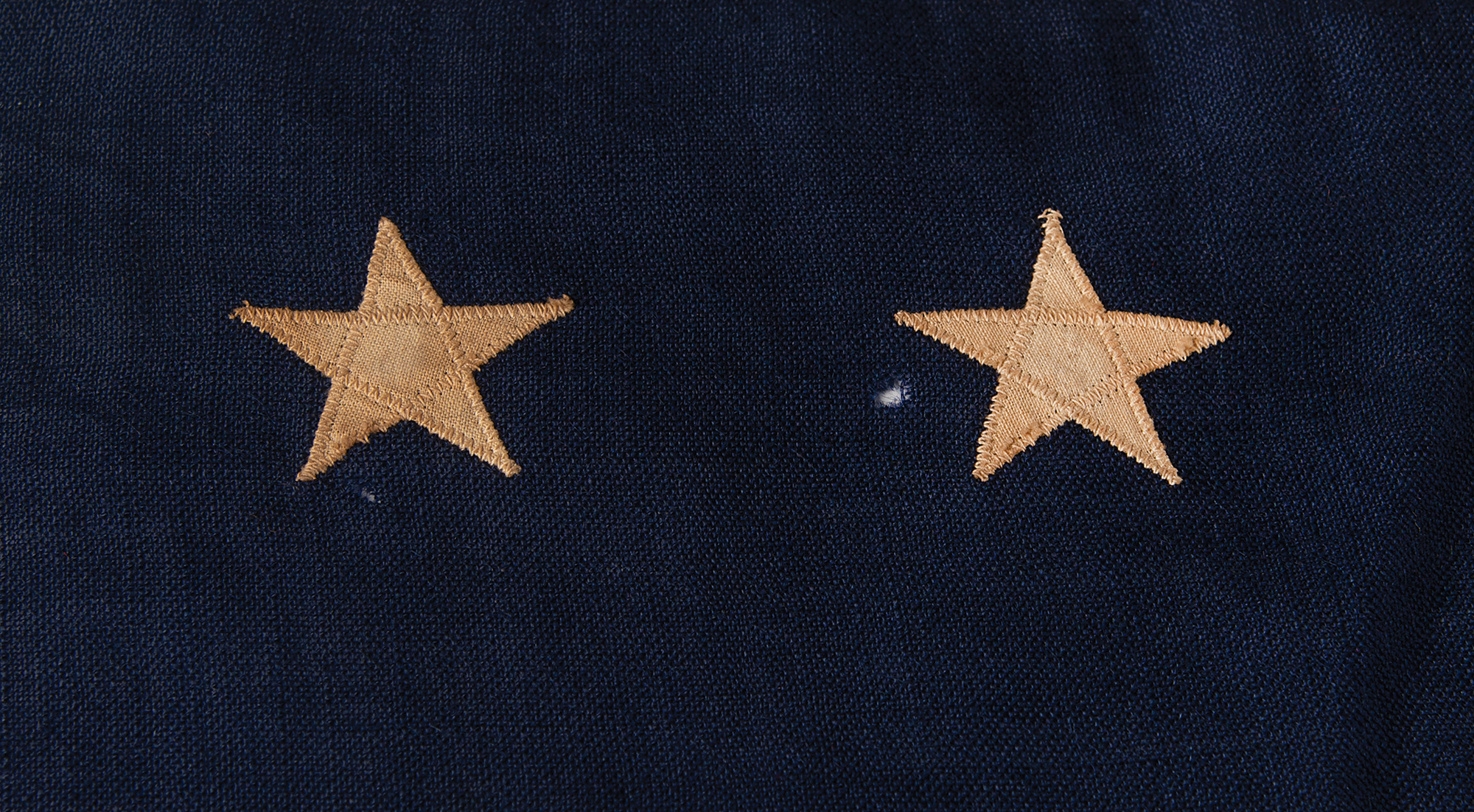
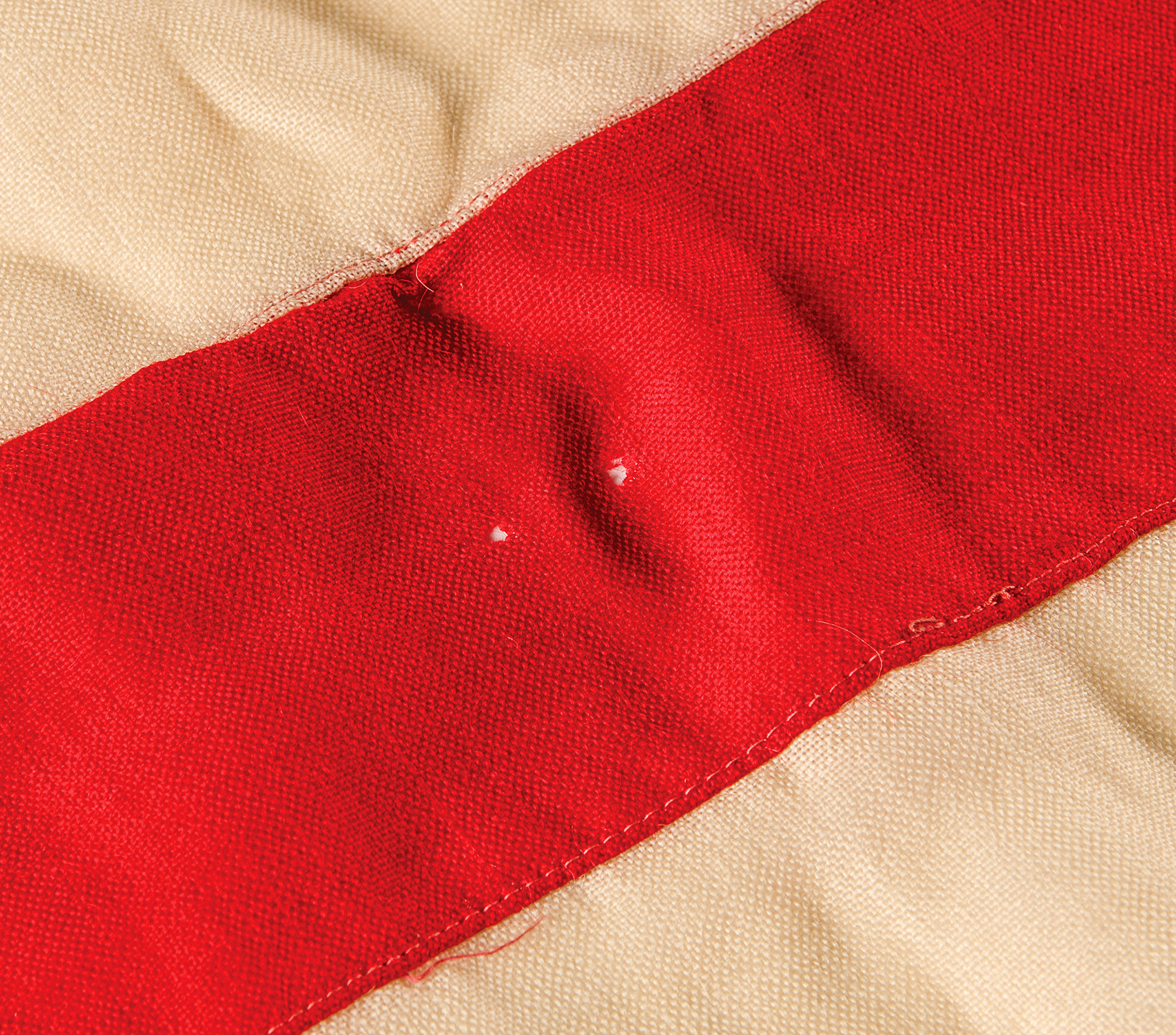
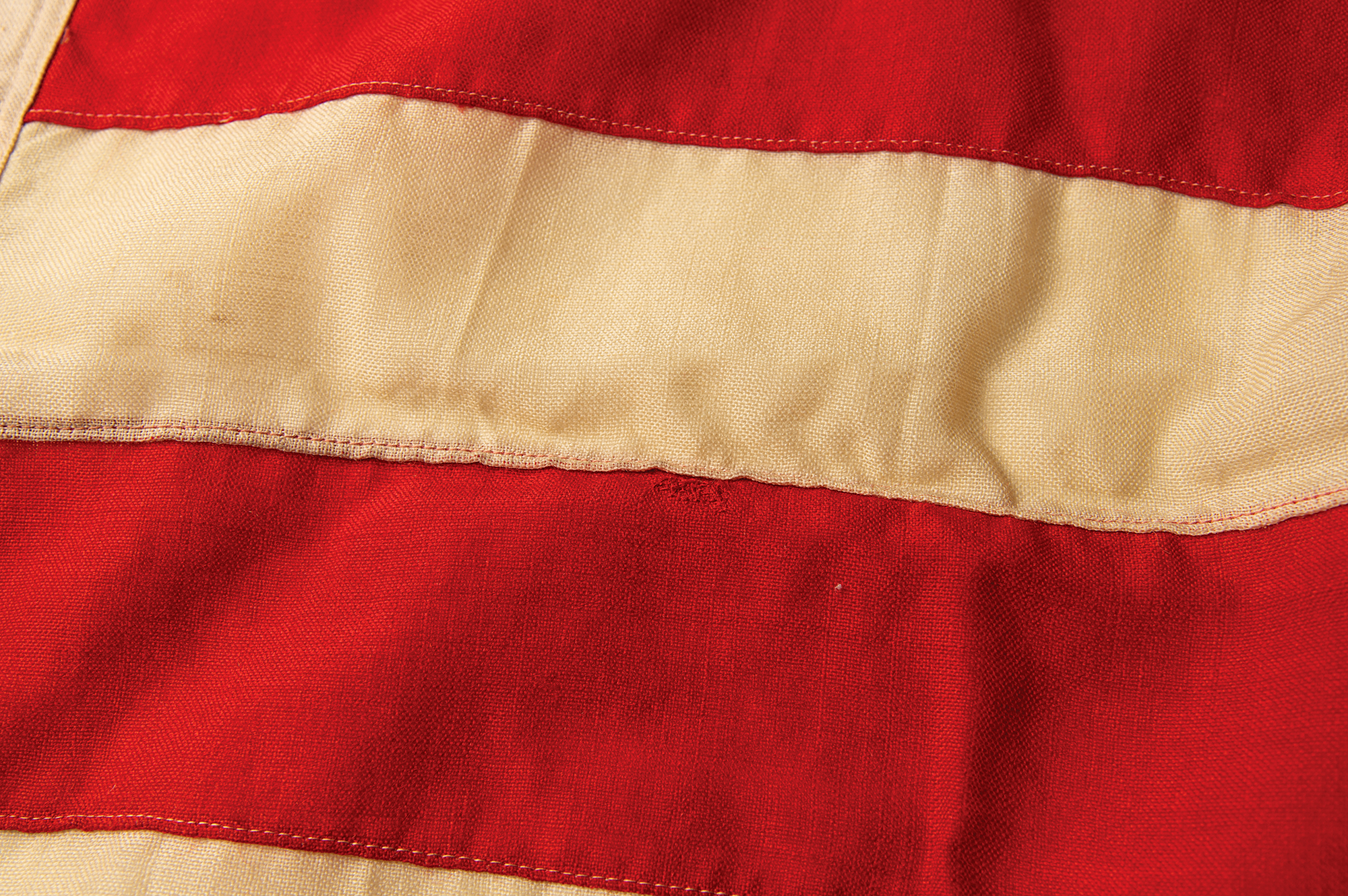
Circa 1920 48-star United States Flag by Star Brand, approximately 70˝ x 44˝, machine-sewn and made of wool bunting, with 48 double-appliqued cotton stars, and metal grommets on the header, which bears the ‘Star Brand’ tag and is annotated “Bond.” In very good condition, with yellowing and minor moth holes.
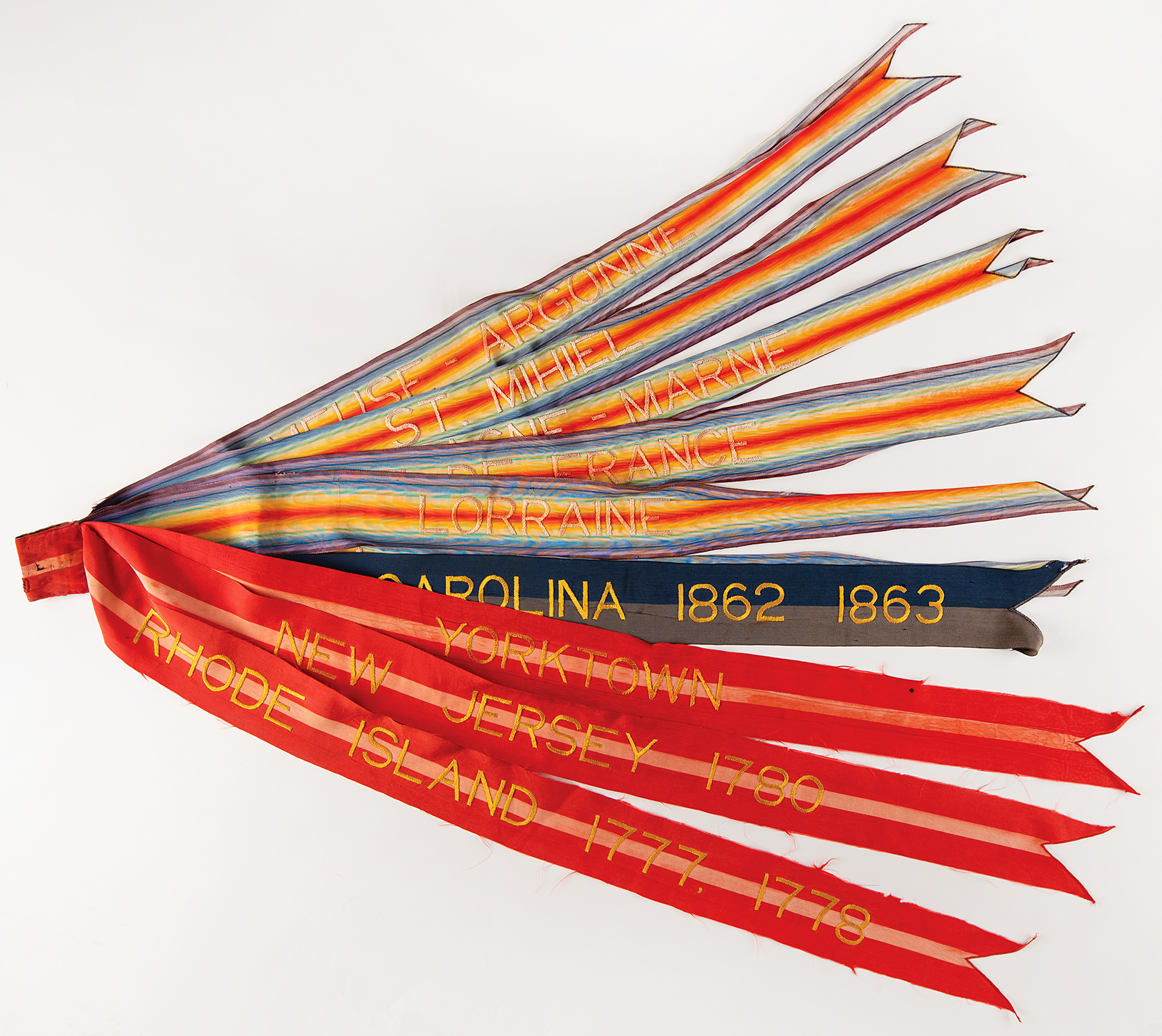
Also included is a multicolored set of 10 U.S. Army campaign streamers from circa 1921, each approximately 36˝ x 2.75˝, symbolizing the various campaigns the Army has participated in throughout U.S. history. Machine-sewn and embroidered, the streamers are based on the campaign list from the 1921 War Department, which dates these to the period between the two World Wars. Each streamer is embroidered with the name of a campaign and the year, or years, it took place, with colors reflecting the campaign ribbon authorized for that specific war. The streamers include: “Rhode Island 1777, 1778,” “New Jersey 1780,” “Yorktown,” “North Carolina 1862 1863,” “Lorraine,” “Ile de France,” “Champagne – Marne,” “Aisne – Marne,” “St. Mihel,” and “Meuse – Argonne.” In overall very good condition, with minor fraying.
The 48-star flag of the United States, a significant symbol of American history, was officially adopted on July 4, 1912, and remained in use until July 3, 1959. This version of the flag came into existence following the admission of New Mexico and Arizona into the Union, bringing the total number of states to forty-eight. This flag flew for 47 years, witnessing the nation's involvement in both World Wars and the Great Depression. It symbolized the unity of 48 states under one banner, each star representing a member of the Union. This flag became a powerful emblem of American resilience and determination, particularly during World War II, where it served as a rallying point for soldiers and civilians alike. Though no longer the official flag, the 48-star flag remains a cherished historical artifact, reminding us of a pivotal era in the American story.
The use of campaign streamers originated during the Civil War, when Army units embroidered battle names on their flags. This practice ended in 1890, when units were allowed to use silver bands engraved with battle names around their flagstaffs. During World War I, when the American Expeditionary Forces couldn't obtain silver bands, General Pershing approved the use of small ribbons with the names of World War I operations. In 1921, all Army units with flags were authorized to use the larger campaign streamers still in use today.
In April 1921, the Historical Section of the Army War College expanded the list of campaigns to 94, including 13 for World War I, 10 for the Philippine Insurrection, three for the China Relief Expedition, three for the War with Spain, 13 for the Indian Wars, 25 for the Civil War, 10 for the Mexican War, six for the War of 1812, and 11 for the Revolutionary War. Campaigns for the Indian Wars were inscribed with tribe names but did not include dates. Six months later, one more Indian War campaign and one more Philippine Insurrection campaign were added. This comprehensive list remained unchanged until World War II.

