Sold For $2,888
*Includes Buyers Premium
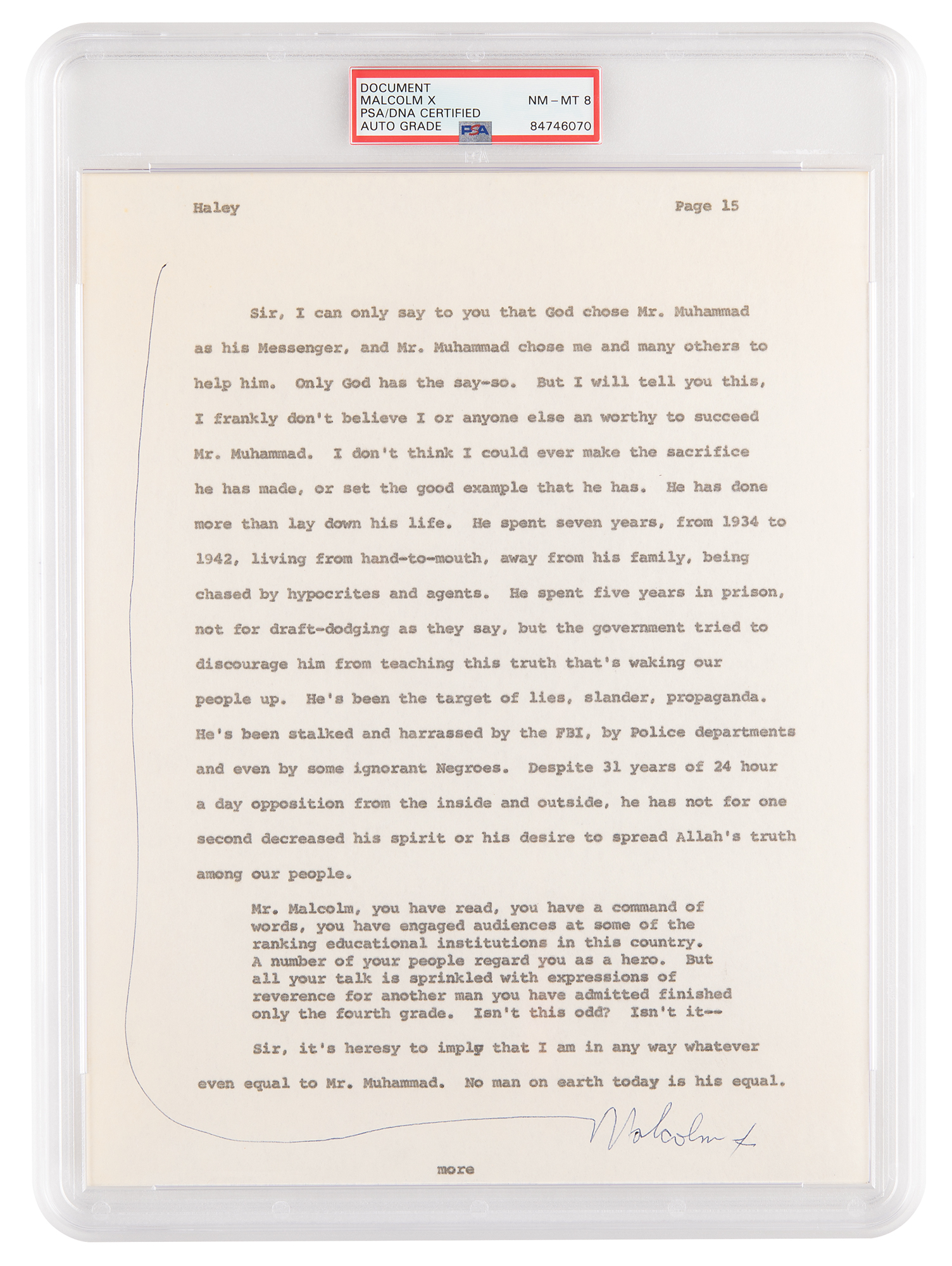
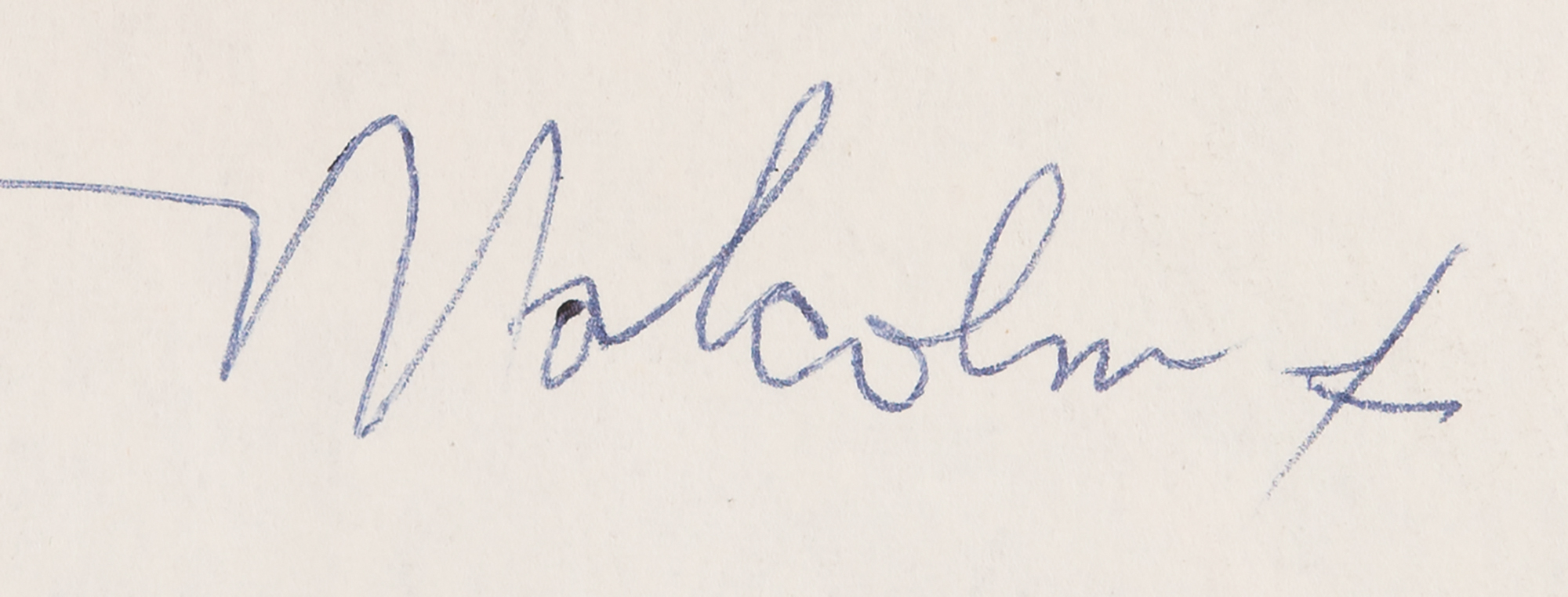
Page 15 from the original typescript of Alex Haley’s 1963 interview of Malcolm X for Playboy magazine, one onionskin page, 8.5 x 11, signed in the bottom margin in ballpoint, "Malcolm X," with a marginal line indicating his approval of the contents. In full: [Malcolm X] Sir, I can only say to you that God chose Mr. Muhammad as his Messenger, and Mr. Muhammad chose me and many others to help him. Only God has the say-so. But I will tell you this, I frankly don't believe I or anyone else an worthy to succeed Mr. Muhammad. I don't think I could ever make the sacrifice he has made, or set the good example that he has. He has done more than lay down his life. He spent seven years, from 1934 to 1942, living from hand-to-mouth, away from his family, being chased by hypocrites and agents. He spent five years in prison, not for draft-dodging as they say, but the government tried to discourage him from teaching this truth that's waking our people up. He's been the target of lies, slander, propaganda. He's been stalked and harrassed by the FBI, by Police departments and even by some ignorant Negroes. Despite 31 years of 24 hour a day opposition from the inside and outside, he has not for one second decreased his spirit or his desire to spread Allah's truth among our people.
[Haley] Mr. Malcolm, you have read, you have a command of words, you have engaged audiences at some of the ranking educational institutions in this country. A number of your people regard you as a hero. But all your talk is sprinkled with expressions of reverence for another man you have admitted finished only the fourth grade. Isn't this odd? Isn't it-
[Malcolm X] Sir, it's heresy to imply that I am in any way whatever even equal to Mr. Muhammad. No man on earth today is his equal.” In fine condition. Encapsulated and graded by PSA/DNA as "NM-MT 8."
Playboy's May 1963 interview with Malcolm X was one of the most famous of Haley’s career and gave most readers their first in-depth look at Malcolm X’s teachings and personality. Supporters and critics viewed the Muslim minister in very different terms. Admirers saw him as a courageous advocate for the rights of African-Americans and condemned crimes against black Americans; detractors accused him of preaching racism, black supremacy, and violence. Nevertheless, he has been described as one of the greatest and most influential African-American leaders in history. Within a year of granting this interview, with America still gripped by ever-growing racial tension, the once-combative black nationalist Malcolm X had repudiated almost every stance in the interview. He had broken with the Nation of Islam movement, fallen out with its leader, Elijah Muhammad, renounced black supremacy, and embraced racial equality and human rights. He was assassinated in Harlem in 1965.
The Marc and Mary Perkins Collection.

