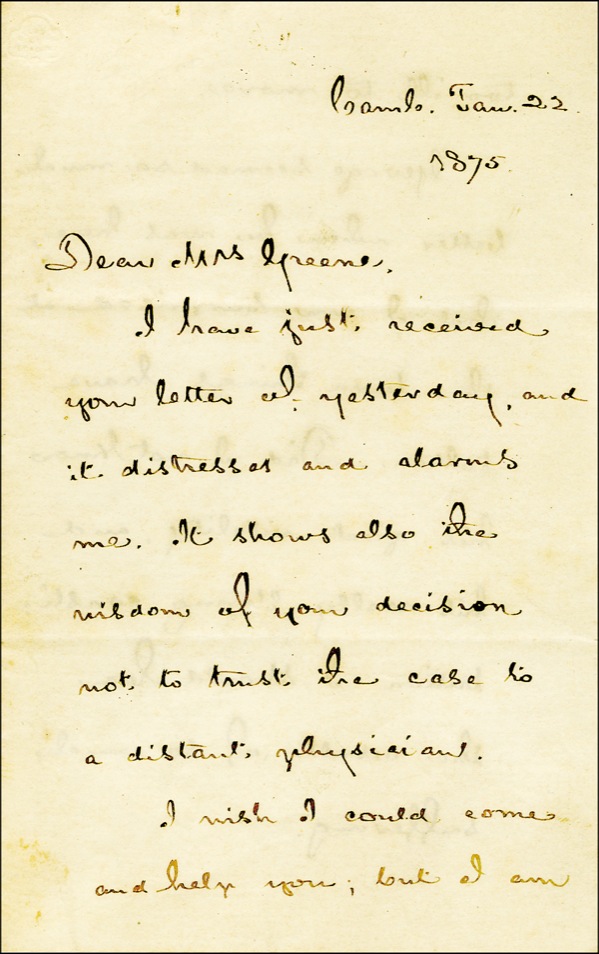
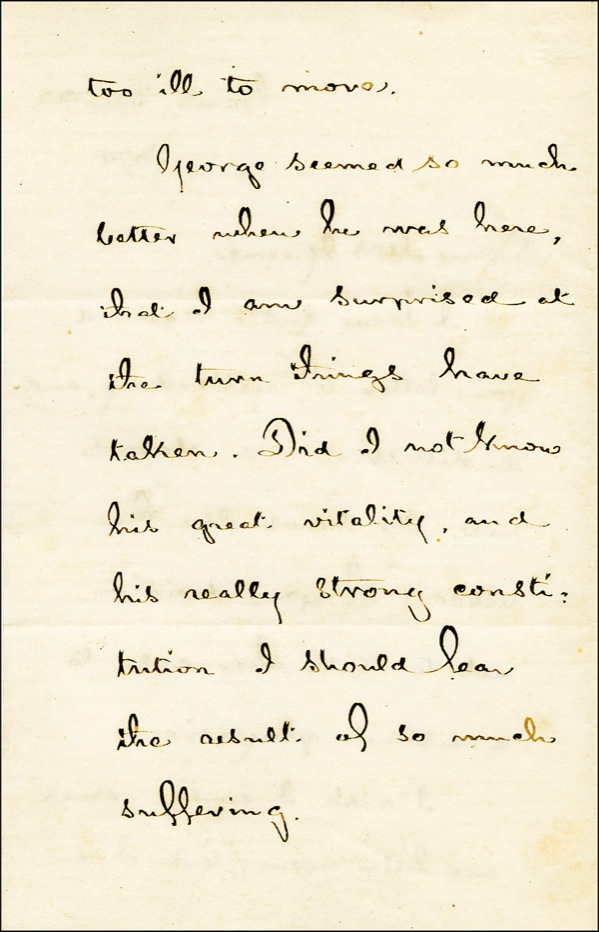
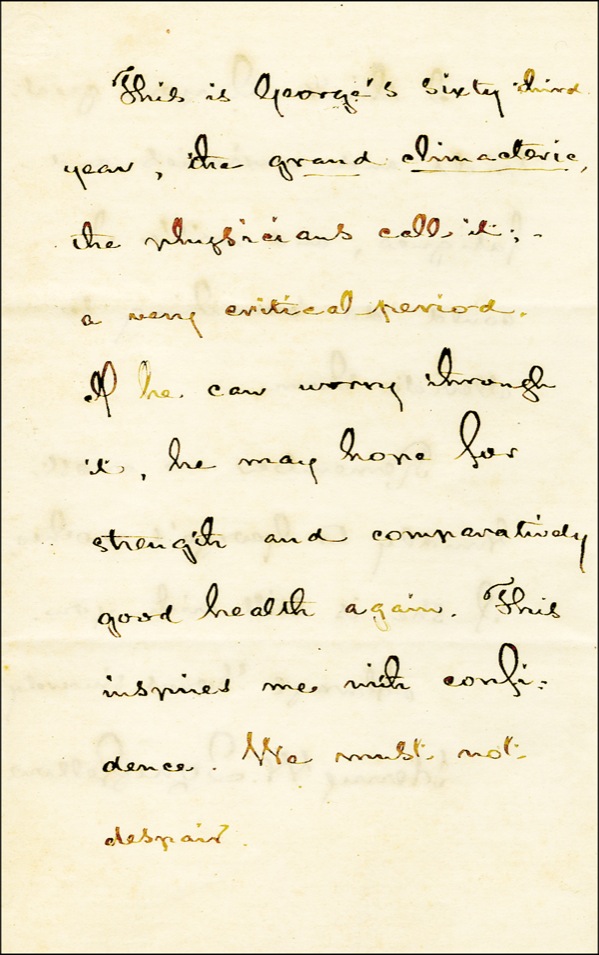
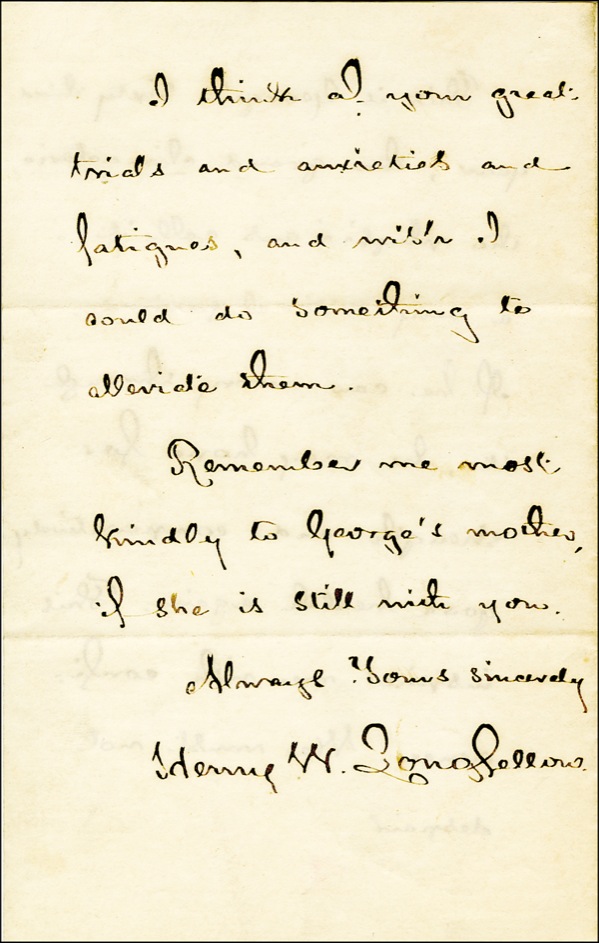
American writer. Extremely popular in the United States in his lifetime, his works include The Song of Hiawatha (1855) and a translation (1865–1867) of Dante's The Divine Comedy. ALS signed “Henry W. Longfellow,” four pages on two adjoining sheets, 4.5 x 7, Camb. letterhead, January 22, 1875. In part: “Dear Mrs. Greene, I have just received your letter and it distresses and alarms me. It shows also the wisdom of your decision not to trust the case of a distant physician. I wish I could come and help you, but I am too ill to move. George seemed so much better when he was here, that I am surprised at the turn things have taken. Did I not know his great vitality and his really strong constitution I should hear the results of so much suffering. This is George’s sixty-third year, the grand climacteric, the physicians call it. A very critical period. If he can worry though it, he may be home for strength and comparatively good health again. This inspired me with confidence. We must not despair. I think of your great trials and anxieties and fatigues and wish I could do something to alleviate them. Remember me most kindly to George’s mother, if she is still with you.” In fine condition. Longfellow was sixty-eight at the time he wrote this letter, and had evidently endured his own grand climacteric. R&R COA.Lon

