The 30 Minute Rule begins September 24 at 7:00 PM EDT. An Initial Bid Must Be Placed By September 24 at 6:00 PM EDT To Participate After 6:00 PM EDT
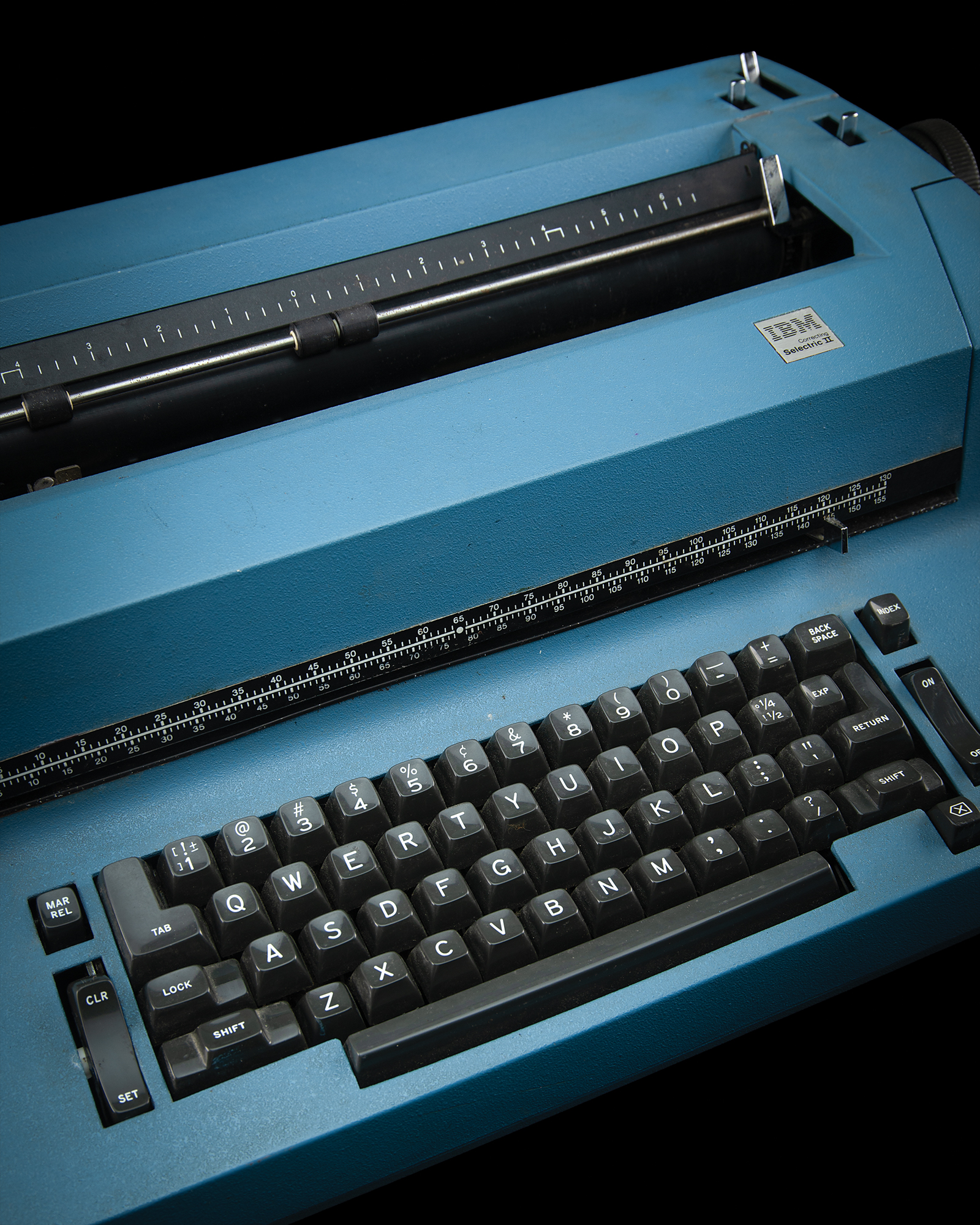
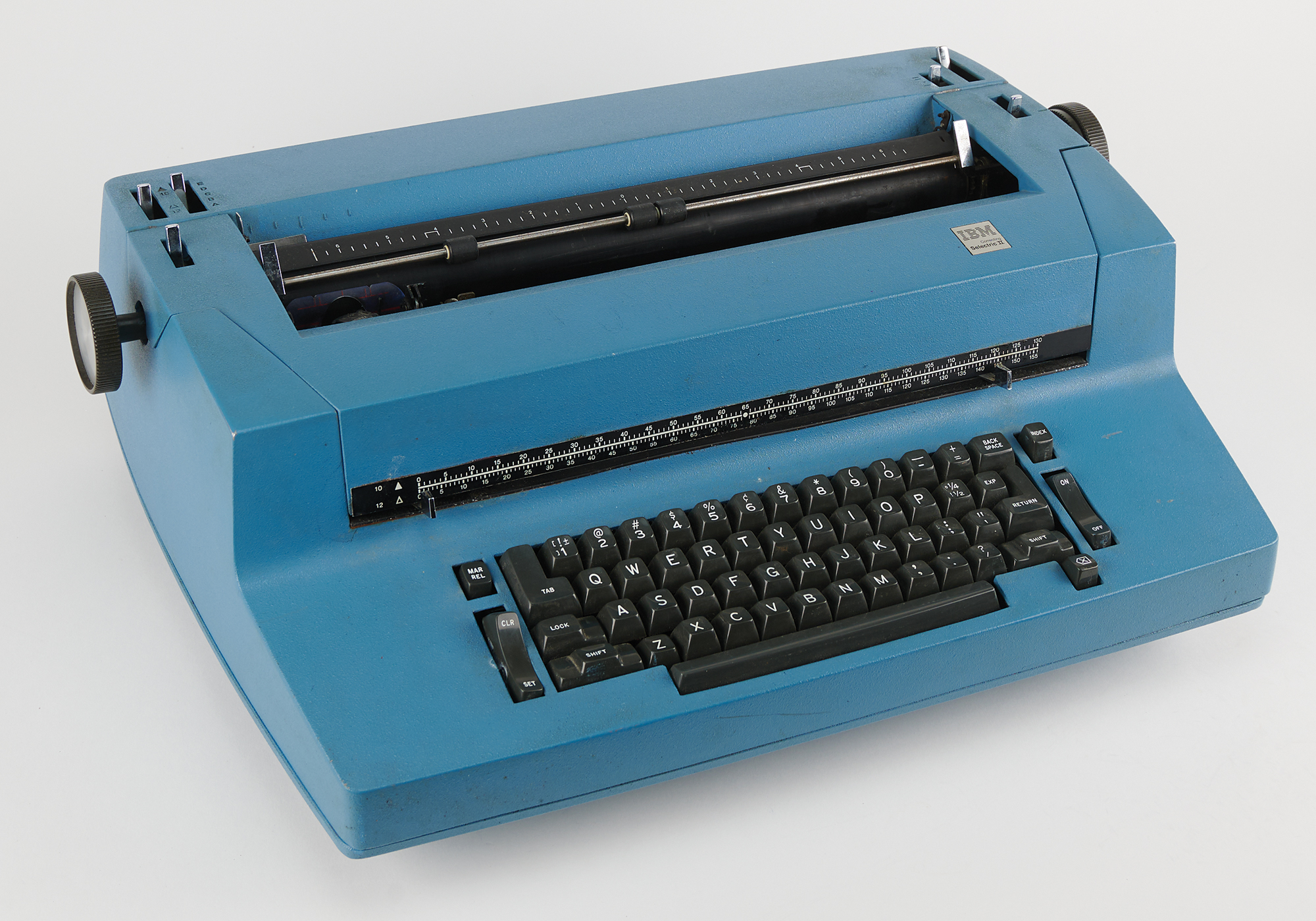
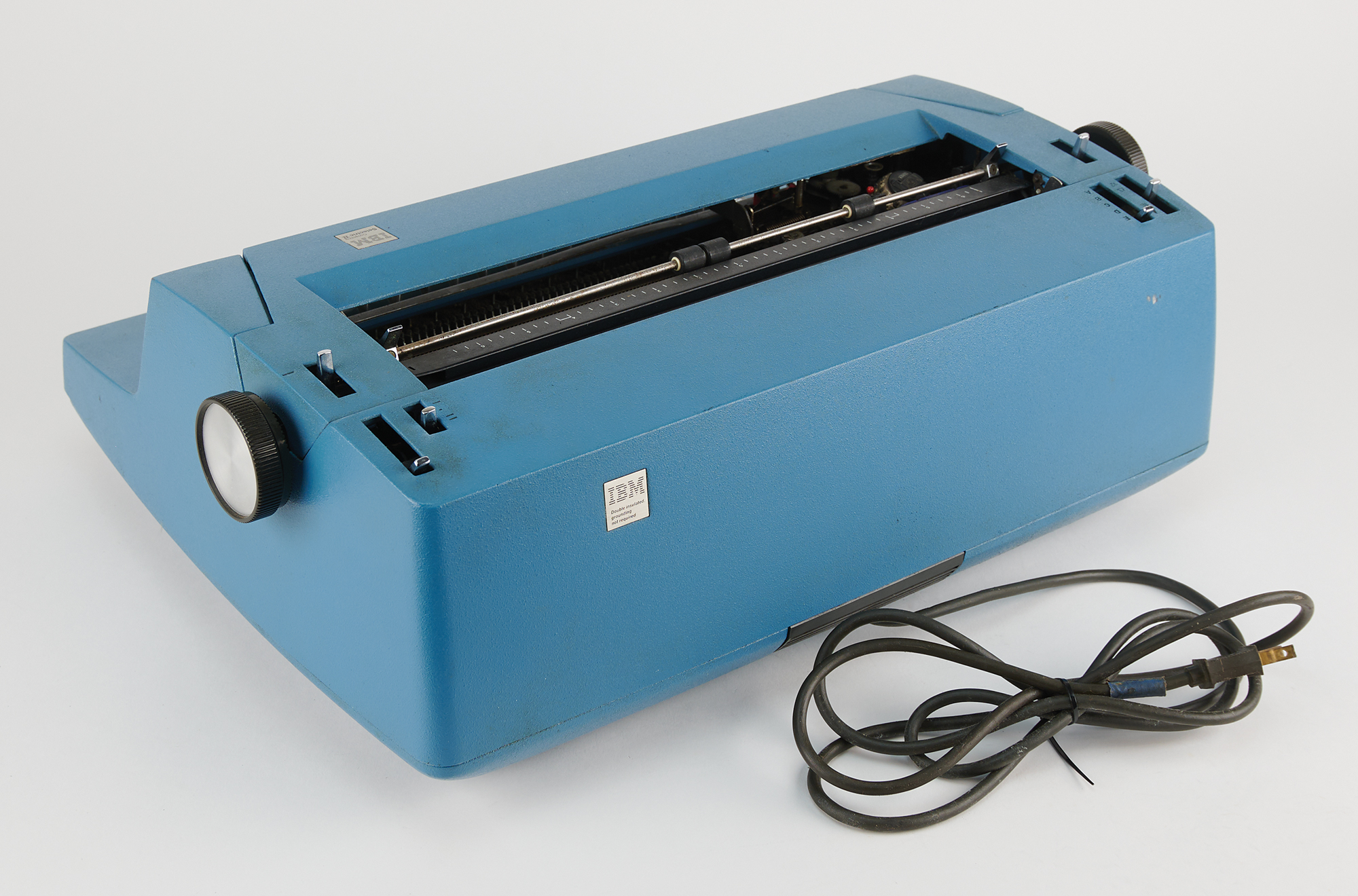
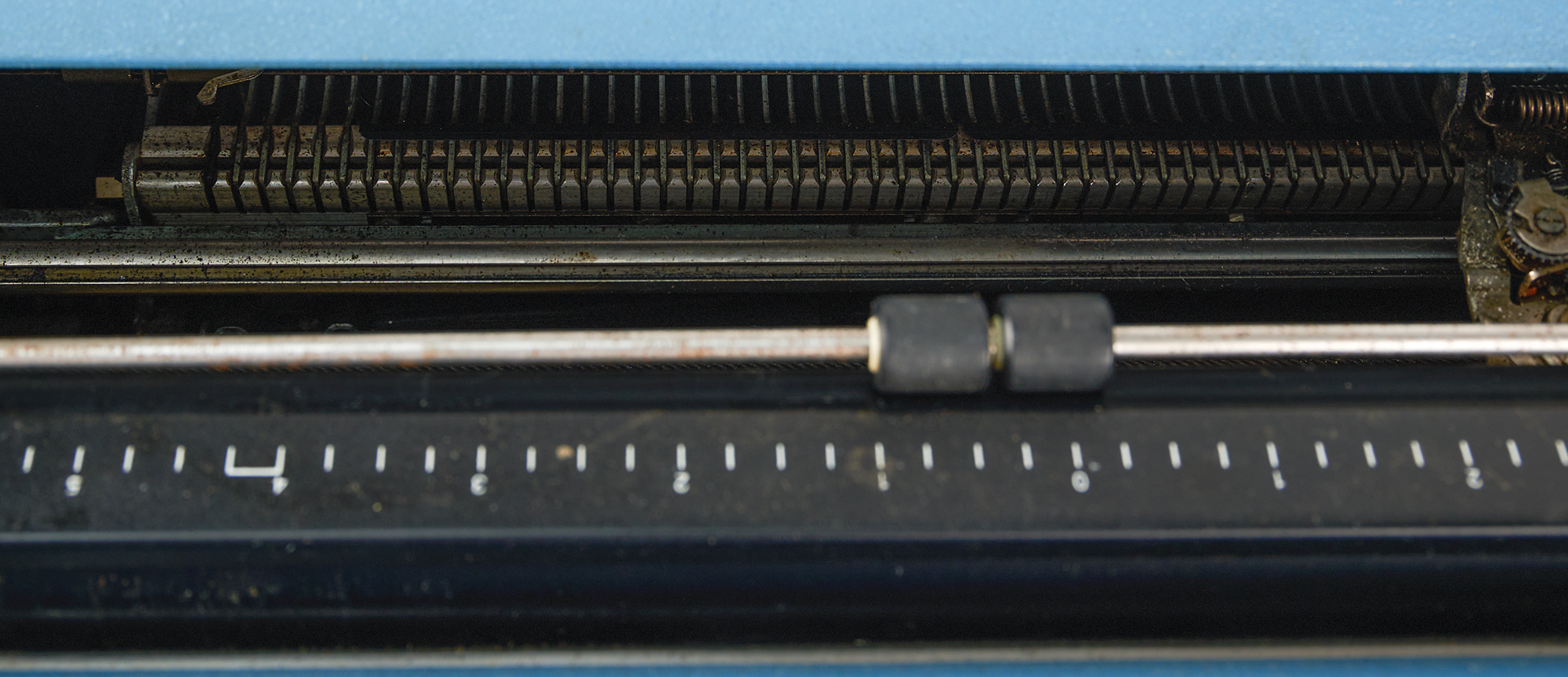
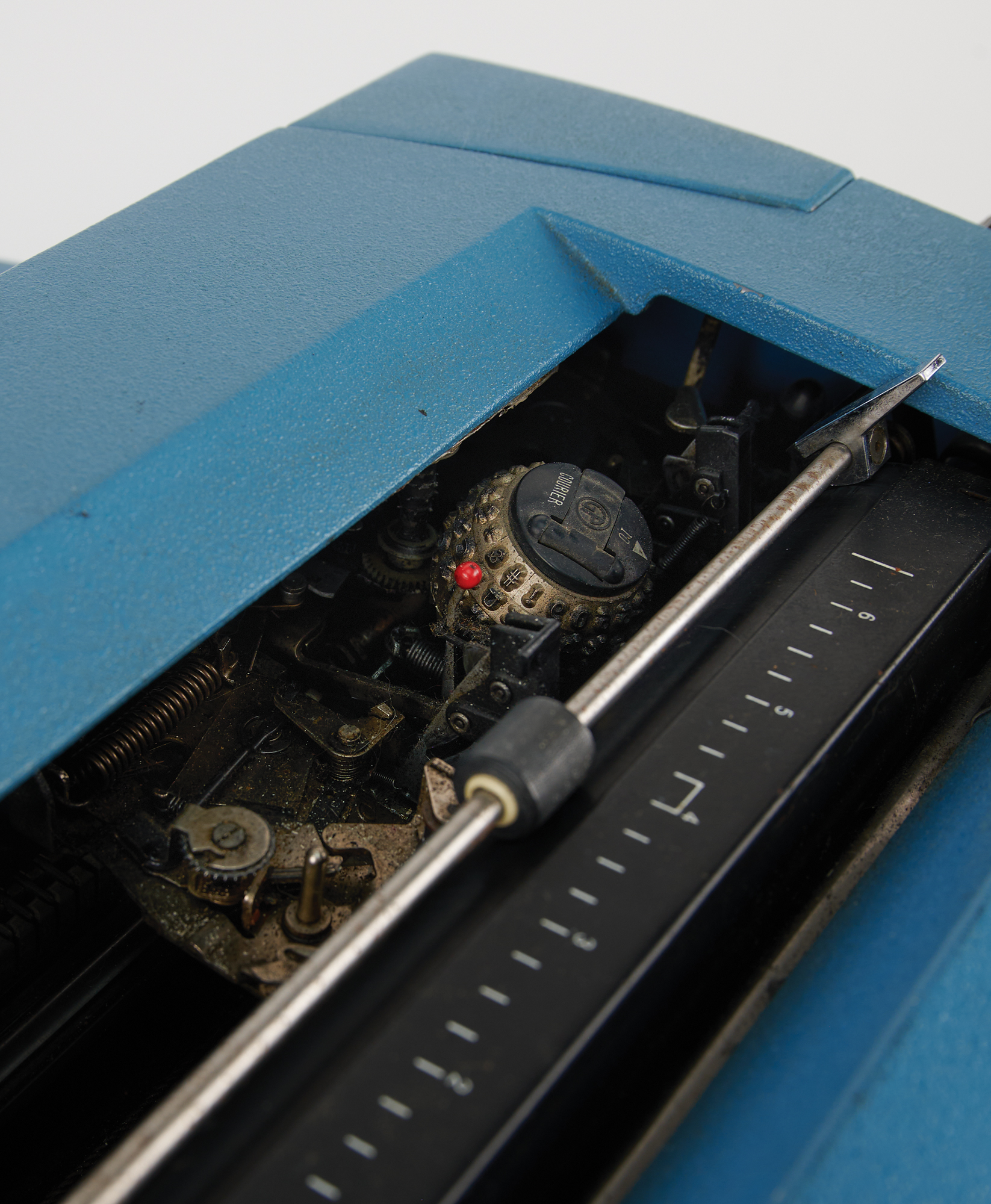
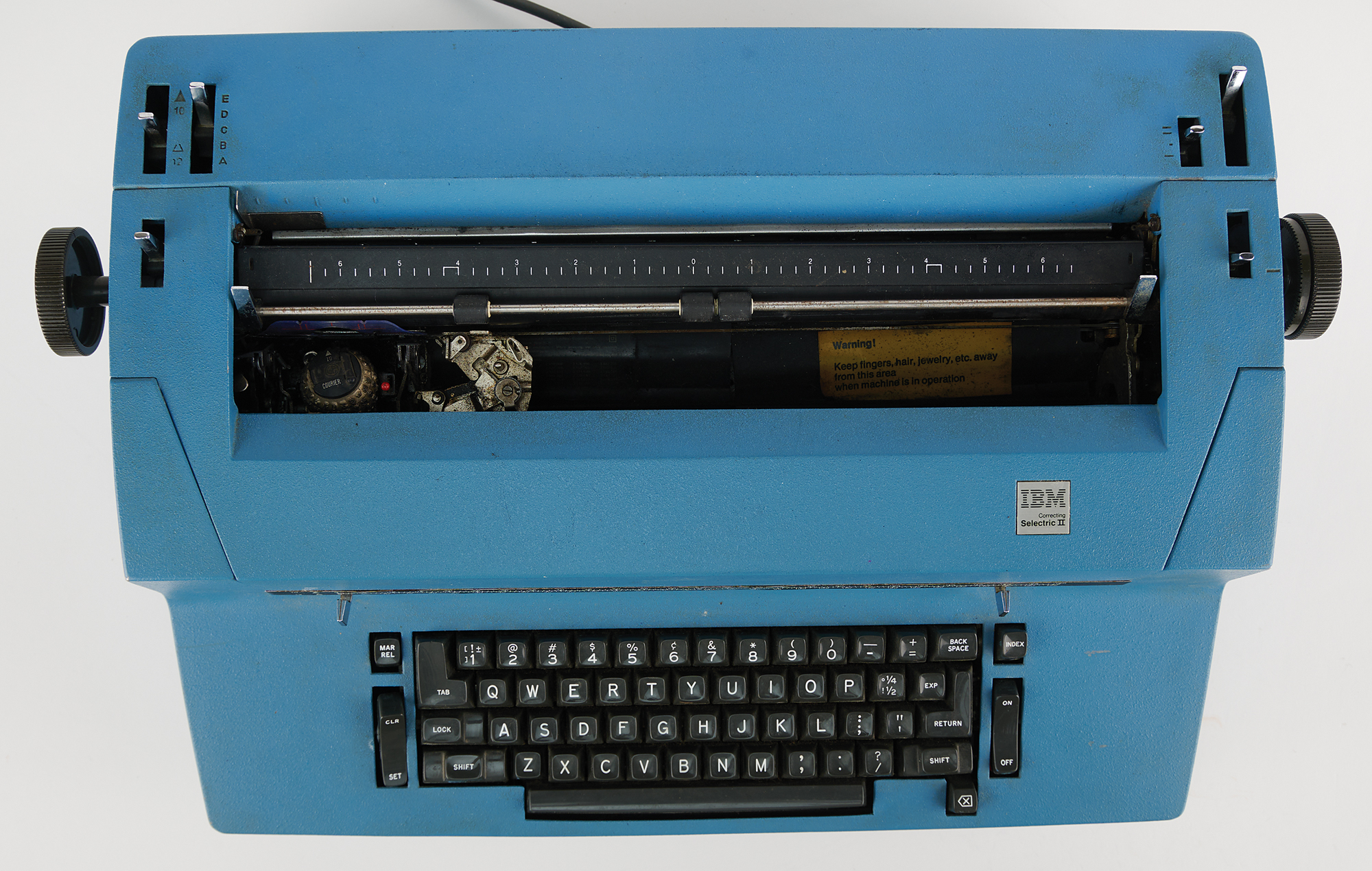
Hunter S. Thompson's personally-owned IBM Correcting Selectric II typewriter, the iconic electric writing machine favored by many journalists and authors throughout the 1970s. Featuring IBM’s interchangeable spherical typing element and built-in correction system, the Selectric II offered exceptional speed and precision—qualities particularly well suited to Thompson’s urgent, improvisational style of composition. The large typewriter measures 22˝ x 15˝ x 7˝, and features a blue metal housing and full-size QWERTY keyboard. In very good cosmetic condition, with the "CLR/SET" key on the left side of the keyboard detached but present.
Hunter S. Thompson wrote almost exclusively on an IBM Selectric, favoring its rapid mechanical rhythm and sturdy construction for his intense, all-night writing sessions. Famously hard on his equipment, he pounded the keys with such force that he reportedly wore out multiple machines over the course of his career. Even as personal computers became commonplace, Thompson remained loyal to the Selectric, which became less a piece of office equipment than an extension of his combative, high-velocity approach to Gonzo journalism.
Accompanied by the original letter of provenance signed by Baird Jones, a noted New York City nightclub party promoter, photographer, curator, art critic, collector, and gossip reporter. Jones had assembled a collection of six typewriters belonging to American literary luminaries. He writes, in part: "For decades I've promoted New York City nightlife parties, and over a million persons have gone free to parties I've hosted. I have staged public exhibitions in all of the city's premier nightclubs and have (so far) invested more than $1 million in my collection of Celebrity Art.
This collection of typewriters was assembled with the intention of placing them on display at the famed Limelight nightclub, in the area of the club known as The Library. The show was to be titled 'Literary Types.' Unfortunately, the owner of Limelight became embroiled with insurmountable legal battles and was stripped of his operating licenses before I could formally launch the exhibition."
Describing the acquisition of the Thompson typewriter, he notes: "I never met Hunter Thompson, but when I was discussing my exhibition plan with Bill Burroughs, he suggested that I get in touch with him. I wrote to Thompson at his home out west, told him of Bill's recommendation, but I didn't hear a word in response and assumed it was a dead end. Three or four months later, a large parcel arrived unannounced at my home and inside were two IBM brand typewriters, one bright red and one bright blue. I sent Thompson a letter of appreciation but, once again, there was no reply." Accompanied by a certificate of authenticity from JSA for Jones's letter.
An interesting historical connection further links Jones to Thompson: although Baird Jones notes that he never personally met the author, his father, Cranston Jones—co-founder of People magazine and a noted collector of Hollywood memorabilia—had employed a young Hunter S. Thompson as a copyboy while serving as a senior editor at Time magazine. The connection adds an intriguing footnote to the typewriter’s provenance, linking Thompson and the Jones family decades before the author unexpectedly sent Baird Jones the two IBM typewriters for his planned “Literary Types” exhibition.

