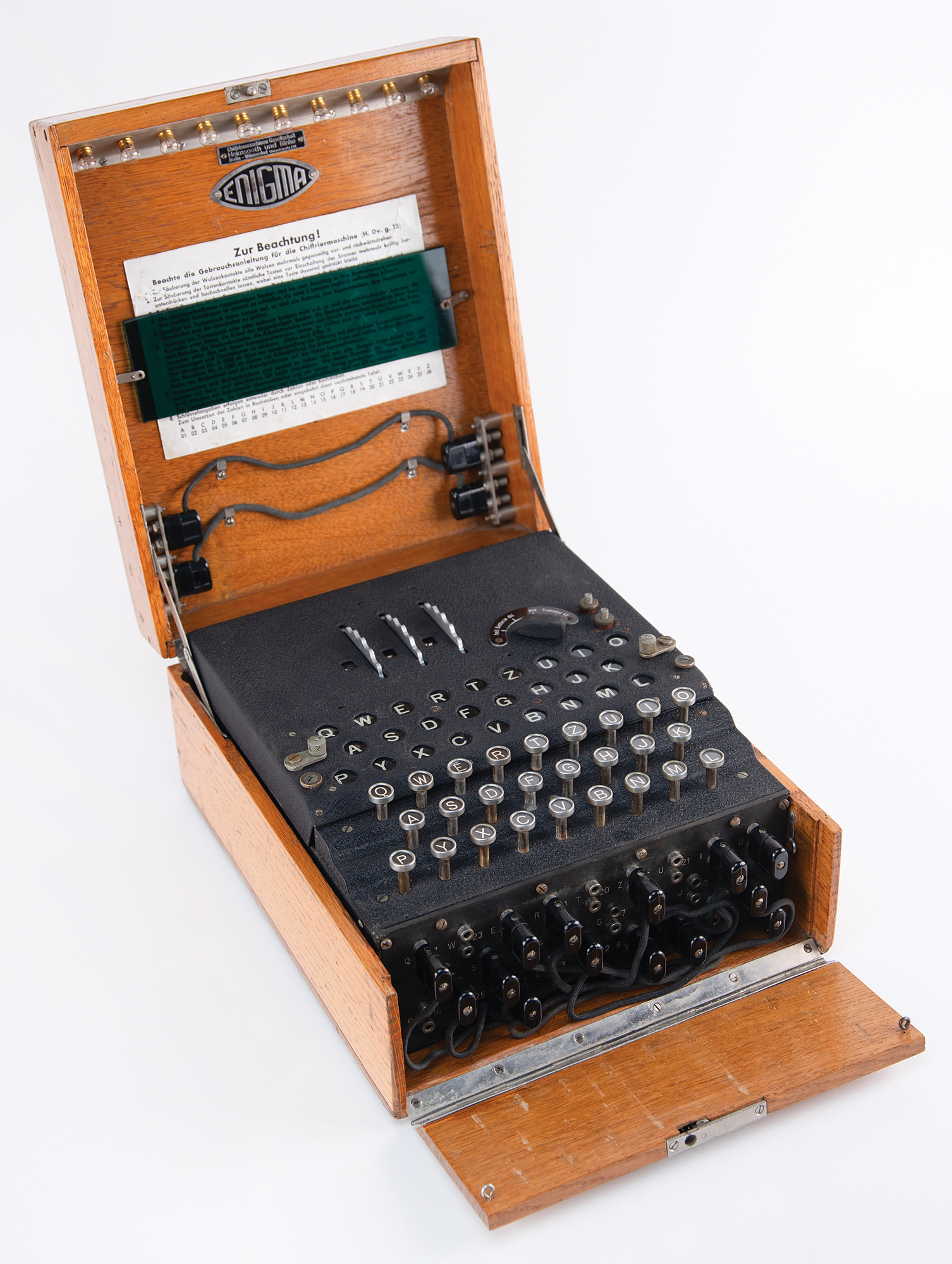
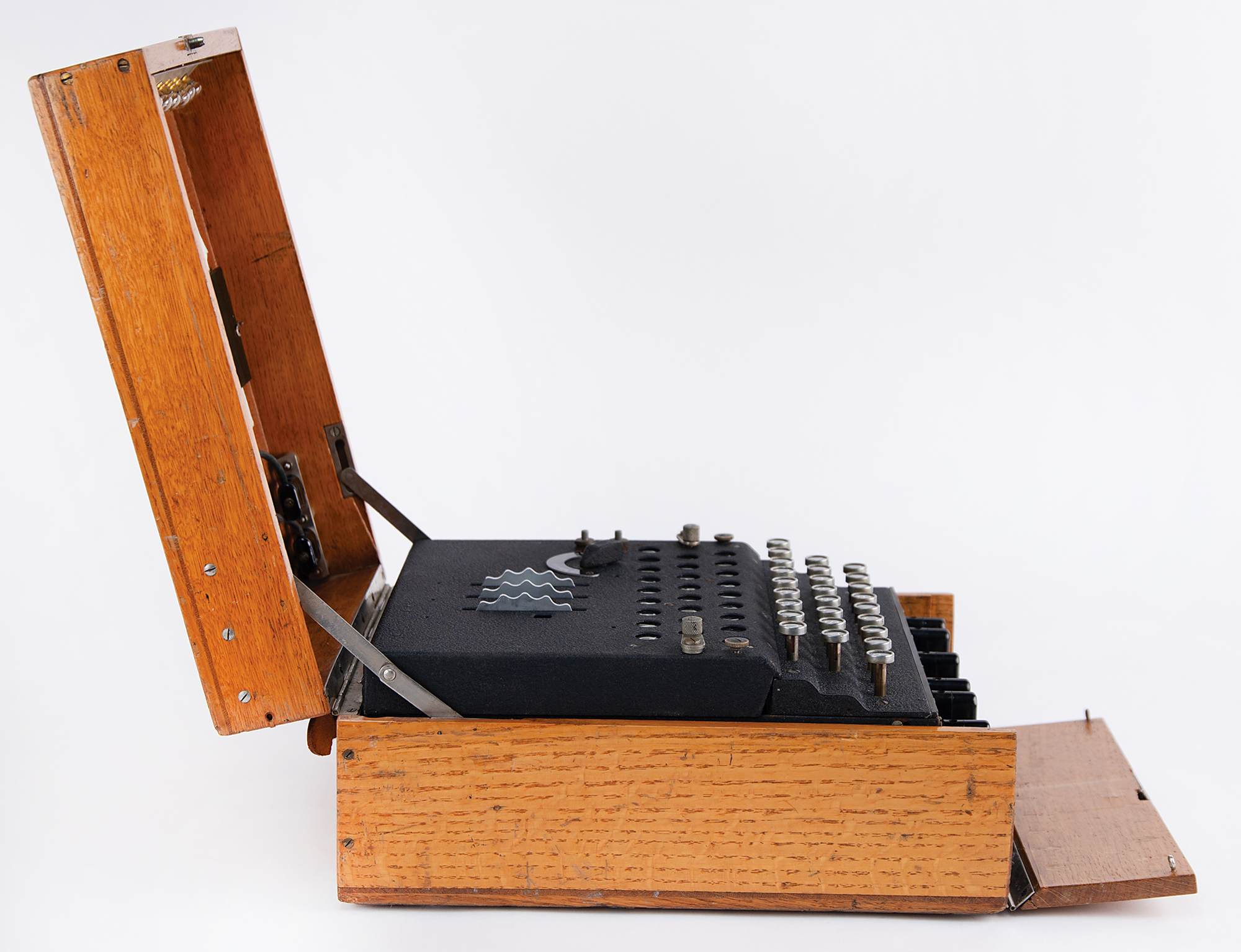
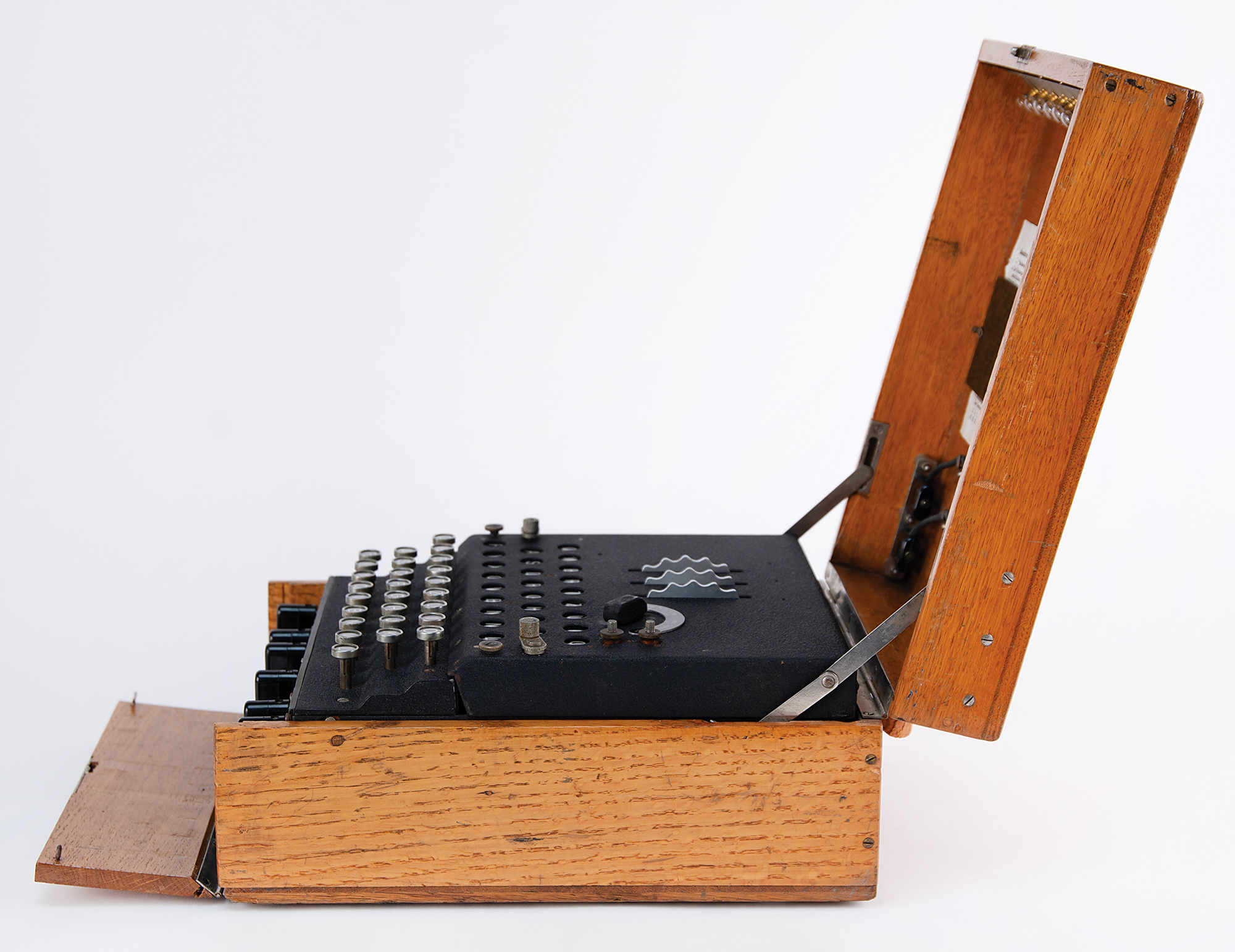
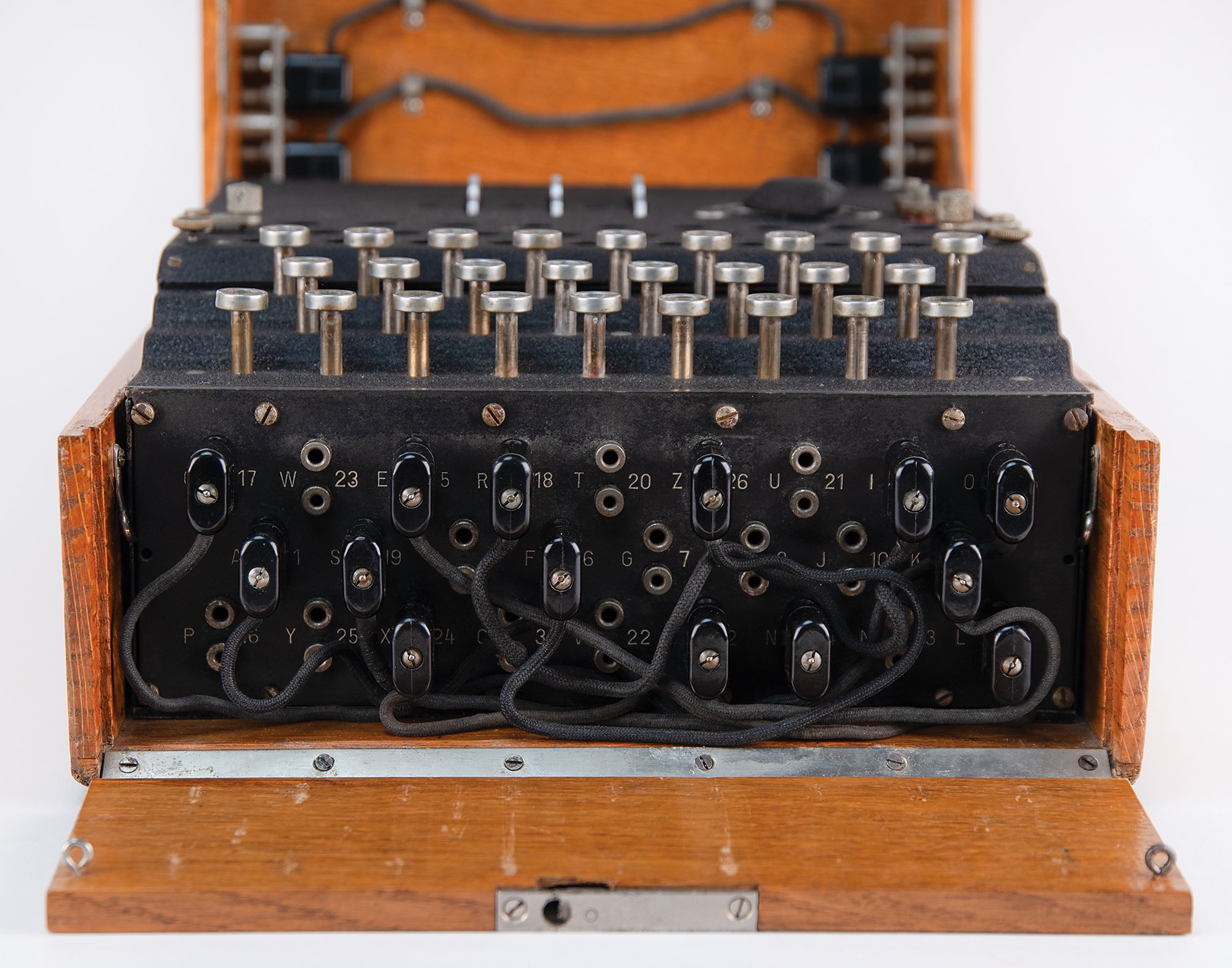
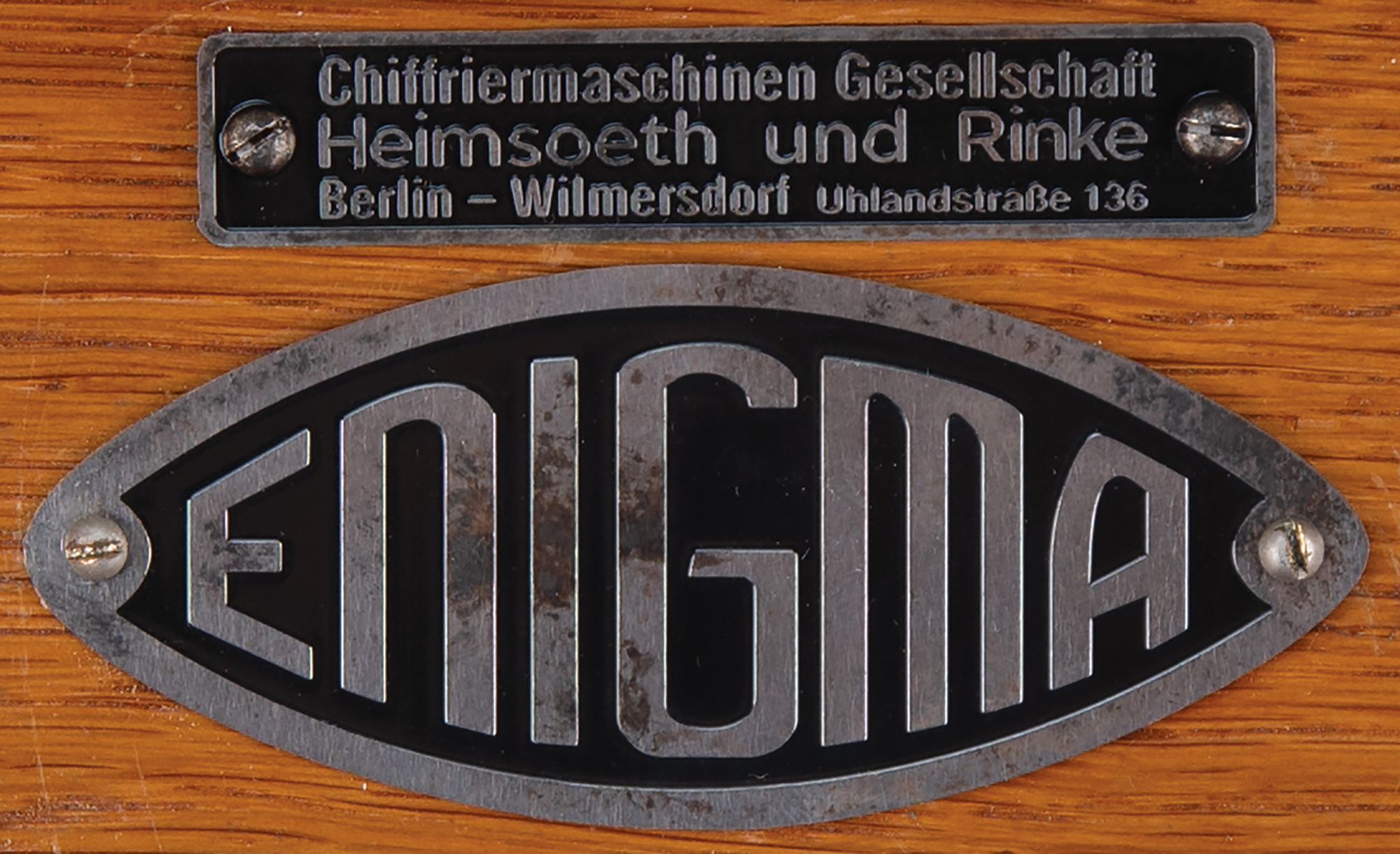
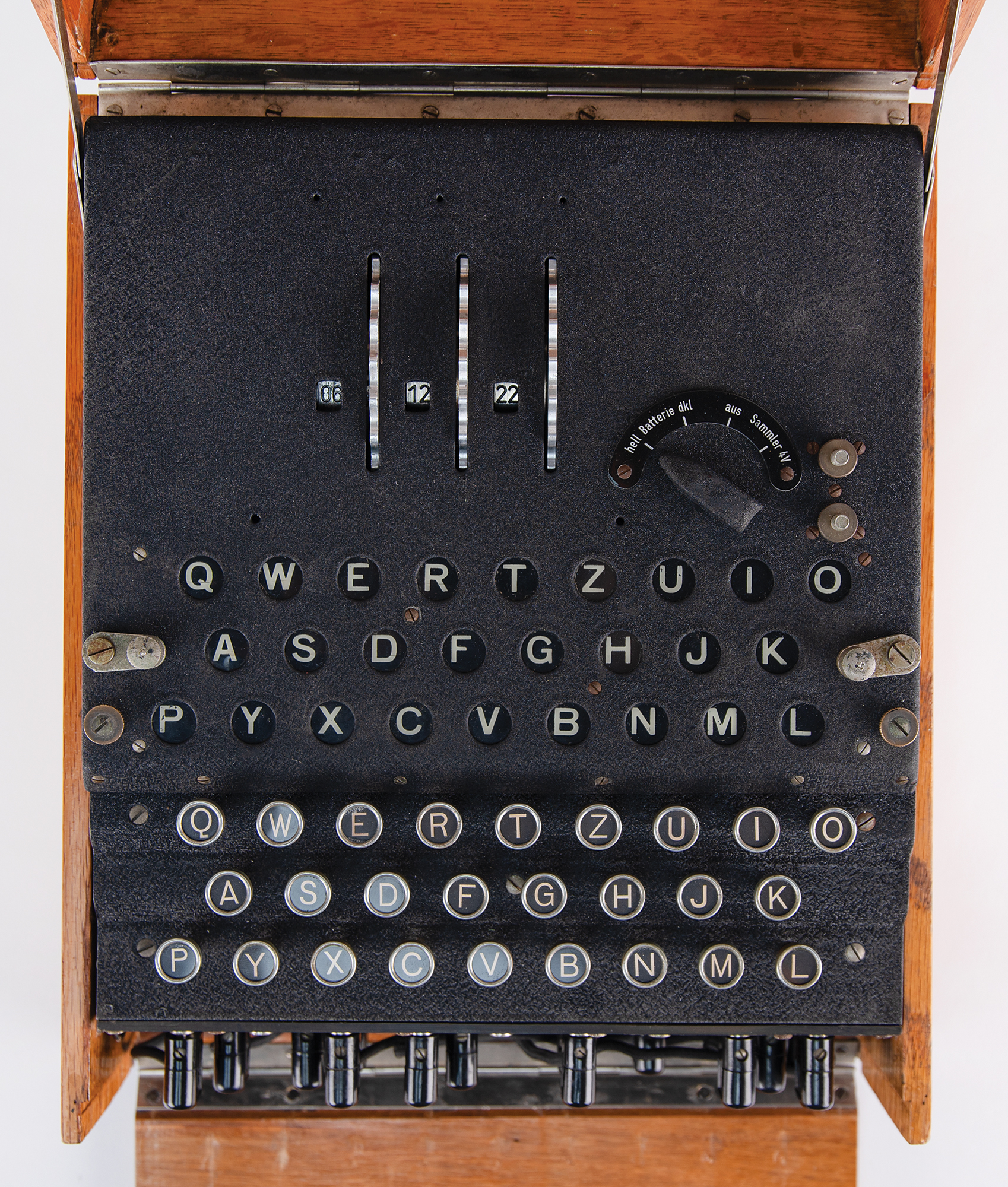
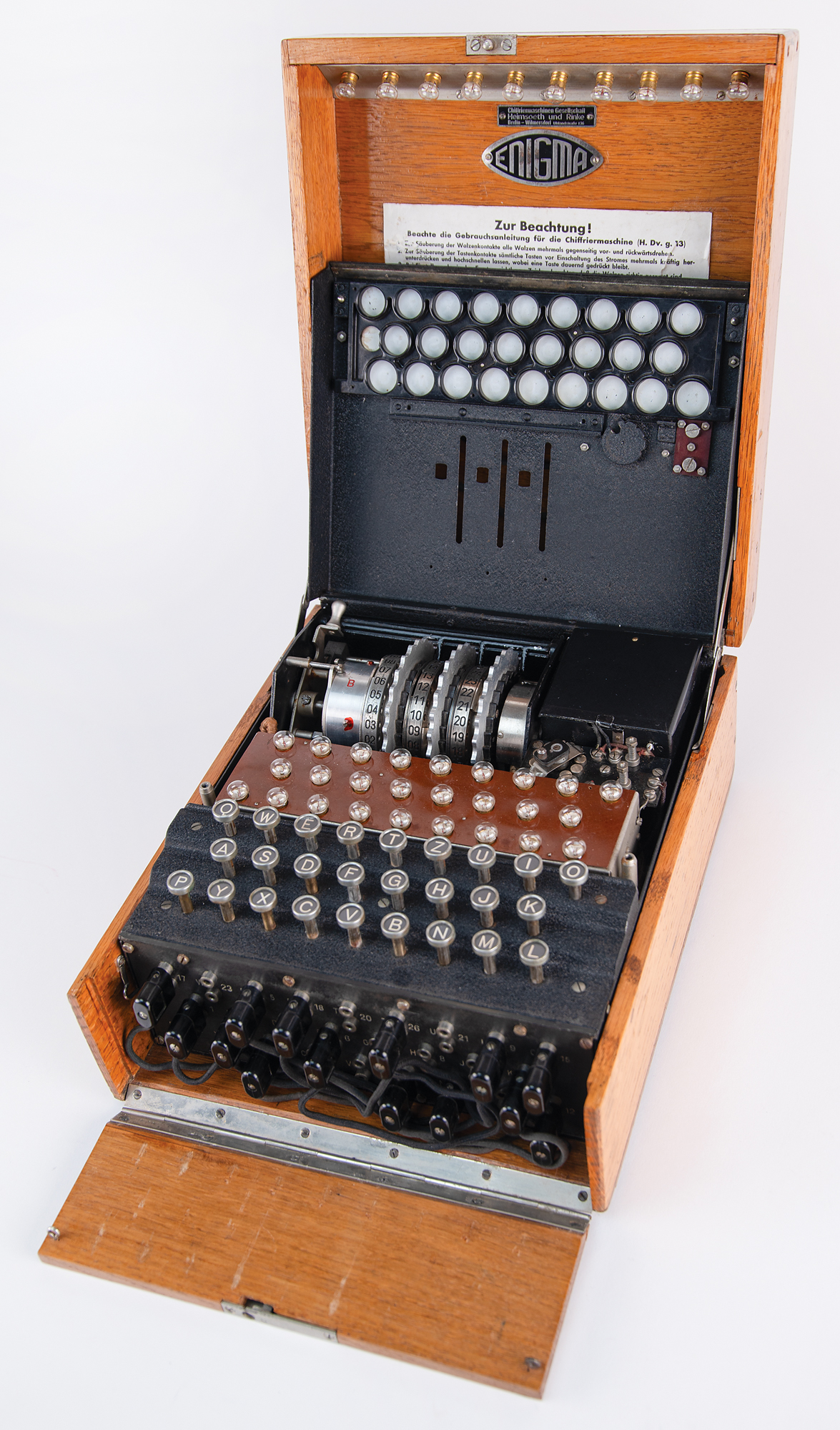
Exceptionally early three-rotor Enigma I electromechanical cipher machine manufactured for the German military by Chiffriermaschinen AG at Steglitzerstrasse 2 in Berlin, with serial number “A1317.” The low serial number indicates that the machine was ordered circa 1931–1932 and likely delivered to the German military in 1933, making it a notably early production example. Based on the chassis of the commercial Enigma D, the Enigma I became the standard cipher machine used by the German Army and Air Force. It features an ebonite Steckerbrett [plugboard] on the front, an innovation exclusive to the German armed forces that exponentially increased the complexity of the code. Also known as the Heeres [Army] Enigma, Wehrmacht Enigma, or Luftwaffe Enigma, machines of this early type were used to conceal Germany’s clandestine military expansion in violation of the Treaty of Versailles before seeing service throughout World War II.
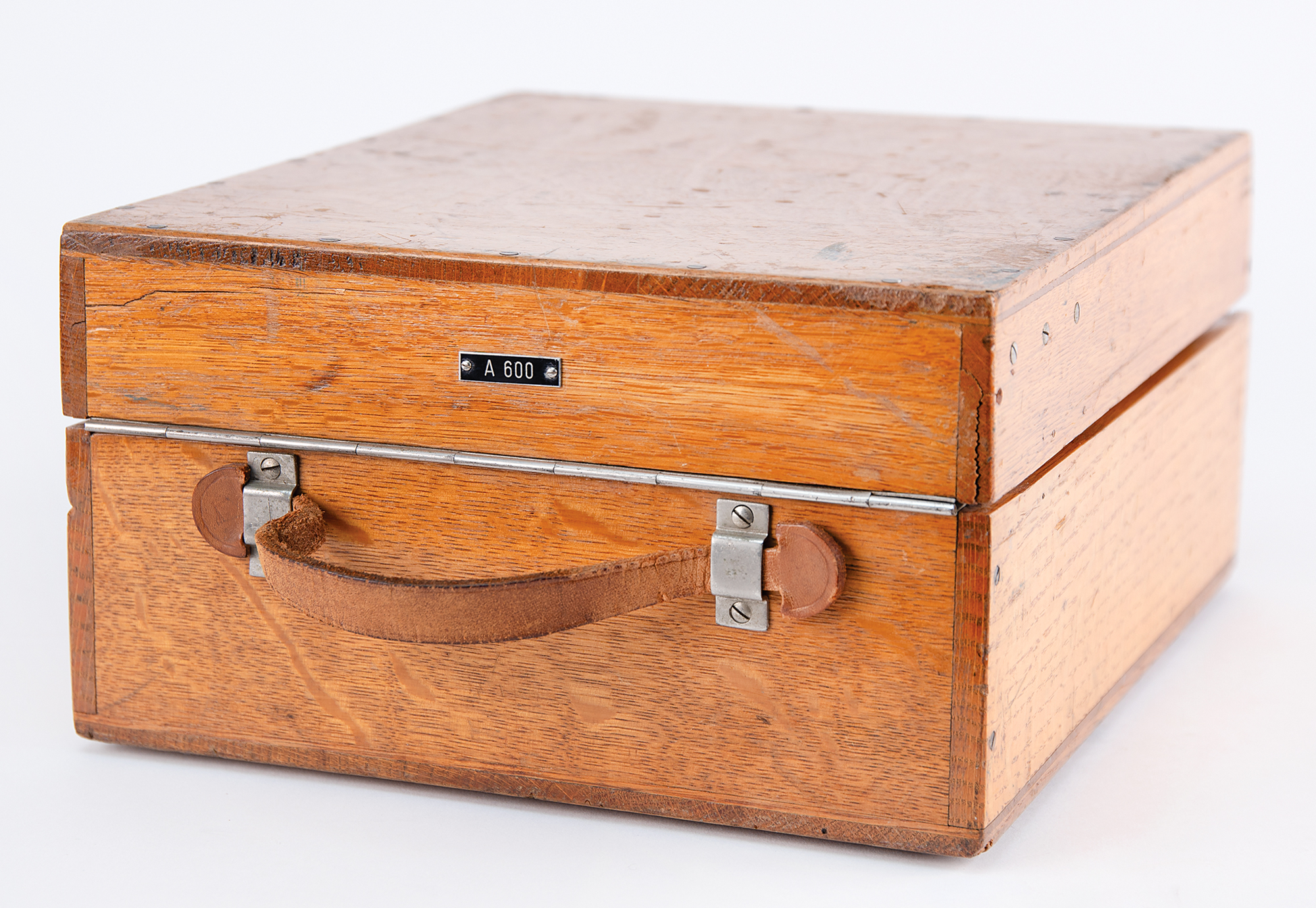
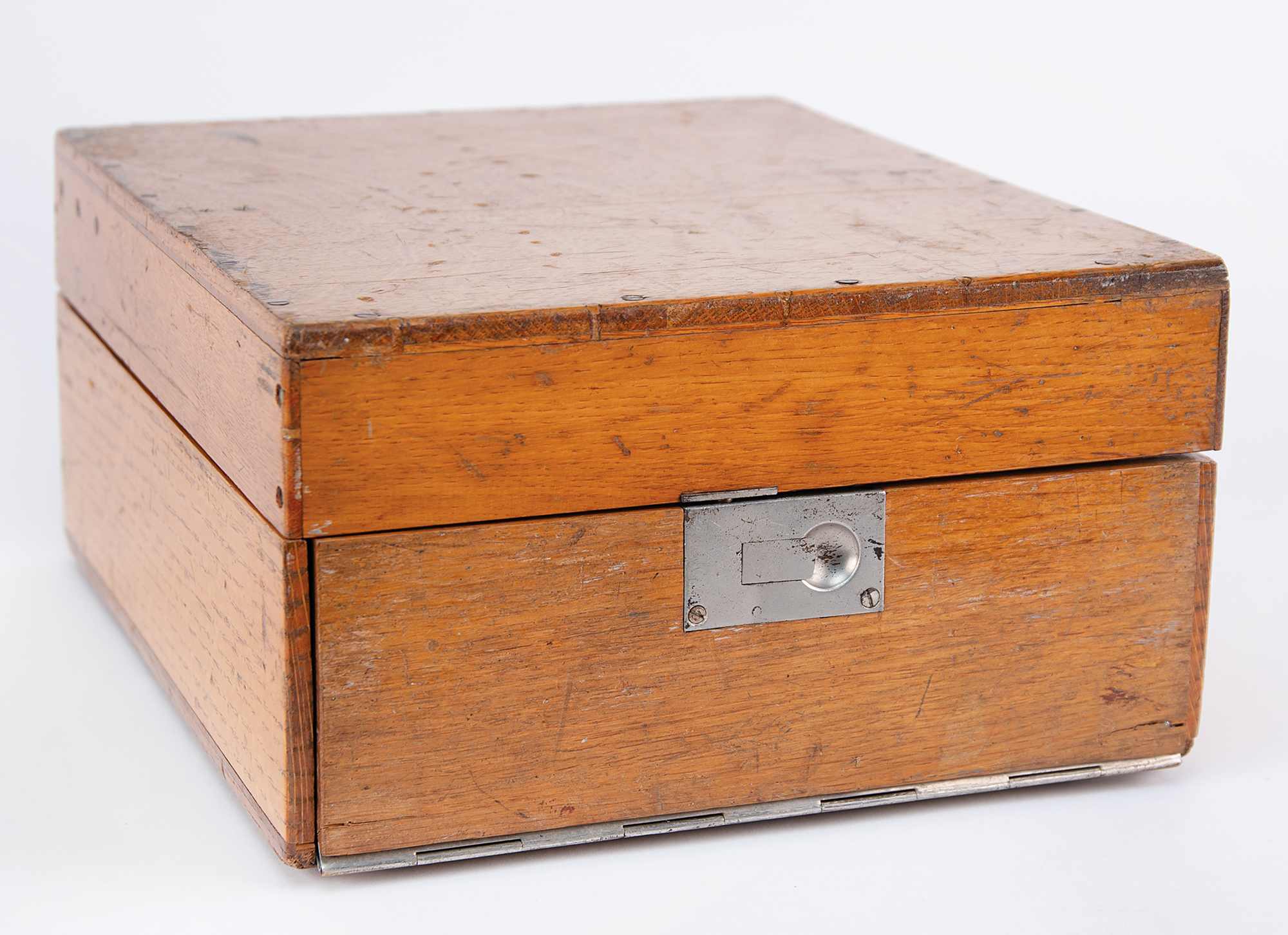
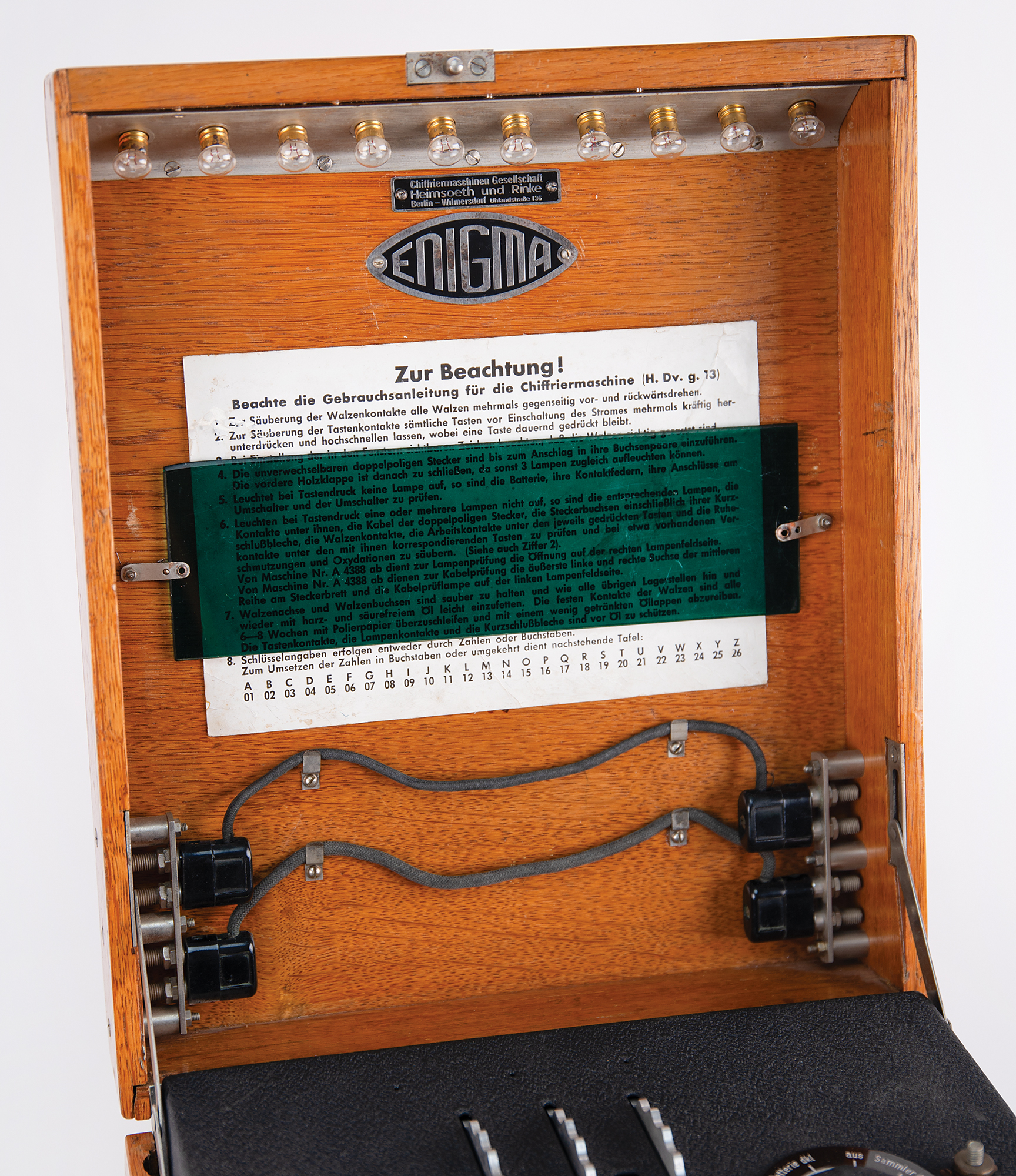
The machine, serial number “A1317,” is housed in a very early stained oak transport case with hinged lid and front panel. An exterior tag reads “A600,” indicating that the case was originally issued with another machine; however, it is of the correct early vintage for A1317. The case retains what appears to be its original finish and exhibits wear consistent with military use. An exact replica address tag replaces the missing original inside the lid. Both the machine and its case remain in excellent overall condition, with no significant rust or corrosion, suggesting that they were stored in a clean, dry environment after their period of service.
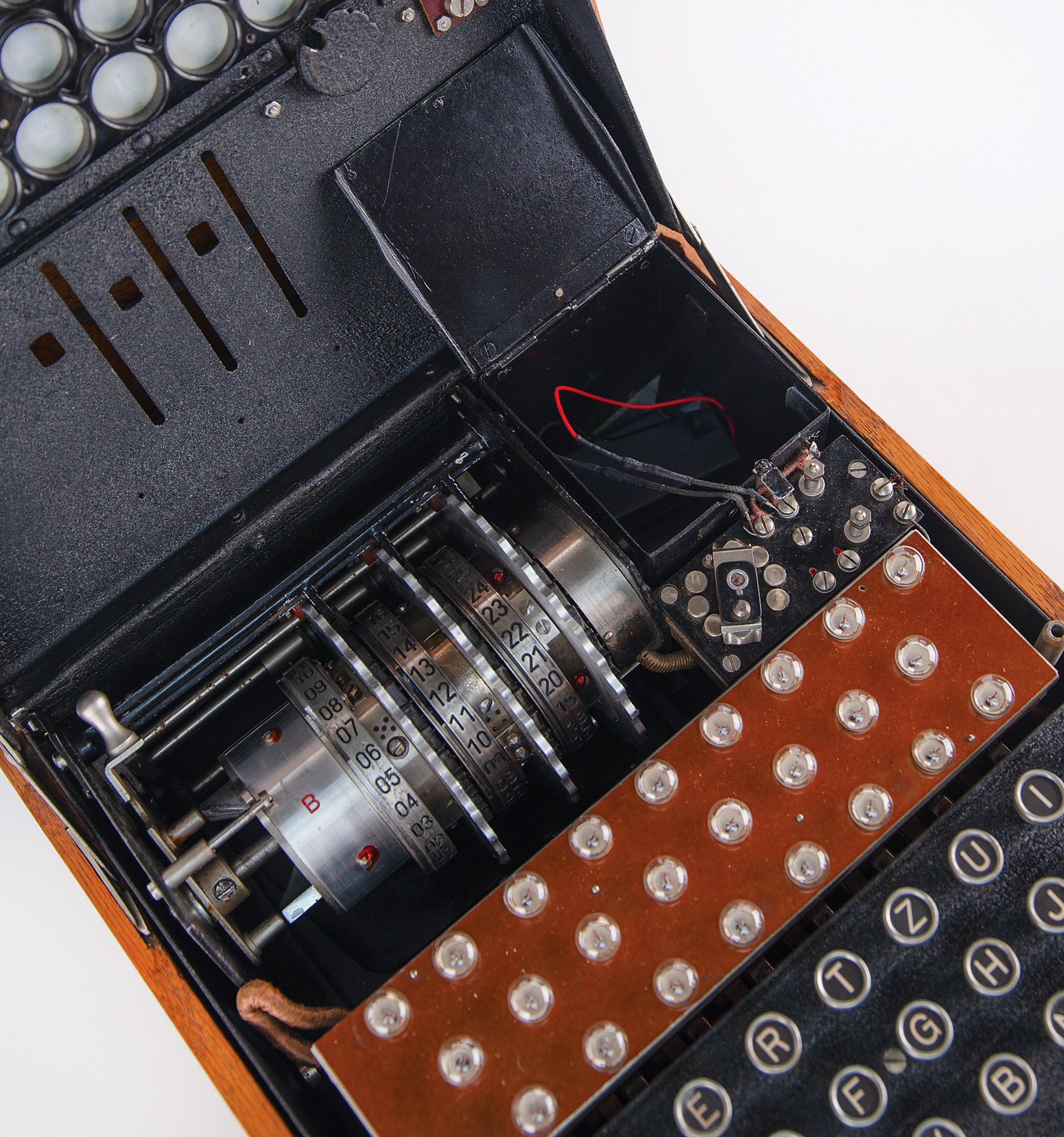
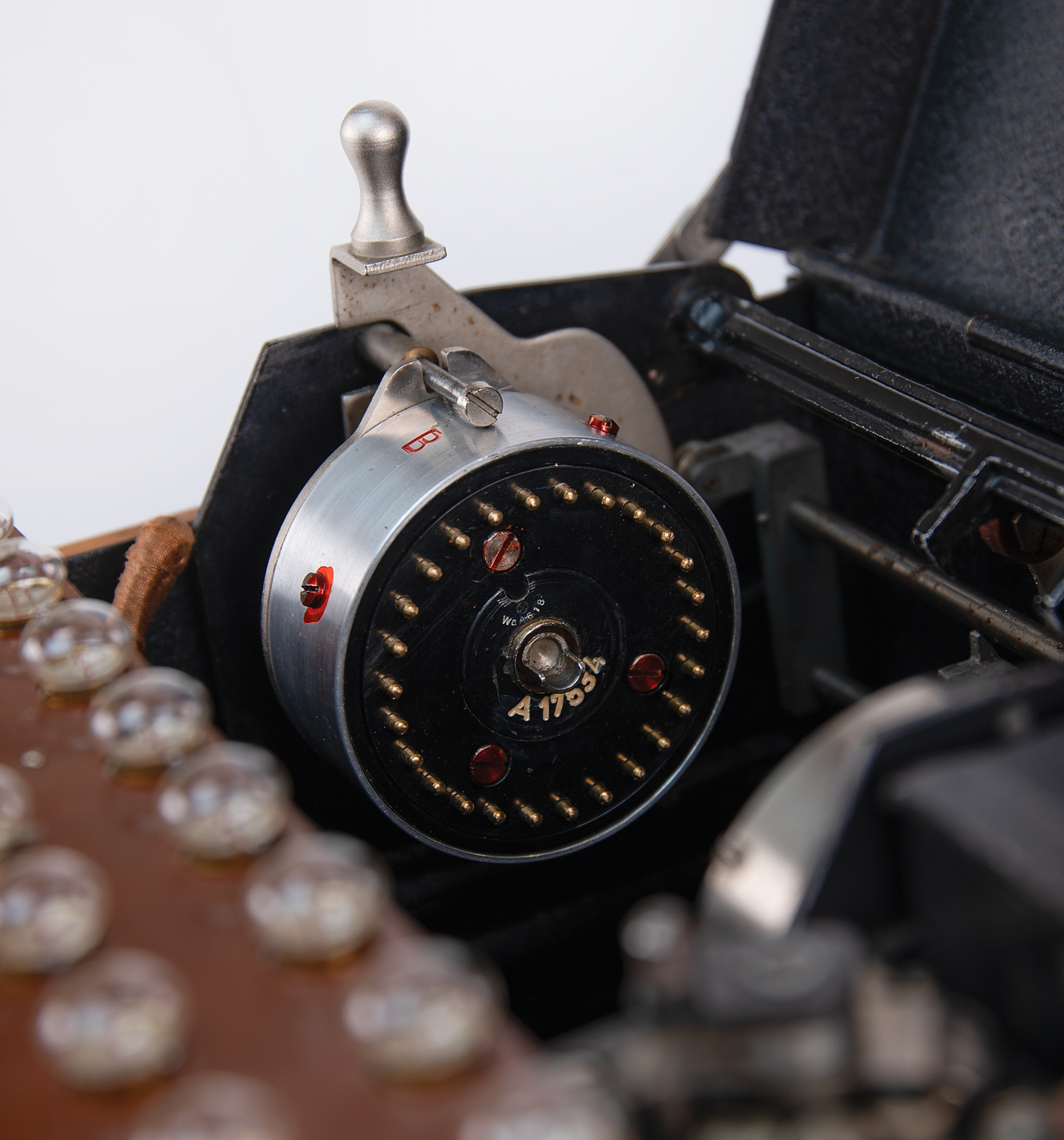
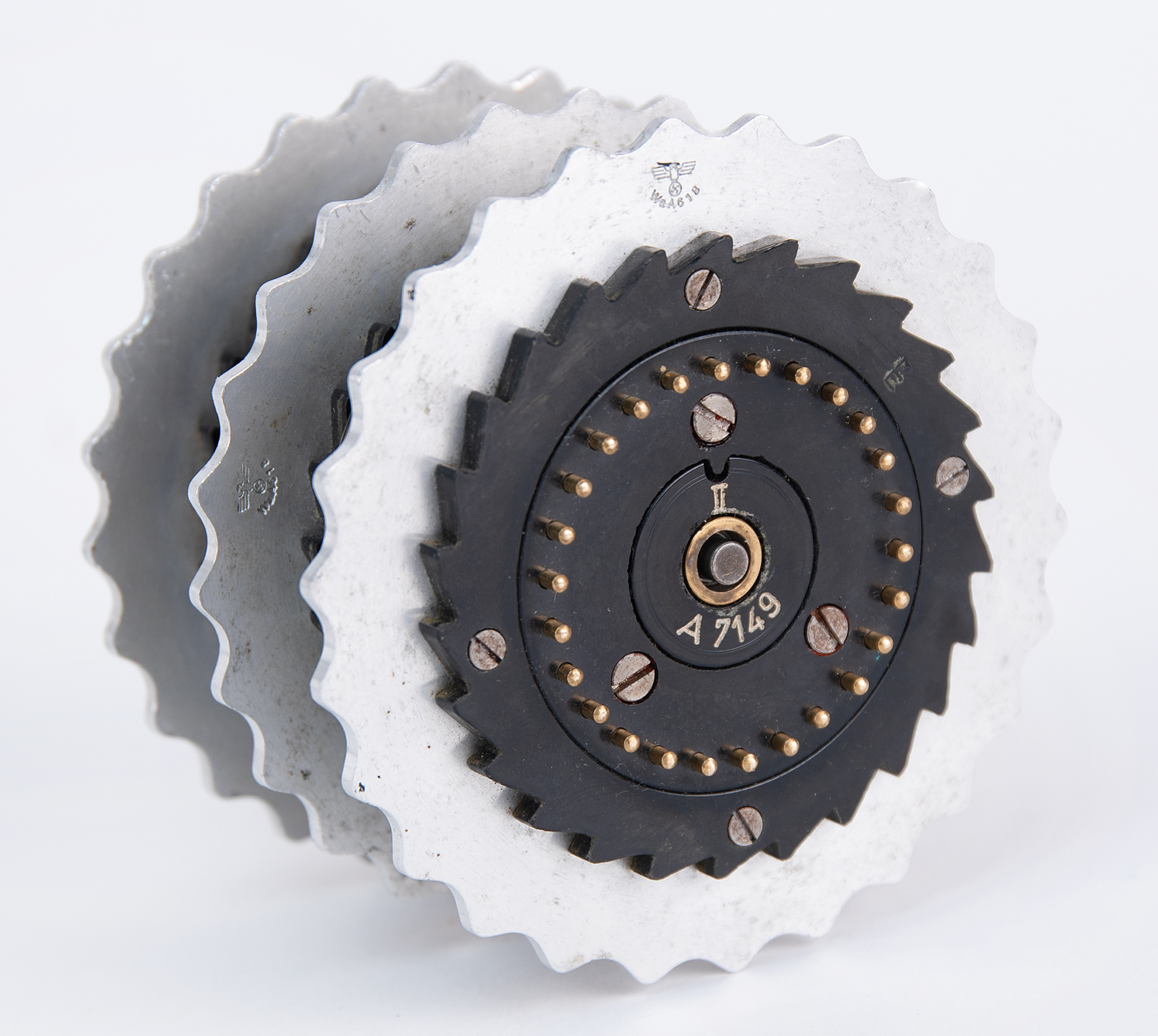
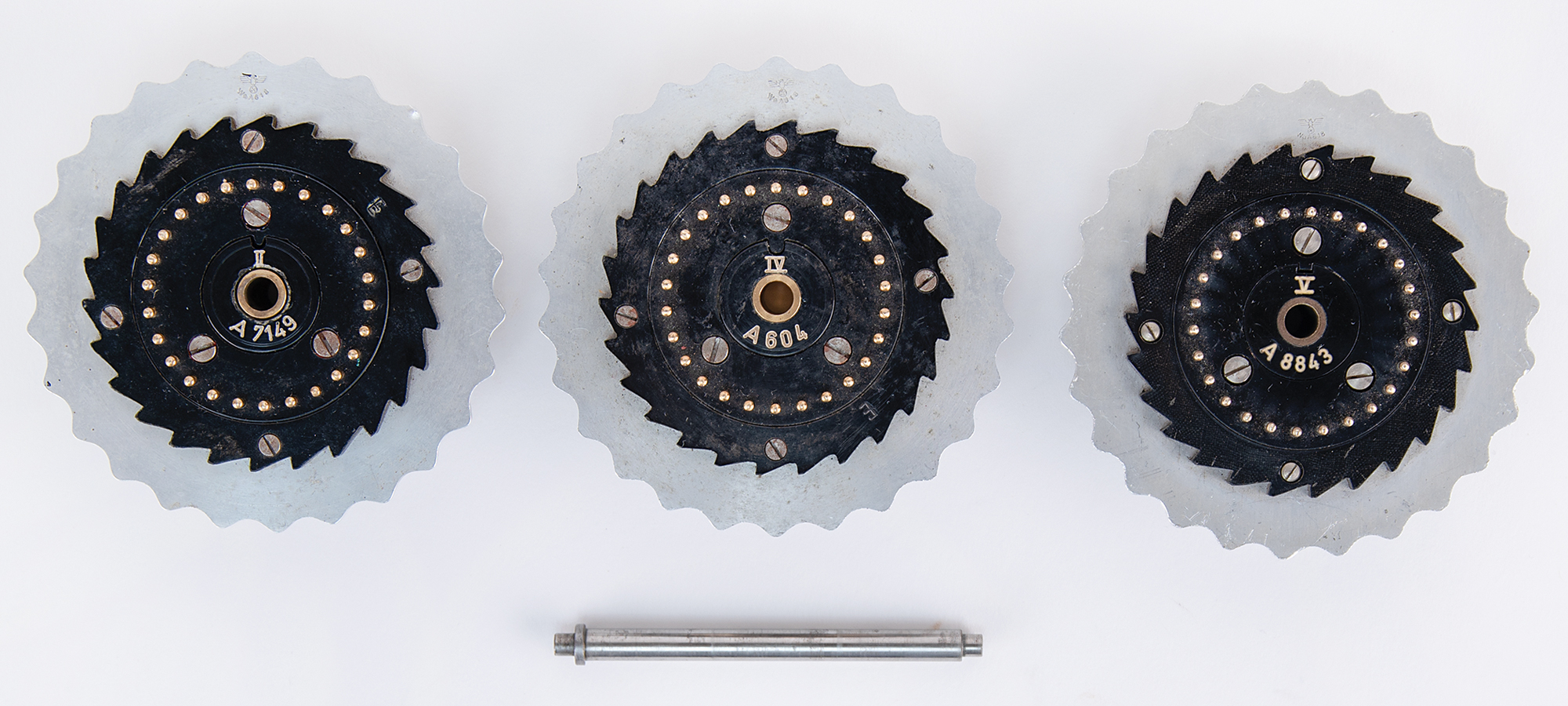
The three included rotors—marked “II,” “IV,” and “V”—carry serial numbers that do not match the machine or one another (A7149, A604, and A8843). Such mismatches are typical of field-used Enigmas, as interchangeable rotors were frequently exchanged at German communications posts and maintenance depots. When A1317 was first issued, it would likely have been equipped with rotors I, II, and III; beginning in 1937, the German military expanded the available rotor set to five, issuing rotors IV and V to machines already in service. The rotors appear to have been refurbished to restore functionality at some point in time. Their internal wiring, along with that of the machine and reflector, has been inspected and verified.
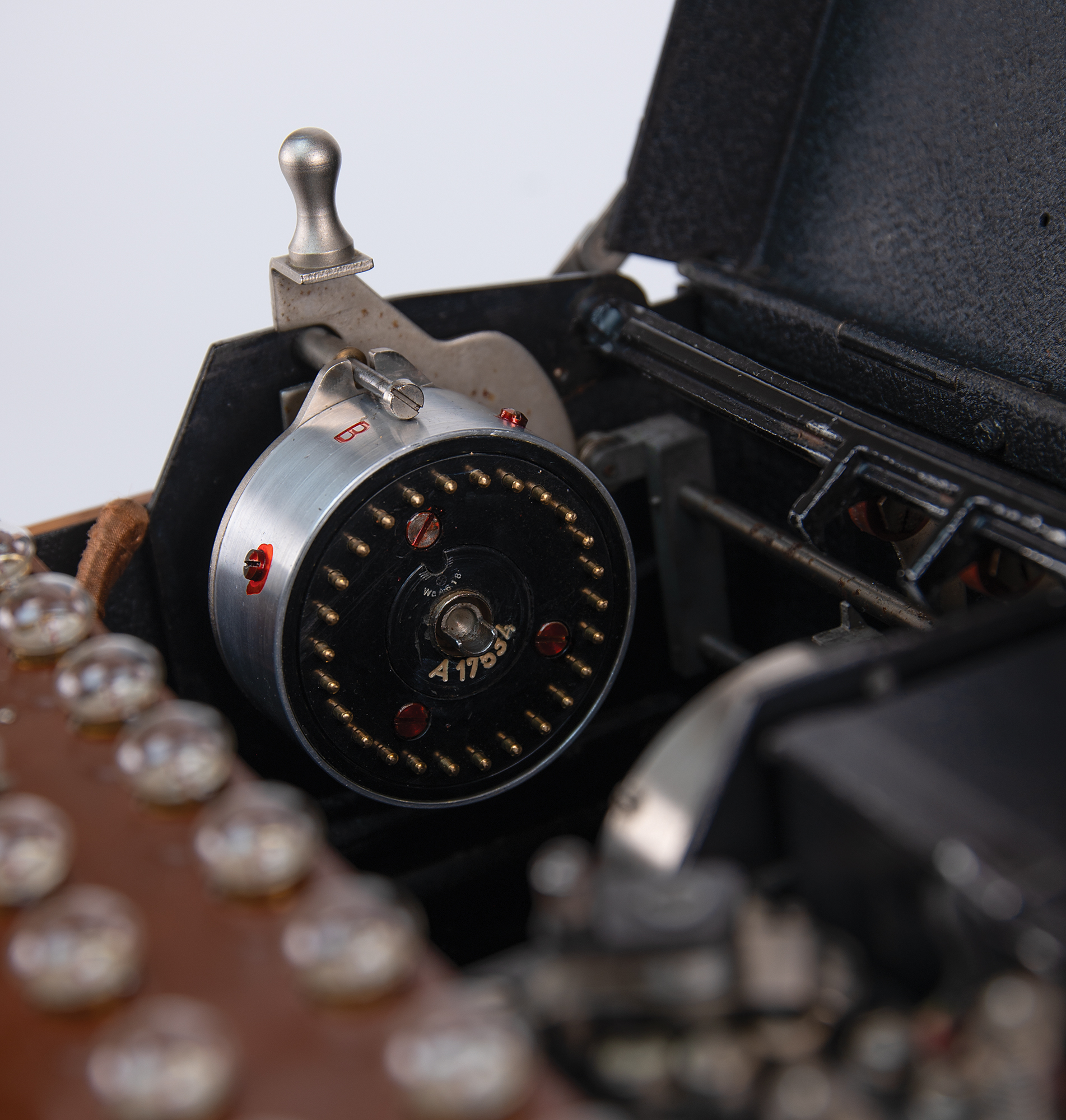
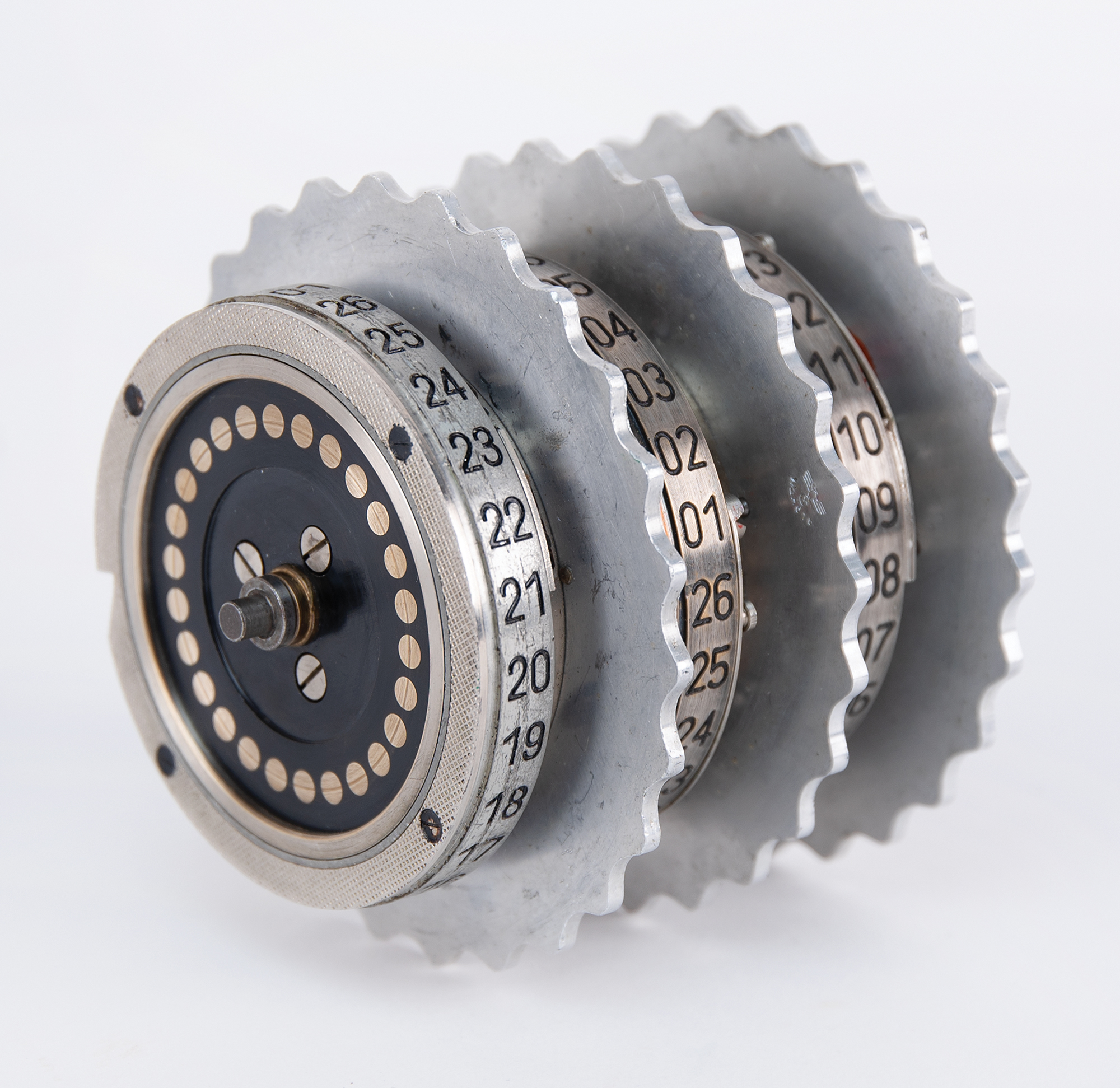
Each rotor can display one of its 26 numerals through the three windows in the machine’s cover. Spring-loaded contacts on either side correspond to the letters of the alphabet, and the rotors may be installed in different orders on the internal shaft. Their sequence, starting positions, ring settings, and plugboard connections were changed according to secret daily key sheets, allowing German communications units to configure their machines identically while producing an enormous number of possible cipher settings.
The Enigma has a standard German “QWERTZ” keyboard with 26 white-on-black keys and a corresponding illuminated letter display. When a key is pressed, electrical current passes through the plugboard, rotating rotors, and reflector, illuminating the encoded letter. The rightmost rotor advances with each keystroke and, at predetermined turnover points, causes the adjacent rotors to step. As a result, a letter is rarely encrypted the same way twice, avoiding the weaknesses of a simple substitution cipher. An operator recorded the illuminated letters and transmitted the resulting ciphertext, usually by radio telegraph. The receiving station, using an Enigma set to the same daily configuration, typed the ciphertext to reveal the original message one illuminated character at a time.
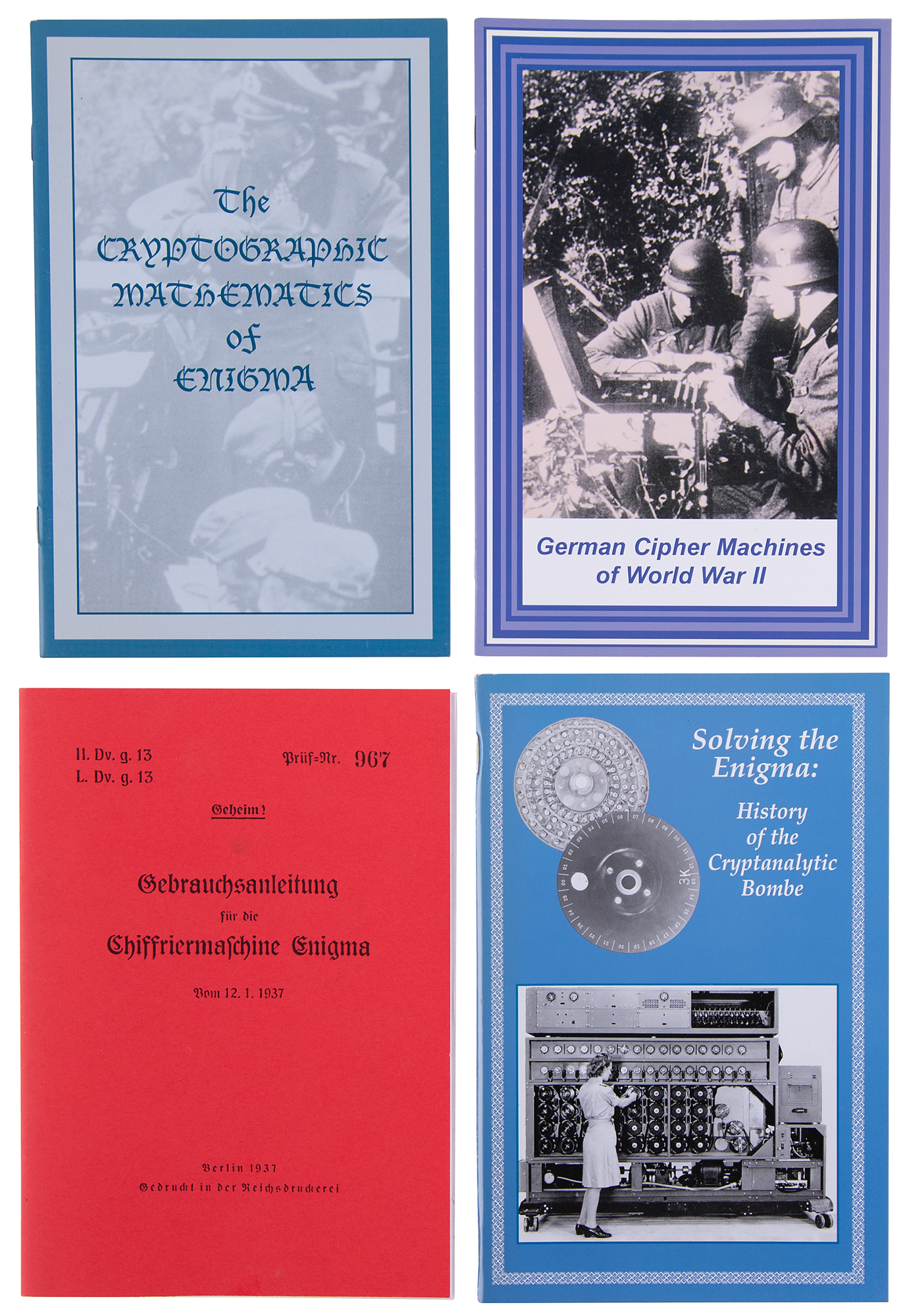
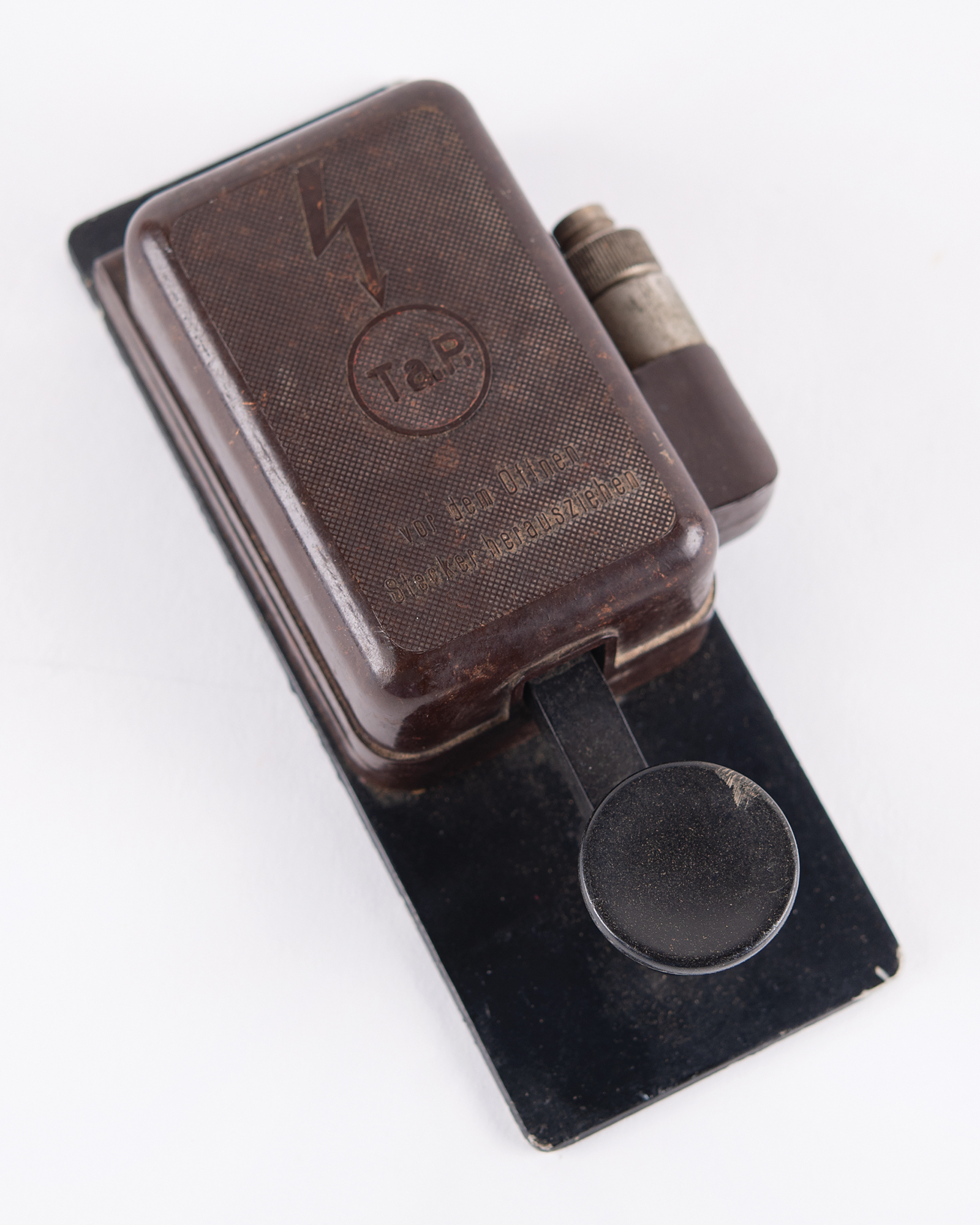
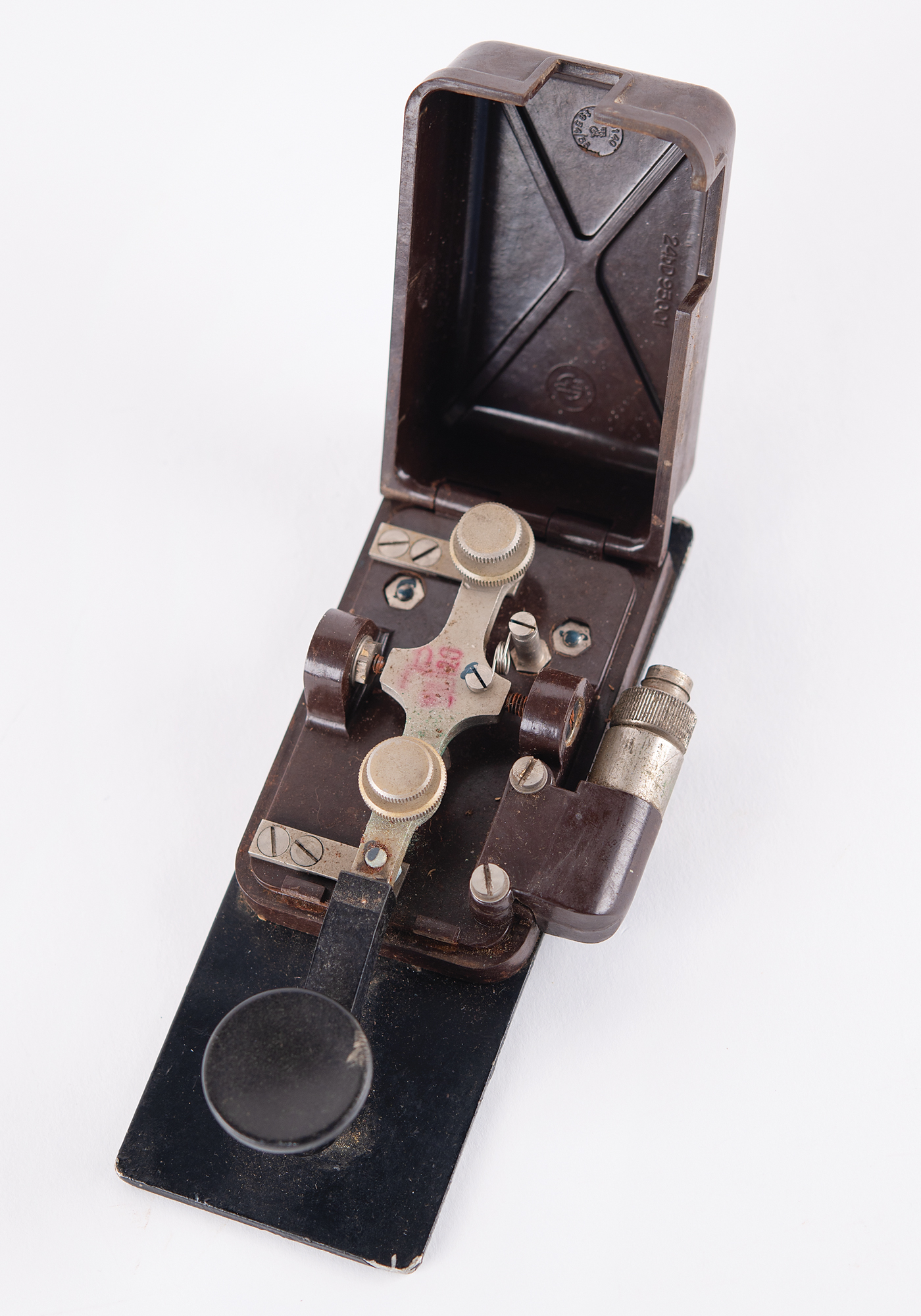
A modern battery holder accepting standard flashlight batteries is included to permit operation. The machine is partially functional, with an encoded bulb illuminating on approximately 75% of keystrokes. Missing or nonfunctional bulbs have been replaced with exact replica Enigma bulbs. Also included are an original WWII Germany military telegraph key, a reproduction of an original Enigma operating manual, plus three modern booklets discussing the Enigma.
Enigma A1317 likely remained in German military service from its delivery in 1933 through the end of the war in May 1945 and may subsequently have seen postwar service in Europe. Britain encouraged several countries—including Norway and West Germany—to continue employing captured or surplus Enigma machines after the war, without revealing that Allied cryptanalysts had mastered their decryption. The machine was acquired in 1995 from the family of a German collector known to have obtained surplus military Enigmas in West Germany during the 1970s, and was later exhibited in a French museum for more than two decades.
First patented in 1918 by Arthur Scherbius, the Enigma was developed to protect confidential commercial, diplomatic, and military communications. The German armed forces adopted versions of the machine during the 1920s, after learning how effectively British intelligence had exploited German naval communications during World War I. Polish mathematicians Marian Rejewski, Jerzy Różycki, and Henryk Zygalski made the first decisive breakthroughs against the military Enigma and shared their methods with Britain and France shortly before the German invasion of Poland. At Bletchley Park, Alan Turing, Gordon Welchman, and their colleagues expanded upon the Polish work, developing electromechanical bombes and increasingly sophisticated methods of processing intercepted communications. The resulting intelligence, codenamed Ultra, influenced operations throughout the European and Atlantic theaters and is widely credited with significantly shortening the war.
German forces were ordered to destroy Enigma machines rather than allow their capture, and many were smashed, burned, sunk, or otherwise disabled during the final collapse of the Third Reich. Consequently, only a small fraction of the machines manufactured are believed to survive, with many preserved in institutional collections. An exceptionally early example with documented European museum display and distinguished provenance, Enigma A1317 represents a rare artifact at the intersection of military, cryptographic, and computer history.

