The 30 Minute Rule begins July 8 at 7:00 PM EDT. An Initial Bid Must Be Placed By July 8 at 6:00 PM EDT To Participate After 6:00 PM EDT
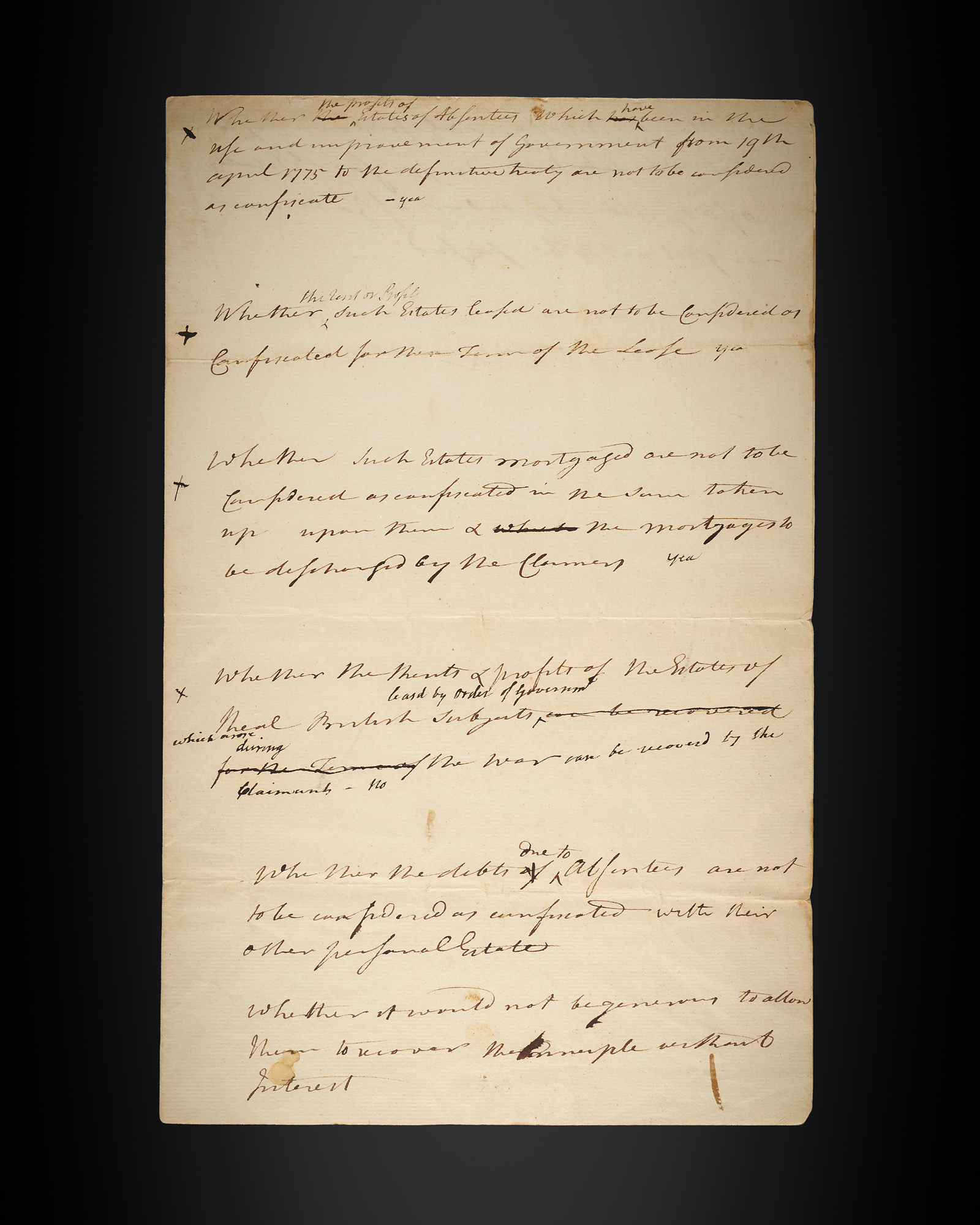
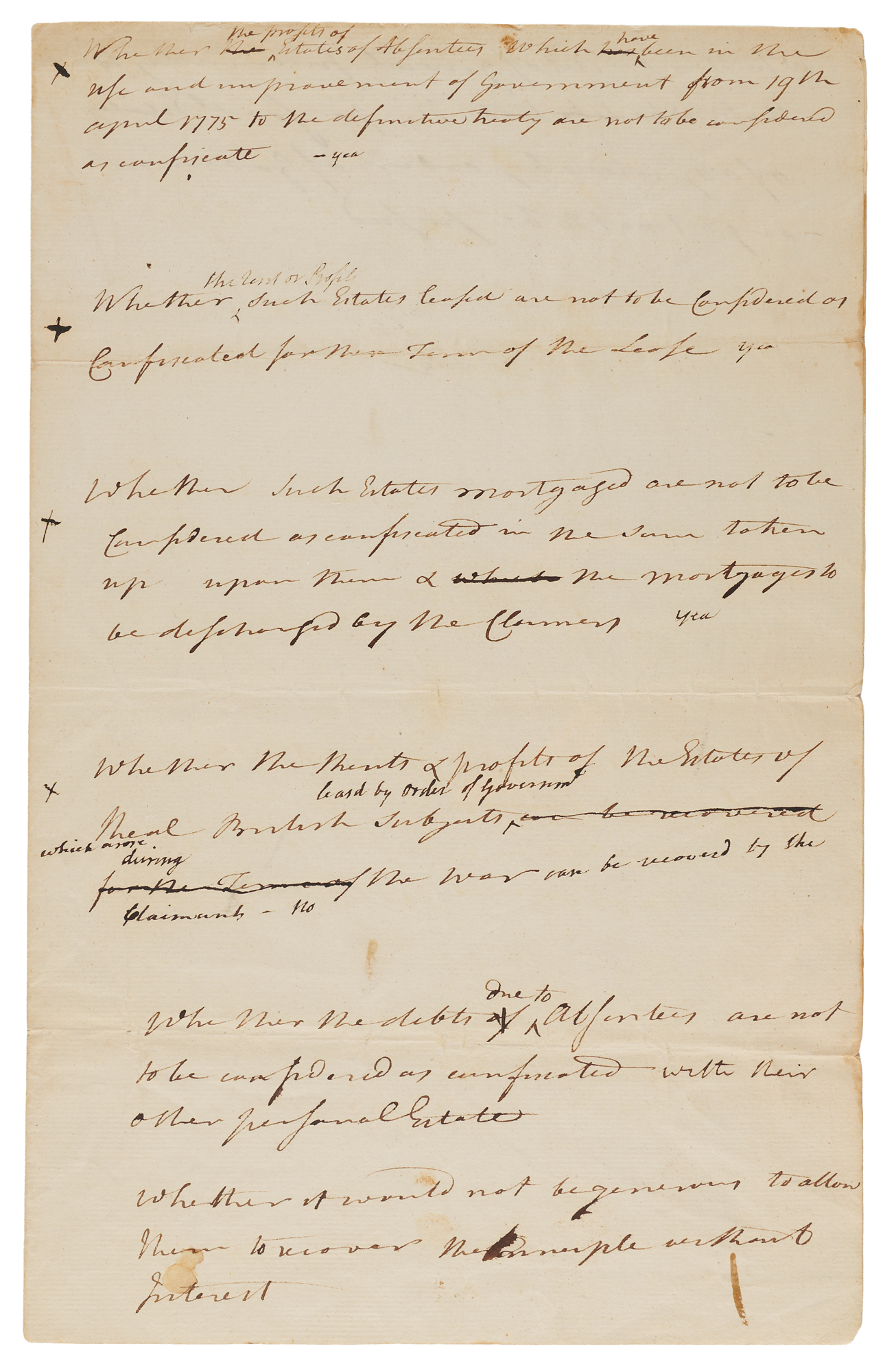
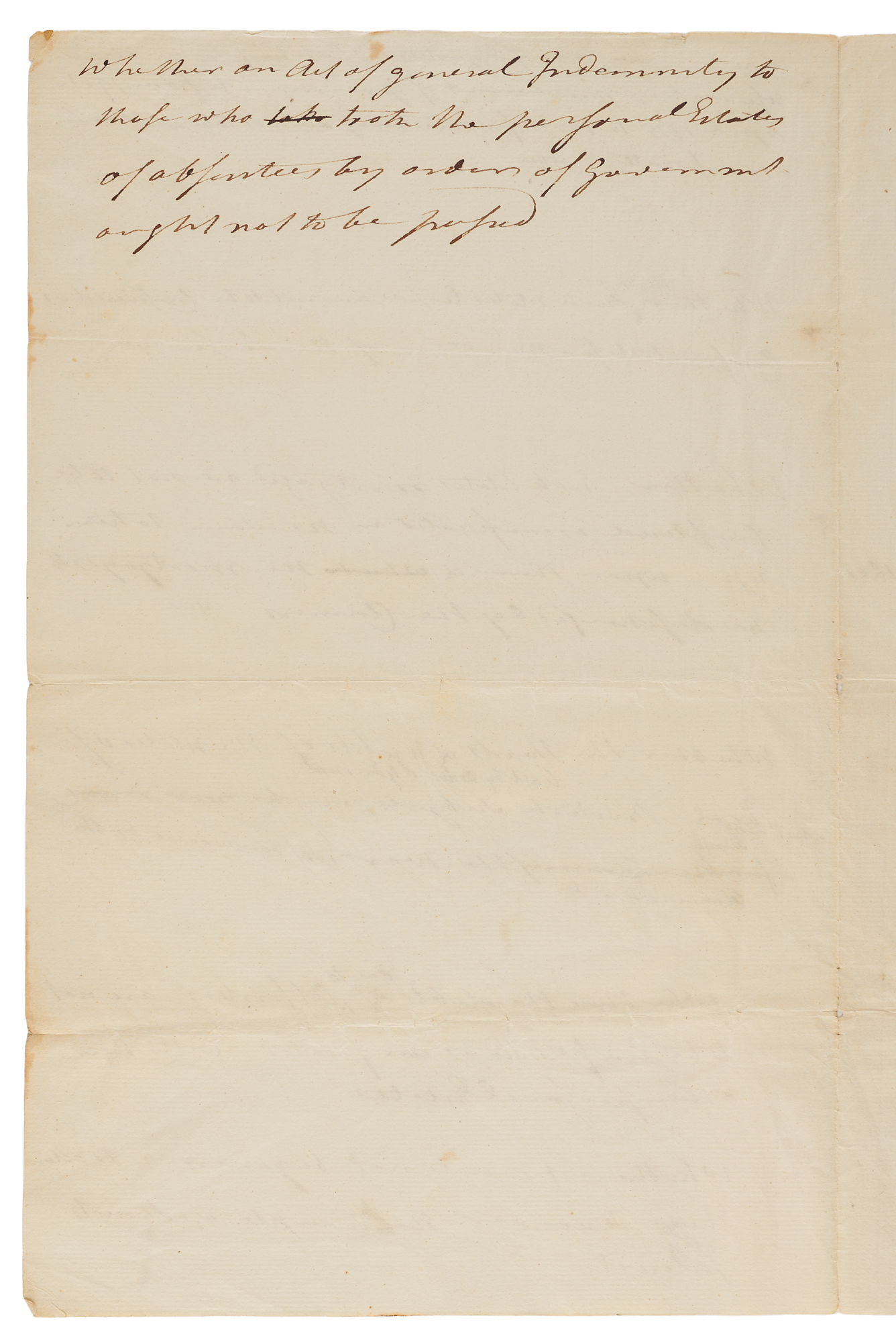
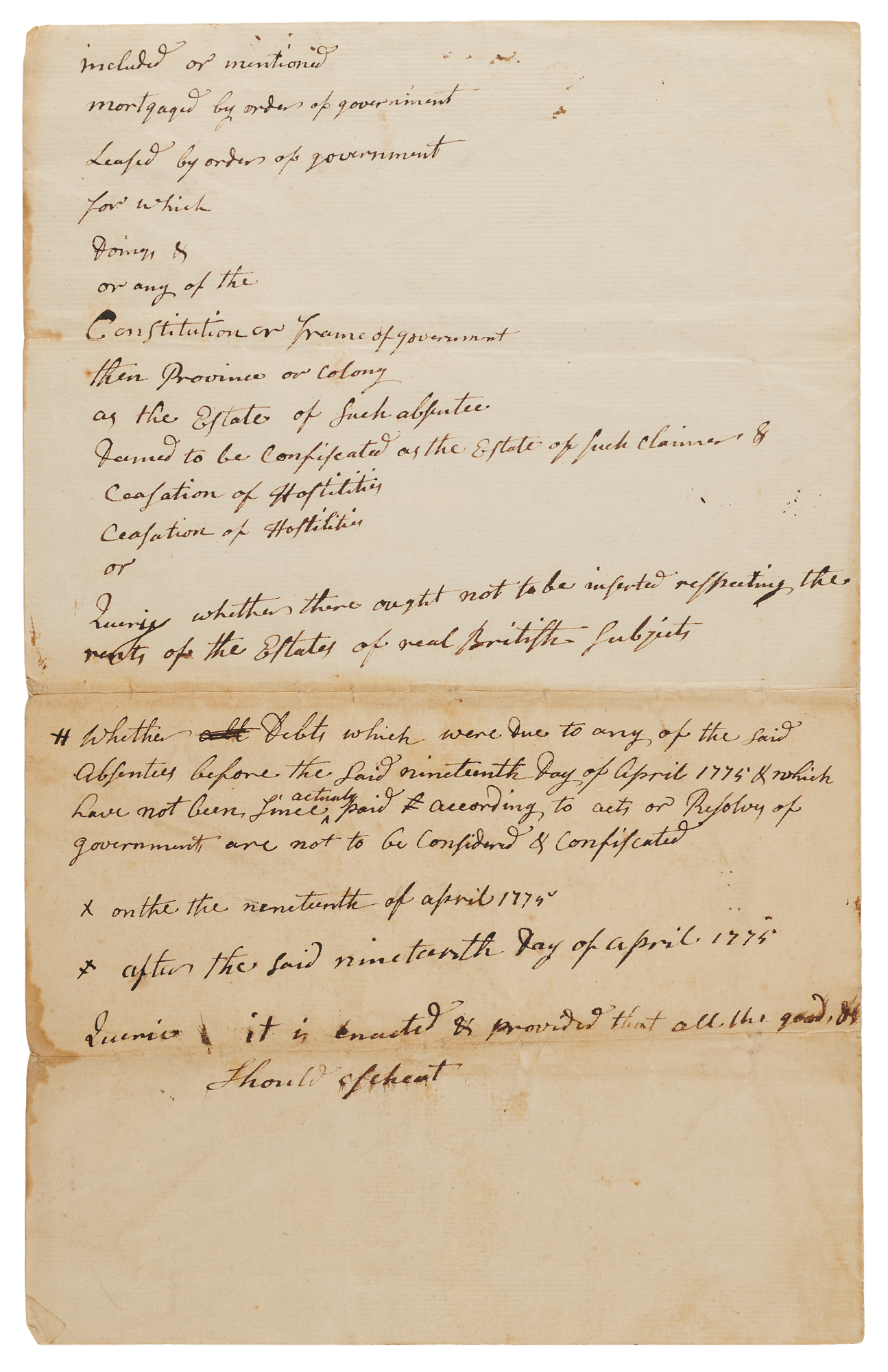
Manuscript document, three pages on two adjoining sheets, 8 x 12.5, no date but circa 1787. A portion of the minutes of the Constitutional Convention of the State of Connecticut, written in brief note-like fashion, largely concerning the disposition of lands owned by Tories and those loyal to the United States. In part: "Whether the Rents & Profits of the Estates of these British subjects which arose during the war can be recovered the Claimants. No. Whether the debts due to absentees are not to be considered or confiscated with their other personal Estate. Whether it would not be generous to allow them to recover the principle without interest. Whether an Act of general Indemnity to those who took the personal Estates of Absentees by order of Government ought not to be passed…Leased by orders of government for which doings & or any of the Constitution or frame of government then Province or Colony as the Estate of such absentee deemed to be confiscated as the estate of such Claimers & ceastion of hostilities." In fine condition.
This manuscript captures Connecticut’s post-Revolutionary reckoning with Loyalist property and wartime confiscation, issues left unsettled even after independence had been won. Written in terse, working-note form, it reflects the state’s effort to balance legal claims, political retribution, and public fairness: whether British subjects or absentees could recover rents, debts, or principal from confiscated estates, and whether those who acted under government authority during the war should be indemnified. As such, it offers a revealing glimpse into the practical consequences of the Revolution, when new state governments had to convert wartime measures against Tories into a durable civil and constitutional order.

