The 30 Minute Rule begins May 21 at 7:00 PM EDT. An Initial Bid Must Be Placed By May 21 at 6:00 PM EDT To Participate After 6:00 PM EDT
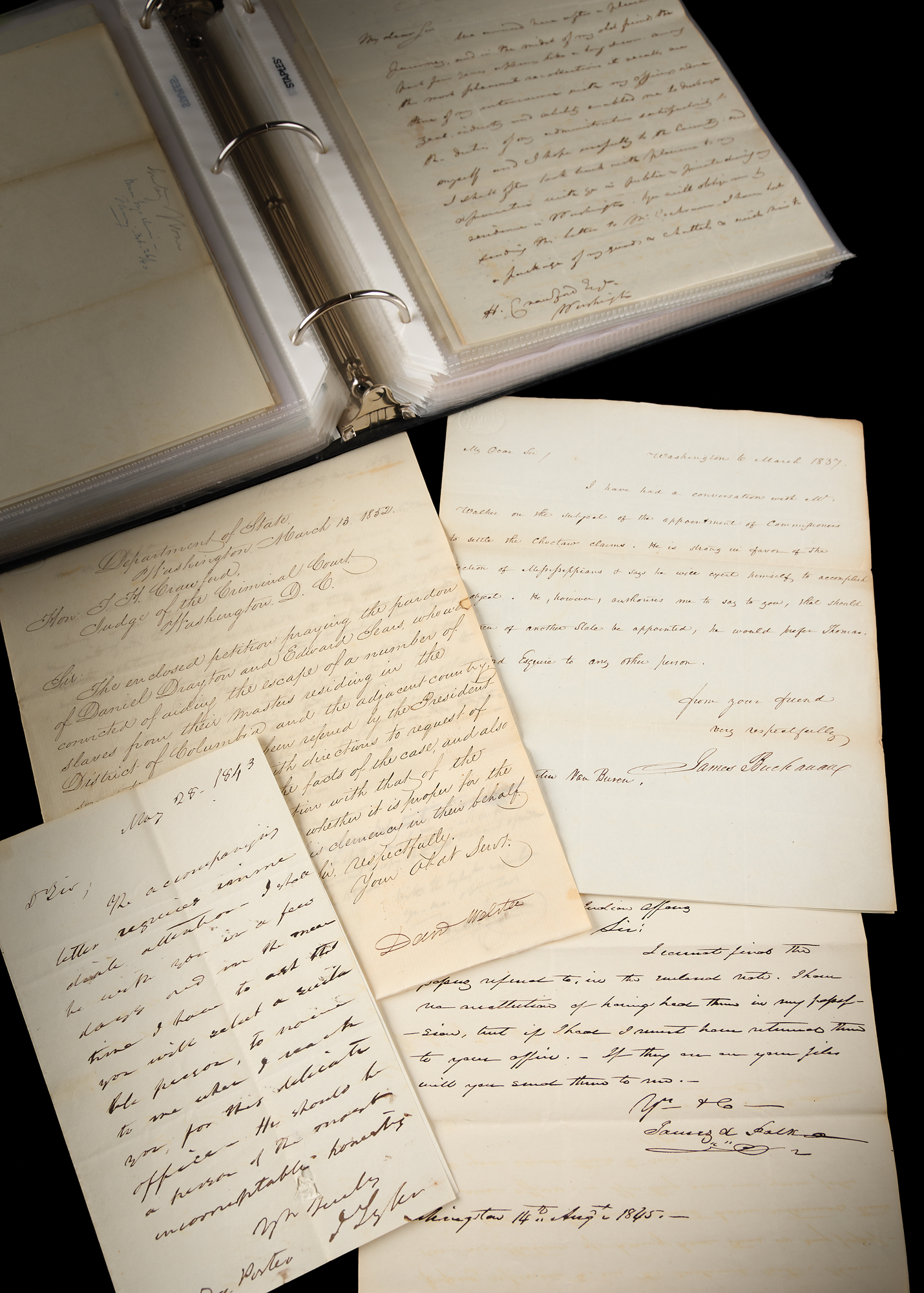
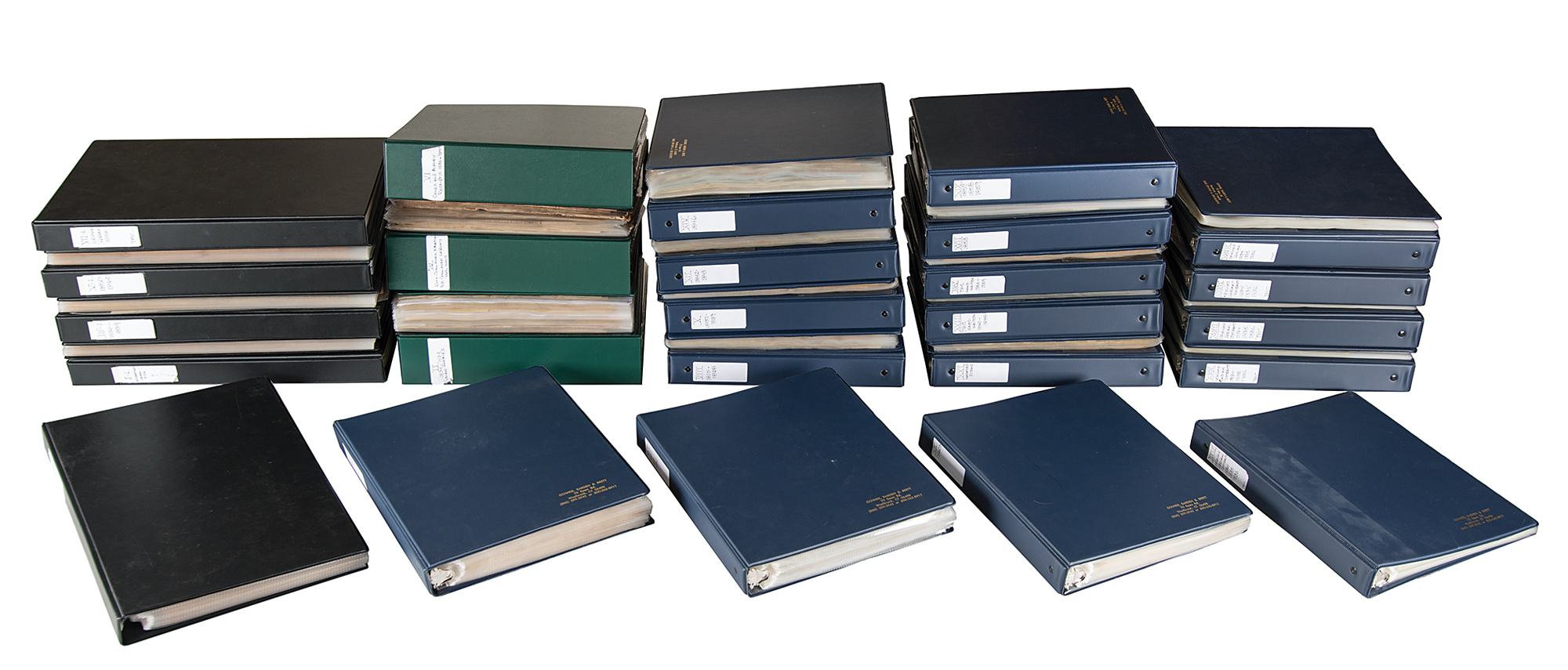
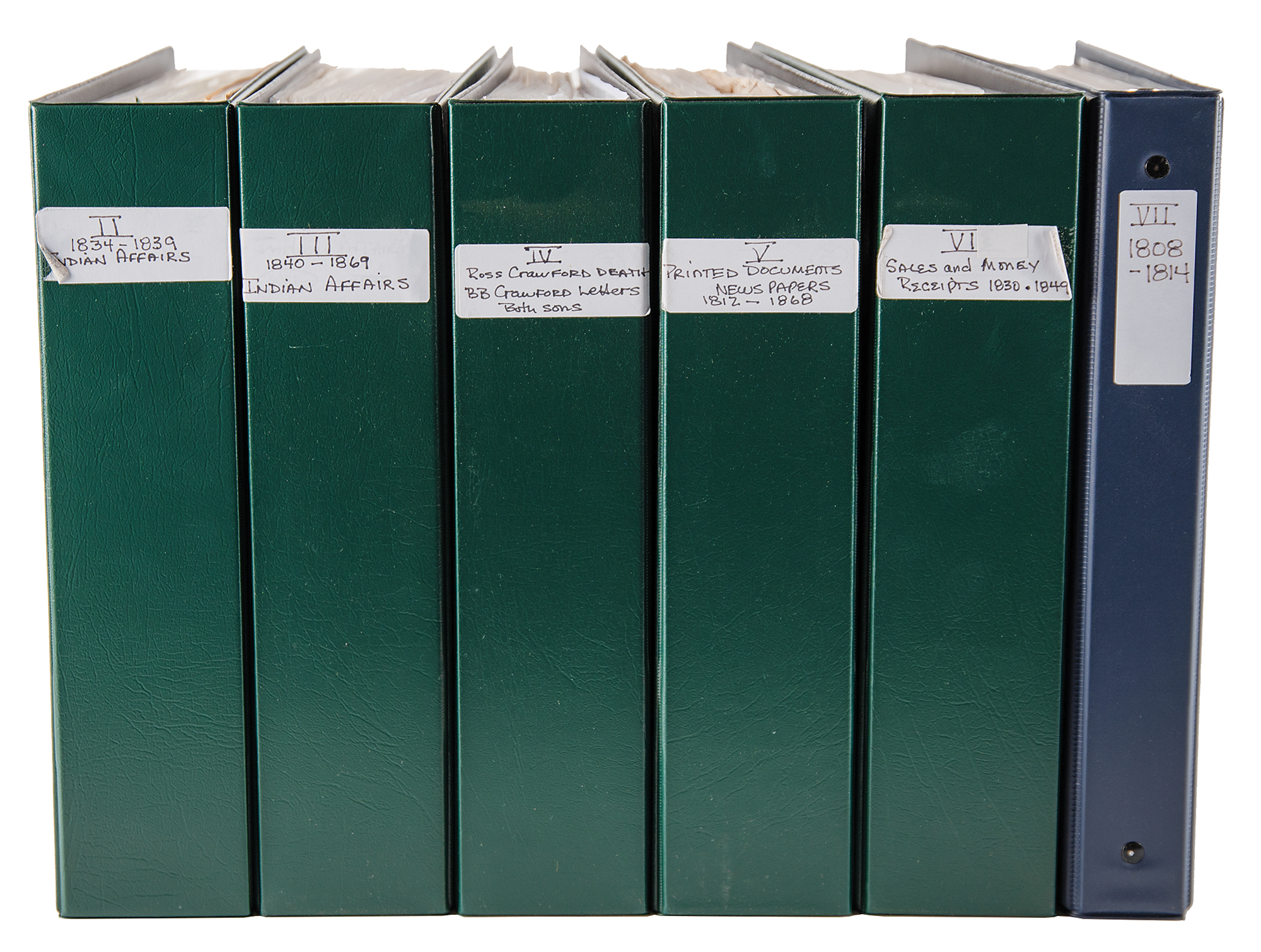
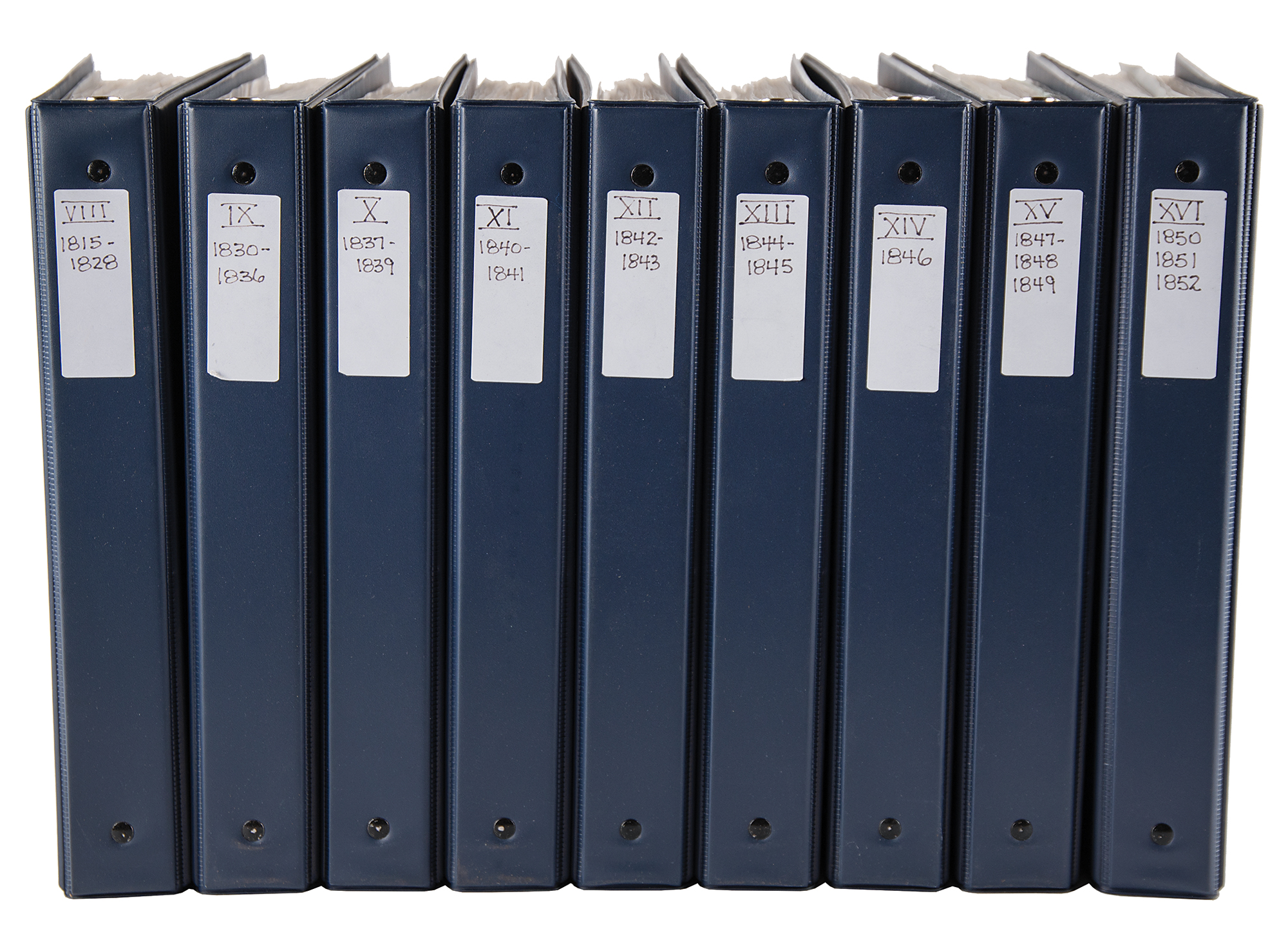
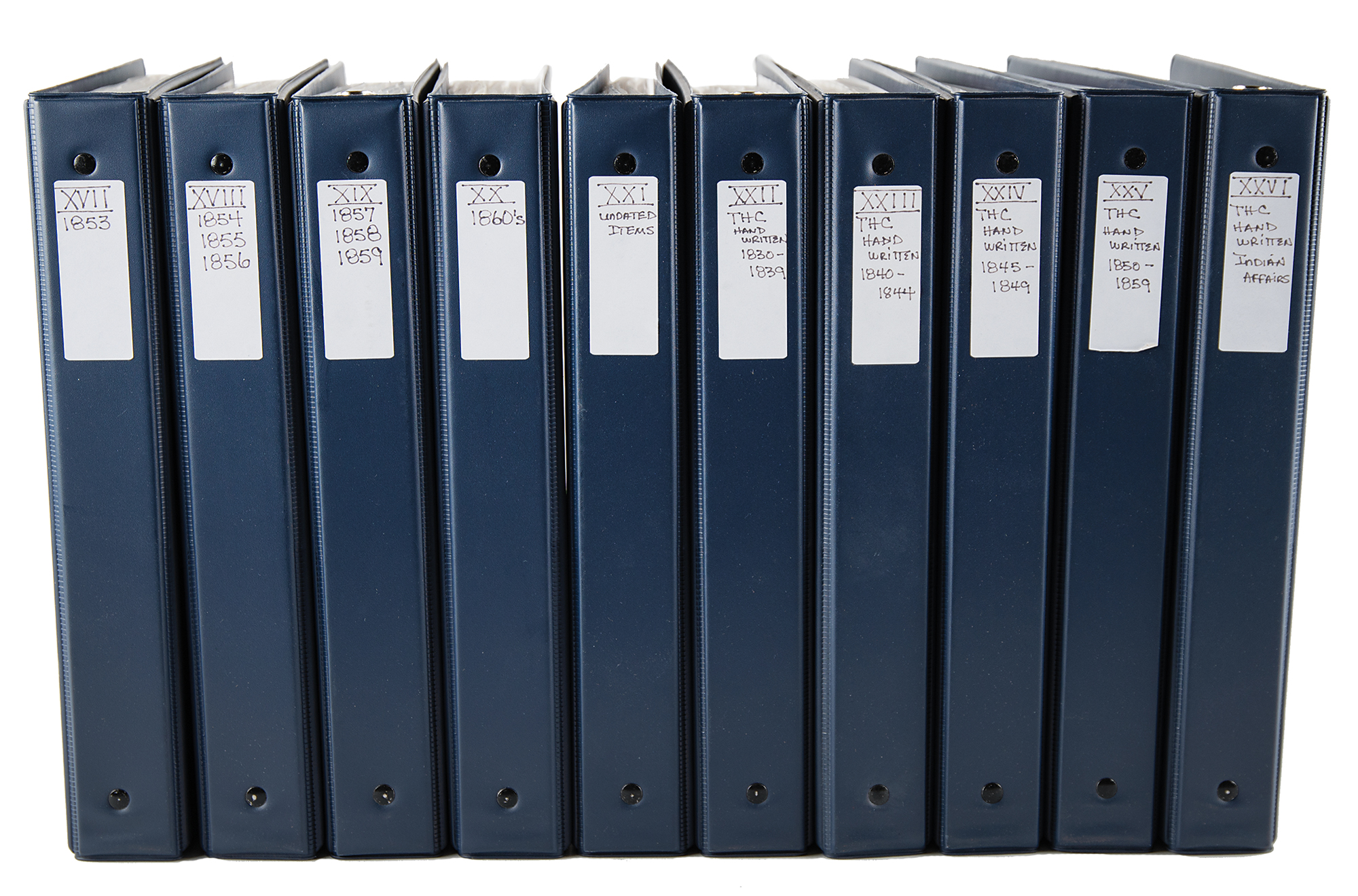
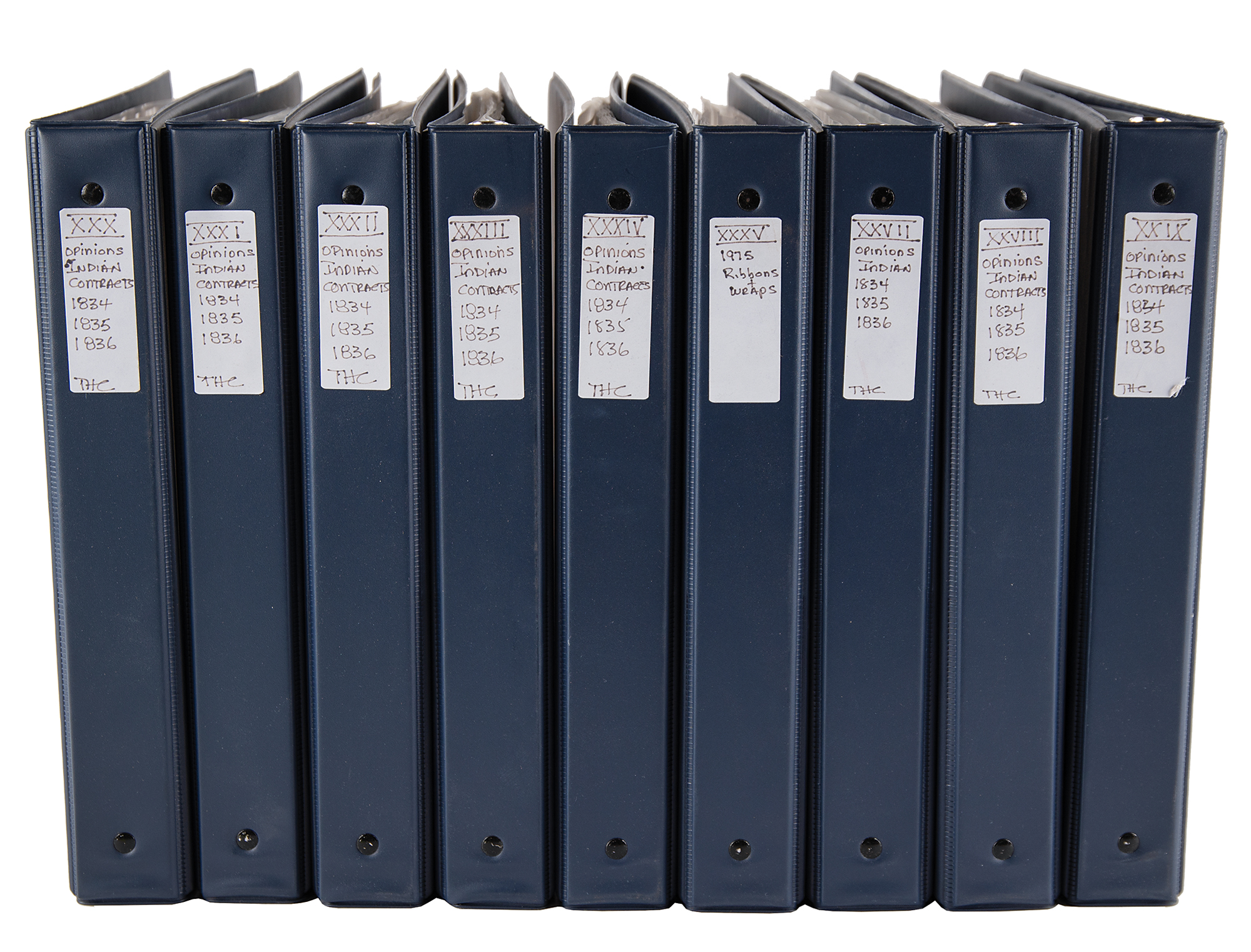
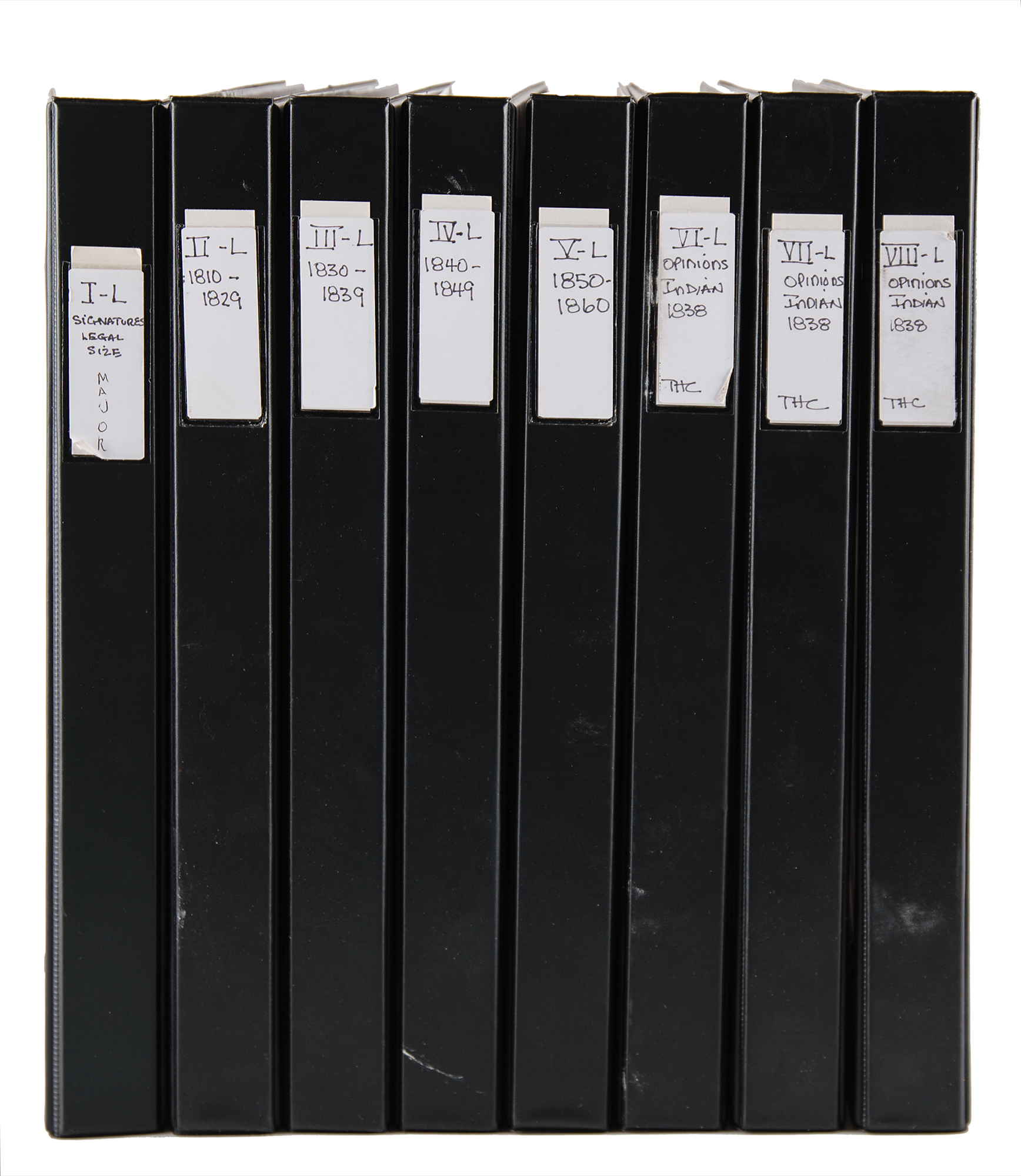
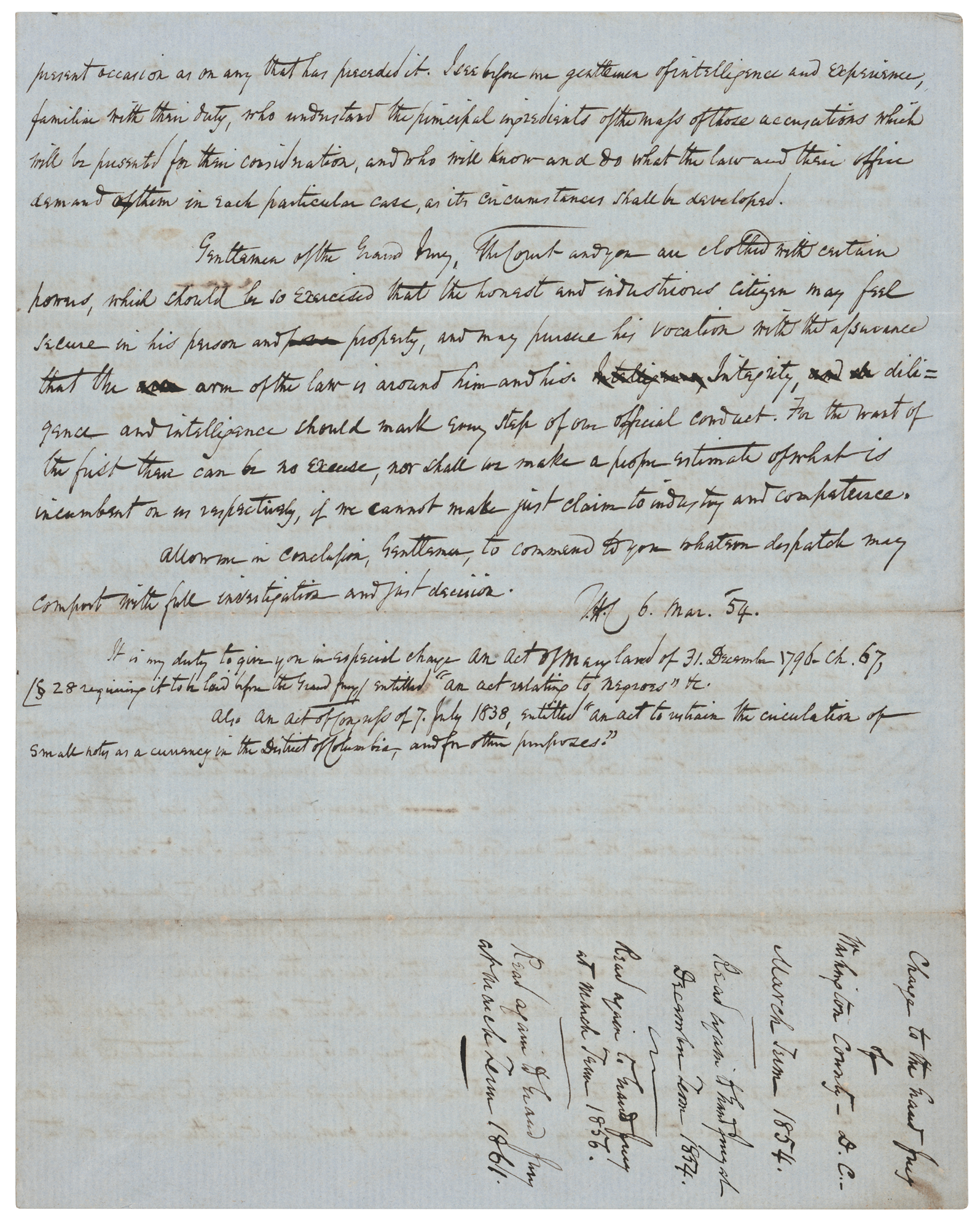
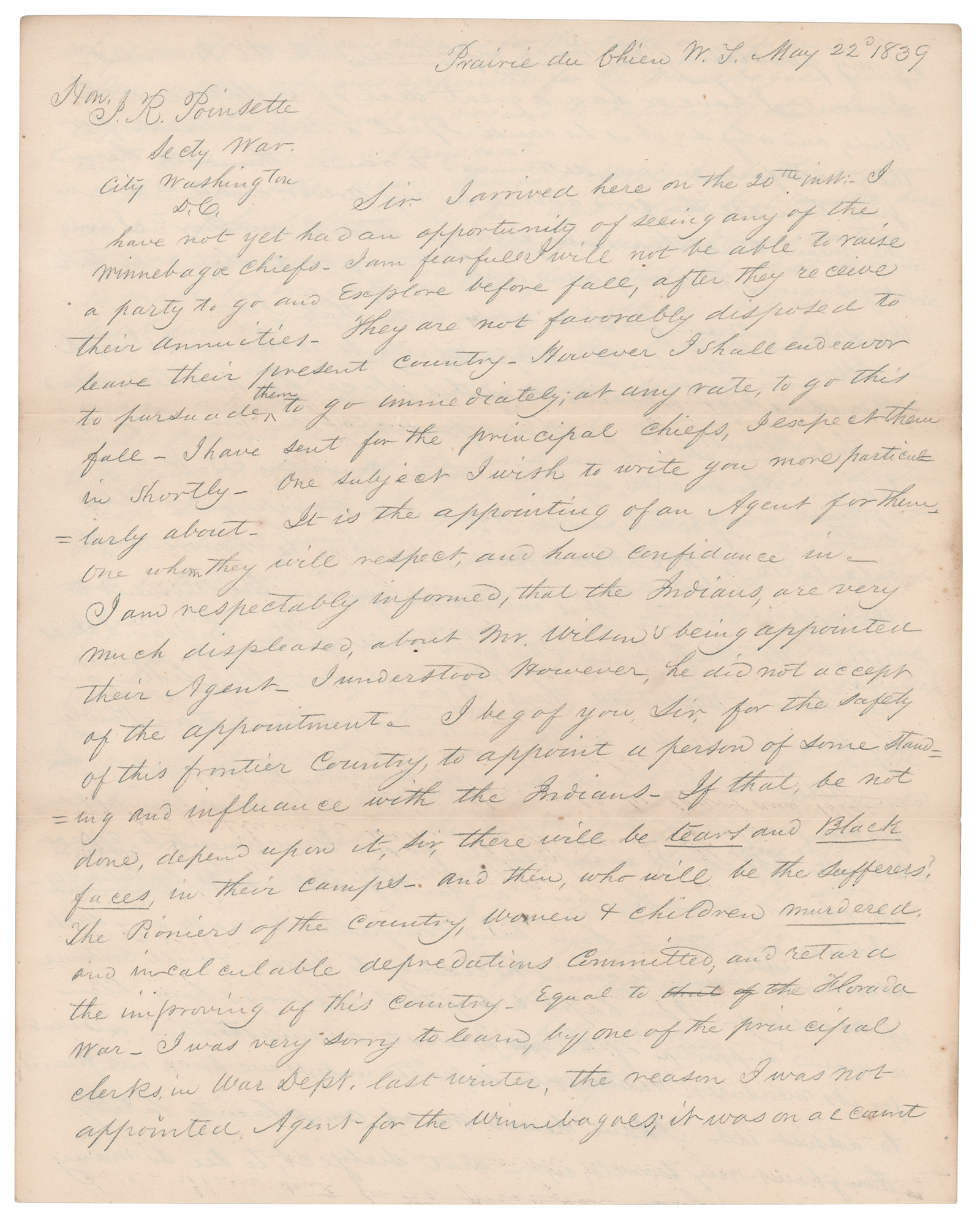
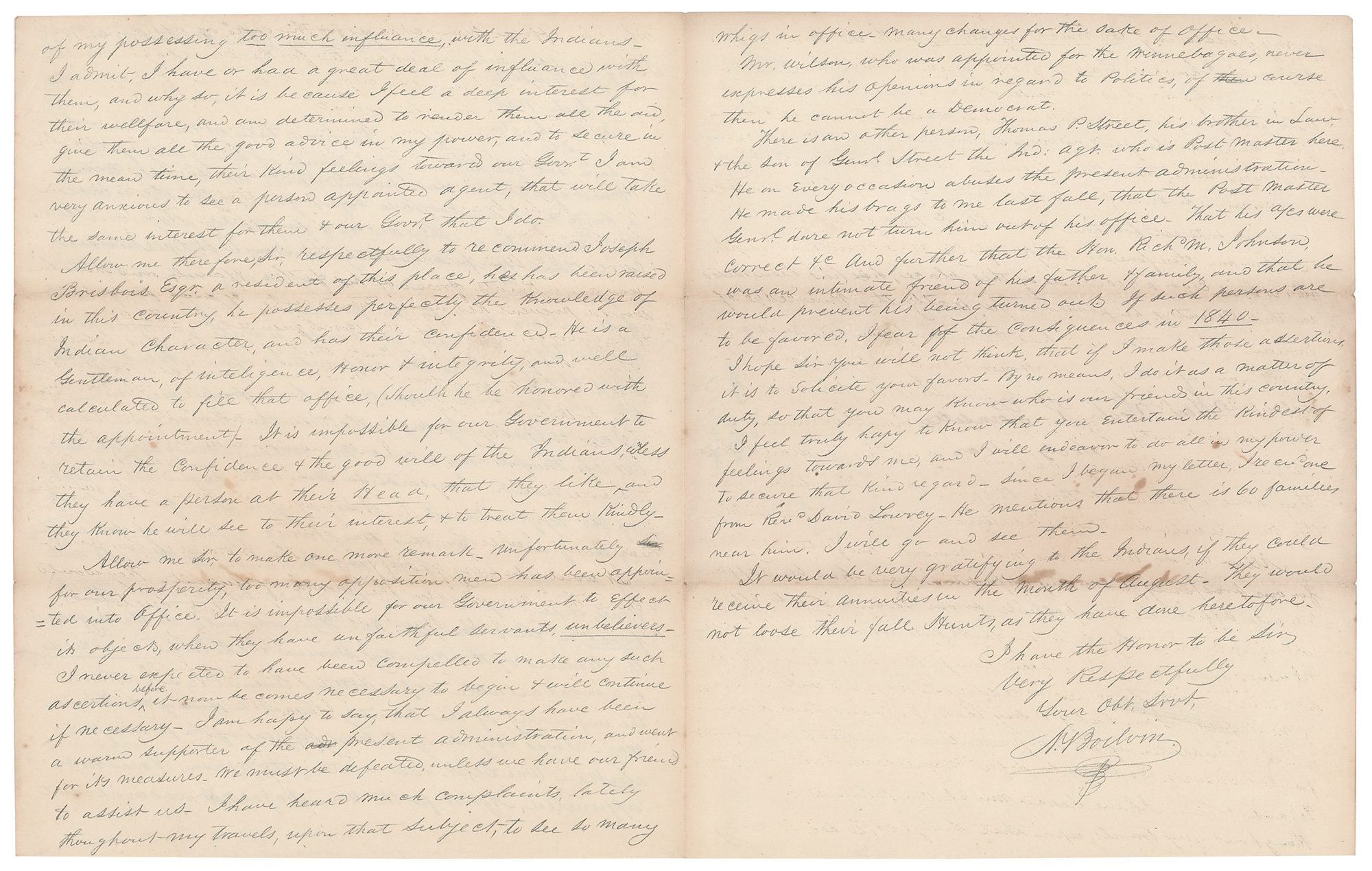
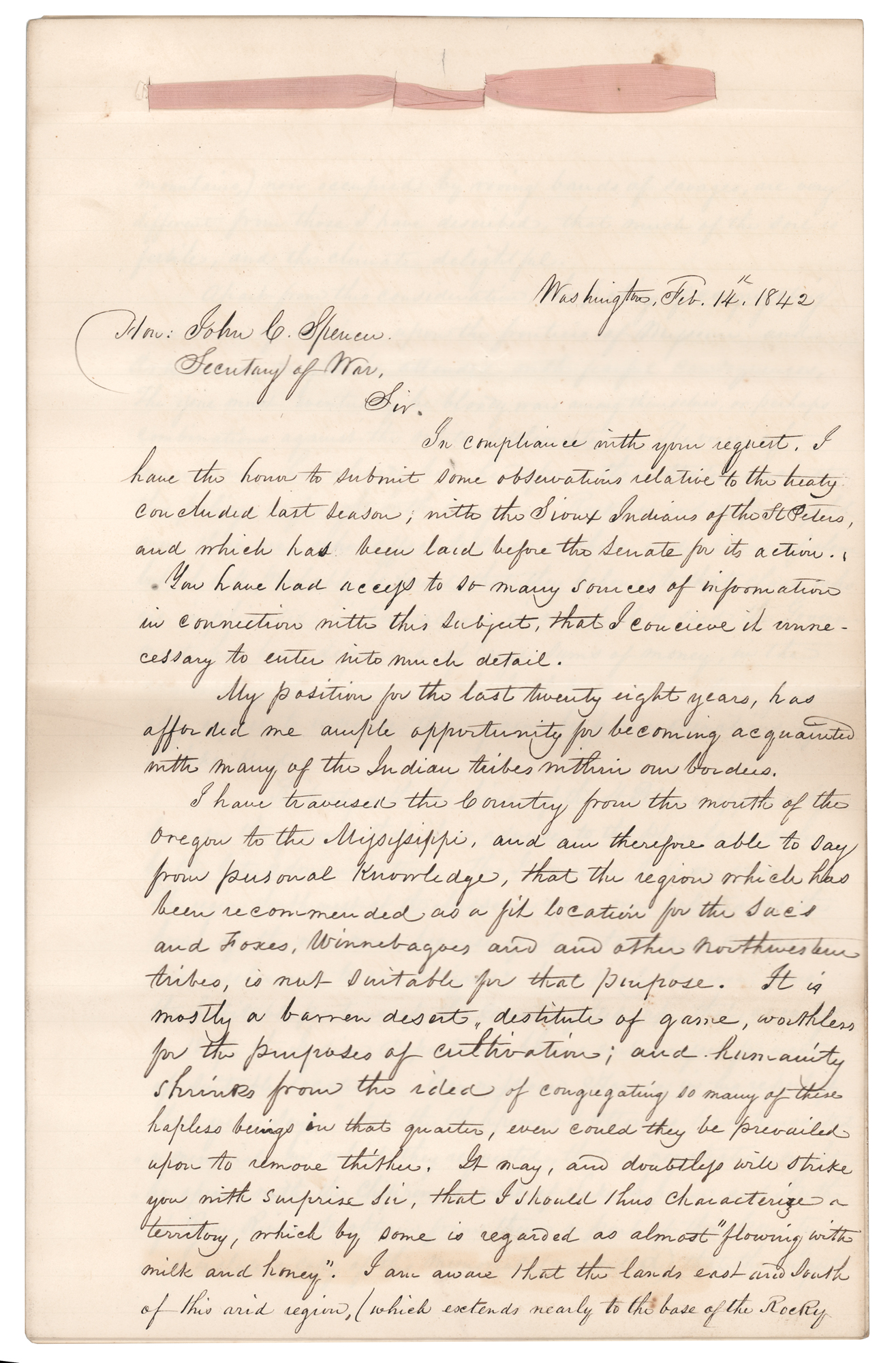
Historic, comprehensive archive of the papers of Judge Thomas Hartley Crawford, being the most important unpublished record of the physical and fiscal treatment of Native American Indians by the United States government in the mid-19th century, and thus chronicling the westward expansion of the United States. The enormous archive comprises nearly 3,000 papers (amounting to more than 12,000 pages), neatly organized into 43 separate binders.
Thomas Hartley Crawford (1786–1863) was born in Chambersburg, Pennsylvania, graduated from Princeton University in 1804, and was admitted to the Pennsylvania bar in 1807. Elected as a Jacksonian Democrat, he served as a U.S. Representative to the Twenty-first and Twenty-second Congresses (1829–1833) and as a member of the Pennsylvania State House of Representatives in 1833 and 1834. Appointed by President Andrew Jackson to investigate alleged frauds in the sale of Creek lands in Alabama, he was subsequently appointed by President Van Buren as U.S. Commissioner of Indian Affairs, serving from October 22, 1838 to October 30, 1845. At the end of his tenure Crawford was appointed federal judge of the criminal court of the District of Columbia, a post he held until his death in January 1863.
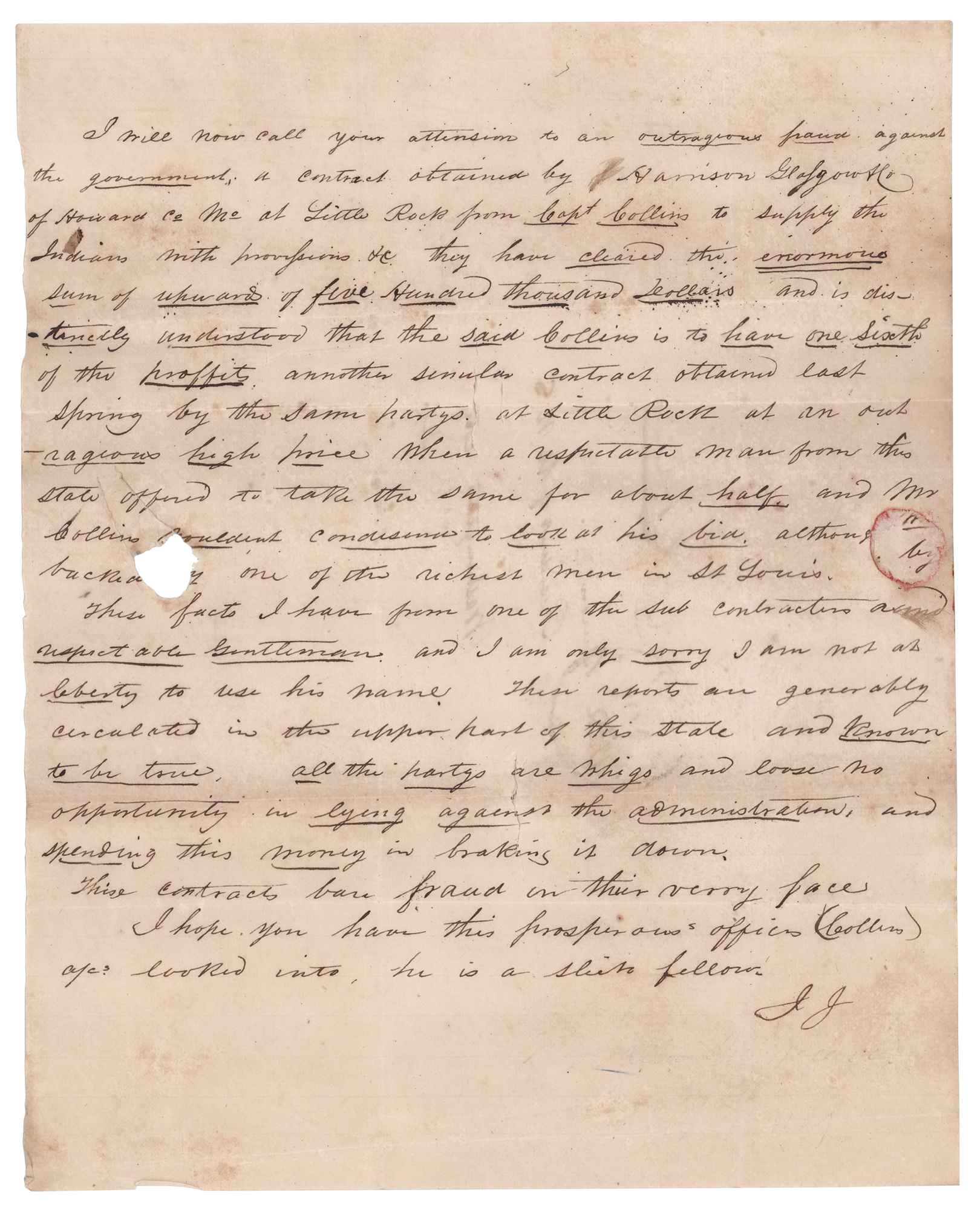
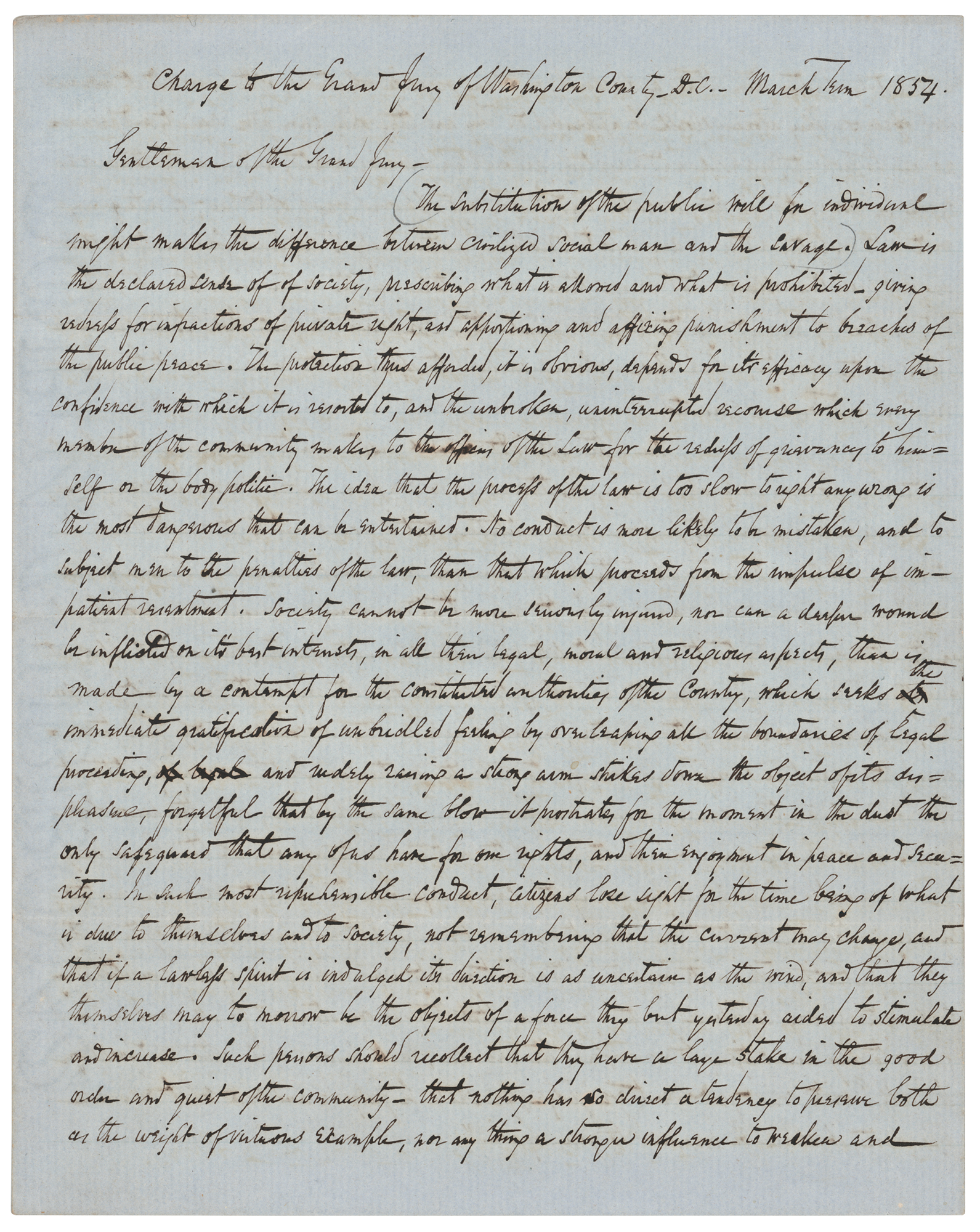
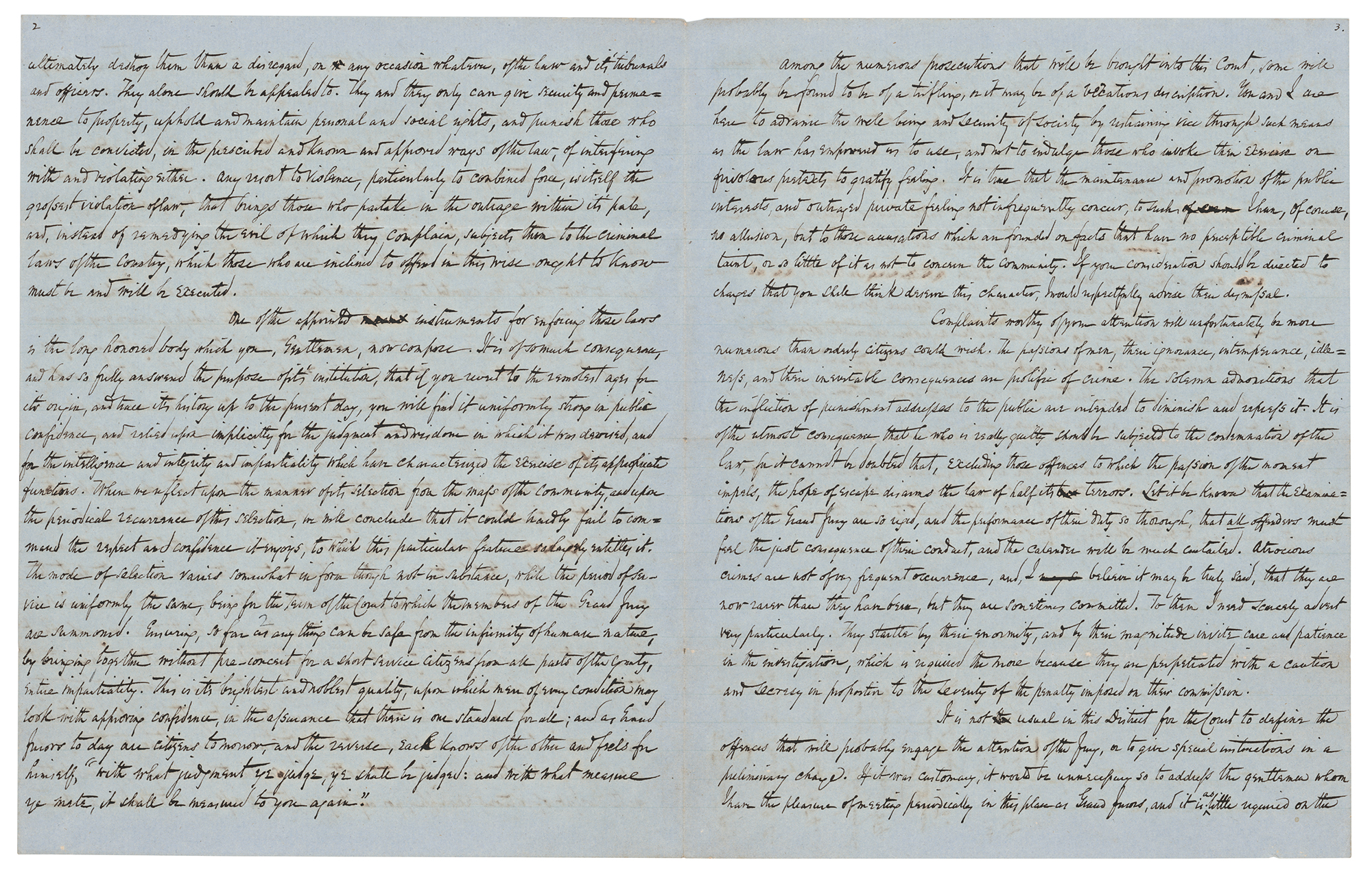
As Federal Commissioner of Indian Affairs, Crawford oversaw the removal of Native Americans from their ancestral lands during the critical period of America's westward expansion. Through nearly half of this unpublished archive we see in writing the problems faced by the government, Indian traders and agents whose agendas were less than altruistic, and settlers anxious to have what they called the "wretched race" removed so they could take over and form new states. The submissions to Crawford by individual agents detailing the costs of feeding, clothing, and trading with the various tribes are particularly revealing. The other half of the archive consists of Crawford's legal opinions, chronicling cases through another critical period of American history, with many of his draft letters and opinions relating to slavery and political problems of the age.
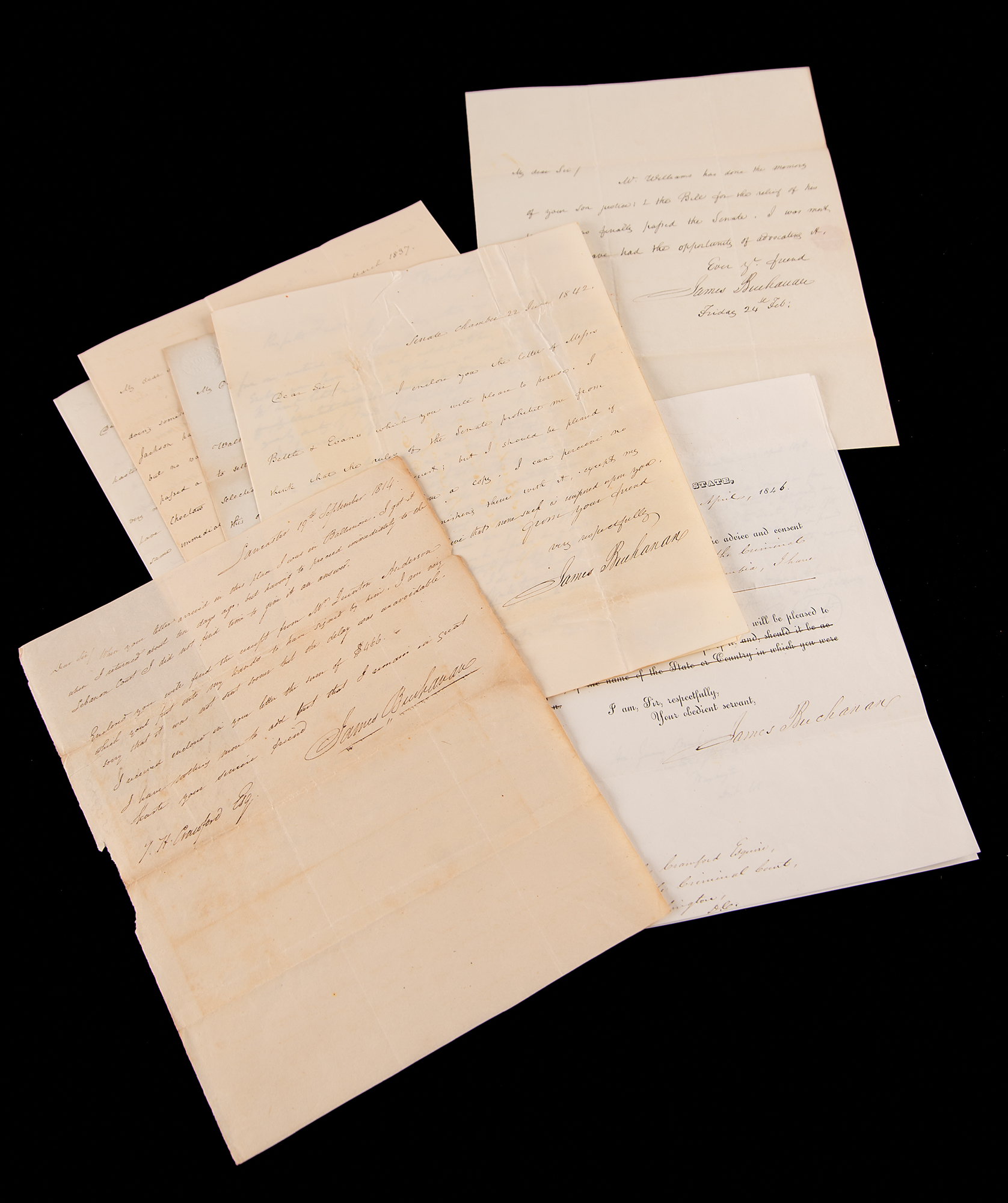
The sweeping depth and breadth of the archive might be broken down into five distinct groups: Indian affairs; handwritten legal opinions; handwritten letters by Crawford (drafts and dockets); legal and personal documents and correspondence; and significant letters signed by famous and significant personages, including James Buchanan, James K. Polk, John Tyler, Francis Scott Key, Daniel Webster, Winfield Scott, Robert Stuart, John Bell, James Duane Doty, Ethan A. Hitchcock, and Joel Roberts Poinsett.
Among the key signers in the archive are:
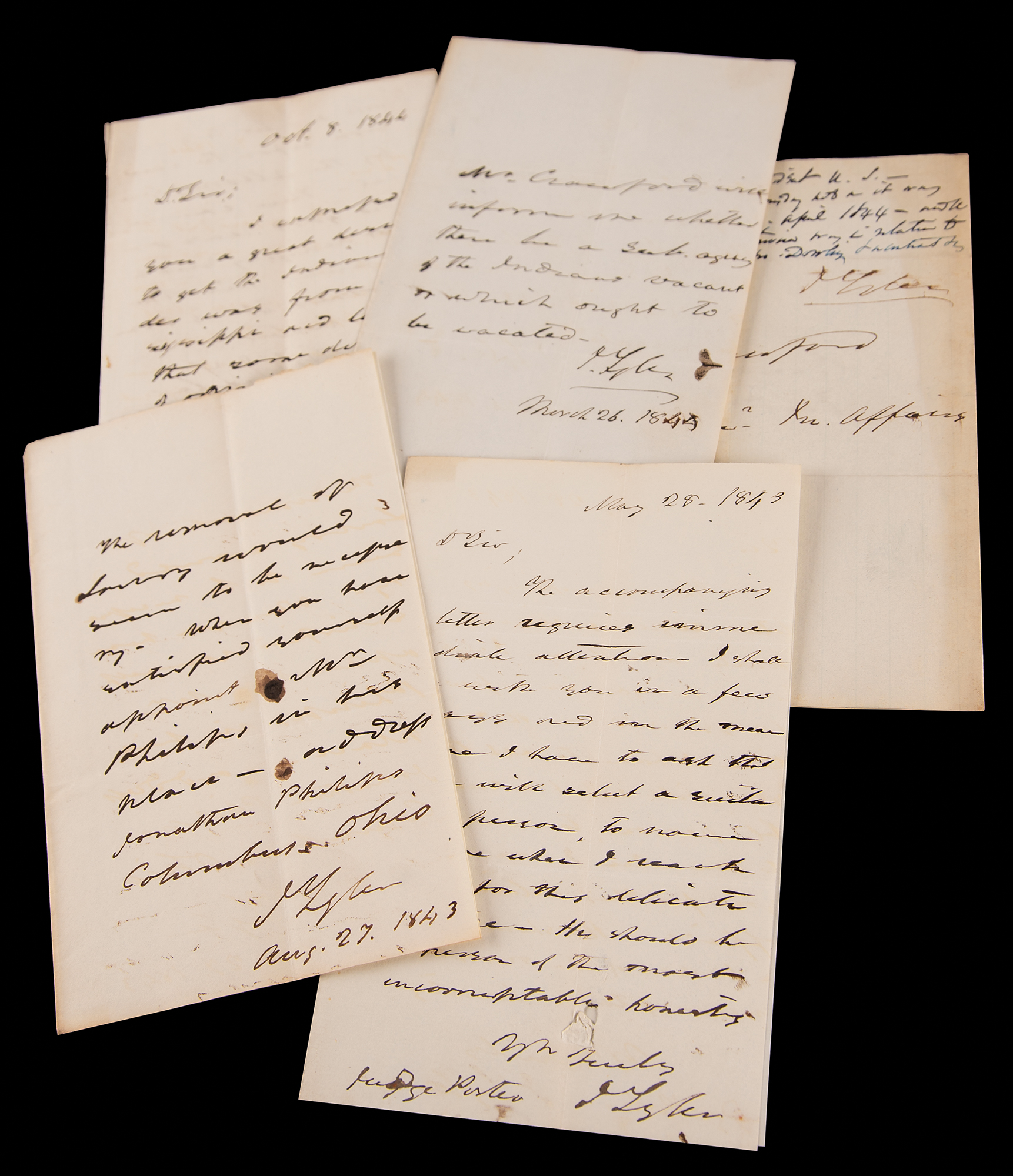
President John Tyler (5 ALSs as president, dated from 1843–1844) - President Tyler writes regarding appointments and direct attention to Indian matters, in one case asking: "Mr Crawford will inform me whether there be a sub agency of the Indians vacant or which ought to be vacated." In another, he writes: "The President desires to see Mr. Crawford the Commissioner of Indian Affairs early this morning." In a contentious letter of October 8, 1844, Tyler writes: "I expressed to you a great desire to get the Indians under way from Mississippi and learn that some difference of opinion of difficulty exists upon some collateral point that detains the contractors. They are said to be presented in writing by Col. Forester with a view to a decision upon the law by the Attorney General. There can be no good reason for denying such reference and the sooner it is over the better."
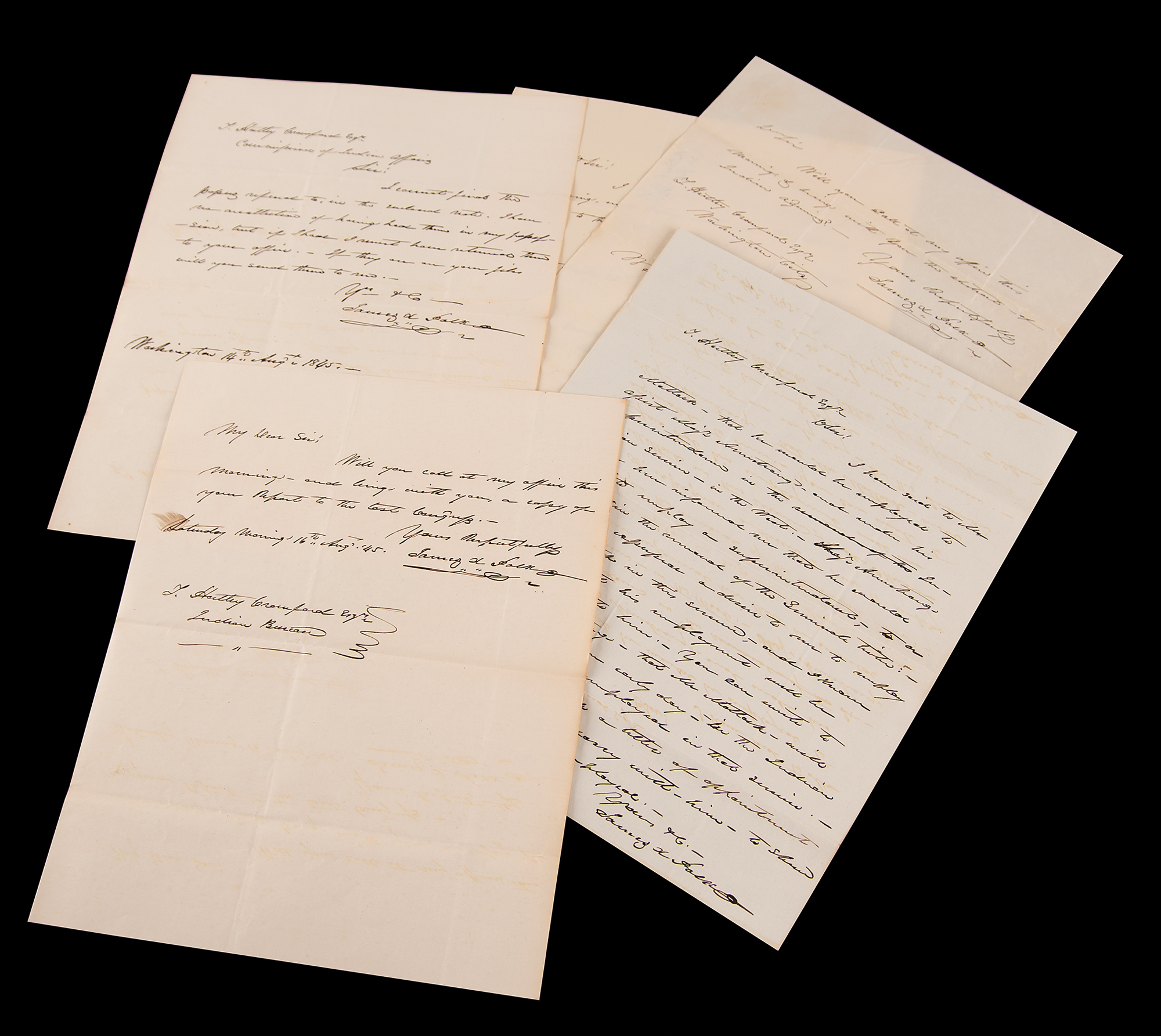
President James K. Polk (5 ALSs and 2 DSs, all as president, dated from 1845–1846) - President Polk writes regarding the employment of a "Mr. Mattack" to assist "Maj'r Armstrong…in the Indian service—in the West" as a "superintendent, to assist, in the removal of the Seminole tribe." Other letters request visits to his office, with a couple of brief references to Indian affairs and a request for a copy of Crawford's report to Congress. In the documents, both of which are countersigned by Secretary of State James Buchanan, President Polk twice appoints Thomas Hartley Crawford as "Judge of the Criminal Court for the District of Columbia" (October 28, 1845 and April 23, 1846).
President James Buchanan (6 ALSs and 1 DS, dated from 1814–1846) - Amongst other topics, Buchanan discusses the crowded field of applicants for the Secretaryship of the Senate in 1836, noting he has received numerous letters on the subject and has returned the same answer to all—that he will not commit himself in favor of any person until his arrival in Washington, adding that as Pennsylvania has already enjoyed the clerkship of both Houses for several years, he does not consider it probable that a citizen of their state could be successful; he also reports that Van Buren's majority in the state is believed to be between four and five thousand, and that they will have a majority of one in the convention. In 1837, he writes regarding the appointment of commissioners to settle the Choctaw claims, noting that Mr. Walker is "strong in favor of the selection of Mississippians," but that Crawford is the strongest candidate from another state. He writes again on the subject the next day, noting that "Congress passed a law establishing a Board of three commissioners to settle the Choctaw claims at a salary of $3000," and reports on Joel Roberts Poinsett's confirmation as Secretary of War. In the document, Secretary of State Buchanan transmits Crawford's commission as "Judge of the Criminal Court for the District of Columbia." Two of the letters are free franked by Buchanan on the integral leaf.
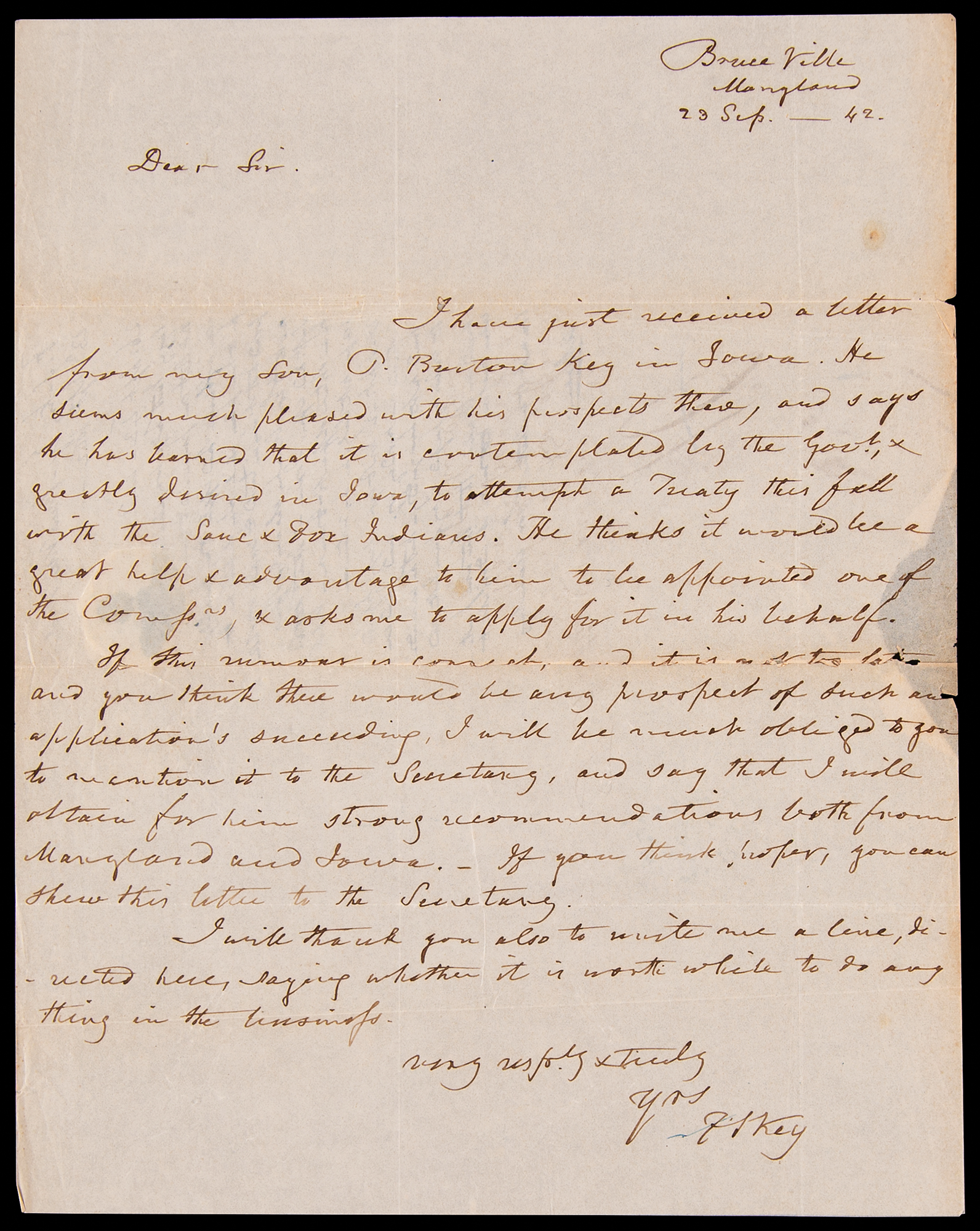
Francis Scott Key, author of 'The Star-Spangled Banner' (1 ALS, dated 1842) - Key writes to Crawford about his son, Philip Barton Key, who is in Iowa "and says he has learned that it is contemplated by the Gov't. & greatly desired in Iowa, to attempt a Treaty this fall with the Sauc & Fox Indians. He thinks it would be a great help & advantage to him to be appointed one of the Commiss'rs & asks me to apply for it in his behalf."
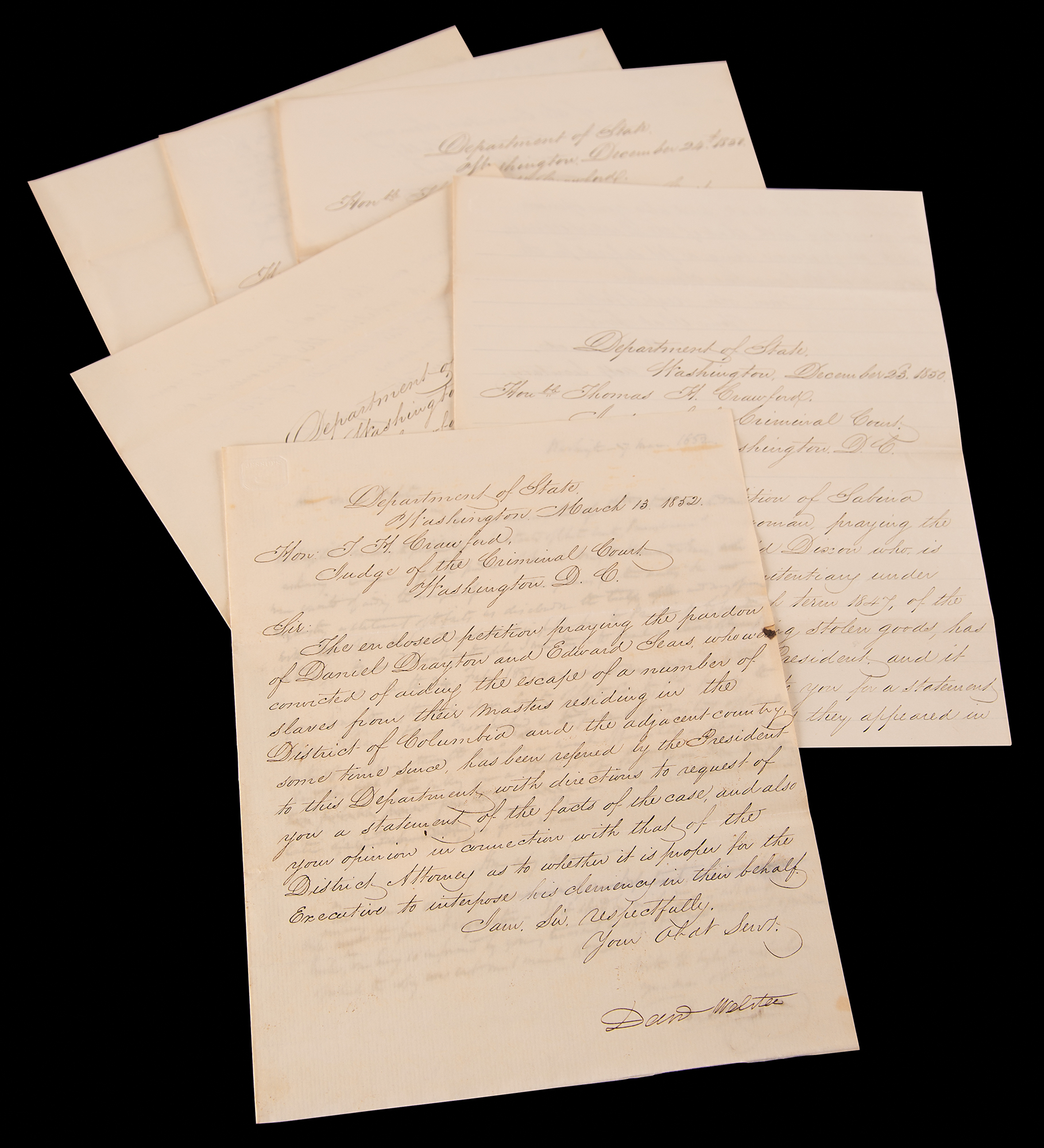
Secretary of State Daniel Webster (4 LSs, dated from 1851–1852) - Webster writes concerning petitions for various pardons, including two letters concerning Daniel Drayton and Edward Sears, central figures in the 1848 Pearl incident, the largest attempted slave escape in U.S. history. One letter transmits a "petition of a committee of the Anti-Slavery Society of Chester County, Pa., praying the release of Drayton and Sears, 'now confined in the prison of the District of Columbia, for the offence of having attempted to remove a number of persons held as slaves, from said District,' is respectfully referred to you for a statement of the facts of the case as they appeared in evidence in their trial,' and also, your opinion in connection with that of the District Attorney as to whether the prisoners are fit subjects for the exercise of the Executive Clemency." Crawford drafts his replies on the integral leaves of each letter on Drayton and Sears.
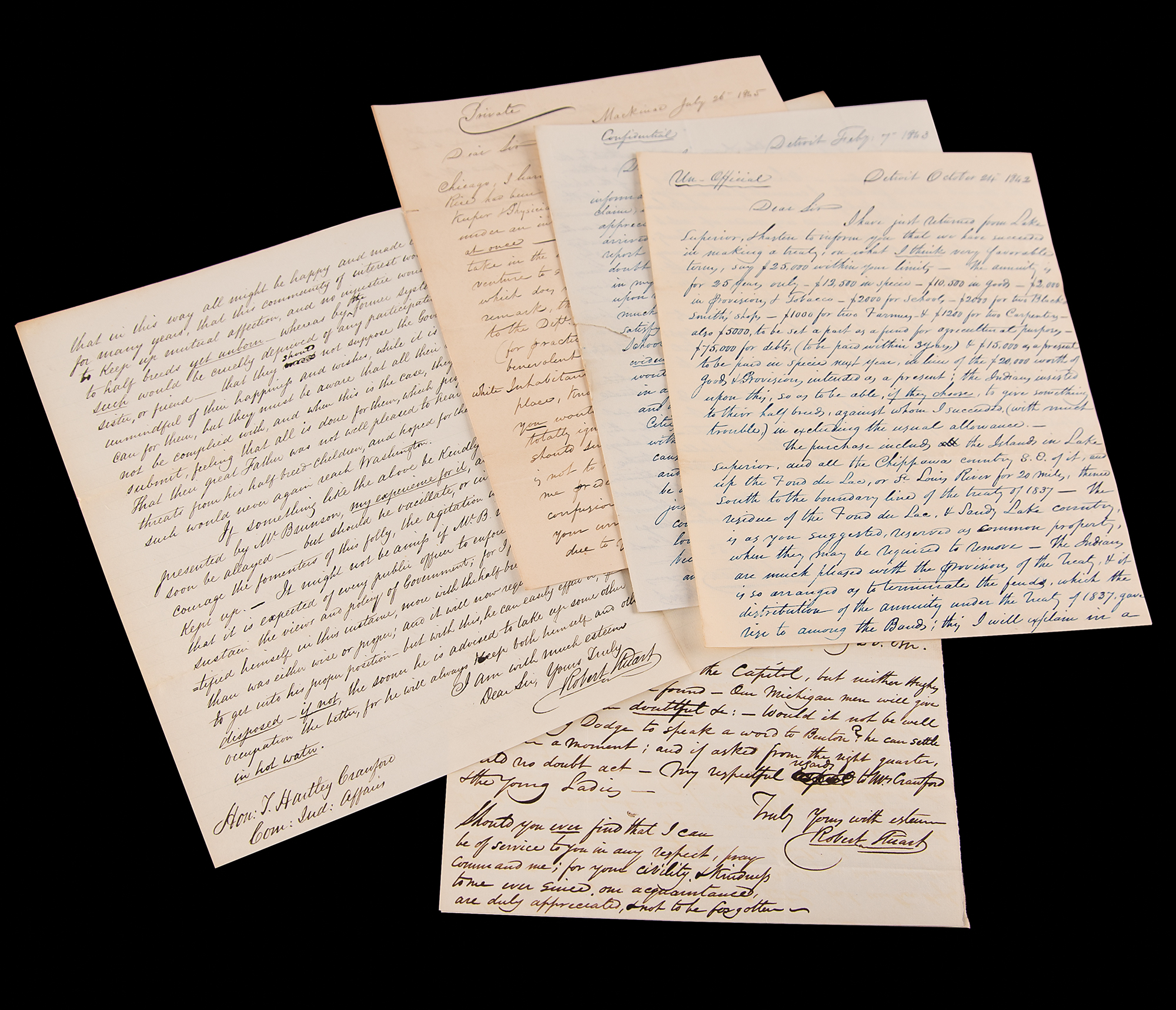
Robert Stuart, explorer and fur trader affiliated with John Jacob Astor (5 ALSs and 1 LS, dated from 1842–1845) - Stuart's letters carry significant content concerning Indian relations and treaty negotiations, including one on negotiating a significant 1842 treaty, in part: "I have just returned from Lake Superior, & hasten to inform you that we have succeeded in making a treaty, on what I think very favorable terms, say $25,000 within your limits—the annuity is for 25 years only—$12,500 in specie—$10,500 in goods—$2,000 in provisions & tobaco…The purchase included the Islands in Lake Superior, and all the Chippawa country S.E. of it, and up the Fond du Lac, or St. Louis River for 20 miles, thence south to the boundary line of the treaty of 1837…The Indians are much pleased with the provisions of the Treaty & it is so arranged as to terminate the feuds, which the distribution of the annuity under the Treaty of 1837, gave rise to among the Bands." In an 1845 letter from Mackinac, he informs Crawford of the resignation of the "Dormitory Keeper & Physician to the Indians," observing: "Were it not for the deep interest I take in the welfare of these hapless Indians, I should not venture to say a word…upon a subject which does not immediately concern me, & I will only remark, that Dr. Ries' services will be a serious loss to the Dept. & Indians."
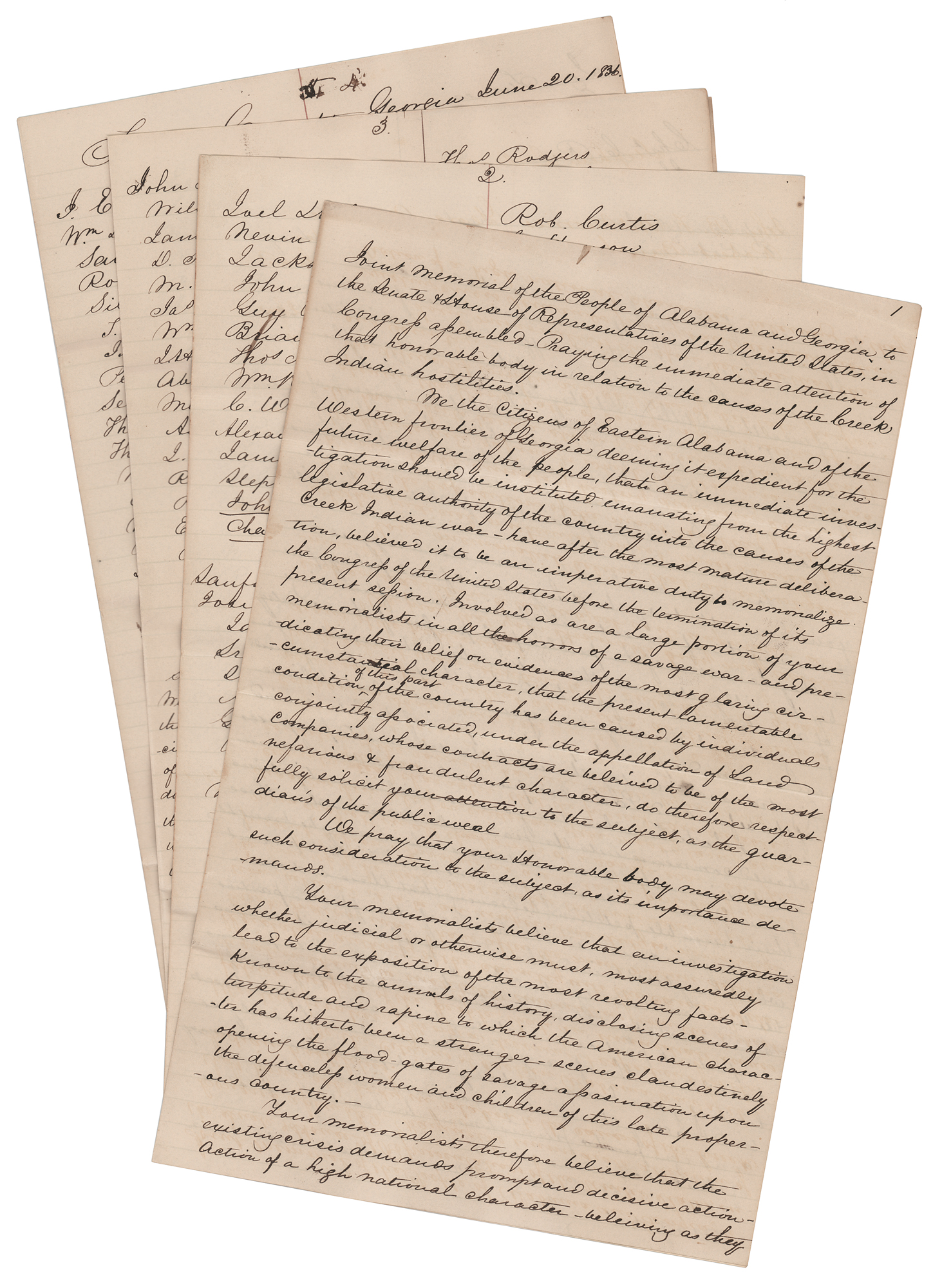
Some other highlights are: a contemporary manuscript copy of a memorial submitted by the "People of Alabama and Georgia," requesting a federal investigation into "the causes of the Creek Indian War"; a lengthy manuscript "Itinerary of a route from Fort Randall, Nebraska Territory, in Lake Preston, Minn. to the…Whetstone River below 2nd fork"; a court martial document signed by Judge Advocate General Joseph Holt, who would famously prosecute the Lincoln assassination conspirators; and substantial correspondence from cabinet secretaries, numerous generals and officers, regional commissioners of Indian Affairs, territorial governors, senators, representatives, judges, lawyers, Indian agents, and many other notable men of this historic time period.
In overall very good to fine condition.
Interested parties are encouraged to view the collection in person at our offices or call us with specific inquiries, as this collection is sold as is and no returns will be accepted.
The Western Americana auction of Jochen Zeitz.

