The 30 Minute Rule begins May 21 at 7:00 PM EDT. An Initial Bid Must Be Placed By May 21 at 6:00 PM EDT To Participate After 6:00 PM EDT
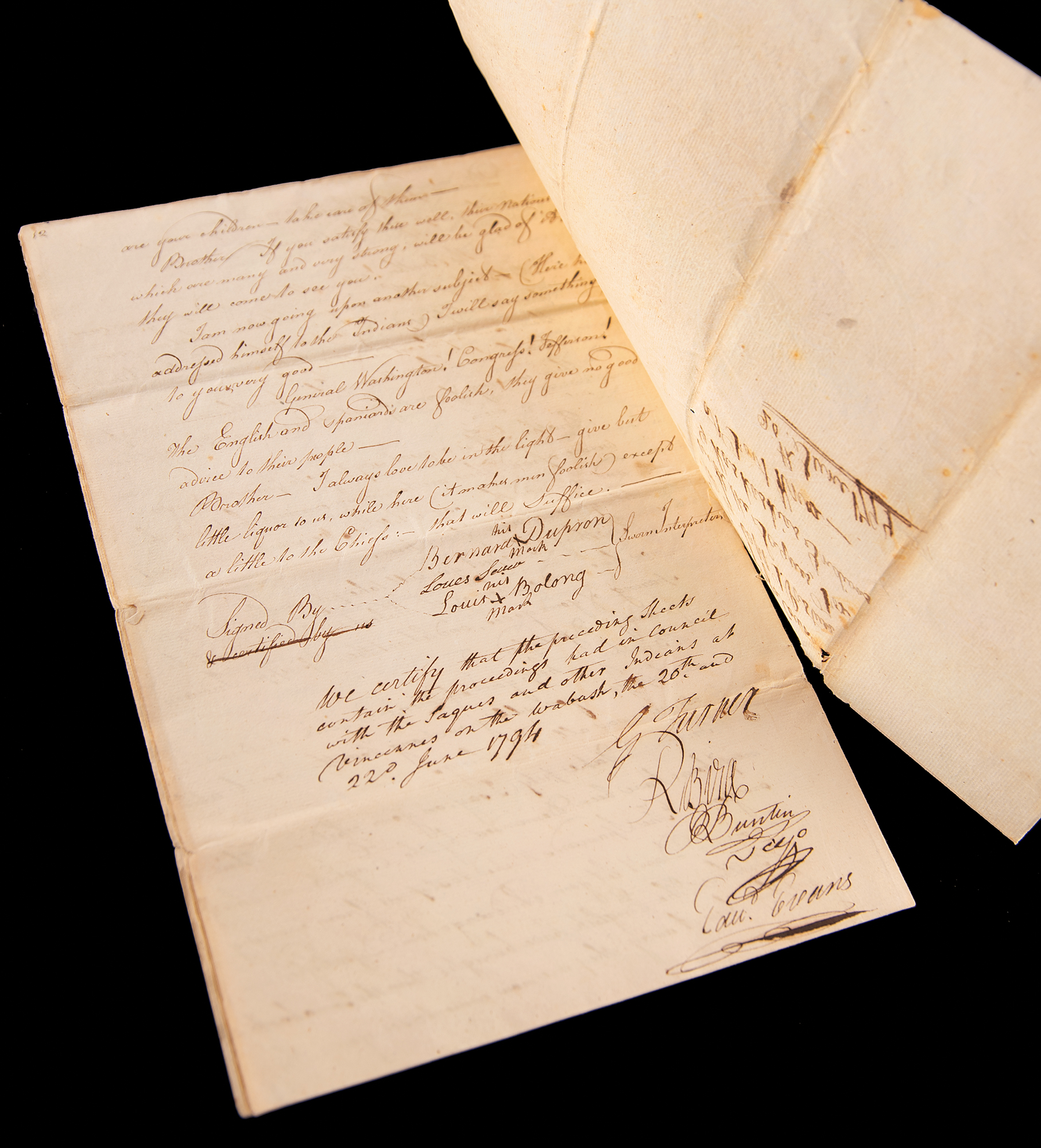
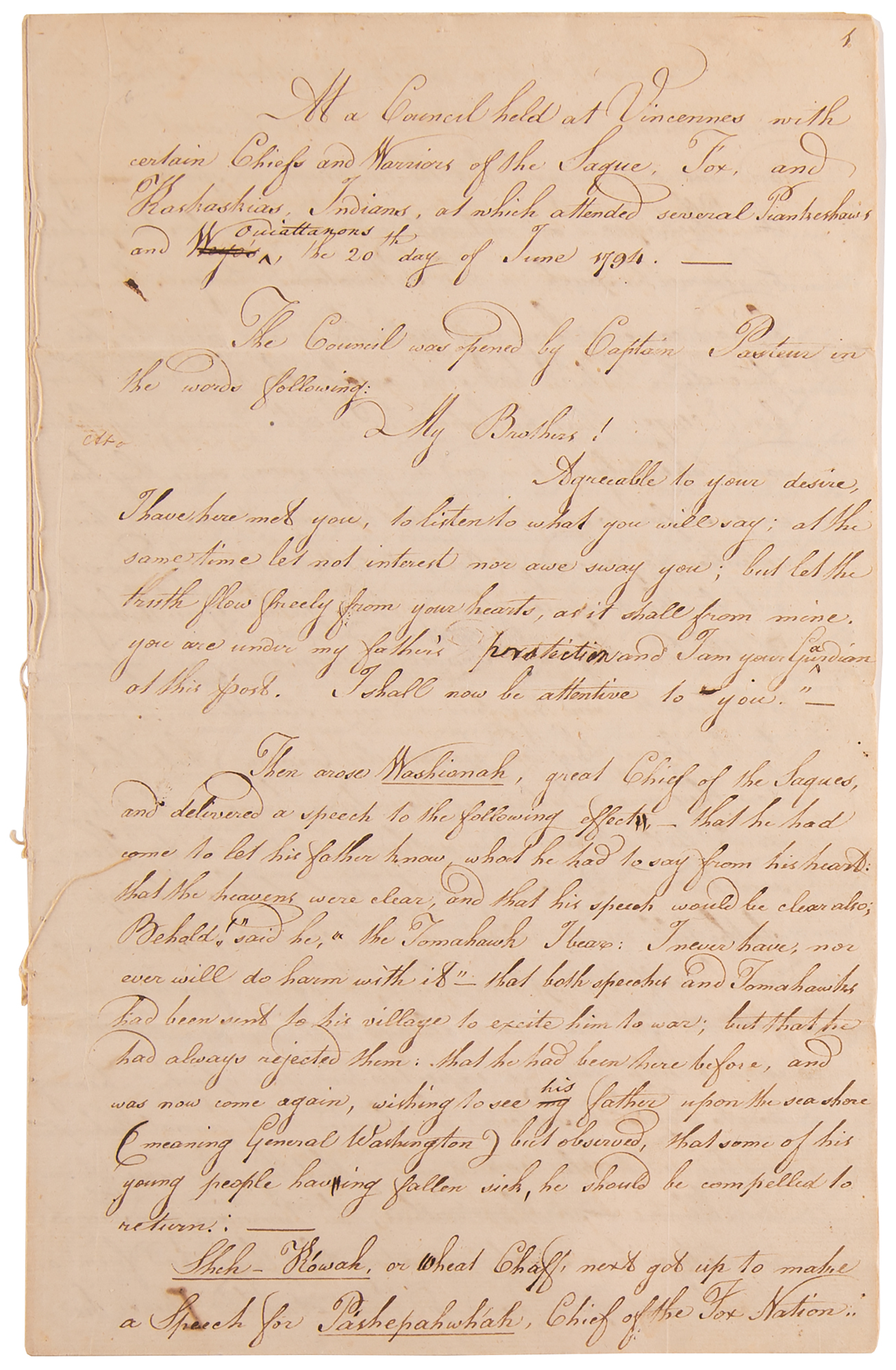
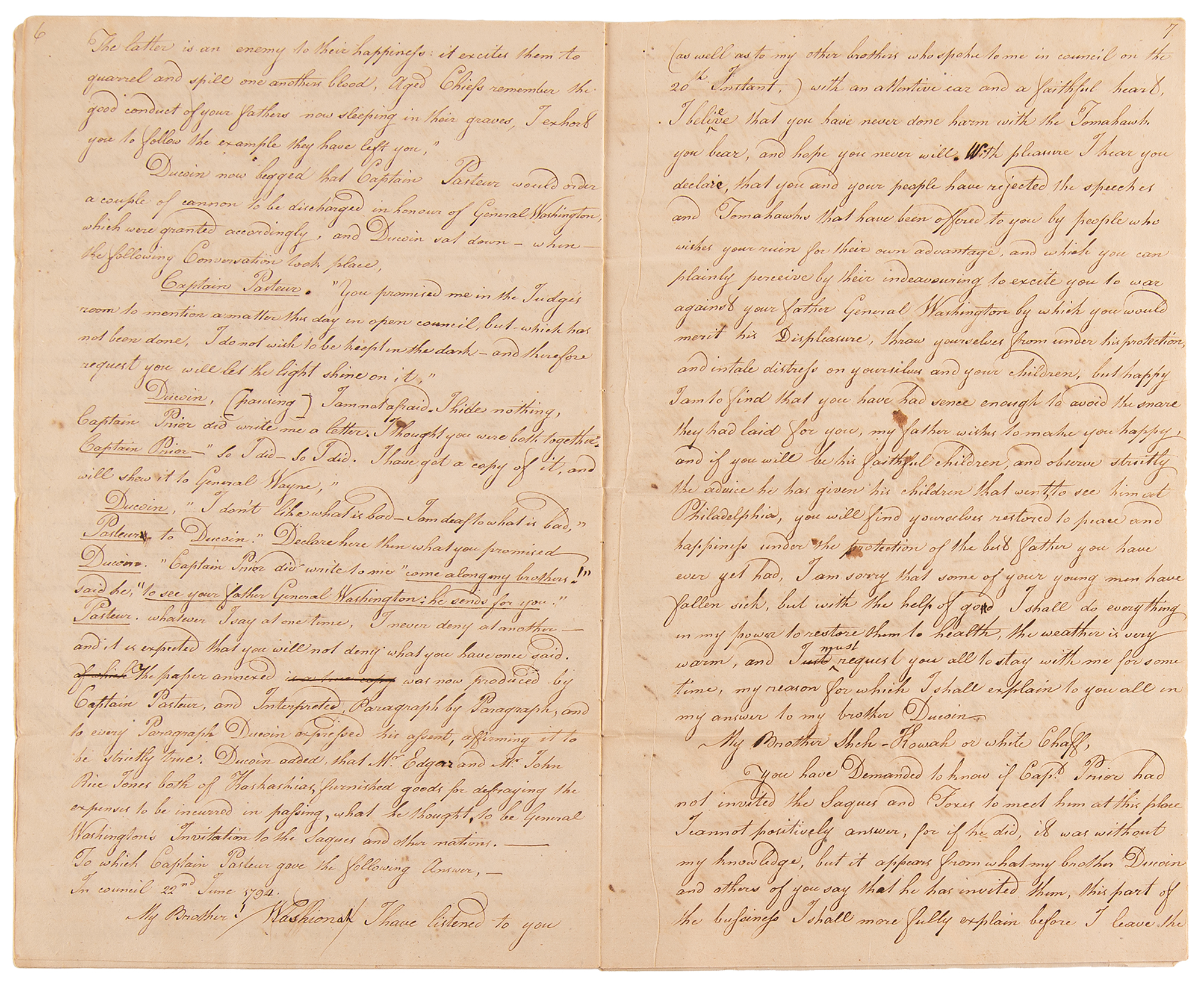
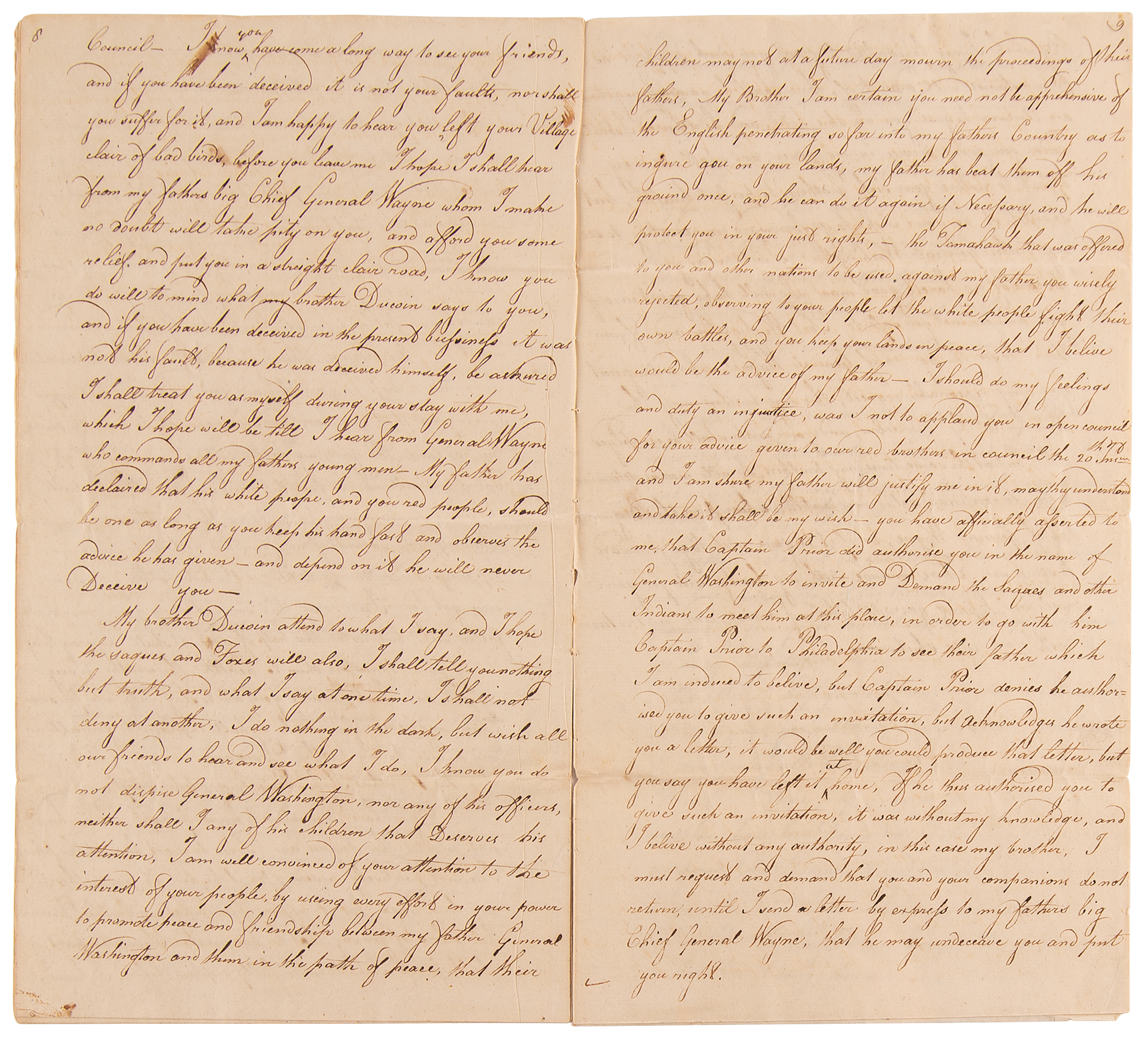
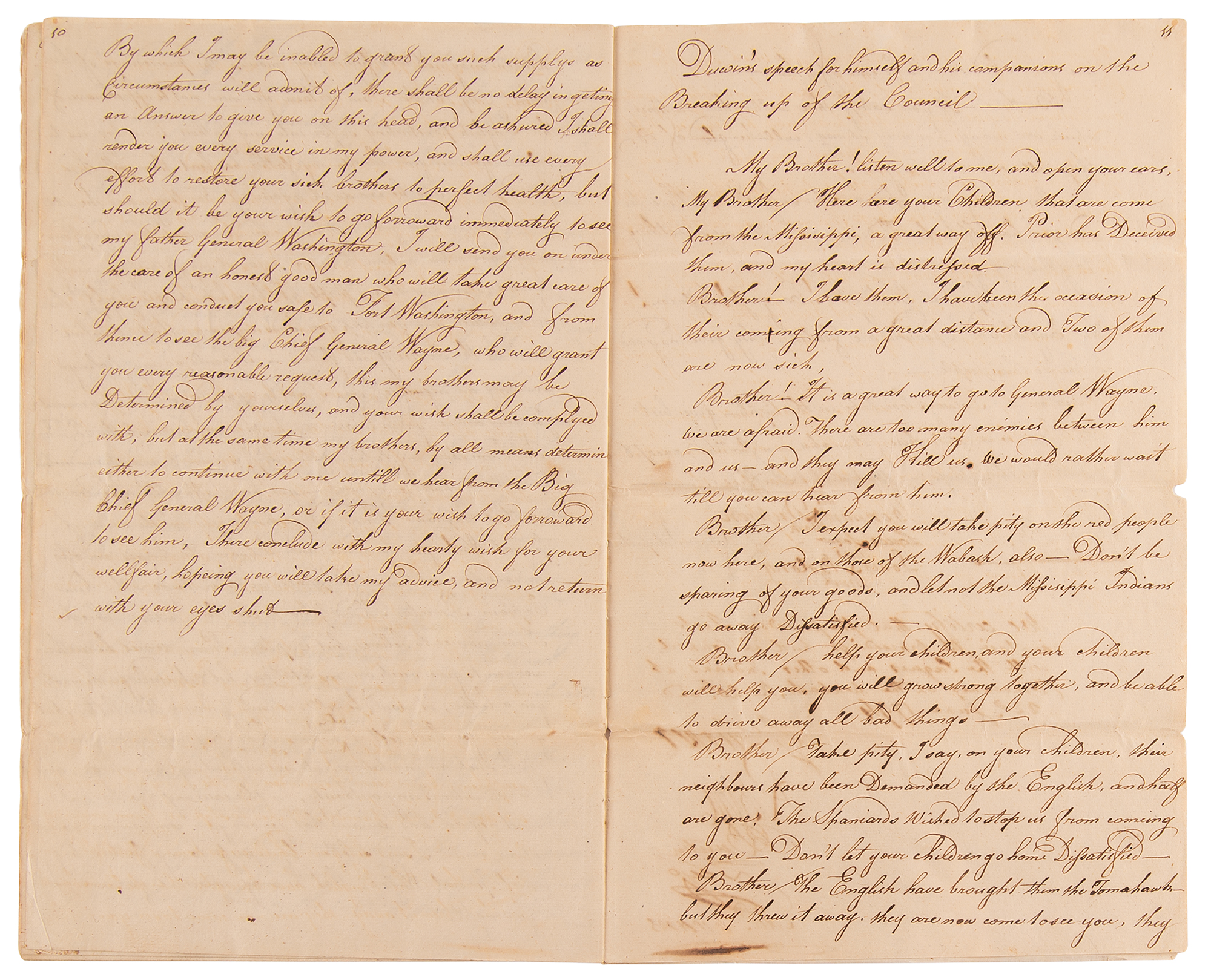
Manuscript DS, twelve pages on adjoining string-bound sheets, 7.5 x 12, June 20, 1794. Significant manuscript record of a "Council held at Vincennes with certain Chiefs and Warriors of the Saque, Fox, and Kaskaskias, Indians, at which attended several Piankeshaws and Ouiattanons," with the United States represented by Captains Pasteur and Prior. In this record of the Council, chiefs from the three tribes express their affection for Gen. George Washington, the United States, and France, and request more provisions from the white settlers, especially guns.
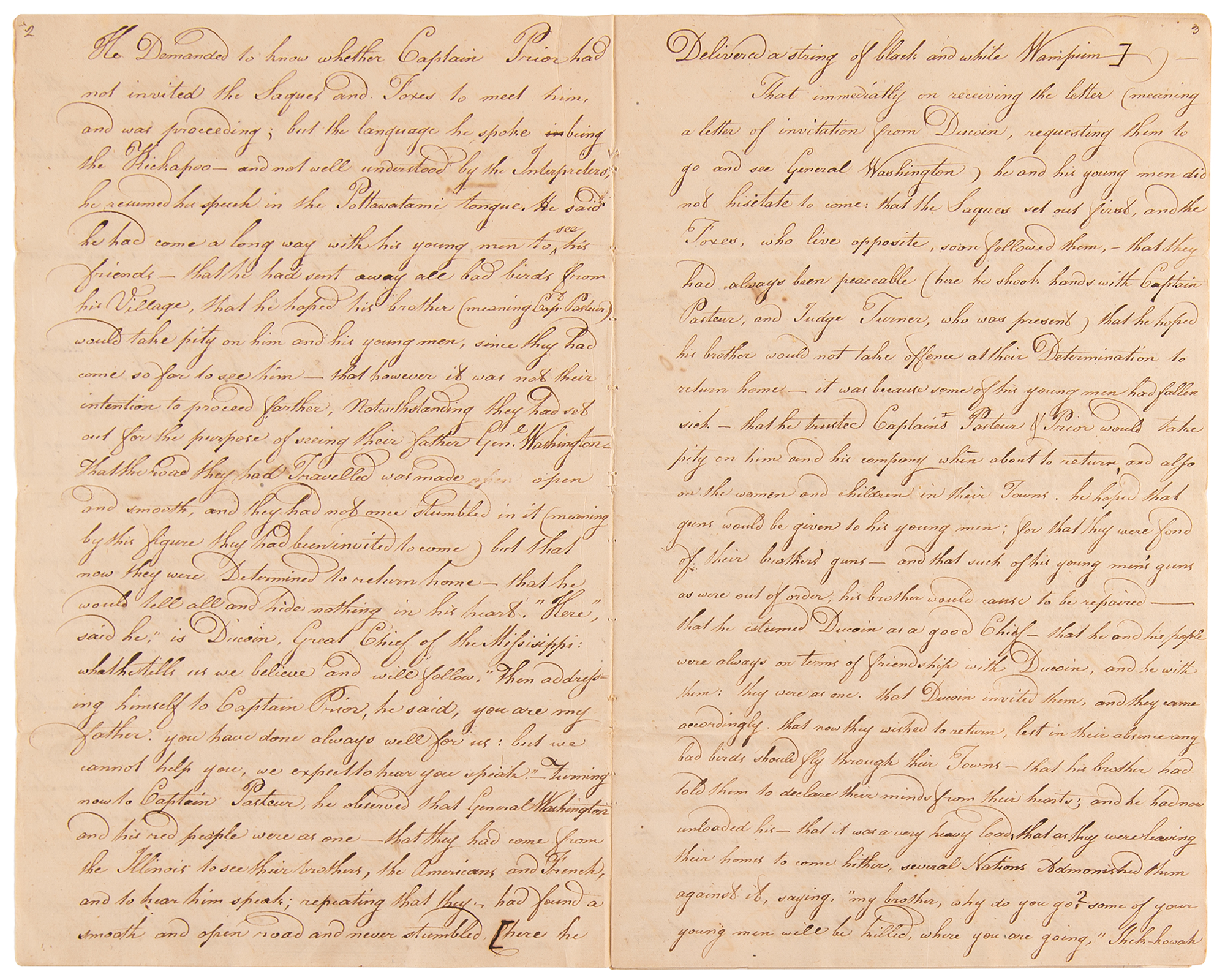
In part: "Sheh-Kowak, of Wheat Chaff…Got up to make a Speech for Pashepahwhah, Chief of the Fox Nation….the language he spoke being the Kickapoo—and not well understood by the Interpreters, he resumed his speech in the Pottawatami tongue. He said he had come a long way with his young men to see his friends—that he had sent away all bad birds from his Village, that he hoped his brother (meaning Capt. Pasteur) would take pity on him and his young men, since they had come so far to see him…Turning to Captain Pasteur, he observed that General Washington and his red people were as one—that they had come from Illinois to see their brothers, the Americans and French, and to hear him speak…he delivered a string of black and white Wampum…That immediately on receiving the letter (meaning a letter of invitation from Ducoin, requesting them to go and see General Washington) he and his young men did not hesitate to come…he hoped that guns would be given to his young men; for that they were fond of their brothers’ guns—and that such of his young men's guns as were out of order, his brother would cause to be repaired…that as they were leaving their homes to come hither, several Nations admonished them against it, saying, 'My brother, why do you go? Some of your young men will be killed, where you are going.' Sheh-Kowak concluded by saying they were dry for a Dram; he then delivered another string of black and white Wampum."
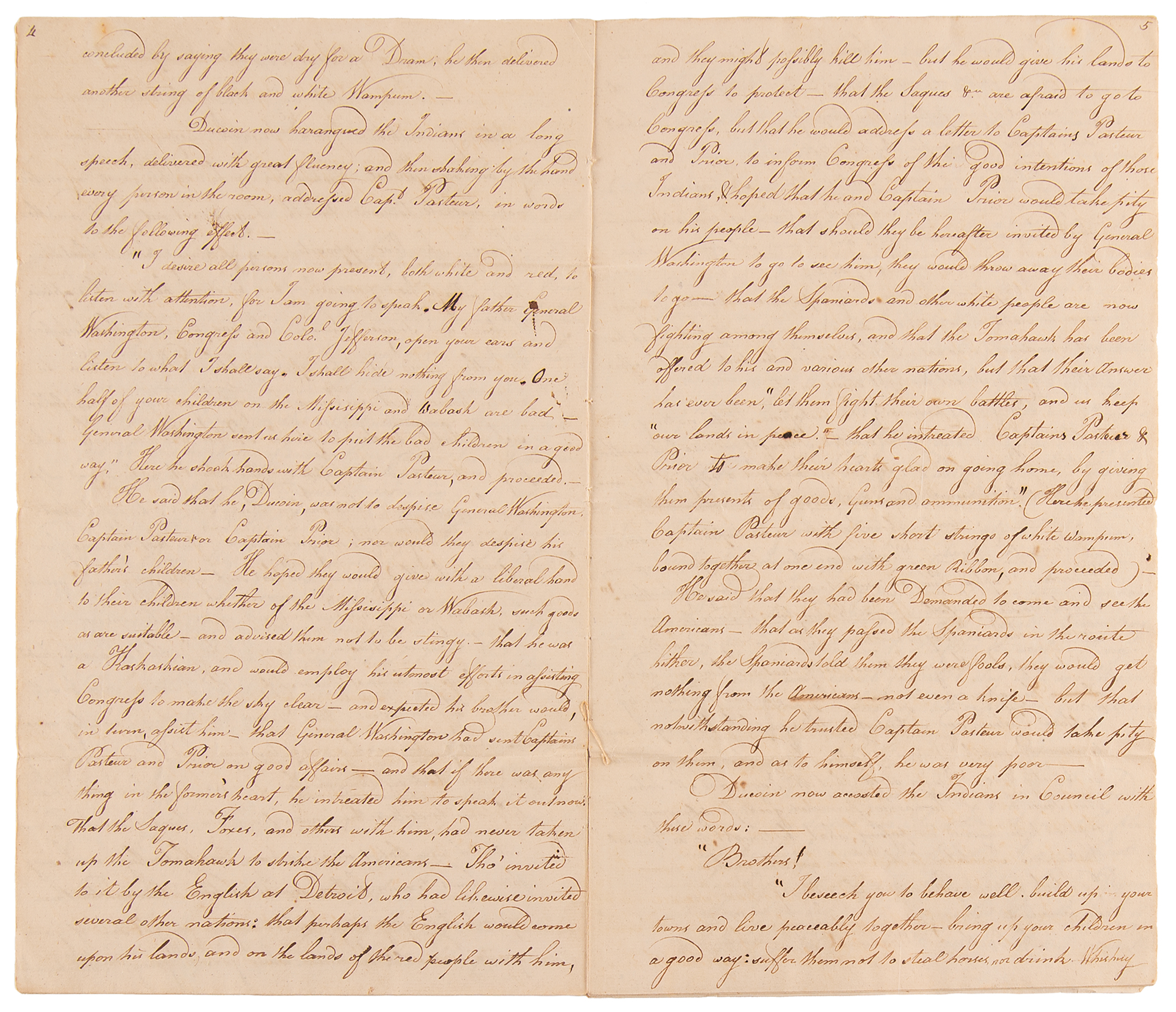
Speaking next, Kaskaskia chief Ducoin announces: "'I desire all persons now present, both white and red, to listen with attention, for I am going to speak. My father General Washington, Congress and Colo. Jefferson, open your ears and listen to what I shall say. I shall hide nothing from you. One half of your children on the Mississippi and Wabash are bad—General Washington sent us here to put the bad children in a good way'….He said that he, Ducoin, was not to despise General Washington, Captain Pasteur, or Captain Prior, nor would they despise his father's children—He hoped they would give with a liberal hand to their children whether of the Mississippi or Wabash, such goods as are suitable…that perhaps the English would come upon his lands, and on the lands of the red people with him, and they might possible kill him—but he would give his lands to Congress to protect…that he intreated Captains Pasteur & Prior to make their hearts glad on going home, by giving them presents of goods, guns and ammunition…He said that they had been demanded to come and see the Americans—that as they passed the Spaniards in the route hither, the Spaniards told them they were fools, they would get nothing from the Americans—not even a knife—but that notwithstanding he trusted Captain Pasteur would take pity on them."
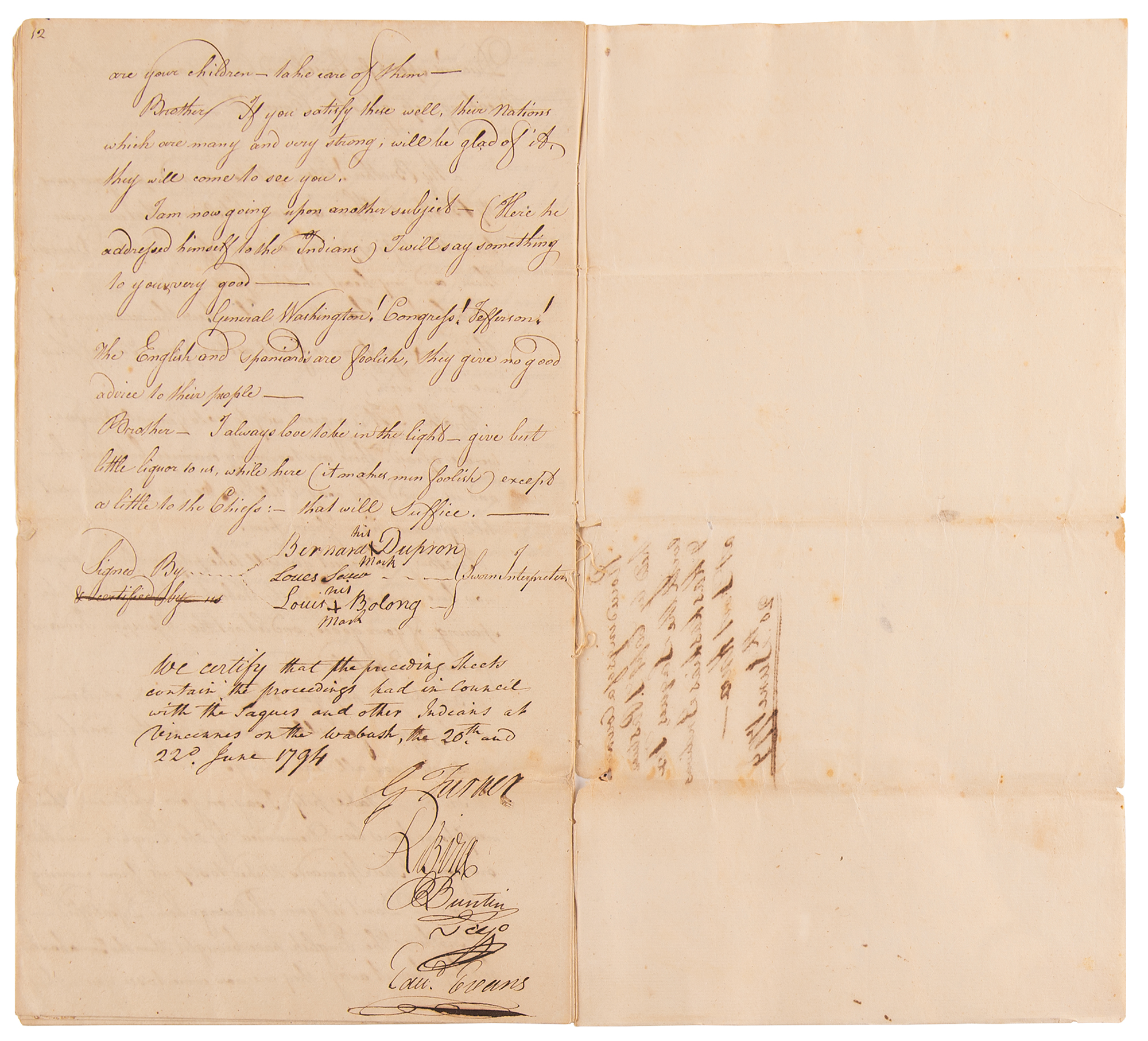
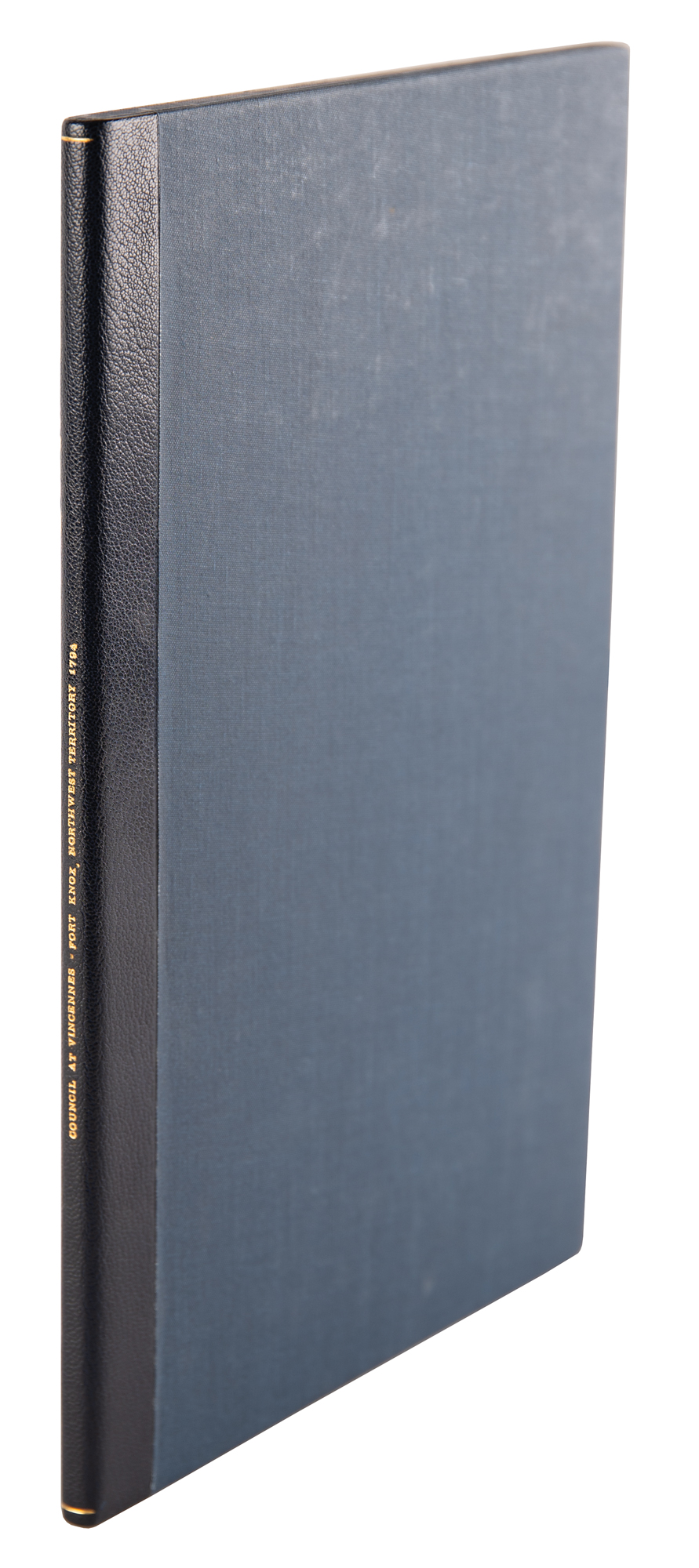
The document continues along similar lines, with further transcripts of speeches of the various council attendees, closing with another speech by Ducoin. At the end, it is signed by three interpreters and five witnesses, who attest that it is a true record. One witness, Francis Vigo (1747-1836), was a prominent fur trader and merchant with headquarters in St. Louis. During the Revolution, his aid was instrumental in George Rogers Clark’s efforts to secure the northwest country from British influence. In fine condition. Housed in custom-made a quarter-morocco slipcase with chemise.
The United States’ standing with the western Indian tribes had collapsed after the decisive defeats of Generals Harmar and St. Clair along the Wabash in 1791. In the years that followed, the situation on the Northwest frontier remained unstable, with British agents actively encouraging further conflict against American forces. In 1794, the United States mounted a counteroffensive under General Anthony Wayne, who spent the spring and summer recruiting and rigorously training a force of regular soldiers and Kentucky militia.
Amid expectations of renewed war on the northern frontier, American leaders moved to secure their western flank by persuading—and at times pressuring—nearby tribes to remain neutral or supportive. The Vincennes Council, held in late June, proved pivotal in winning the loyalty of tribes that could otherwise have posed a serious threat to overstretched American forces. This effort was highly successful, as the three key tribes remained aligned with the United States.
Just two months later, on August 20, 1794, General Wayne’s army decisively defeated the British-backed confederation at the Battle of Fallen Timbers, near present-day Toledo. The outcome owed much to the diplomatic groundwork laid at Vincennes, which helped ensure that potential western adversaries did not join the fight.
The Western Americana auction of Jochen Zeitz.

