The 30 Minute Rule begins May 21 at 7:00 PM EDT. An Initial Bid Must Be Placed By May 21 at 6:00 PM EDT To Participate After 6:00 PM EDT
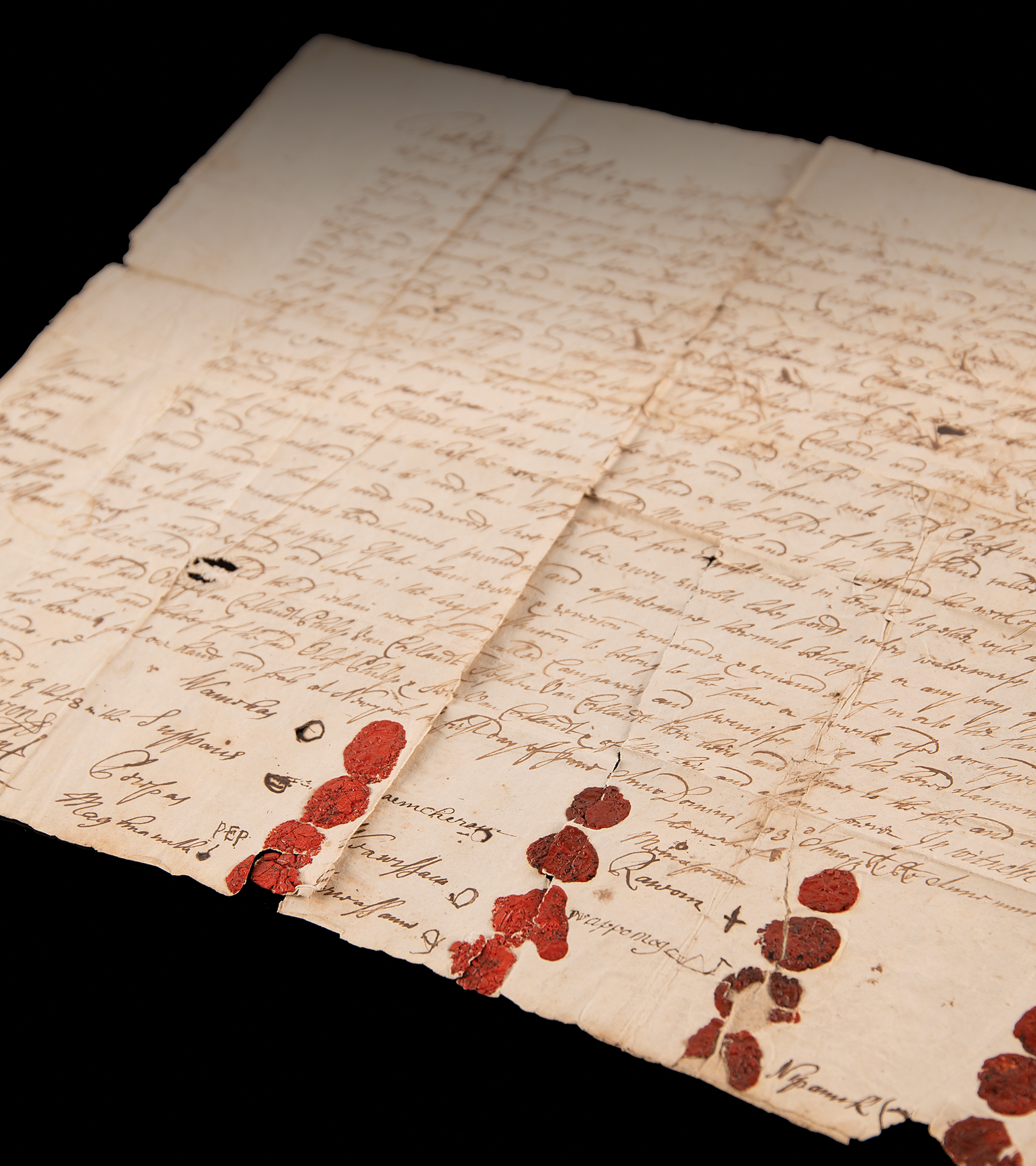
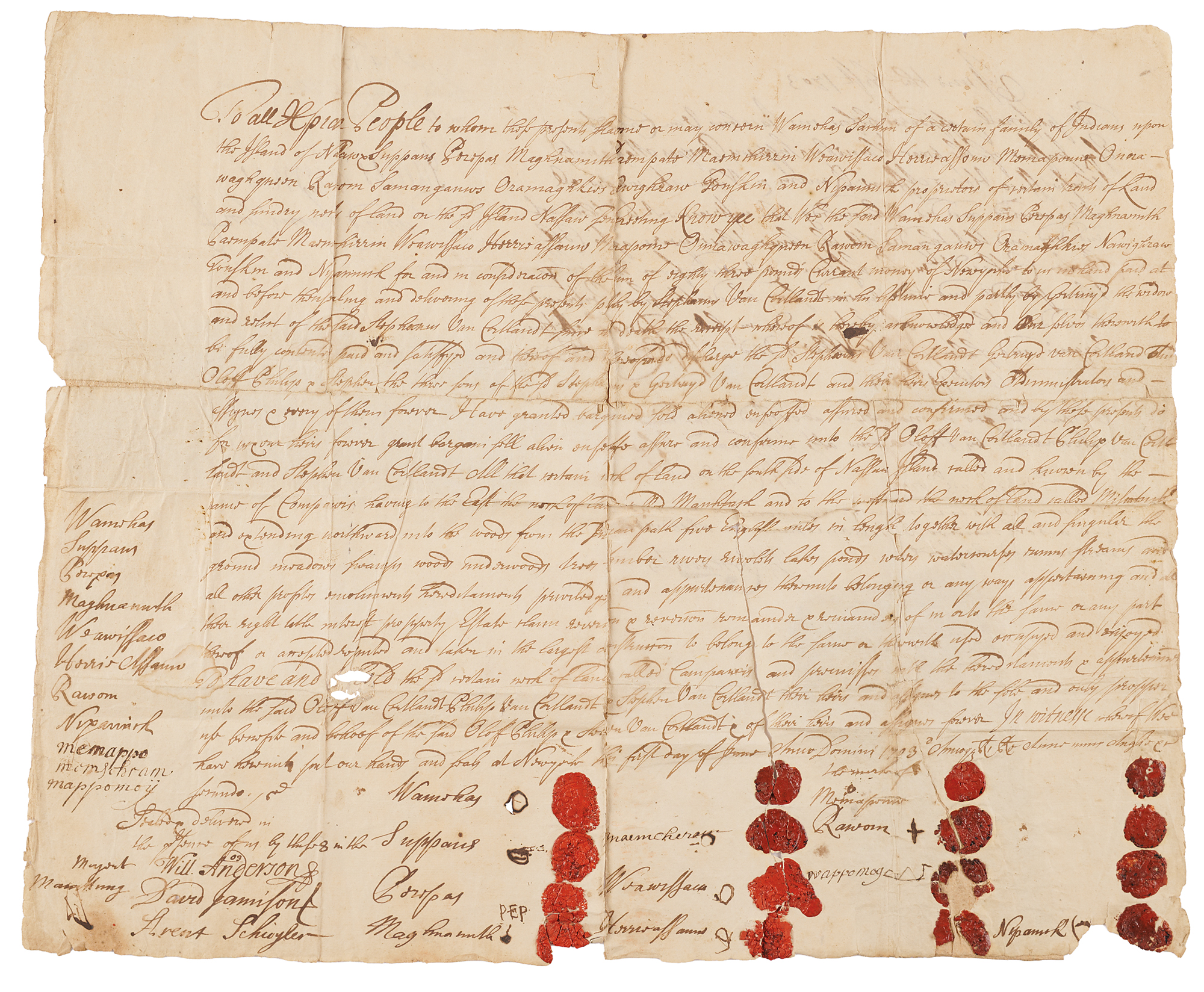
Rare manuscript deed signed by twelve Native American Indian chiefs, one page, 14.5 x 11.5, June 1, 1703, selling a large tract of land on Long Island to members of the wealthy and influential Van Cortlandt family. This deed follows in a long line of similar transactions stretching back to 1626, when Peter Minuet purchased Manhattan Island from the local Indians on behalf of the Dutch West India Company. In 1670, Governor Francis Lovelace purchased Staten Island from local chiefs. The present contract was made on June 1, 1703, between twelve Indian chiefs and Gertrude Van Cortlandt, widow of the late Stephanus Van Cortlandt, and her children. The names of the chiefs on the document include Wamshas, Suppans, Porspas, Rawson, and others from the local Indian tribes. They agree to sell, “for and in consideration of eighty three pounds currant money of New York to us in hand paid,” an extensive tract of land “on the south side of Nassau island.”
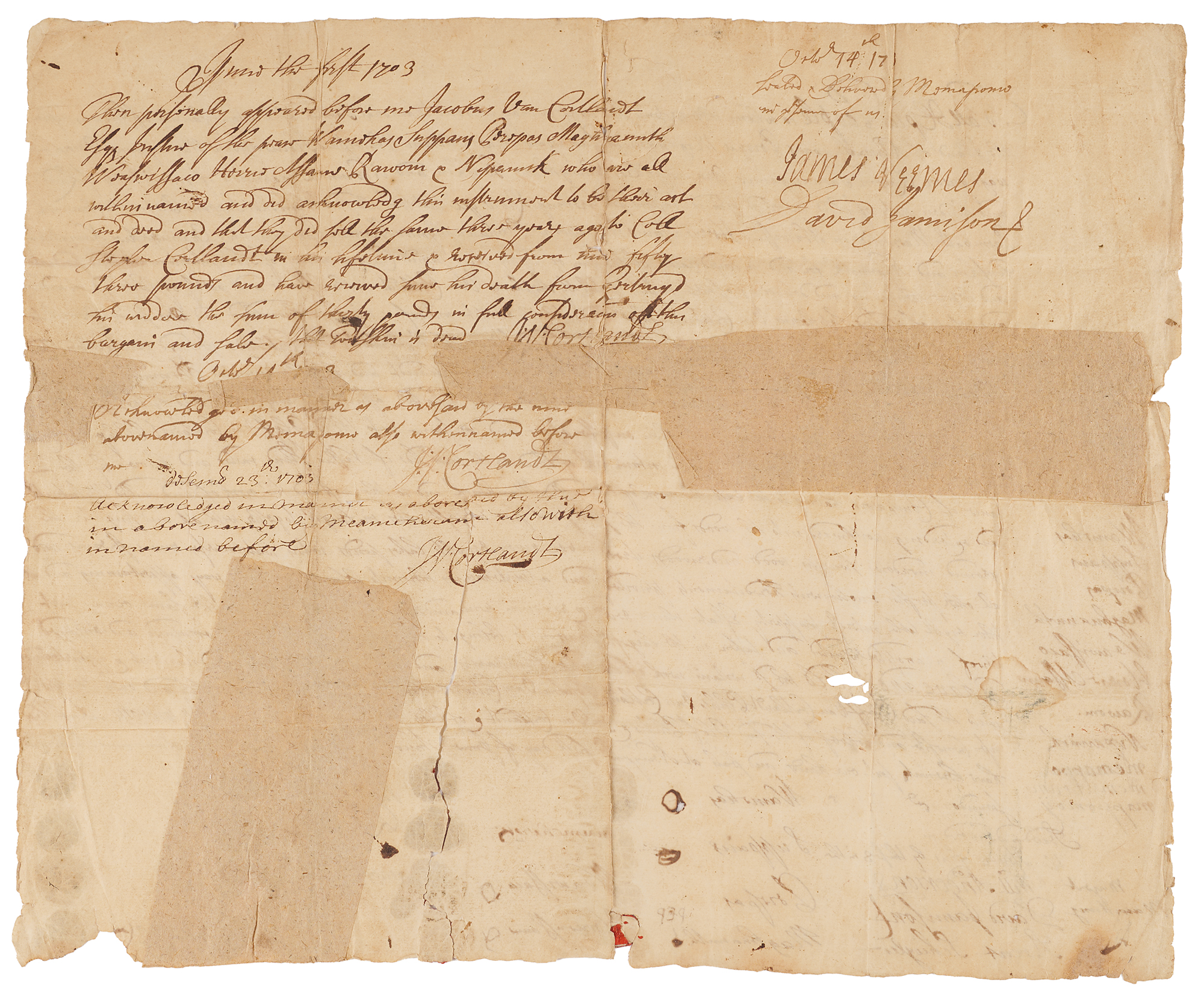
The deed is signed at the conclusion in ink by the twelve Native American Indian leaders mentioned, all signing with their marks beside affixed red wax seals. It is additionally signed by three witnesses—including the noted trader and land speculator Arent Schuyler—and is endorsed on the reverse by Jacobus Van Cortlandt (1658-1739), who was mayor of New York City in 1710 and 1719, and, like other members of his family, also set about amassing a large estate through purchases of land from local Indian tribes (a part of which became present-day Van Cortlandt Park in the Bronx). Van Cortlandt attests that the chiefs have presented themselves before him and confirmed the accuracy of the document. In good to very good condition, with tears and fold splitting (nearly complete separation to the central vertical fold), partly repaired with old tape on the reverse.
The Van Cortlandt family was among the most prominent clans in colonial New York. Stephanus Van Cortlandt (1643-1700) was born in New Amsterdam (now New York), the son of a wealthy merchant. In 1681 he married Gertrude Schuyler of Albany, and they had eleven children. Stephanus Van Cortlandt rose to prominence as a merchant himself, and he successfully negotiated the power struggle between the Dutch and British in New York, being appointed to positions of power by colonial authorities on both sides. In 1677 the British governor of New York, Sir Edmund Andros, appointed him the first native-born mayor of New York City, and he served on the Governor’s Council, as receiver of the revenue for New York and New Jersey, and as a judge on several courts. Also in 1677, Andros granted Van Cortlandt a license to obtain land from the Indians, and in 1683 he began buying huge tracts of land along the Hudson River and in western Connecticut. He also owned land in Manhattan, as well as in the counties of Suffolk (on the northeast shore of Long Island), Richmond (on Staten Island), and Kings (in present-day Brooklyn). Upon his death in 1700, Van Cortlandt divided his land among his eleven children, though his widow, Gertrude, largely controlled the estates until her death in 1723. The Van Cortlandts continued to add to the family lands through purchases such as the one executed in this deed.
Early colonial land cession documents of this nature are exceptionally rare survivals, offering direct, contemporaneous evidence of the complex and often fraught relationships between Native American Indian communities and European settlers. While such agreements are frequently cited in broader narratives of colonial expansion, the original manuscripts themselves remain underutilized as primary sources that illuminate the agency and material realities of Indigenous participants. This deed stands as an important historical record, preserving not only the names and marks of the Native leaders involved, but also the legal and economic frameworks through which land was transferred—providing invaluable insight into the early dynamics of colonial land acquisition and Native–colonial relations in New York.
The Western Americana auction of Jochen Zeitz.

