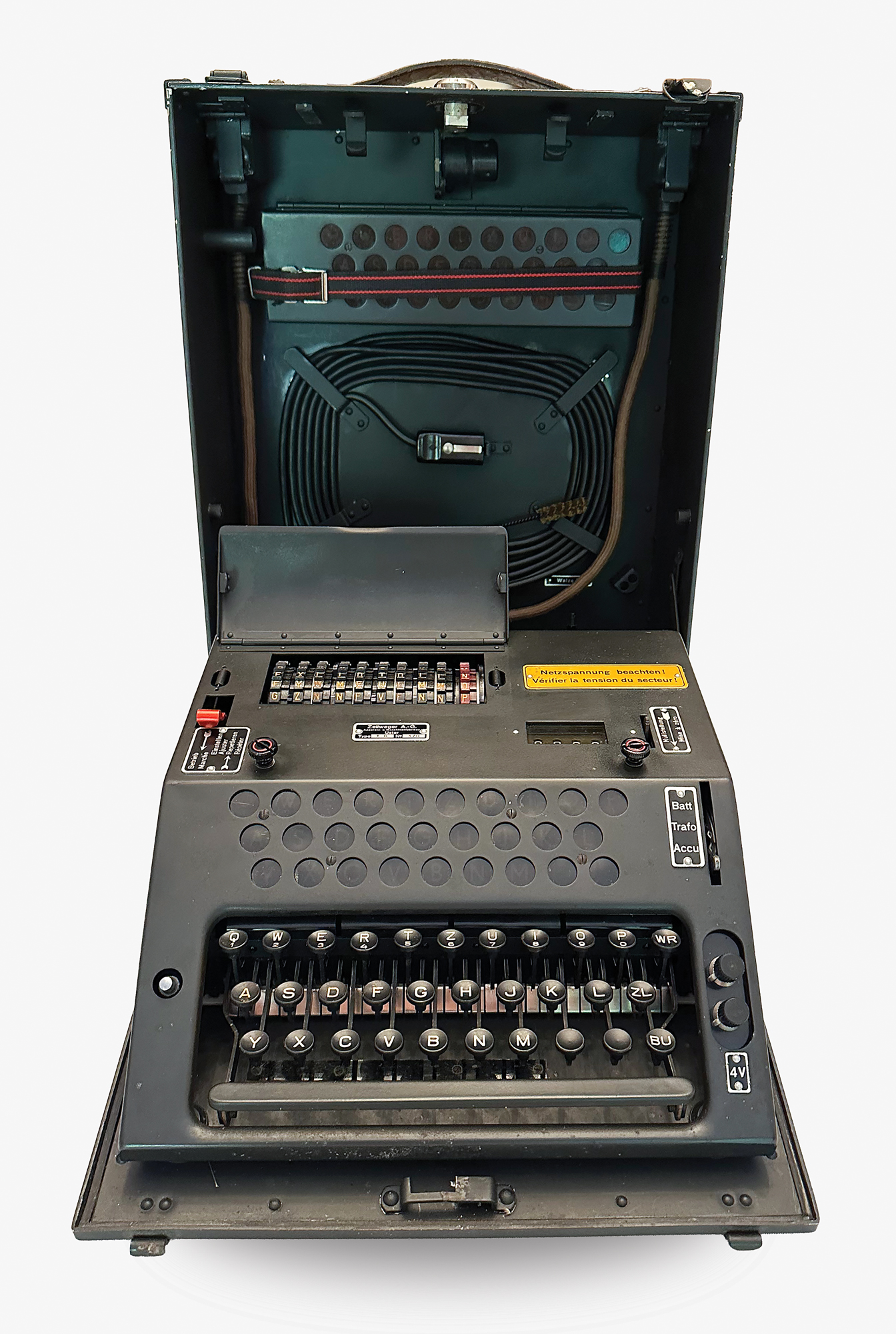
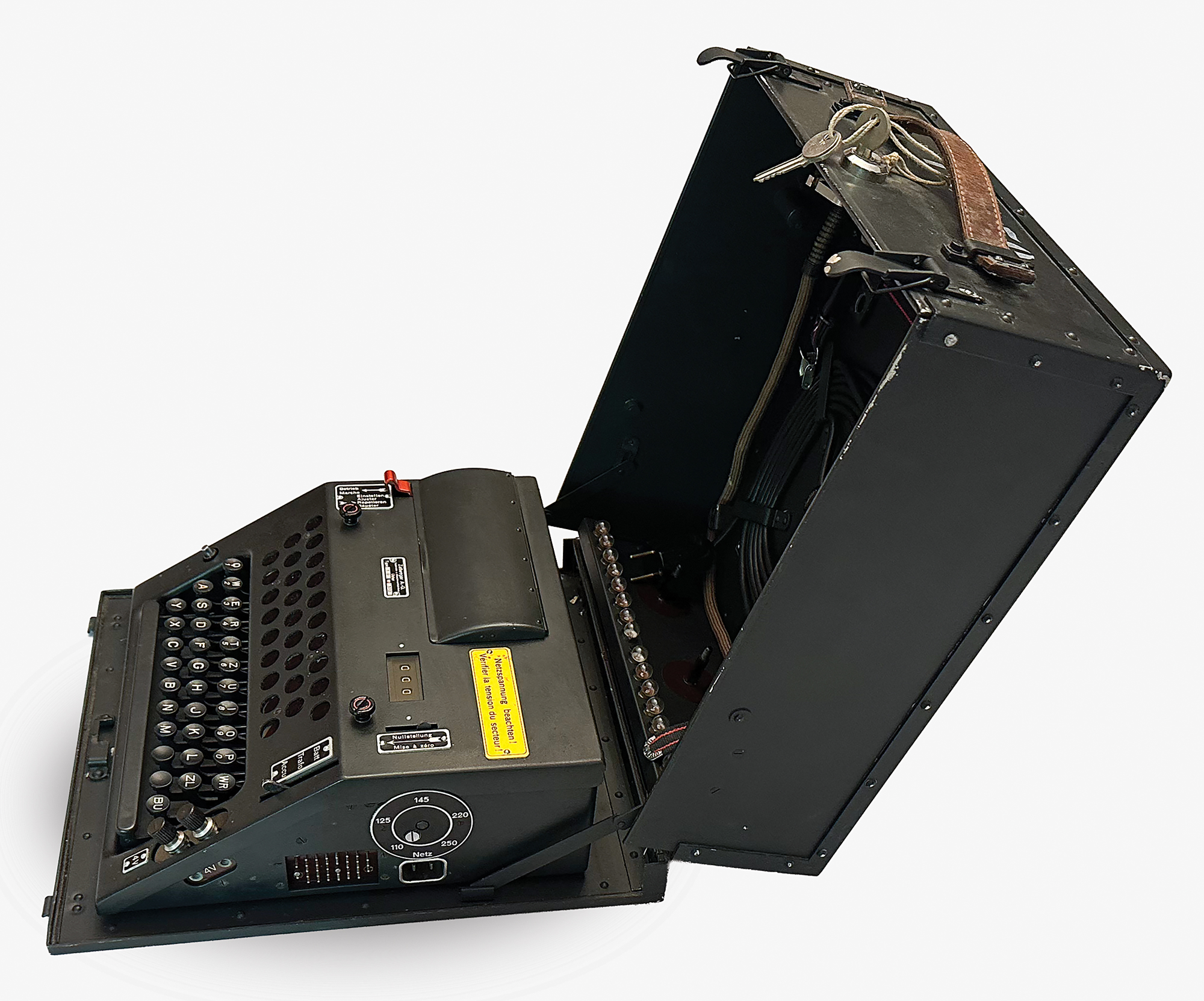
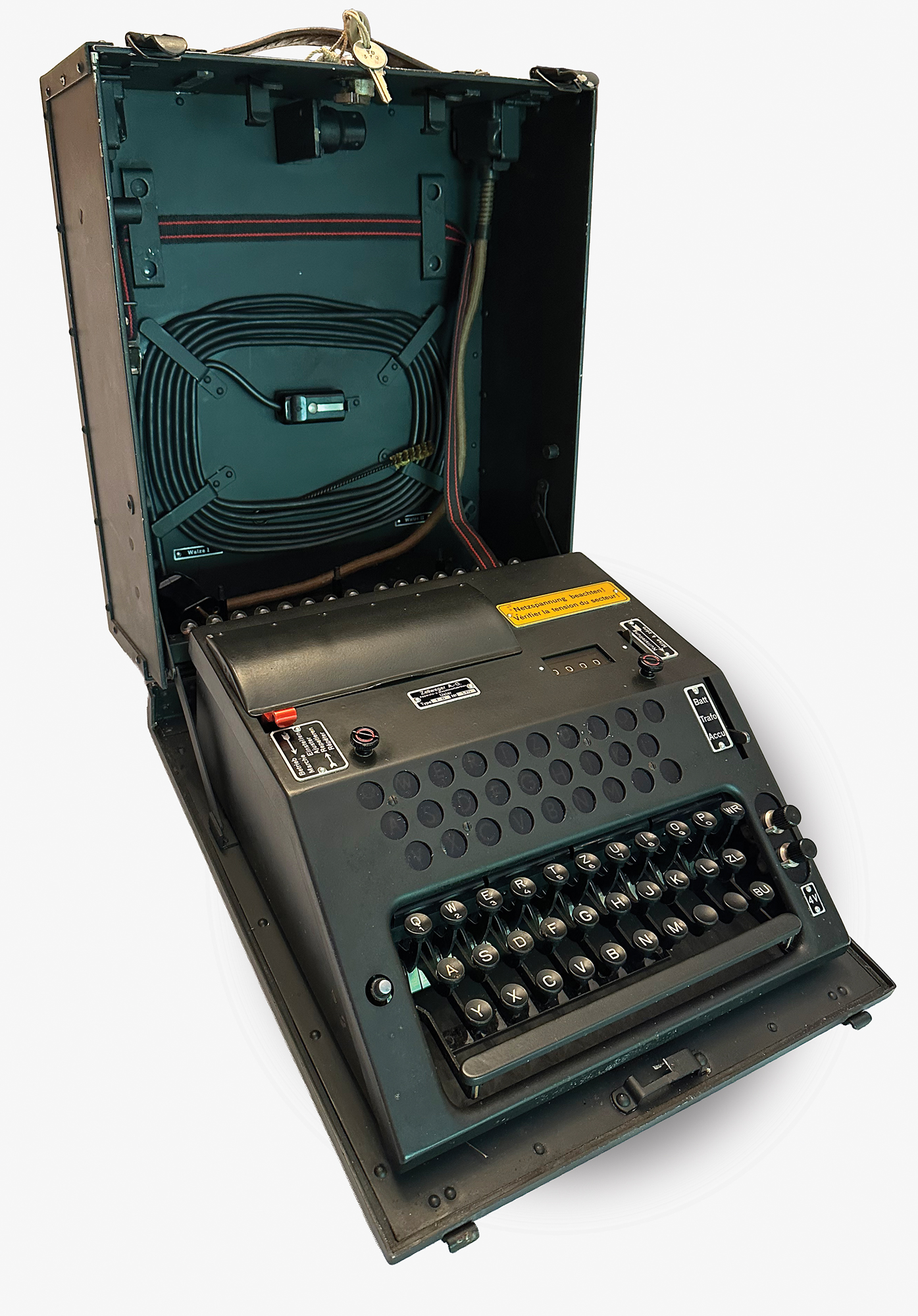
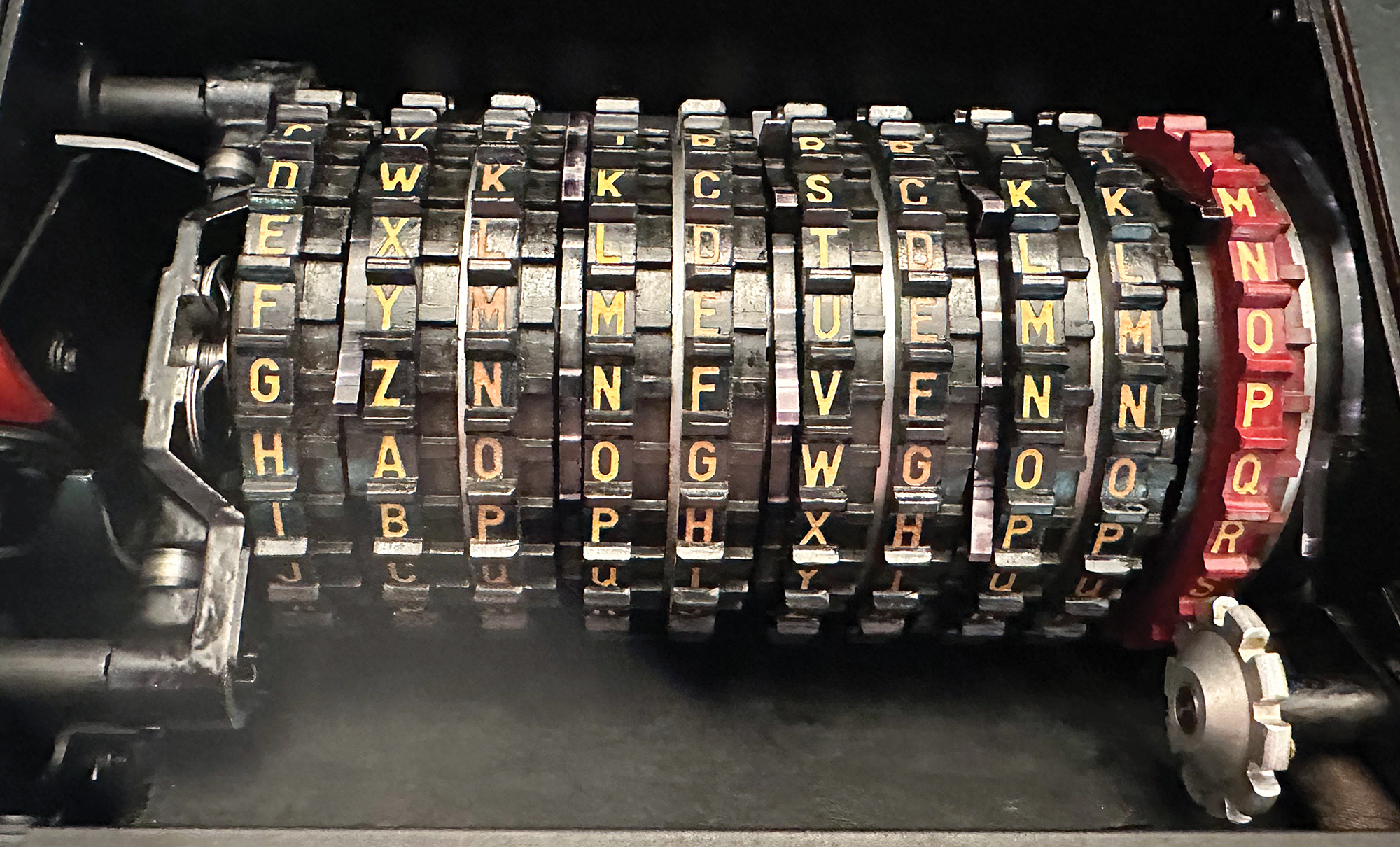
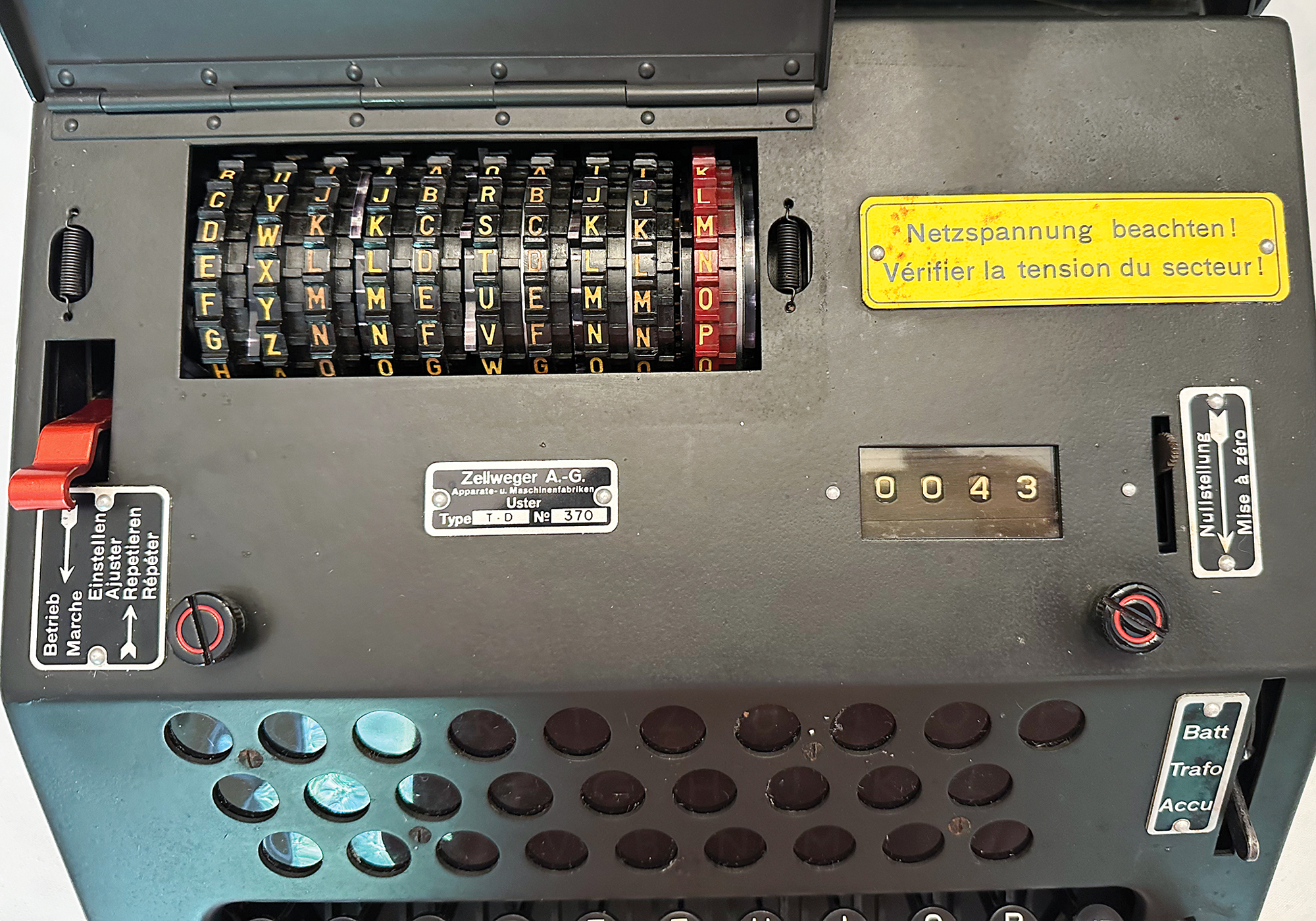
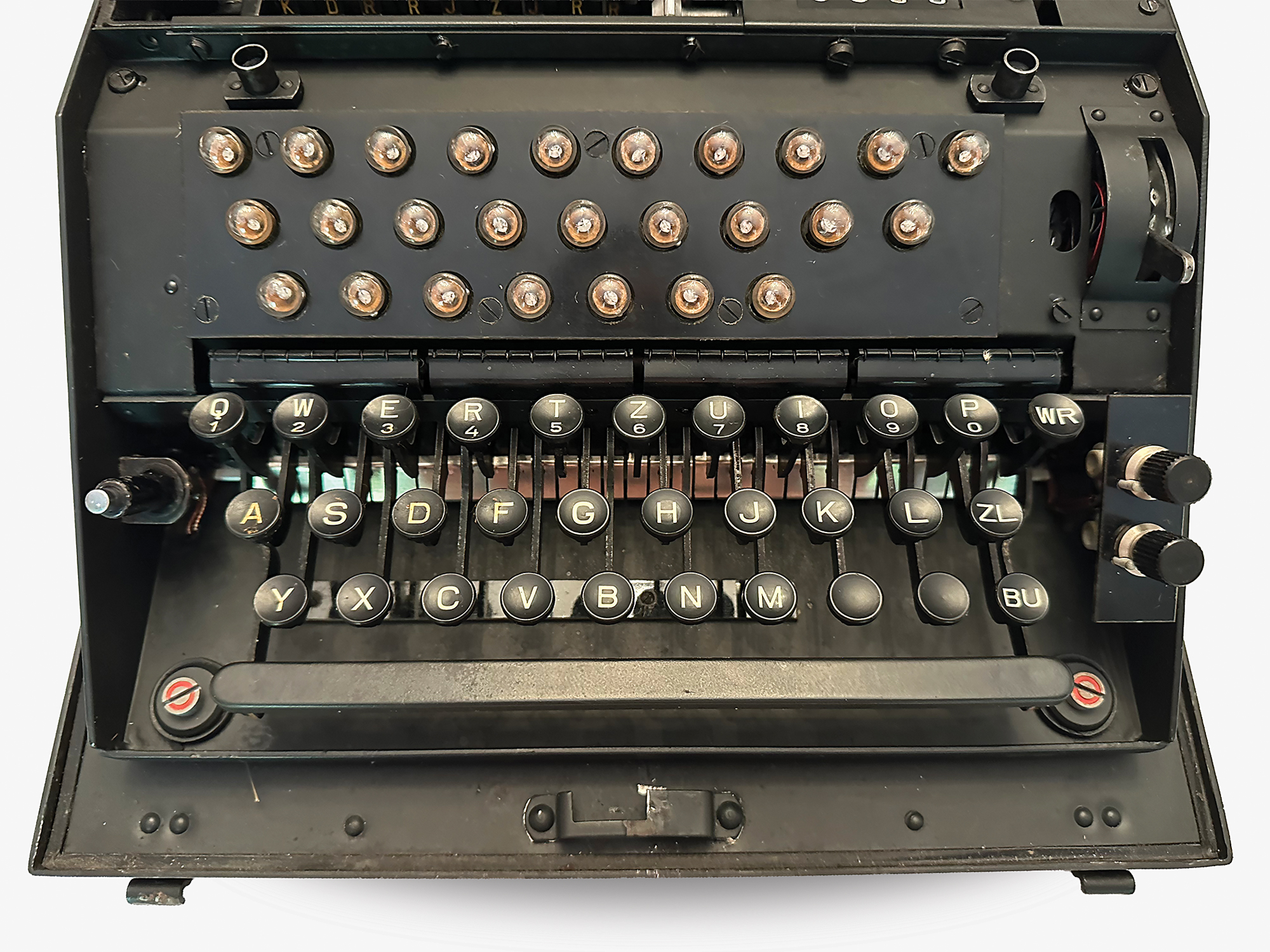
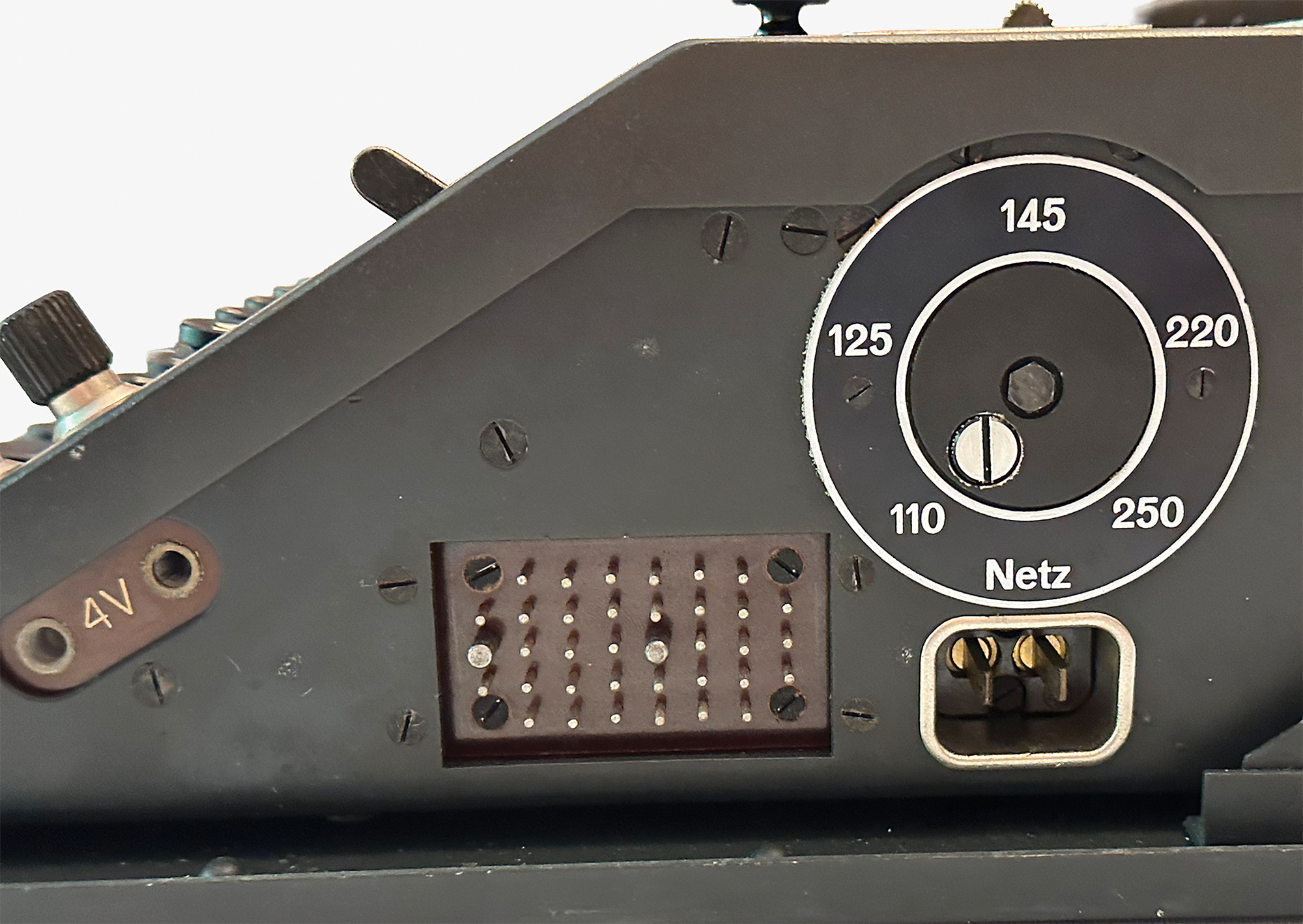
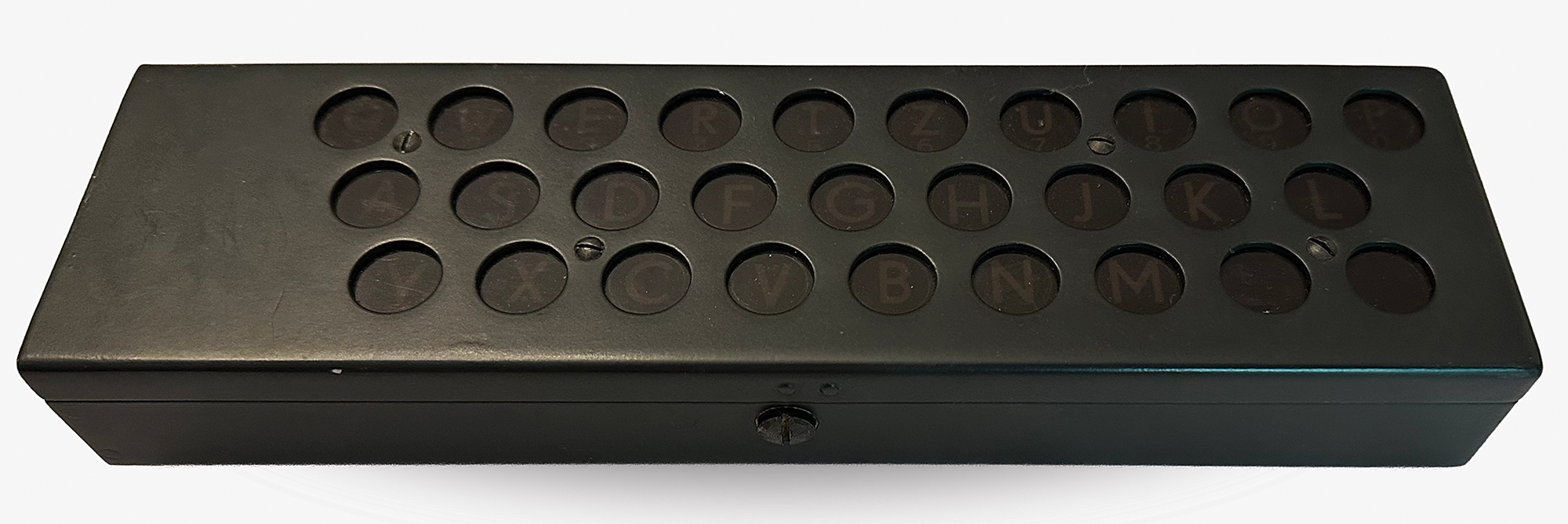
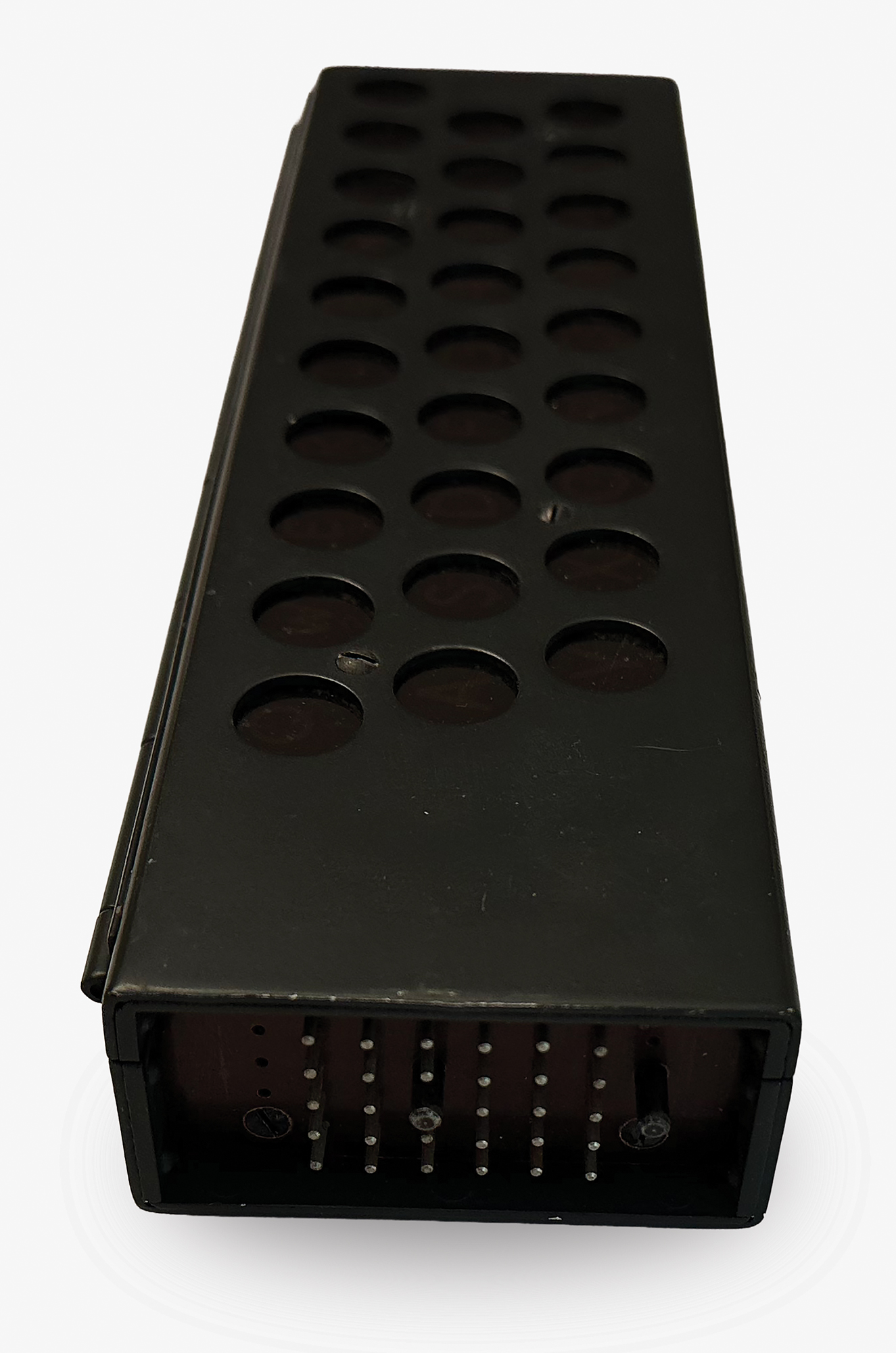
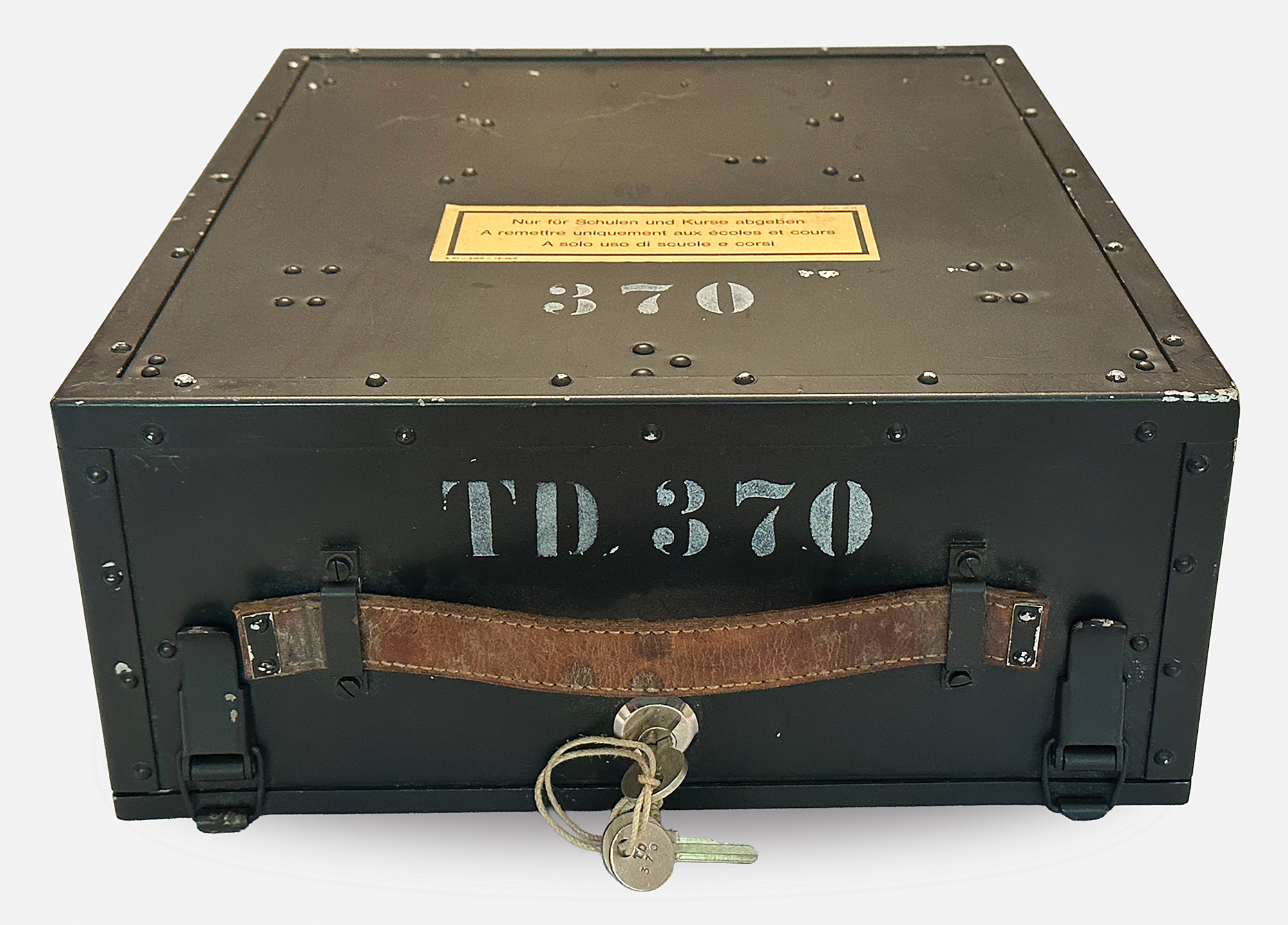
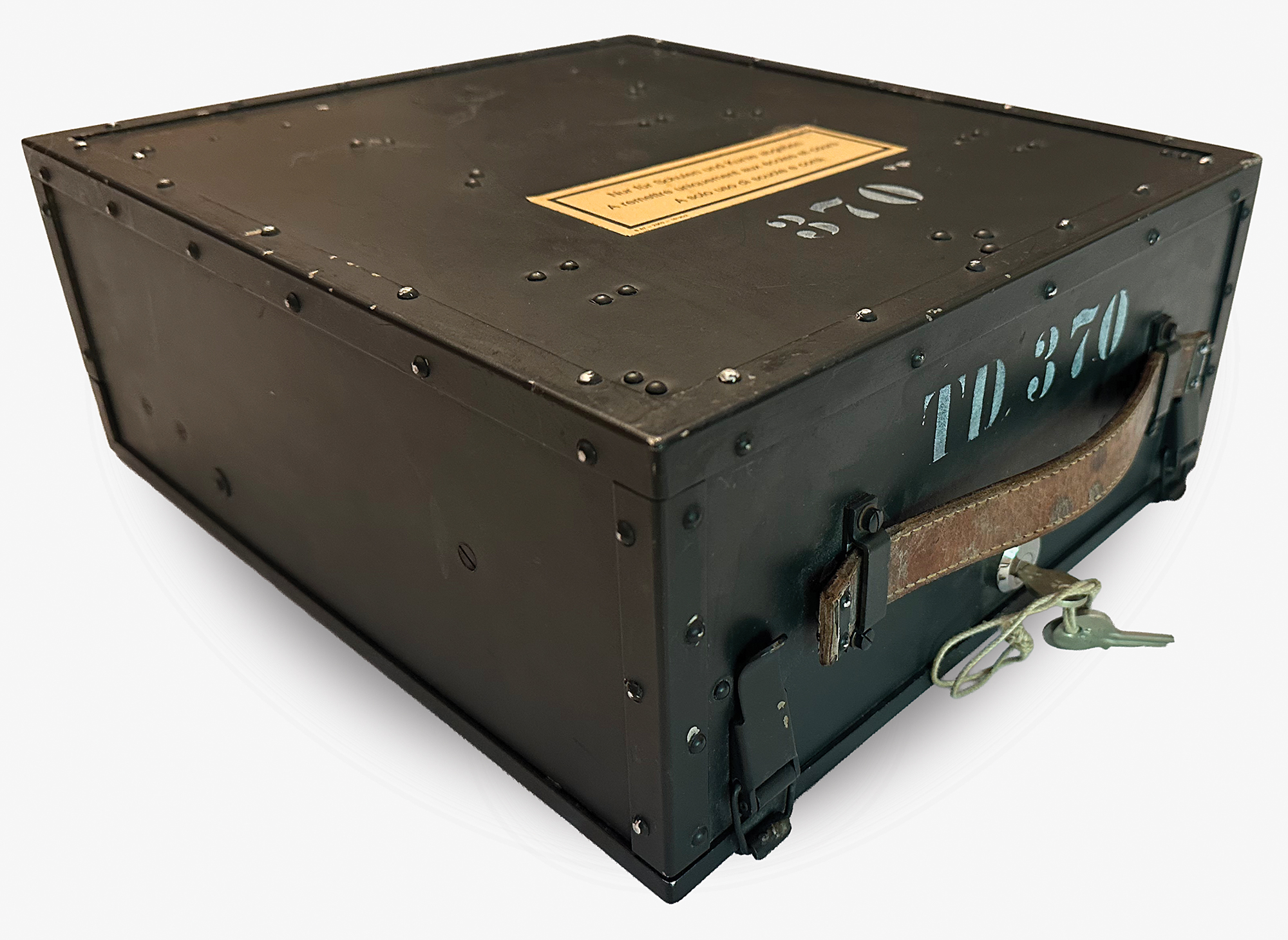
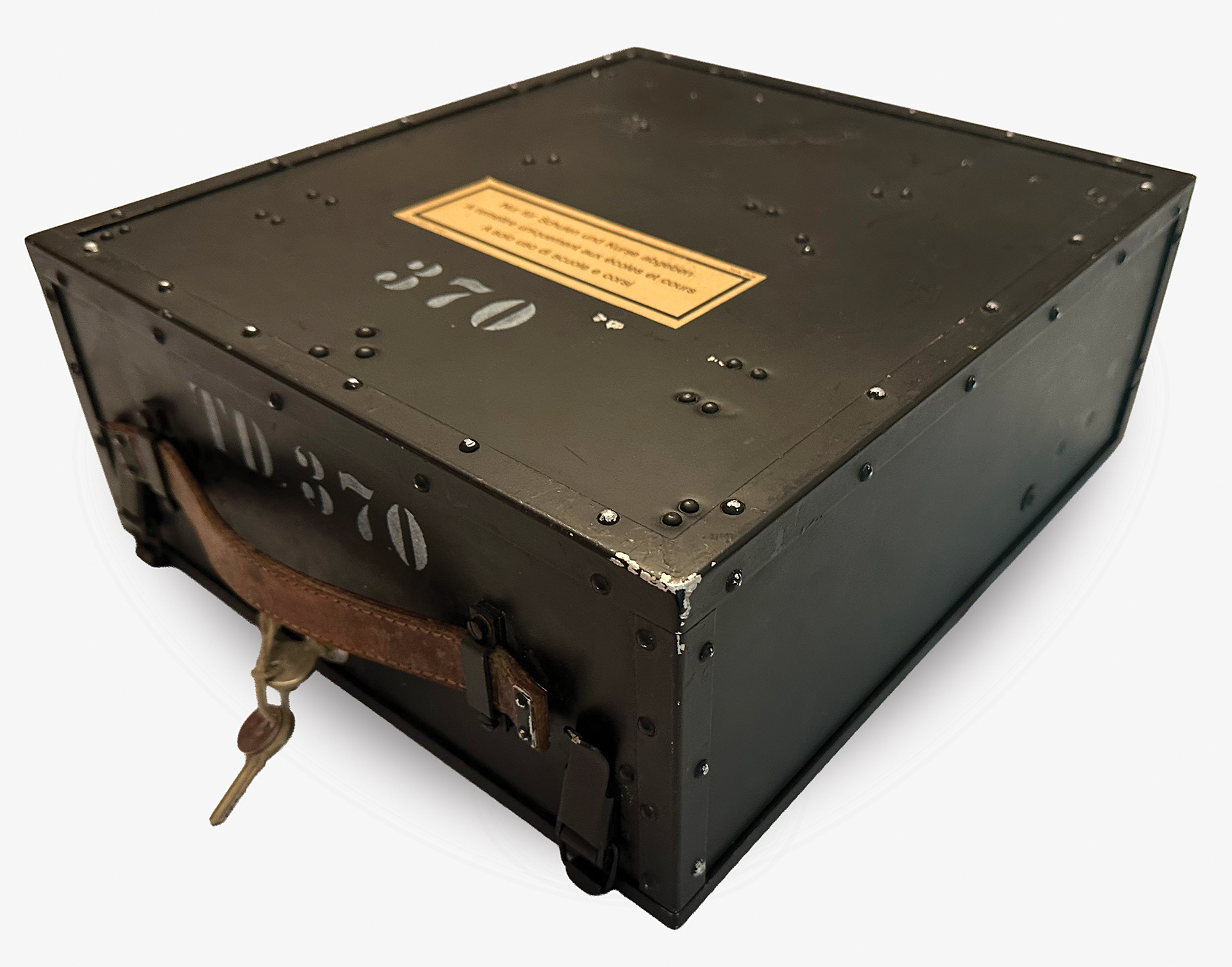
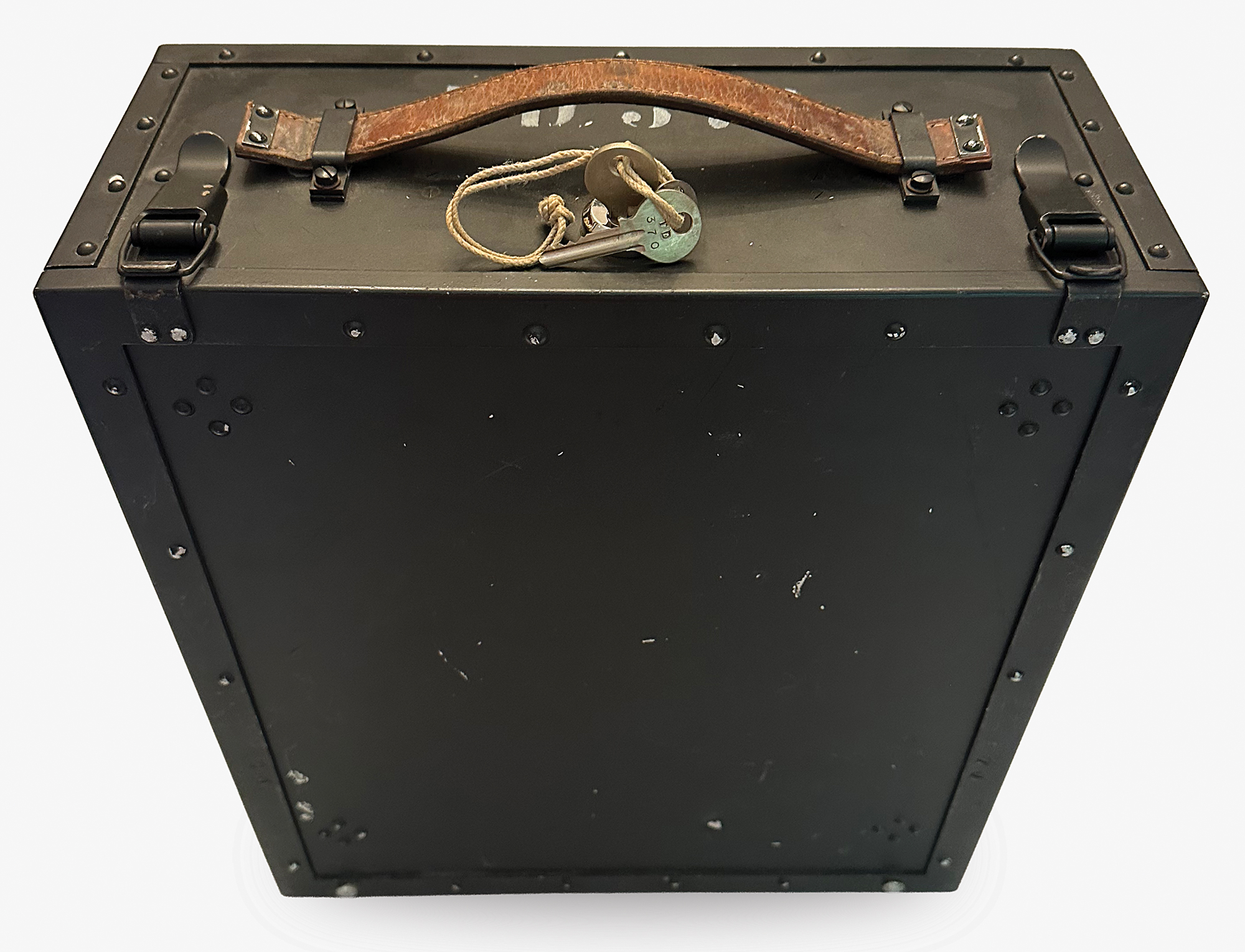
Original Swiss NEMA Model 45 cipher machine, serial no. TD-370, developed by Zellweger AG in Uster, Switzerland, during World War II as a replacement for the German Enigma Model K that was being used by the Swiss Army. The machine is also known as T-D, which stands for Tasten-Drücker Maschine (key-press machine).
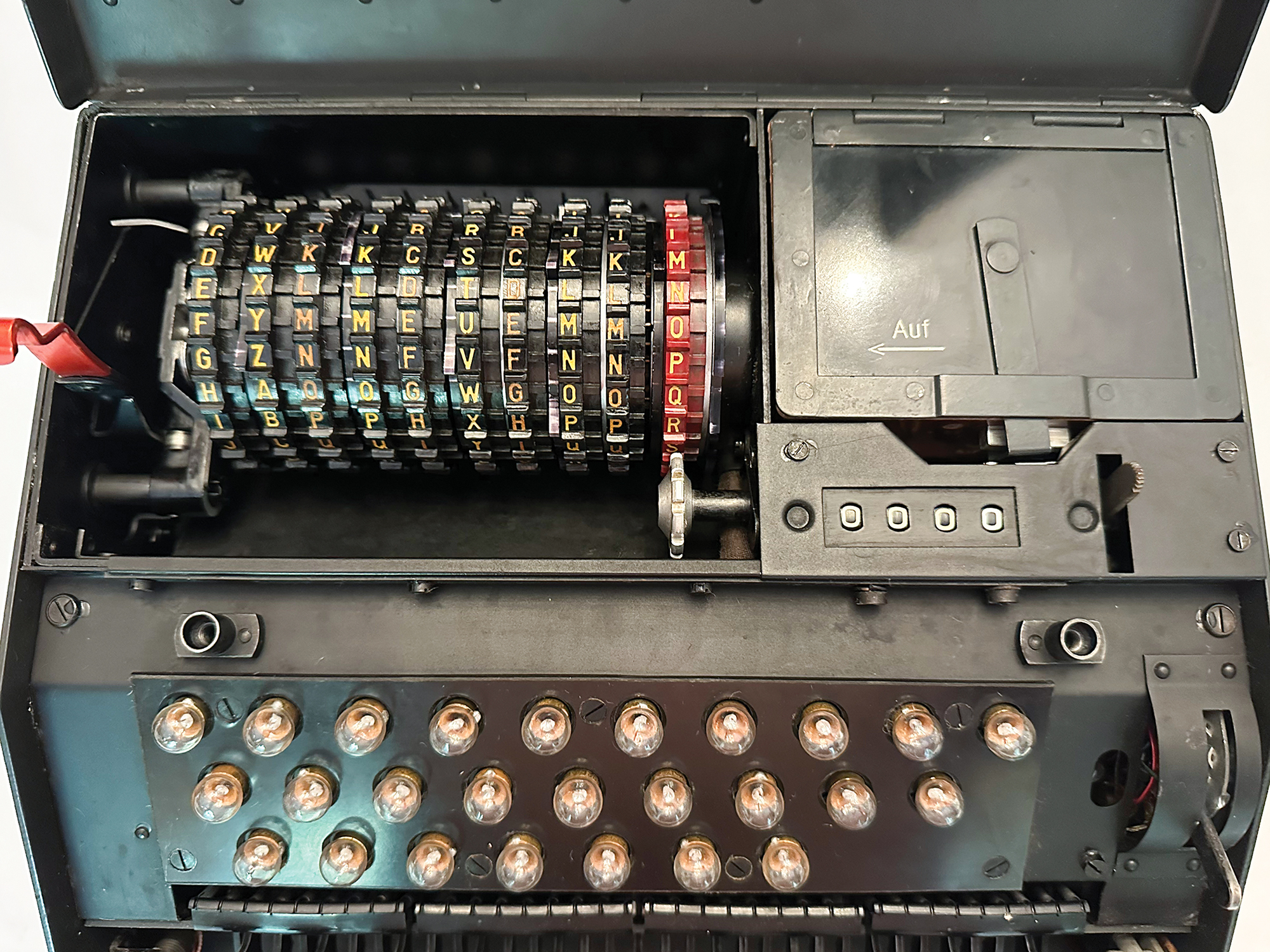
The electro-mechanical wheel-based cipher machine features ten wheels: four electrical rotors with 26 contacts at each end, one electrical reflector with 26 pairwise cross connected contacts, and five drive wheels that control the stepping of the rotors and reflector. The stepping mechanism is adjustable and irregular, making the machine much less predictable than its predecessor—and therefore far more difficult to crack.
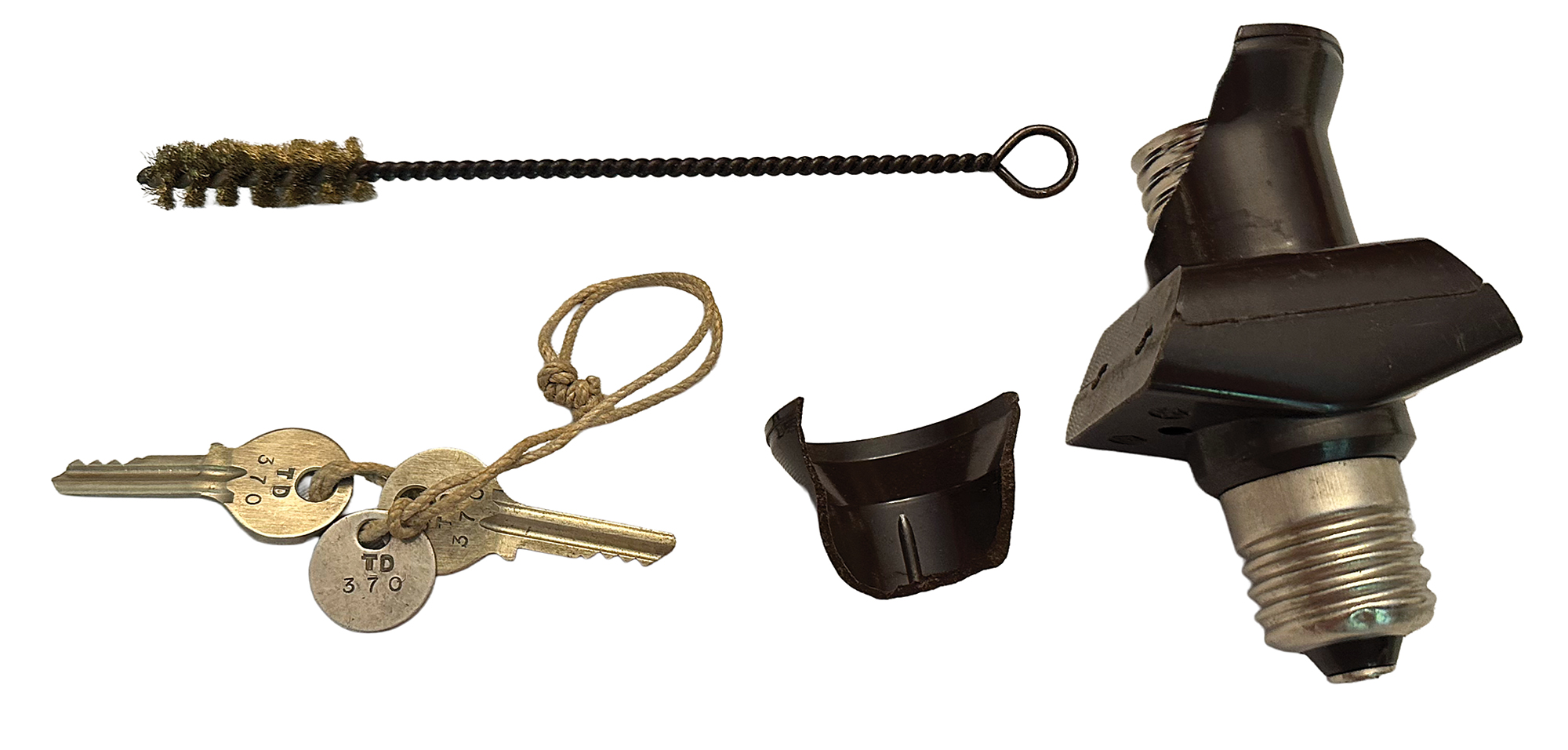
This NEMA machine was used at signal schools for officer training, and features an uncommon label on the lid in German, French, and Italian (translated): "For use by schools and courses only." Most NEMA machines were stored away to be used in the event of war and carried a different label. Accompanied by a power cable, cleaning brush, two keys and a key tag (with matching numbers, "TD370"), and extra light panel; the lamp adapter is functional but broken into two pieces.
During WWII, the Swiss Army used a modified version of the German-made commercial Enigma Model K machine. After the Swiss discovered that their Enigma K traffic was being read by both the Allied forces and the Germans, they started the development of their own improved machine, which they called NEMA, derived from “NEue MAschine [NEw MAchine].”
The NEMA cipher machine was developed between 1941 and 1943, and the first prototype was ready in early 1944. After a few modifications and improvements, the machine was finally approved in March 1945. Production started in 1946, with the first machines entering service in 1947. The NEMA was used by the Swiss Army in the years following WWII, and by the Swiss Diplomatic Service. The NEMA was officially declassified in 1992.

