Sold For $3,273
*Includes Buyers Premium
Two items signed by Louis Pasteur:
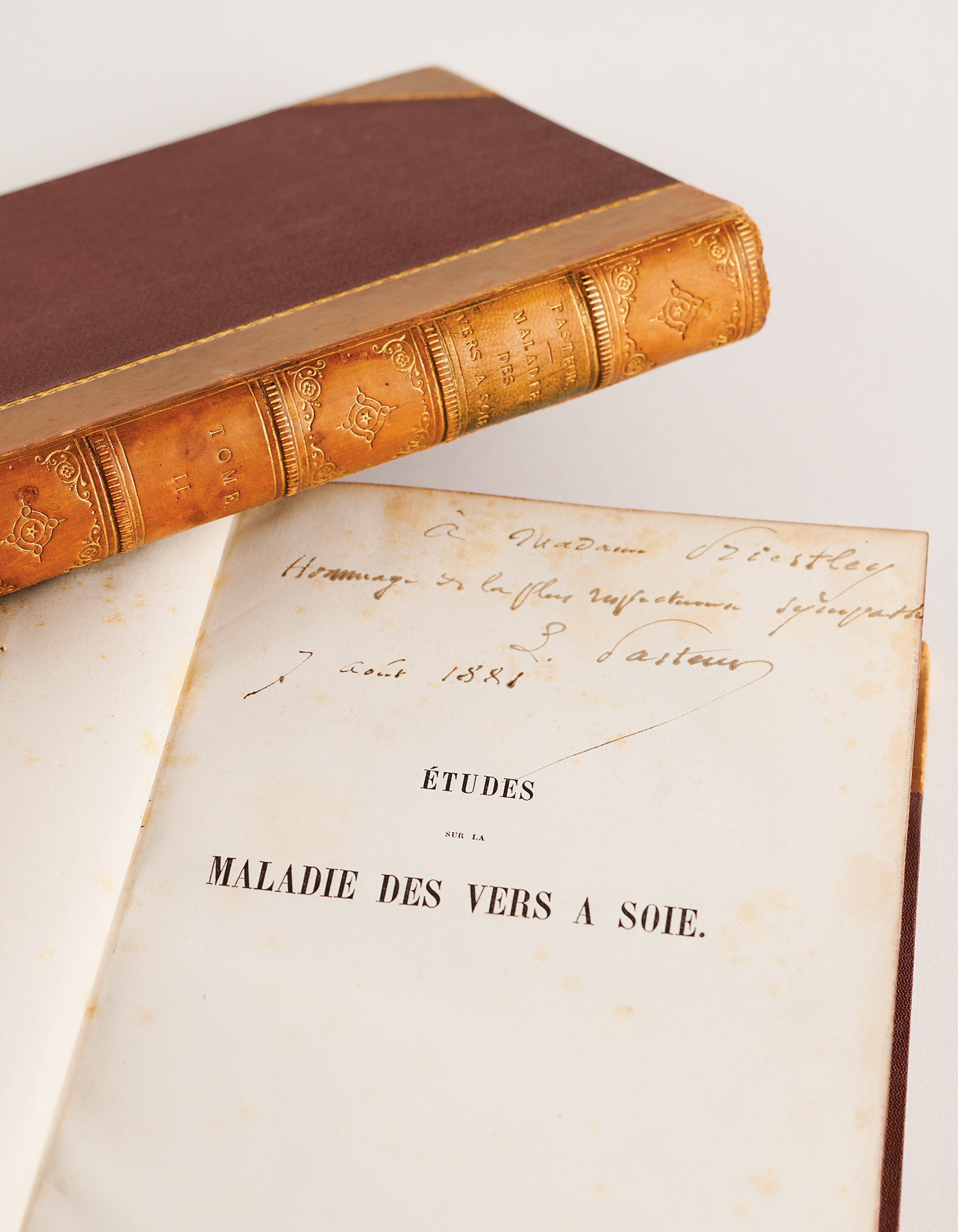
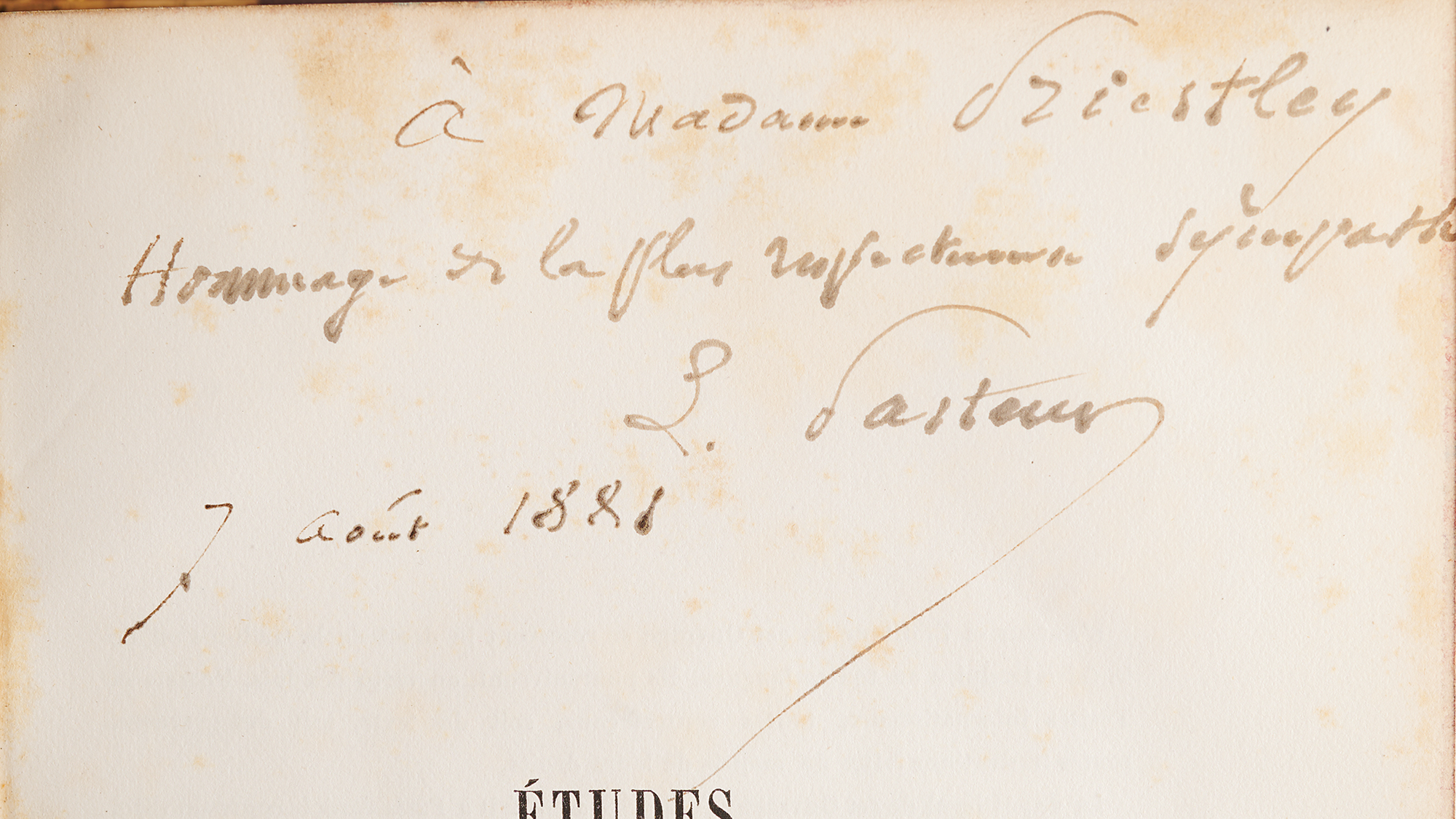
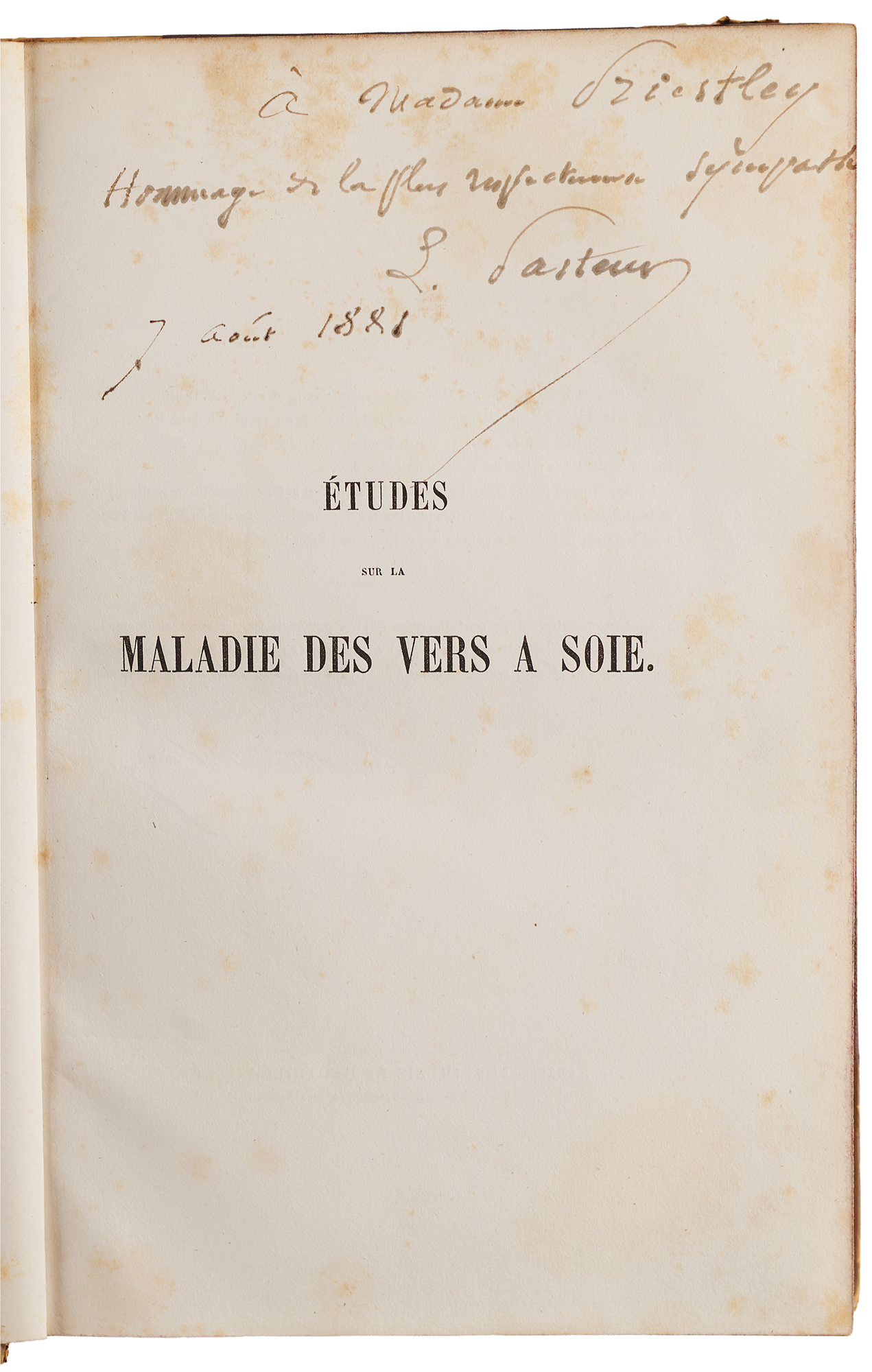
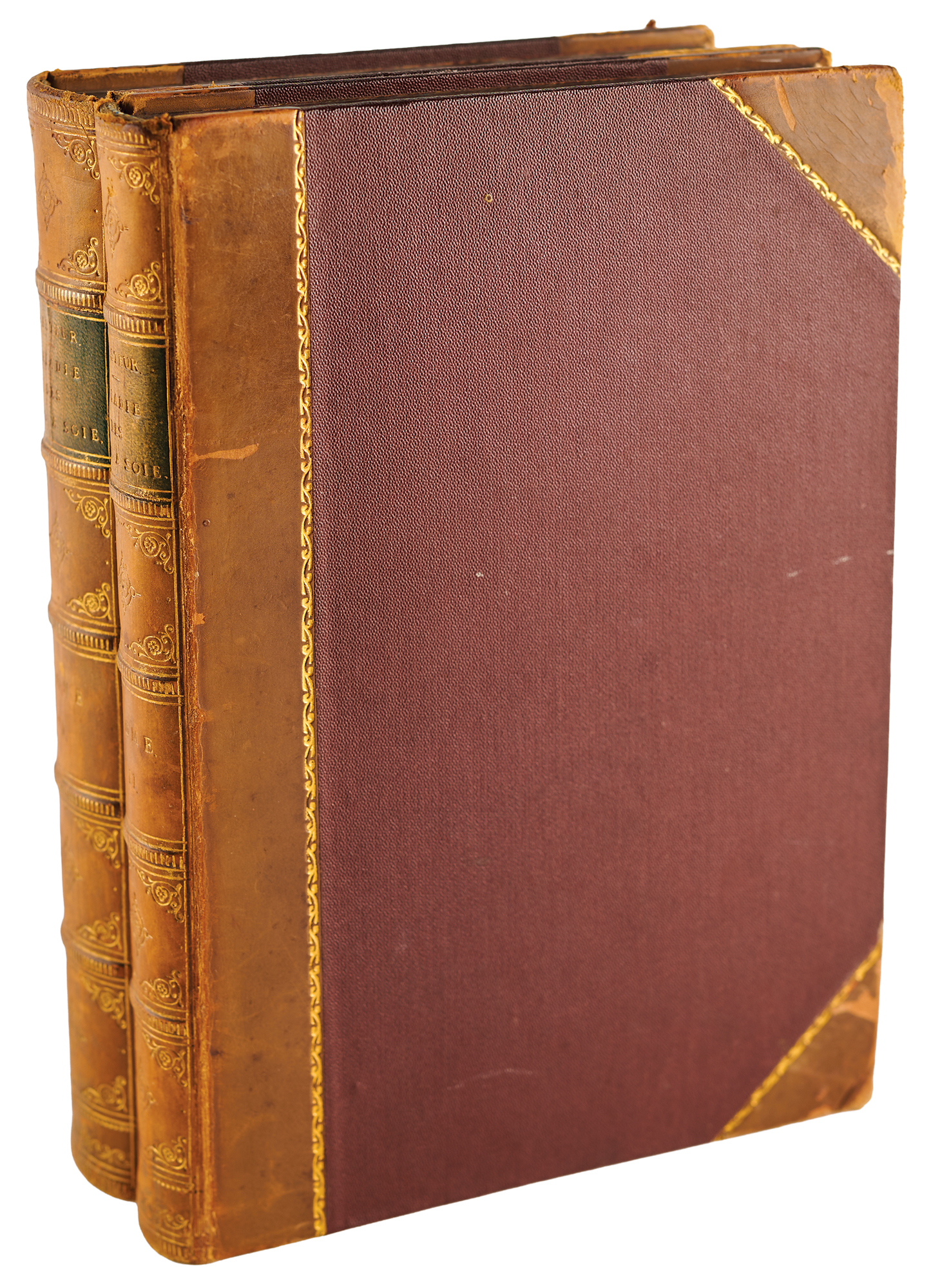
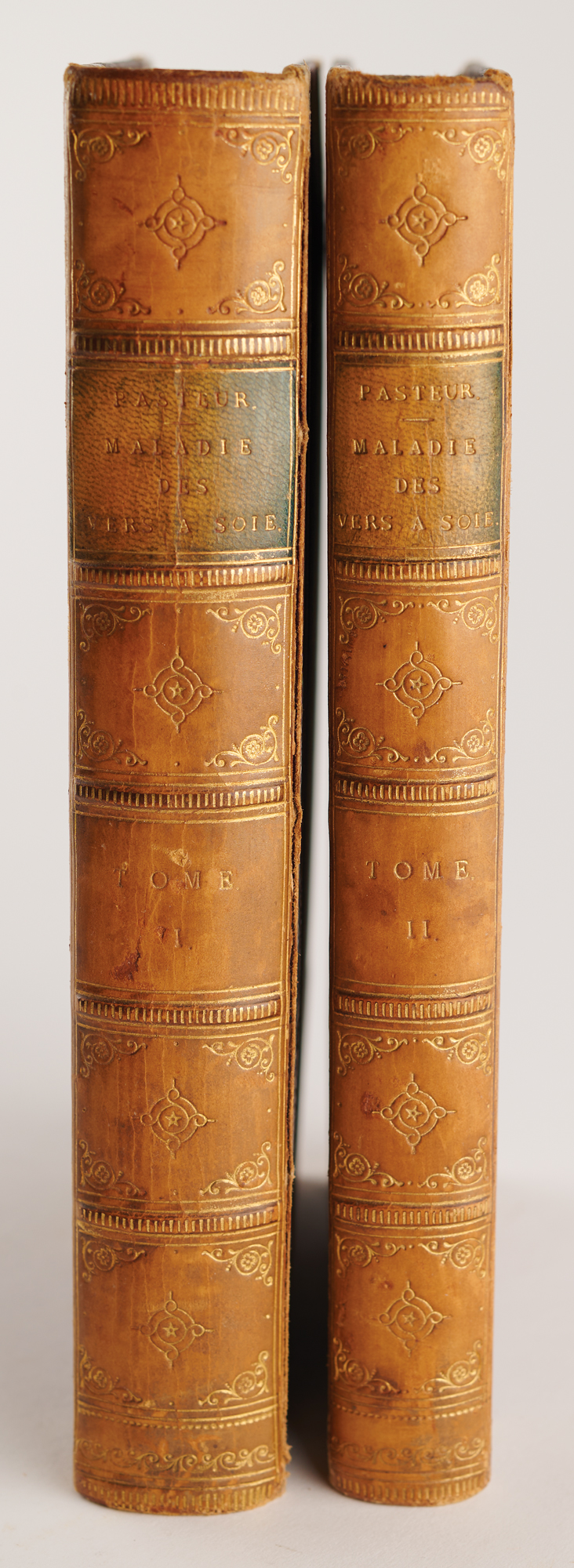
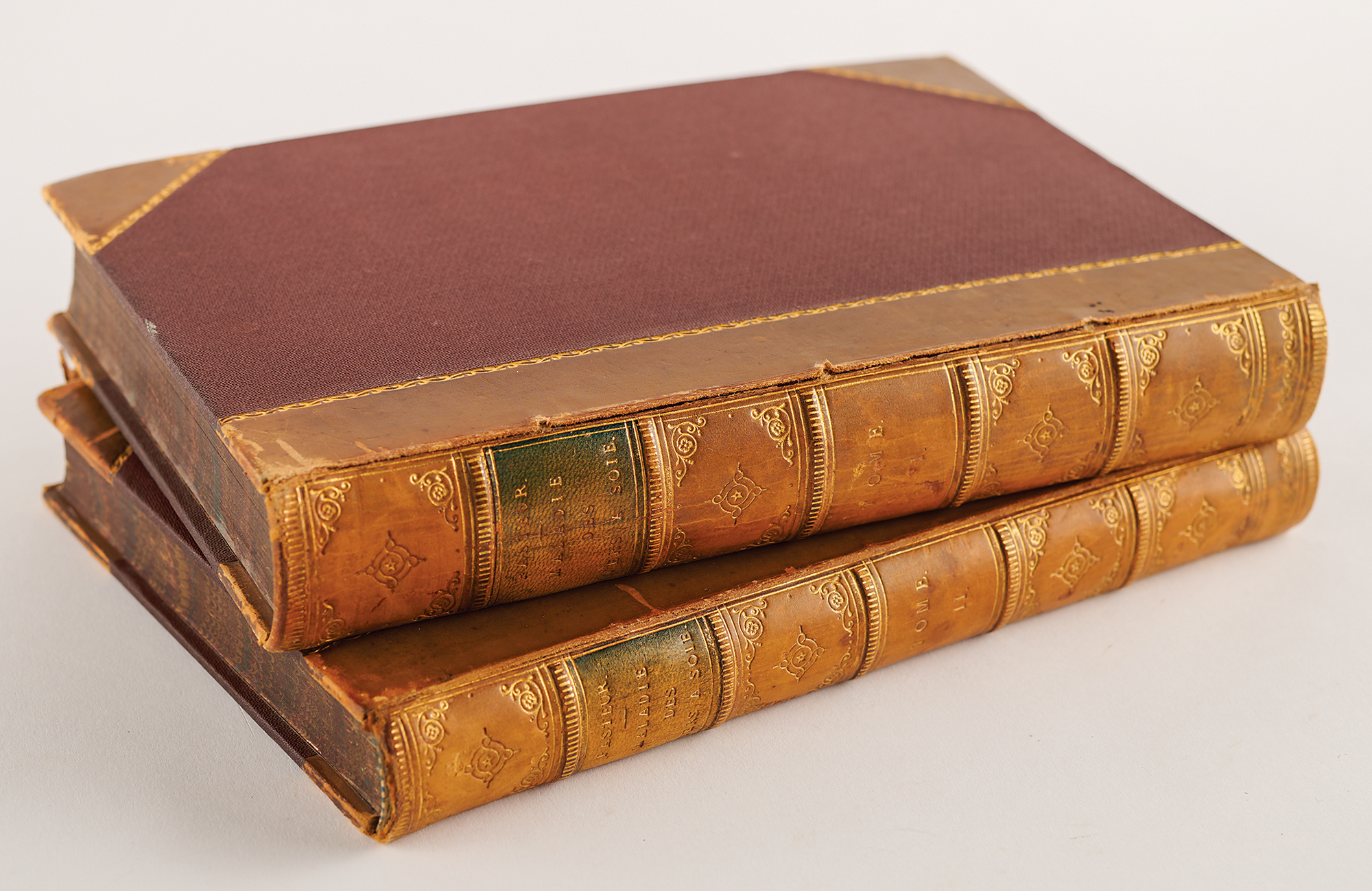
Signed book: Études sur la maladie des vers à soie, moyen pratique assuré de la combattre et d'en prévenir le retour [Studies on silkworm disease: a practical and reliable method to combat it and prevent its recurrence] by Louis Pasteur: Volumes I and II. Paris: Gauthier-Villars, Imprimeur-Libraire, 1870. Hardcover bound in quarter-leather with marbled boards and textblock, 6.25 x 9, 649 pages. Signed and inscribed on the half-title page in fountain pen, “A Madam Priestley, Hommage à la plus respectueuse sympathie, L. Pasteur, 7 aout, 1881.”
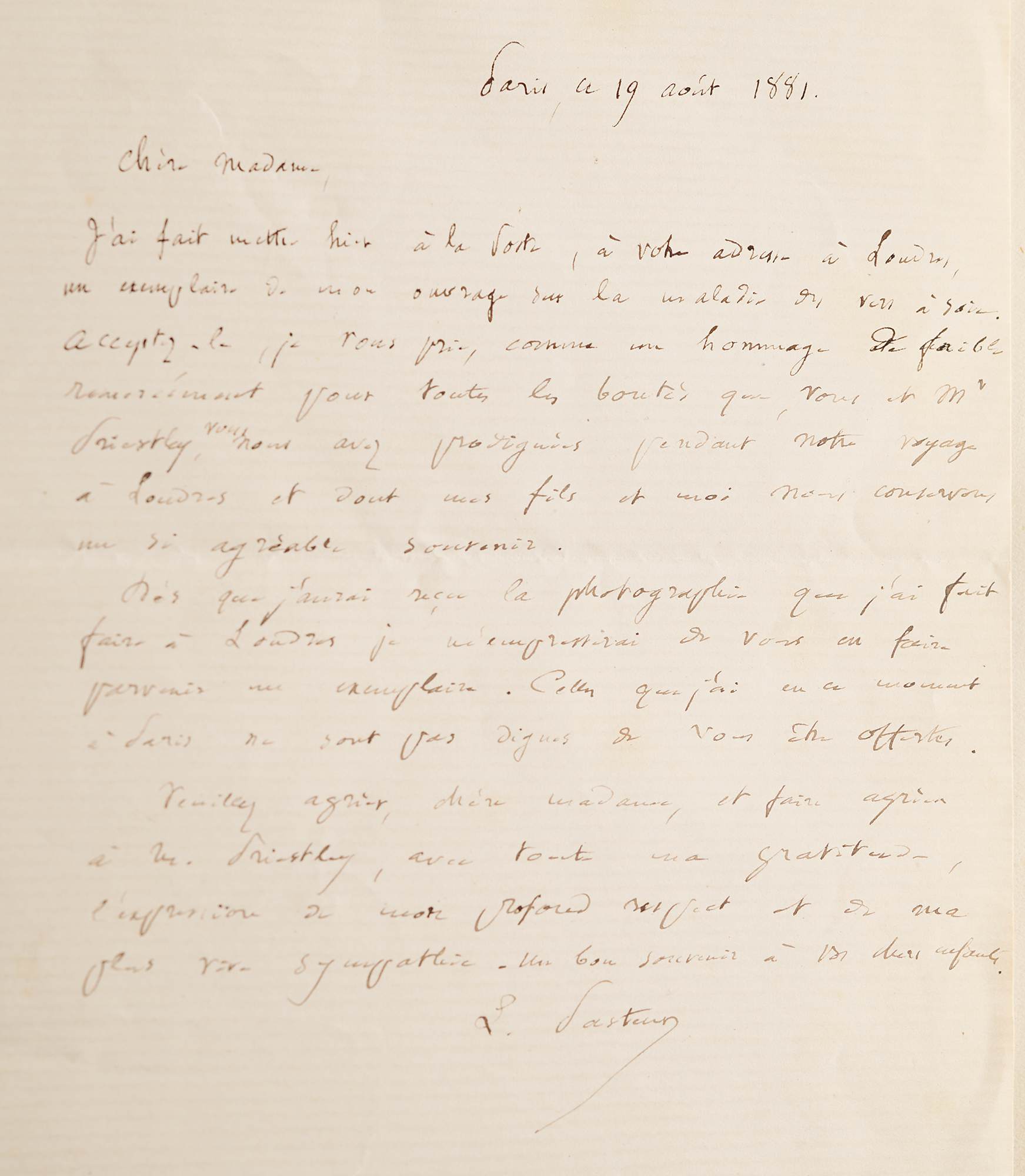
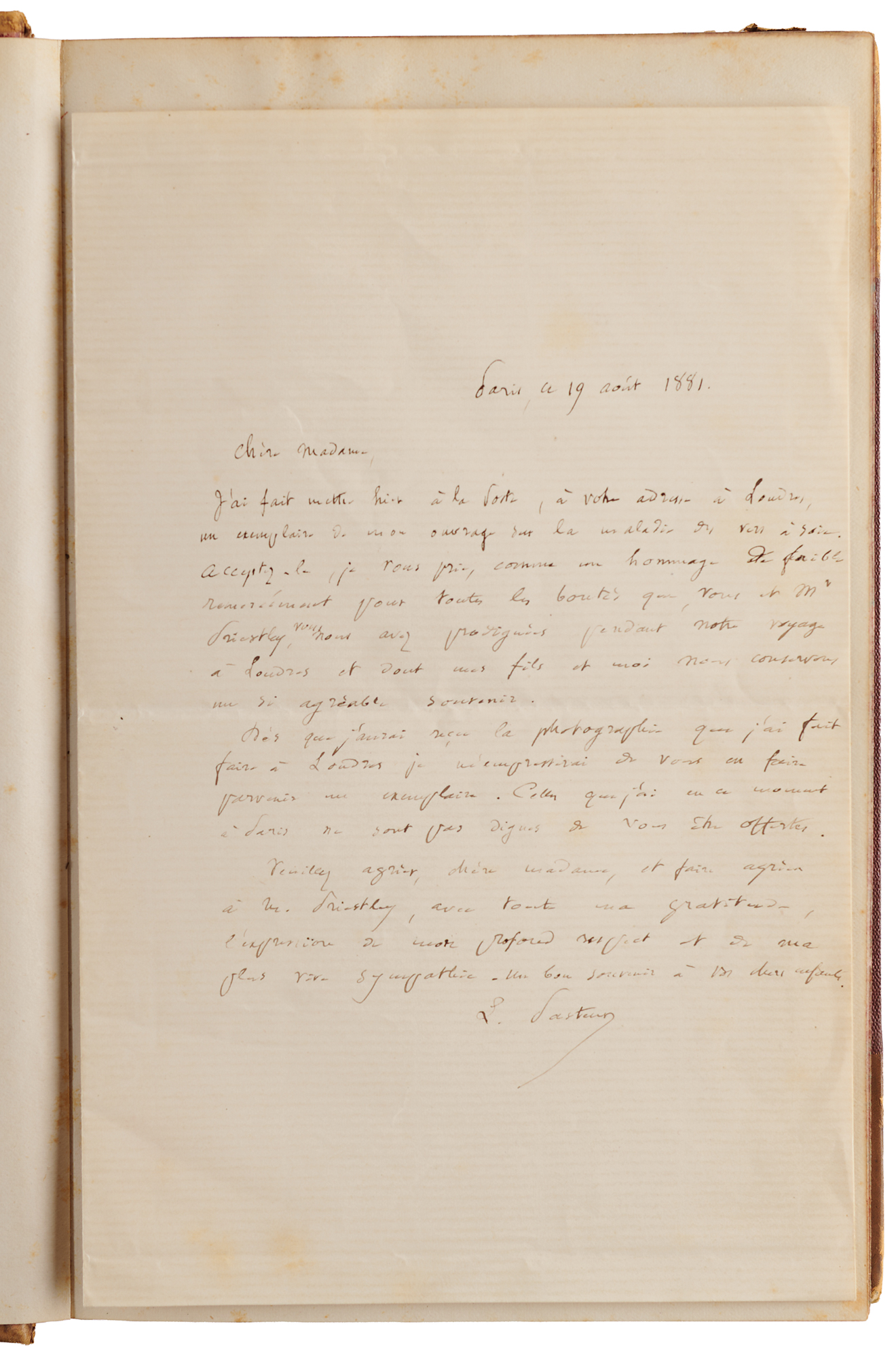
Affixed to an opening page of the offered book is an ALS signed “L. Pasteur,” one page, 5.25 x 8, August 19, 1881, sent from Paris and addressed to the book’s recipient, “Madam Priestley,” presumably Eliza Chambers Priestley, the wife of physician William Overend Priestley and the daughter of the noted publisher and geologist Robert Chambers. The handwritten letter, in part (loosely translated): “Yesterday I had posted to your London address a copy of my work on the disease of the silkworm. Please accept it as a small token of gratitude in recognition of all the kindnesses that you and Mr. Priestley bestowed upon us during our stay in London, and of which my sons and I retain such a pleasant memory. As soon as I receive the photograph that I had taken in London, I shall hasten to send you a copy. The ones I presently have in Paris are not worthy of being offered to you.” The letter is in fine condition; the book signed page is very good to fine, with scattered foxing. Book condition: G+/None, with mottled browning to the textblock, edgewear, and rubbing to spine.
In 1865, at the request of the French government, Louis Pasteur began investigating pébrine, a disease devastating silkworm farms in southern France. What was initially a practical effort to save the silk industry became a five-year endeavor (1865–1870) that transformed his scientific career. Entering a field entirely new to him, Pasteur developed an original and effective method to eliminate the pathogens infecting silkworm populations, while also establishing a more rigorous understanding of infection, contagion, and heredity. This work marked a decisive turning point, as Pasteur moved beyond his training as a chemist and laid conceptual foundations that would later extend to animal and human disease, effectively ushering him into biology.

