Sold For $10,104
*Includes Buyers Premium
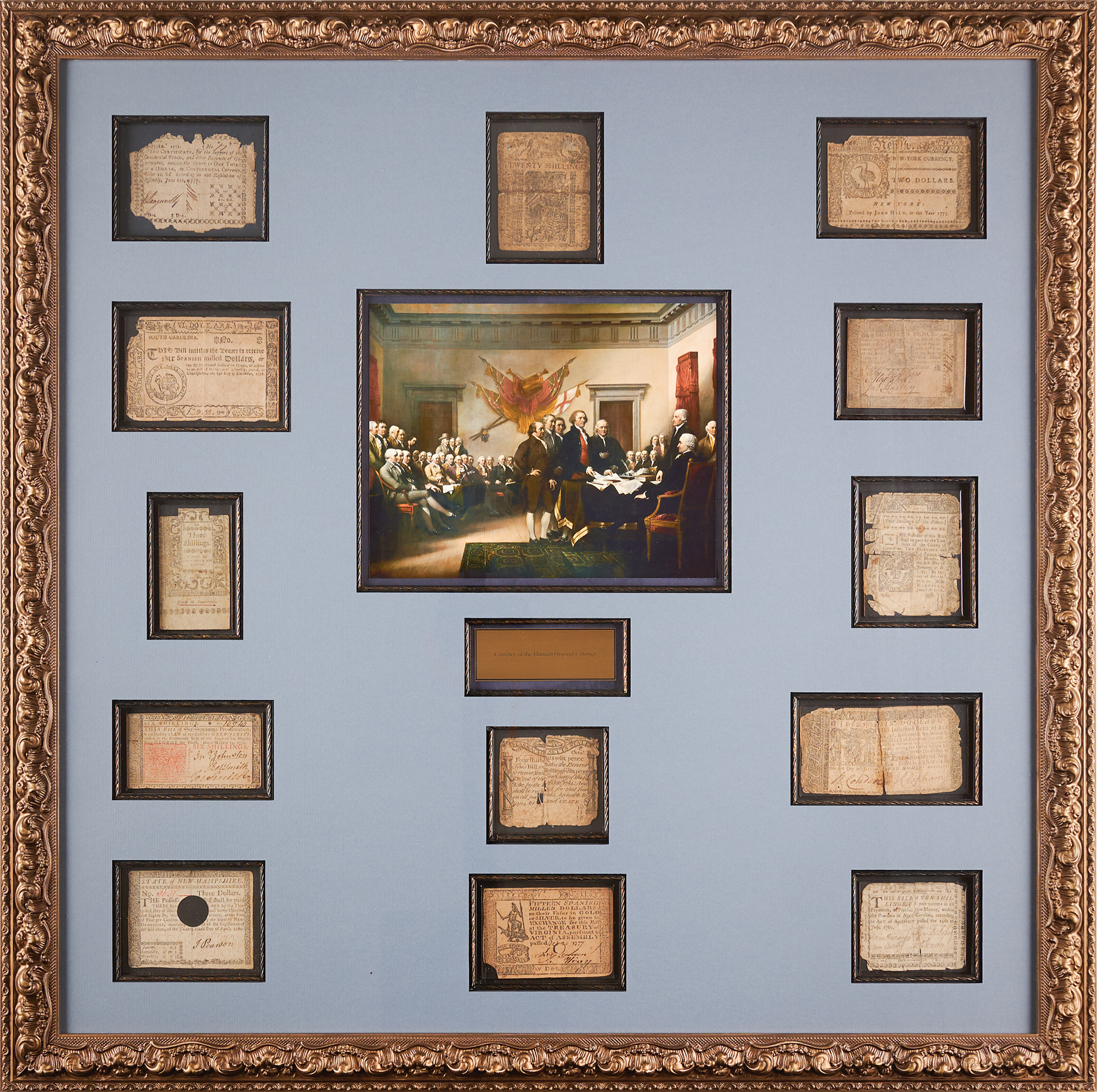
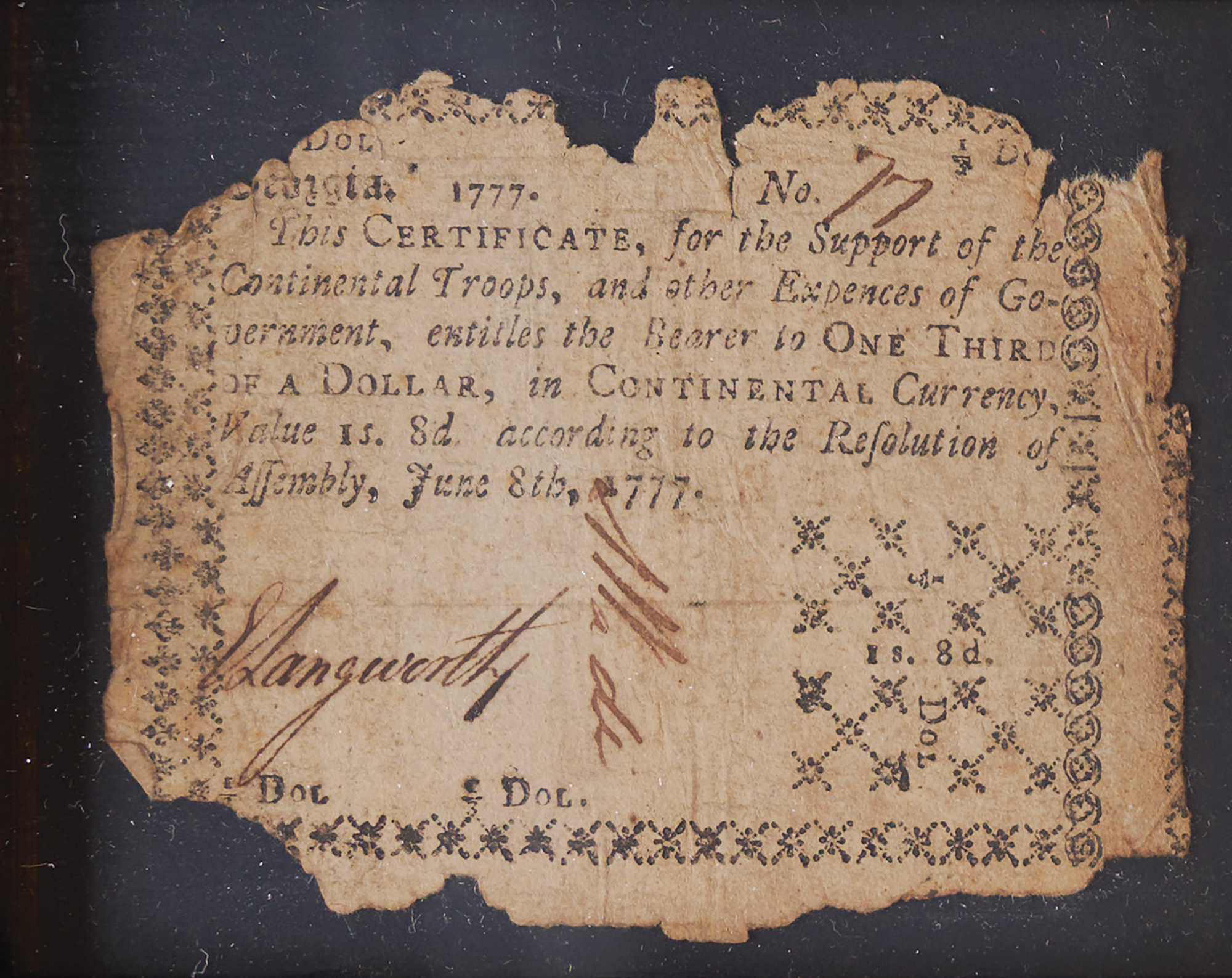
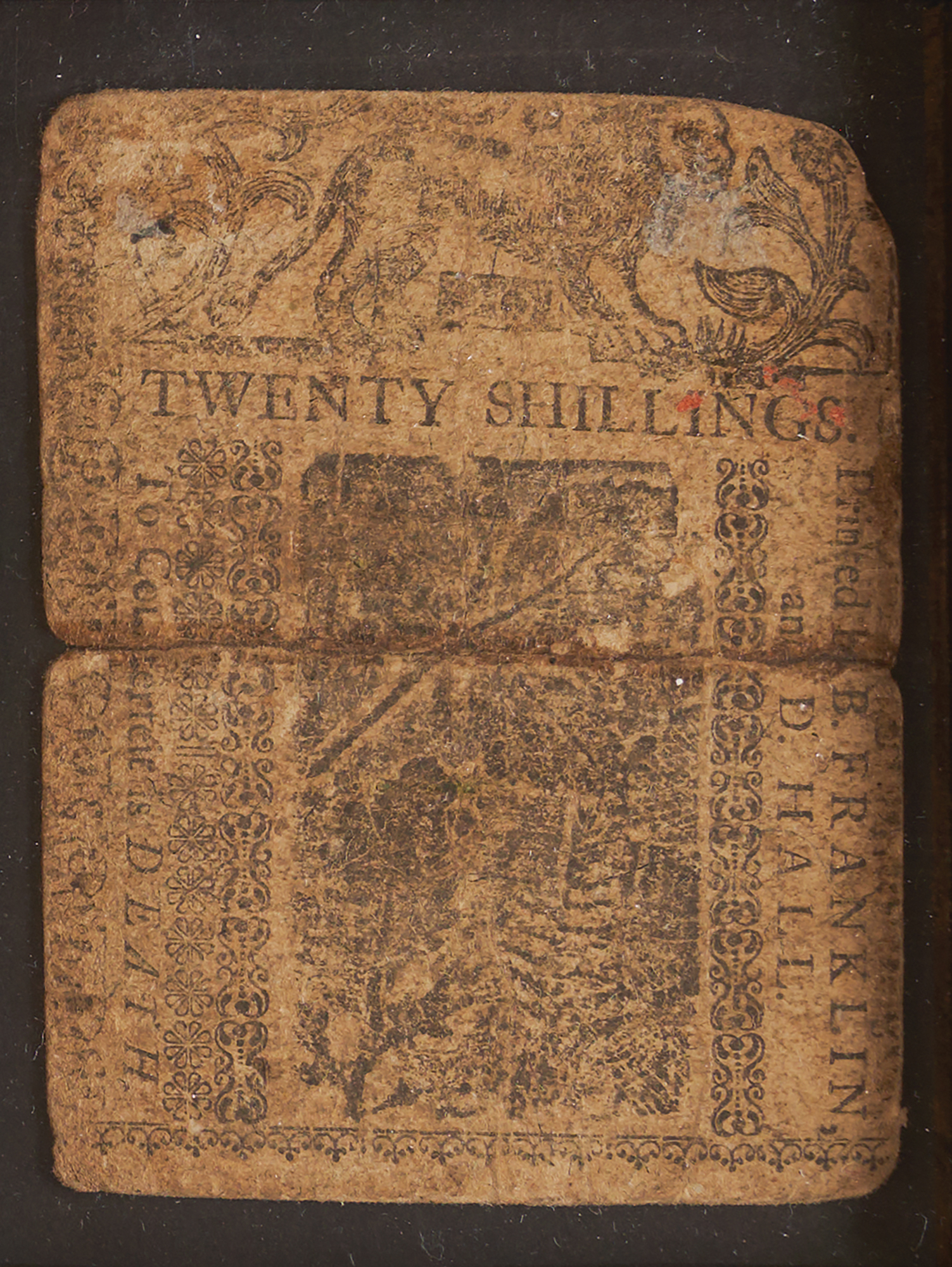
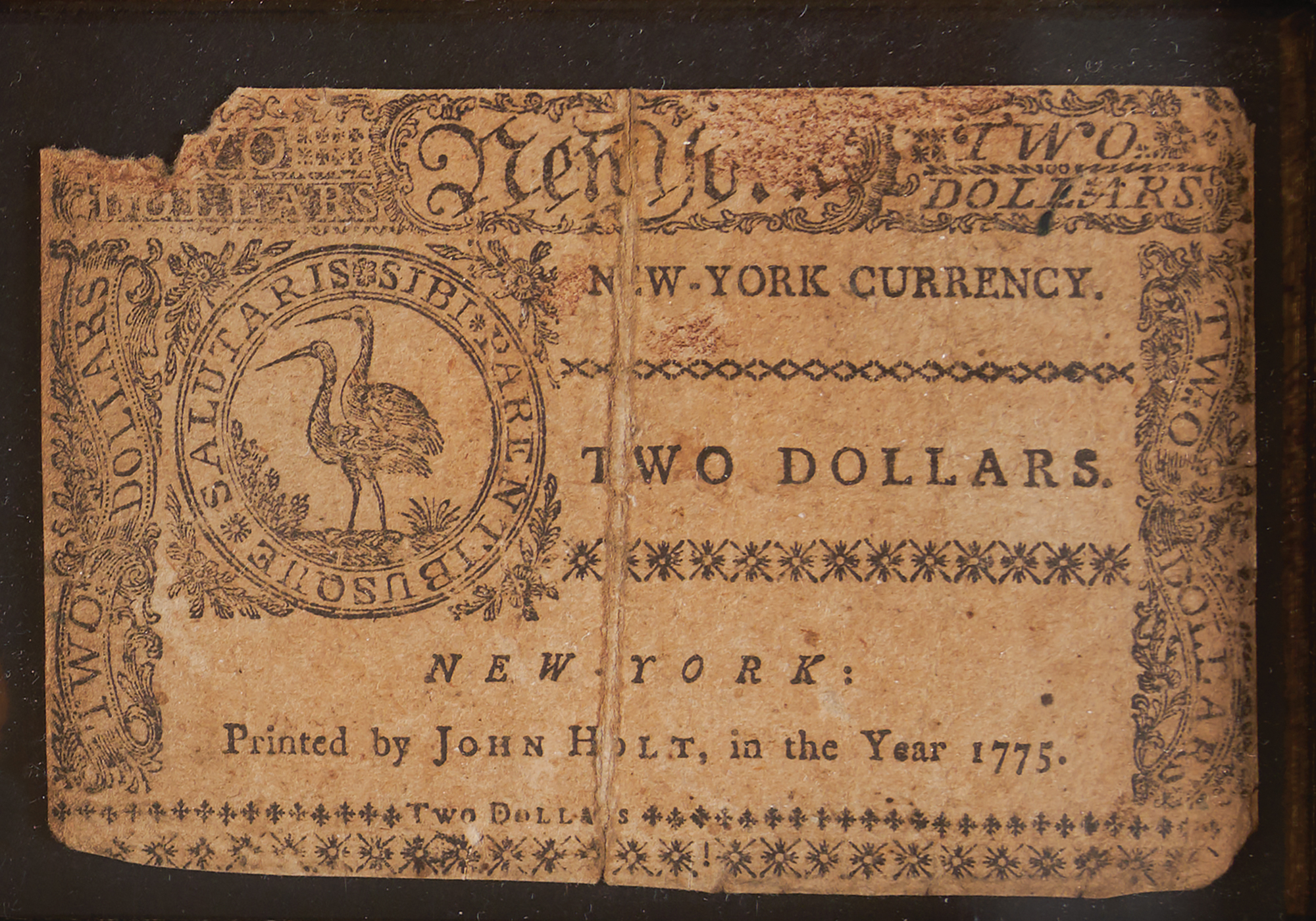
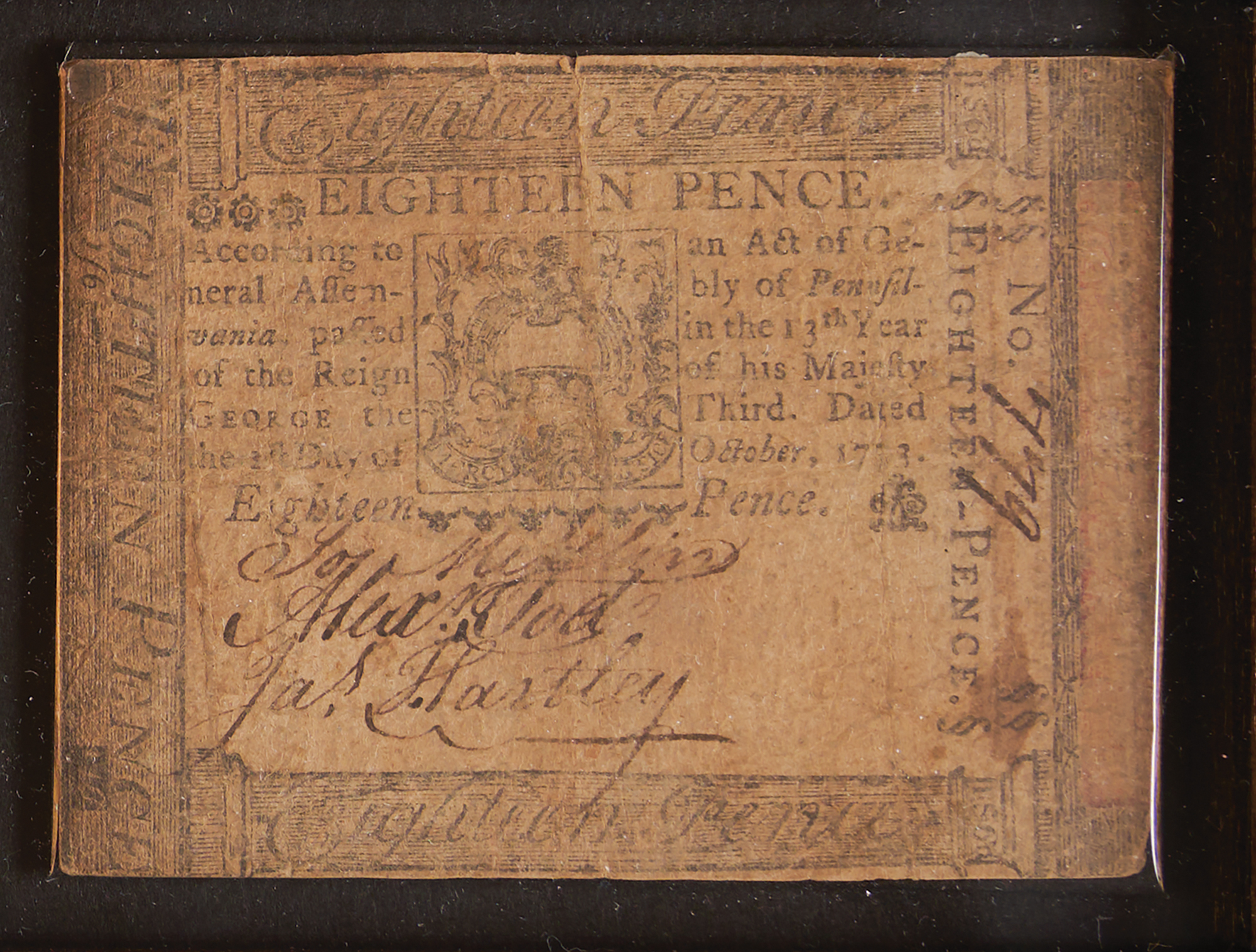
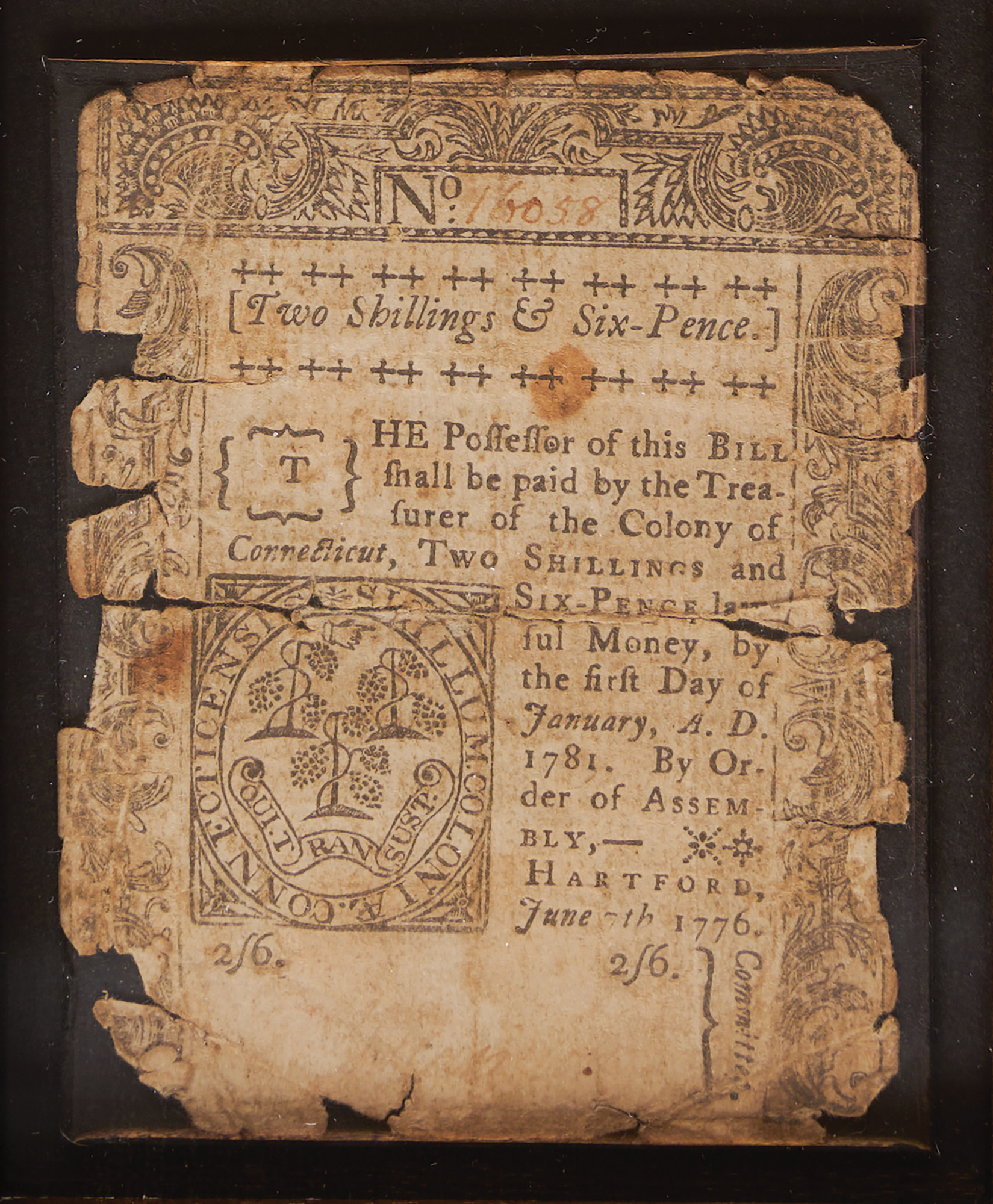
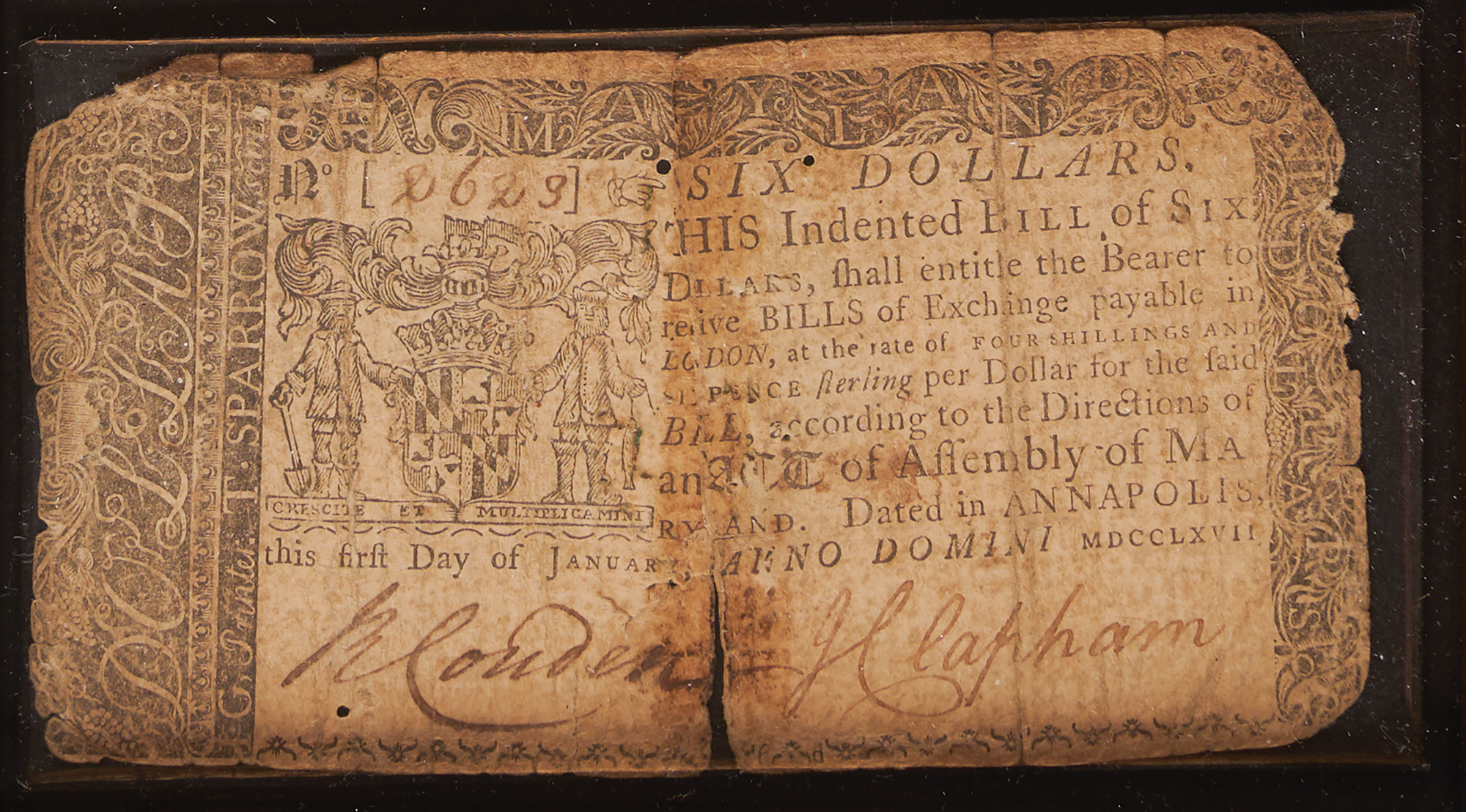
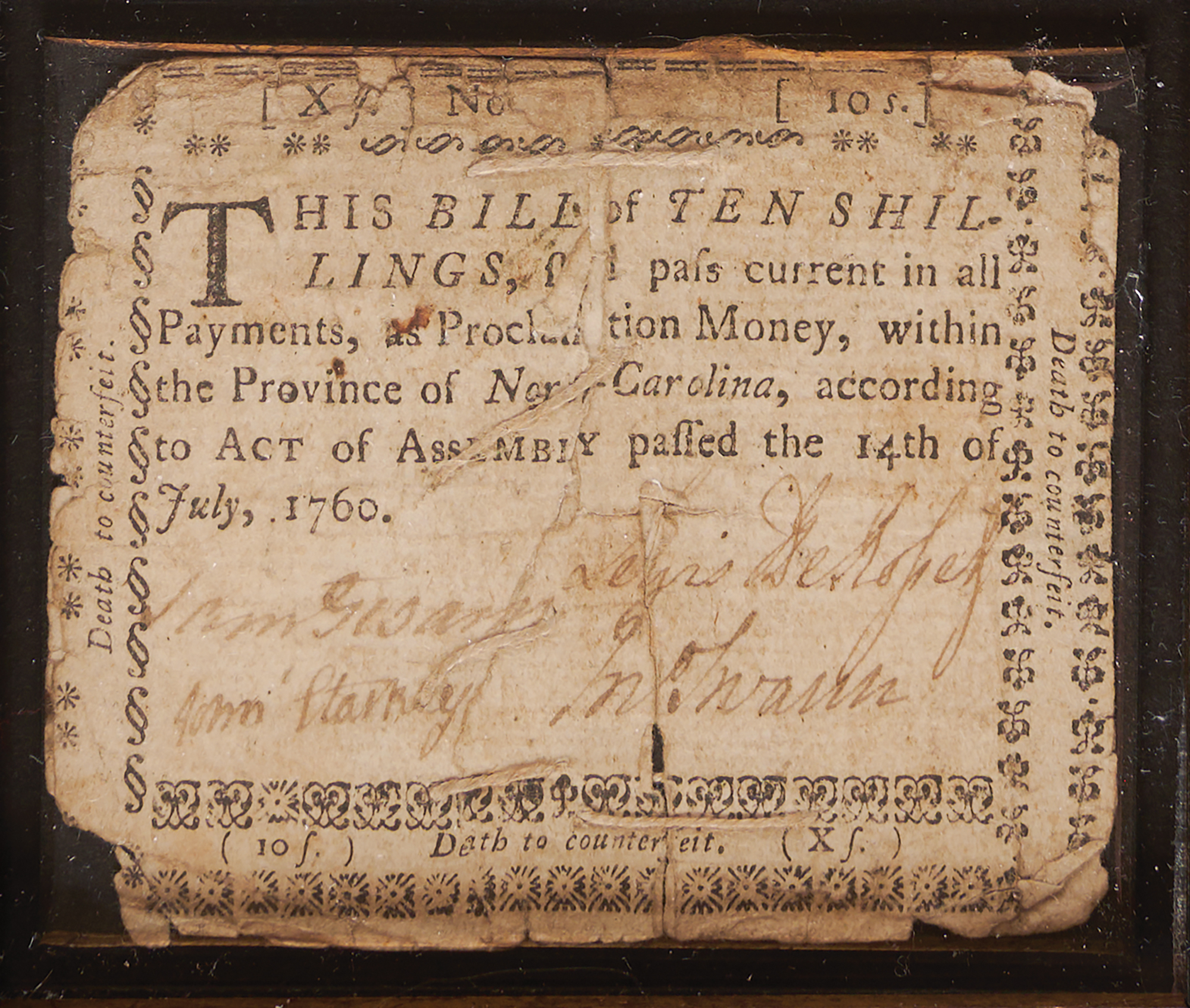
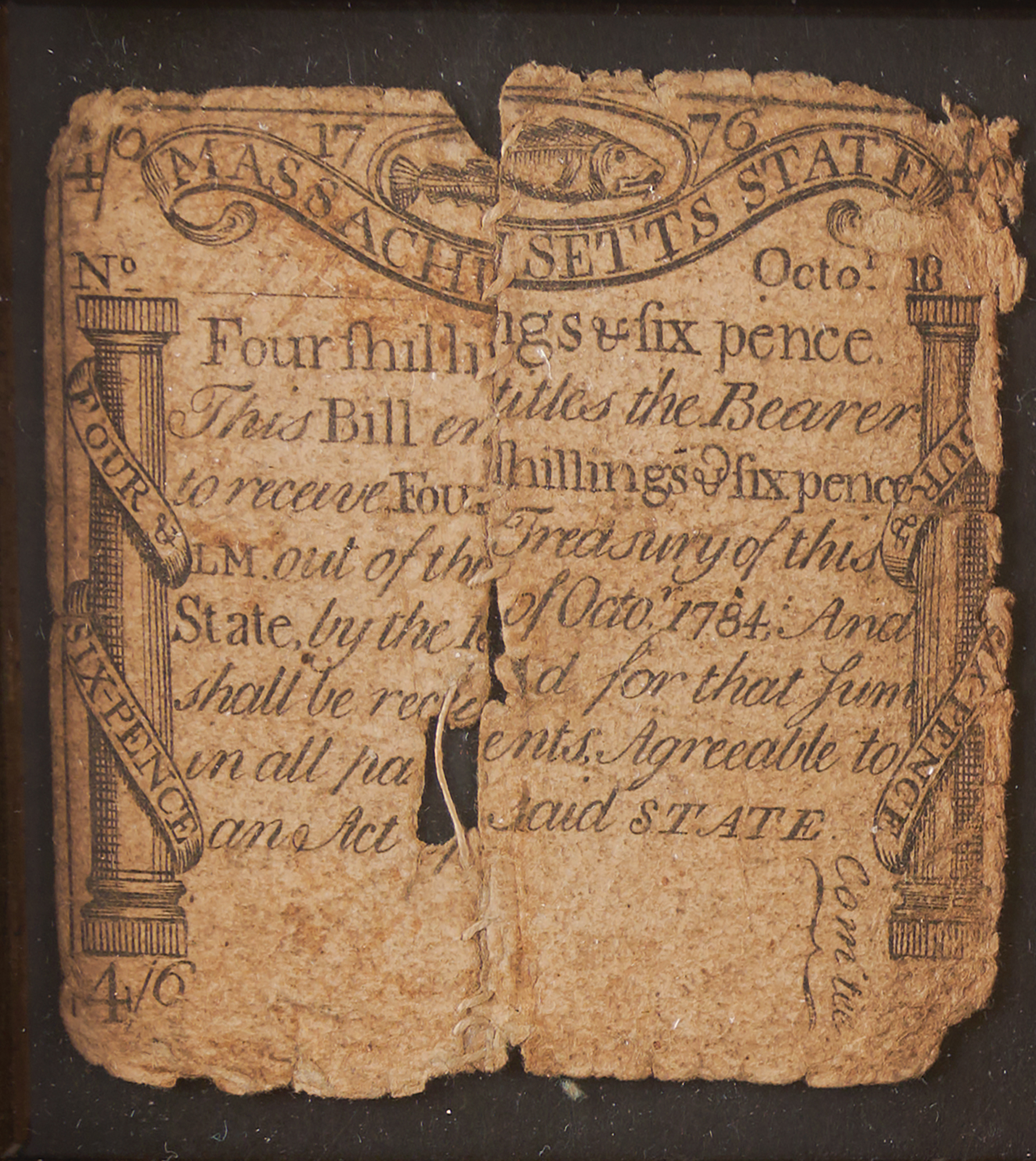
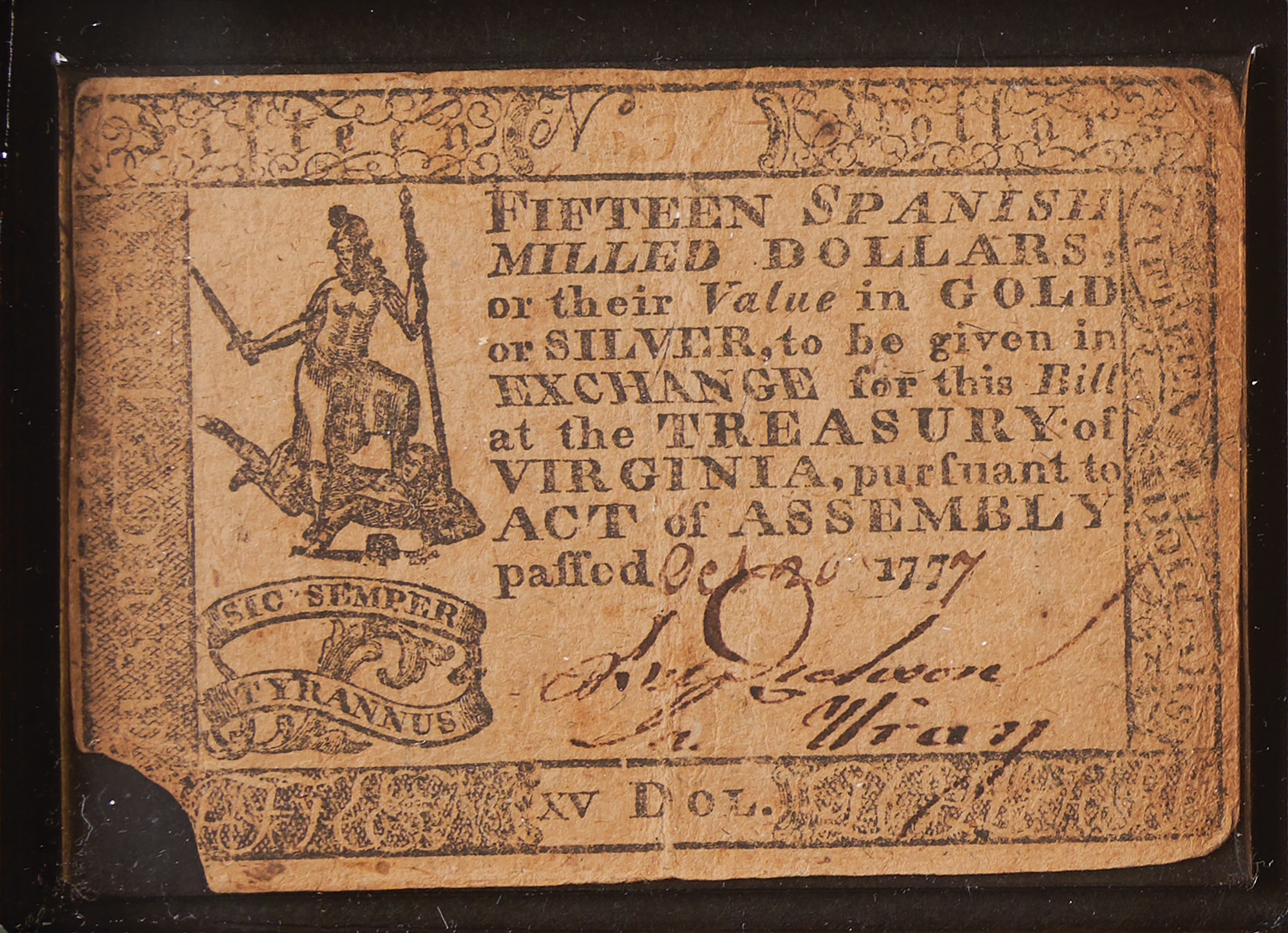
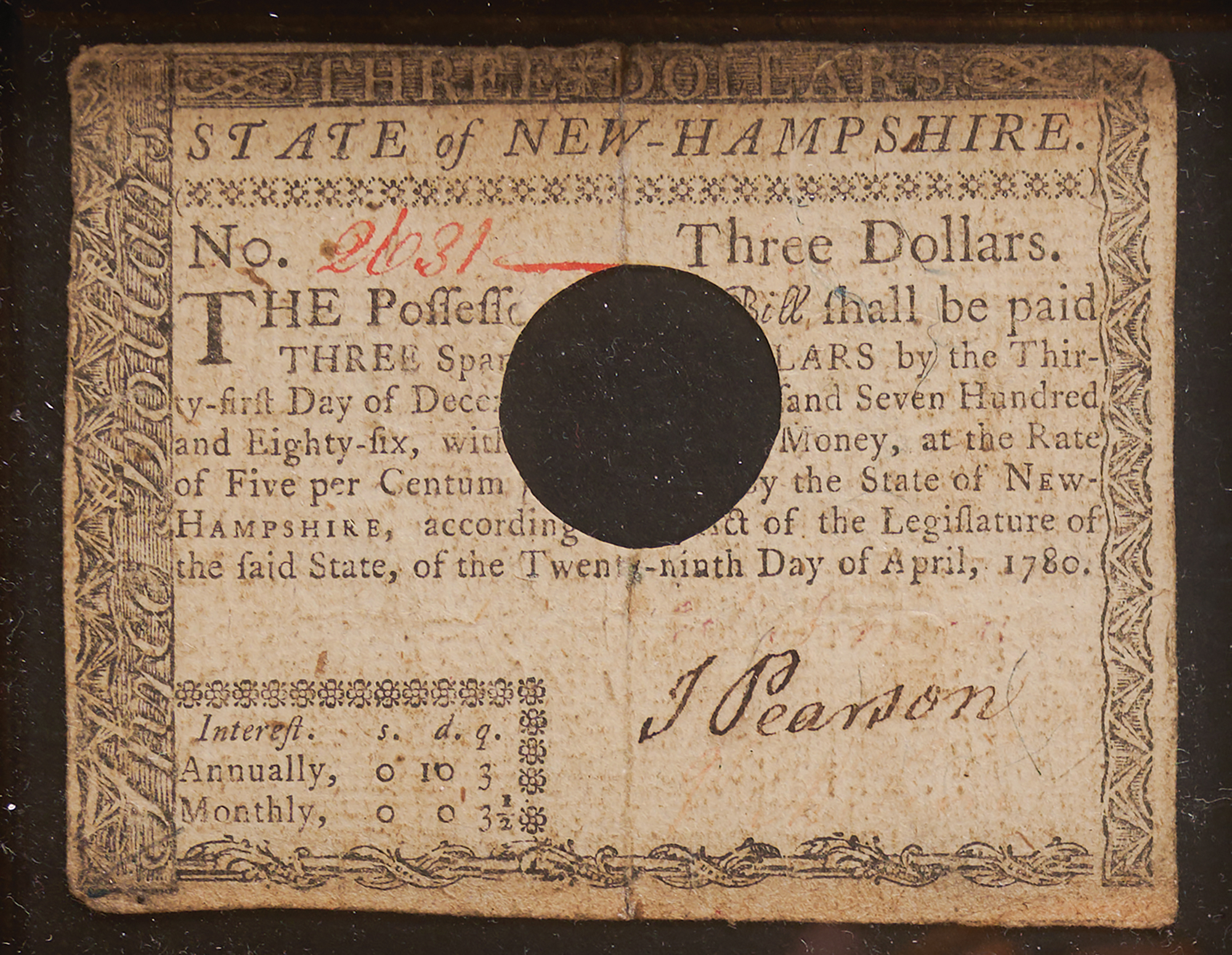
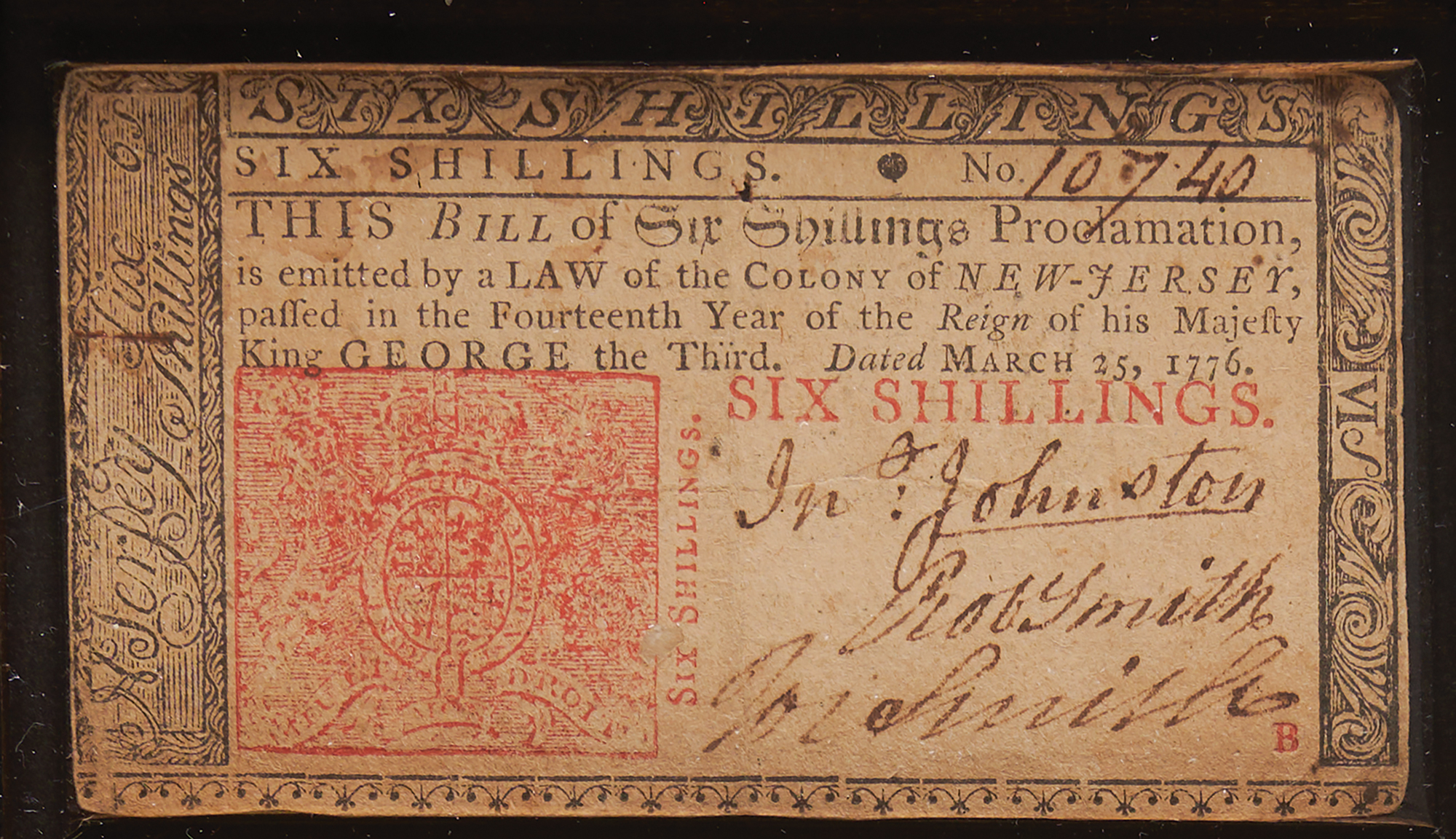
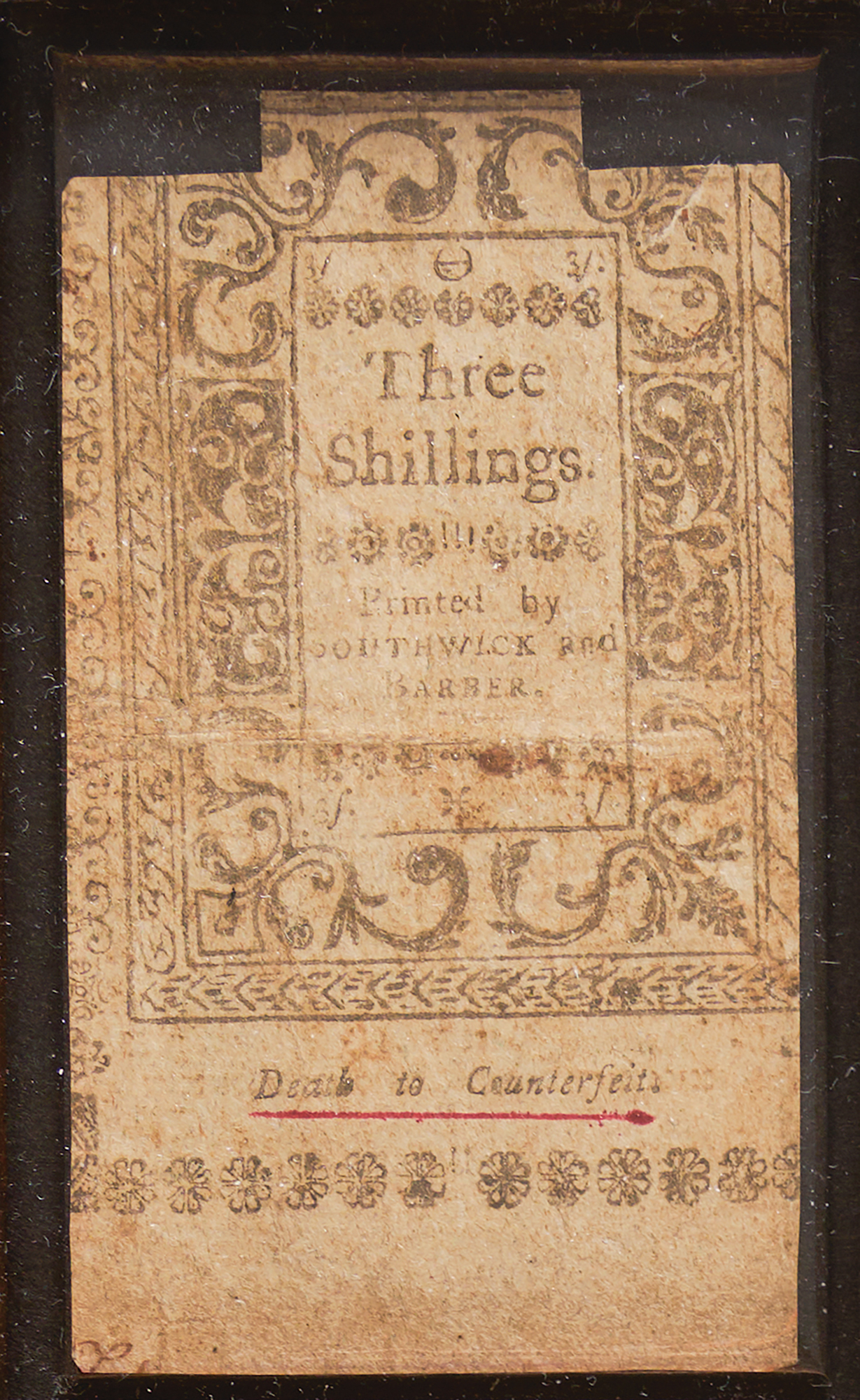
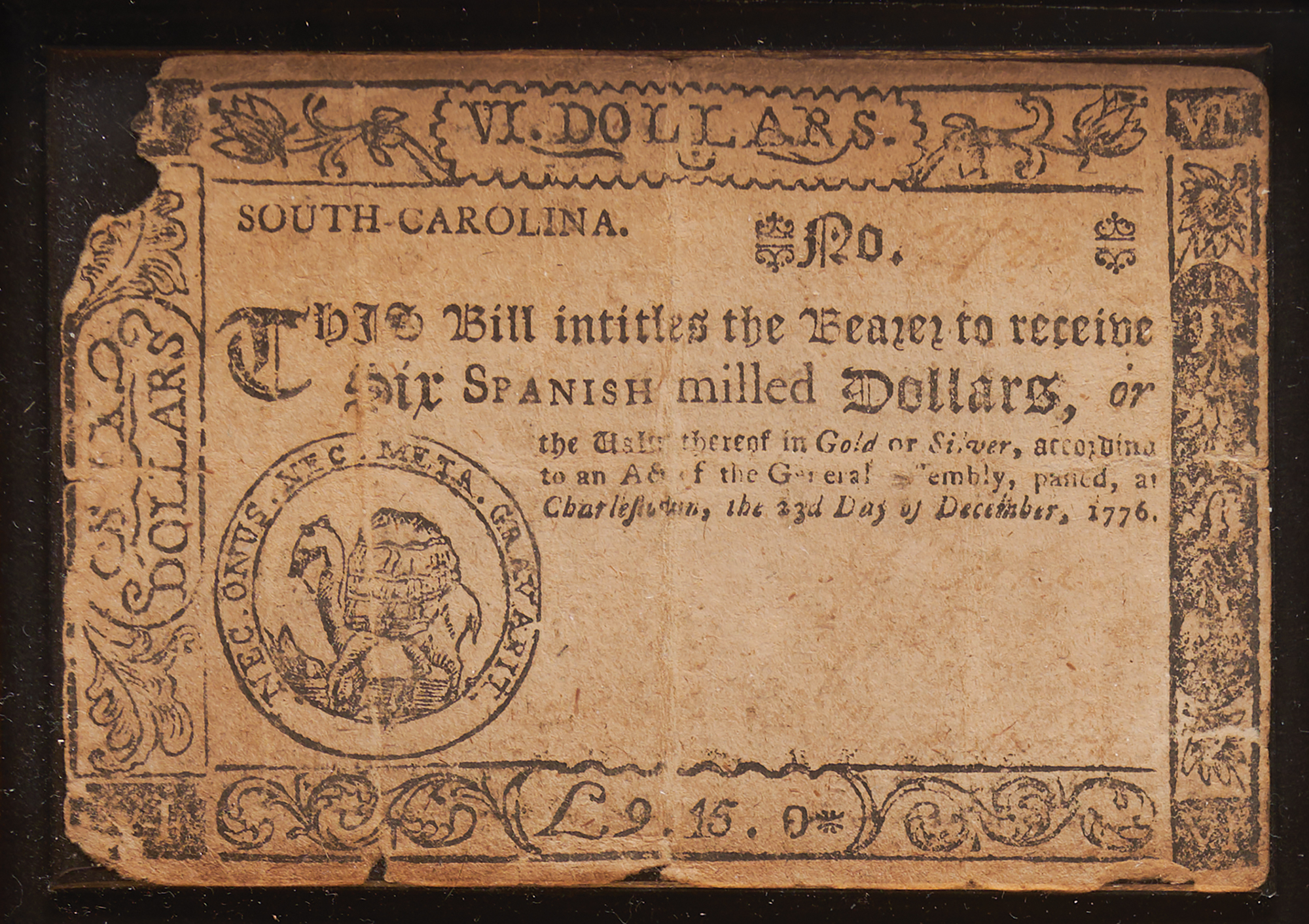
Currency notes from the 13 original colonies, ranging in denomination from eighteen pence to fifteen Spanish milled dollars, and one-third of a dollar to six dollars, from the colonies of New Hampshire (1780), New York (1775), Massachusetts (1776), Pennsylvania (1776), Connecticut (1776), Rhode Island, Maryland (1767), New Jersey (1776), Delaware, North Carolina (1760), South Carolina (1776), Virginia (1777), and Georgia (1777). The notes range in size from 2 x 3.5 to 4.5 x 3, and seven of the notes bear one to five authoritative signatures at the conclusion of the ornately designed slip. Matted and framed with an image of the signing of the Declaration of Independence, and a small plaque reading ‘Currency of the Thirteen Original Colonies,’ to an overall size of 31.5 x 31.5. In overall very good to fine condition.
Before the Revolutionary War, the British Parliament passed the Currency Acts of 1751, 1764, and 1773 to control colonial paper money to protect their merchants from depreciated colonial currency. By not allowing the currency to be used for ‘legal tender’ to pay public and private debts, this created a money crisis for the colonials, who had little access to gold and silver for coinage except for foreign coins like the Spanish dollar. When the war broke out, the colonies were freed from the monetary restrictions, allowing the Continental Congress to print paper money to help fund the war effort. Each state also issued its own unrestricted currency, contributing to a rapid depreciation of both state and Continental money. To address this problem, the Constitution, ratified in 1788, banned the right of independent states to coin and print money.

