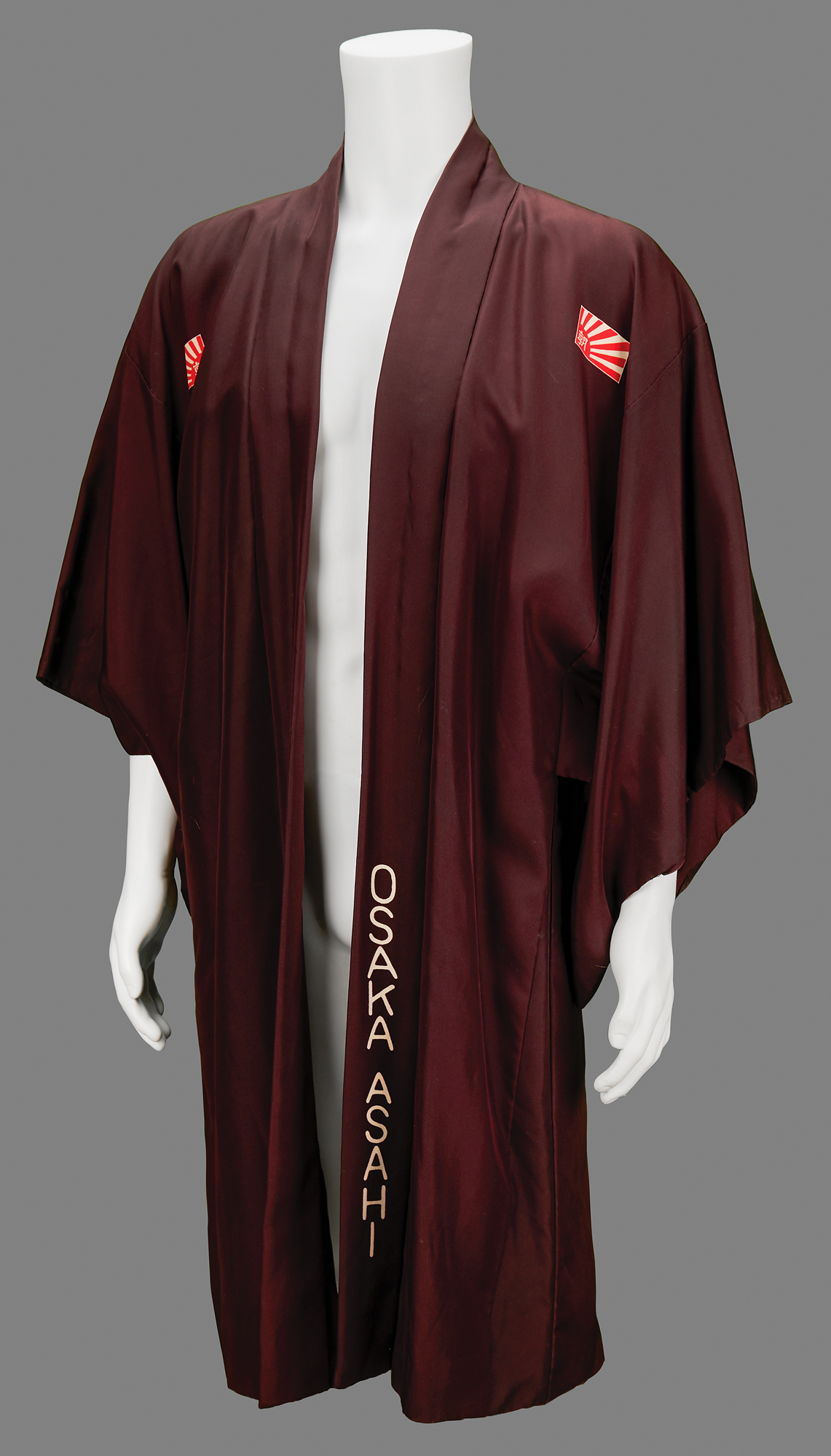
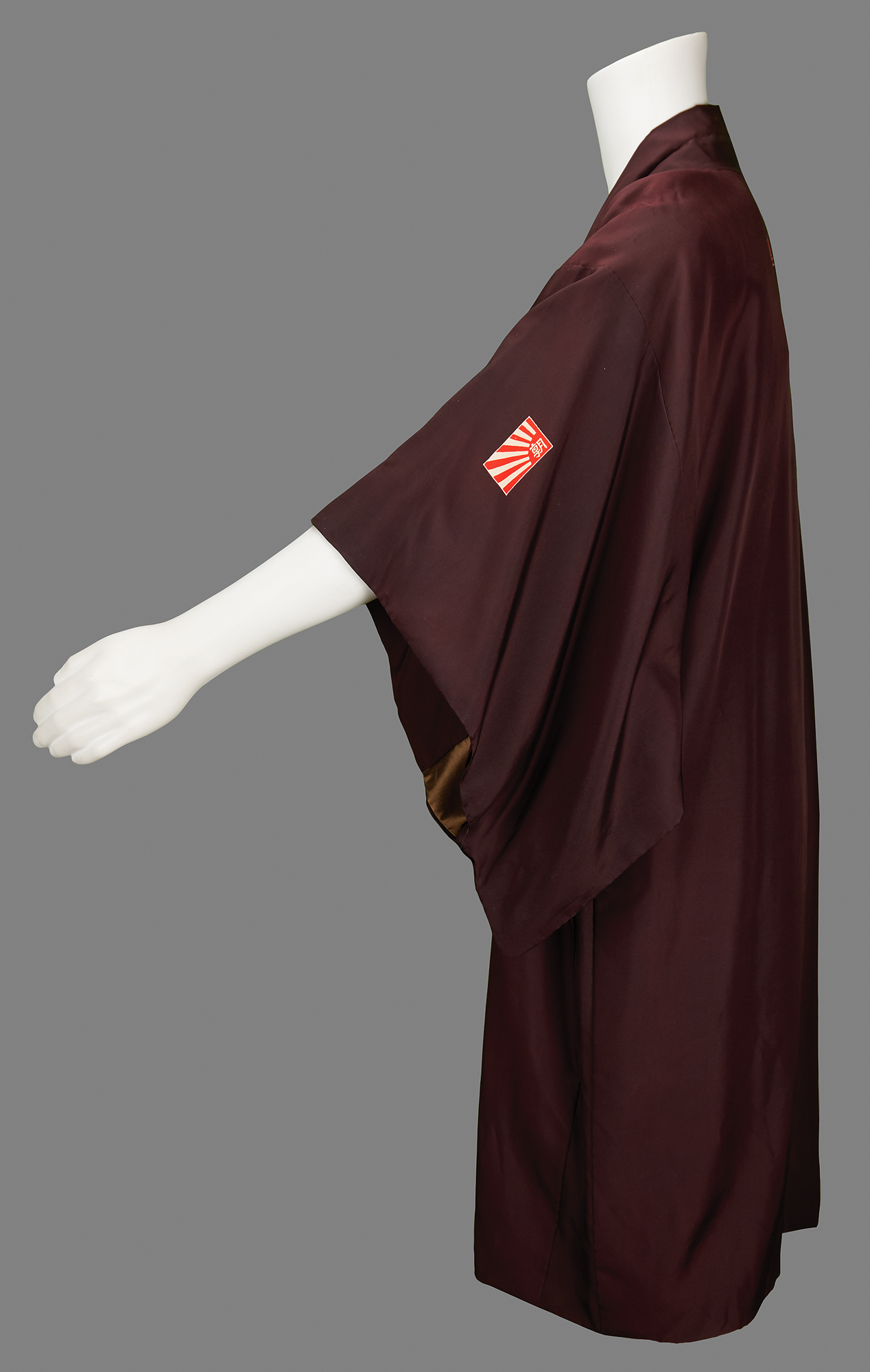
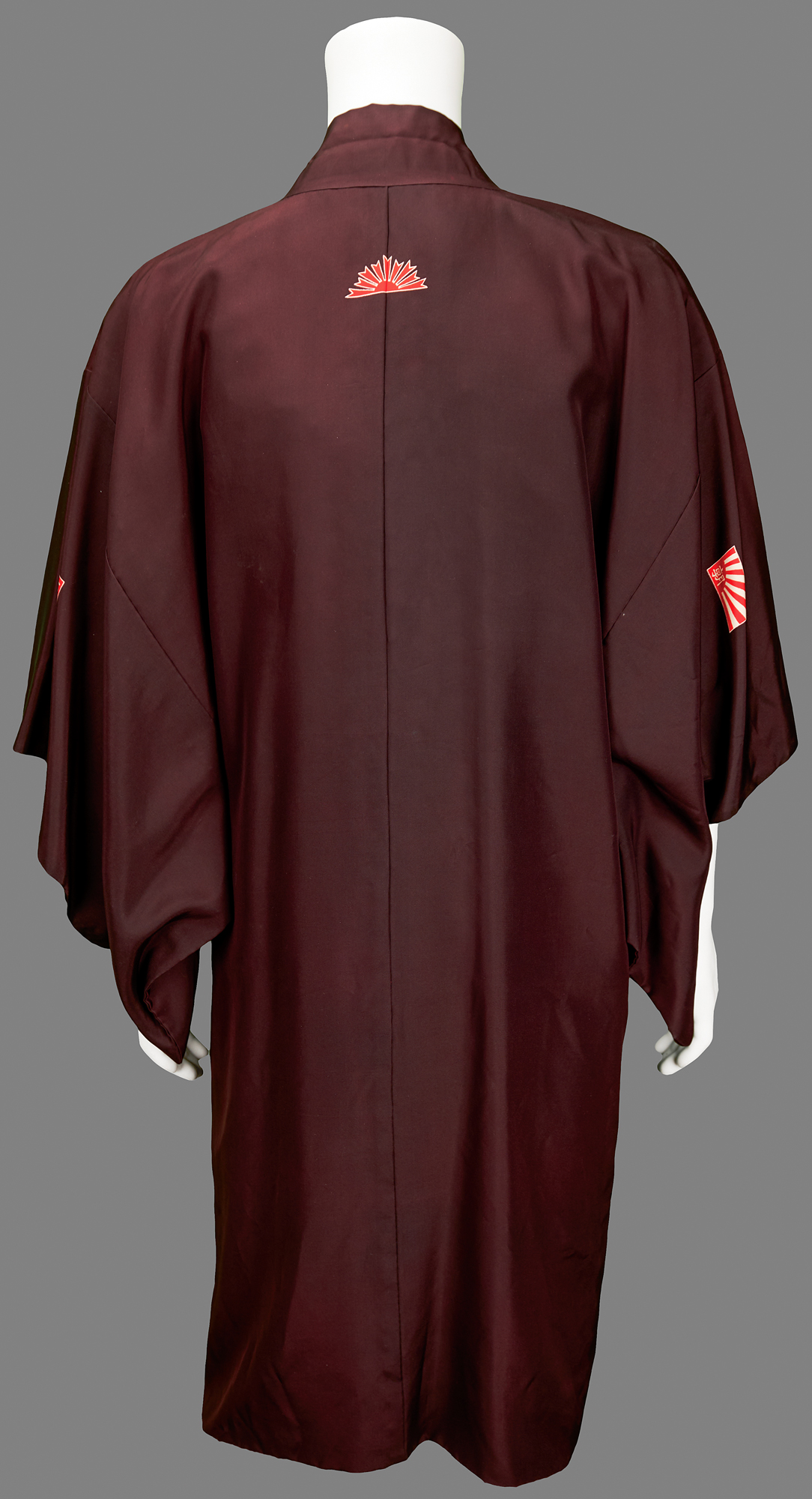
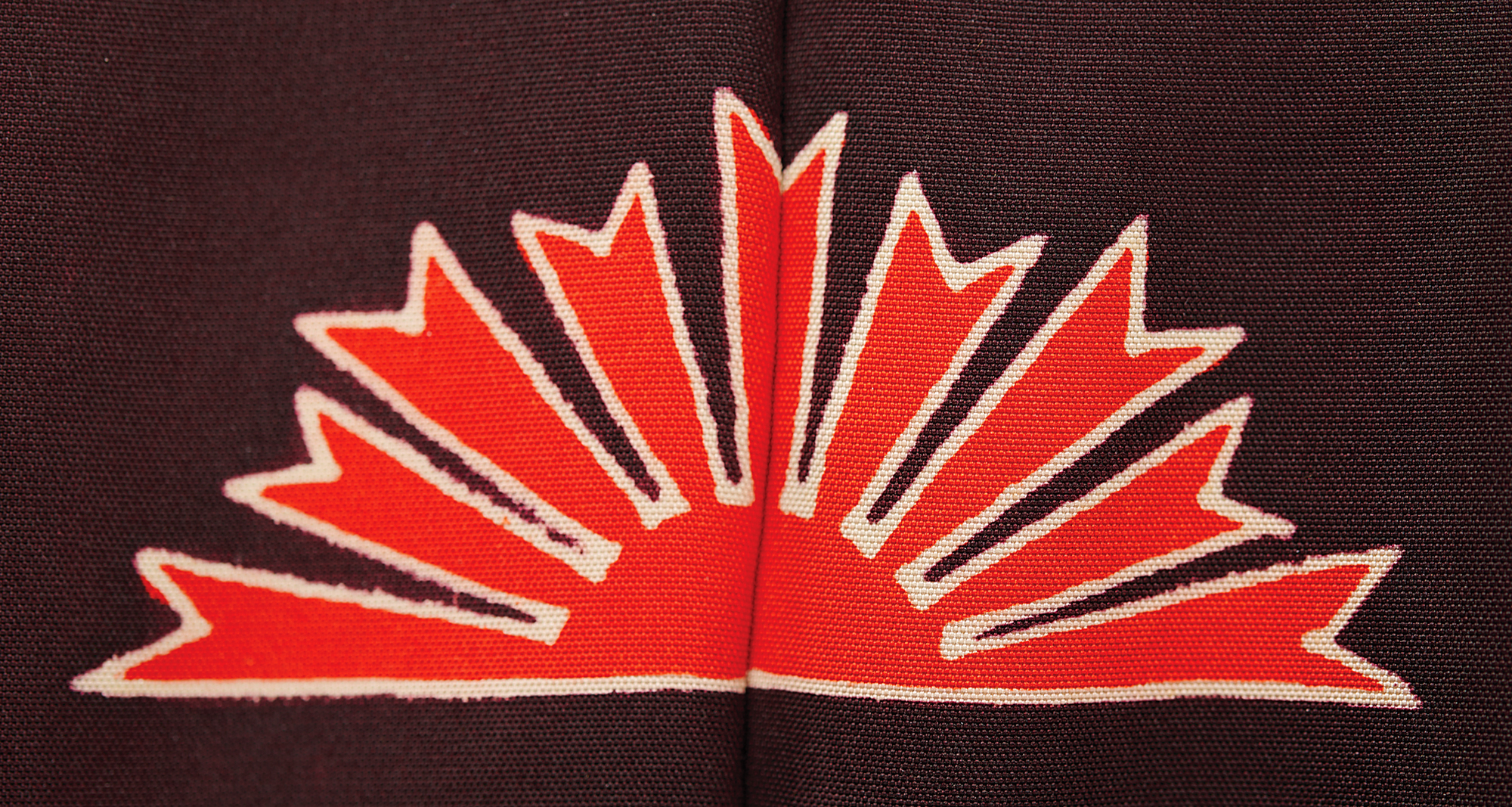
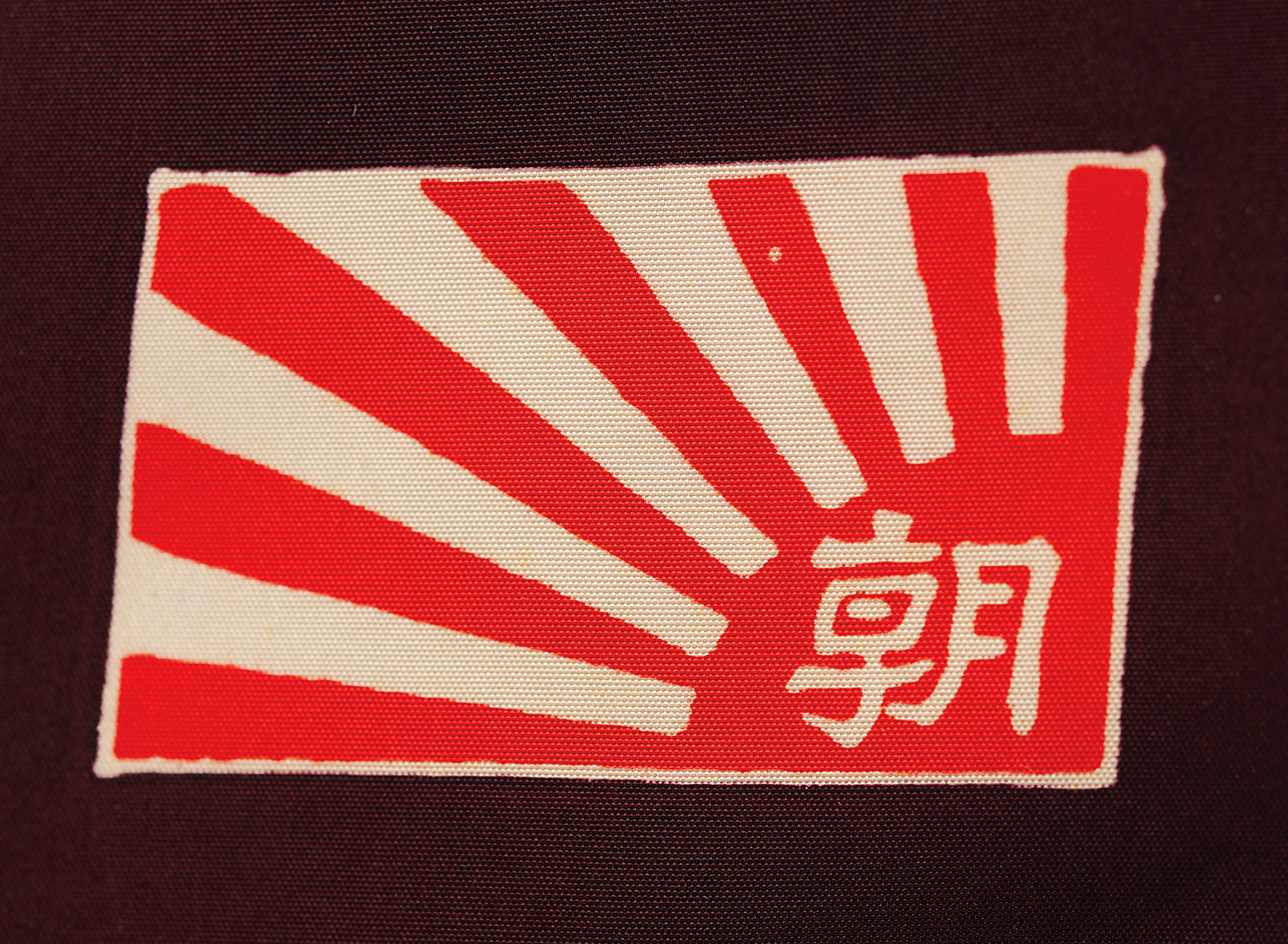

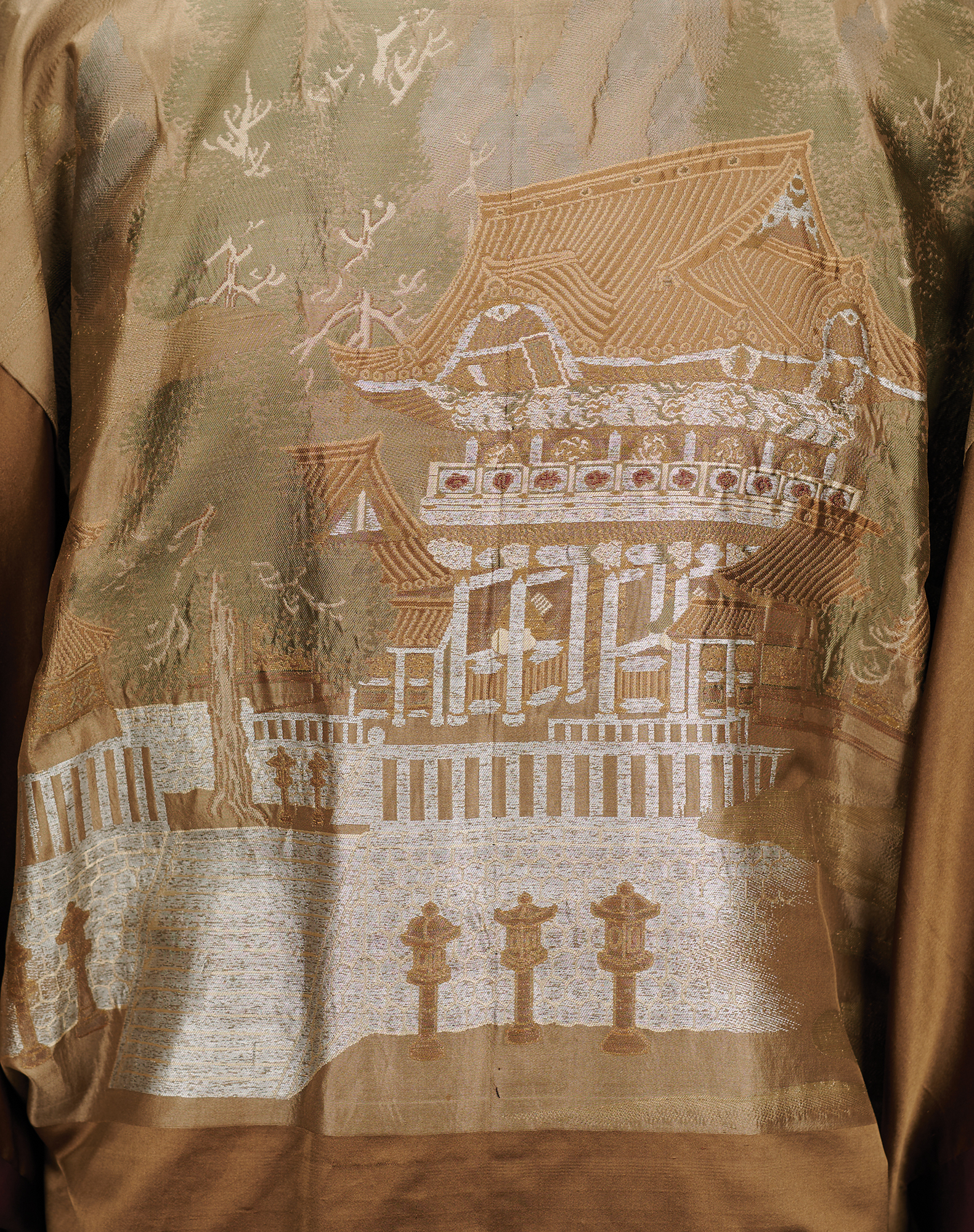
The brown kimono, no size (likely small), features matching emblems of the flag of the Asahi Shimbun Company to the sleeves and shoulders, a rising sun to the upper back, and vertical text in English to the front, “Osaka Asai.” The inner main panel of the kimono features a stunning design of a formal Shinto shrine complex, rendered in subdued gold, silver, and warm neutral colors; such imagery was reserved for high-quality, symbolic garments of the period. In fine condition, with some loose stitching to the sleeves.
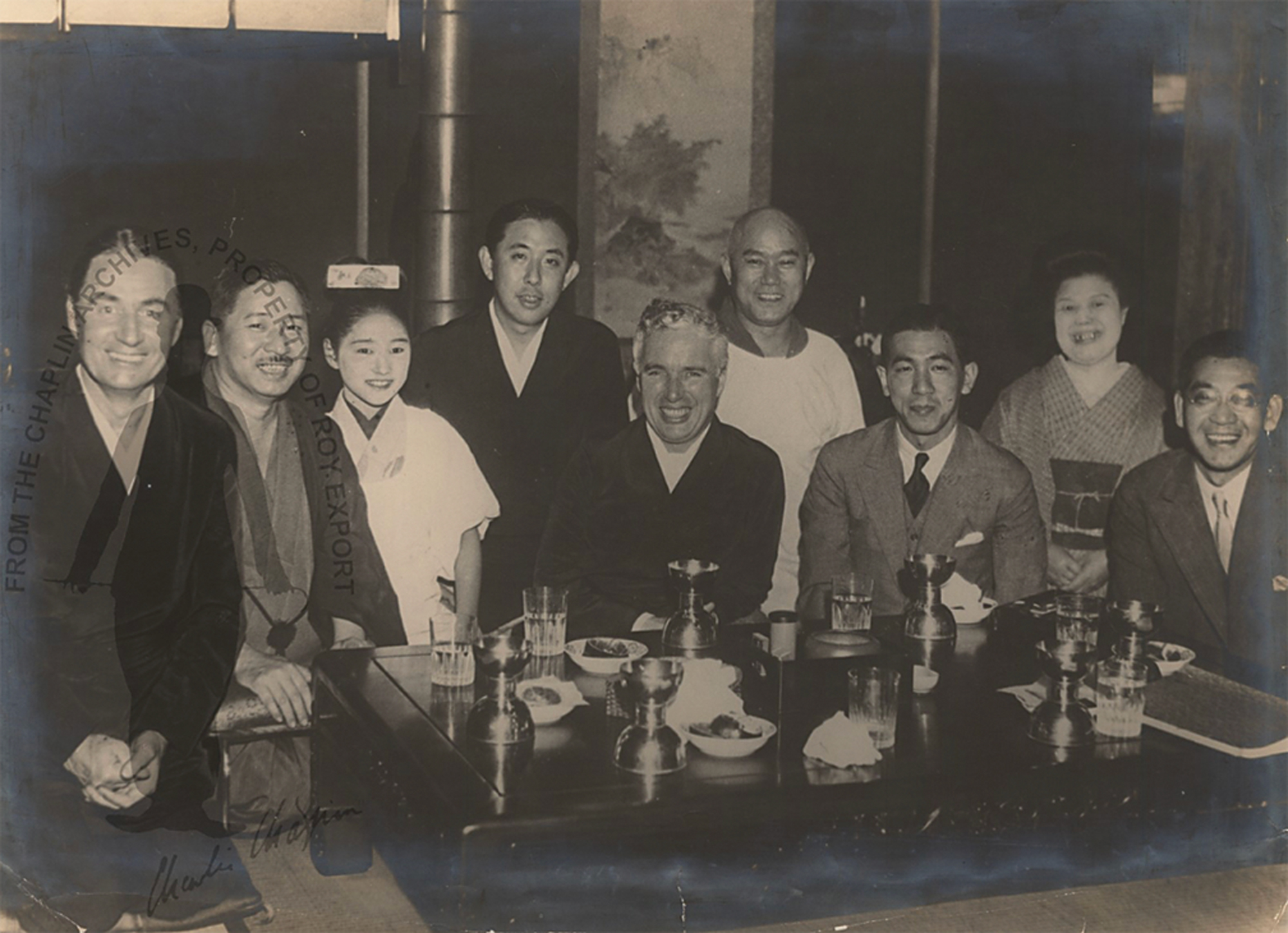
During Charlie Chaplin’s 1932 world tour promoting City Lights, his visit to Japan in May placed him unexpectedly close to one of the most consequential political assassinations in modern Japanese history. Chaplin arrived on May 14, 1932, at a moment of intense political instability marked by the rise of ultranationalist movements within the military. A group of radical naval officers had allegedly conceived an assassination plot that included killing Chaplin, a symbol of Western culture, during a welcome reception hosted by Prime Minister Inukai Tsuyoshi. The plan was ultimately thwarted when the public announcement of the reception was delayed, preventing the conspirators from acting as intended.
Fate intervened the following day. While the officers carried out their attack and assassinated Prime Minister Inukai on May 15, 1932, Chaplin was not present. Instead, he was attending a sumo wrestling match alongside Inukai’s son, Inukai Takeru—an unplanned diversion that likely saved both of their lives.
Accompanied by a copy of a notarized letter of provenance from W. Shelby Coates, Jr., the former husband of model/actress Frances Louise Ward, who Chaplin gifted this kimono in 1943. Coates states: ‘In December of 1959 we moved from a rented house into our permanent residence located at 200 Piping Rock Road, Locust Valley, Long Island, New York. After we unpacked she displayed for me two garments — a kimono and a suit — which she told me had been given to her in the nineteen forties by the renowned actor, director, producer, screenwriter, and composer: Charlie Chaplin…Before [Ward] departed from Hollywood, Chaplin simply made an outright gift, owing to their friendship, of the garments to her. He explained to her that Hirohito, Emperor of Japan, had given them to him during a visit to Japan in the early thirties.’
Also included is a signed letter of provenance from Ward's daughter, Susan White, who writes: "Charlie Chaplin gifted this kimono to my mother in 1943. My mother, Frances Louise Ward, was a top model and actress in NYC and a Hollywood starlet who was under contract with MGM studios. She had been in several films, including a Bette Davis film and a Mickey Rooney/Judy Garland film, and MGM Studios had positioned her to be one of their next new stars. MGM called her ‘the next Carole Lombard.’
My mother was introduced to Charlie by his son, Sydney, who brought my mother to Charlie’s house. She then became good friends with Charlie and was often a guest at his home, and had many happy times with him. Her friend, Oona O’Neill, told my mother that she had a crush on Charlie, so my mother introduced them on the phone. Oona later married Charlie and had eight children together.
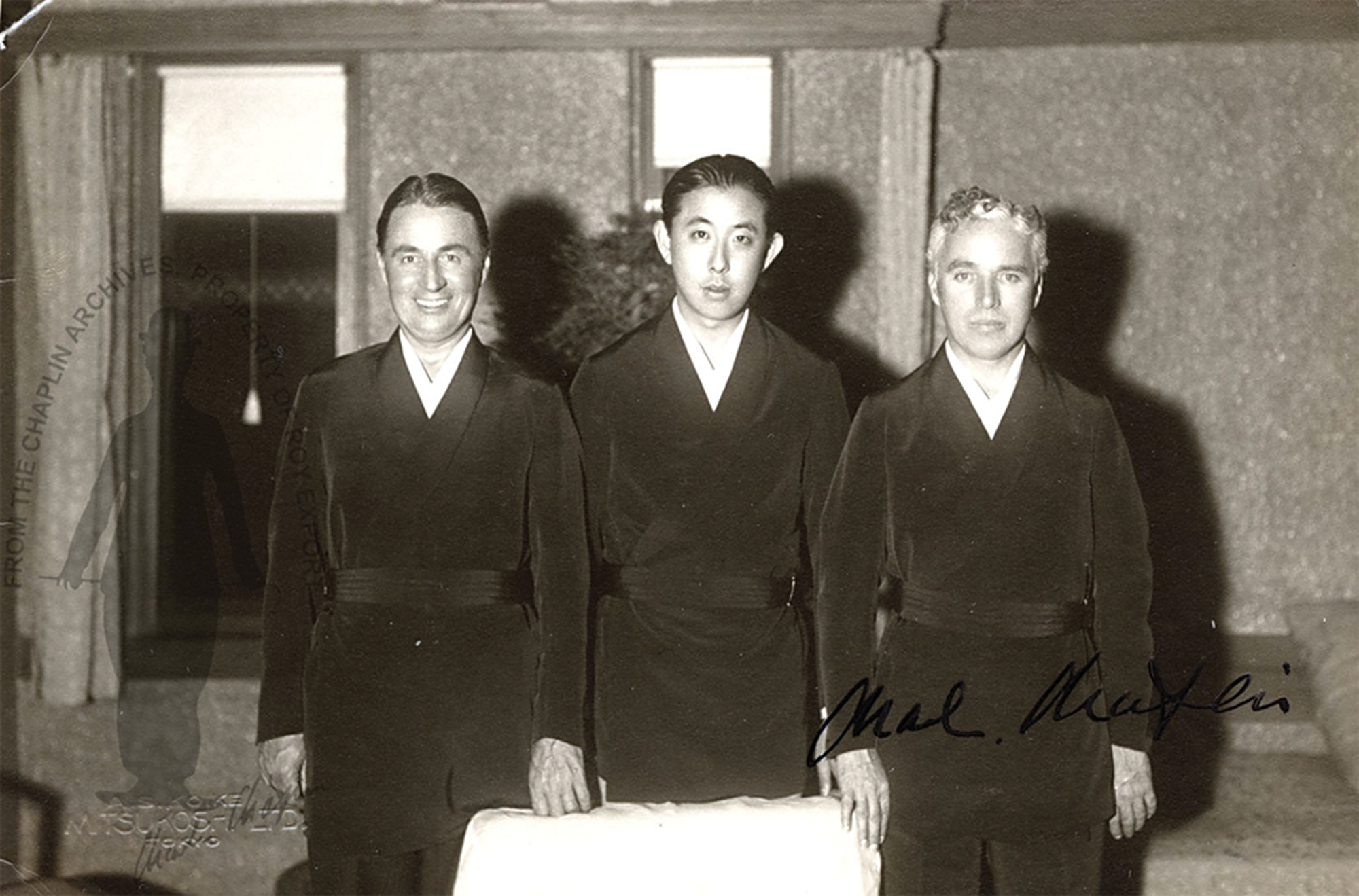
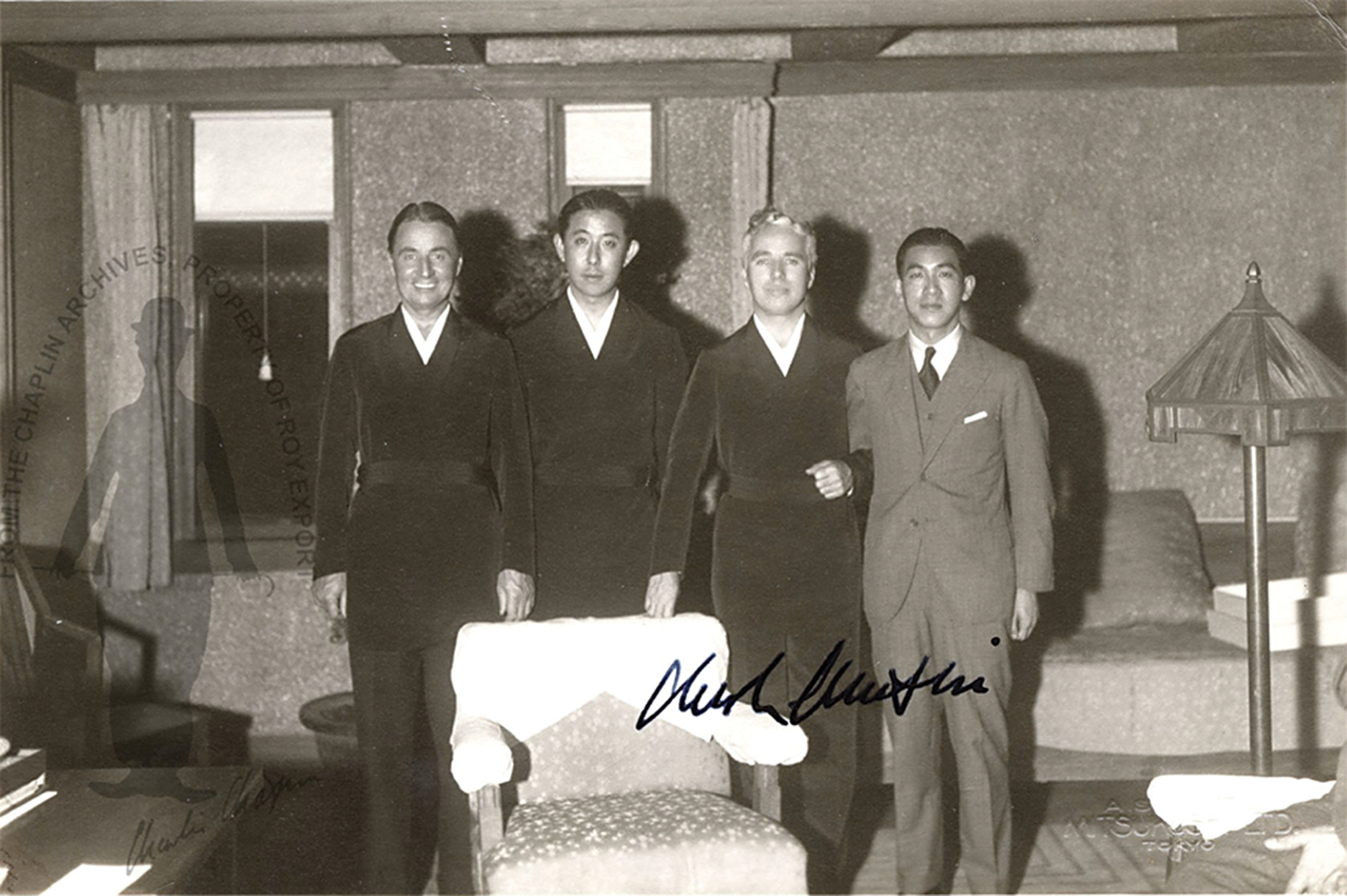
Charlie told my mother that the Emperor Hirohito of Japan gifted him a commemorative real gold and silk kimono during that trip. It was during that same trip that Charlie also had a special silk suit designed. He reportedly wore it during his meetings with the Prime Minister’s son and the Emperor. There are photos of him wearing the suit with the Prime Minister’s son. Tragically, that same day, the Prime Minister, whom Charlie was to meet, was assassinated, so Charlie never met him."

