Sold For $2,200
*Includes Buyers Premium
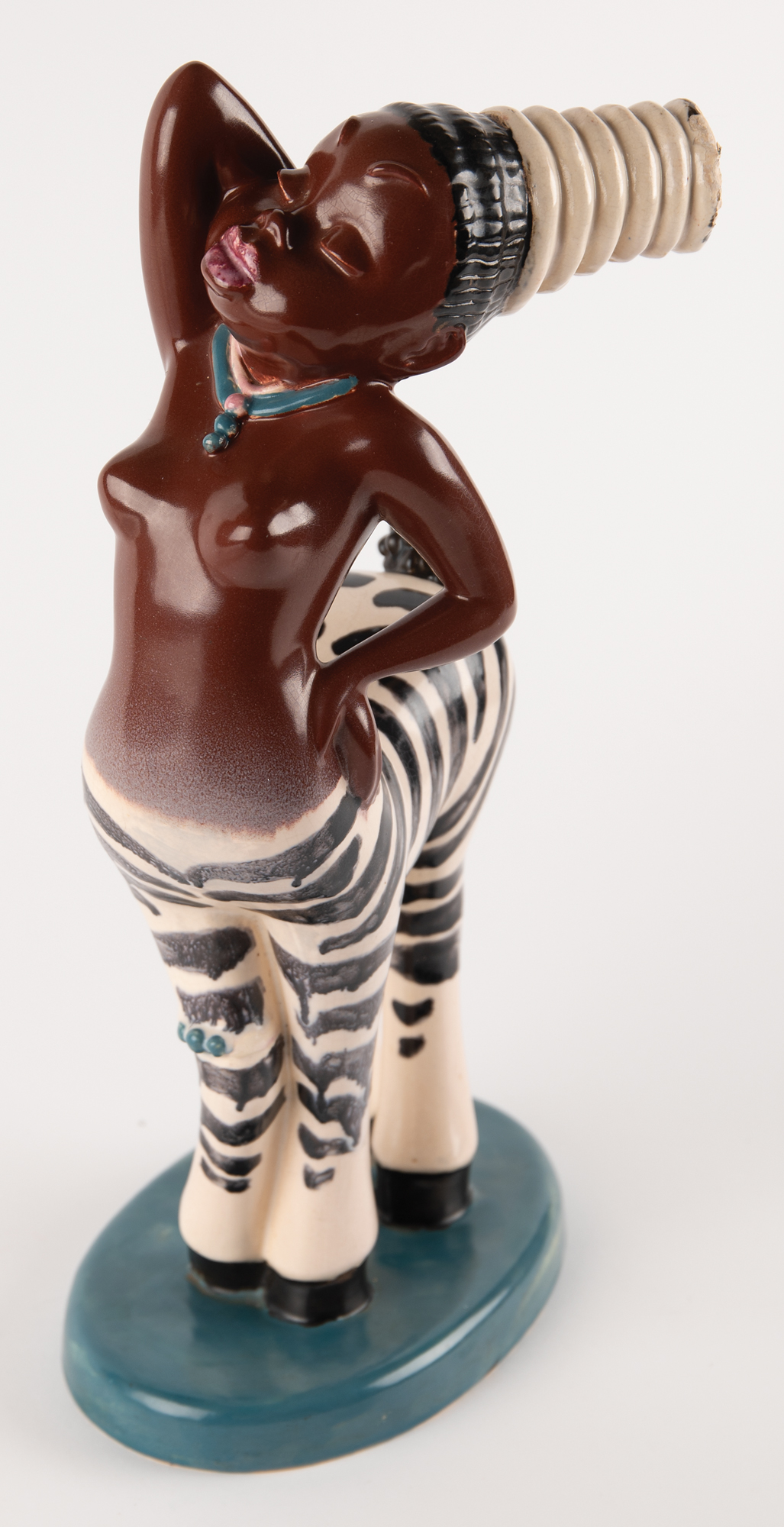
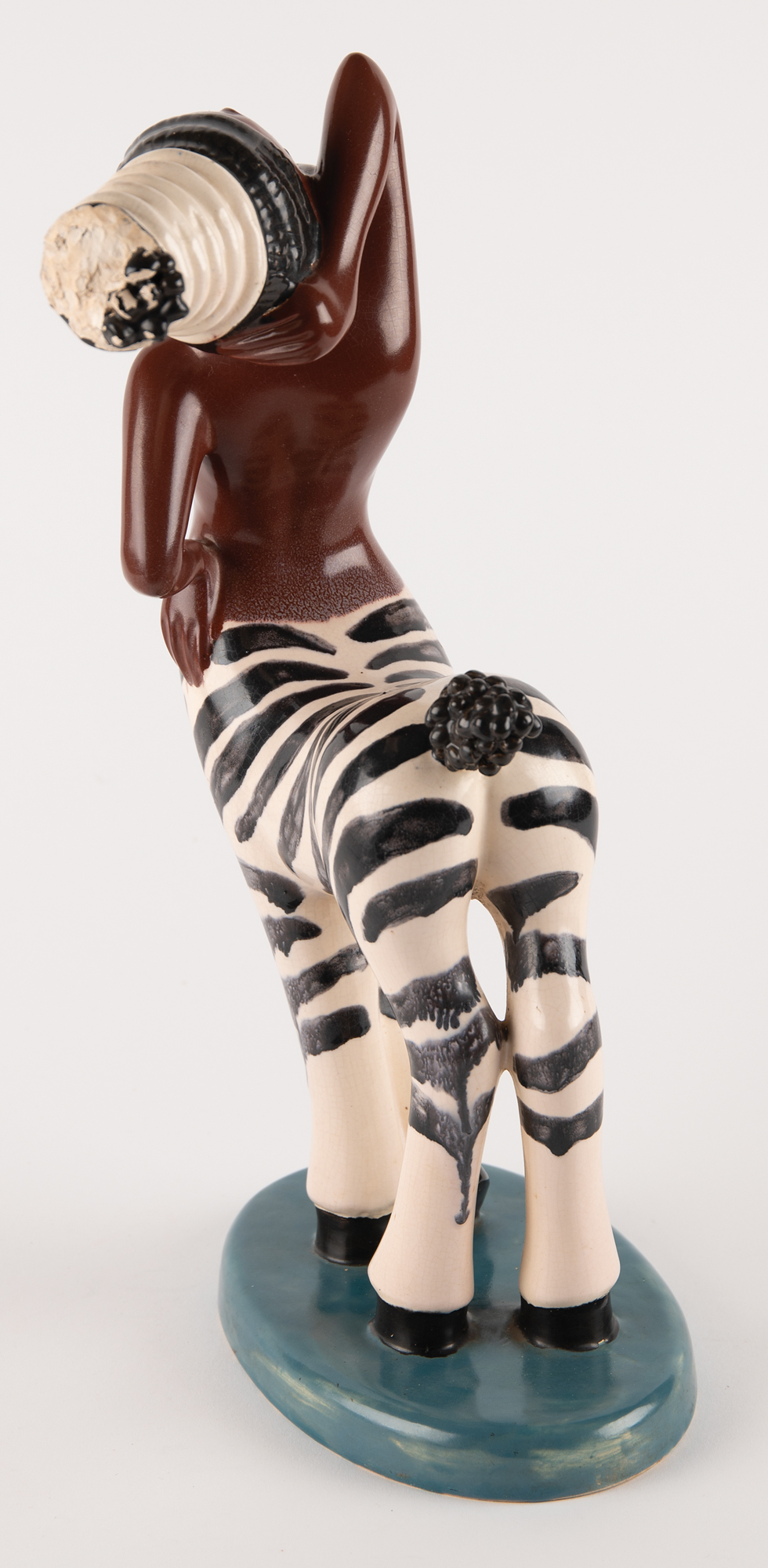
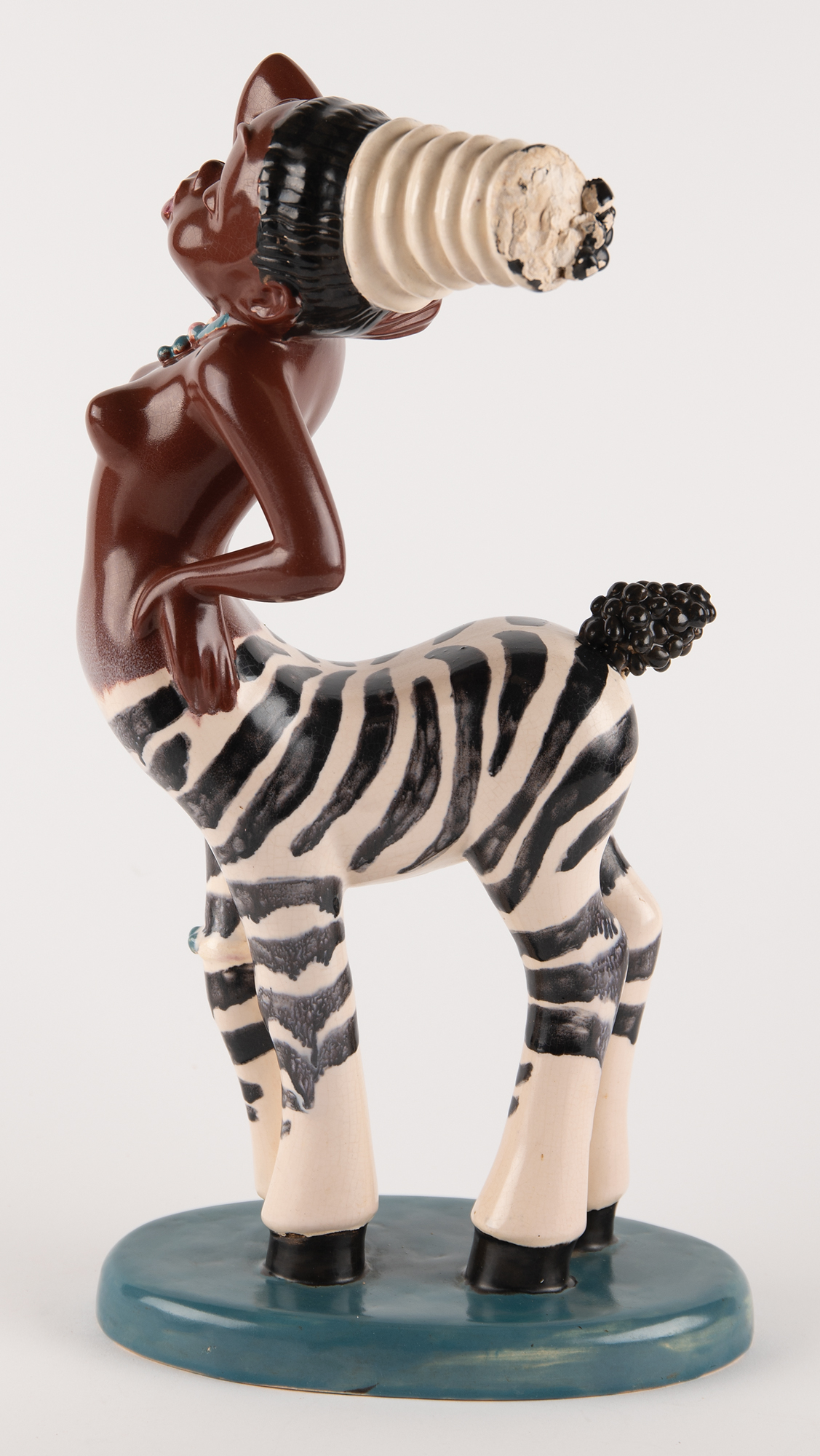
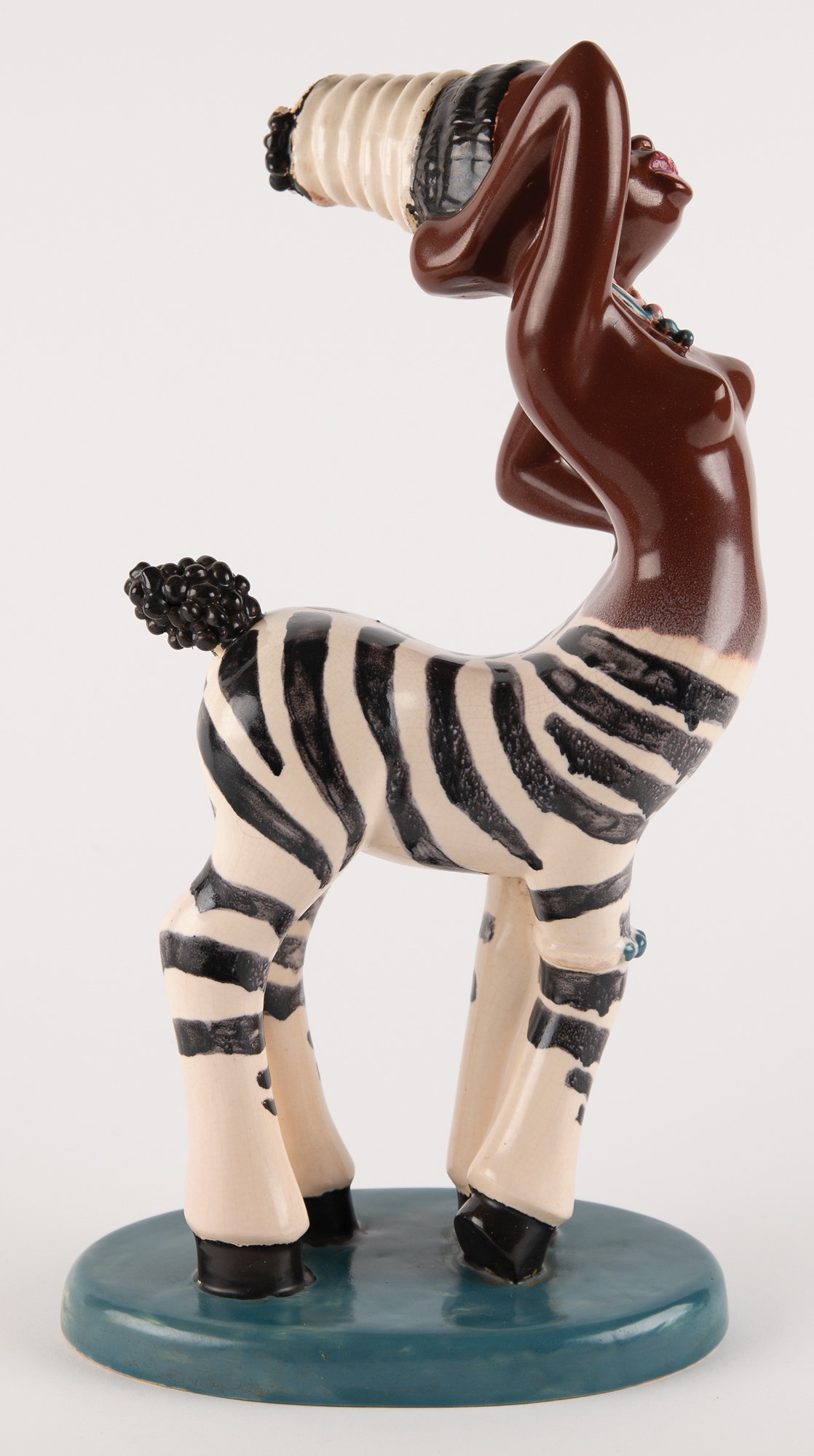
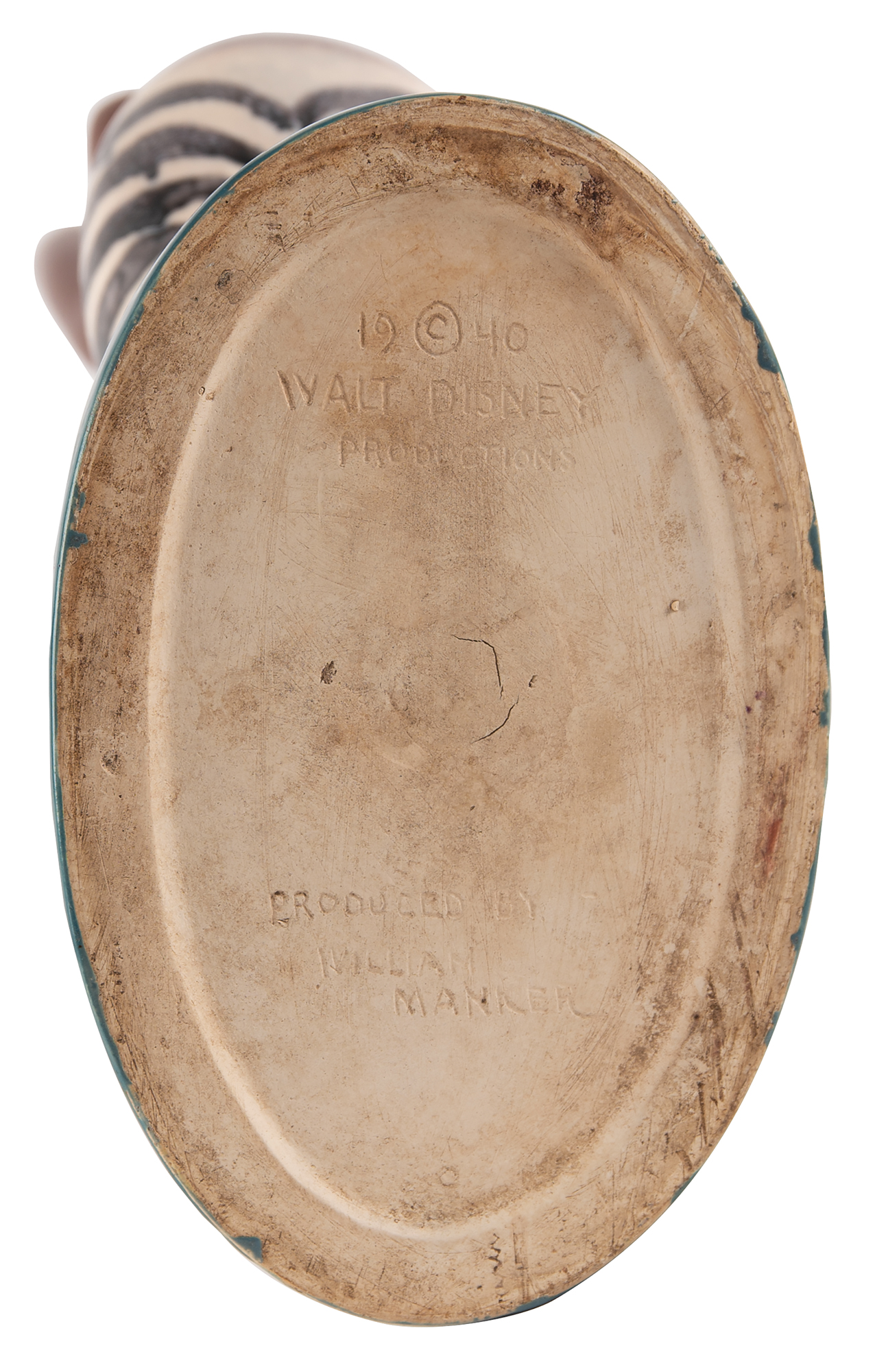
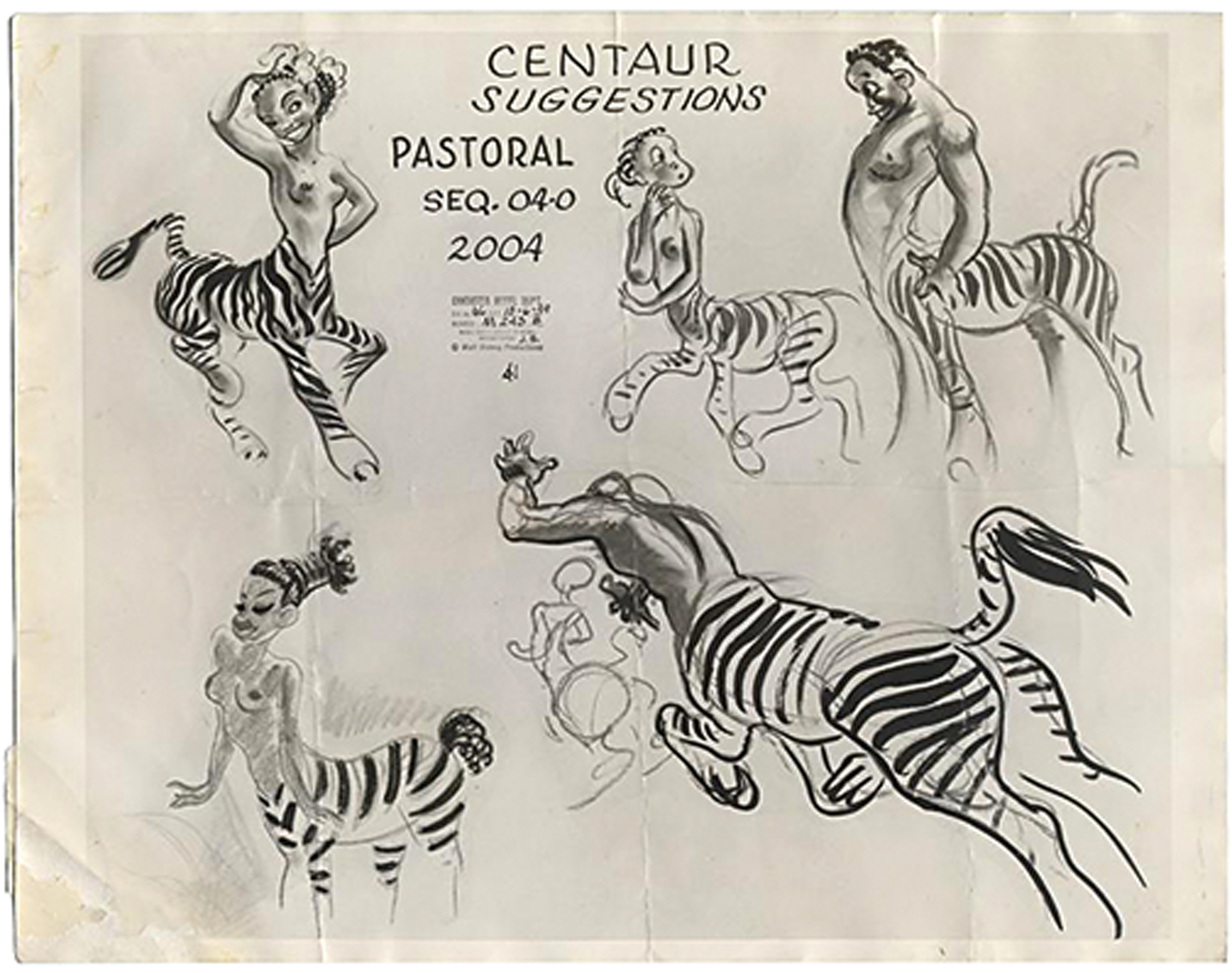
Large handmade ceramic Zebra Centaurette created by noted ceramics artist William Manker, measuring 8˝ x 15.5˝ x 5˝, the hand-painted ceramic statuette depicts a topless Zebra Centaurette from the ‘Pastoral Symphony’ segment of the classic 1940 Disney film Fantasia, which shows the character in a stretching pose with eyes closed, her left hand resting on her hip, and her right arm bent at the elbow and reaching behind her head. The underside of the base is engraved, “Produced by William Manker, 1940, Walt Disney Productions.” In fine condition, with some loss to the top of the figure's headwear. Accompanied by a modern print of a Disney character model drawing sheet for ‘Centaur Suggestions.’
While creating the mythological characters for the ‘Pastoral Symphony’ segment of Fantasia, Disney’s story artists came up with an idea for Black Centaurs and Centaurettes of ‘African origin.’ The character artists envisioned the Black Centaurs and Centaurettes as being similar to their Caucasian counterparts, only instead of being half-horse, they would have zebra-striped bodies. In the end, only two made it into the film; both were female, and both acted as servants to Bacchus, the god of wine.
Animation aficionados will no doubt recall there being a third Black Centaurette – the incredibly ill-conceived Sunflower – who Disney artists designed to look part-human and part-donkey. Only the two Zebra Centaurettes, which were sometimes referred to as the ‘Nubian Centaurettes,’ can be found in Disney’s recently released versions of Fantasia. This ceramic appears to have been based directly on the production model of the character, which can be seen in the tour of the ‘Character Model Department’ in the 1941 Disney film The Reluctant Dragon.
William Manker (1911–1989) was known for hand-built, cast, and, later in his career, thrown, low-fired earthenware work. He established and worked at William Manker Ceramics (1932-1950s), a small studio he established in 1932 to produce his designs of mid-century modern cast line. Manker’s work is characterized by its distinctive glazes. Often, Manker would begin with a base color over which a contrasting color was applied to give the effect of blending. Manker began to throw pots after taking classes with Gertrud Natzler, who immigrated to the USA in 1938, bringing her flywheel potter’s wheel. This throwing technology, which allowed the potter to sit while throwing, revolutionized many American ceramics programs.

