Sold For $128,066
*Includes Buyers Premium
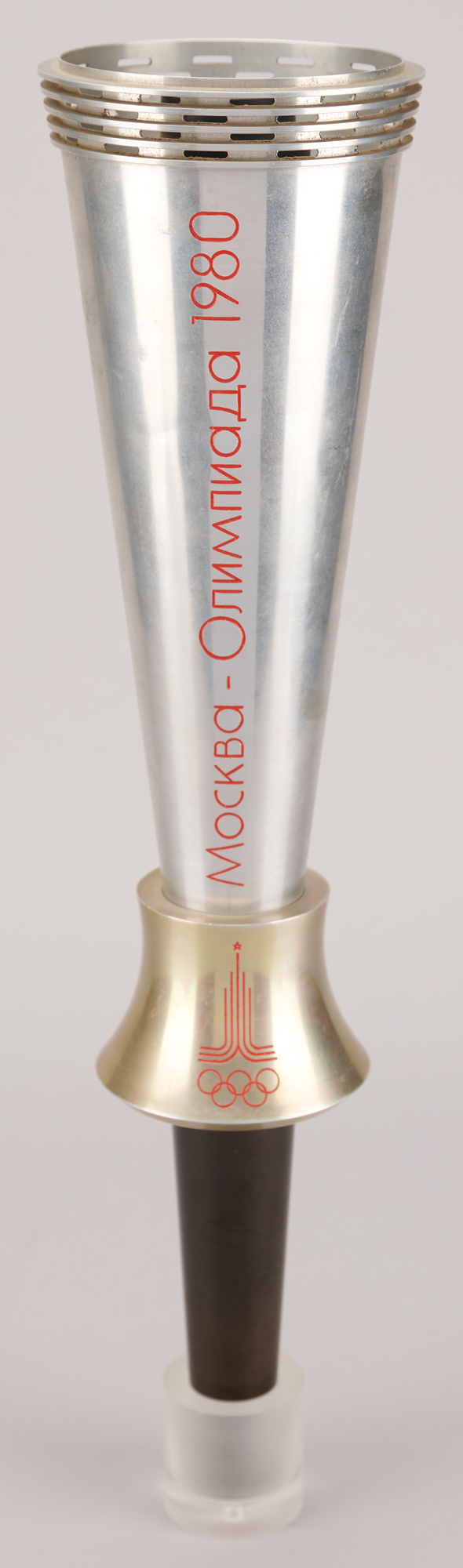
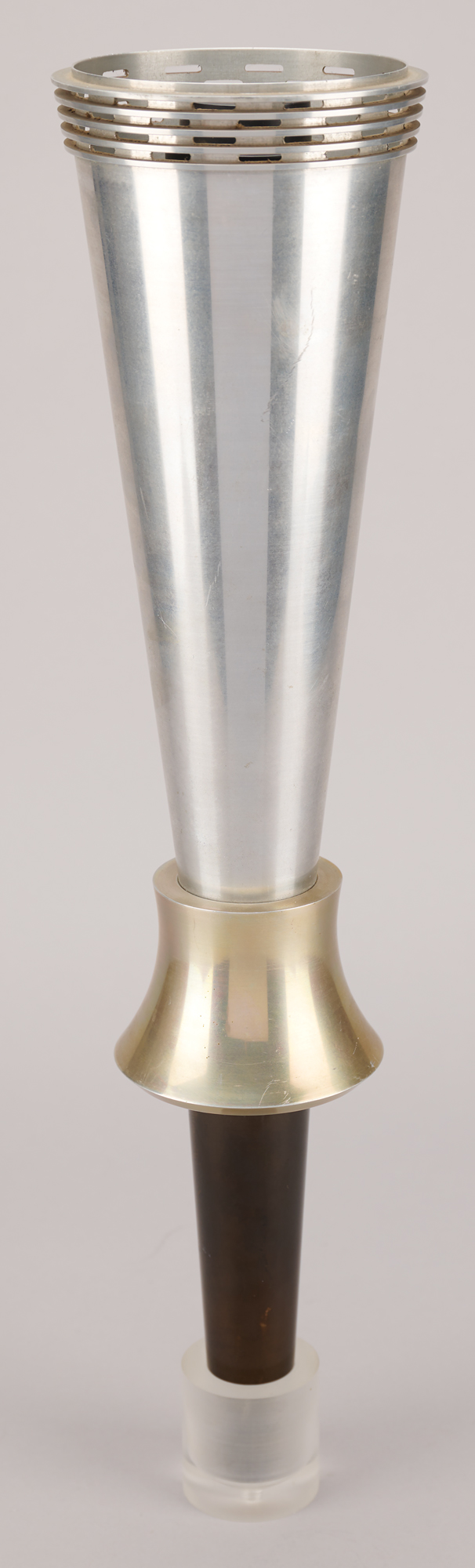
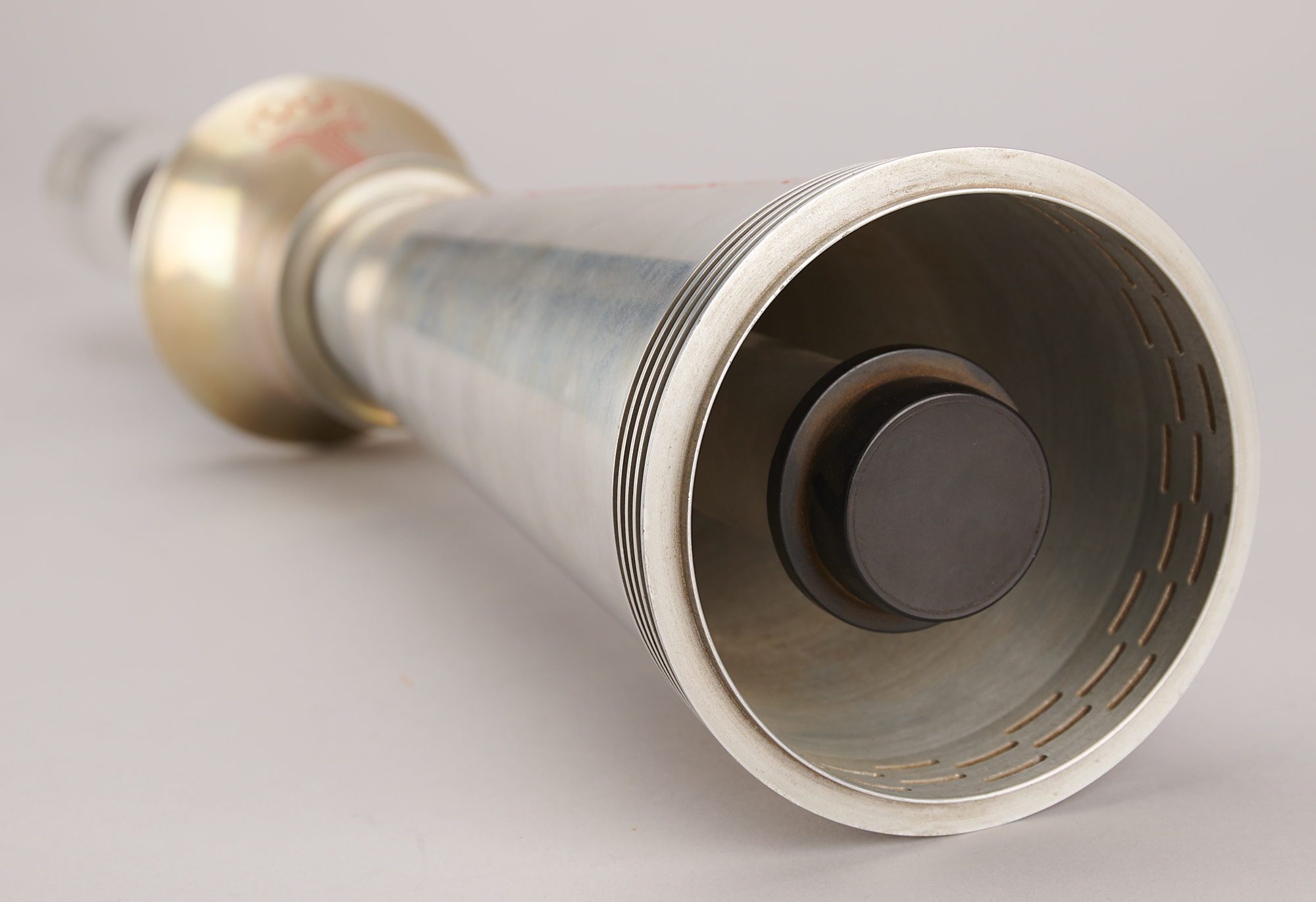
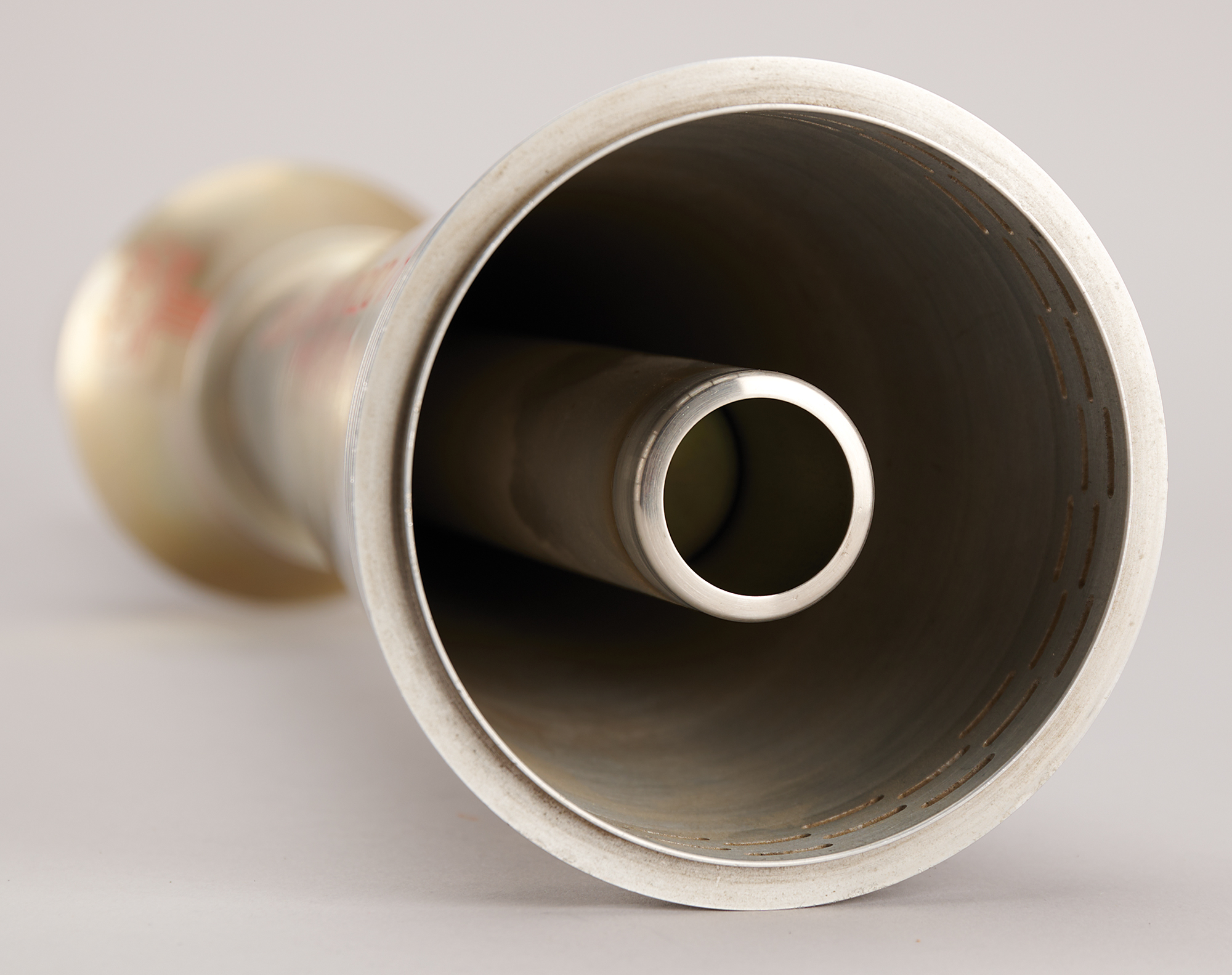
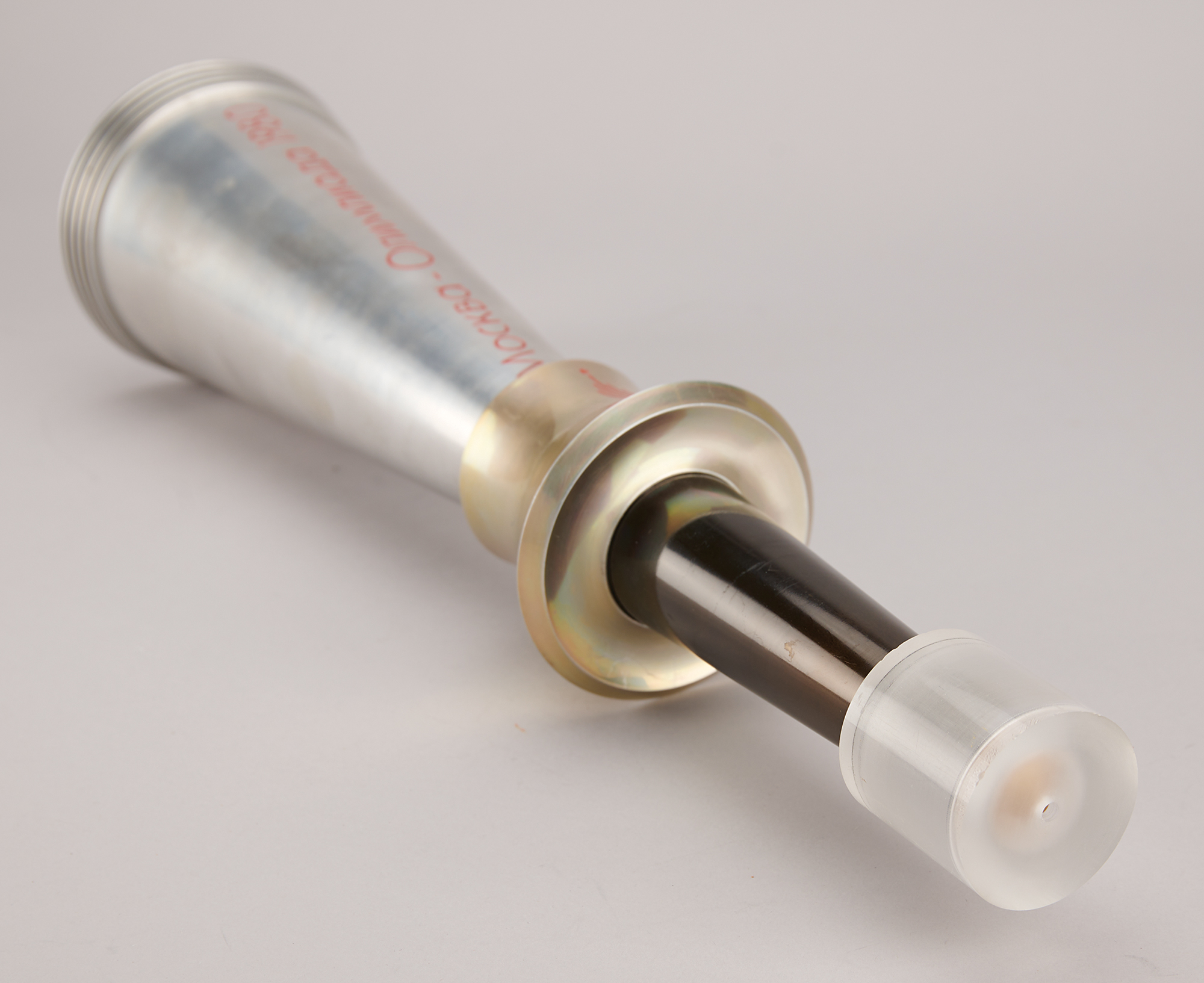
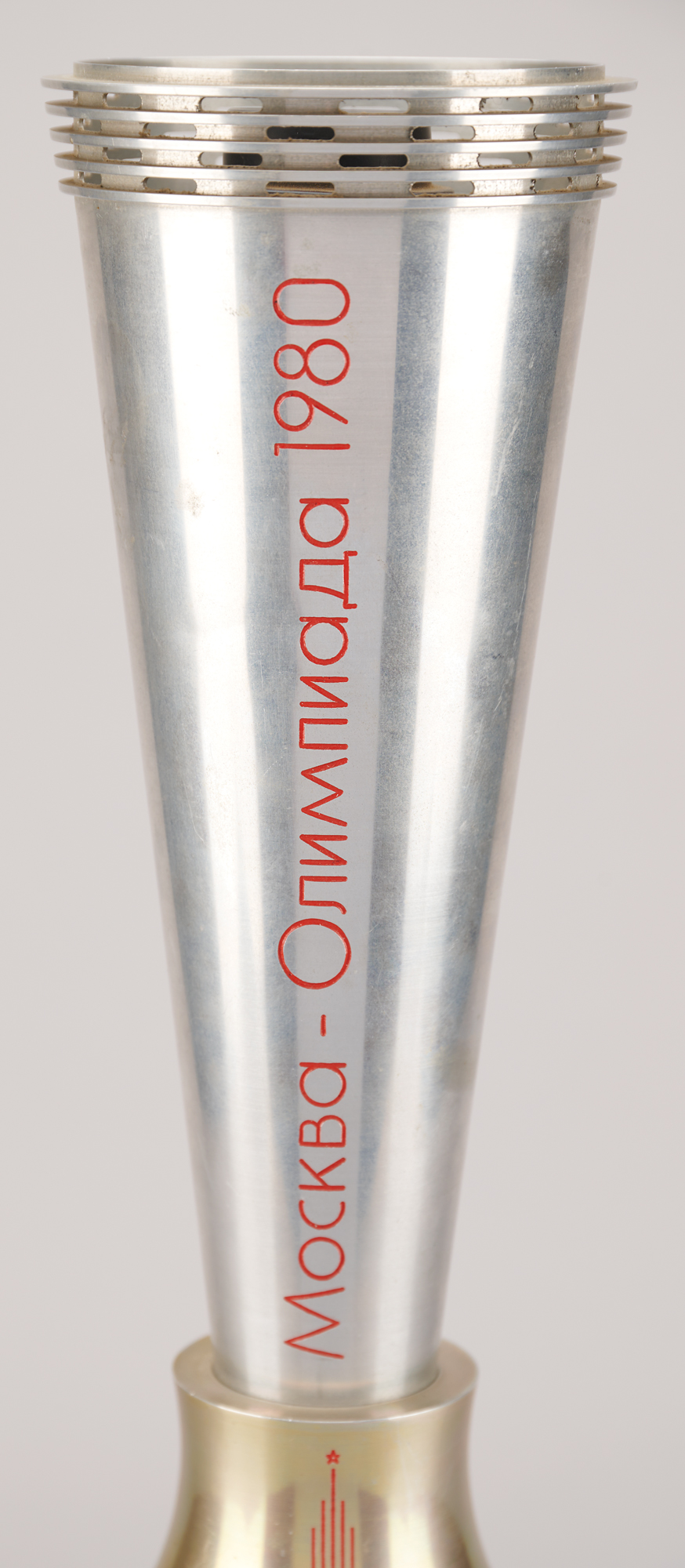
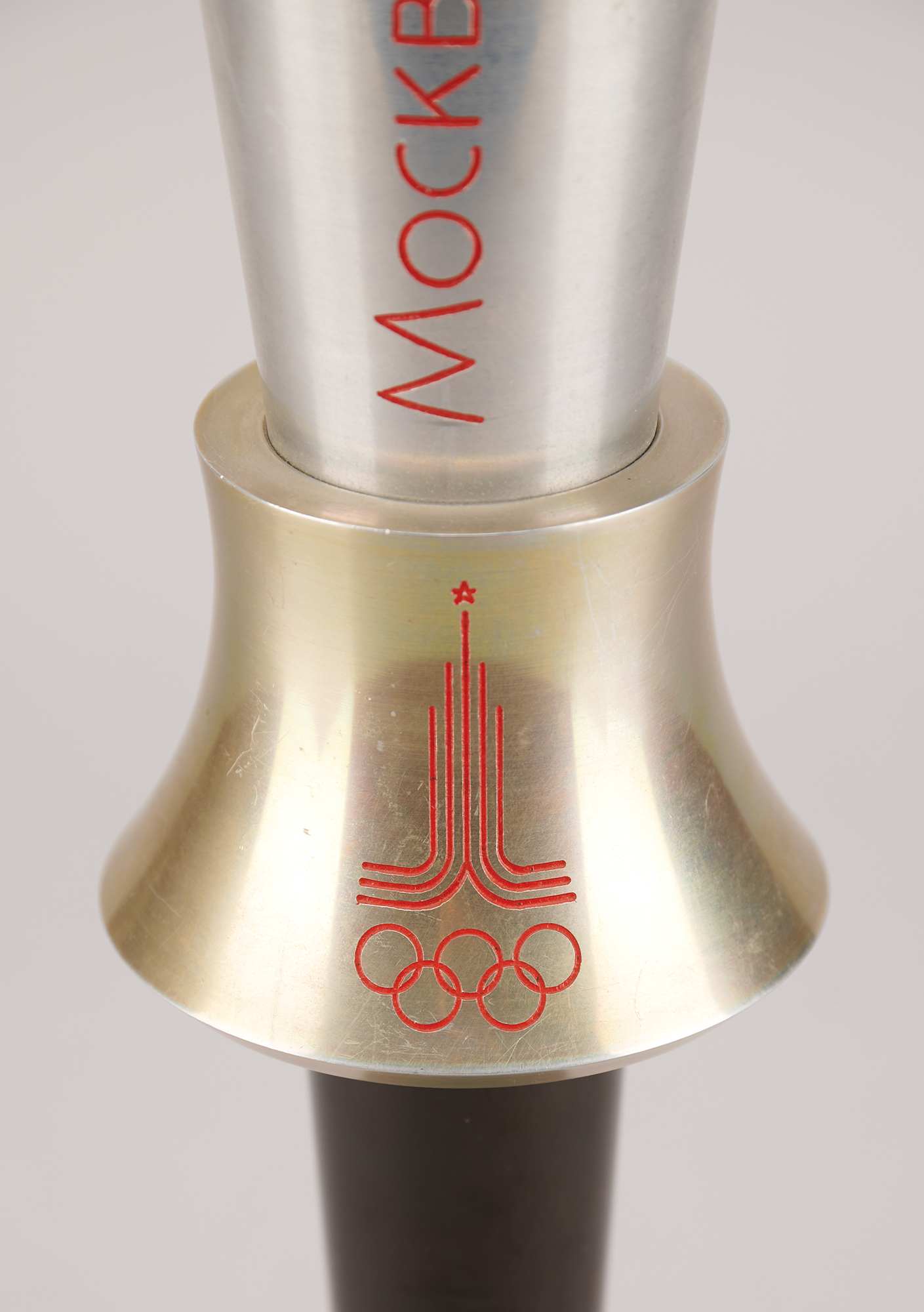
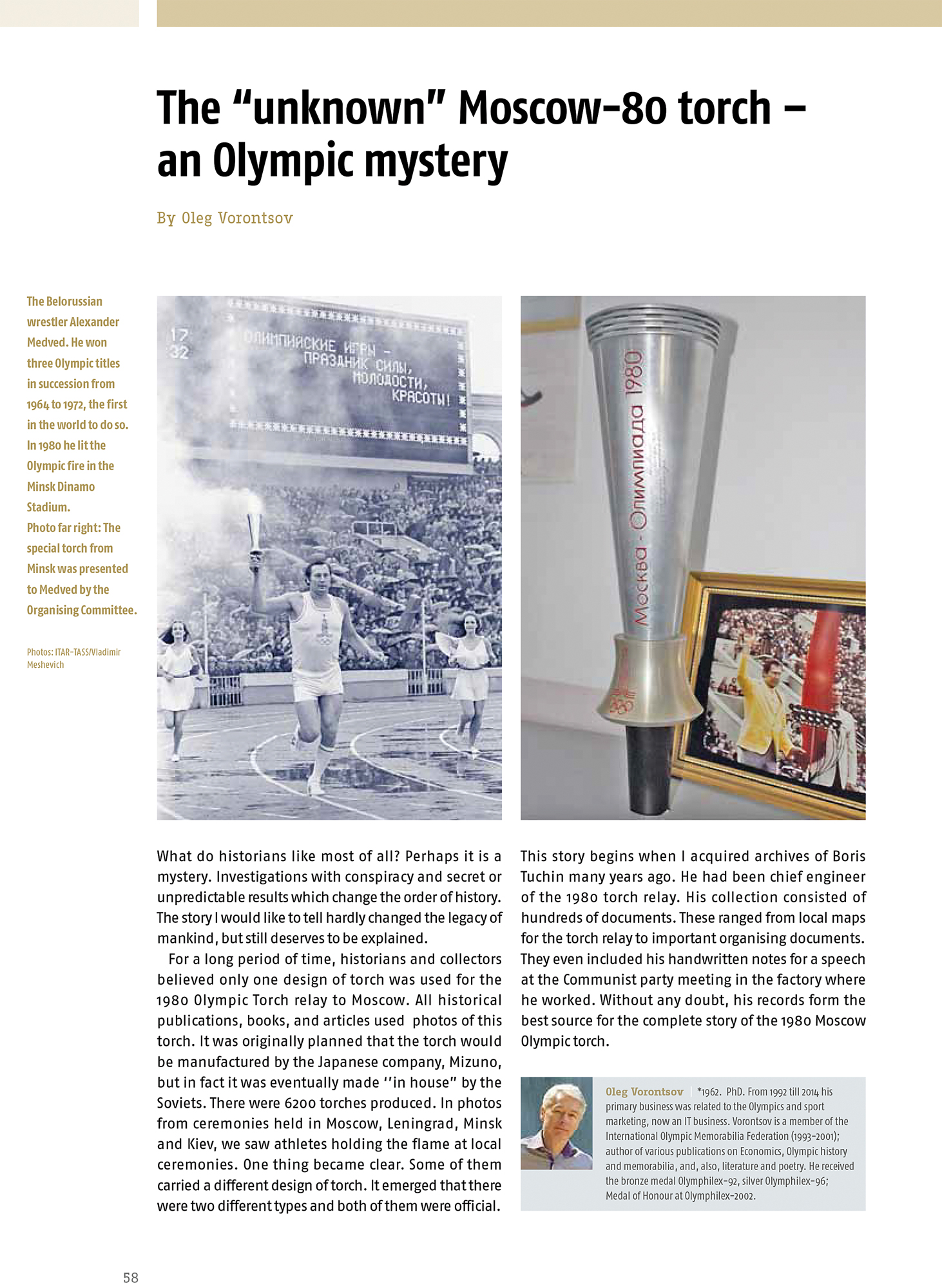
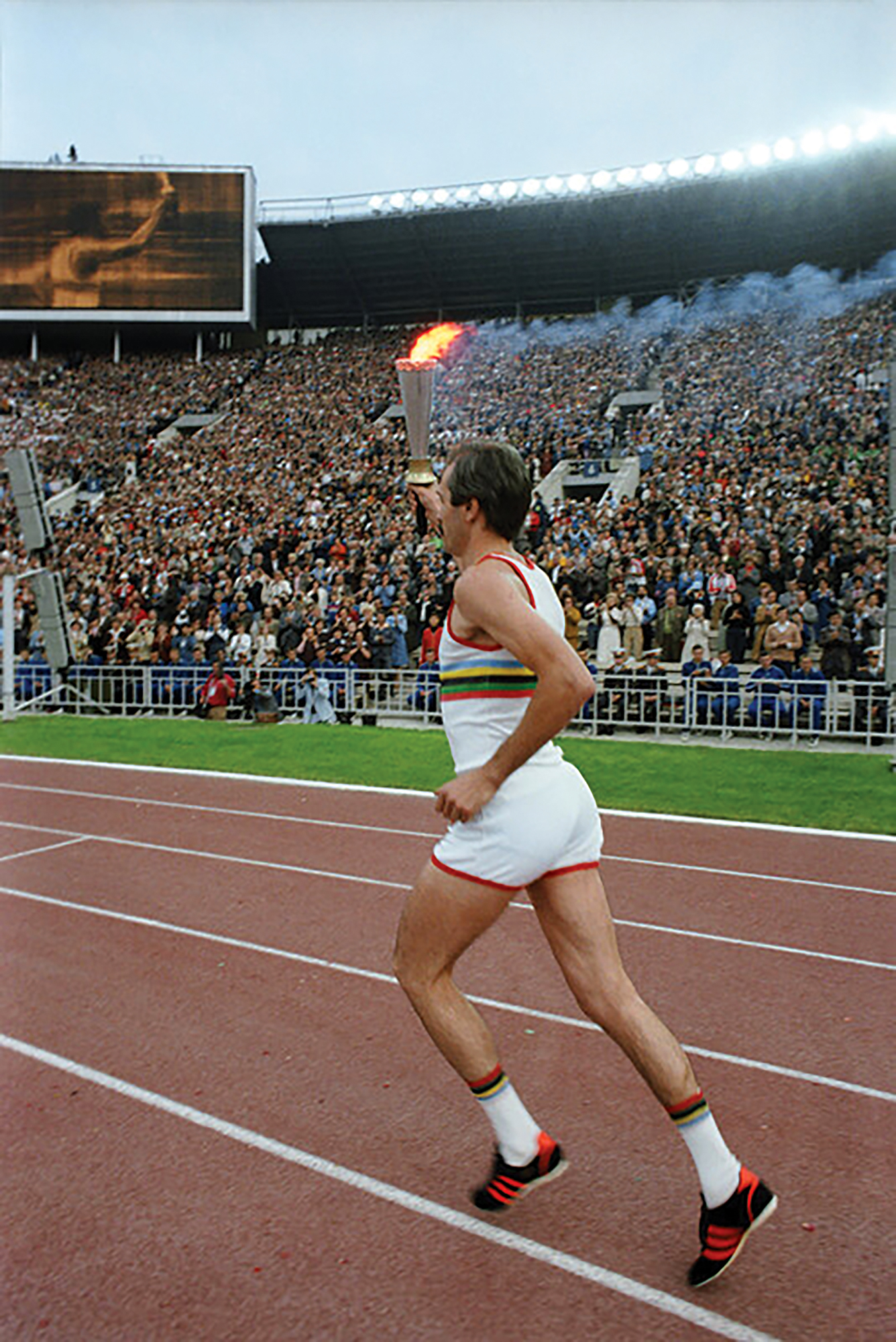
Rare, virtually unknown variant of the official 1980 Moscow Olympics torch, one of 20 examples specially designed and used in four opening flame-lighting ceremonies held in stadiums located in Moscow, Leningrad, Minsk, and Kiev. This special stadium torch, comprised of aluminum alloy, measures 20˝ in length and 4.75˝ at its widest point, and is outwardly similar to the more commonly seen ‘normal’ relay torch, of which around 6,200 examples were produced under the direction of the 1980 Soviet Olympic Committee. Among the differences, the relay torch utilized a liquid gas system; this stadium torch was equipped with solid fuel, a distinction that allowed the torch to stay lit under the most dire weather conditions. Due to the extreme heat of the stadium torch’s flame, the golden ring found atop the relay torch was omitted from the design; engineers believed that the intense heat from the Olympic cauldron would melt/damage the ring. Additionally, the torch’s body is shiny metallic with vertically engraved red lettering in Cyrillic, “Moscow-Olympiad 1980,” whereas the relay torch was a light gray with painted lettering. The gold-tone cup of the relay torch and its gray handle are not present on the stadium torch, whose handle cup is of a more muted gold, and the handle itself bears a deep metallic bronze finish; like the body lettering, the emblem of the Games and Olympic rings are engraved onto the handle cup. The base of the stadium’s torch handle is capped with a hard, clear stopper, unlike its counterpart, which terminates with a gold-tone, rotatable endcap. The torch bears slight wear, such as scattered light dings and scratches. Per Olympic historian Oleg Vorontsov, in a decade of investigation, only seven out of these 20 special stadium torches have been accounted for, all of which reside in museums or private collections.
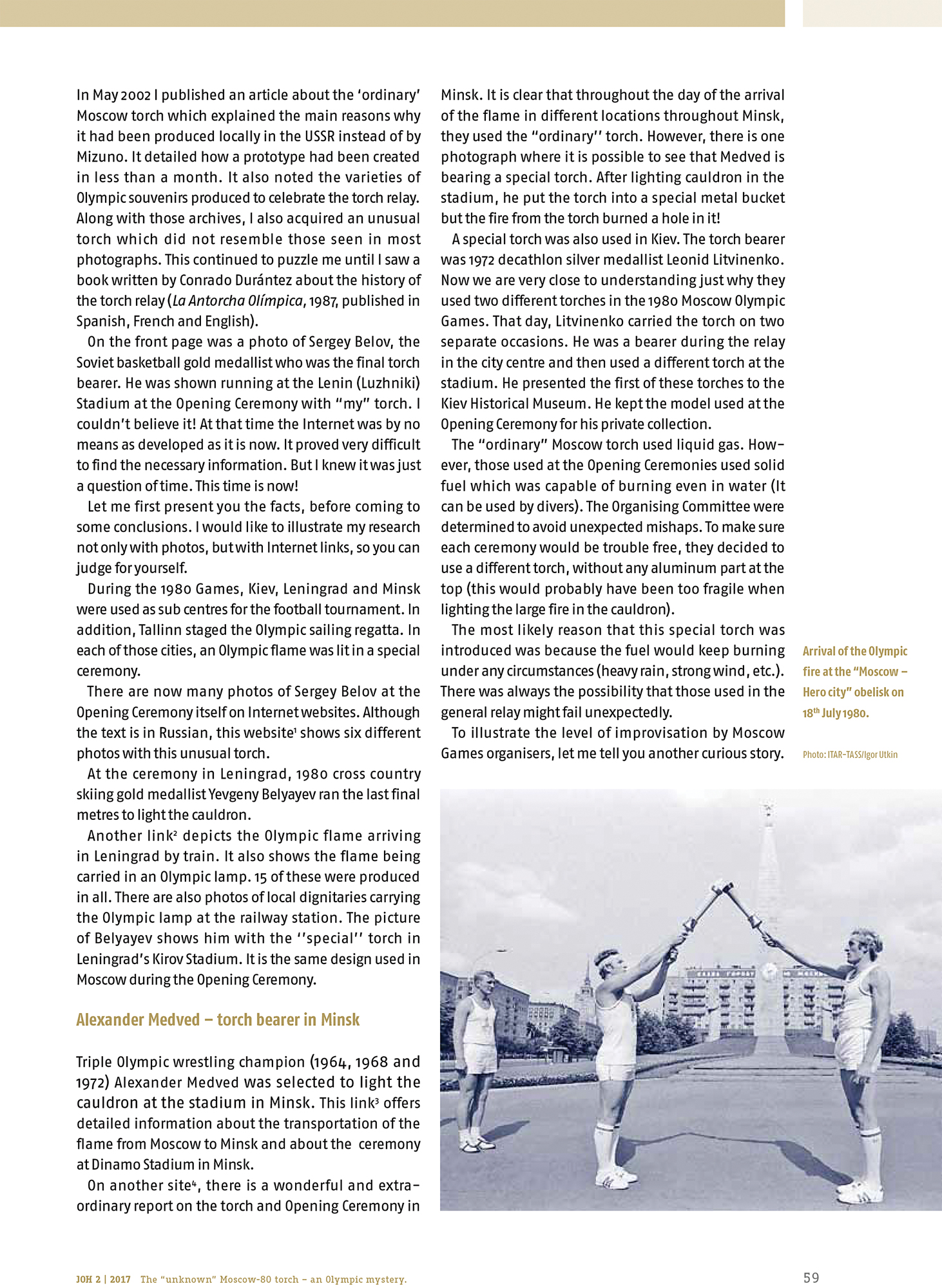
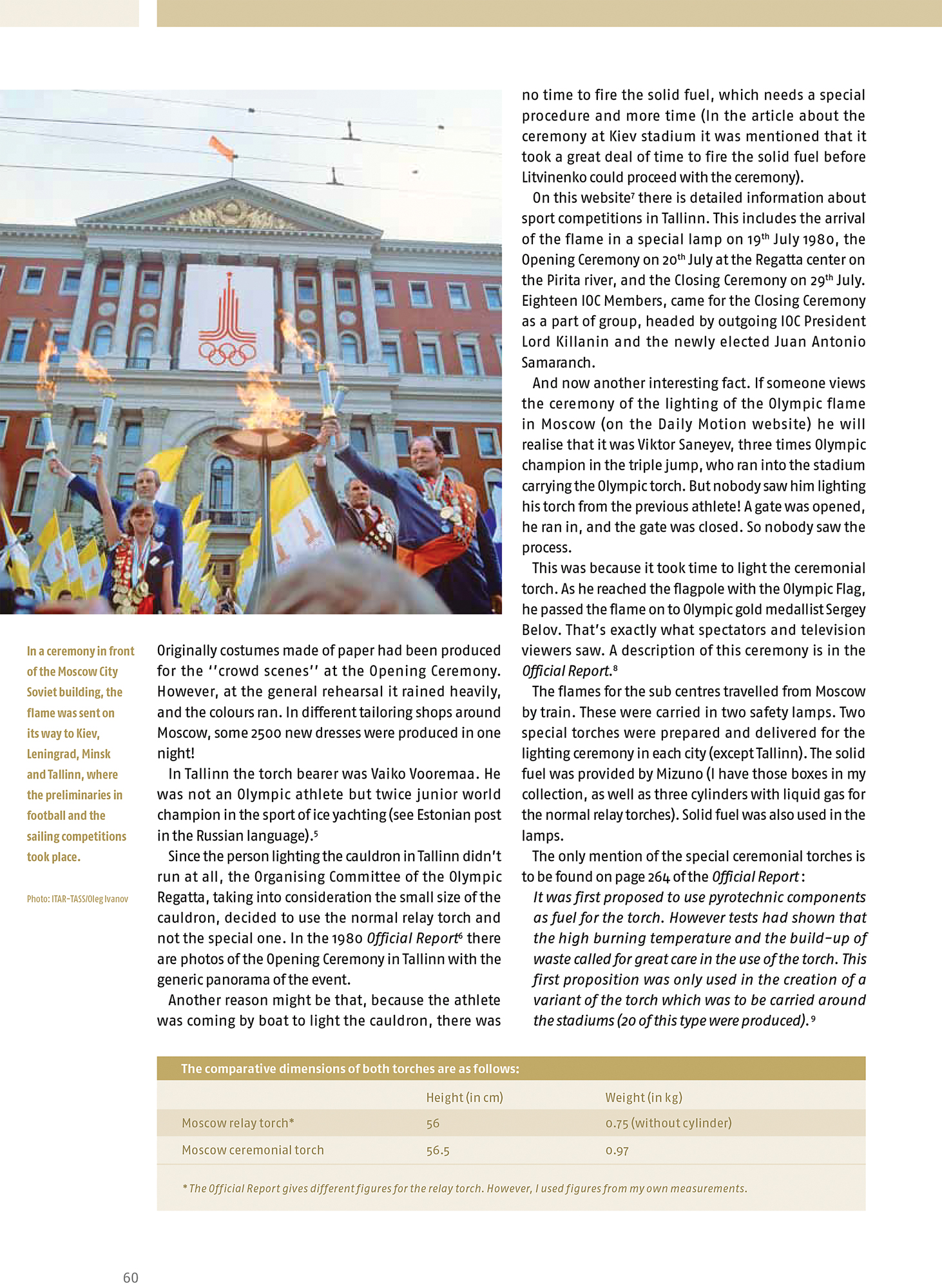
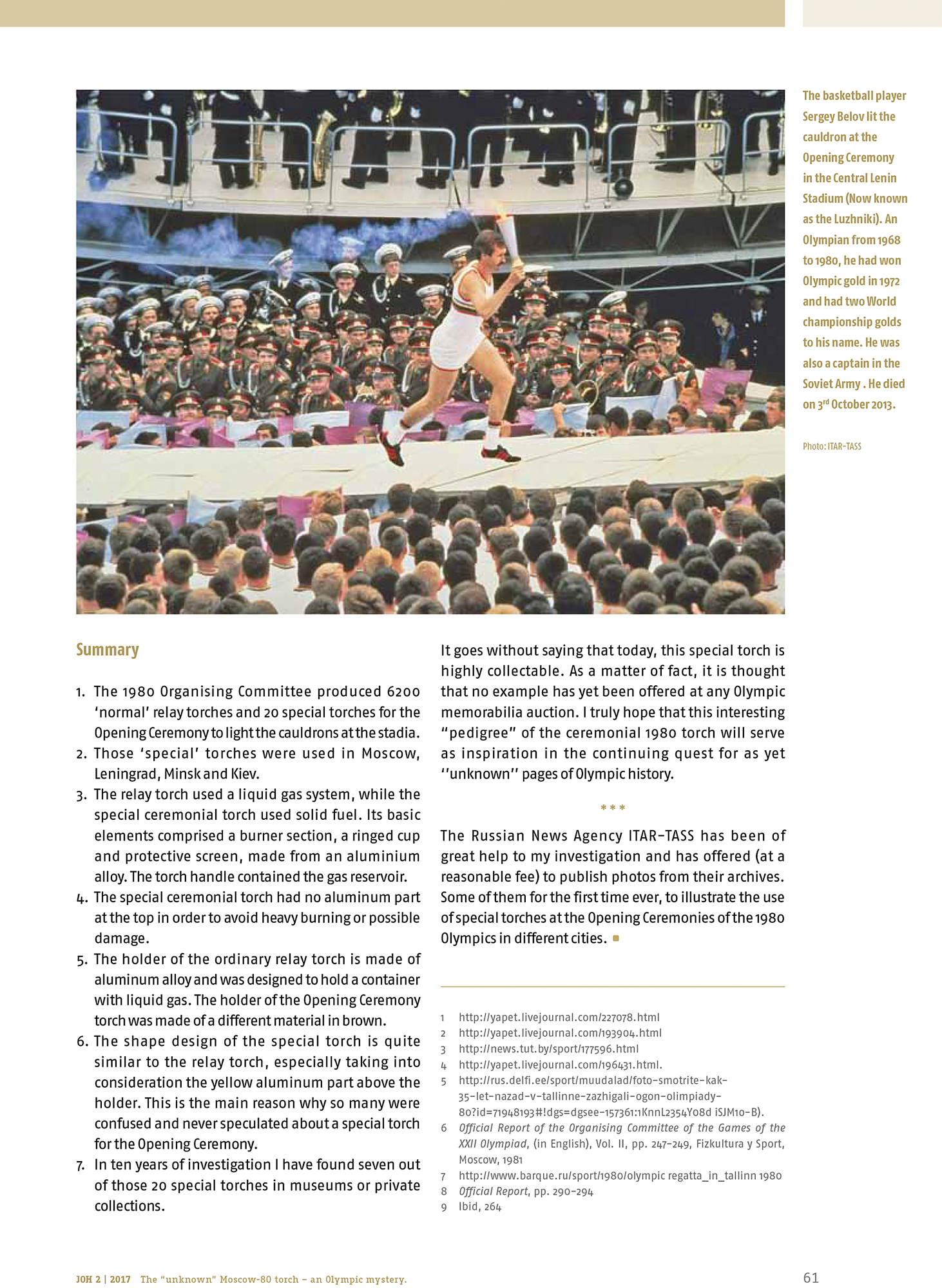
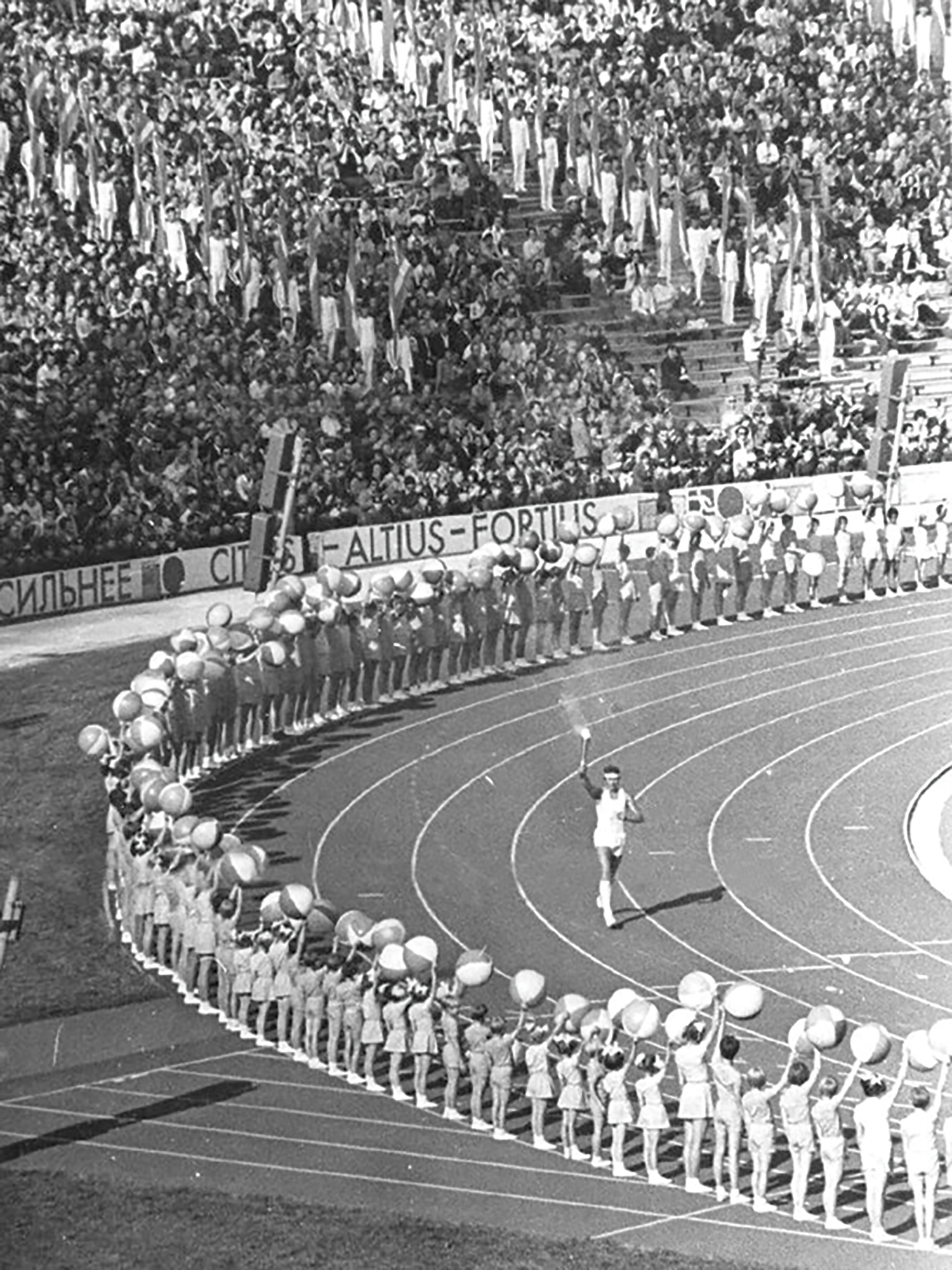
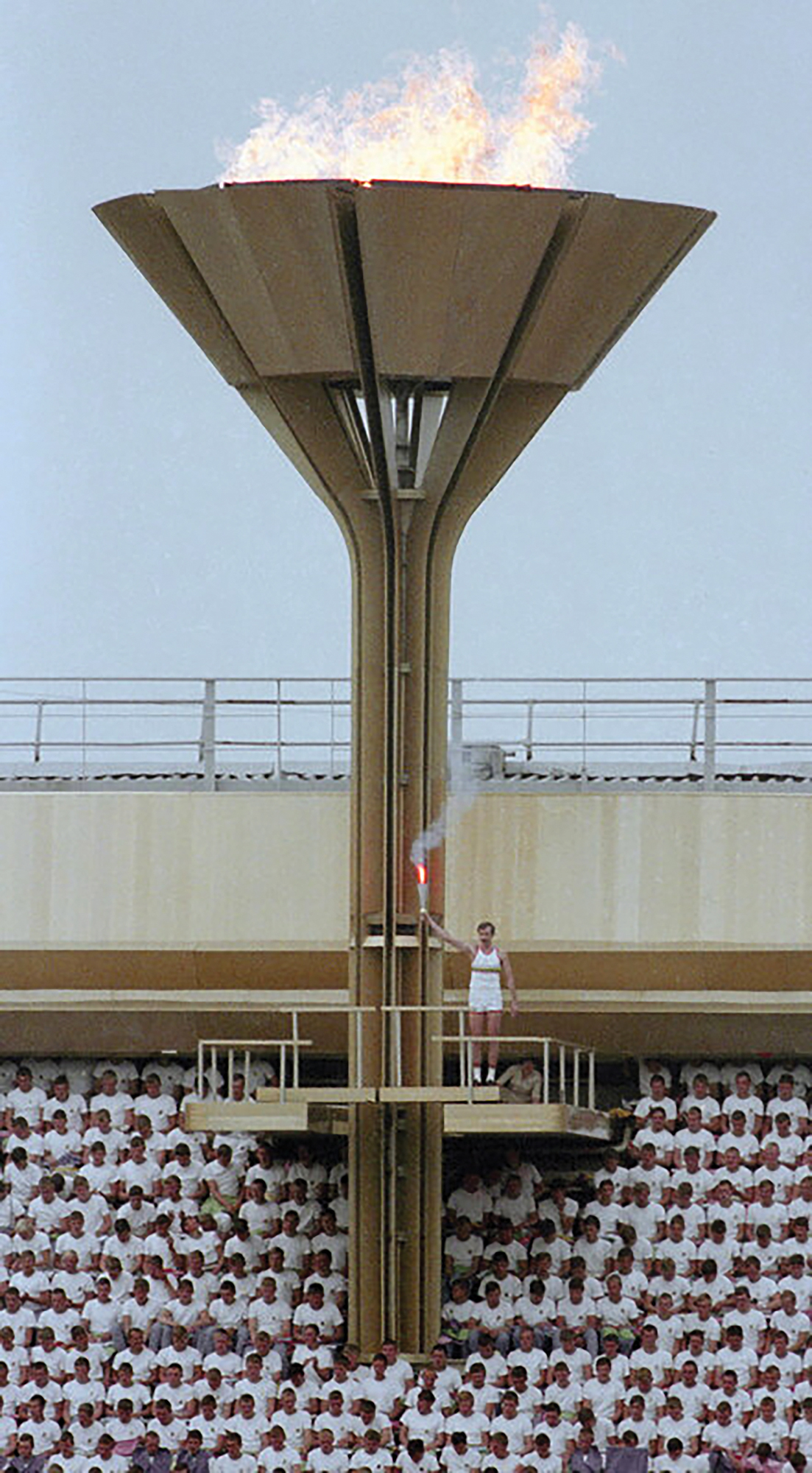
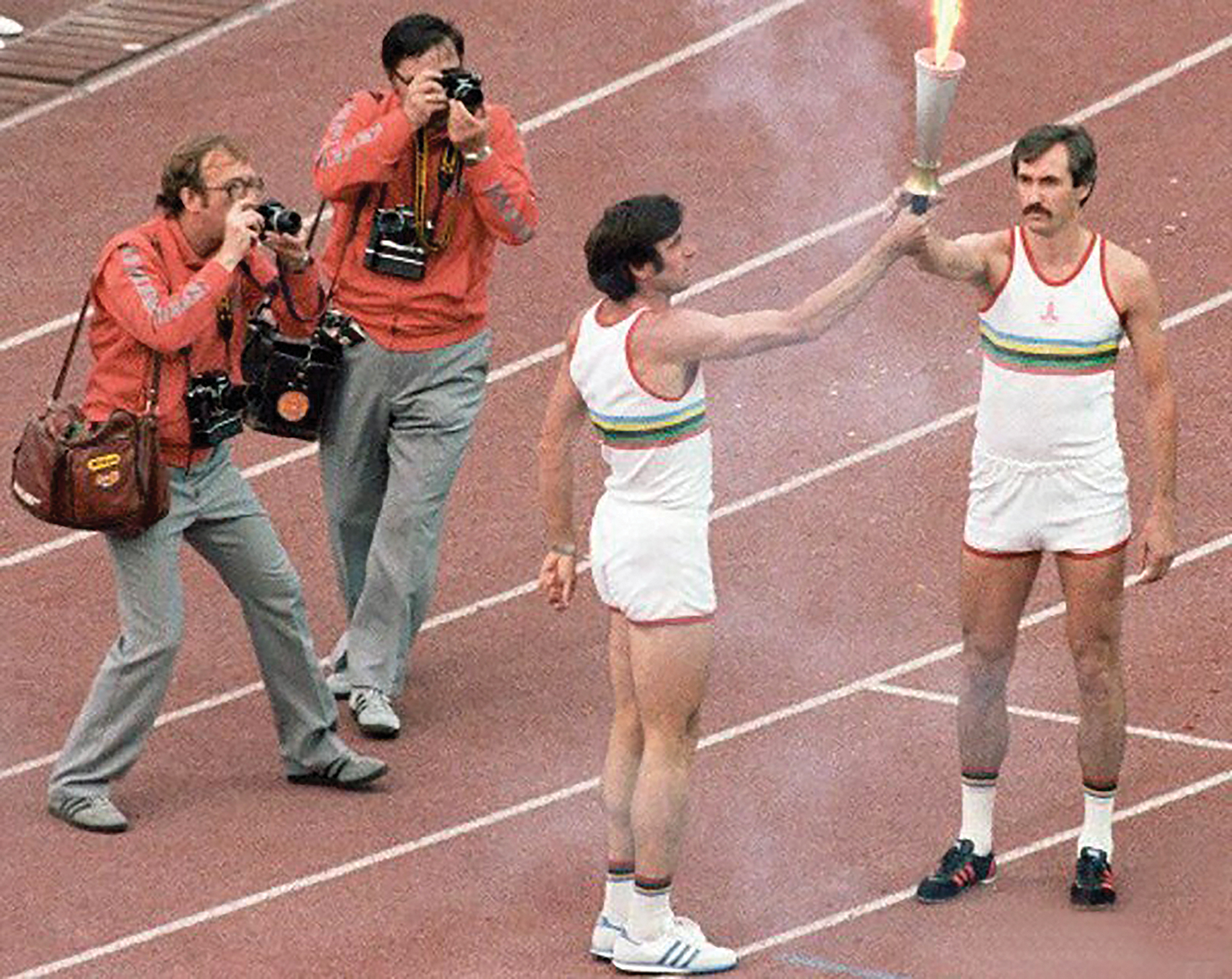
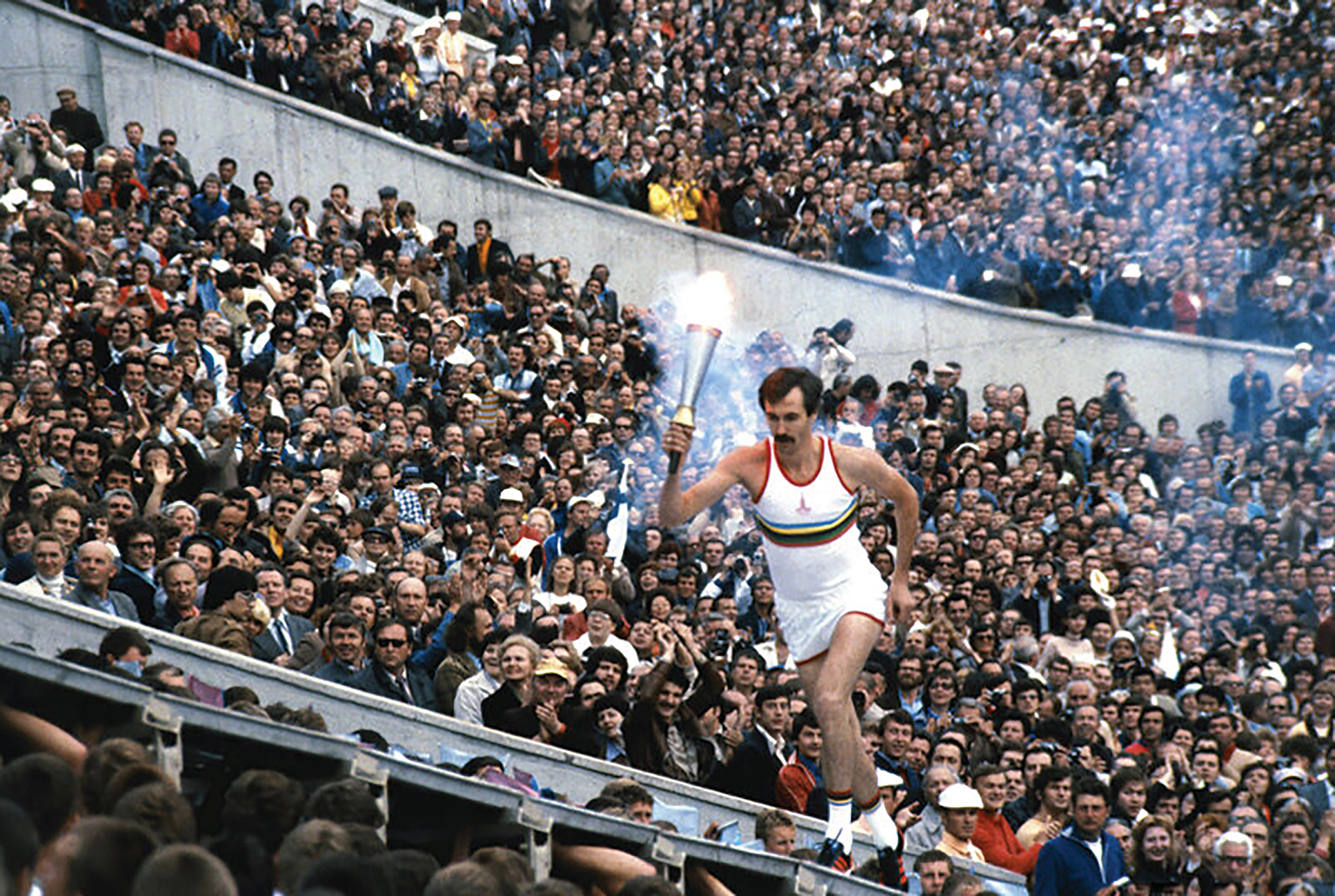
During the 1980 Moscow Olympics, a little-known special solid-fuel stadium torch—produced in only 20 examples—was introduced for cauldron-lighting ceremonies in Moscow, Leningrad, Minsk, and Kiev. Unlike the standard liquid-gas relay torch used by the thousands, this stadium variant was engineered for absolute reliability: its pyrotechnic fuel burned in any weather, even underwater, and its construction avoided the fragile upper aluminum section of the standard model. Each host city received the flame from Moscow by train in two safety lamps, along with two special torches prepared in advance because the solid fuel required a lengthy ignition process. These torches appear in the hands of the athletes who performed the ceremonial lightings: in Moscow, triple jump legend Viktor Saneyev secretly entered the stadium already carrying the pre-lit torch and passed the flame to basketball gold medalist Sergey Belov for the cauldron lighting on July 19, 1980. In the football sub-centres, Yevgeny Belyayev lit the cauldron at Leningrad’s Kirov Stadium, Alexander Medved lit it at Minsk’s Dinamo Stadium—his special torch famously burned through a metal bucket afterward—and Leonid Litvinenko used the special torch inside Kiev’s Republican Stadium after carrying the ordinary torch in the city relay earlier the same day.
The consistent use of the special torch in these stadium ceremonies reveals the Organizing Committee’s concern with eliminating any risk of flame failure at the decisive moment. Whereas the regular relay torch could be extinguished by heavy weather, the solid-fuel stadium torch guaranteed a robust, wind- and rain-proof flame for the public lighting of the cauldron. The only exception occurred in Tallinn, host of the Olympic sailing regatta, where the cauldron was lit not by an Olympian but by junior world ice-yachting champion Vaiko Vooremaa. Because he arrived by boat, had no running segment, and because the small cauldron and tight ceremony schedule made it impractical to pre-ignite the slow-firing pyrotechnic torch, Tallinn instead used the standard relay model. Thus, the 20 special torches—created solely for stadium use—served as a carefully engineered safeguard for the Games’ most symbolically important moments, appearing briefly but critically in the hands of some of the Soviet Union’s greatest athletes on a single day, July 19, 1980.
The lone mention of this stadium torch can be found on page 264 of the Official Report of the Organizing Committee of the Games of the XXII Olympiad: ‘It was first proposed to use pyrotechnic components as fuel for the torch. However, tests had shown that the high burning temperature and the build-up of waste called for great care in the use of the torch. This first proposition was only used in the creation of a variant of the torch which was to be carried around the stadiums (20 of this type were produced).’

