


Sold For $46,963
*Includes Buyers Premium
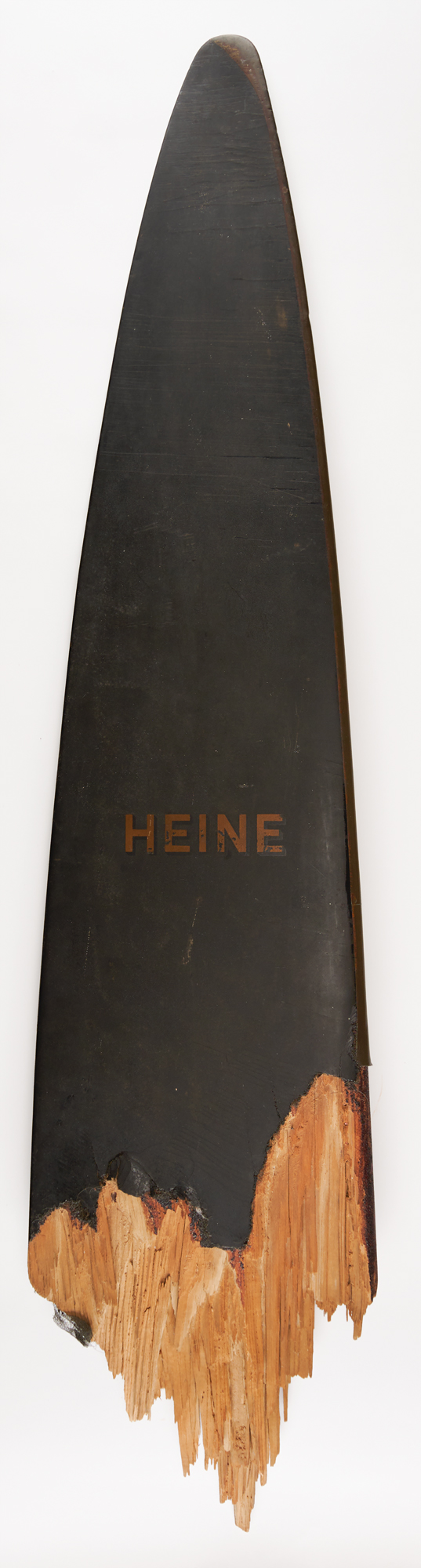
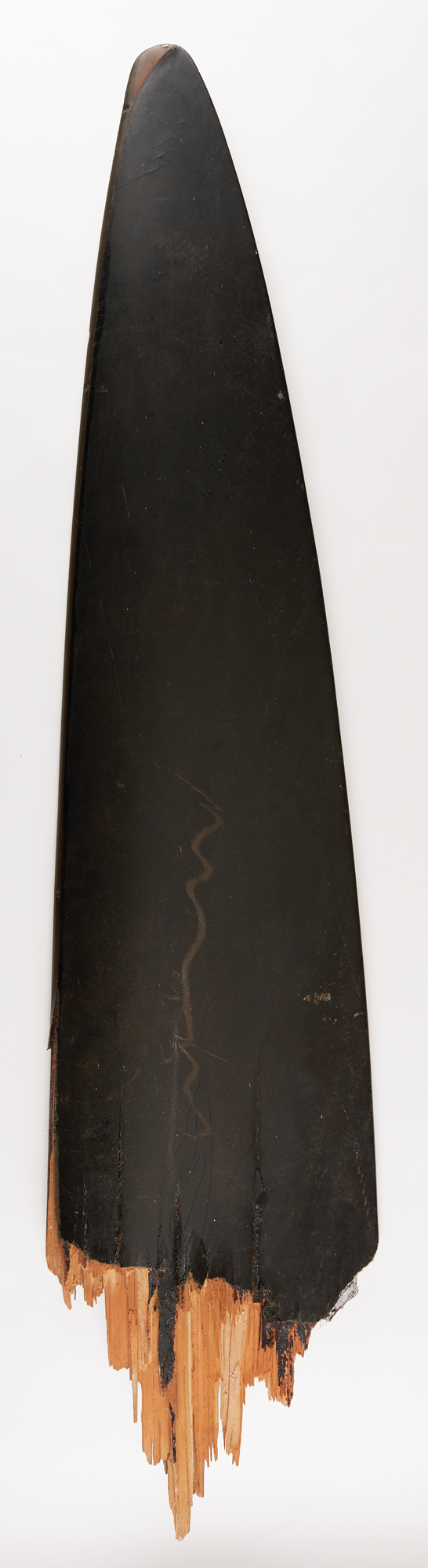
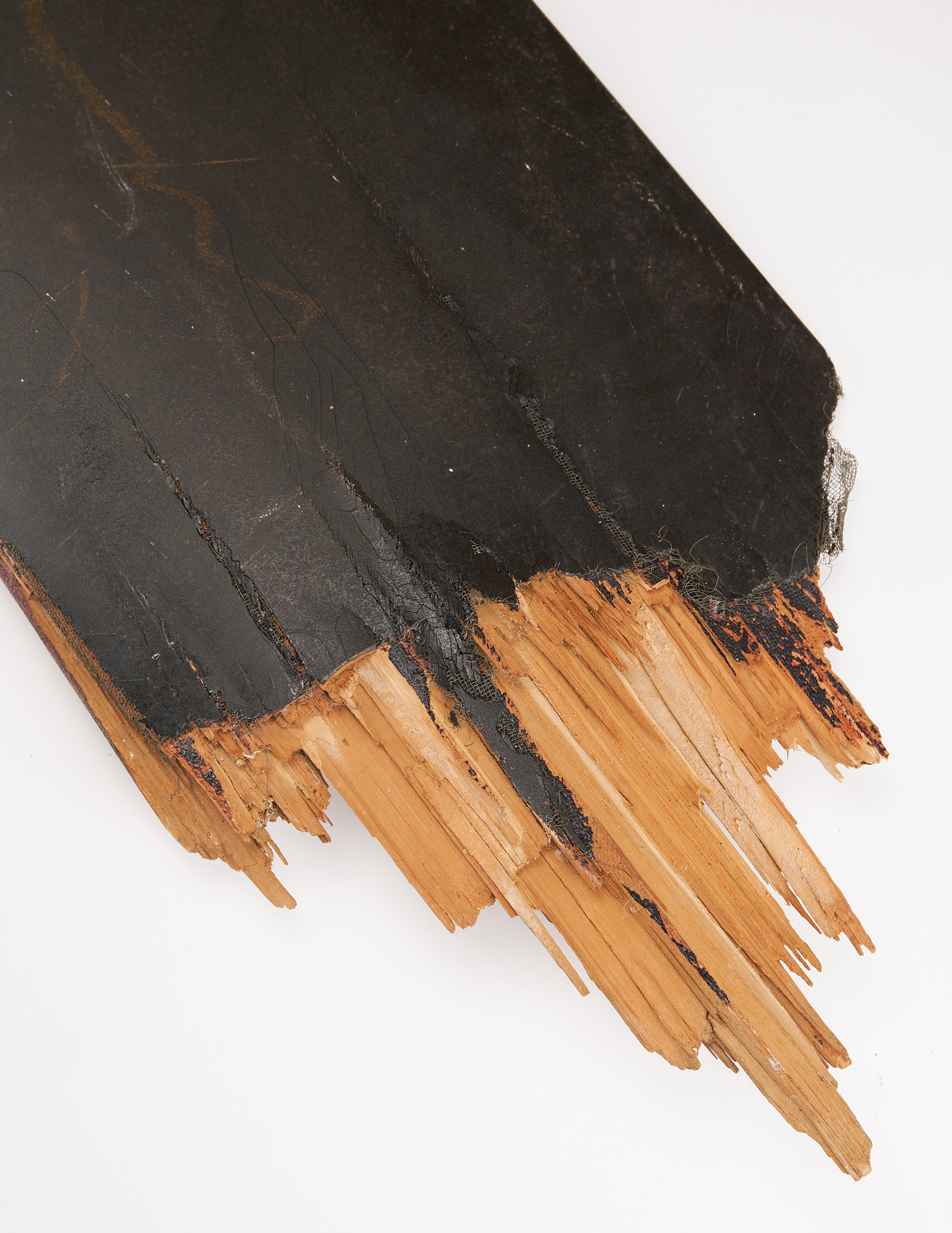
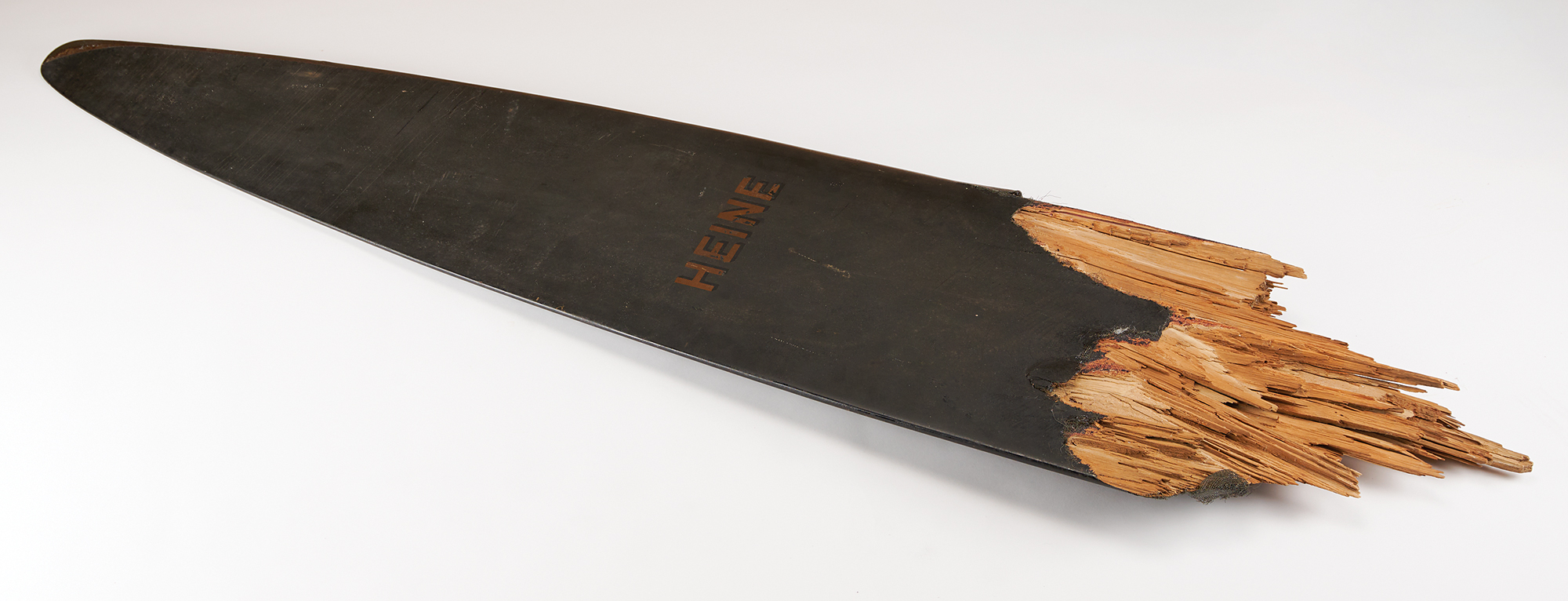
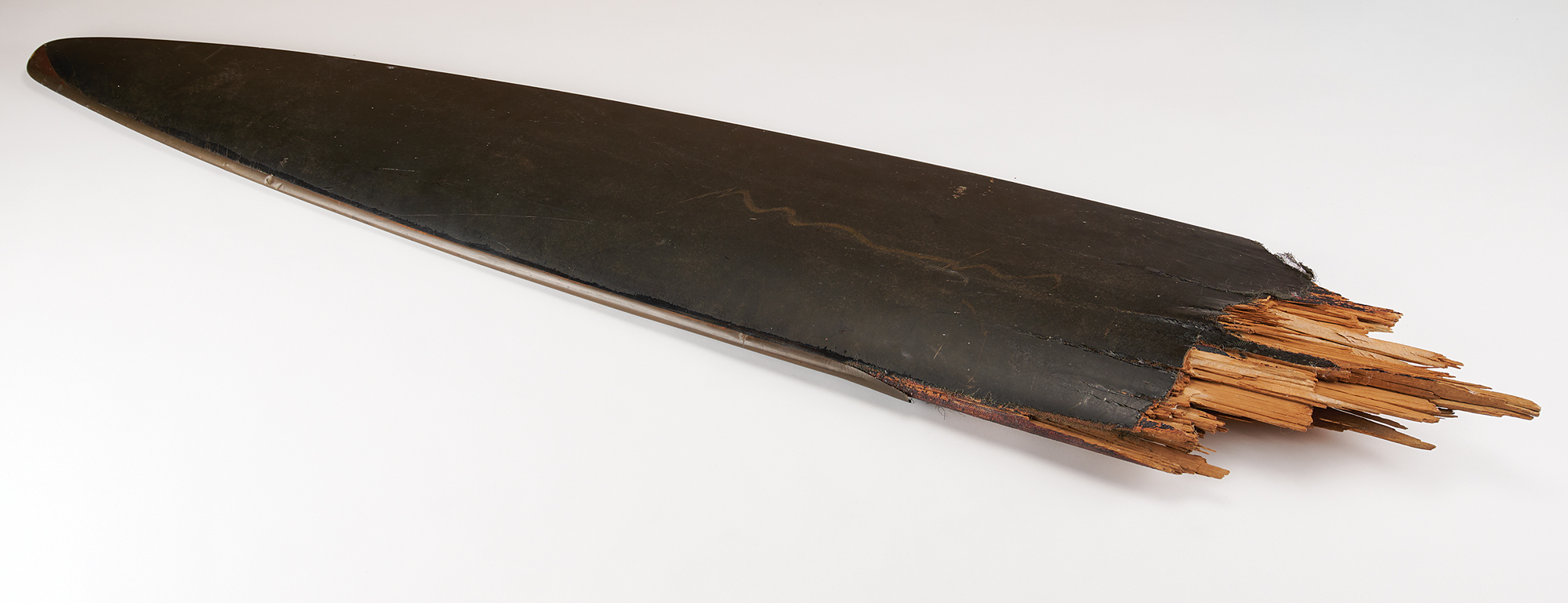
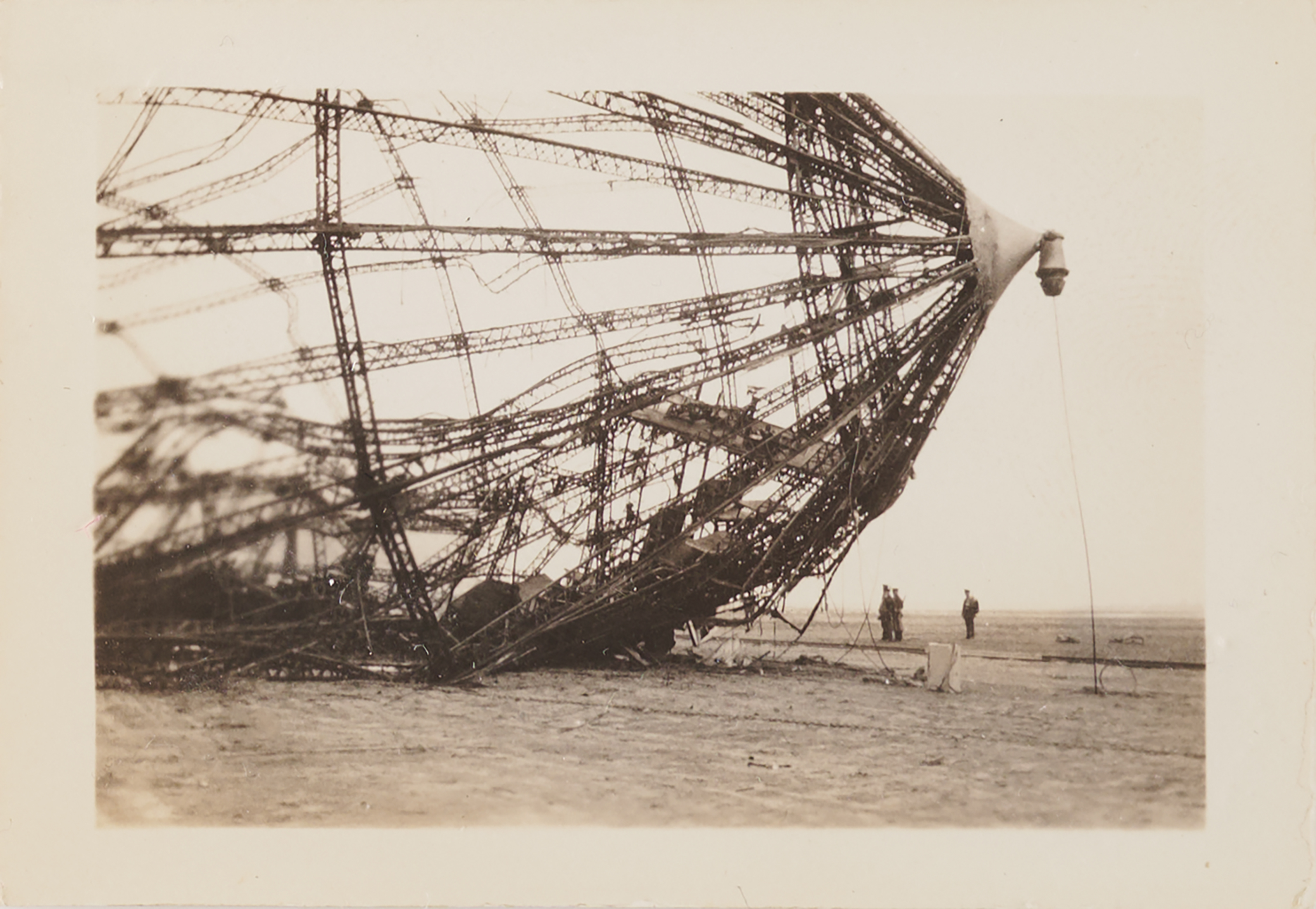
Five-foot wooden propeller blade tip recovered from the wreckage of the hydrogen-filled German airship LZ 129 Hindenburg, which caught fire and was destroyed during its attempt to dock at the mooring mast at U.S. Naval Air Station Lakehurst, New Jersey, on May 6, 1937. The disaster claimed 36 lives—13 passengers and 22 crewmen among the 97 persons aboard, along with one fatality on the ground—and effectively brought the era of rigid passenger airships to an abrupt end.
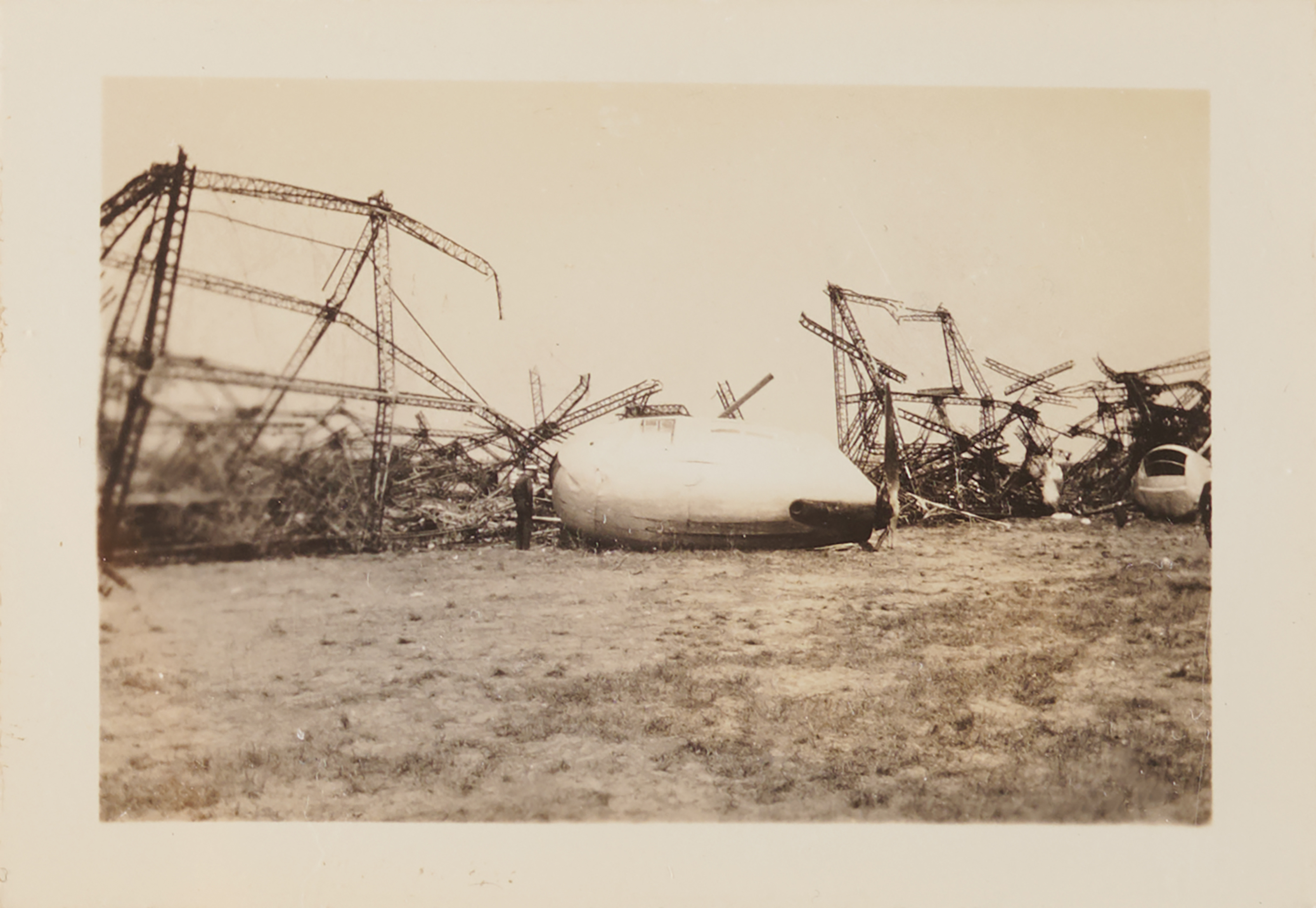
Delayed by headwinds and afternoon thunderstorms, the Hindenburg passed over Boston, Massachusetts, on the morning of May 6th and later that day flew low over Manhattan Island, to the delight of commuting New Yorkers, while awaiting improved weather in nearby New Jersey. After conditions cleared, the airship rerouted to Lakehurst and began its final landing approach shortly after 7:00 p.m. At approximately 7:25 p.m., during the mooring maneuver, some witnesses reported a flutter of fabric, a possible gas leak, while others claimed to see a dim blue flame upon the Zeppelin’s skin. Moments later, the great airship was engulfed in fire. It fell from an altitude of 295 ft (90 m) and, in less than 40 seconds, its bow crashed into the earth.
This historic artifact was salvaged at the crash site by U.S. Navy Yeoman First Class Joseph E. Cely, who was among those on duty at Lakehurst to greet the Hindenburg’s arrival. In the immediate aftermath of the disaster, Cely and his commanding officer encountered a serviceman carrying a large piece of debris. When the officer questioned the man about the object, the nervous serviceman—fearing repercussions—discarded it into nearby tall grass and fled. Once order was restored, Cely returned to the location and retrieved the item—this propeller blade tip. To discreetly remove it from the site, he covered it with a blanket and transported it back to base under the guise of an ‘ironing board.’
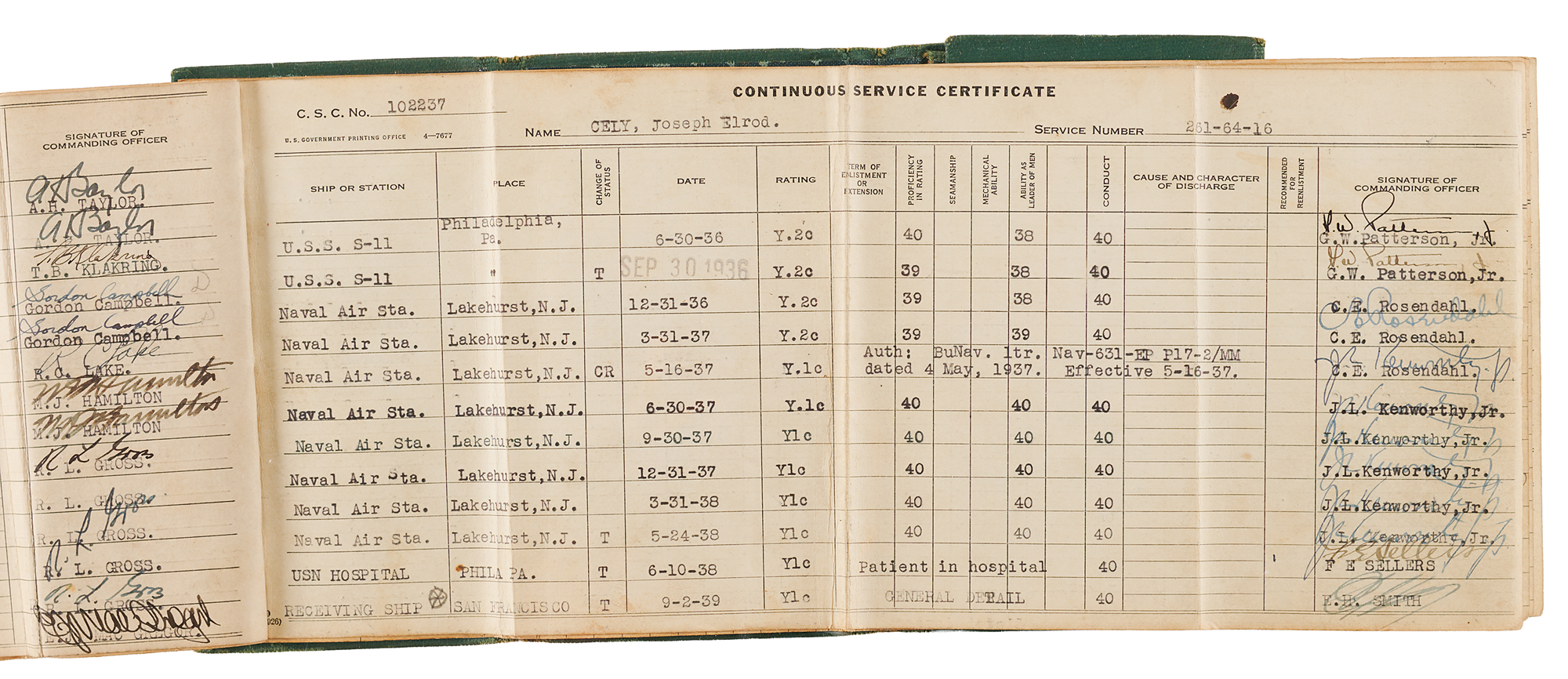
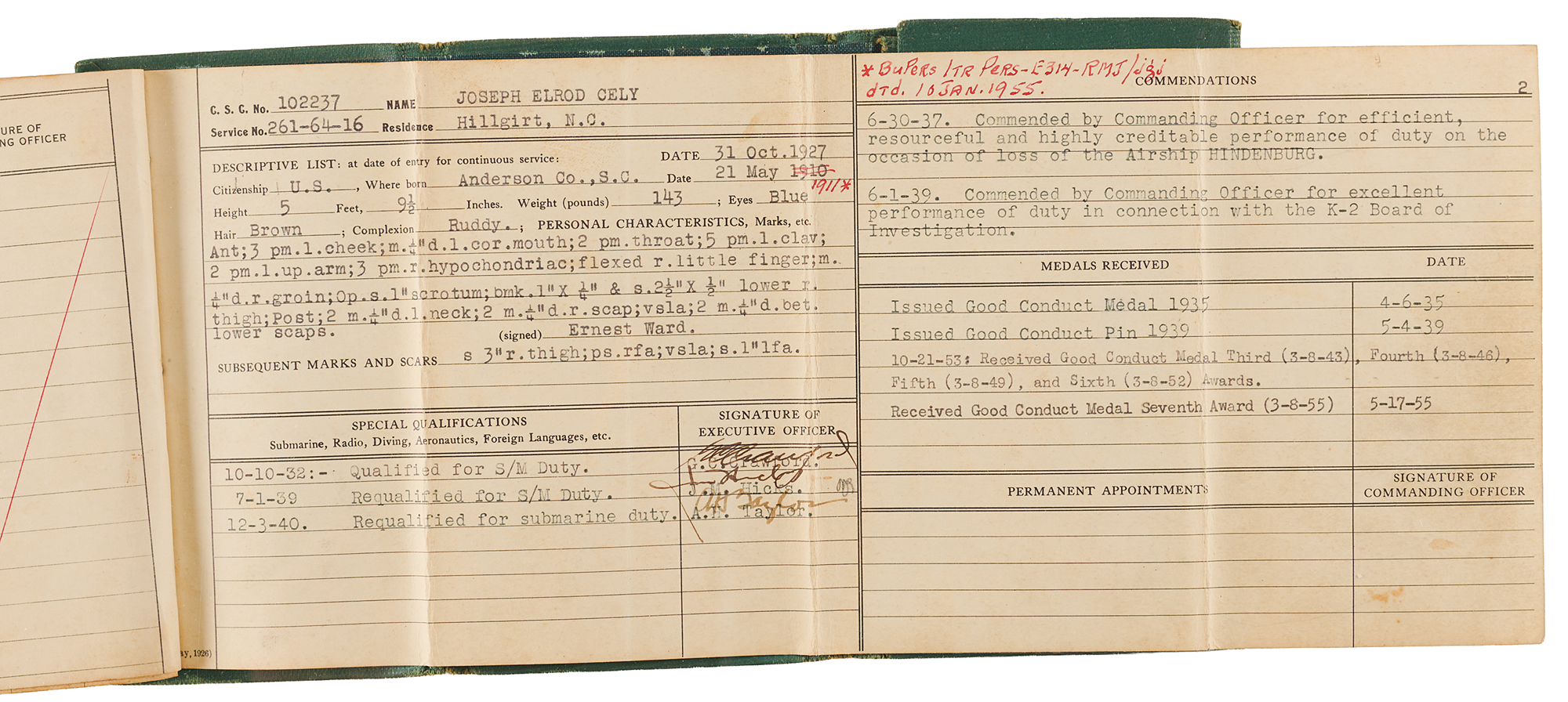
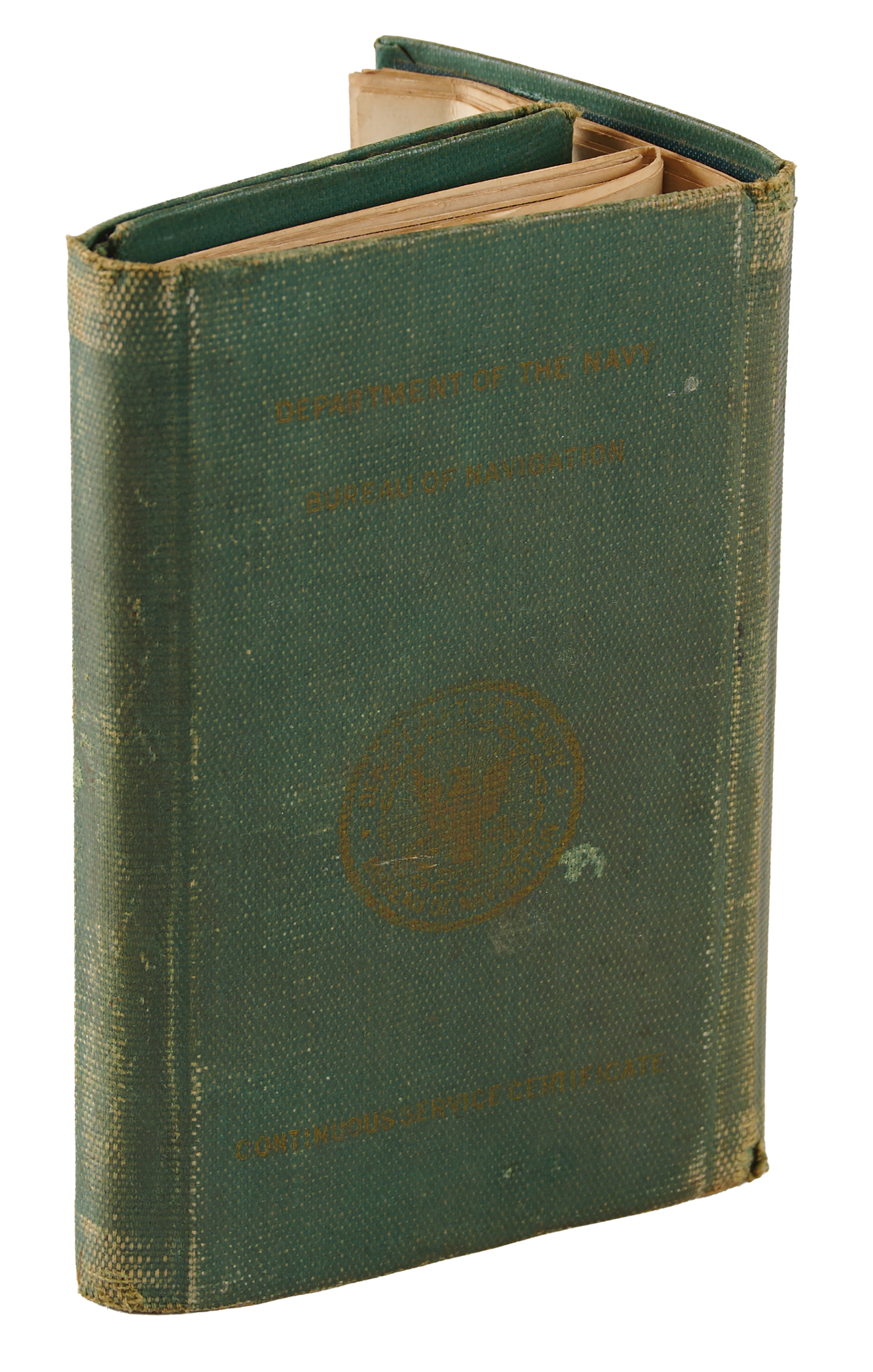
Included with the propeller blade fragment is a U.S. Naval Air Station Lakehurst memorandum from 1939 related to Cely’s work with the U.S. Navy’s K-2 non-rigid blimp, two newspaper articles related to the Cely family’s decadeslong storage of the artifact, and Cely’s official Navy Department ‘Continuous Service Certificate’ booklet, which places him at Lakehurst throughout 1937, with a section of the book’s ‘Commendations’ section reading: “6-30-37. Commended by Commanding Officer for efficient, resourceful and highly creditable performance of duty on the occasion of loss of the Airship HINDENBURG.”
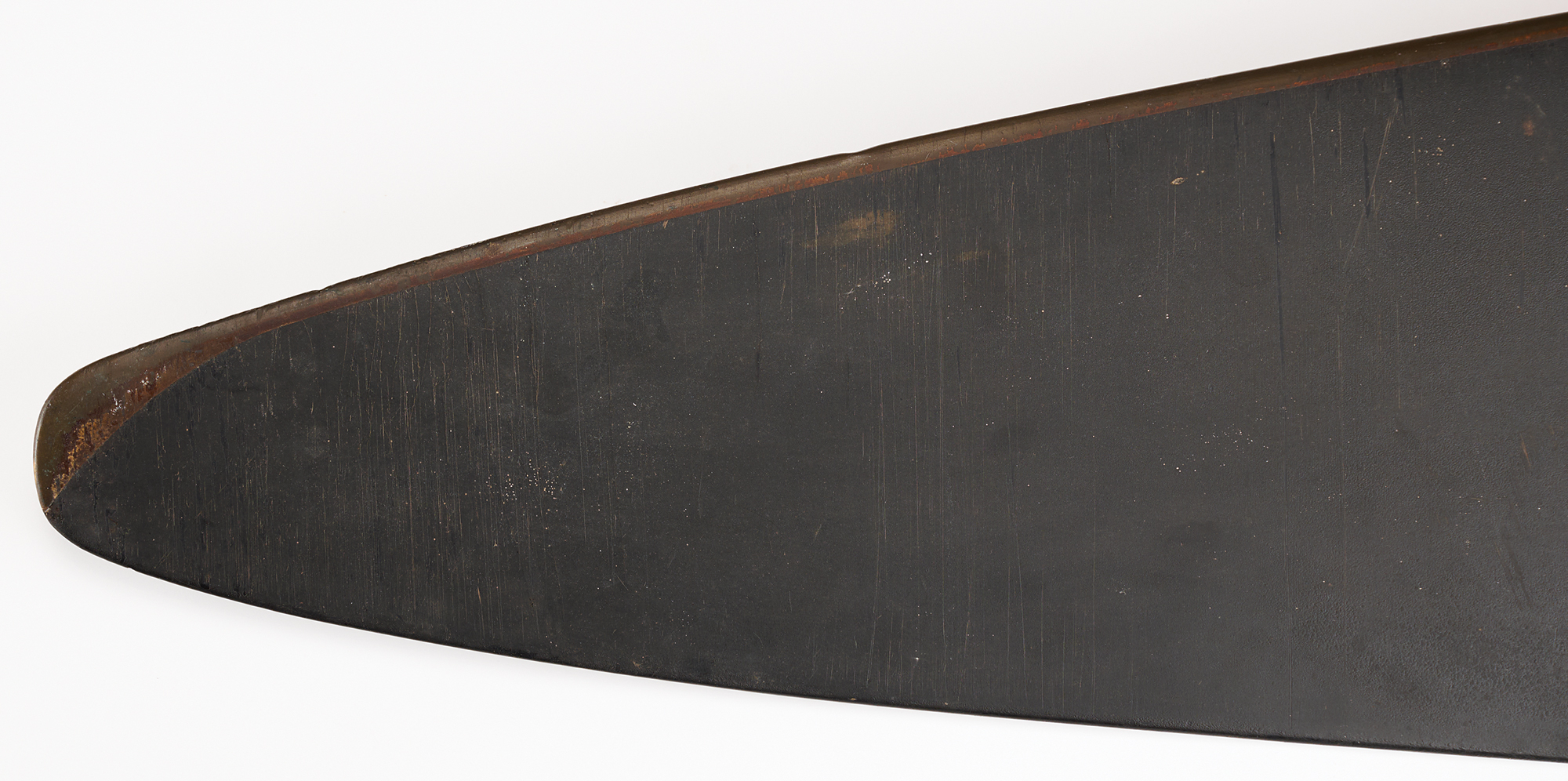
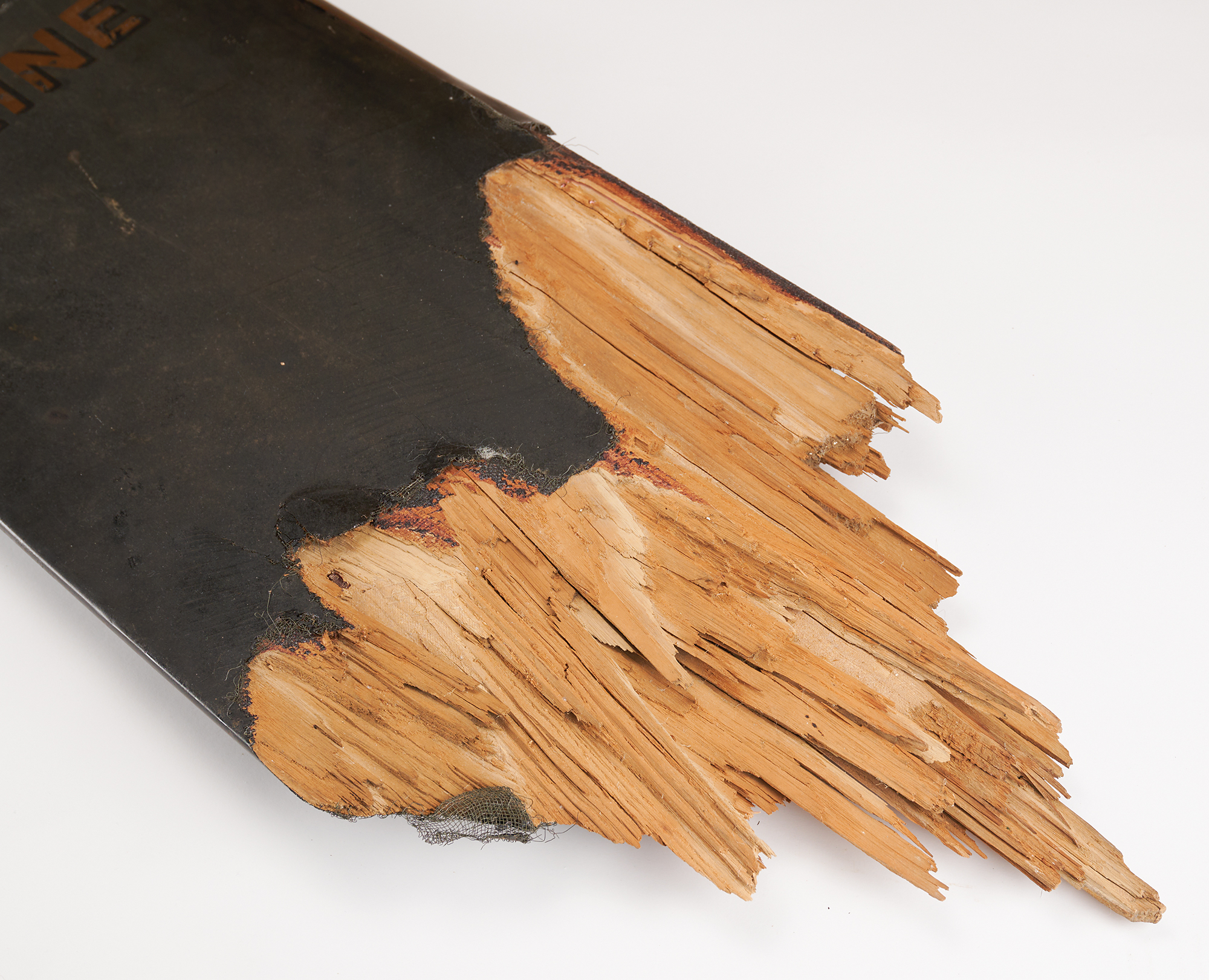
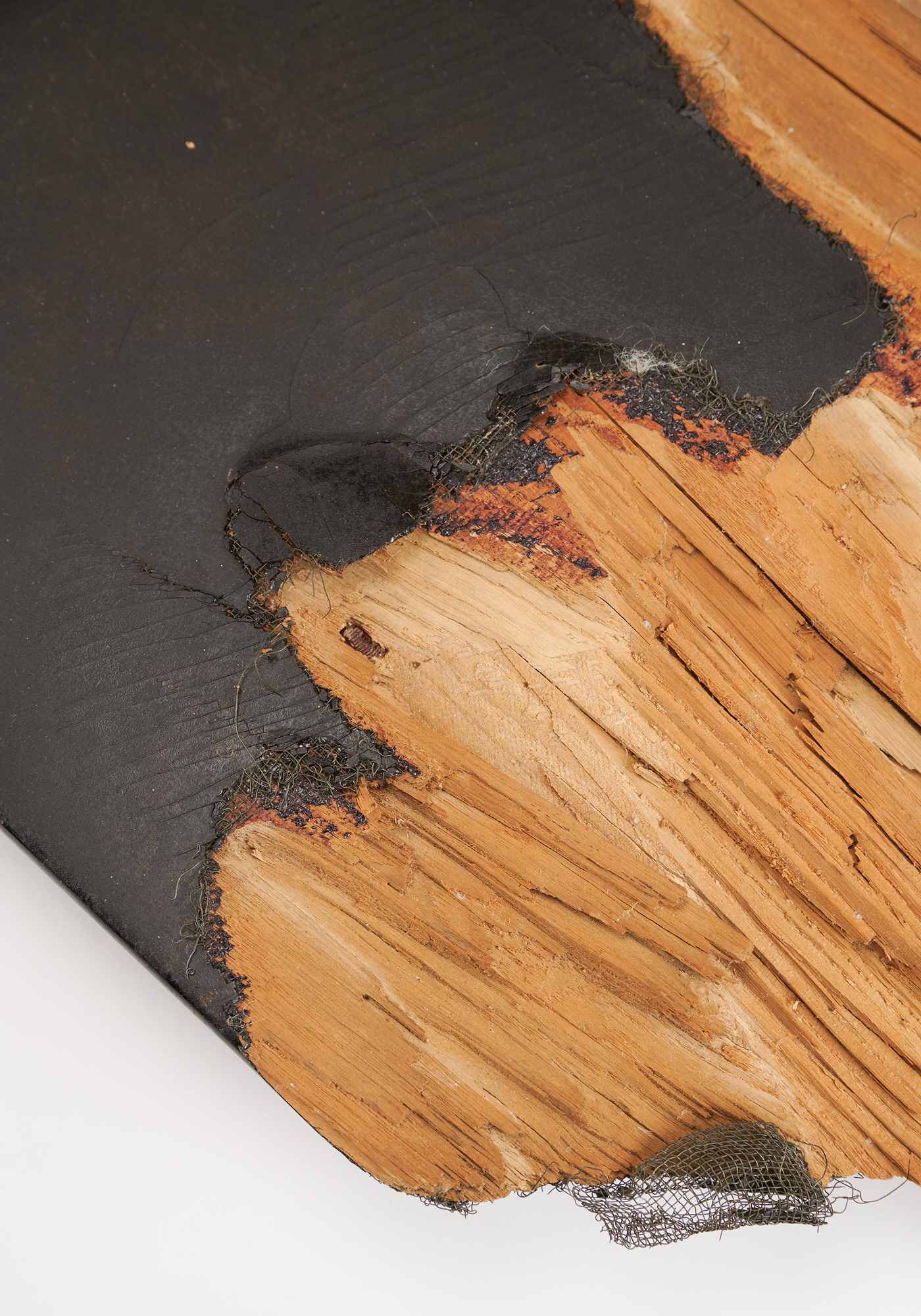
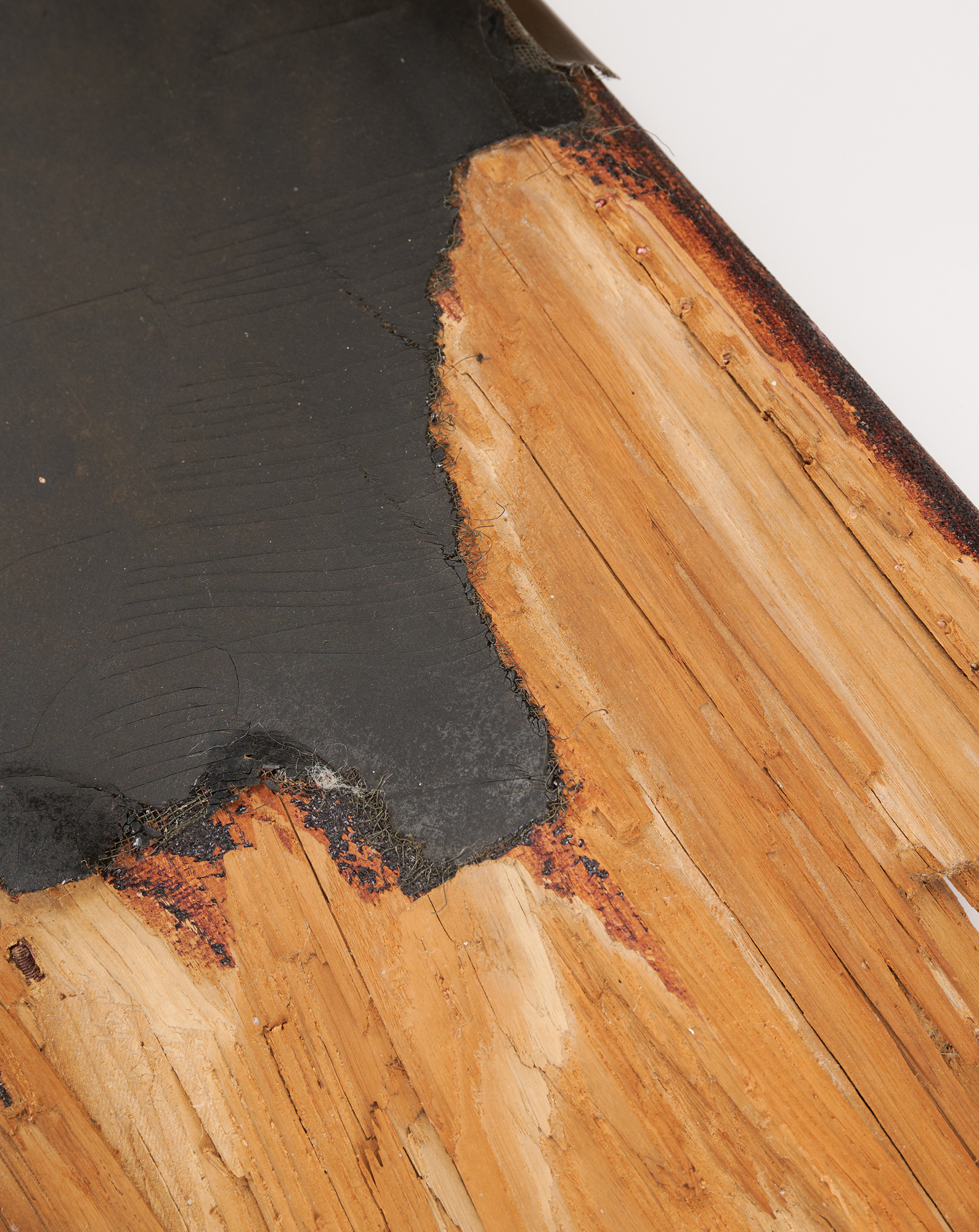
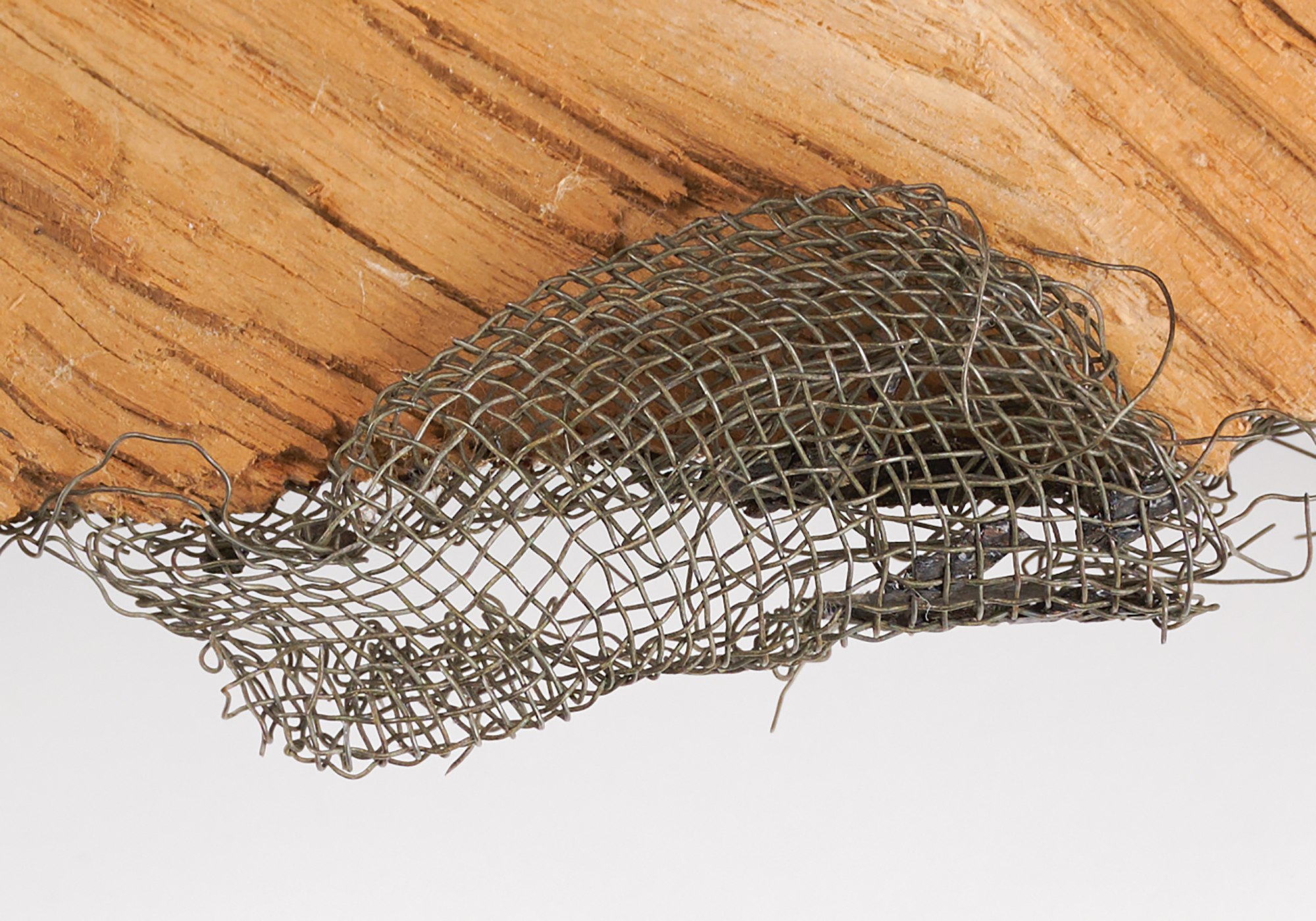
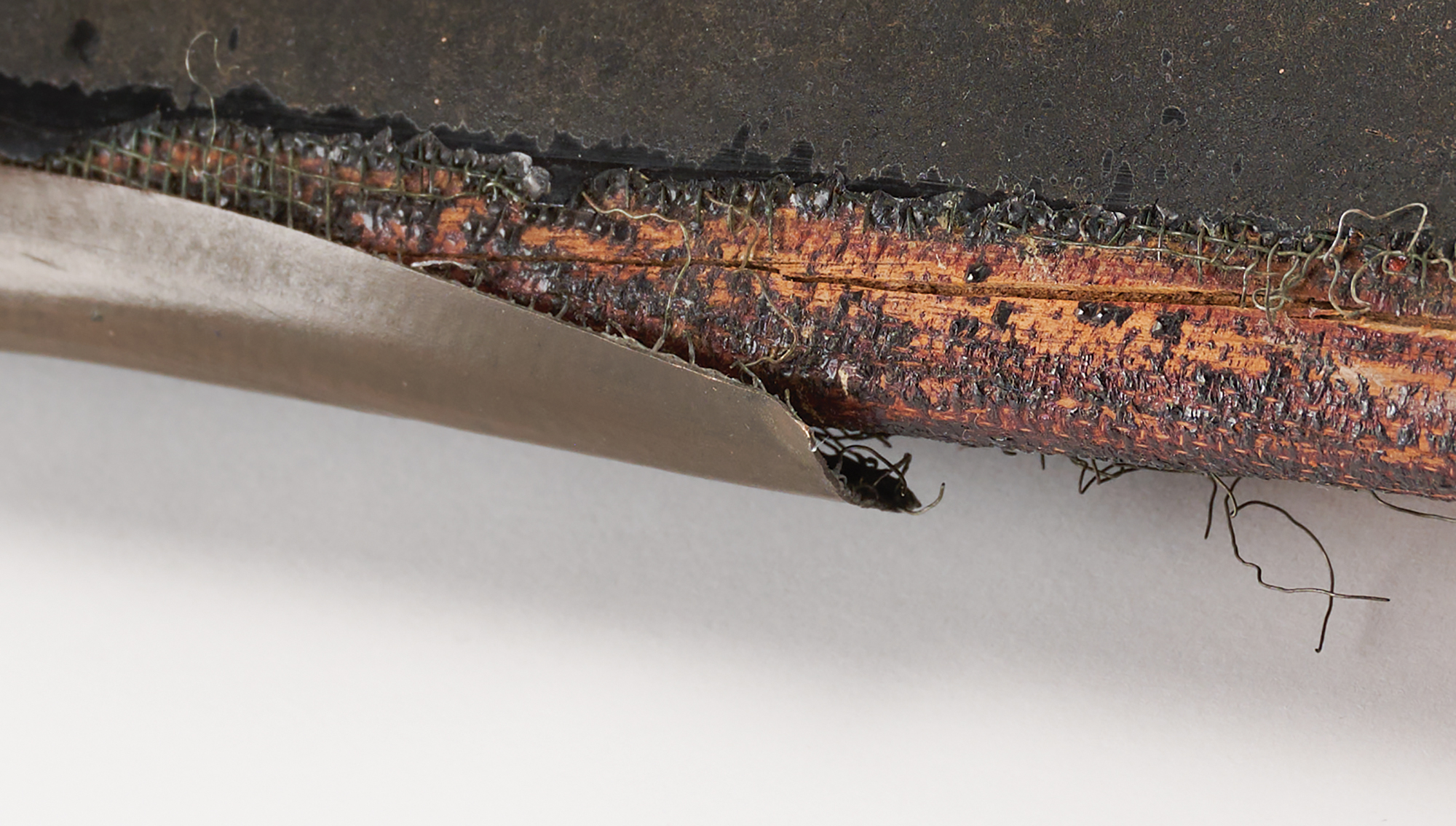
The propeller blade tip measures 64˝ x 14.5˝ x 3˝ and weighs 21 pounds, approximately, and is constructed of laminated mahogany finished in black paint. The face of the blade features the propeller manufacturer’s name, “HEINE,” painted in gold, the splintered bottom section reveals internal wire mesh reinforcement, and the leading edge retains its original brass sheathing for rain and abrasion protection.
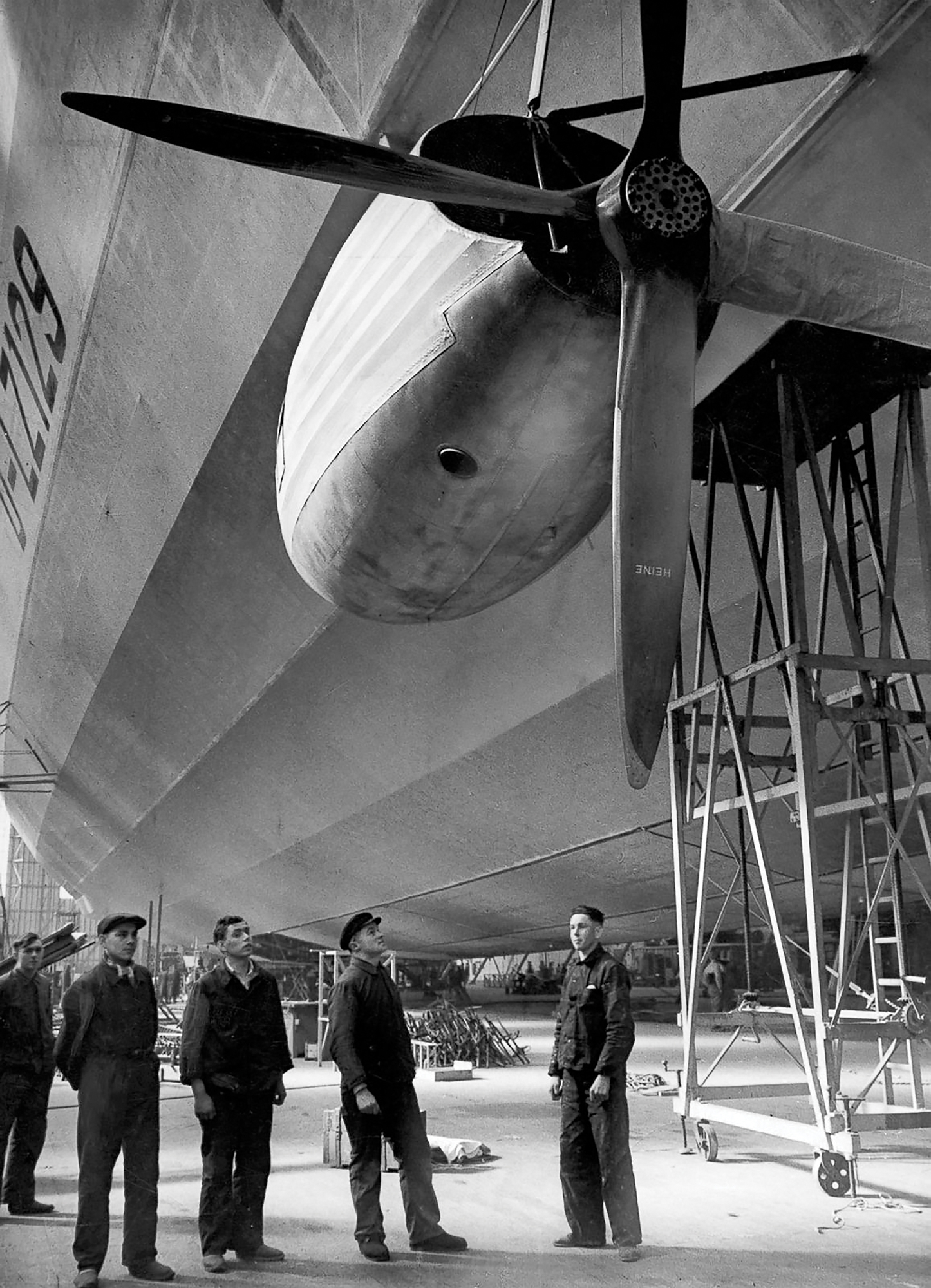
Heine Propellerwerke was a Berlin-based German manufacturer active in the interwar period, specializing in large laminated wooden propellers for aircraft and rigid airships. The firm was a supplier to Luftschiffbau Zeppelin, producing propellers for major Zeppelin airships, including LZ 127 Graf Zeppelin and LZ 129 Hindenburg, where its robust, metal-reinforced wooden blades were paired with high-torque diesel engines for sustained transatlantic operation. Heine propellers are identifiable by factory-applied markings, such as the painted “HEINE” name present on this blade.
The Hindenburg was powered by four Daimler-Benz DB 602 (LOF-6) 16-cylinder, V-type diesel engines, each producing approximately 1,100–1,320 horsepower, for a combined output of roughly 4,800 horsepower. Each engine drove a four-bladed, reversible-pitch wooden propeller measuring approximately 20 feet in diameter, mounted in an aft-facing ‘pusher’ configuration.
The engines were housed in four external gondolas—two forward and two aft—and were attended in flight by onboard mechanics. The reversible-pitch propellers allowed the engines to be run in reverse, aiding maneuvering and docking. This propulsion system enabled the Hindenburg to cruise at approximately 78 mph, with a maximum speed of about 84 mph, exceptional performance for a rigid airship of its size.
A rare surviving propulsion artifact from the Hindenburg, this blade fragment occupies a singular place in aviation history and would serve as an awesome centerpiece to any historical collection—the only other widely cited recovered section of a Hindenburg propeller is a partial blade held in the collection of the Smithsonian Institution.

