Sold For $1,944
*Includes Buyers Premium
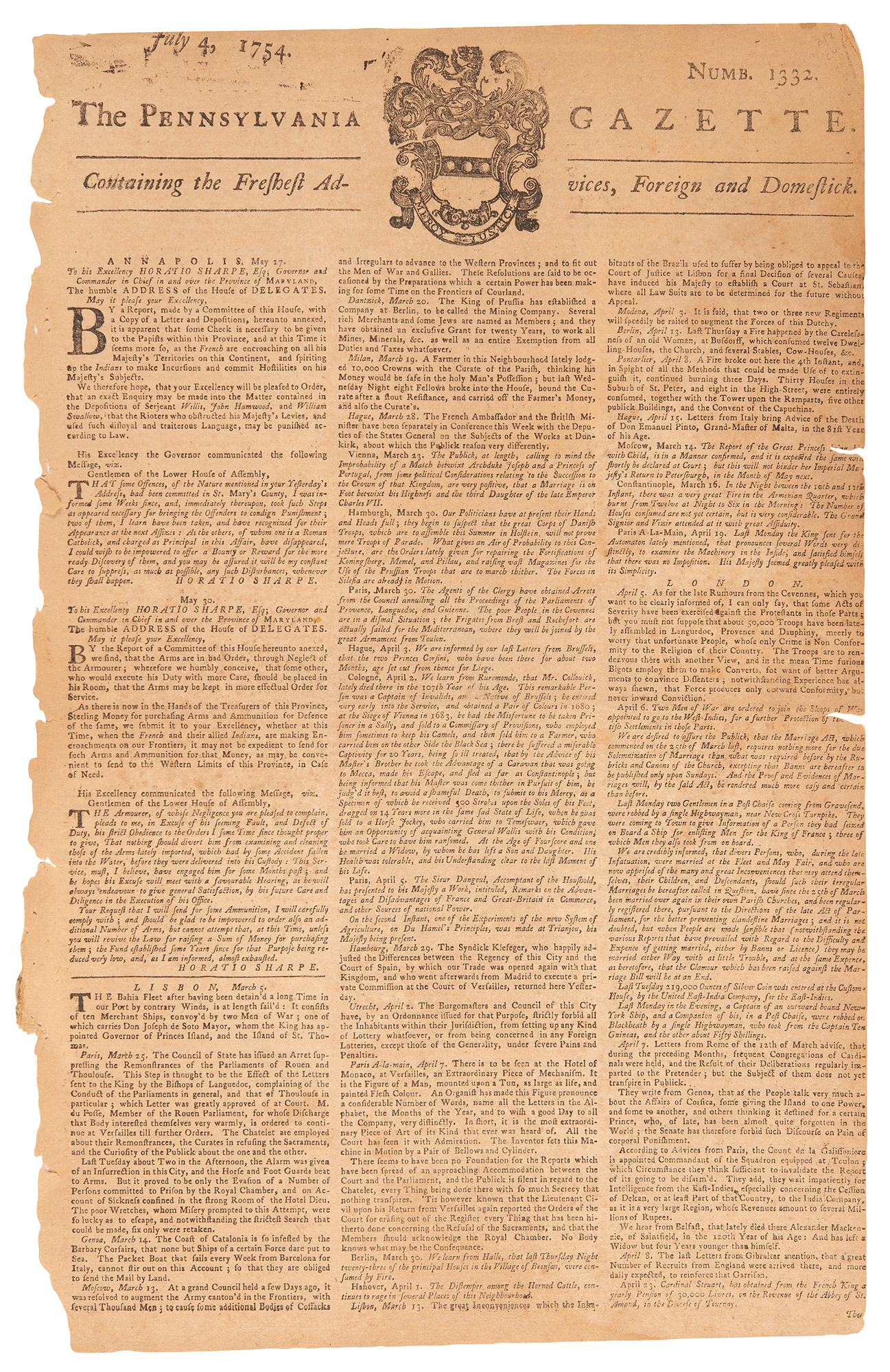
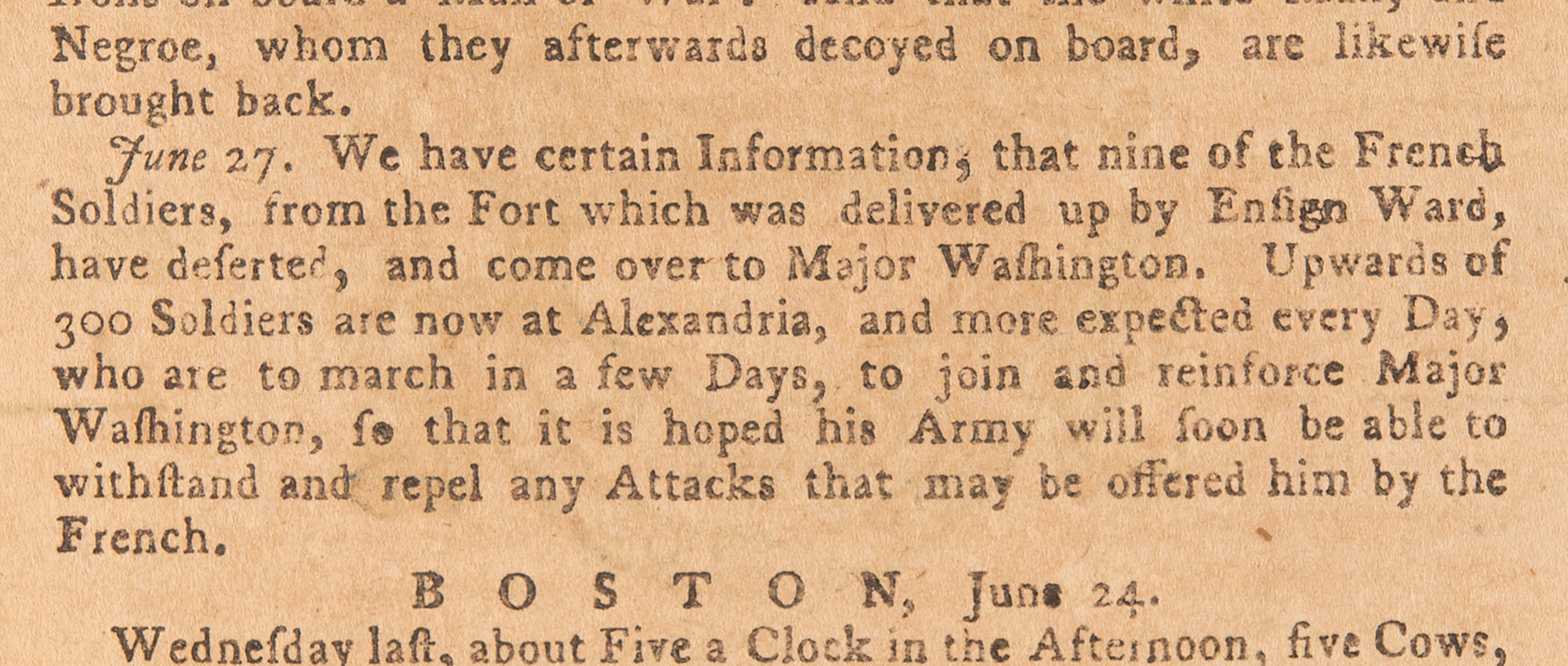
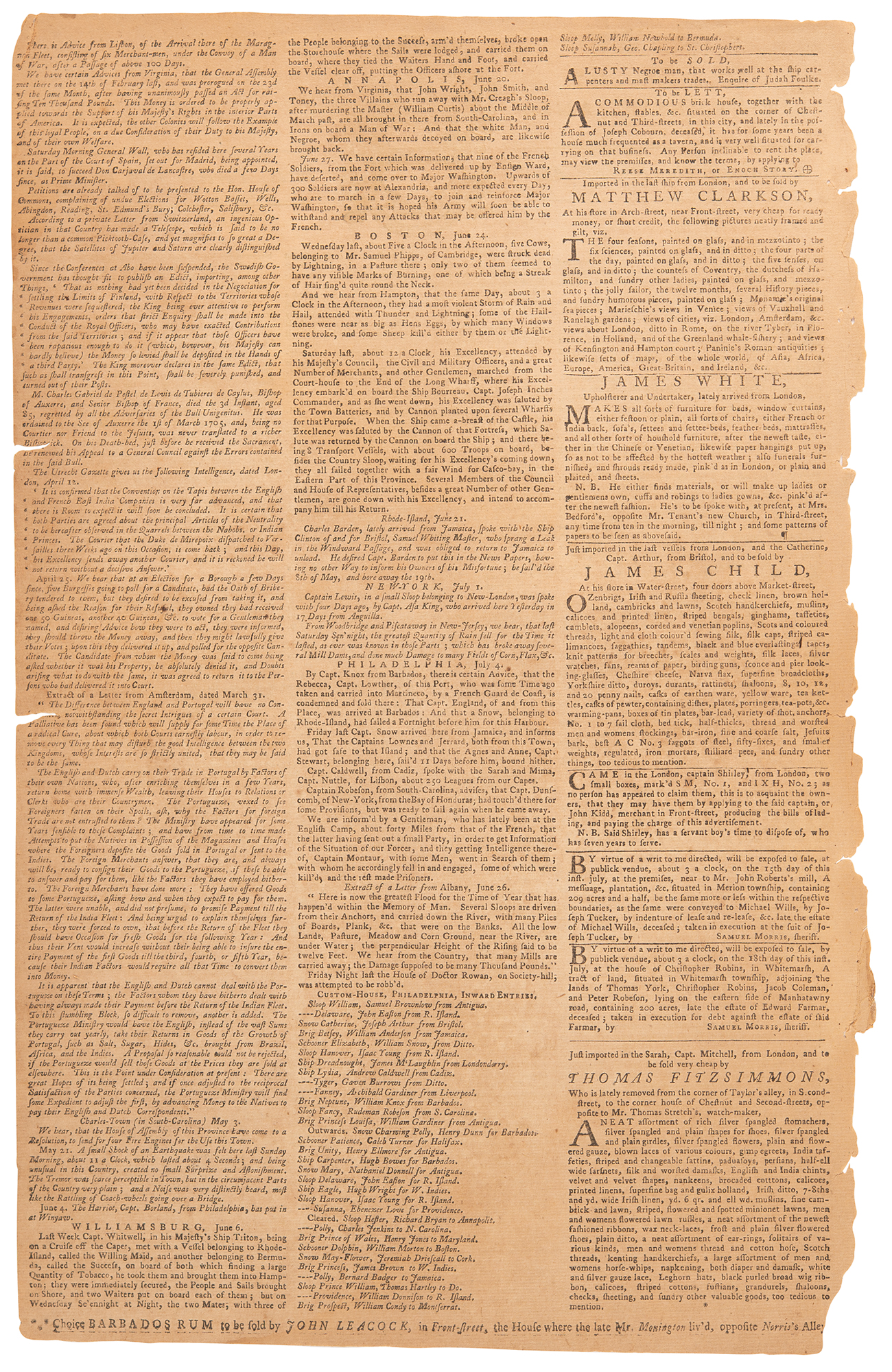
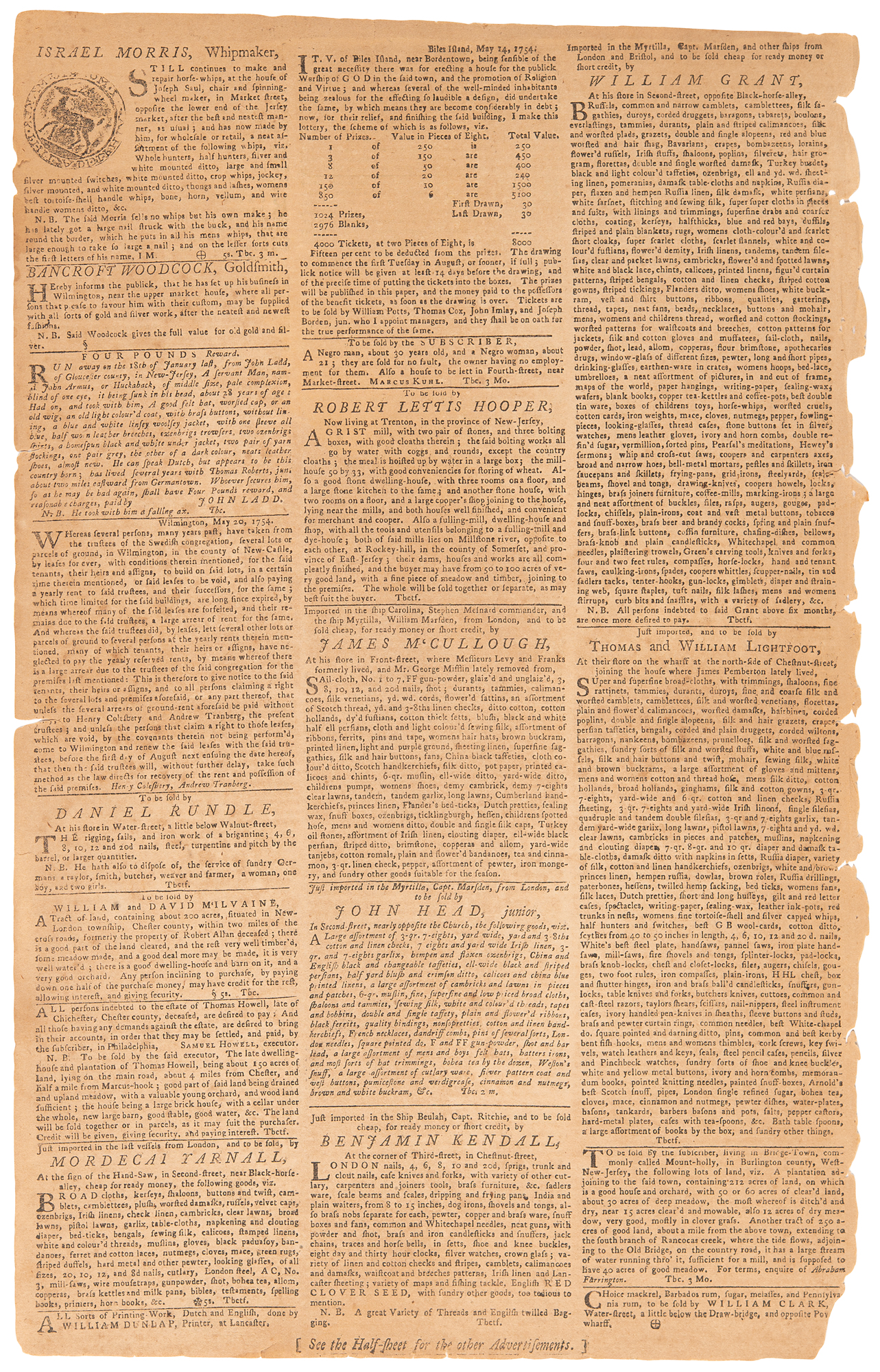
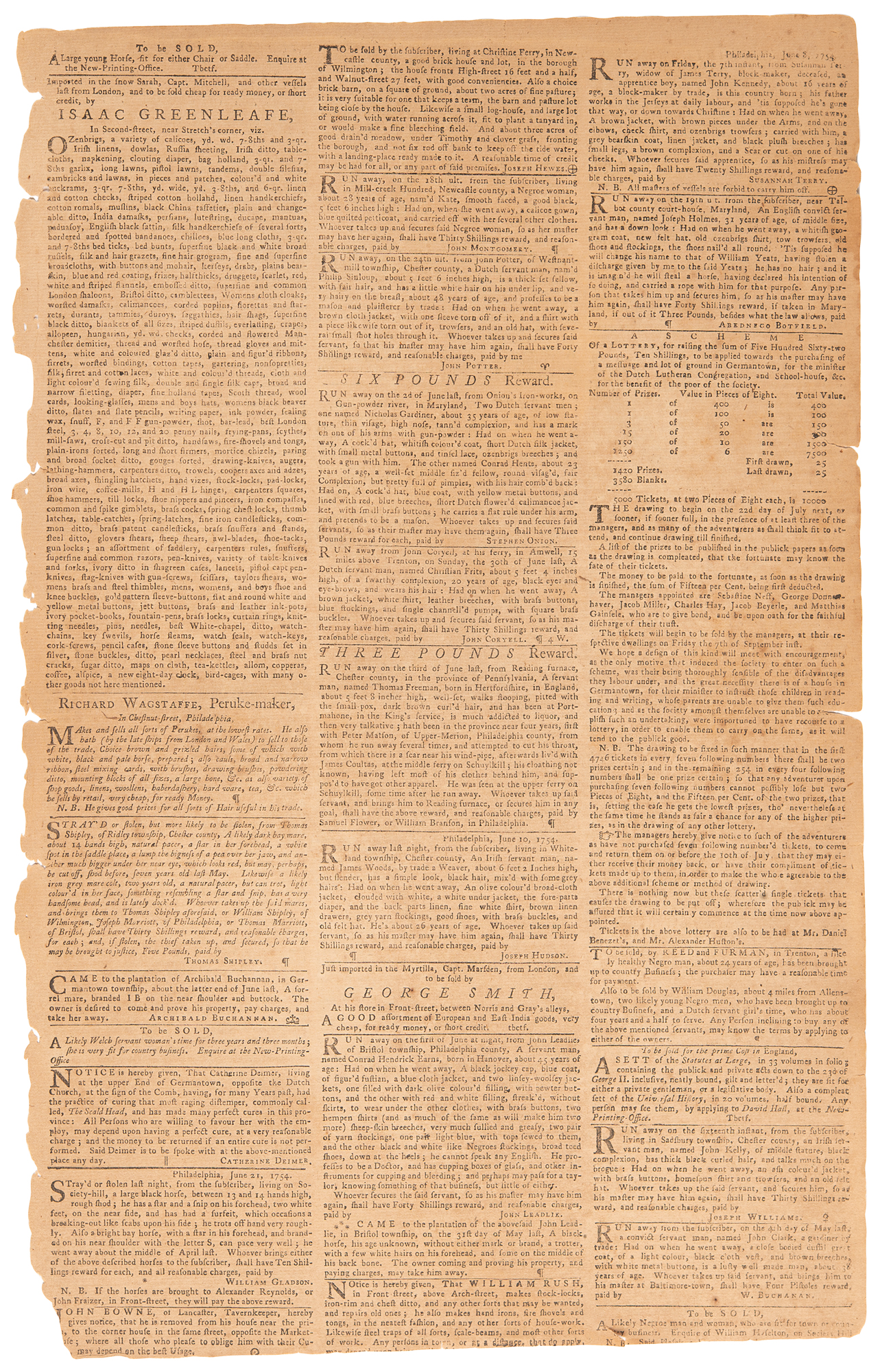
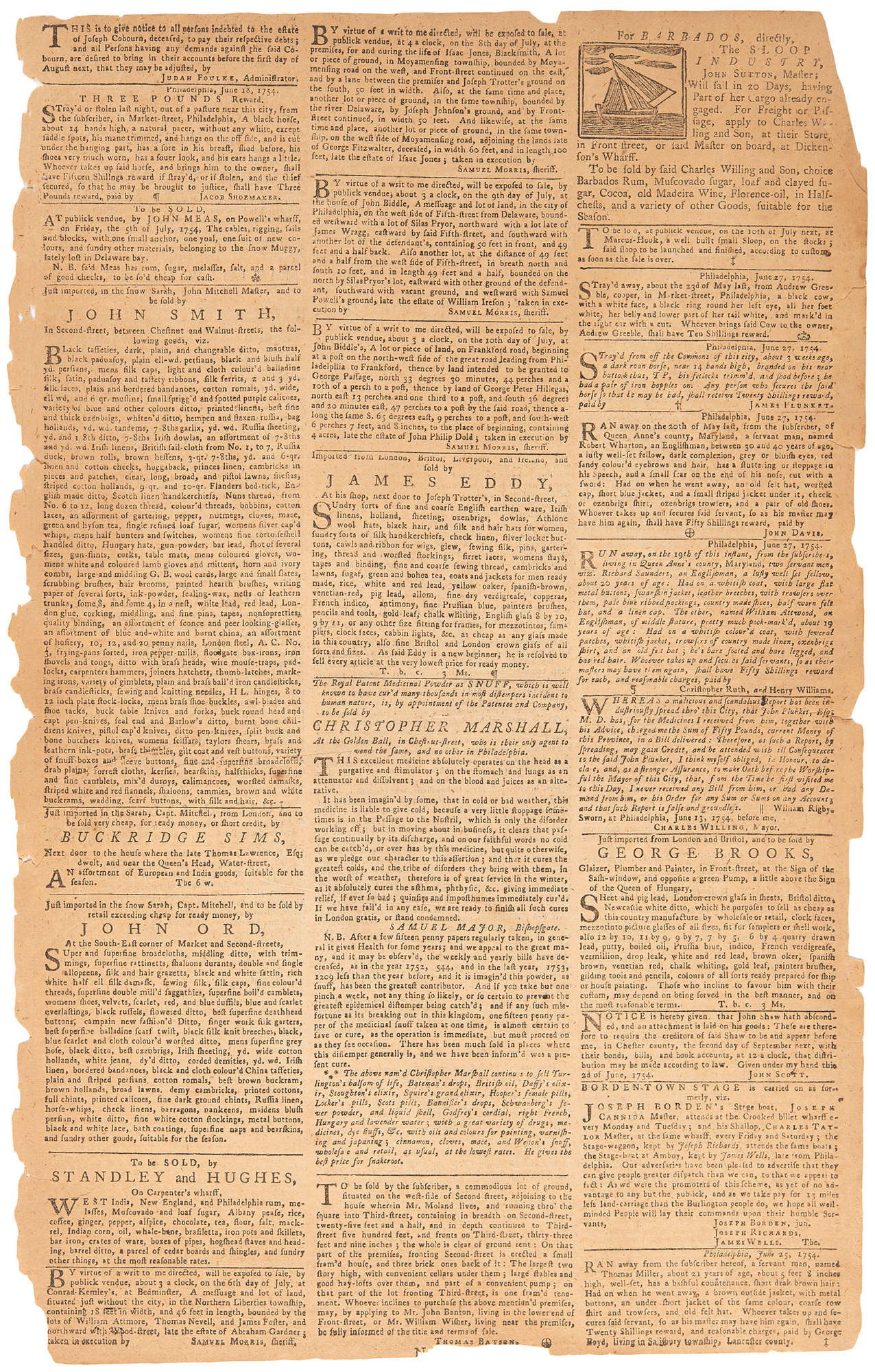
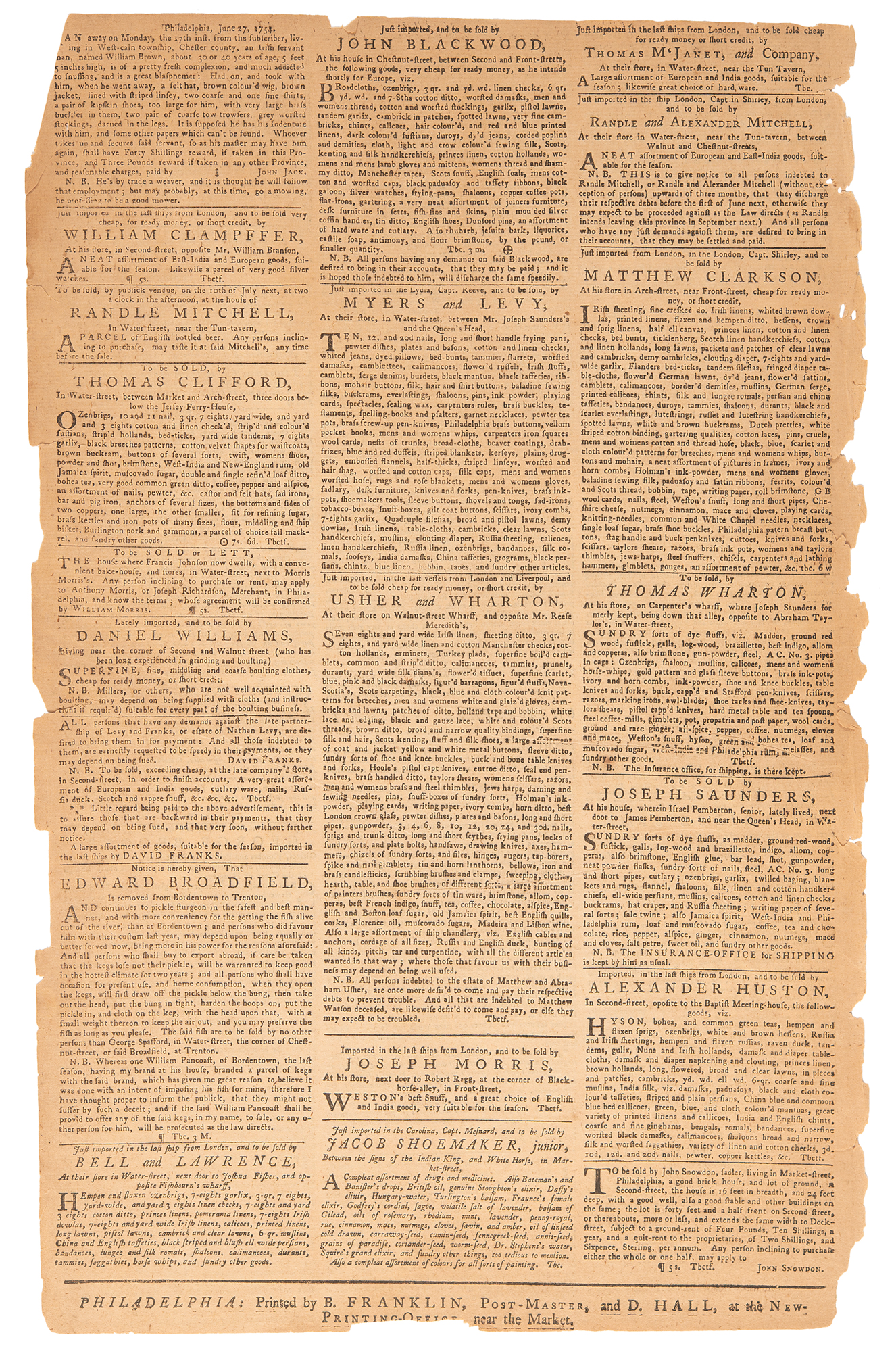
Complete issue of The Pennsylvania Gazette from July 4, 1754, 9.5 x 15, six total pages, containing considerably early and seldom-seen contemporary press about 22-year-old Corporal George Washington (erroneously listed here as a major), in the year his name first appeared in print. From a report the Gazette had garnered a week before publication, this blurb relays on the second page two status items on the conflict that Washington was leading for the British at the northwest French-English border, in and around modern-day Pittsburgh. He was navigating the English-French-Indian conflicts that would escalate into the French and Indian War.
The text: “June 27. We have certain information, that nine of the French Soldiers, from the Fort which was delivered up by Ensign Ward, have deserted, and come over to Major Washington. Upwards of 300 Soldiers are now at Alexandria, and more expected every Day, who are to march in a few Days, to join and reinforce Major Washington, so that it is hoped his Army will soon be able to withstand and repel any Attacks that may be offered him by the French.”
In October 1753, the Ohio-familiar surveyor Washington had been appointed by Virginia governor Robert Dinwiddie, after orders from London to investigate and confront French forces that were staking claim in the British frontier near present-day Erie, Pennsylvania, demanding that they vacate. Washington efficiently and successfully accomplished this, and when he returned in January 1754 from the difficult winter task, he wrote, and Dinwiddie published his comprehensive report detailing the French threat, earning Washington wide recognition and distinction. Thus, in February, Dinwiddie promoted Washington to lieutenant colonel and second-in-command of the Virginia Regiment and ordered him on a return journey to the general area.
This time, Washington was to assist and defend the construction of Fort Prince George, at the Ohio River forks in present-day Pittsburgh, if necessary, confronting the French and escalating the conflict. The fort is identified in the article, unnamed but noted as “delivered up by Ensign Ward”; this eventually permitted construction of the French Fort Duquesne in its place. When Washington arrived in April, he coordinated with other British and Indian allies in the area and began constructing their own base, which would be the smaller Fort Necessity. In late May, responding to reports of increasing French presence, Washington, with the help of Indian allies, pre-emptively found, attacked, and destroyed the then-small French force in the Battle of Jumonville Glen. Afterwards, he returned to building his fort. The nine French soldiers mentioned in this article of “joining” Washington were possibly his prisoners of war from that battle. In May, Dinwiddie promoted Washington again to full colonel and sent army reinforcements. These are likely the 300-plus mentioned in the article.
These events preceded Washington's loss of the fort, his surrender, and his written confession in French that he insufficiently understood. Then in June, Corporal Washington was joined by a force from South Carolina led by a British Isles native captain, which resulted in confusion and dispute over their effective ranks with each other and eventually Washington's pending demotion. To circumvent that setback, Washington resigned from the military. But he would rejoin the following year as an aide to General Edward Braddock, thus continuing his military career in the now-ongoing war.
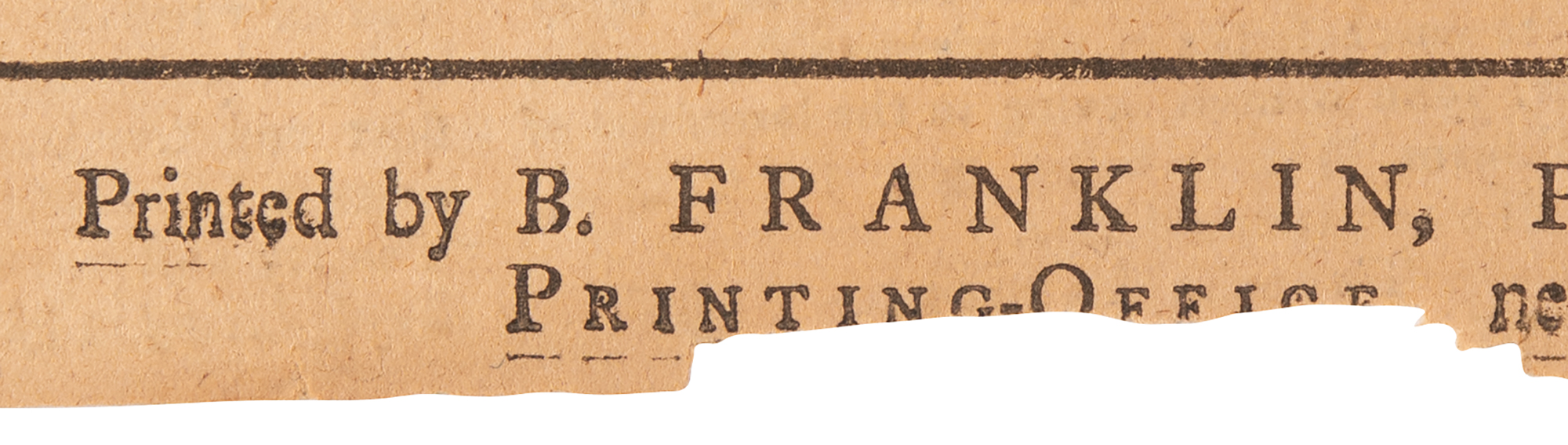
Although Benjamin Franklin was, since 1748, no longer actively managing the Pennsylvania Gazette, the legend “Printed by B. Franklin” is prominently marked in the usual byline location in the footer of the last page. The rest of this 6-page issue of the Pennsylvania Gazette, published in its heyday as a national paper of record, is packed with many additional interesting articles and ads.
In very good to fine condition, with pages detached, wear to edges, and a somewhat overall brittle quality, as is common with issues of this period.

