The 30 Minute Rule begins April 15 at 7:00 PM EDT. An Initial Bid Must Be Placed By April 15 at 6:00 PM EDT To Participate After 6:00 PM EDT
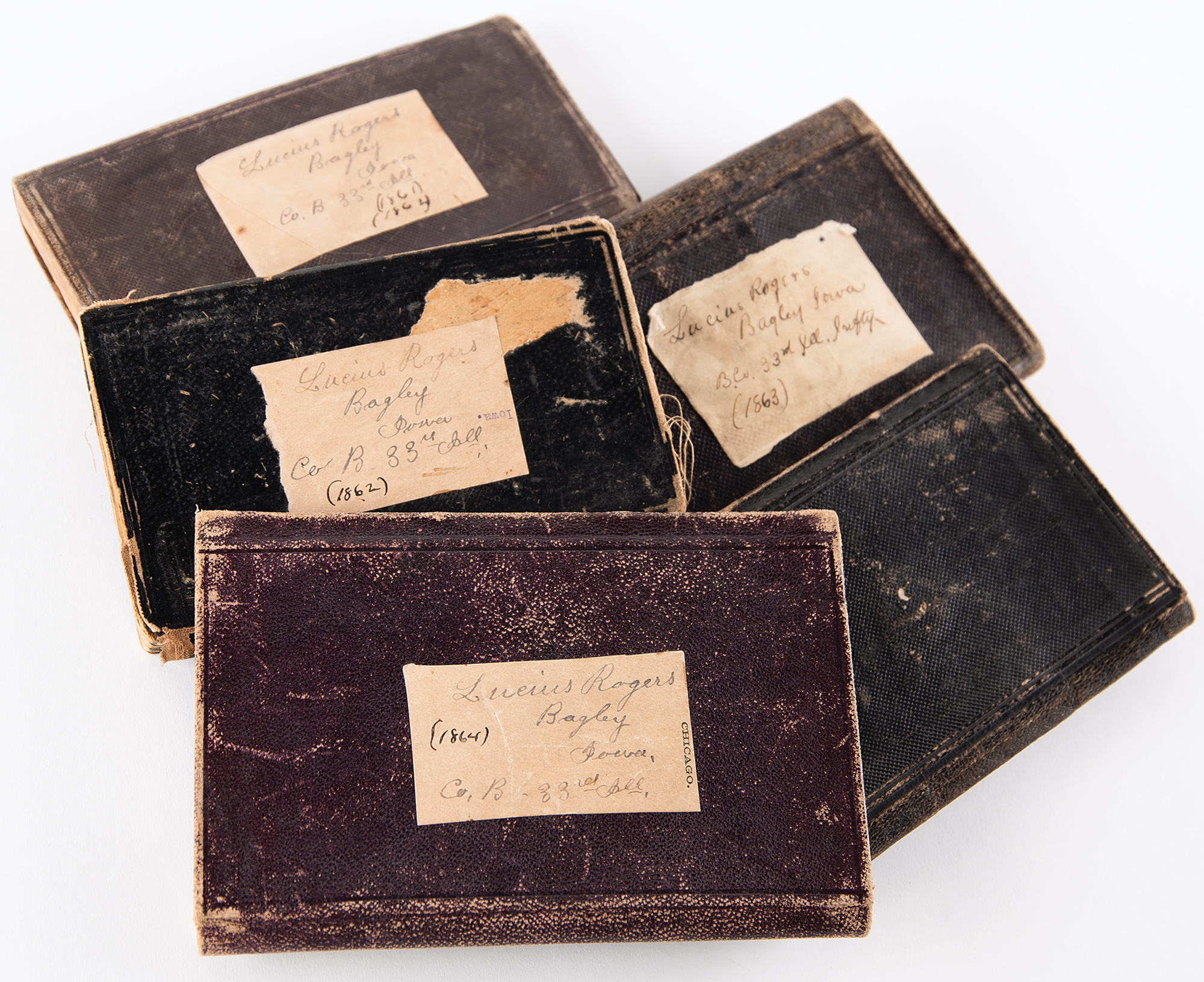
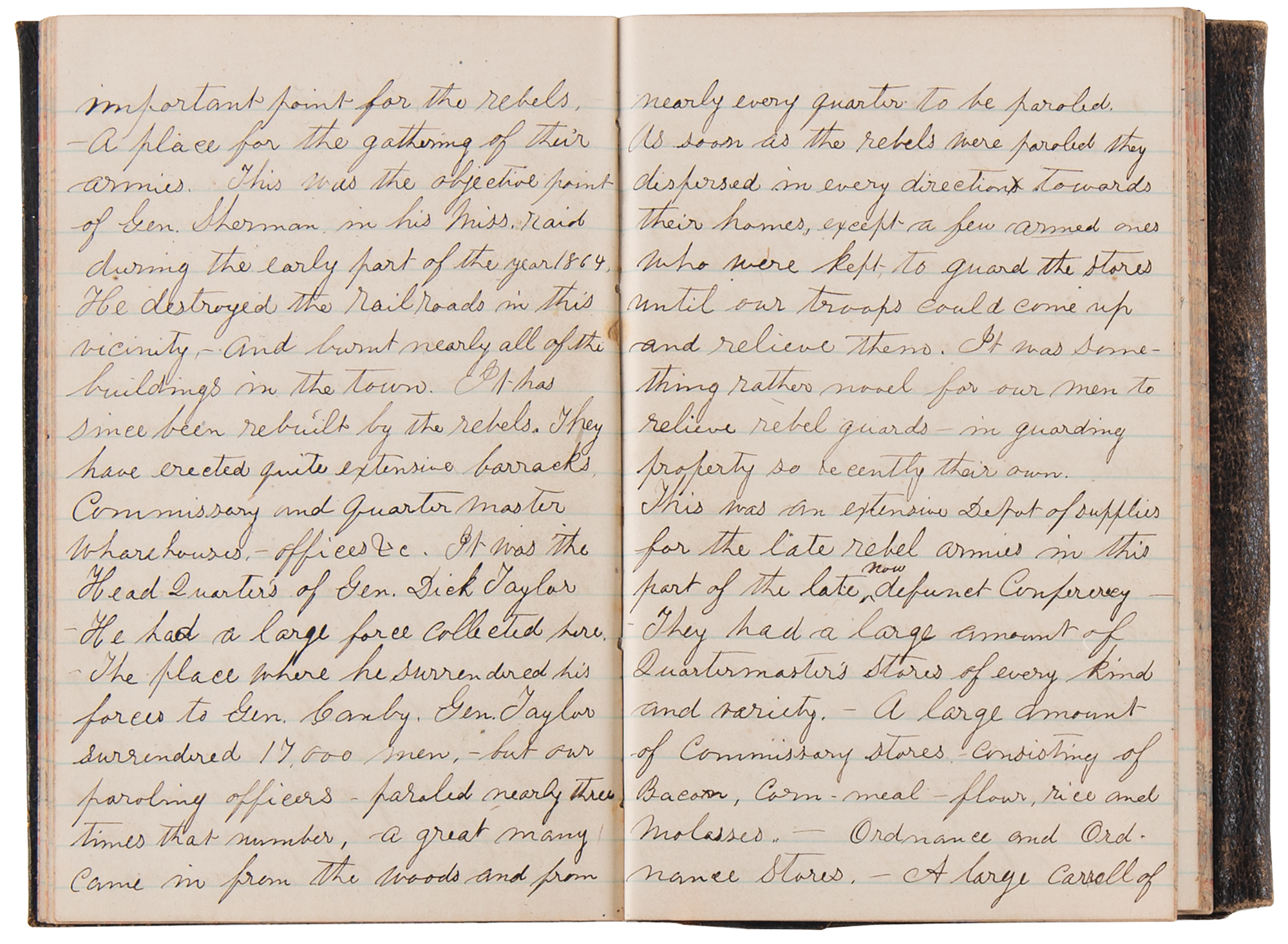
Five leatherbound Civil War diaries kept by Lucius Rogers of Company B, 33rd Illinois Infantry, from 1861 to 1865, offering remarkable, comprehensive insight on the experiences of the regiment, its battles, lines of travel, dates and places of encampment, and conditions throughout the Civil War.
The diaries provide a continuous firsthand account of Union service in the Western Theater of the Civil War. The 33rd Illinois operated extensively in the Mississippi Valley and Gulf regions, supporting Union campaigns that secured control of the Mississippi River and extended Federal authority across Louisiana, Texas, and Alabama. Rogers records marches through Louisiana’s bayou country, reviews by generals including Ulysses S. Grant and Nathaniel P. Banks, and skirmishes with Confederate forces, while also noting the broader social upheaval of the war—abandoned plantations, the recruitment of formerly enslaved men into Union service, and the difficult transition in Southern communities as the Confederacy collapsed.
A few notable excerpts:
September 4, 1863: "Our whole corps was reviewed by Gens. Grant, Banks and staffs. The generals showed themselves to be good horseman. A part of our Div. took transports at Carrollton, came down and landed at Algiers opposite to New Orleans. We are about taking the cars for Brashear Citty 84 miles west by R.R."
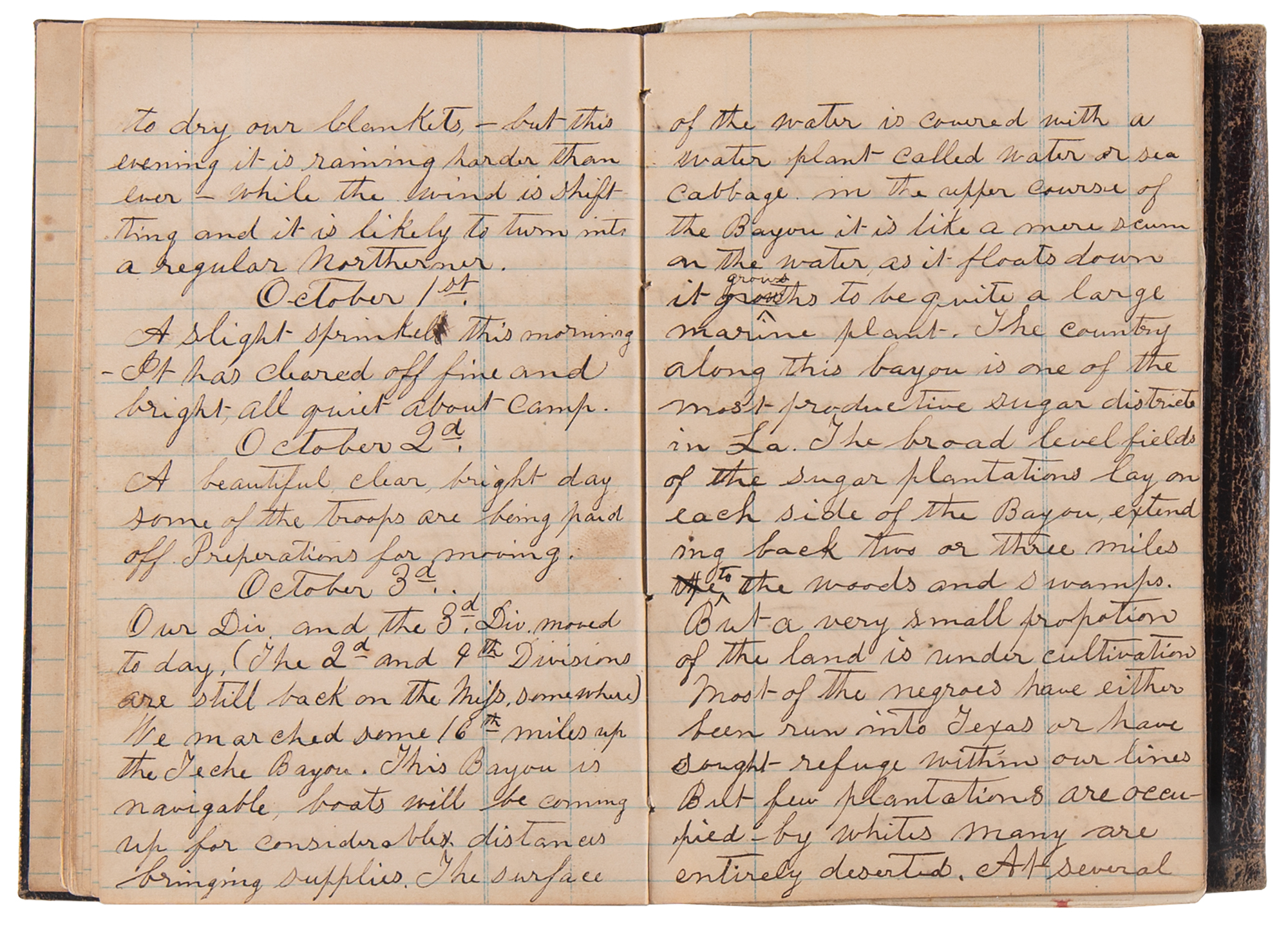
October 3, 1863: "Our Div. and the 3rd Div. moved today…We marched some 16 miles up the Teche Bayou. This Bayou is navigable, boats will be coming up for considerable distances bringing supplies. The surface of the water is covered with a water plant called water or sea cabbage…The country along this bayou is one of the most productive sugar districts in La. The broad level fields of the sugar plantations lay on each side of the Bayou, extending back two or three miles to the woods and swamps. But a very small proportion of the land is under cultivation. Most of the negroes have either been run into Texas or have sought refuge within our lines. But few plantations are occupied by whites, many are entirely deserted…At several places we noticed traces of skirmishes had by Gen. Banks with the rebels when he advanced through this country last spring.
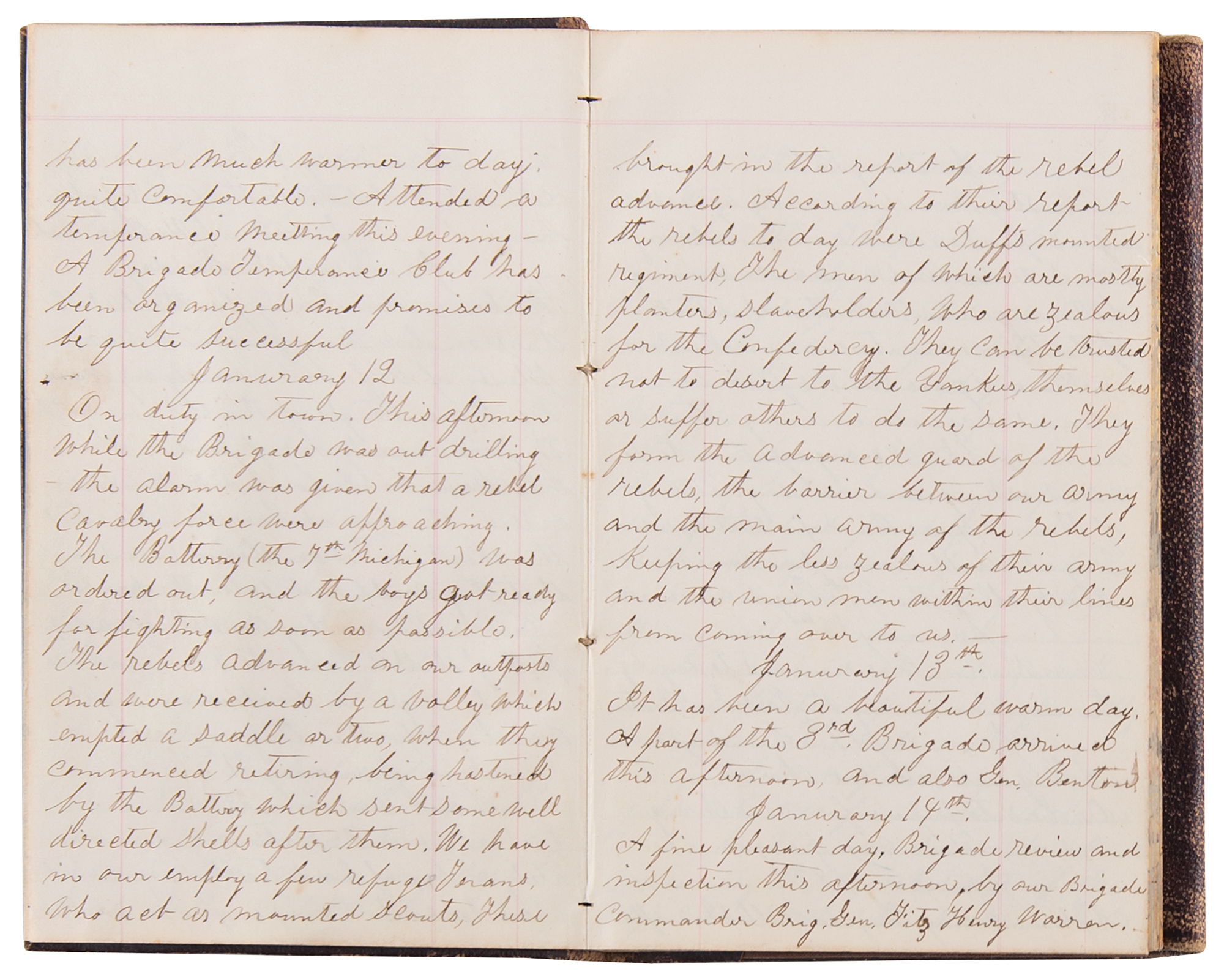
January 12, 1864: "This afternoon while the Brigade was out drilling the alarm was given that a rebel cavalry force were approaching. The Battery (the 7th Michigan) was ordered out, and the boys got ready for fighting as soon as possible. The rebels advanced on our outposts and were received by a volley which emptied a saddle or two, when they commenced retiring, being hastened by the battery which sent some well directed shells after them. We have in our employ a few…mounted scouts…According to their report the rebels today were Duff's mounted regiment, the men of which are mostly planters, slaveholders, who are zealous for the Confederacy. They can be trusted not to desert to the Yankees themselves or suffer others to do the same. They form the advanced guard of the rebels, the barrier between our army and the main army of the rebels, keeping the less zealous of their army and the union men within their lines from coming over to us."
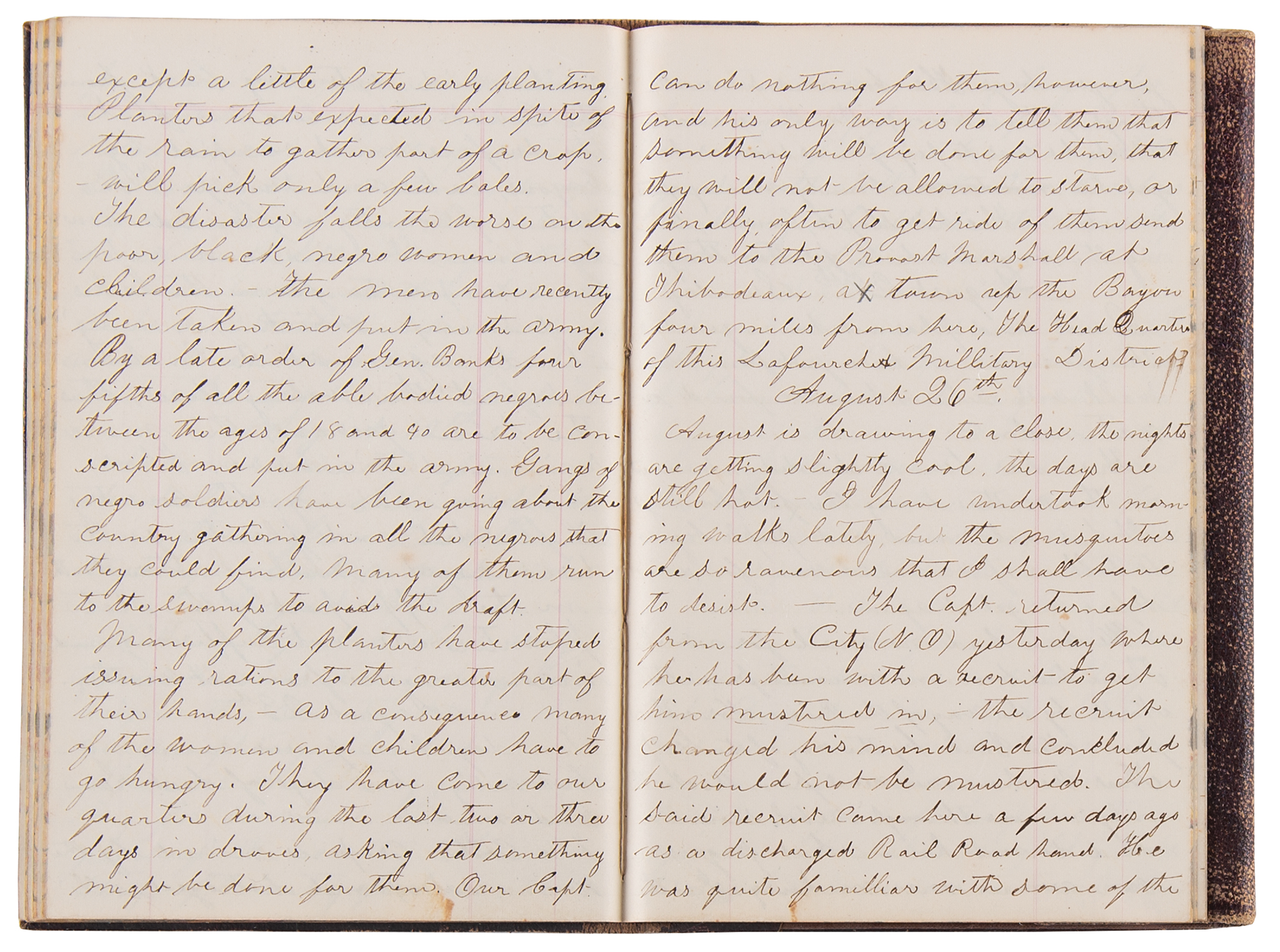
August 23, 1864: "By a late order of Gen. Banks four fifths of all the able bodied negroes between the ages of 18 and 40 are to be conscripted and put in the army. Gangs of negro soldiers have been going about the country gathering in all the negroes that they could find. Many of them run to the swamps to avoid the draft. Many of the planters have stopped giving rations to the greater part of their hands—as a consequence many of the women and children have to go hungry. They have come to our quarters during the last two or three days in droves, asking that something might be done for them. Our Capt. can do nothing for them, however, and his only way is to tell them that something will be done for them, that they will not be allowed to starve."
May 3, 1865, near Montgomery, Alabama: "The town in good times done considerable business. Many of the merchants have opened their stores since we have come but they have but little to sell, at most a beggarly account of empty boxes. Our troops have but little money, and Confederate money is not allowed to circulate. There are many rebels in town, who have been in the rebel army, dressed in their dirty gray uniforms they are quite a contrast to our boys."
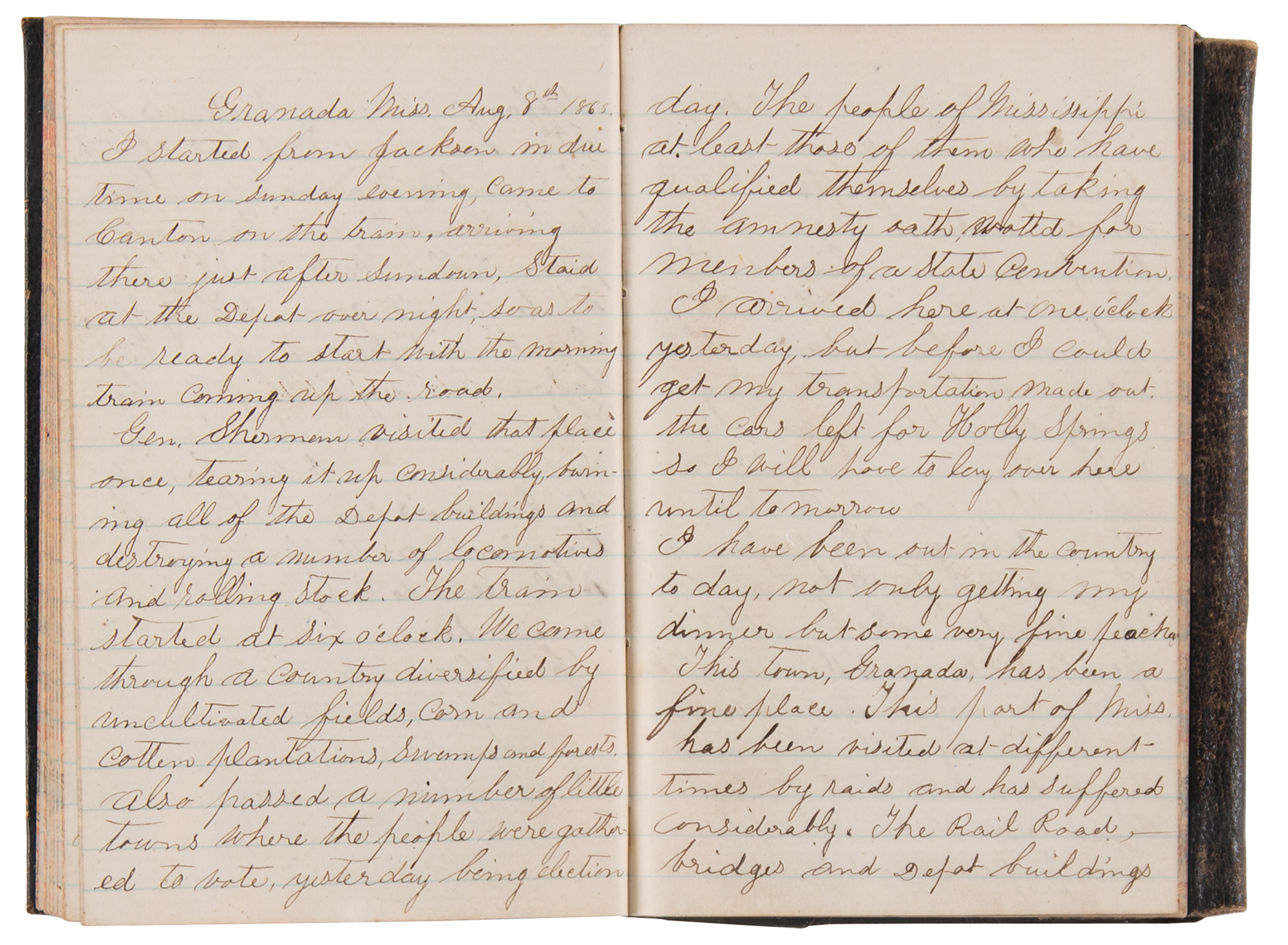
August 8, 1865, Granada, Mississippi: "I started from Jackson…Gen. Sherman visited that place once, tearing it up considerably, burning all of the Depot buildings and destroying a number of locomotives and rolling stock. The train started at six o'clock. We came through a country diversified by uncultivated fields, corn and cotton plantations, swamps and forests. Also passed a number of little turns where the people were gathered to vote, yesterday being election day. The people of Mississippi, at least those who have qualified themselves by taking the amnesty oath, voted for members of a State Convention."
In overall very good to fine condition.

