Sold For $795
*Includes Buyers Premium
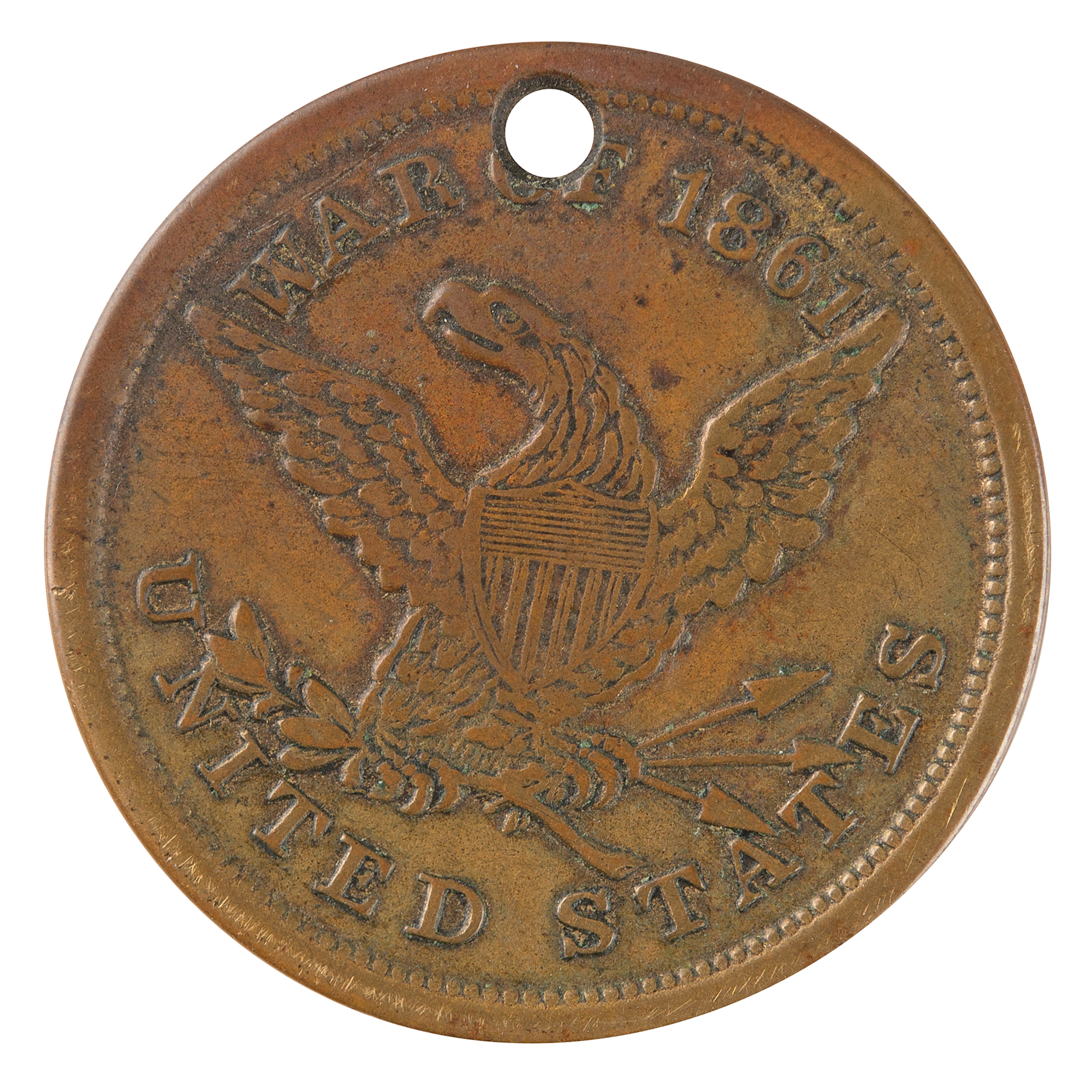
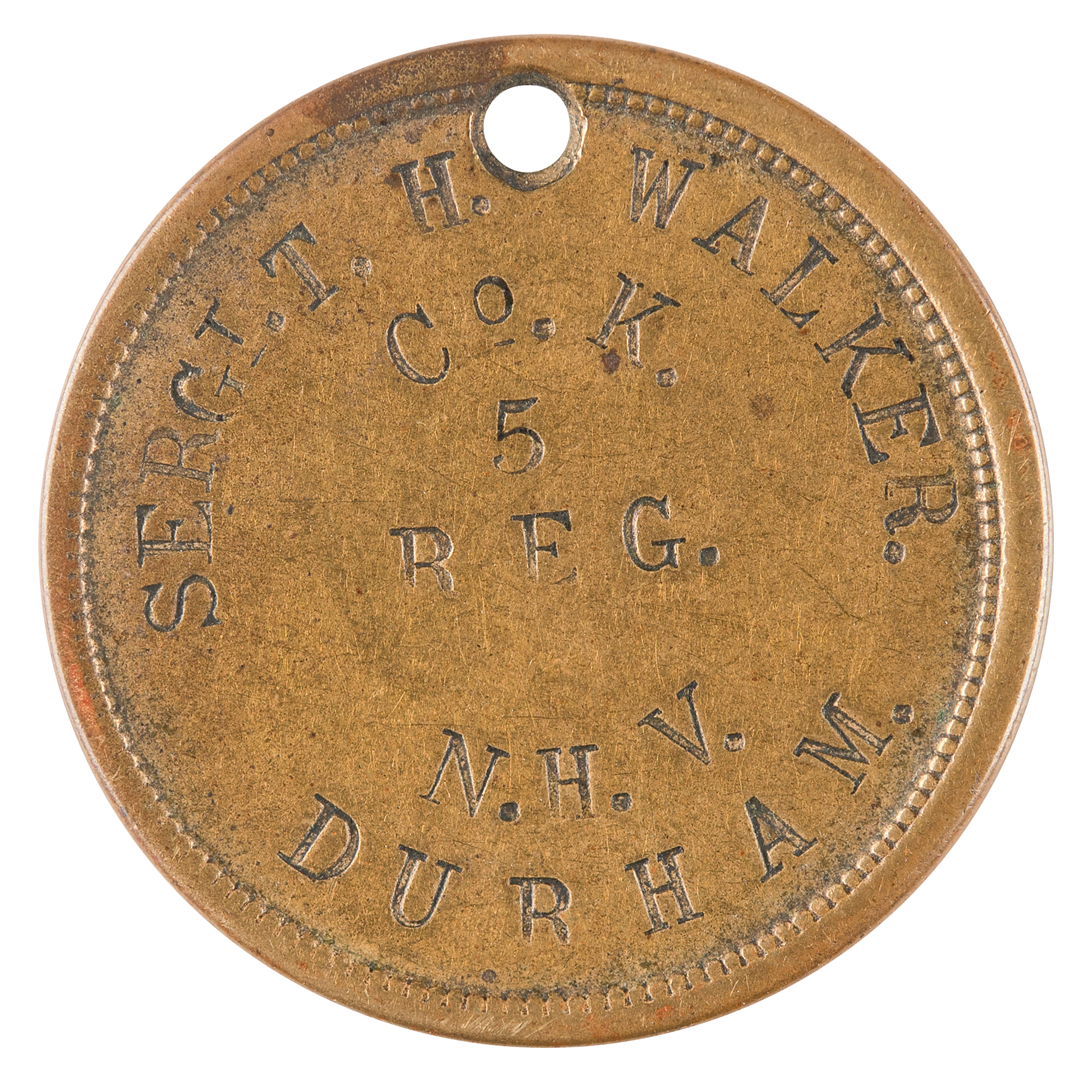
Civil War identity disc or ‘dog tag’ of Sergeant Thomas H. Walker of Durham, New Hampshire, 1˝ in diameter, with the front engraved, “Serg’t T. H. Walker, Co. K, 5 Reg., N.H.V. Durham,” and the reverse bears an embossed American eagle with raised text, “War of 1861, United States.” In very good to fine condition.
Per the 1893 book A History of the Fifth Regiment, New Hampshire Volunteers: ‘Another incident is worthy of mention. A Confederate officer, stepping out from behind a tree, presented a pistol at the breast of a captain and snapped the same three times. Sergeant Walker, Company K, seeing the movement, sent a bullet through his head. He was afterwards buried by our men, and the pistol is now in the possession of people at Lancaster.’
Referred to the regiment as ‘refined gold’ by General Winfield Scott Hancock, the 5th New Hampshire Infantry Regiment was organized in Concord, New Hampshire, and mustered in for a three-year enlistment in the Union Army on October 22, 1861, under the command of Colonel Edward Ephraim Cross. During the Civil War, the regiment, which was famously known as ‘The Fighting Fifth,’ participated in numerous major battles in the Eastern Theater, including the Peninsula Campaign, Antietam, Fredericksburg, Chancellorsville, Gettysburg, Cold Harbor, and the Siege of Petersburg. The 5th New Hampshire Infantry sustained the greatest total combat losses of any infantry or cavalry regiment in the Union, with 295 killed and 756 wounded.
During the American Civil War, soldiers faced the grim possibility that their bodies might never be identified if they fell in battle. Neither the Union nor the Confederate Armies issued official identification tags—what we now call “dog tags.” In 1862, U.S. Secretary of War Edwin Stanton rejected the idea without explanation, leaving soldiers to improvise. Some pinned slips of paper with their names to their clothing, while others scratched their information into belt buckles or other personal items.
Private jewelers, such as Drowne & Moore of New York City, began producing silver identity tags for those who could afford them. Families sometimes fashioned crude versions from bits of lead, copper, or even repurposed coins. But the largest suppliers in the field were often sutlers—civilian merchants who followed the armies, selling coffee, tobacco, and other goods from mobile tents. Using small stamping machines, they pressed designs and personal details into brass or lead discs, creating the first commercially available “dog tags” for American soldiers. These were primarily purchased by Union troops, as Confederate soldiers generally lacked the resources to buy them, and very few Confederate examples survive today.
Despite the availability of such tags, the tragedy of unidentified dead was immense. Of the 325,230 Union soldiers buried in National Cemeteries, 148,883 are marked as unknown. Overall, about 5% of all Civil War dead—Union and Confederate—remain unidentified. It would not be until forty-four years after Stanton’s refusal that the War Department finally adopted official identification tags, cementing the practice that could have spared so many families uncertainty and grief during the war.

