Sold For $10,625
*Includes Buyers Premium
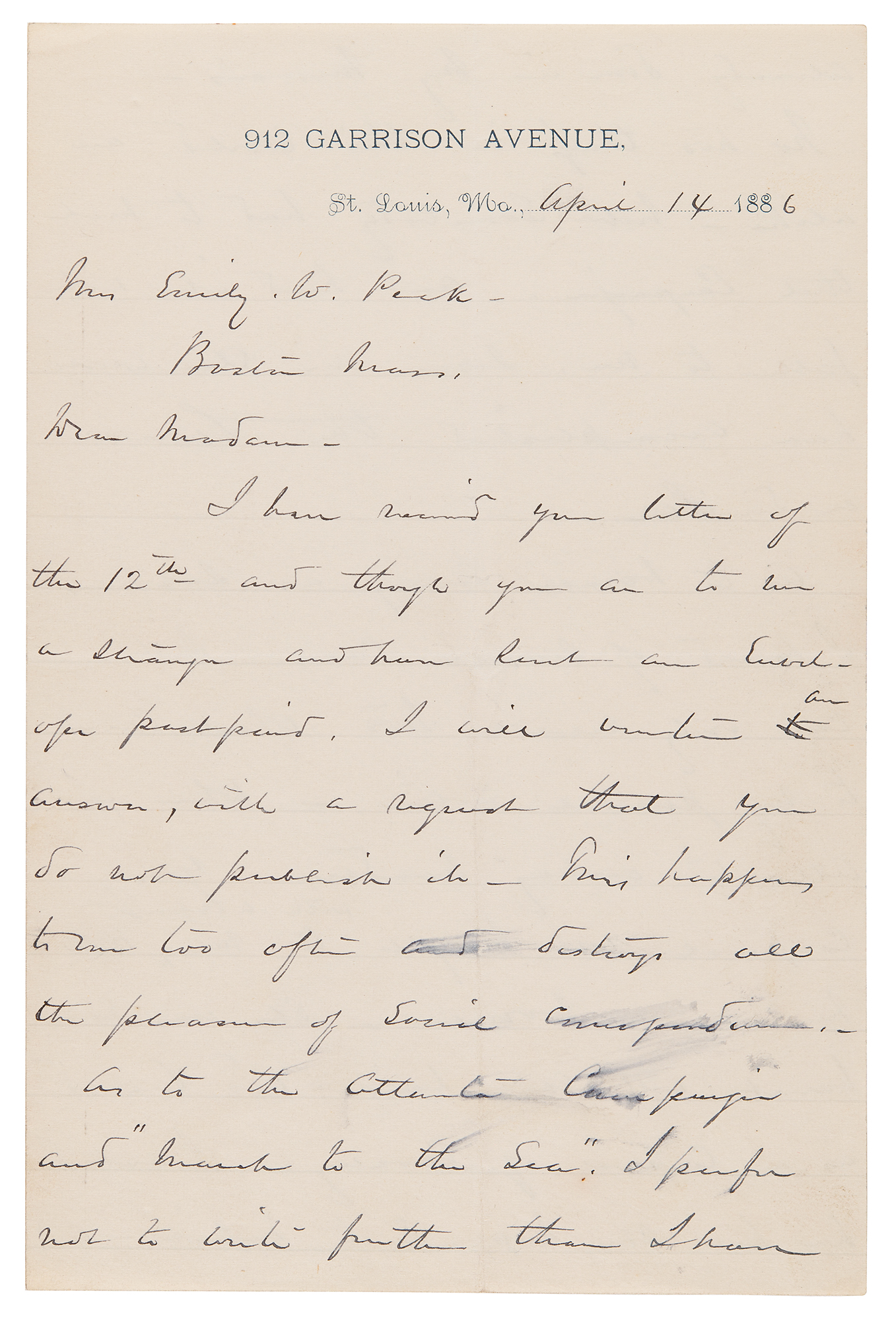
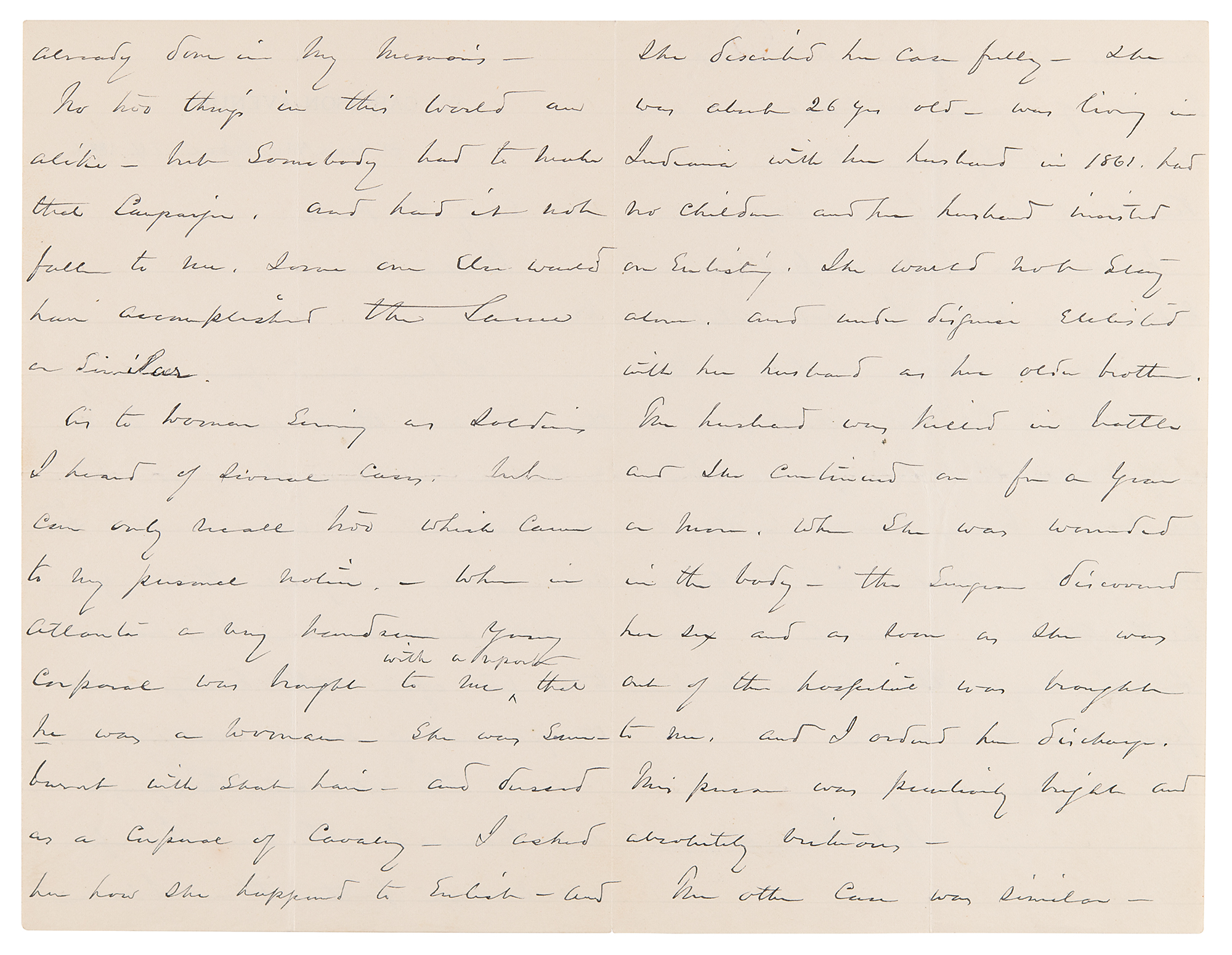
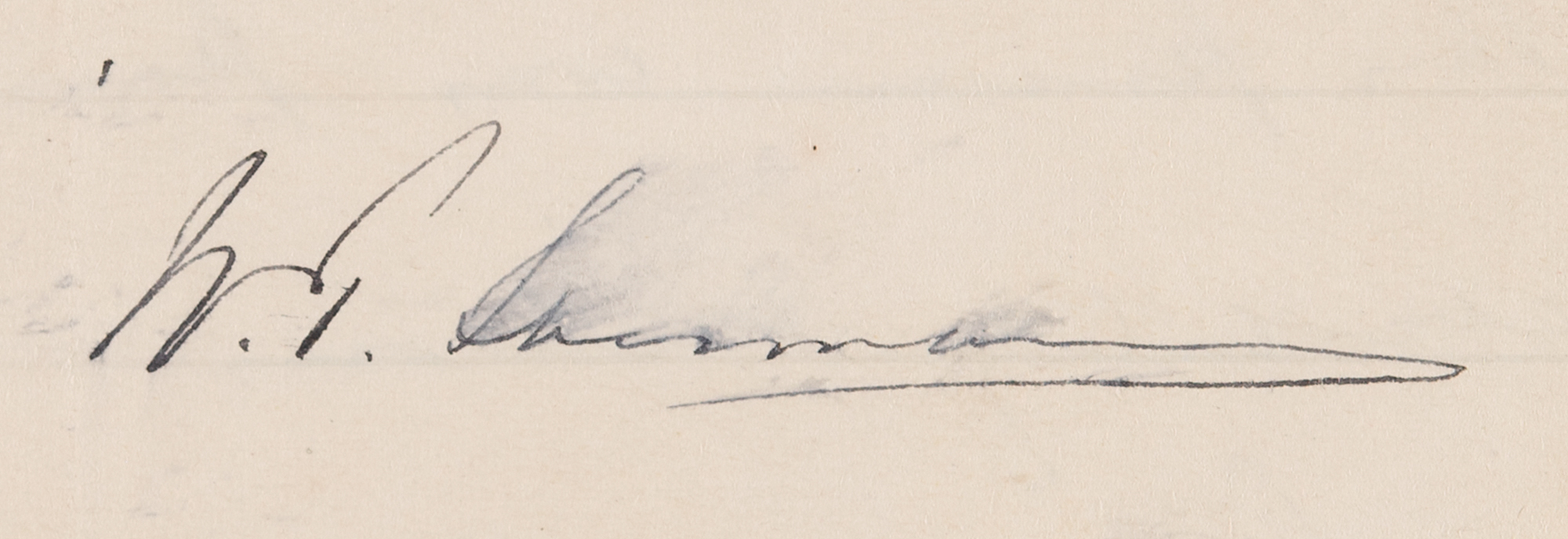
ALS signed “W. T. Sherman,” four pages on two adjoining sheets, 5.5 x 8.25, 912 Garrison Avenue letterhead, April 14, 1886. Handwritten letter to Emily W. Peck of Boston, with remarks on his heroic 'March to the Sea' and insightful commentary on the service of women during the Civil War. In part: "I have received your letter…and though you are to me a stranger and have sent an envelope postpaid, I will return an answer, with a request that you do not publish it. This happens to me too often and destroys all the pleasure of social correspondence. As to the Atlanta Campaign and 'March to the Sea,' I prefer not to write further than I have already done in my memoirs. No two things in this world are alike—but somebody had to make that Campaign. And had it not fallen to me, someone else would have accomplished the same or similar.
As to women serving as soldiers I heard of several cases, but can only recall two which came to my personal notice. When in Atlanta a very handsome young corporal was brought to me with a report that he was a woman. She was sun-burnt with short hair—and dressed as a corporal of Cavalry. I asked how she happened to enlist—and she described her case fully—she was about 26 yrs old, was living in Indiana with her husband in 1861, had no children and her husband insisted on enlisting. She would not stay alone, and under disguise enlisted with her husband as his older brother.
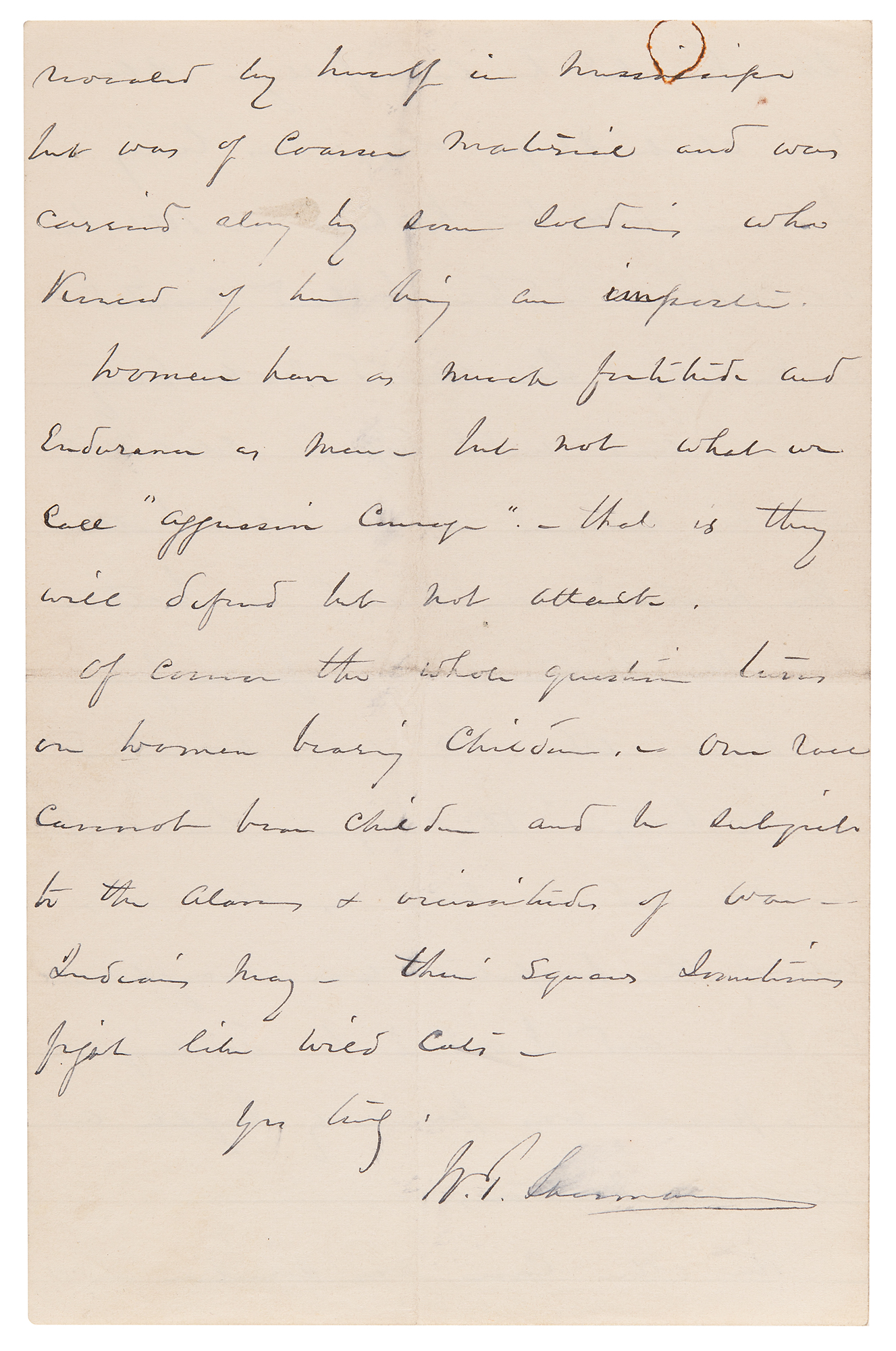
The husband was killed in battle and she continued on for a year or more. When she was wounded in the body—the surgeon discovered her sex and as soon as she was out of the hospital was brought to me, and I ordered her discharge. This person was peculiarly bright and absolutely virtuous. The other case was similar…Women have as much fortitude and endurance as men, but not what we call 'aggressive courage'—that is they will defend but not attack. Of course the whole question turns on women bearing children. Our race cannot bear children and be subject to the alarms & vicissitudes of war. Indians may—their squaws sometimes fight like wild cats." In overall fine condition, with some light brushing to ink and a rusty paperclip stain to the top edge.
In this remarkable letter, Civil War hero William T. Sherman downplays his own role in the Atlanta campaign, attributing its success to necessity rather than individual genius. His comments also reveal a rare acknowledgment of women who disguised themselves to fight in the Union Army, recounting in vivid detail two cases that came to his attention during the war. Written at a time when veterans and historians were shaping the dominant narratives of the war, the letter underscores Sherman’s ambivalence about public attention and his complex, often progressive views on women’s capabilities—tempered by the 19th-century gender and racial norms he still upheld.

