Sold For $250
*Includes Buyers Premium
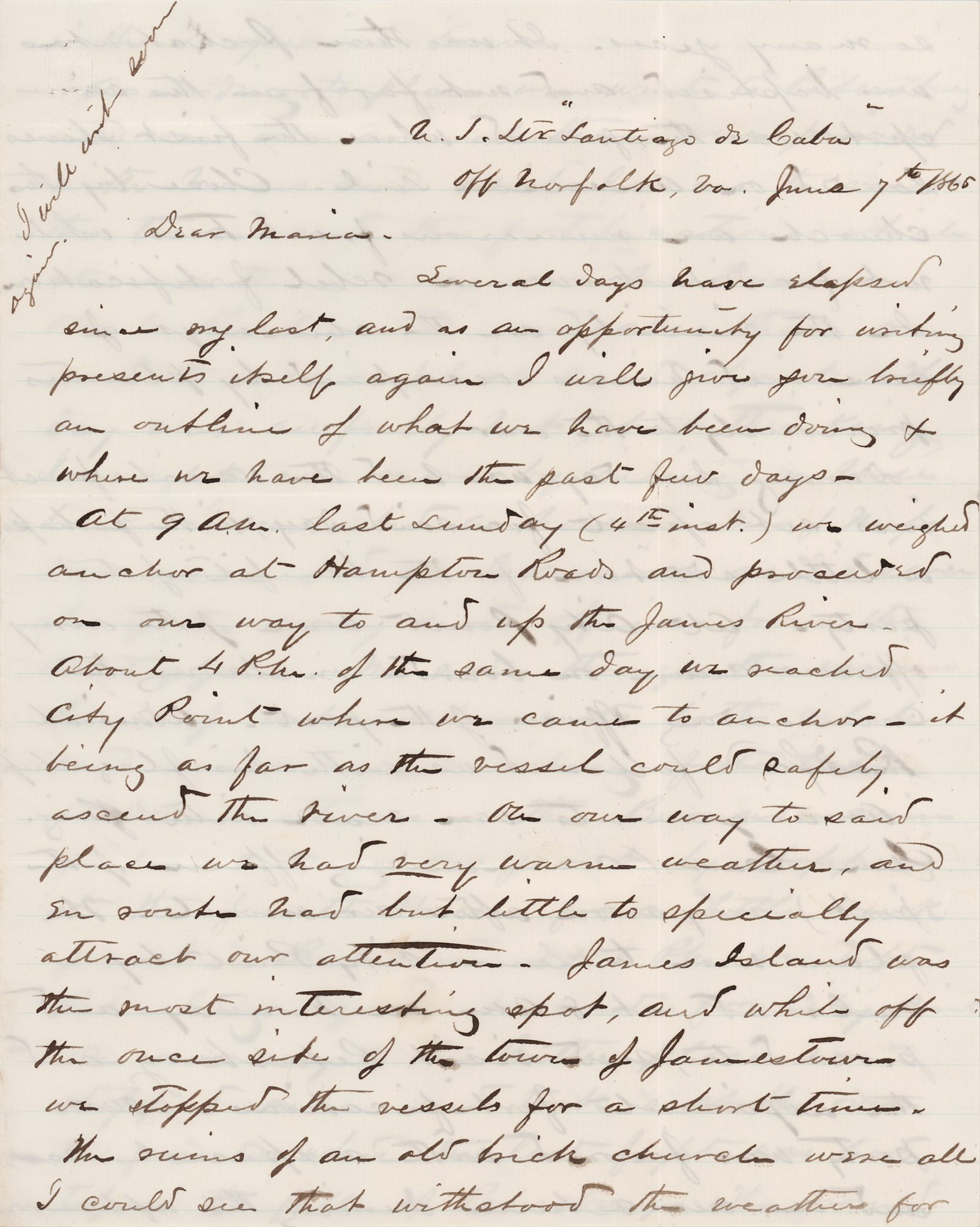
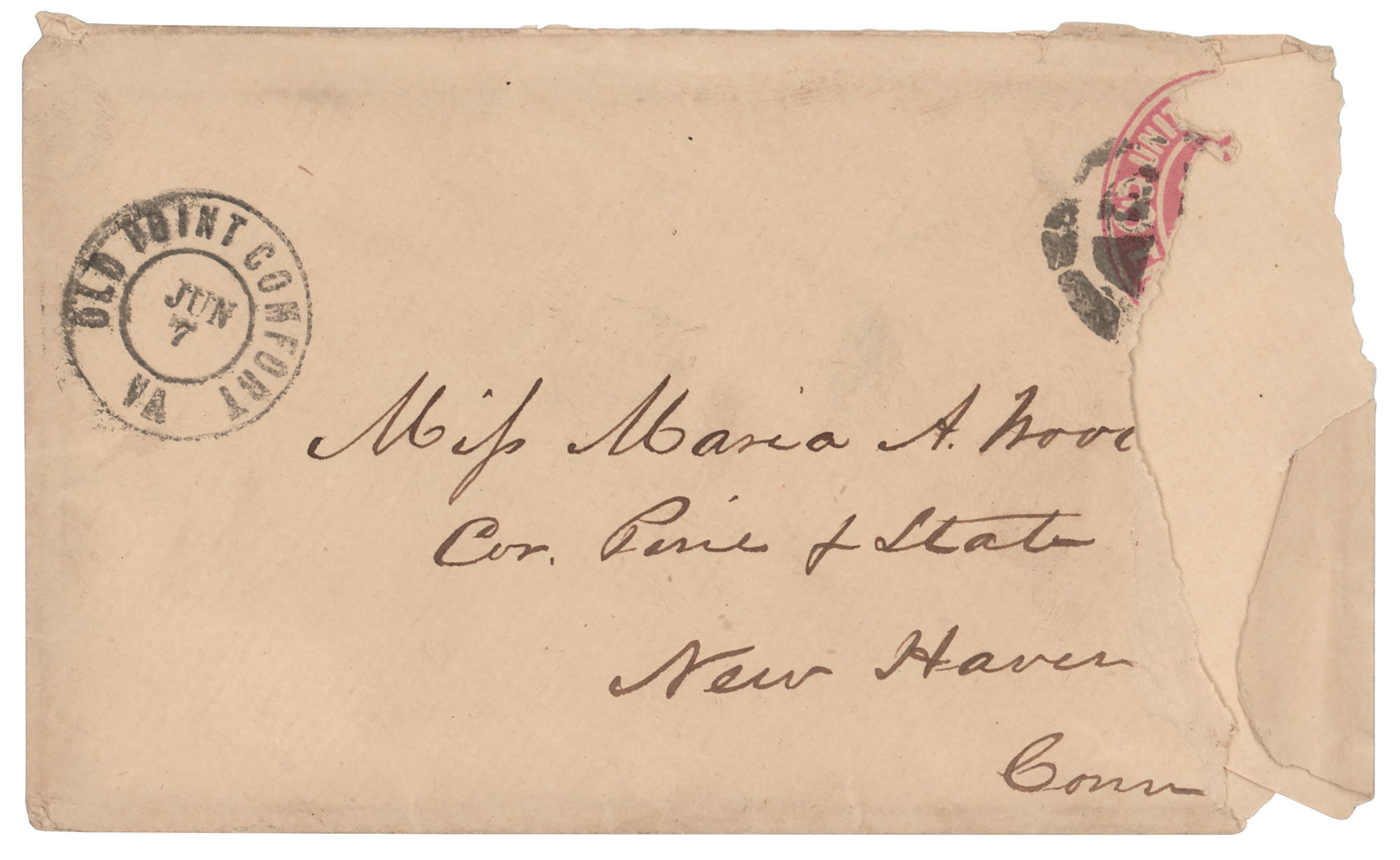
Assistant surgeon in the US Navy during the Civil War (1837–1918). ALS signed “O—,” six pages on three sheets, 7.75 x 9.75, June 7, 1865. Handwritten letter to Maria A. Woodford from "U.S. Str. Santiago de Cuba off Norfolk, Va.," written in the immediate aftermath of the close of the Civil War, chronicling a tour of the postwar South. In part: "At 9 A.M. last Sunday (4th inst.) we weighed anchor at Hampton Roads and proceeded on our way to and up the James River. About 4 P.M. of the same day we reached City Point where we came to anchor—it being as far as the vessel could safely ascend the river. On our way to said place we had very warm weather, and enroute had but little to specially attract our attention.
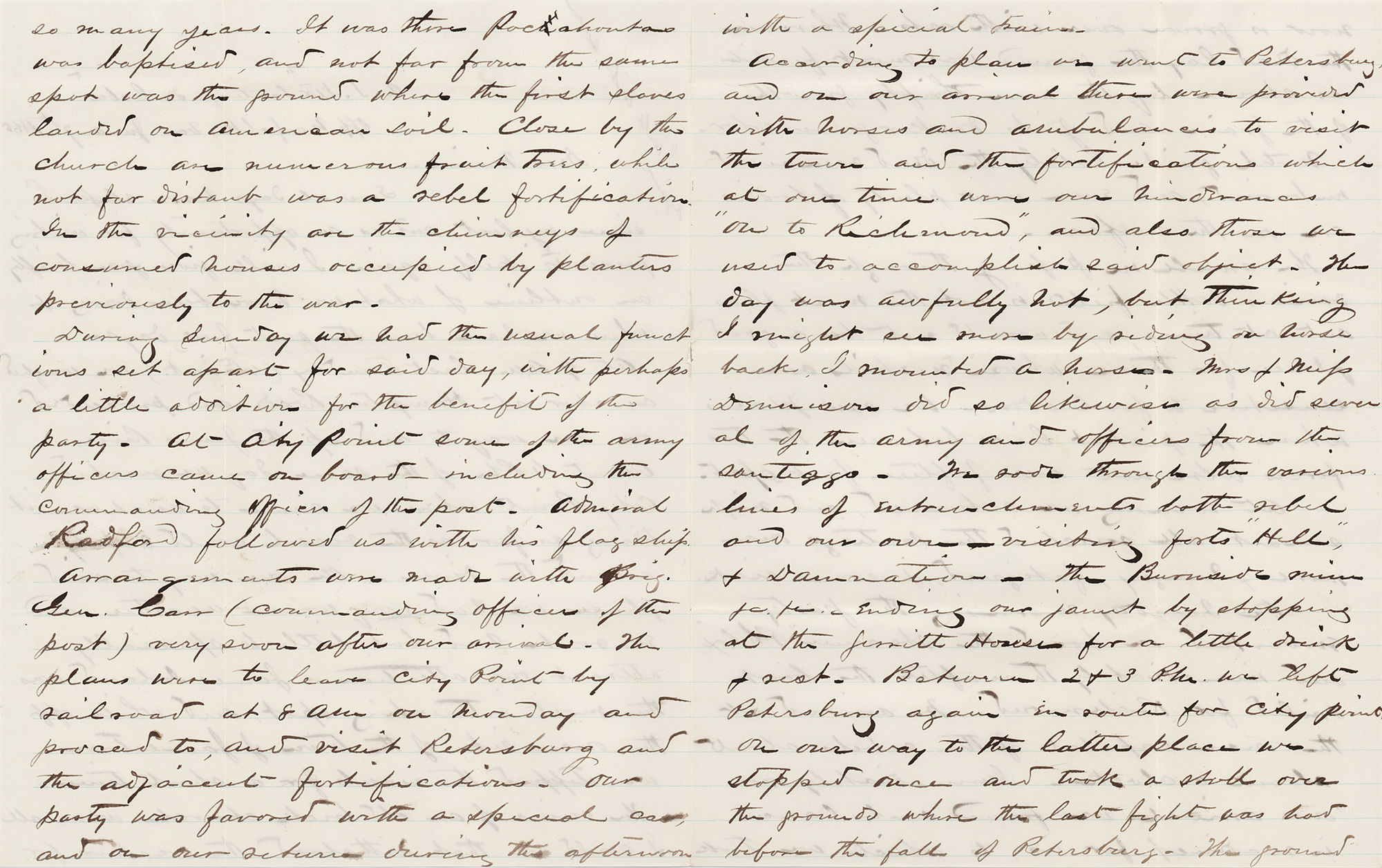
James Island was the most interesting spot, and while off the once side of the town of Jamestown we stopped the vessels for a short time. The ruins of an old brick church were all I could see that withstood the weather for so many years. It was there Pochahontas was baptized, and not far from the same spot was the ground where the first slaves landed on American soil.
Close by the church are numerous fruit trees, while not far distant was a Rebel fortification. In the vicinity are the chimneys of consumed houses occupied by planters previously to the war.
During Sunday we had the usual functions set apart for said day, with perhaps a little additions for the benefit of the party. At City Point some of the army officers came on board—including the commanding officers of this post. Admiral Radford followed us with his flagship.
Arrangements were made with Brig. Gen. Carr (commanding officer of the post) very soon after our arrival. The plans were to leave City Point by sailboat at 8 am on Monday and proceed to, and visit Petersburg and the adjacent fortifications. Our party was favored with a special car, and on our return during the afternoon with a special train.
According to plan we went to Petersburg, and on our arrival there were provided with horses and ambulances to visit the town and the fortifications which at one time were our hindrances 'on to Richmond,' and also those we used to accomplish said object. The day was awfully hot, but thinking I might see more by riding on horseback, I mounted a horse. Mrs. & Miss Dennison did so likewise as did several of the army and officers from the Santiago. We rode through the various lines of entrenchments both Rebel and our own—visiting forts 'Hell,' and Damnation—the Burnside mine &c., &c., ending our jaunt by stopping at the Jerritt House for a little drink & rest.
Between 2 & 3 P.M. we left Petersburg again enroute for City Point. On our way to the latter place we stopped once and took a stroll over the grounds where the last fight was had before the fall of Petersburg. The ground now is grown over with oats. Wherever the dead lay the ground was most fertile as shown by the more thrifty growth of the grain and of its darker green color. Until quite lately the dead remained unburied, and even now plenty of bodies are on the surface.
The smell in passing through the various battlefields is not the most pleasant at times, and would not be a good place for those whole nostrils are sensitive to foul odors. We saw places where the picket lines between the two forces were not over fifteen feet apart. At evening we returned, and nigh sunset all reached the Santiago once more, hungry, fatigued, & some sick.
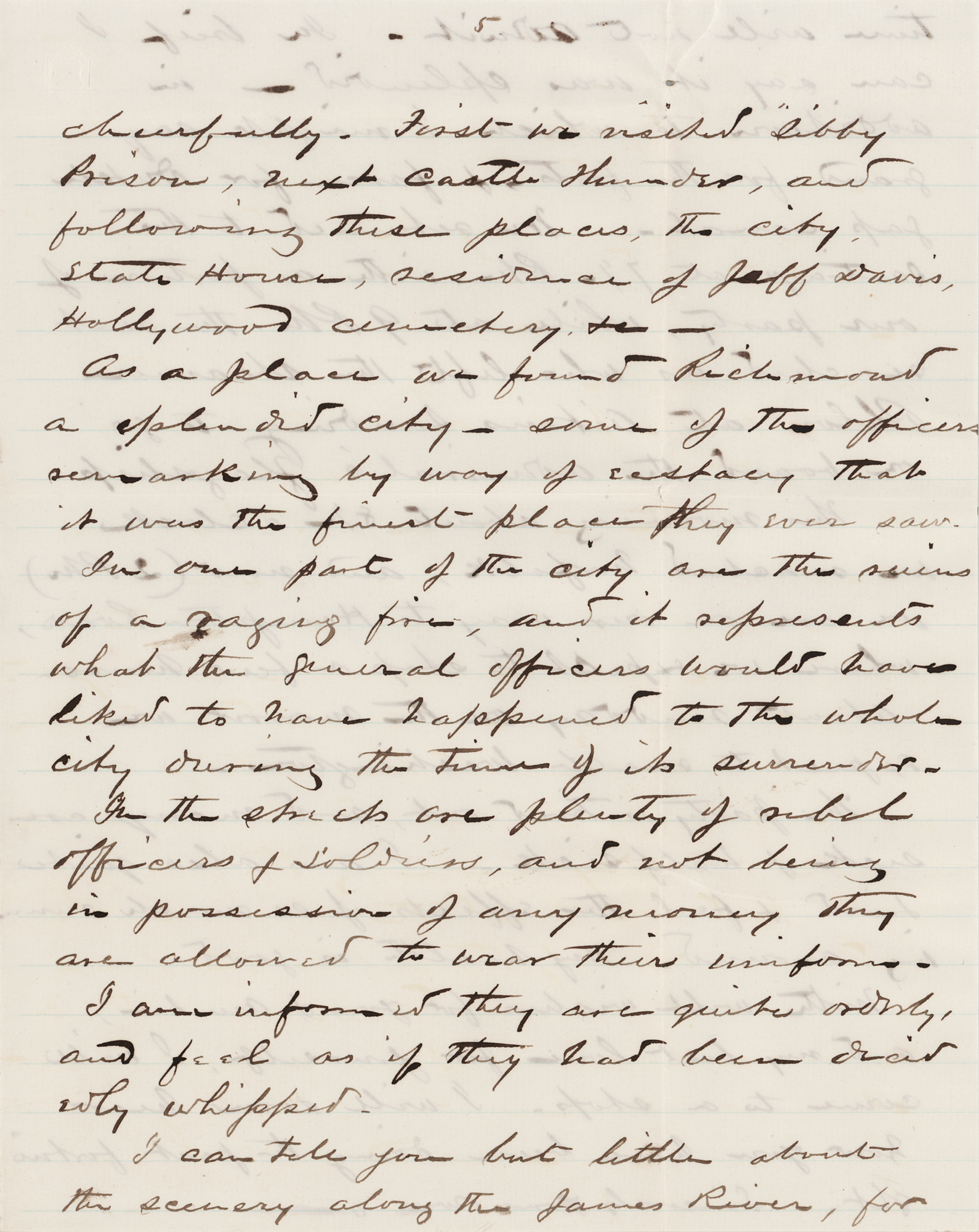
On Tuesday morning the party embarked on board the steamer 'Phlox,' and sociably thereafter the boat sailed for Richmond. We arrived at the once capital of the Rebels about eleven o'clock…on our arrival we found ambulances in readiness for us, to which we took cheerfully. First we visited 'Libby Prison,' next Castle Thunder, and following these places, the city, state house, residence of Jeff Davis, Hollywood cemetery &c.
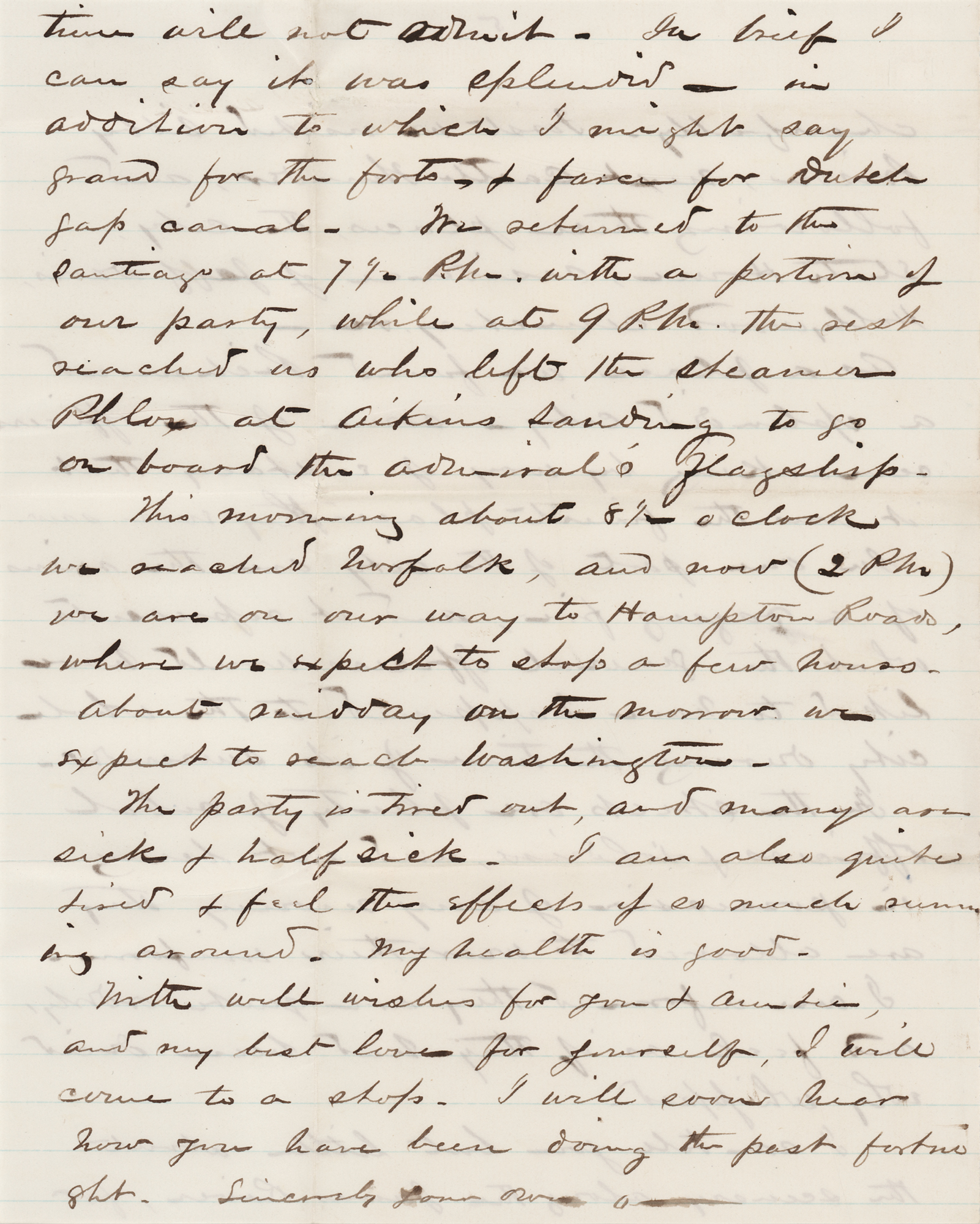
As a place we found Richmond a splendid city—some of the officers remarking by way of ecstasy that it was the finest place they ever saw. In one part of the city are the ruins of a raging fire, and it represents what the general officers would have liked to have happened to this whole city during the time of its surrender. In the streets are plenty of Rebel officers & soldiers, and not being in possession of any money they are allowed to wear their uniforms. I am informed they are quite orderly, and feel as if they had been decidedly whipped. I can tell you but little about the scenery along the James River, for time will not allow it." In fine condition. Accompanied by the original mailing envelope.
The Collection of Dr. Joseph Matheu.

