Sold For $25,000
*Includes Buyers Premium
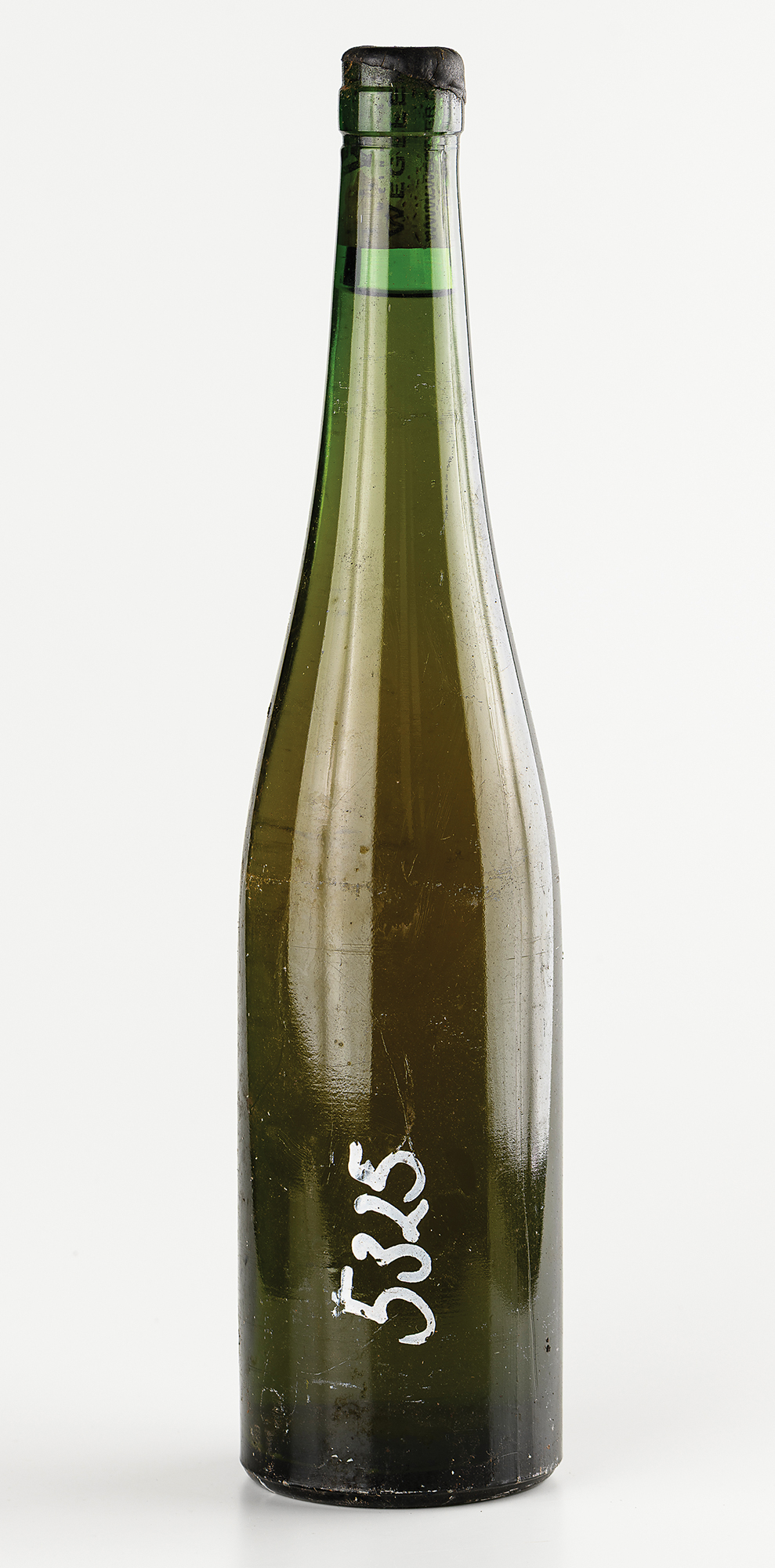
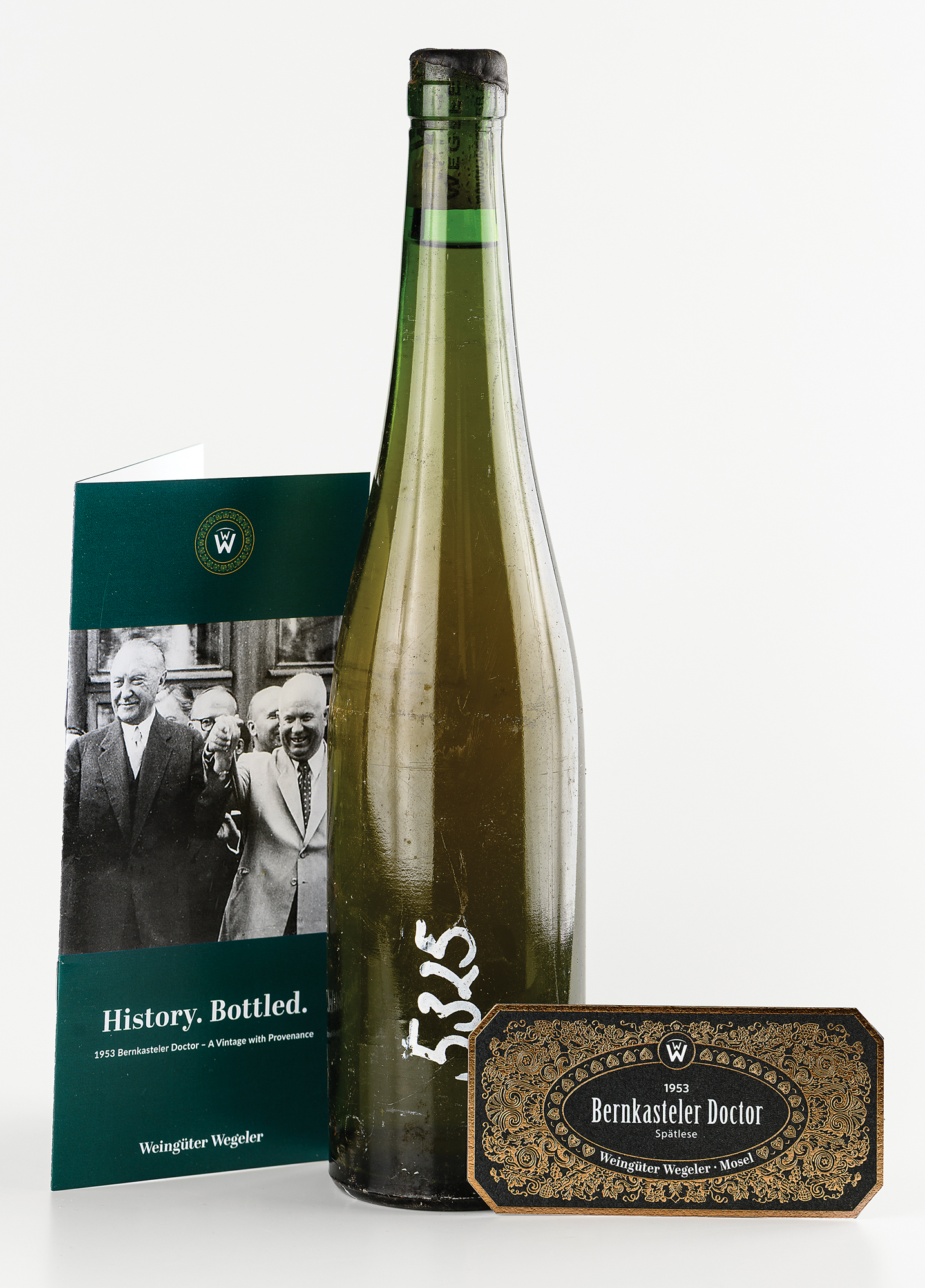
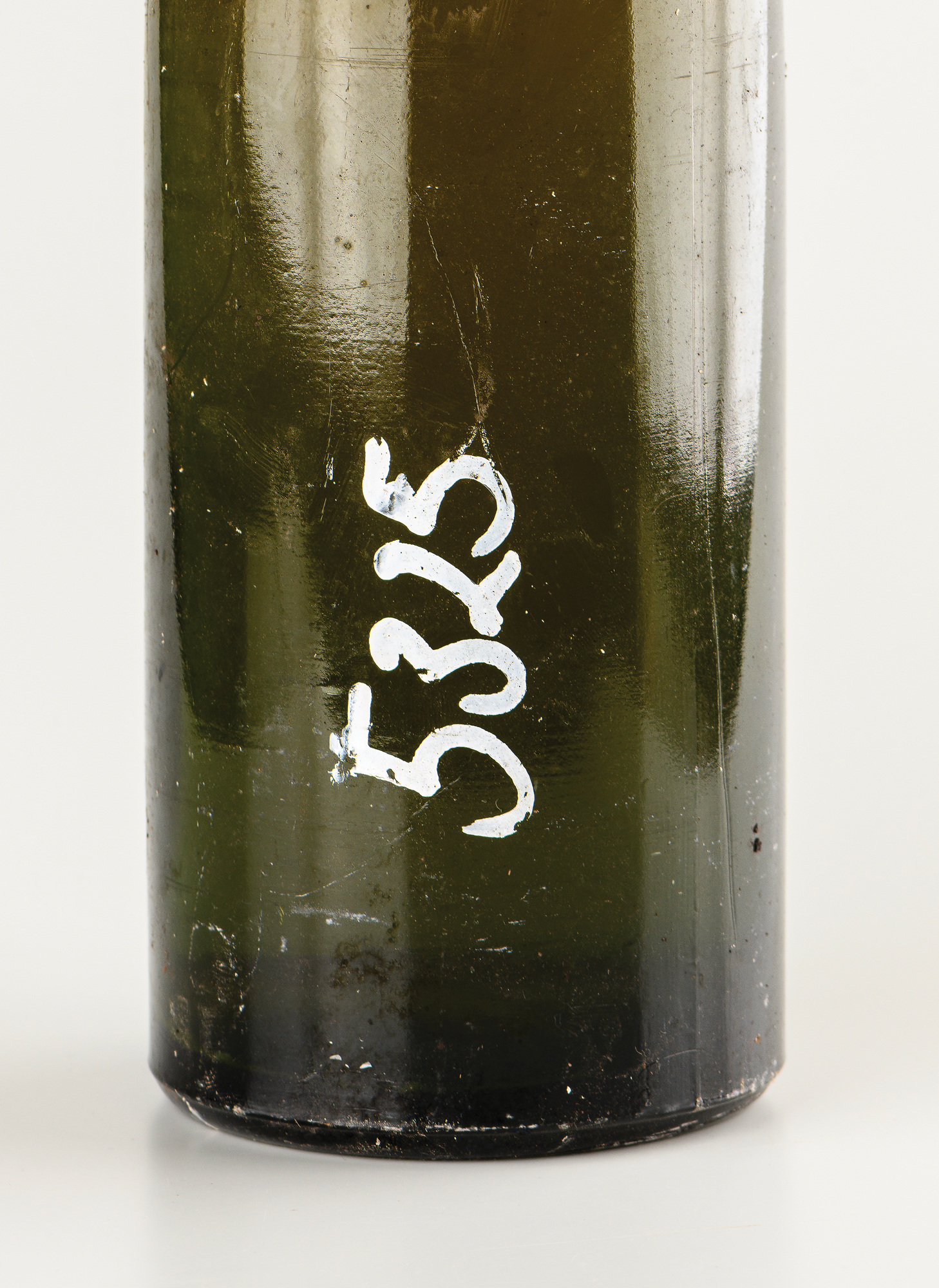
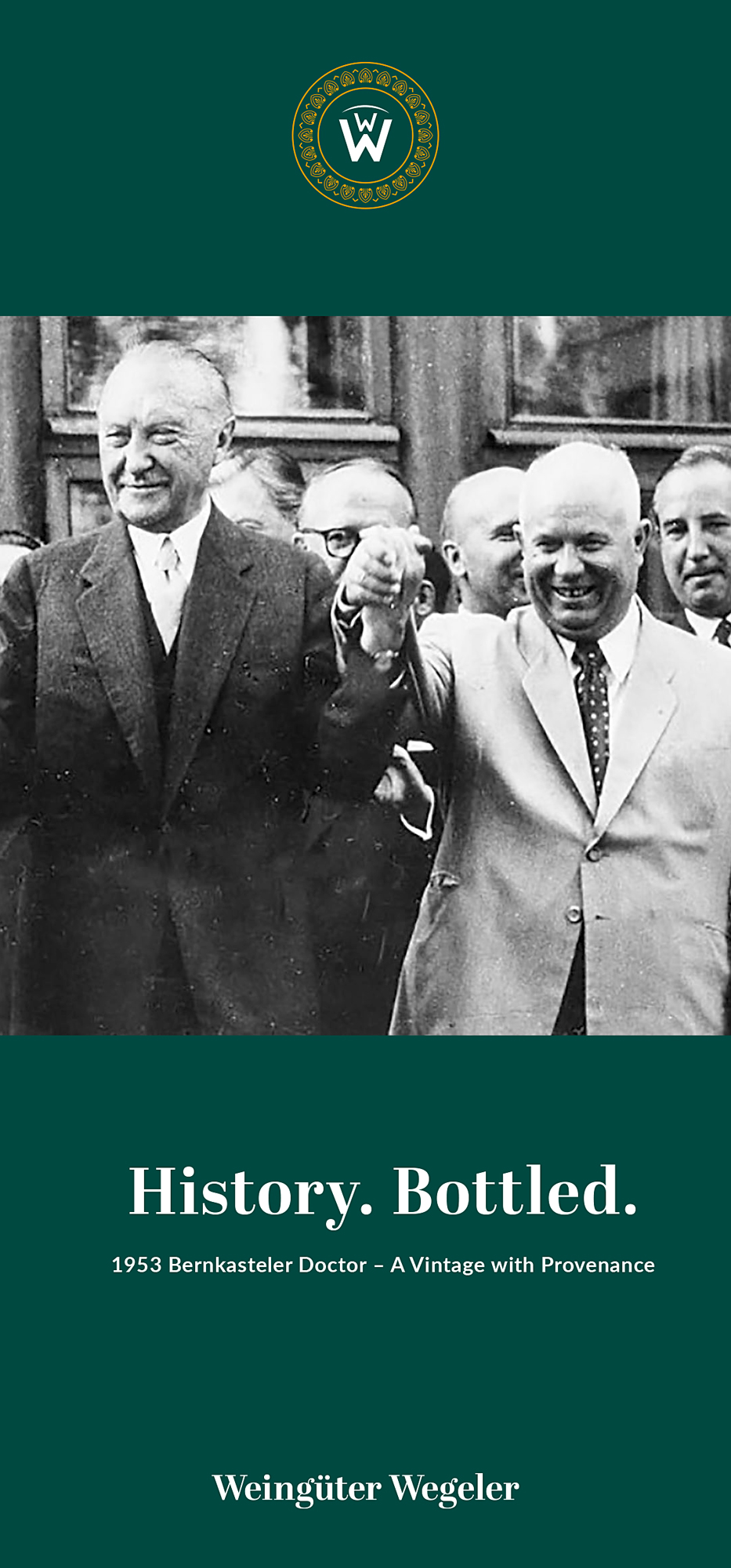
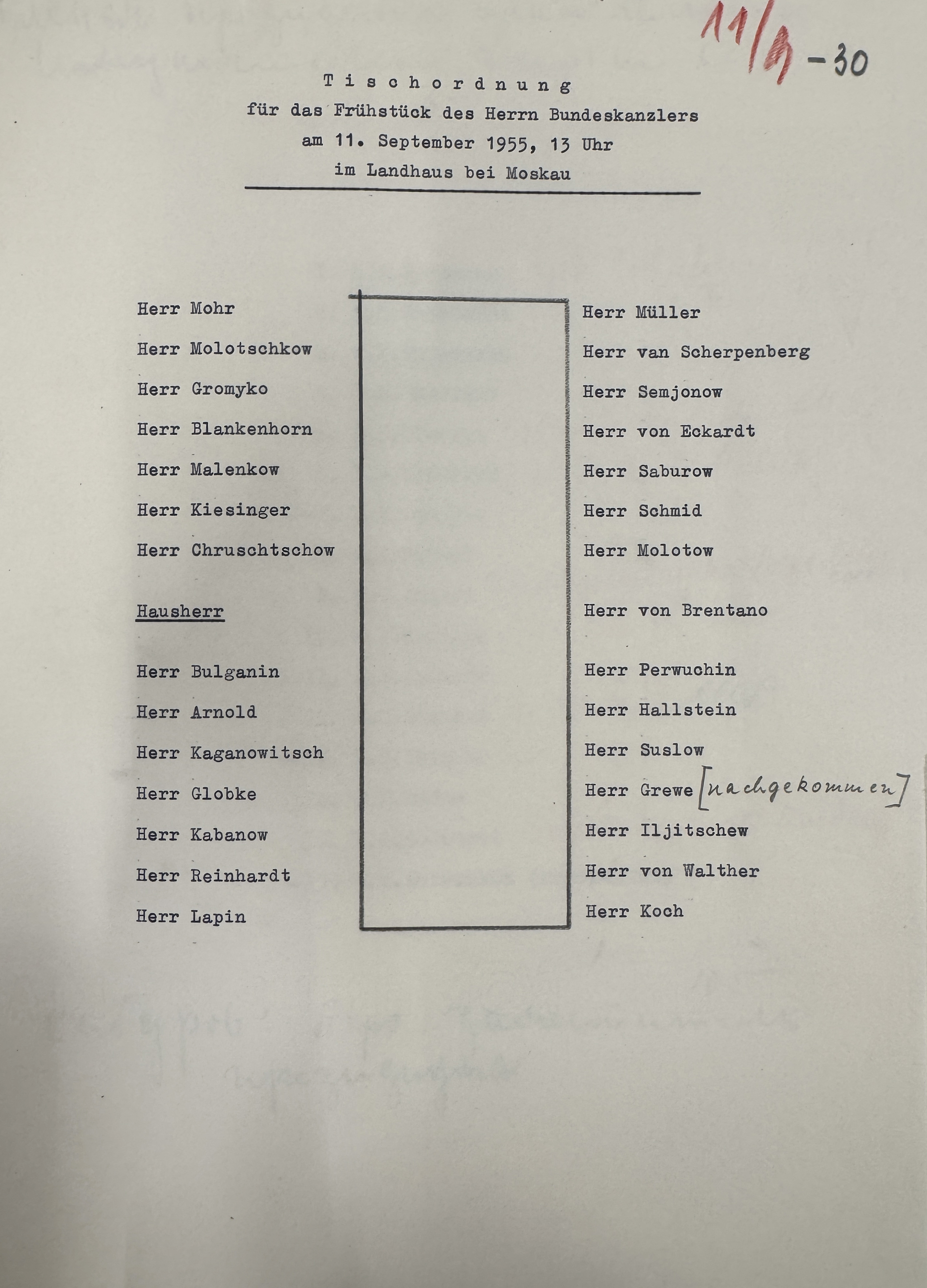
Exceptionally rare unopened bottle of 1953 Bernkasteler Doctor Riesling Spätiese from Weingüter Wegeler, representing the exact vintage served at one of the Cold War's most pivotal diplomatic events – Chancellor Konrad Adenauer's breakfast meeting with Soviet leaders Nikolai Bulganin, Nikita Khrushchev, and Vyacheslav Molotov on September 11, 1955, during the historic Moscow negotiations that secured the release of the last 10,000 German prisoners of war from Soviet camps.
Ten years after the guns of World War II had fallen silent, 10,000 German POWs remained in Soviet camps, locked in a diplomatic limbo. Their absence haunted the soul of postwar Germany. In September 1955, Chancellor Konrad Adenauer — nearing eighty, physically frail but politically unyielding — flew into the heart of the Cold War: Moscow. His goal was both impossible and imperative — to bring those men home.
The strategy was as unconventional as it was necessary: diplomacy by vodka, softened by one of Germany's finest Rieslings, personally selected by the German chancellor.
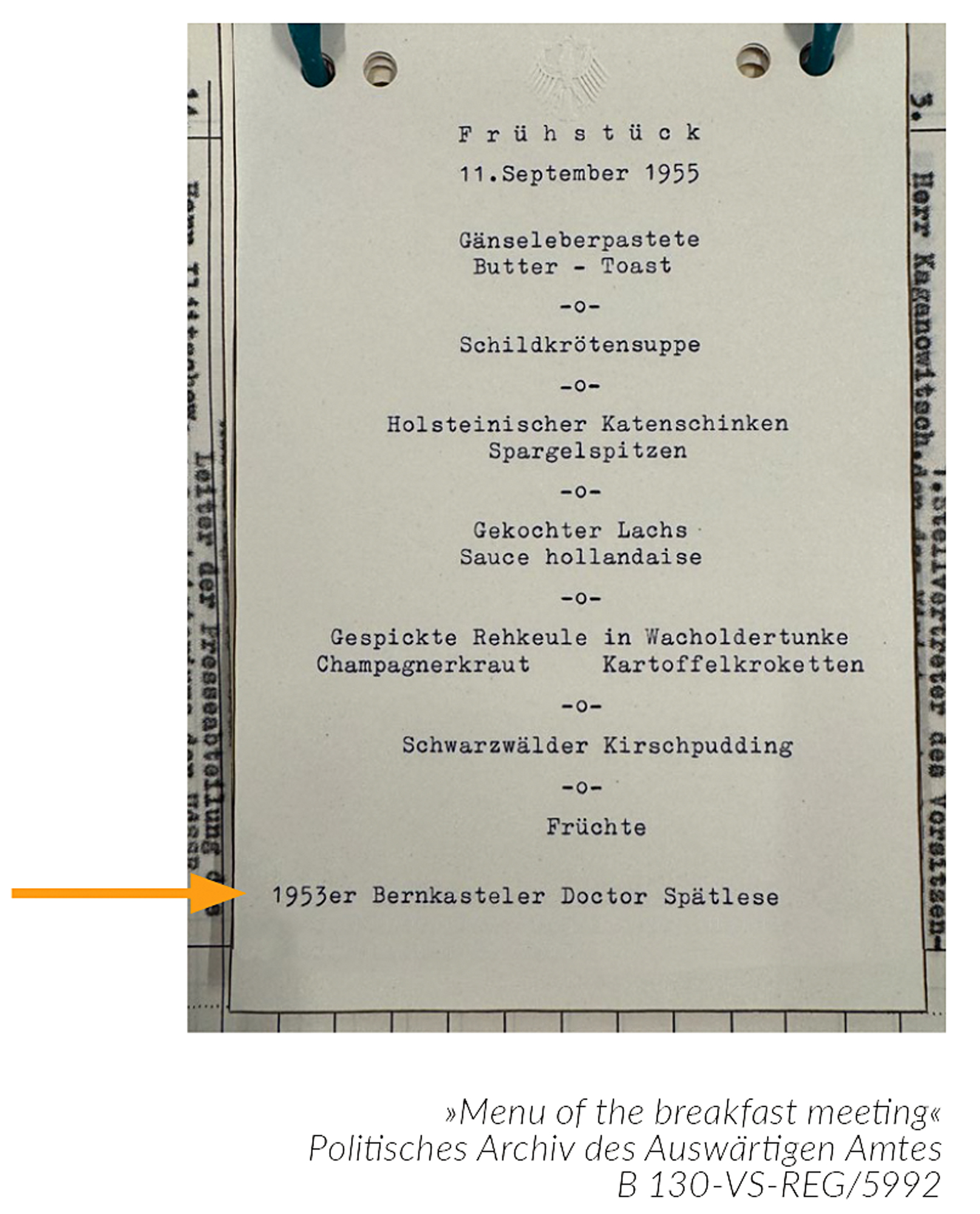
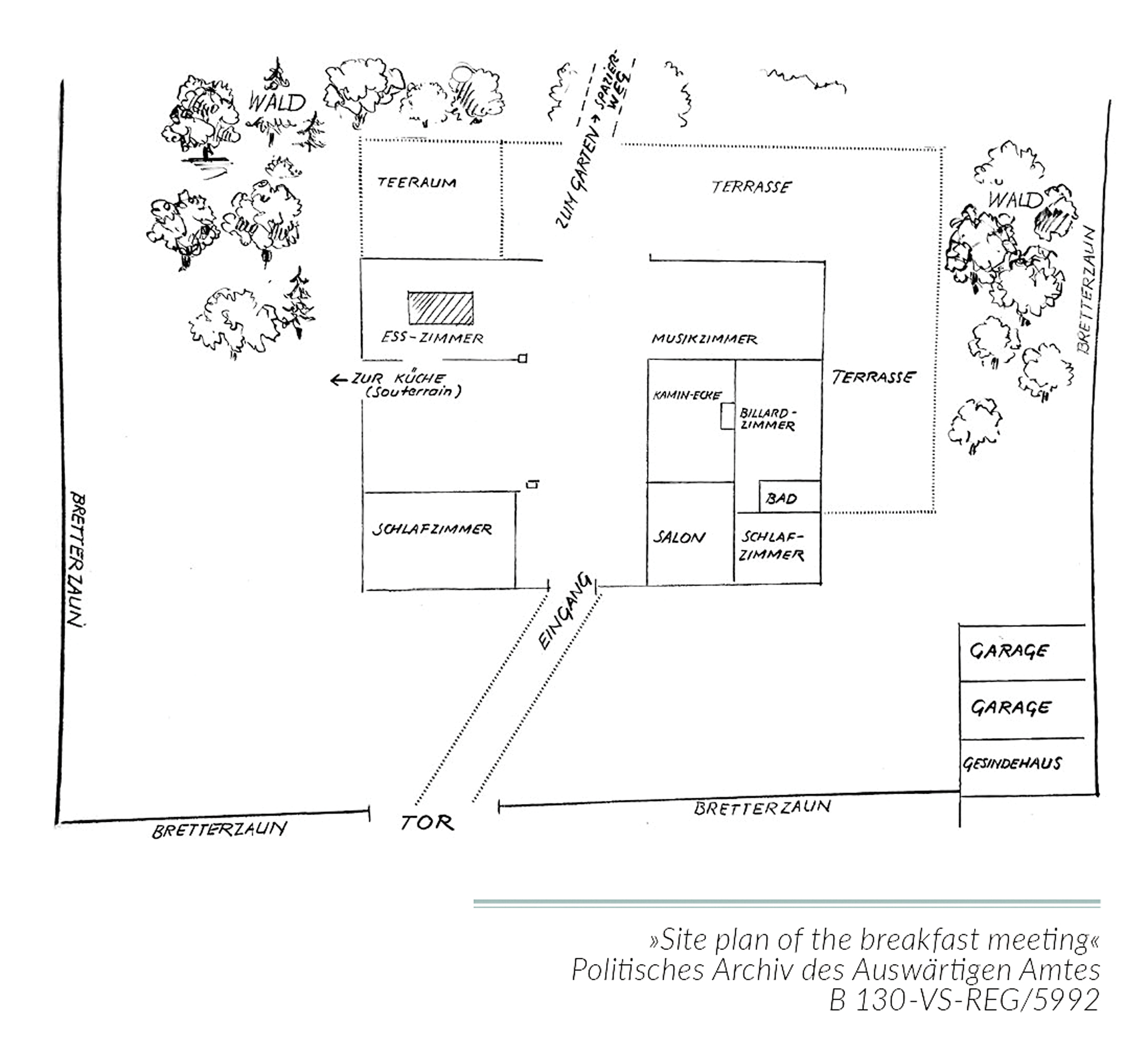
On September 11, 1955, at a high-stakes Kremlin breakfast with Bulganin, Khrushchev, and Molotov, wine became a union of olive branch and weaponry. Printed plainly on the official diplomatic menu was the 1953 Bernkasteler Doctor Riesling Spätlese. Its inclusion was no afterthought. Selected with intention and symbolism, this wine reflected the very image Adenauer wished to project: cultivated, resolute, and serious.
What followed was no ordinary meal. Goose liver, turtle soup, Holstein ham, and larded saddle of venison were served, and vodka flowed freely. But it was the Doctor Riesling, poured with ceremony, that allowed Germany’s chancellor to match ritual with resolve. Each shared toast chipped away at the Cold War frost until the impossible happened — through this drinking diplomacy, an agreement was struck. The final 10,000 German POWs would be released.
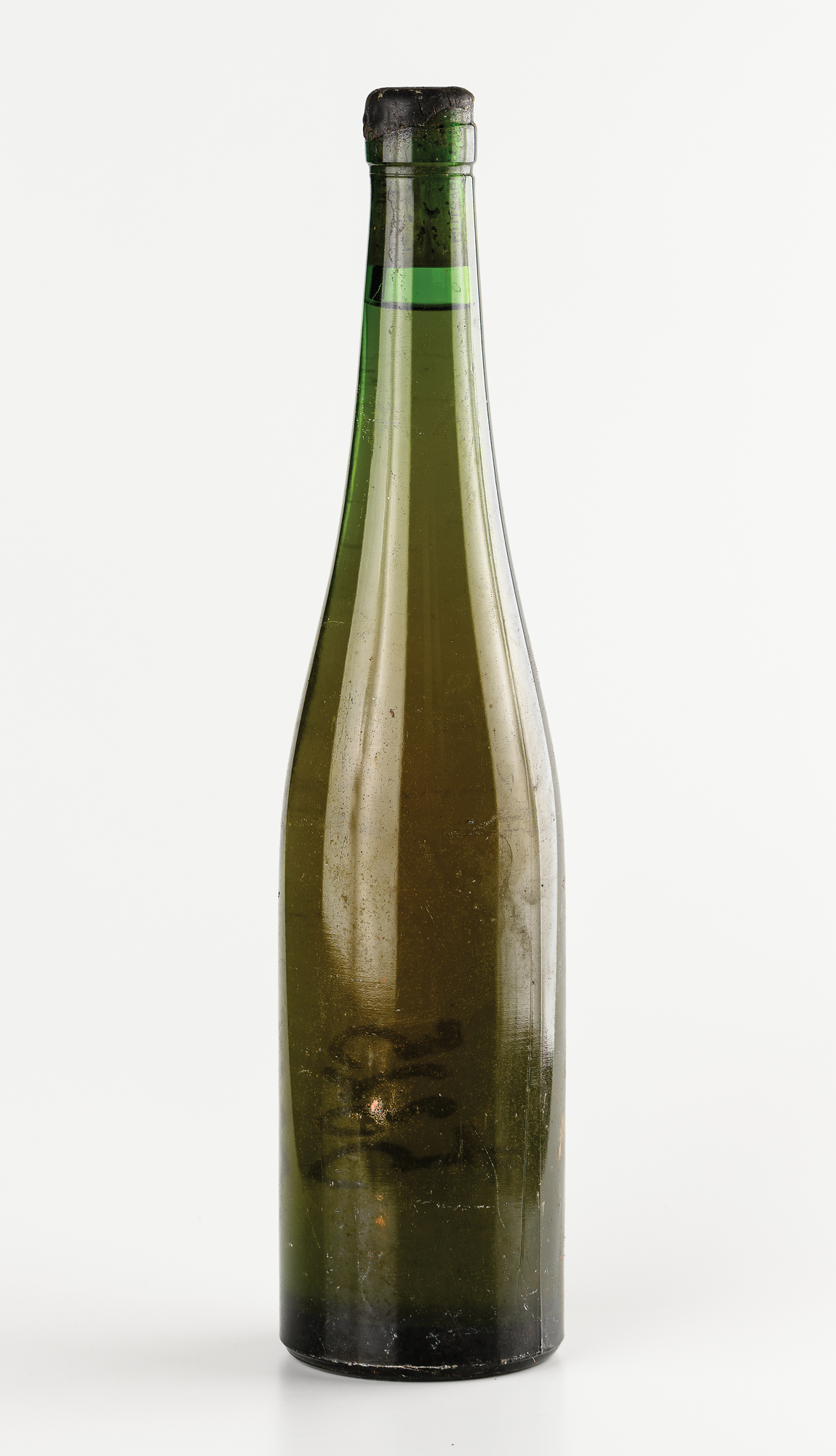
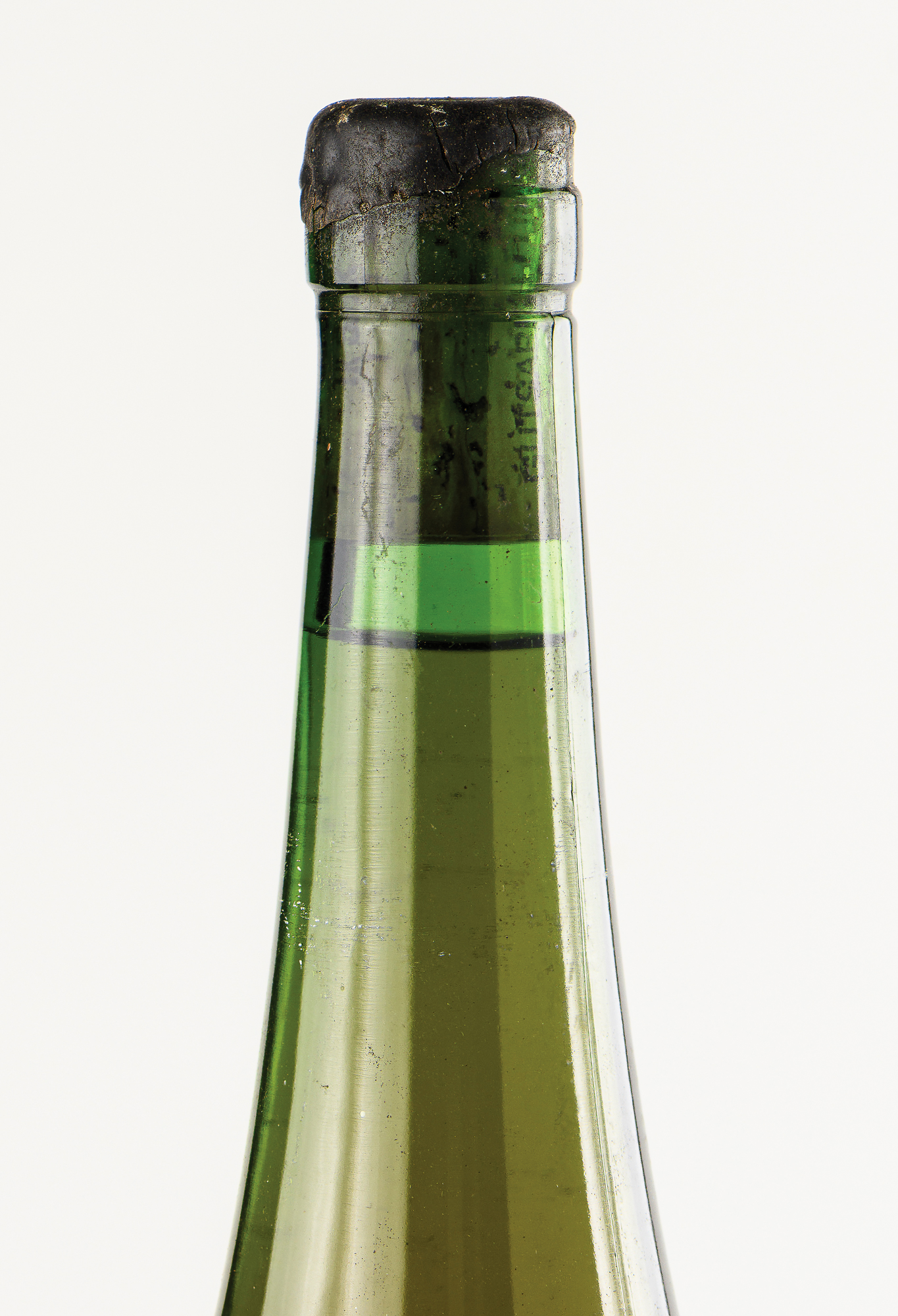
Now, exactly 70 years later, this unopened bottle from the very same vintage and producer — identical to the one poured in Moscow that morning — is offered at auction. Since it was bottled, it has been stored untouched and in its original state under optimal conditions in the cellar of the winery below the Bernkasteler Doctor vineyard.
A recently opened bottle from the same batch revealed a fascinating interplay of aromas: first a fleeting hint of mushrooms, which quickly dissipated. Then aromas of pineapple, apricot, and citrus fruits unfolded. The 1953 vintage, long praised for its ripeness and balance, continues to astonish with depth and grace. This is more than wine. It is a vessel of diplomacy. A fragment of Cold War theater. A silent witness to the moment 10,000 souls were freed with a toast.

