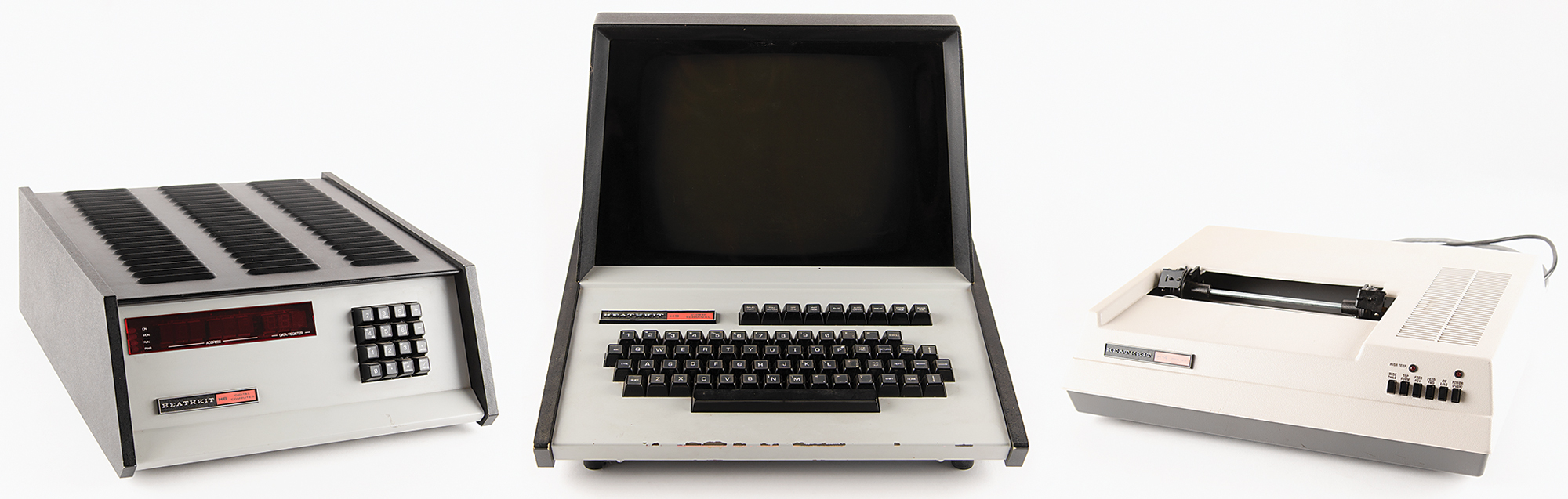
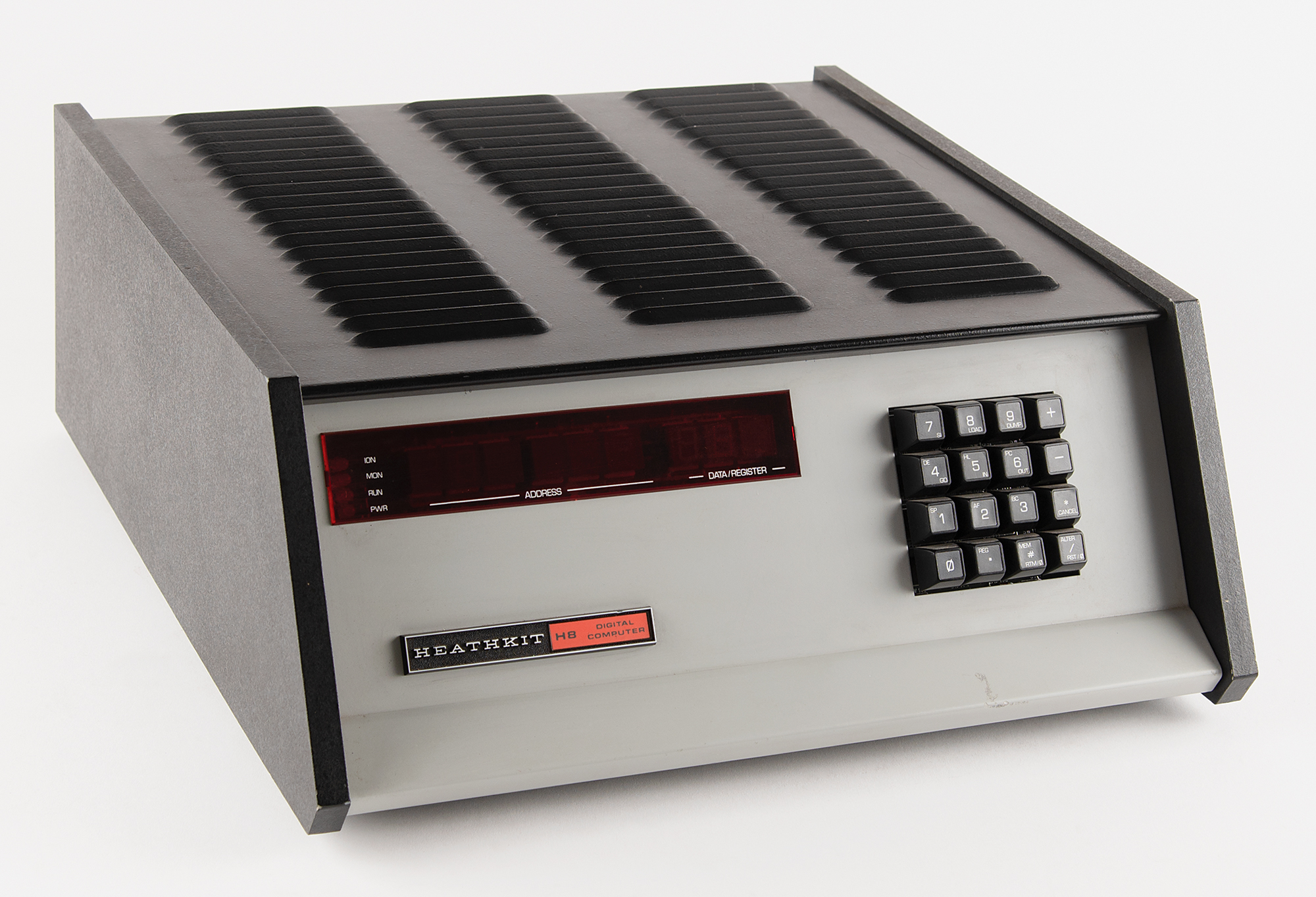
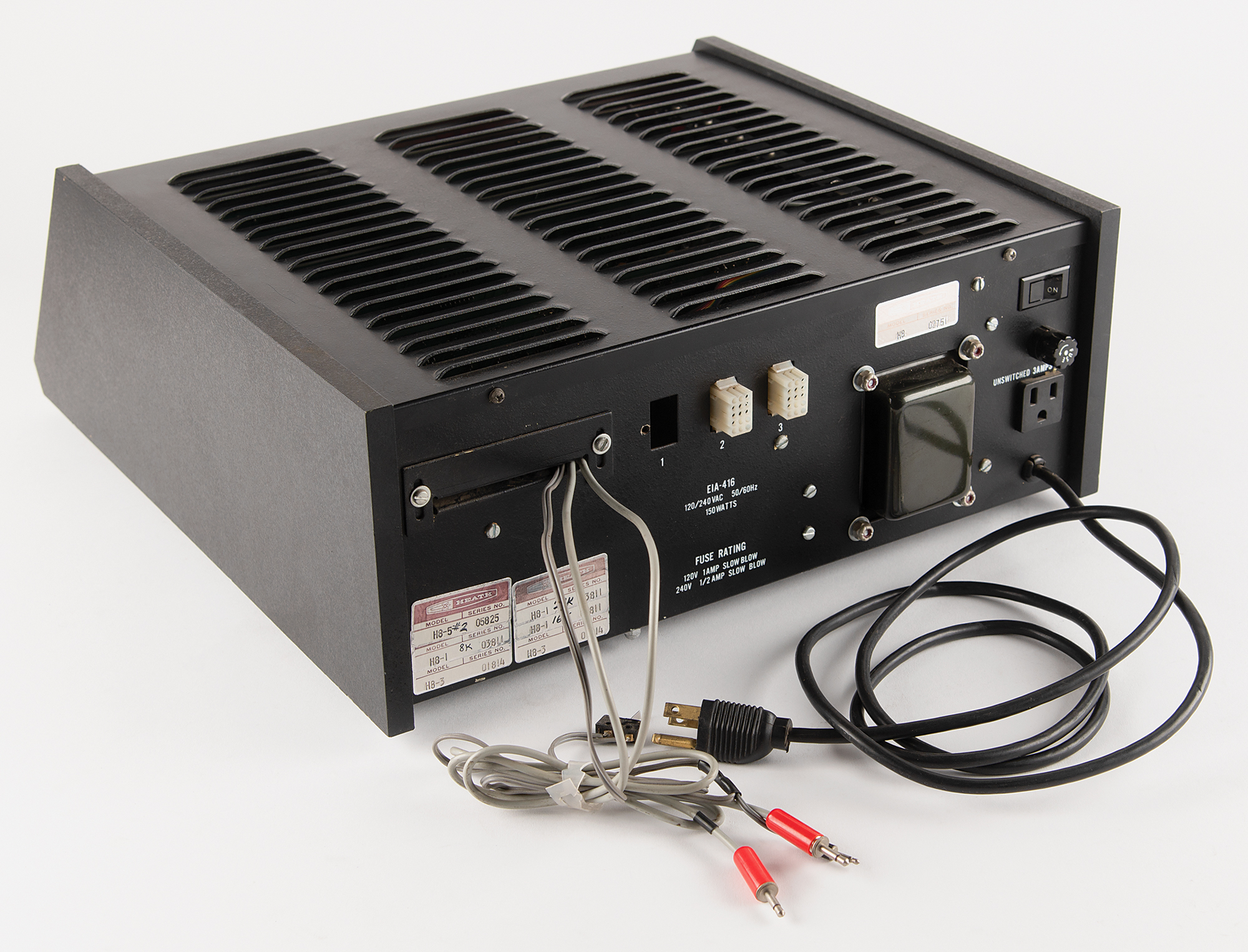
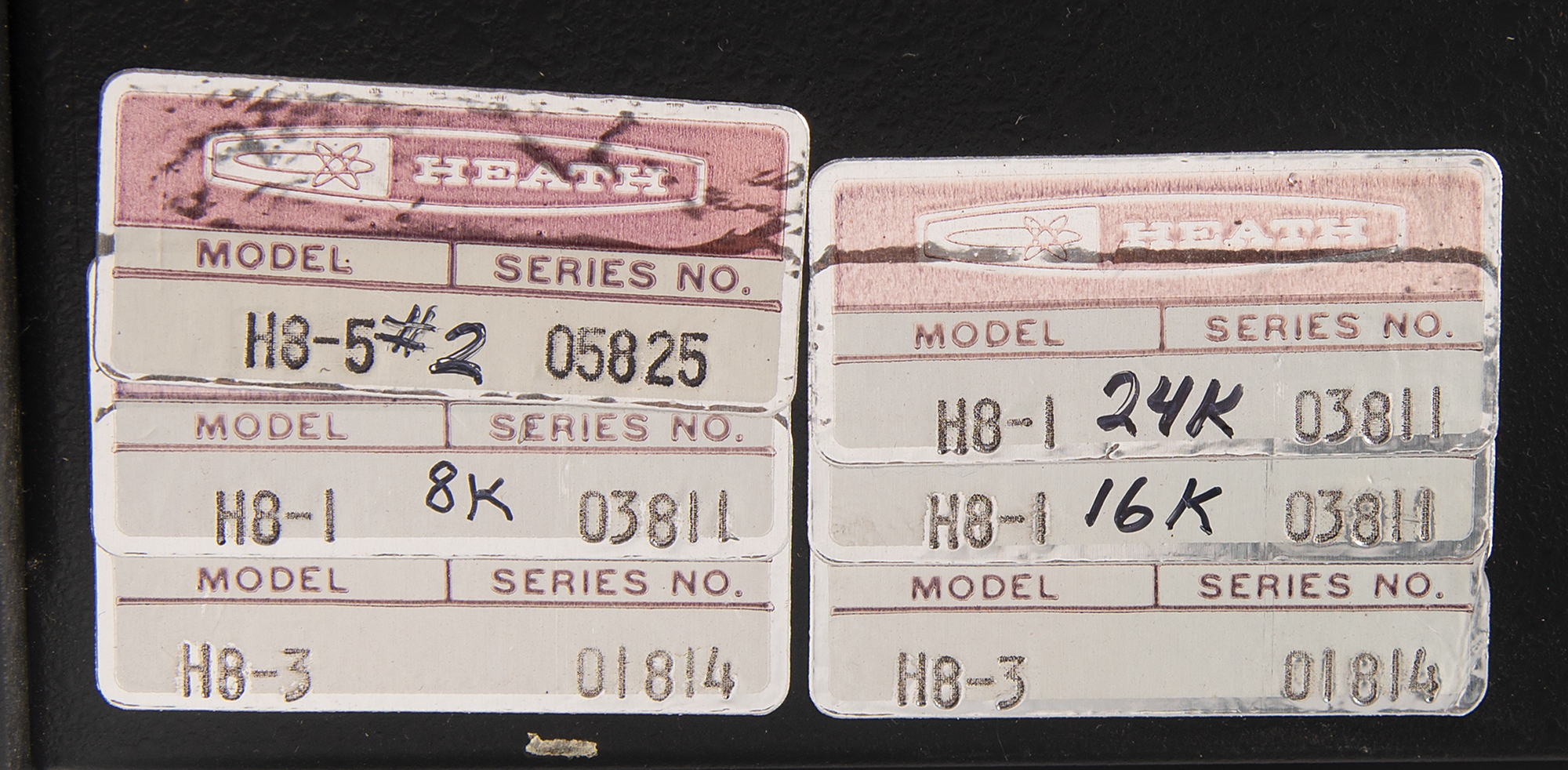
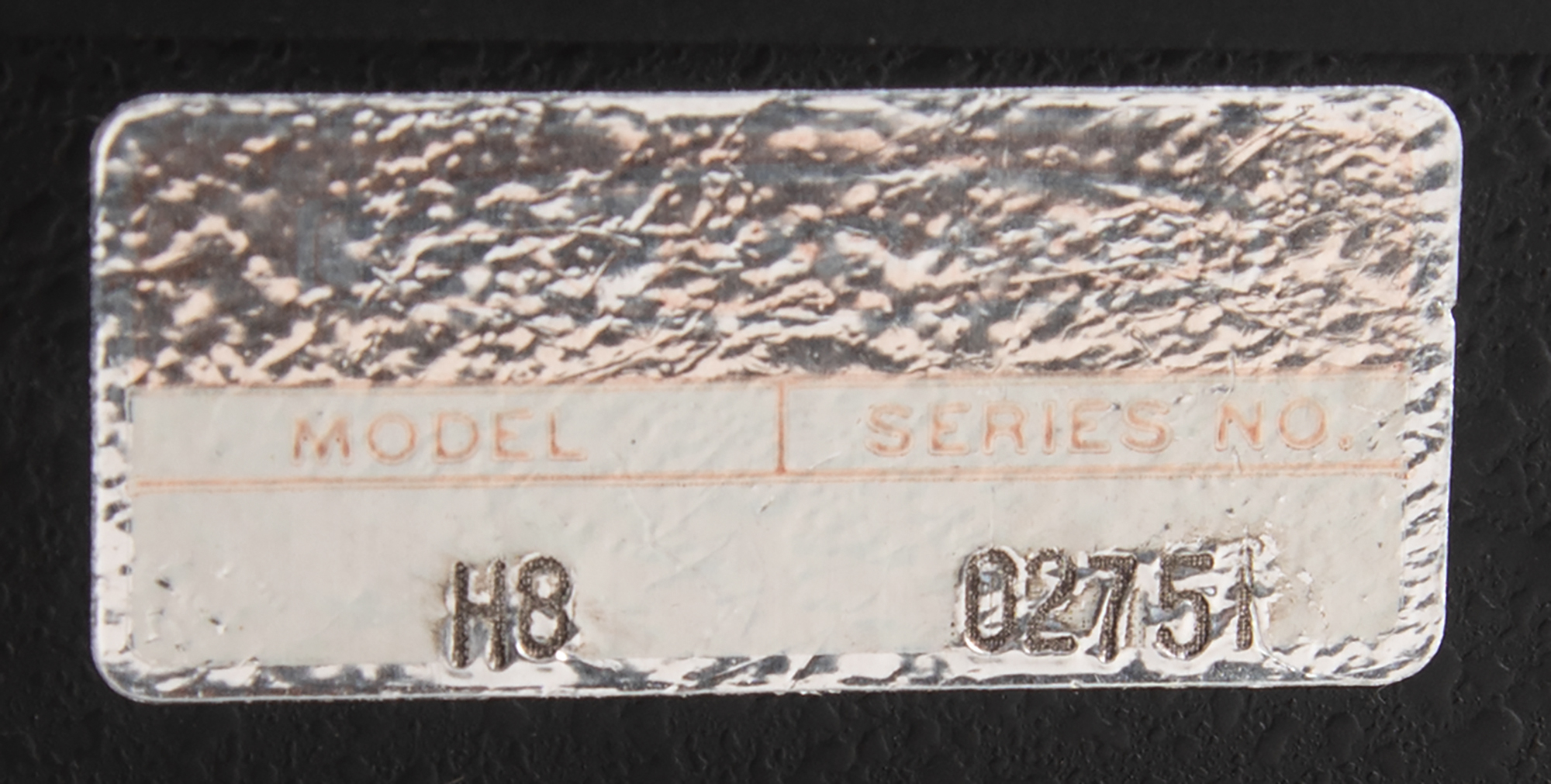
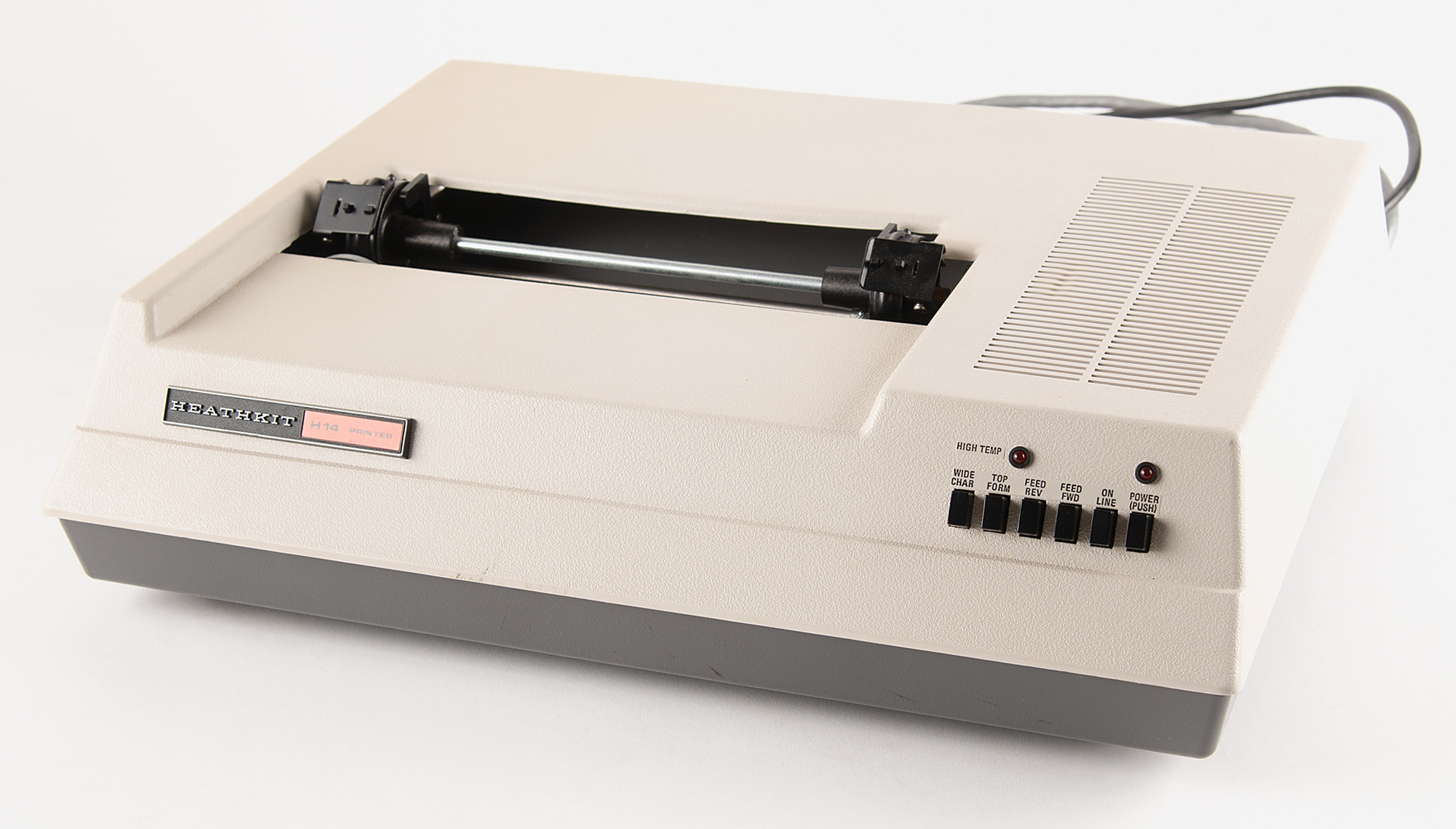
Fully assembled Heathkit H8 microcomputer released by Heathkit in the fall of 1977, which includes a Heathkit H9 Video Terminal, and a Heathkit H14 Printer. Aimed at hobbyists and engineers, the Intel 8080A-based H8 was a build-it-yourself microcomputer kit that followed the success of the Altair 8800, but was designed to offer a more user-friendly and reliable setup. The computer bears a sloping front panel with a 9-digit keypad, and the back of the computer features a group of seven affixed Heath parts labels, with the example in the upper right marked as “Model H8, Series No. 02751.” The other six, all present to the lower left corner, are either marked as models H8-1 (Series 03811), H8-3 (01814), or H8-5 (05825).
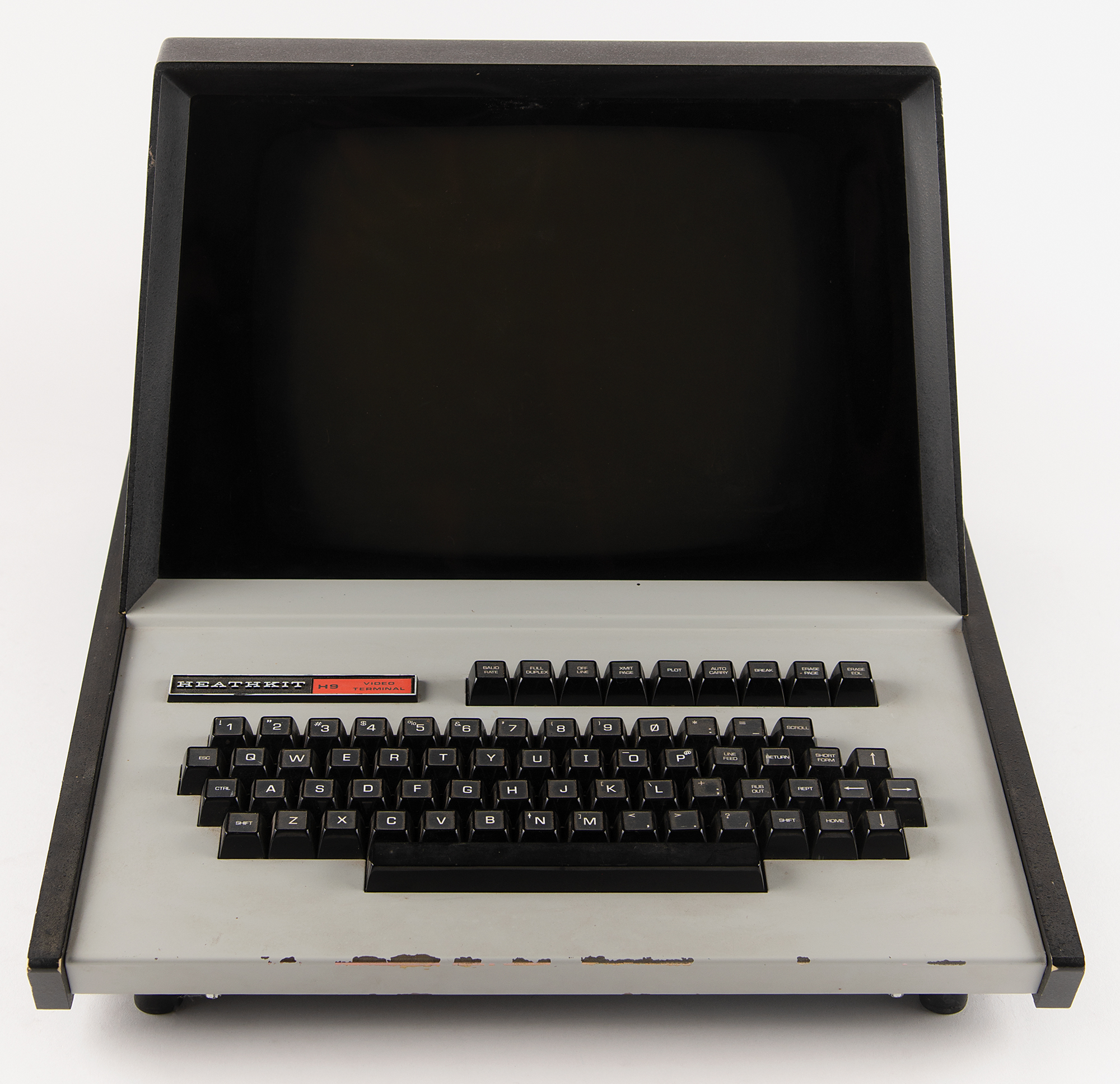
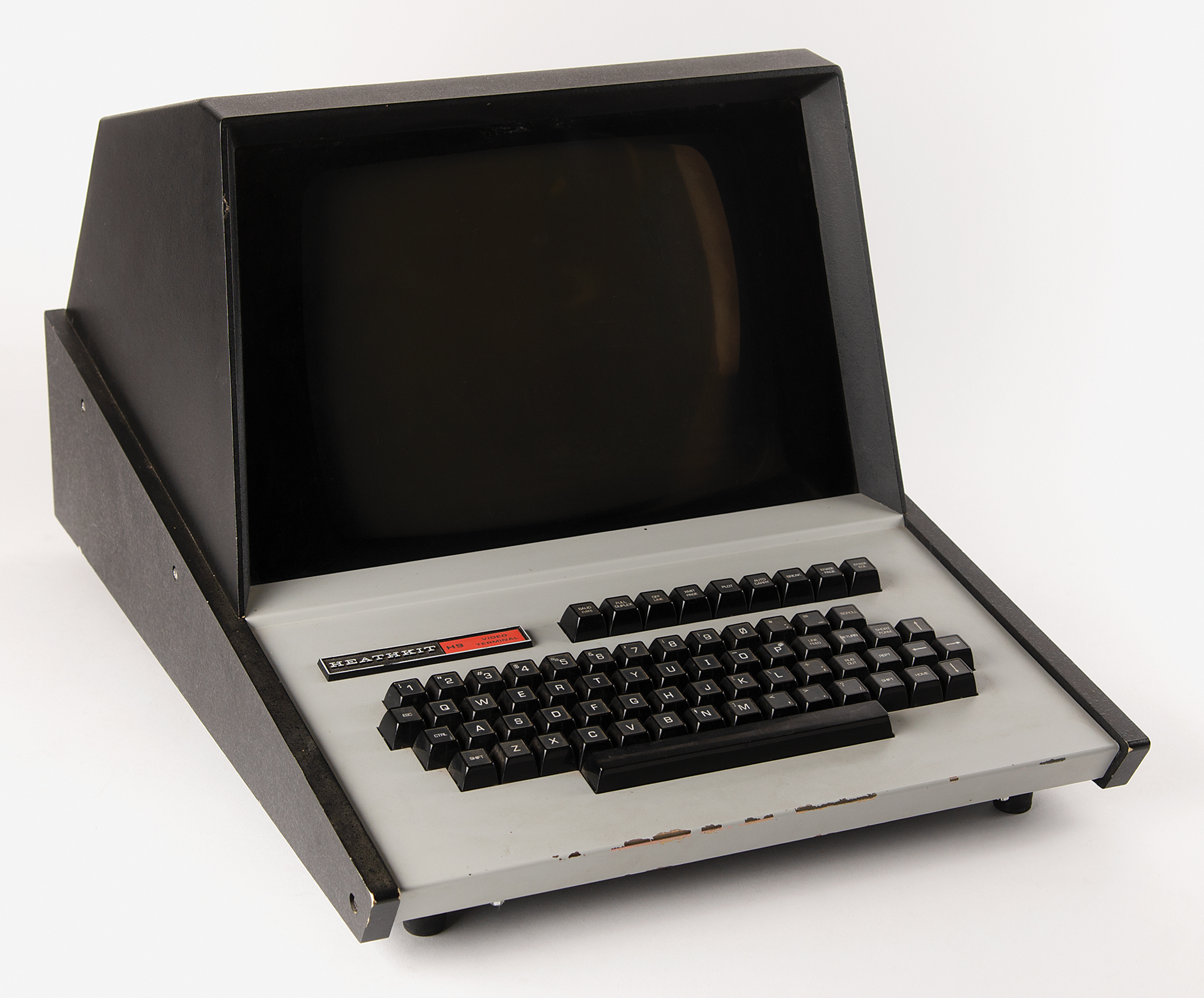
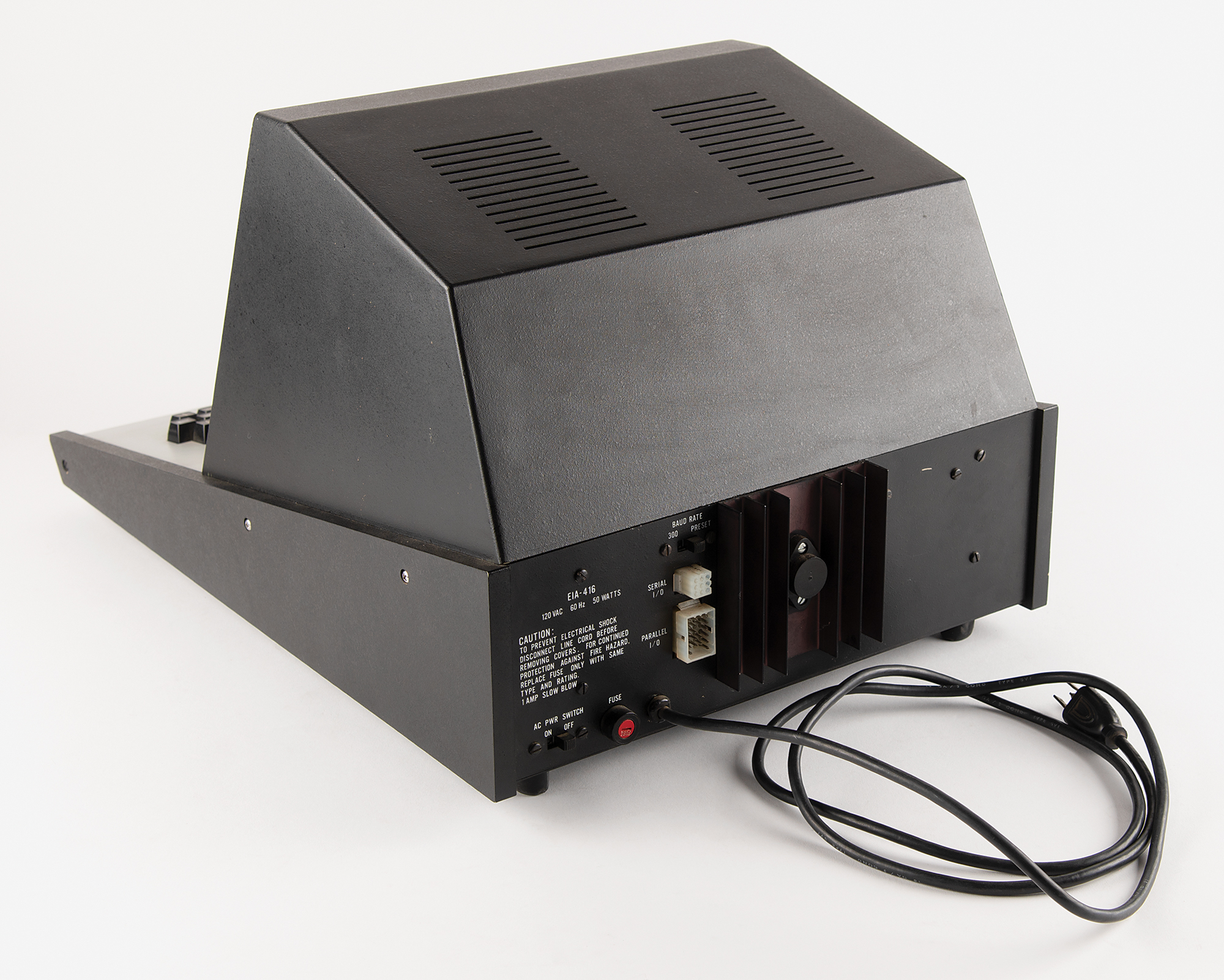
Announced in 1989, the H9 Video Terminal is an alphanumeric video terminal designed to work with any digital computer, but built specifically for the Heathkit H8. The H9 terminal consists of a 12˝ CRT display and uses a 67-key ASCII uppercase keyboard with 80 characters displayed. Baud rate is selectable from 110-9600. Standard serial Interfaces include EIA standard serial, 20mA loop, and TTL input/output.
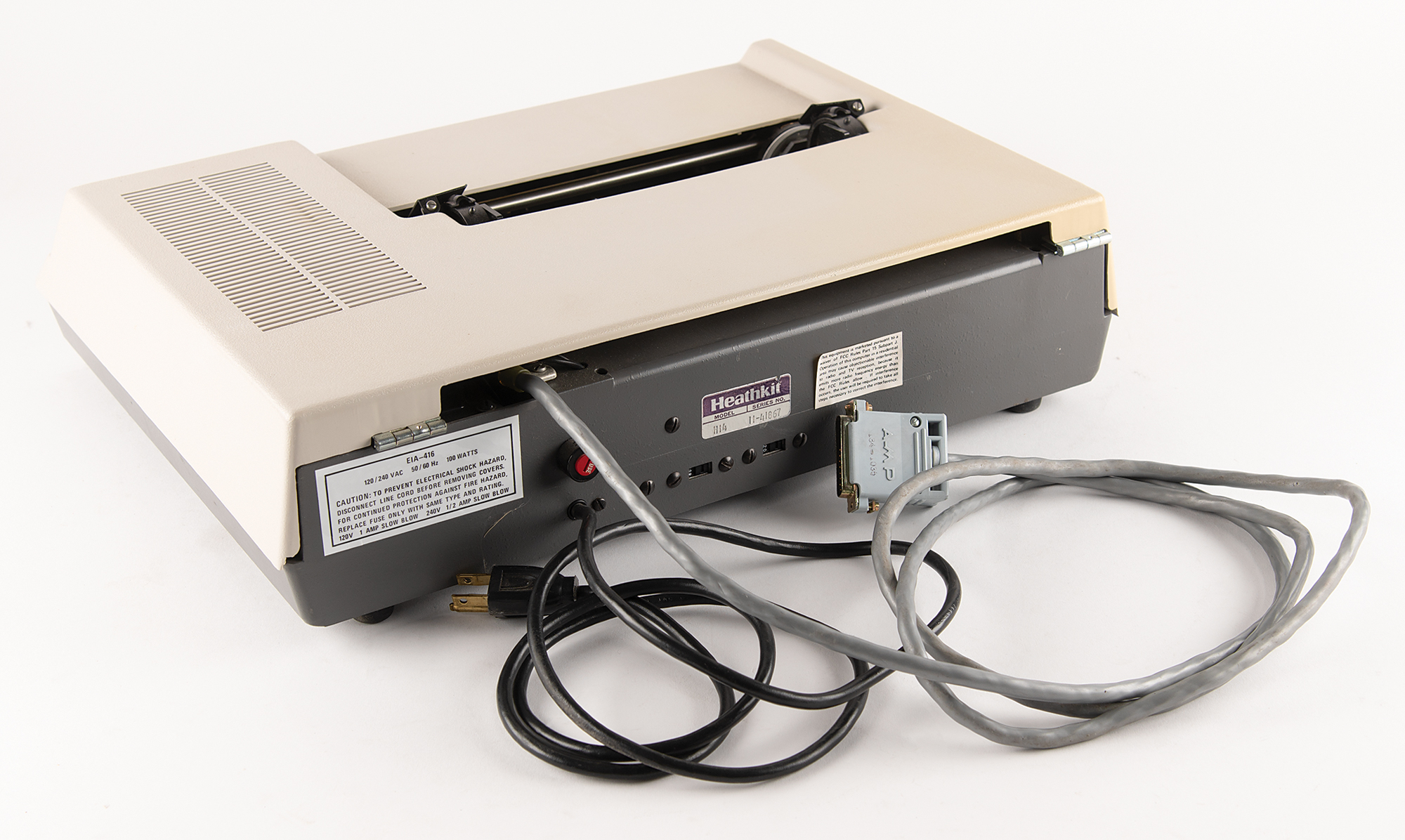
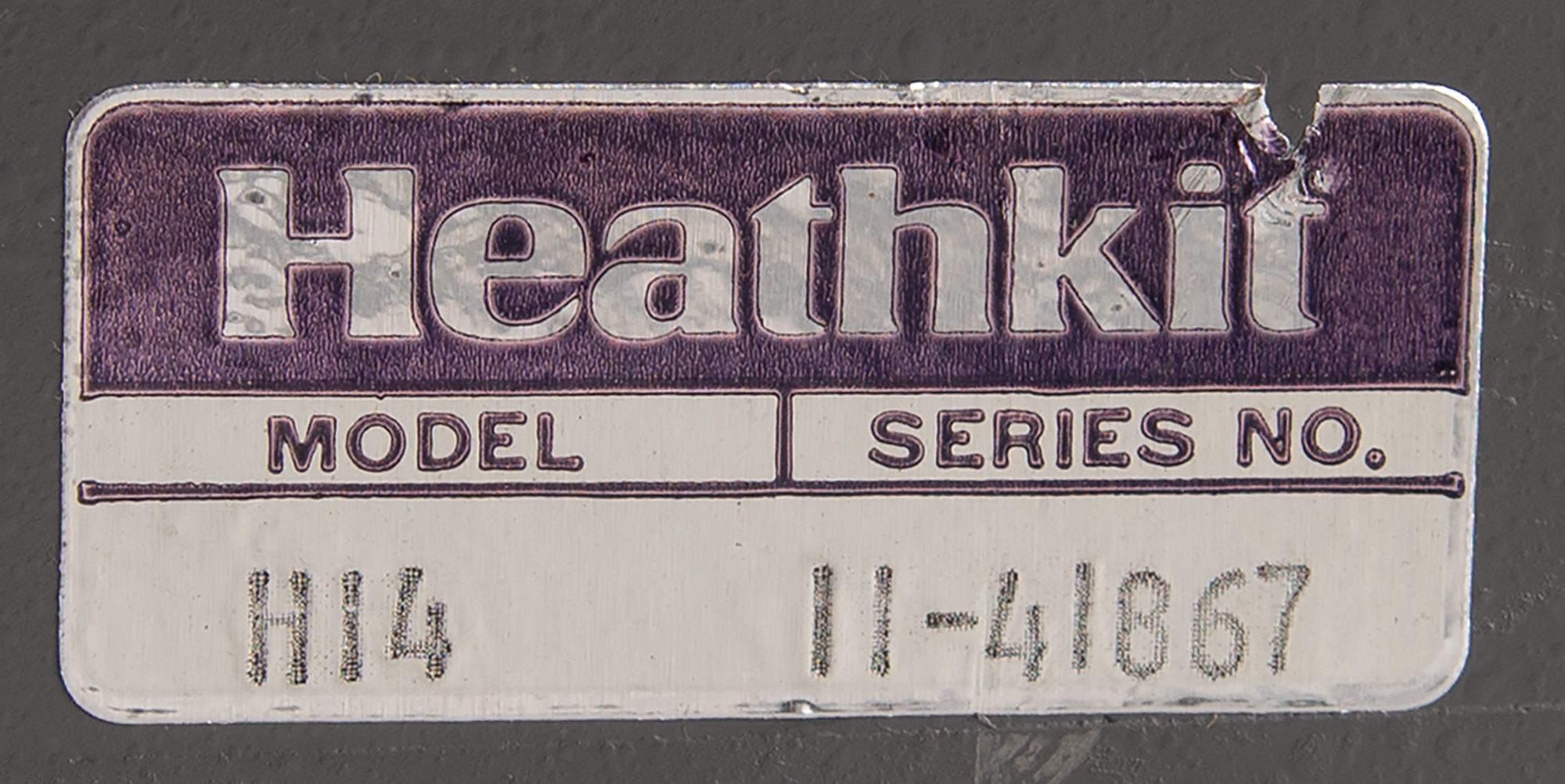
The Heathkit Model H14 Line Printer is a compact, easy-to-use computer peripheral, with the label to the reverse marked as “Model H14, Series 11-41867.” The versatile printed features eight selectable baud rates, operation for either 50 Hz or 60 Hz power line frequency, selectable automatic line feed on receipt of carriage return, and a paper out/paper jam detector that shuts down operation. The consignor notes that the H8, H9, and H14 were tested to be in working order; RR Auction has not confirmed the functionality of any machine, which are in fine cosmetic condition, with waviness to the H9 screen.
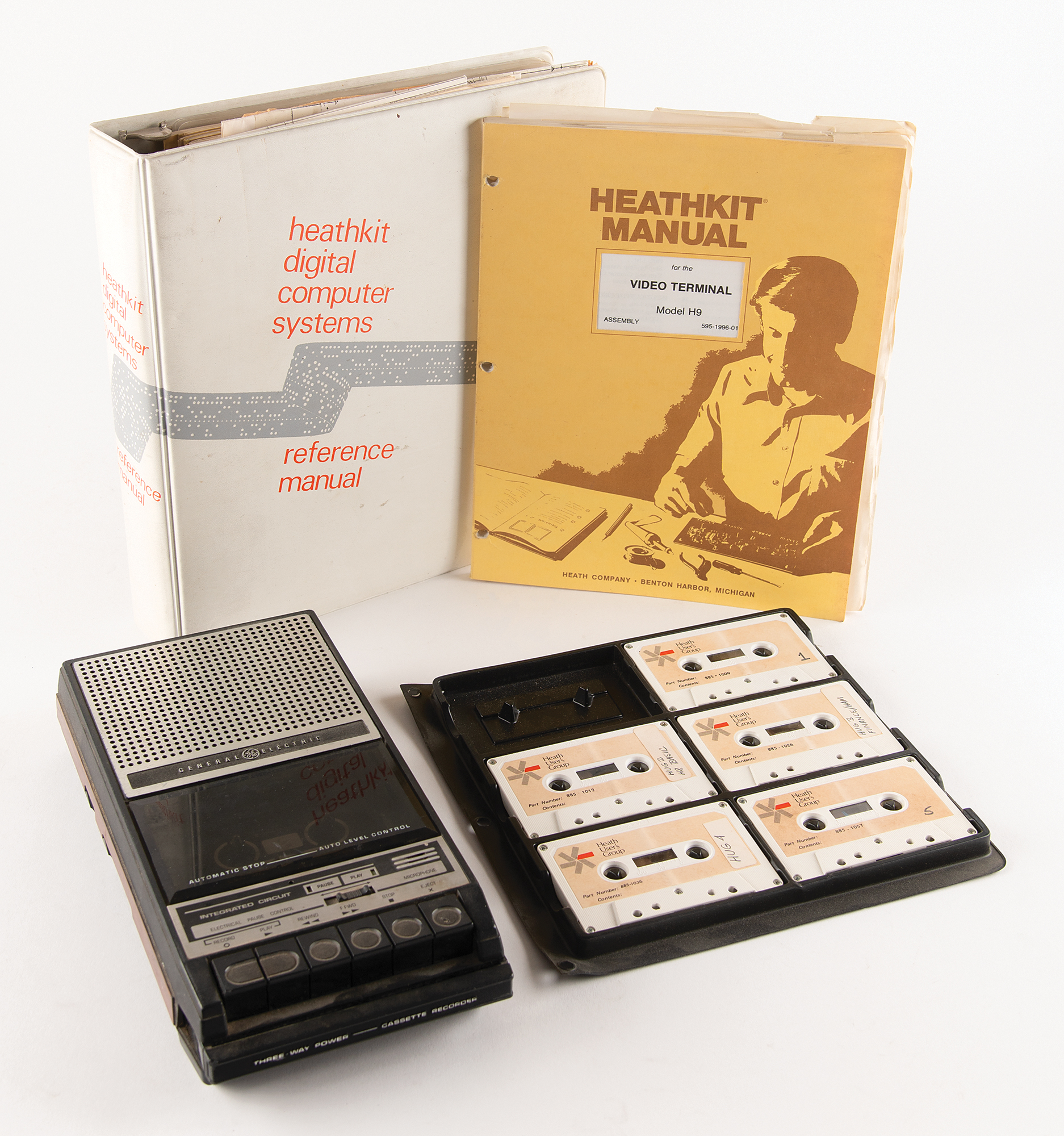
Accompanied by a jam-packed ‘Heathkit Digital Computer Systems Reference Manual’ loaded with publications, schematics, and instruction guides, a ‘Heathkit Manual for the Video Terminal Model H9,’ a set of five Heath User’s Group software cassette tapes, and a period General Electric Cassette Recorder.
Popular among hobbyists, educators, and engineers, the H8 helped bridge the gap between early kit computers and practical desktop systems. Thanks to clear manuals and a reliable design that included a built-in ROM and buffered I/O, the H8 stood out for its ease of assembly, was more robust and modular than rivals like the Altair, and featured user-friendly LED displays instead of switches. The H8 became part of Zenith Data Systems after Heath was acquired by Zenith in 1979 for $63 million.

