

Sold For $81,989
*Includes Buyers Premium
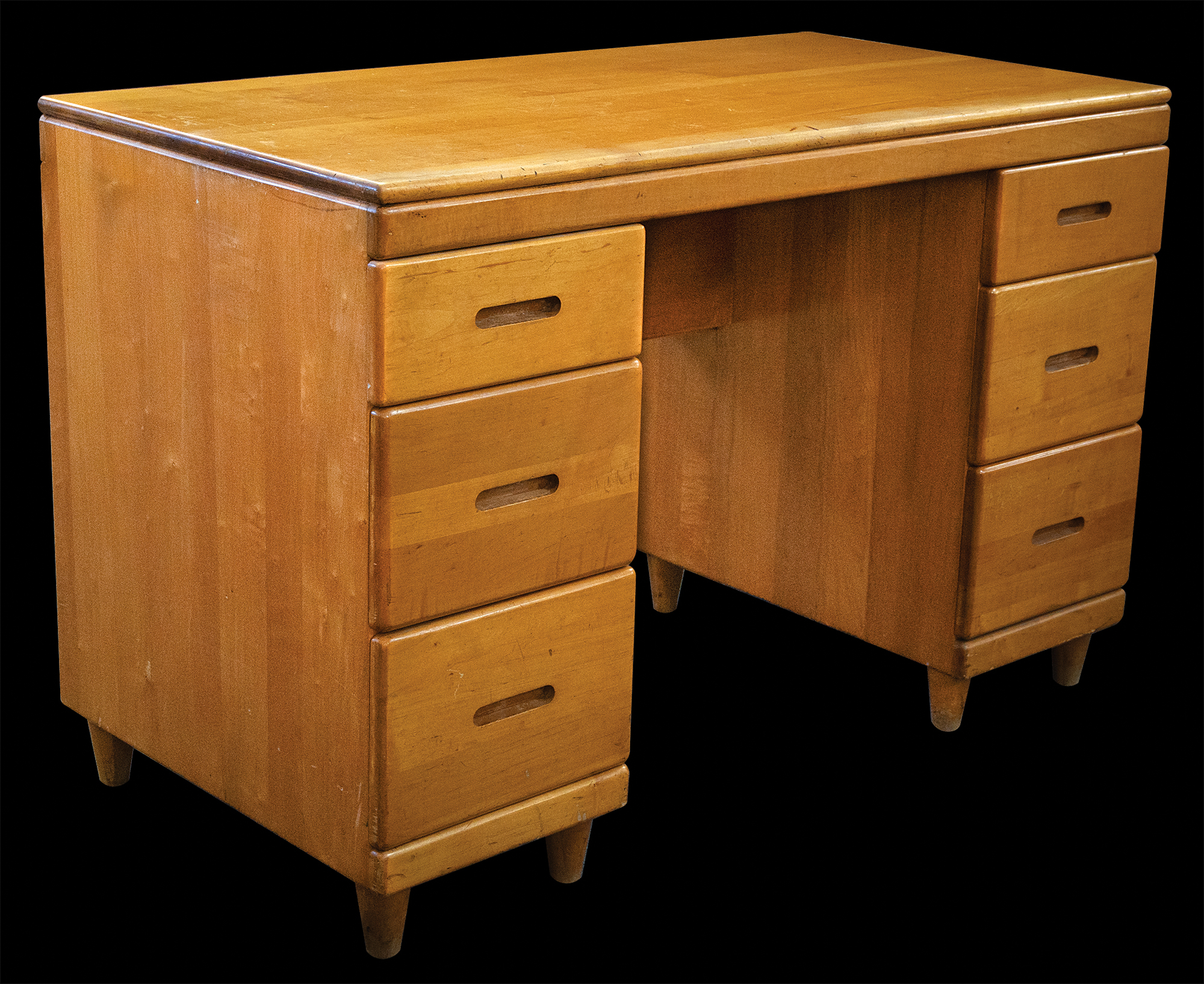
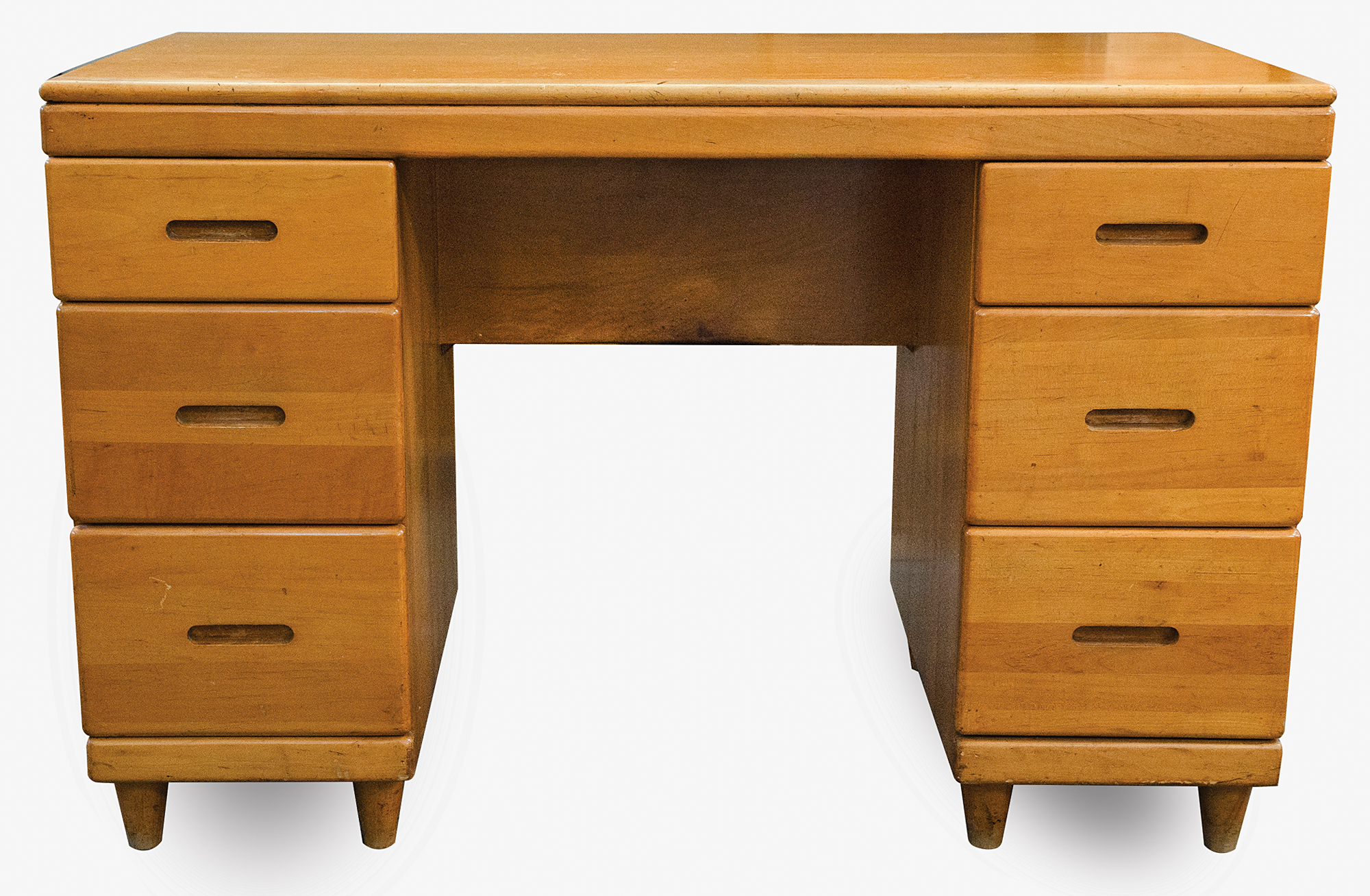
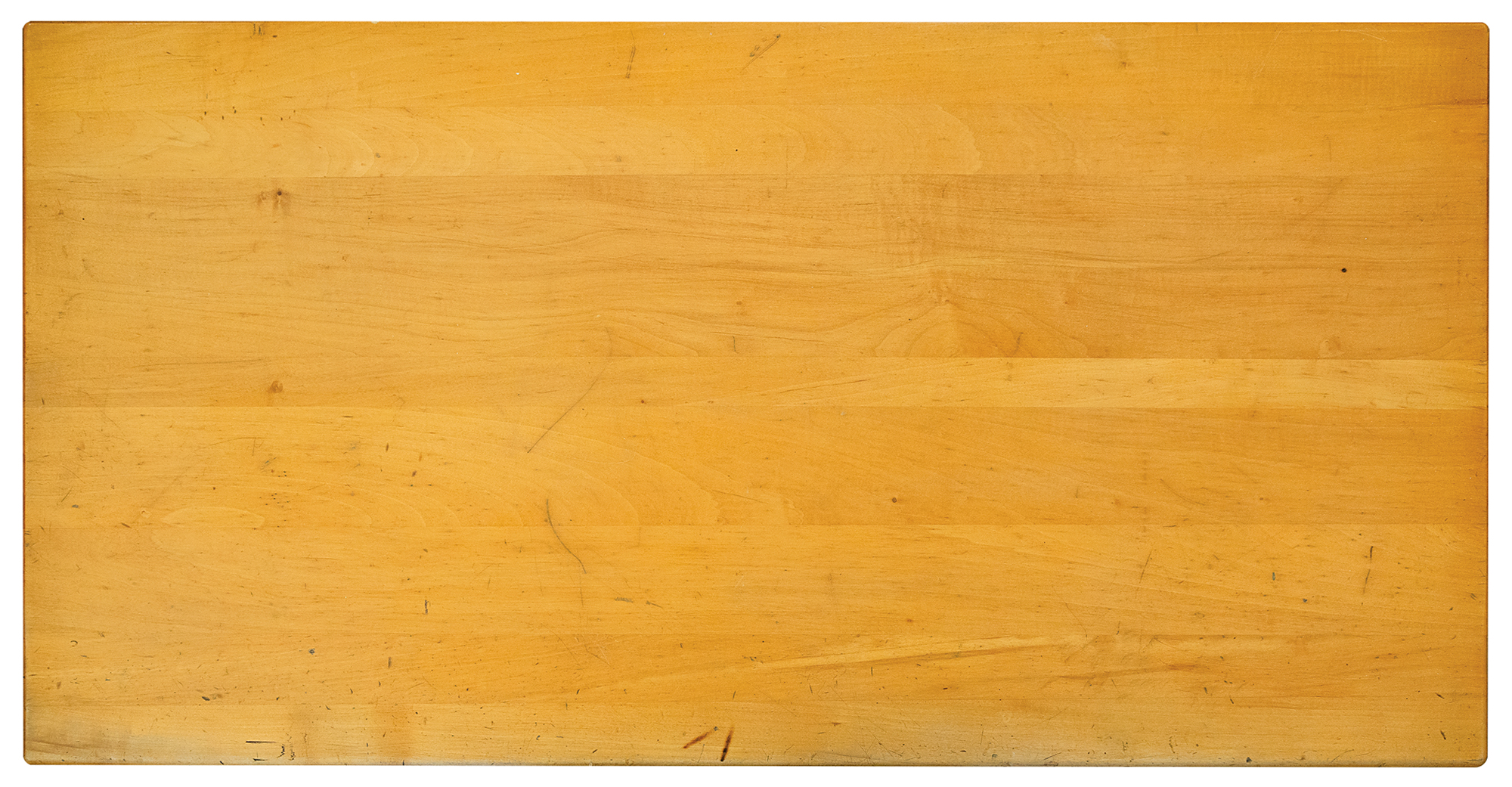
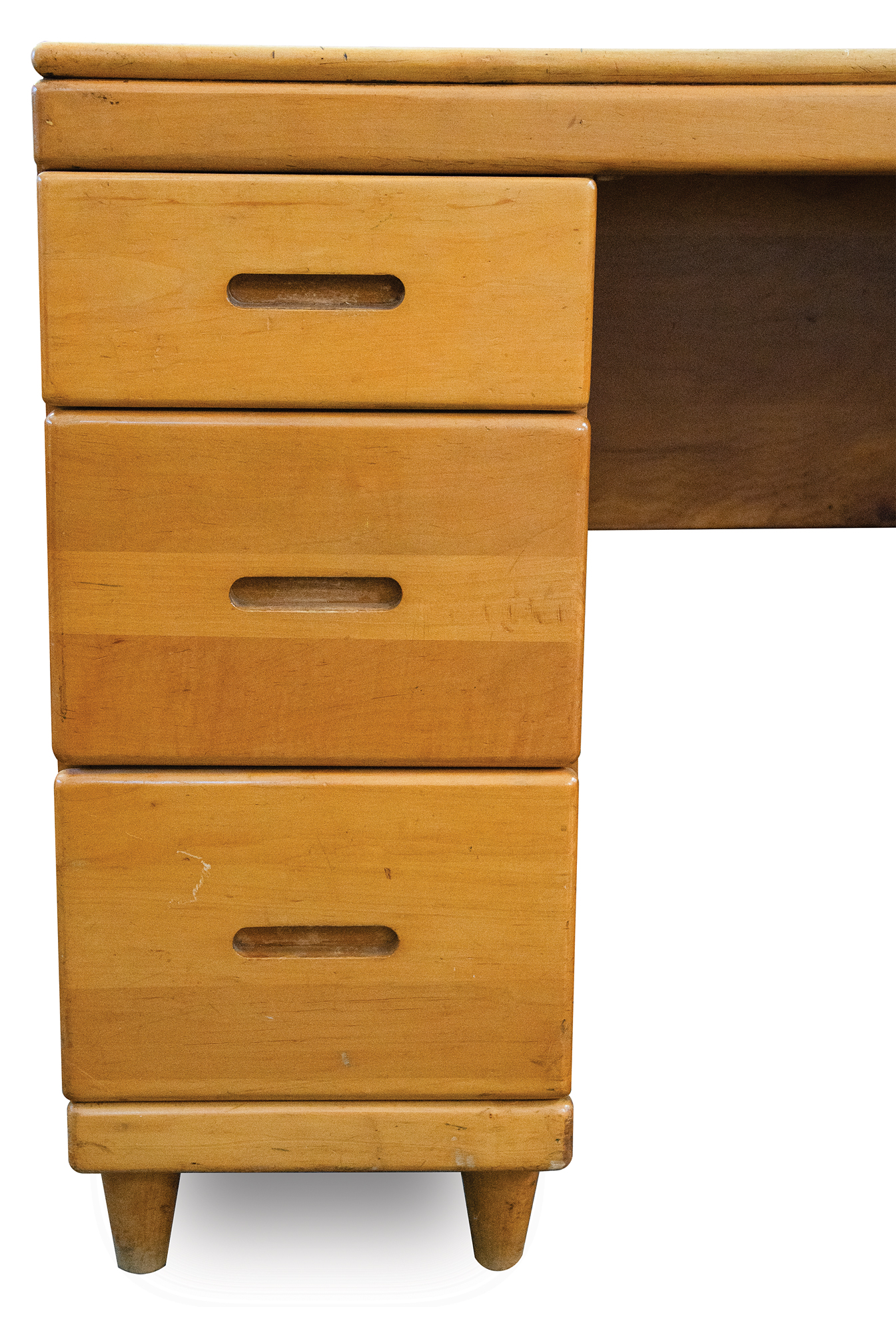
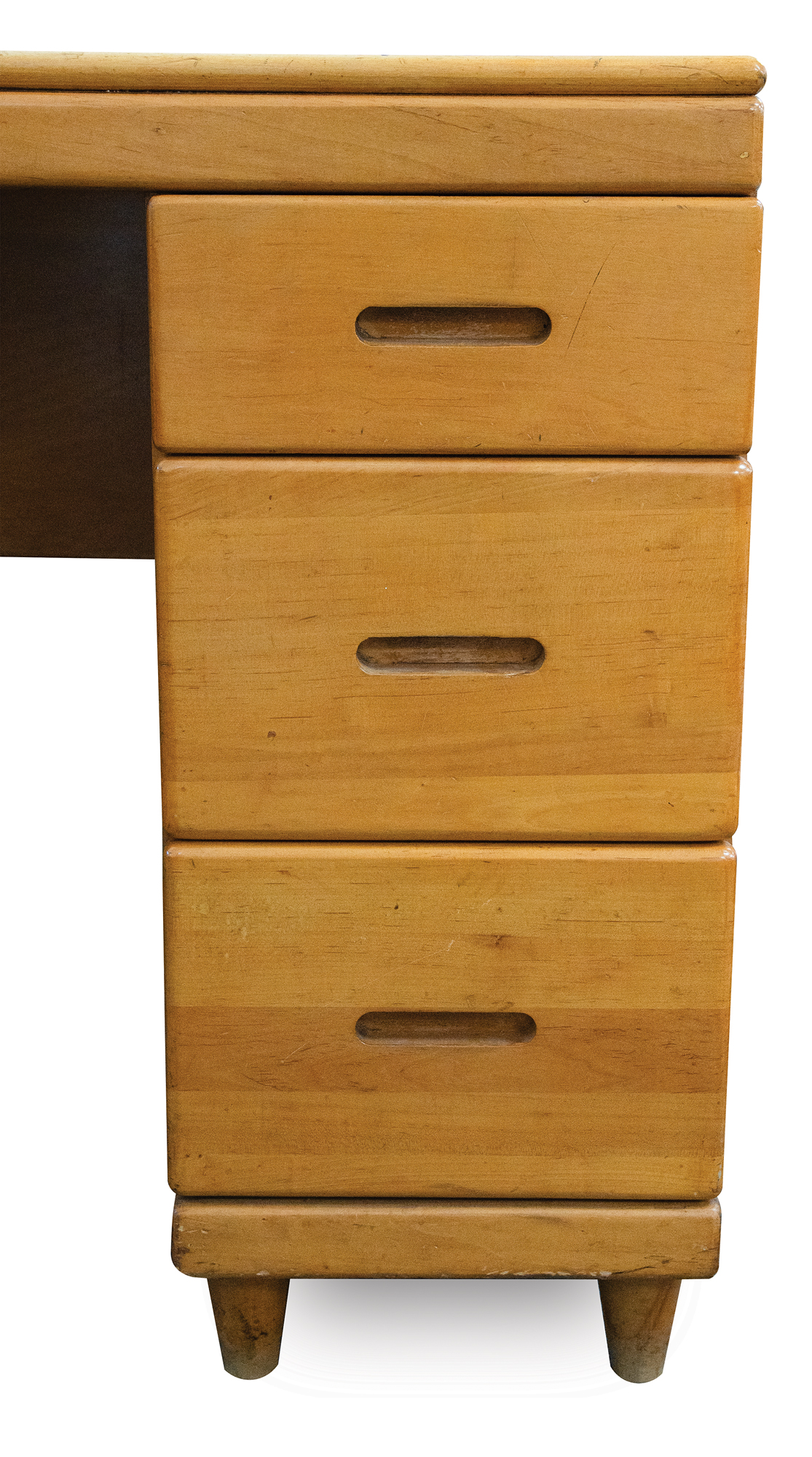
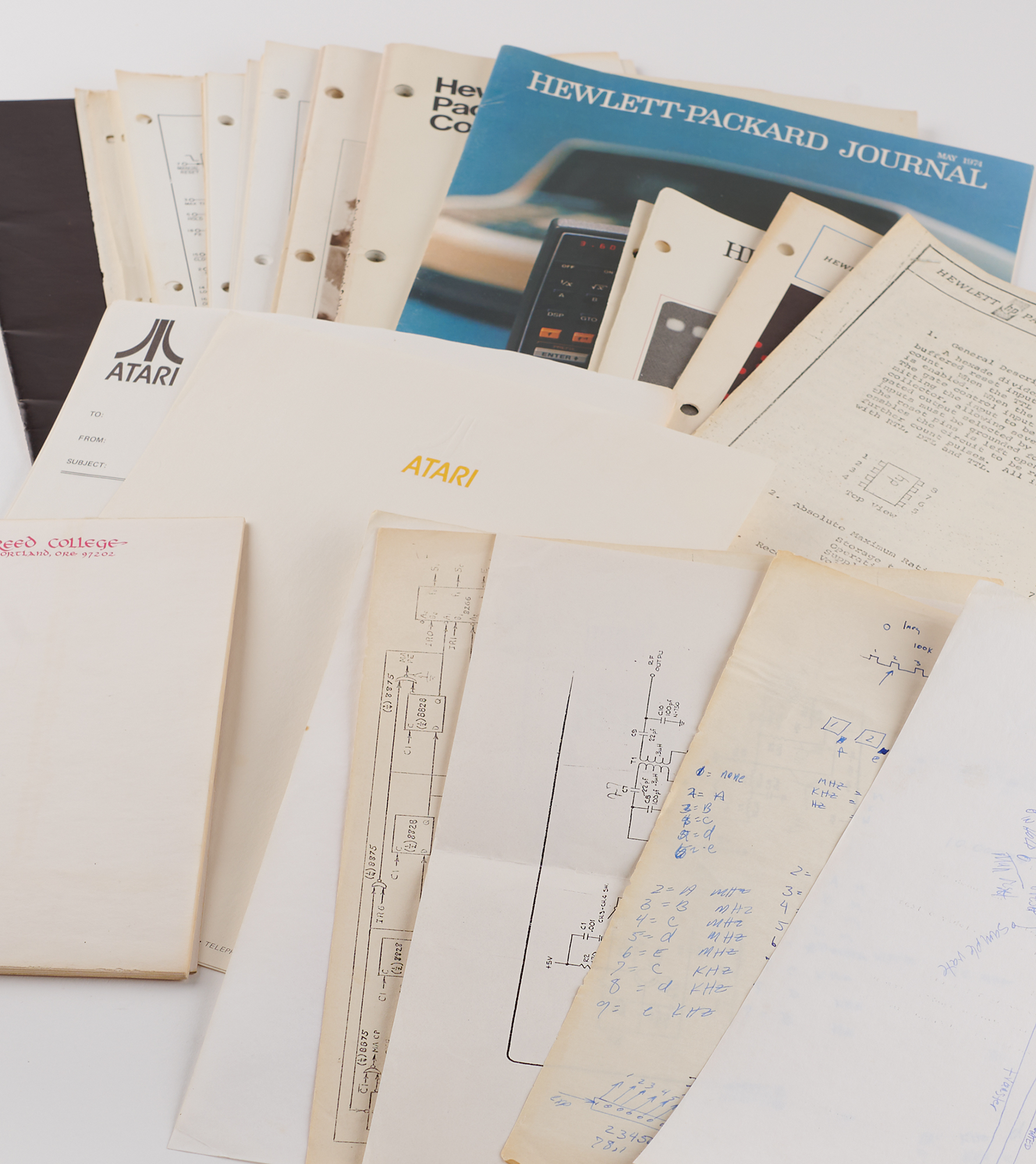
Steve Jobs's bedroom desk from his family's famed 'Apple Garage' property in Los Altos, California, filled with a remarkable archive of papers found in situ, tracing elements of his early path—Atari papers, a Reed College notepad, programming and circuitry notes, HP manuals, and other relics of a life before Apple.
These historic papers include:
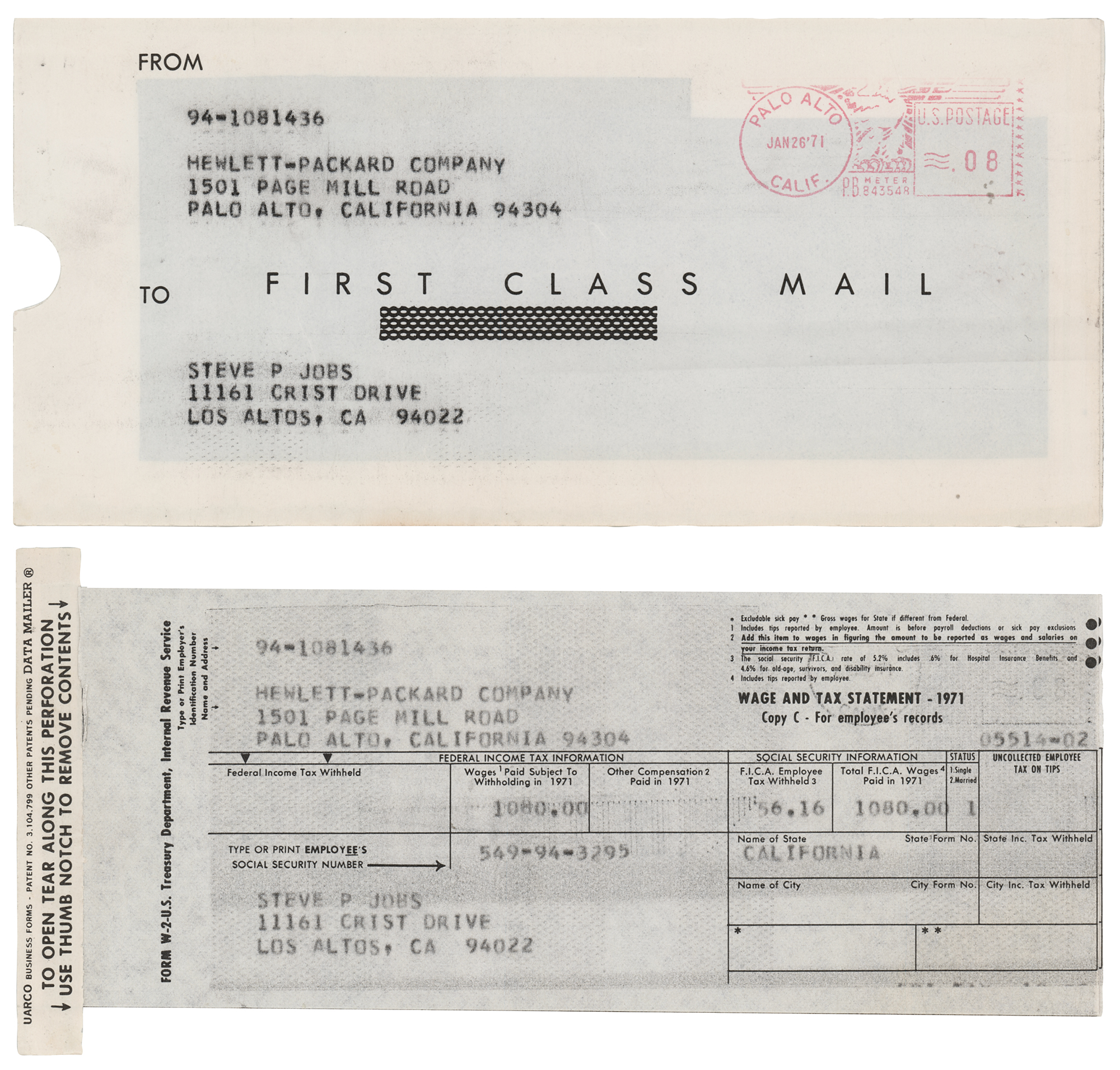
- a Hewlett-Packard mailing envelope addressed to Jobs, postmarked January 26, 1971.
- a Hewlett-Packard Company 'Wage and Tax' statement documenting $1080 wages paid to "Steve P. Jobs" in 1971, during Jobs's teenage years.
- a notepad of 19 sheets of blank Reed College stationery paper.
- a bright orange Atari folder with nine blank Atari inter-office memo sheets, and two blank sheets of embossed Atari letterhead.
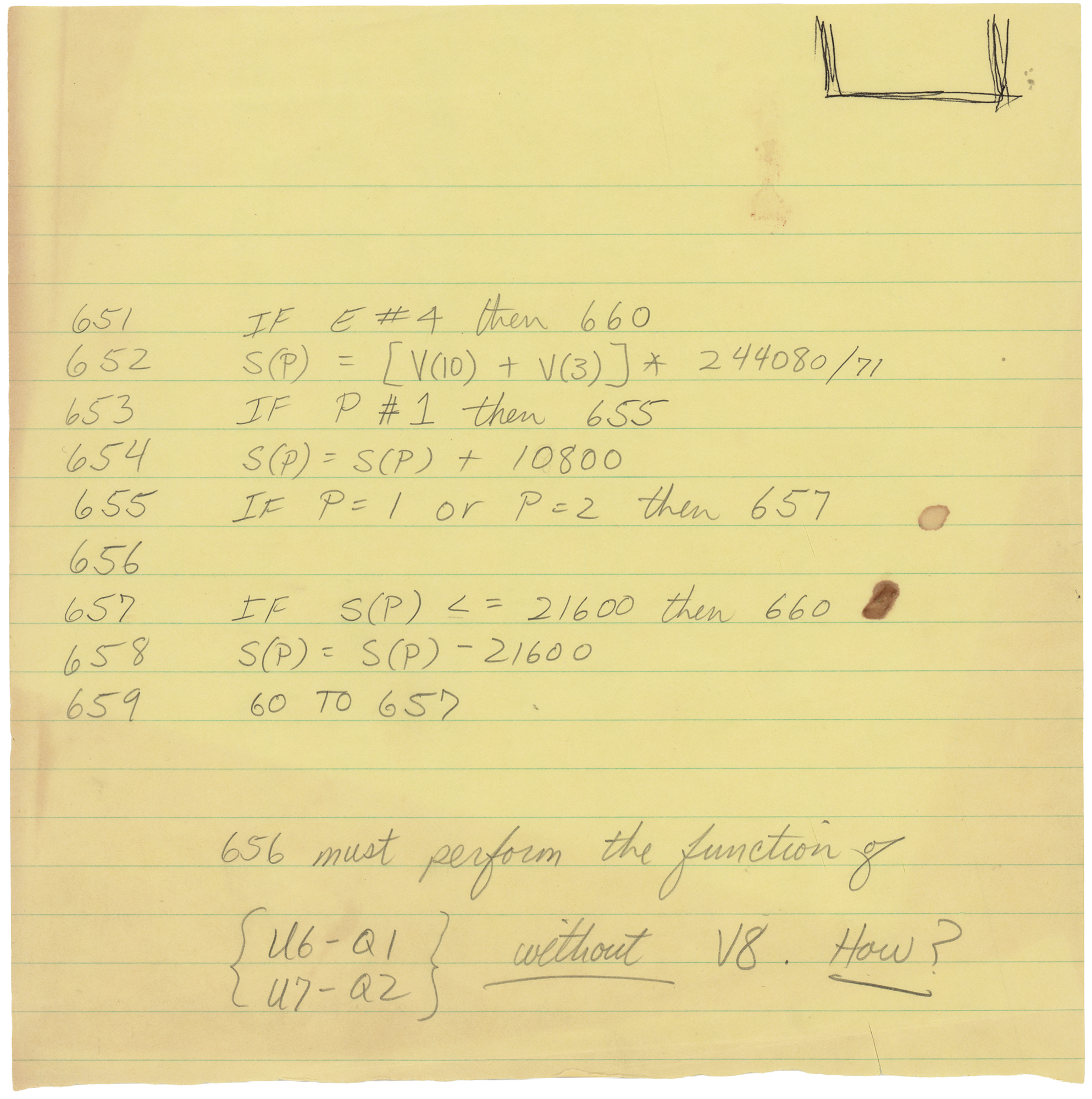
- a page of yellow handwritten programming notes, decisively written in Jobs's own hand.
- three pages of handwritten electronics notes in blue ink, penned in an indistinguishable style but possibly incorporating Jobs's handwriting.
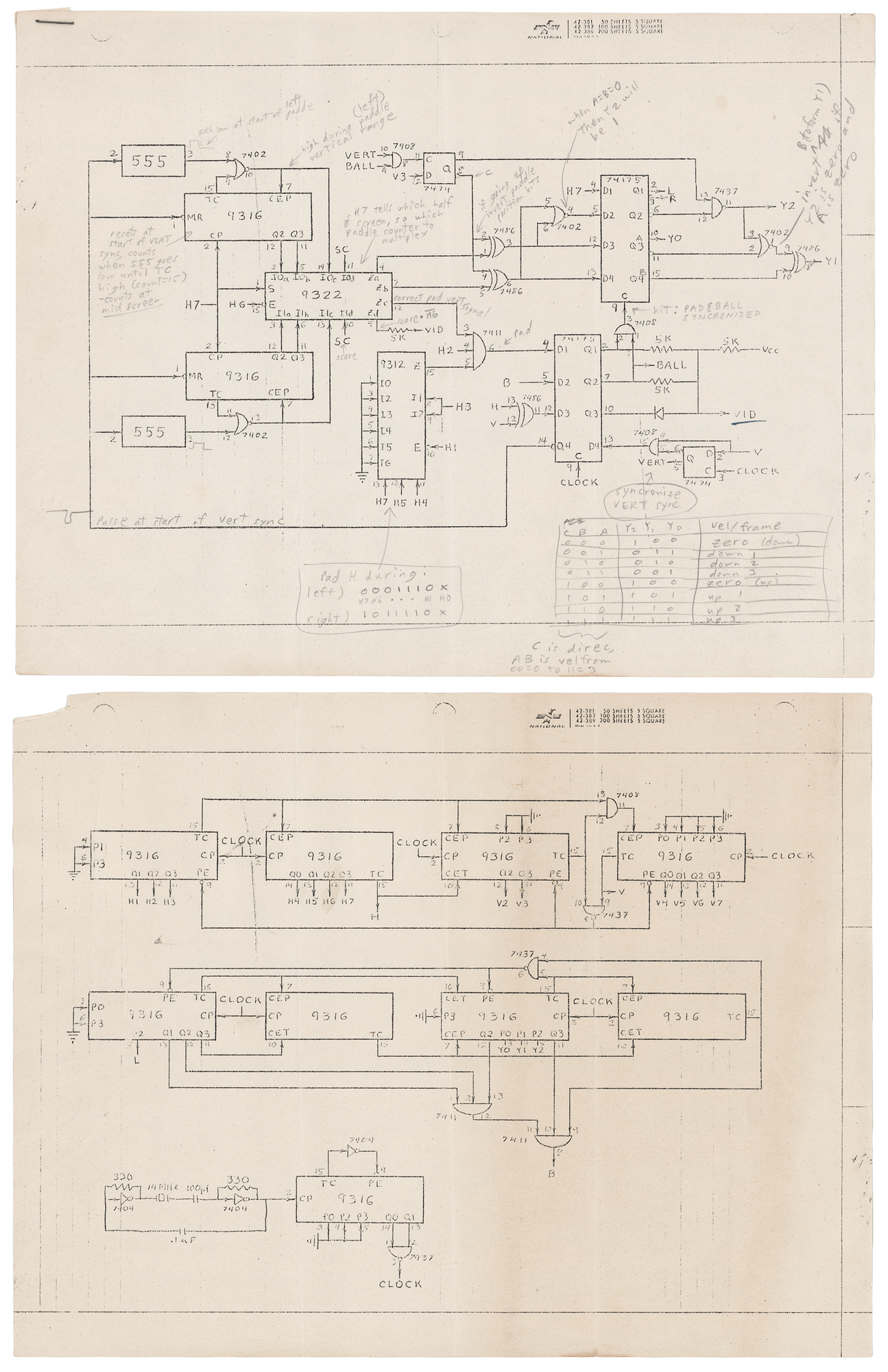
- three pages of photocopied schematics, one heavily annotated in pencil in an unknown hand.
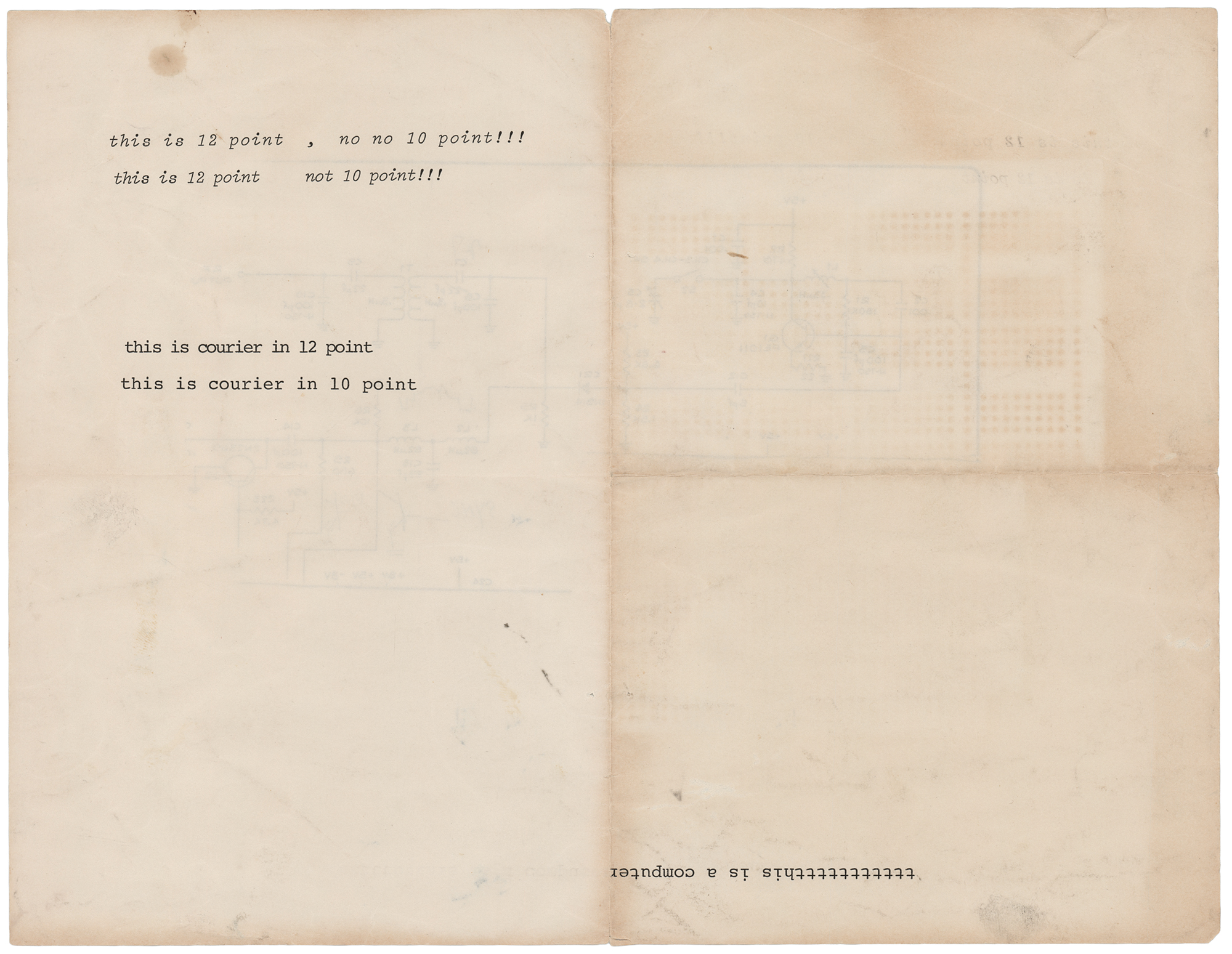
- two photocopied schematics for an RF device, one with some intriguing early computer word processing experiments printed on the reverse, offering evidence of Jobs's playfulness and early predilection for lowercase lettering: "ttttttttttthis is a computer," "this is 12 point , no no no 10 point!!!," "this is 12 point not 10 point!!!," "this is courier in 12 point," "this is courier in 10 point."
- loose-leaf manual for the Hewlett-Packard Measuring System 5300A.
- Hewlett-Packard "Application Note 931" for their "Solid State Alphanumeric Display Decoder/Driver Circuitry."
- Hewlett-Packard technical data sheet for their "Solid State Numeric Indicator."
- Hewlett-Packard internal integrated circuit data sheet for "Time Base Hexade," marked "Company Confidential."
- Hewlett-Packard Journals from February 1969, July 1970, August 1971, and May 1974.
- Hewlett-Packard Components "Optoelectronics Designer's Catalog" from 1975.
- Advent Videobeam Projection Color Television brochure.
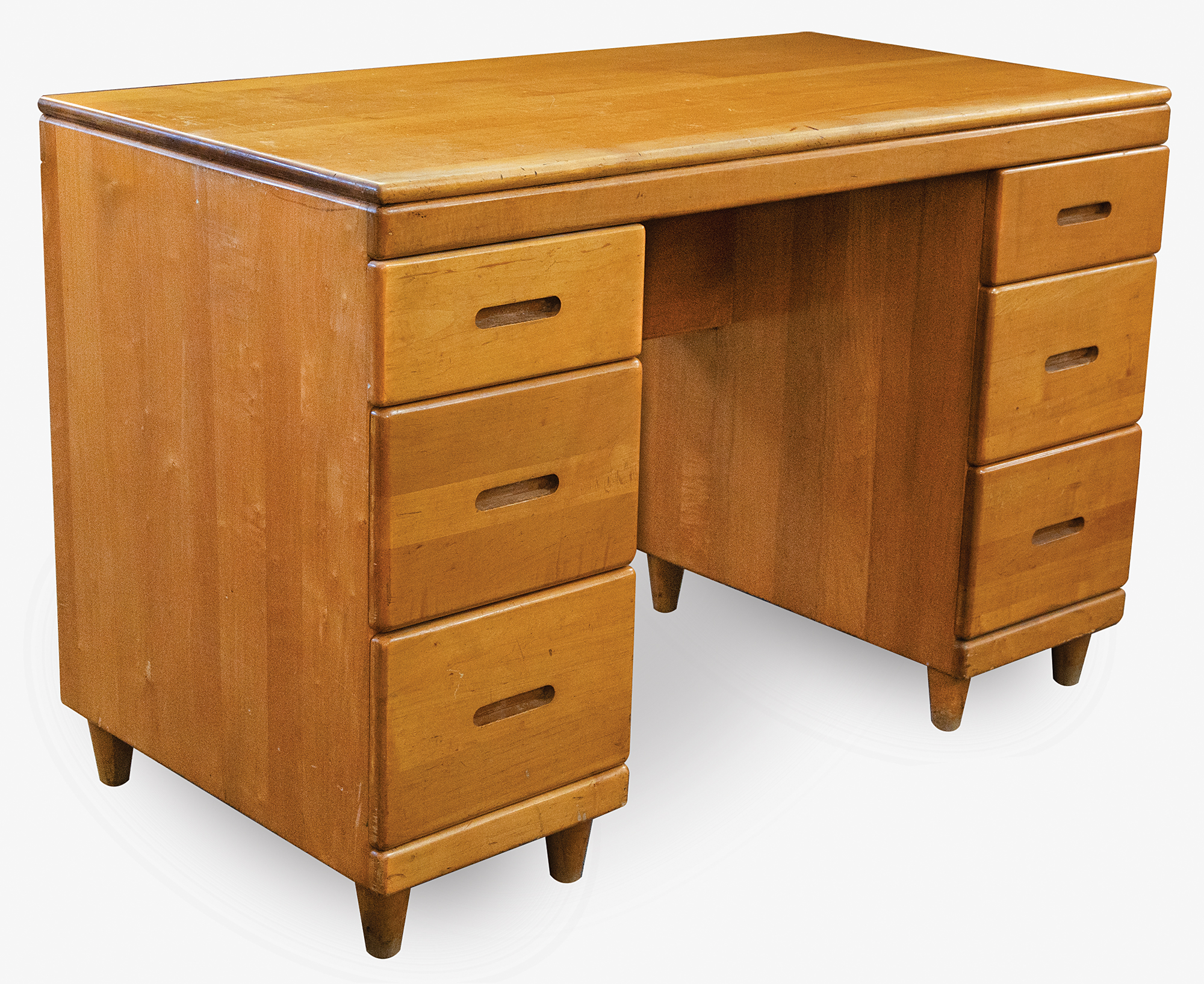
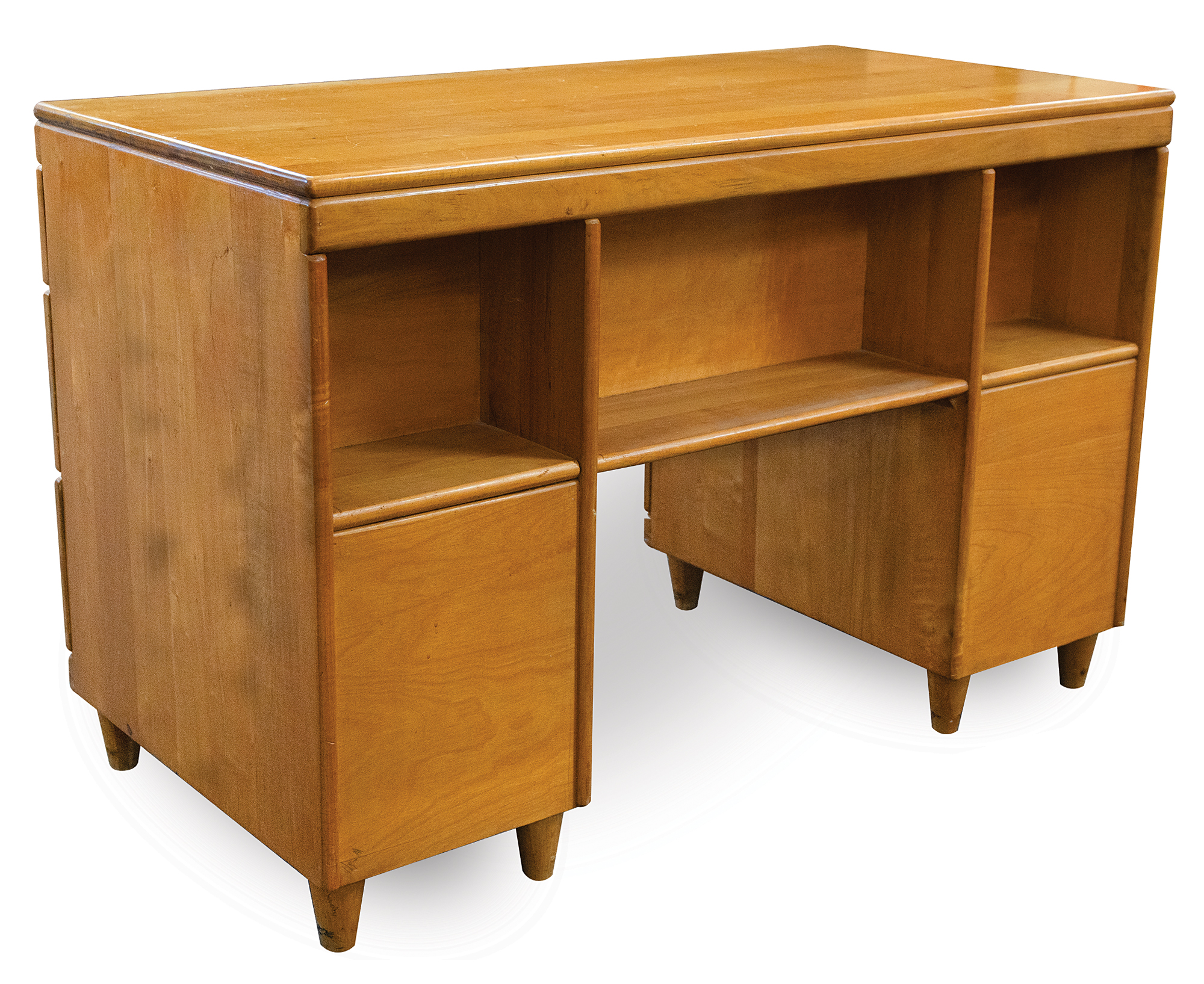
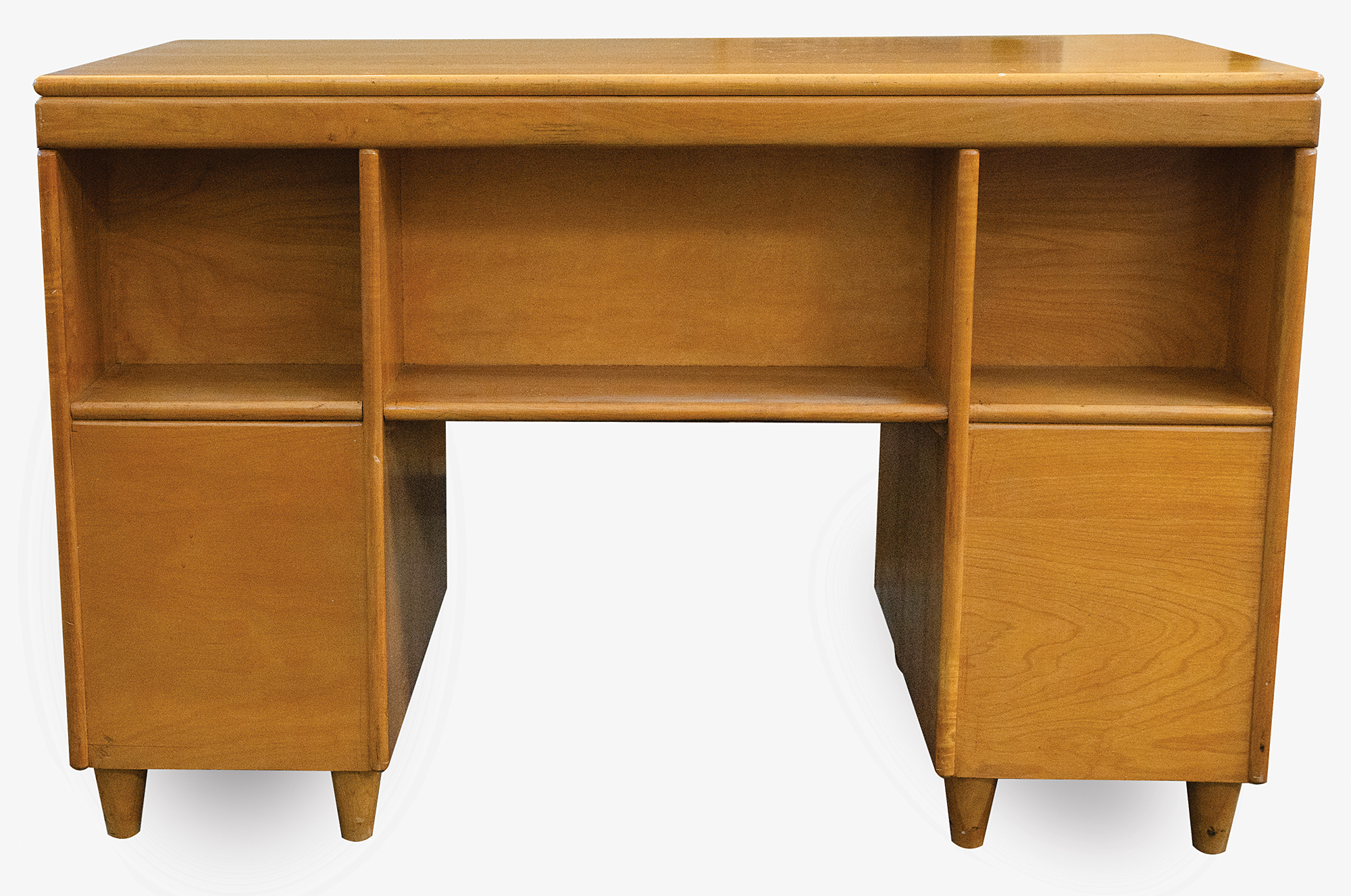
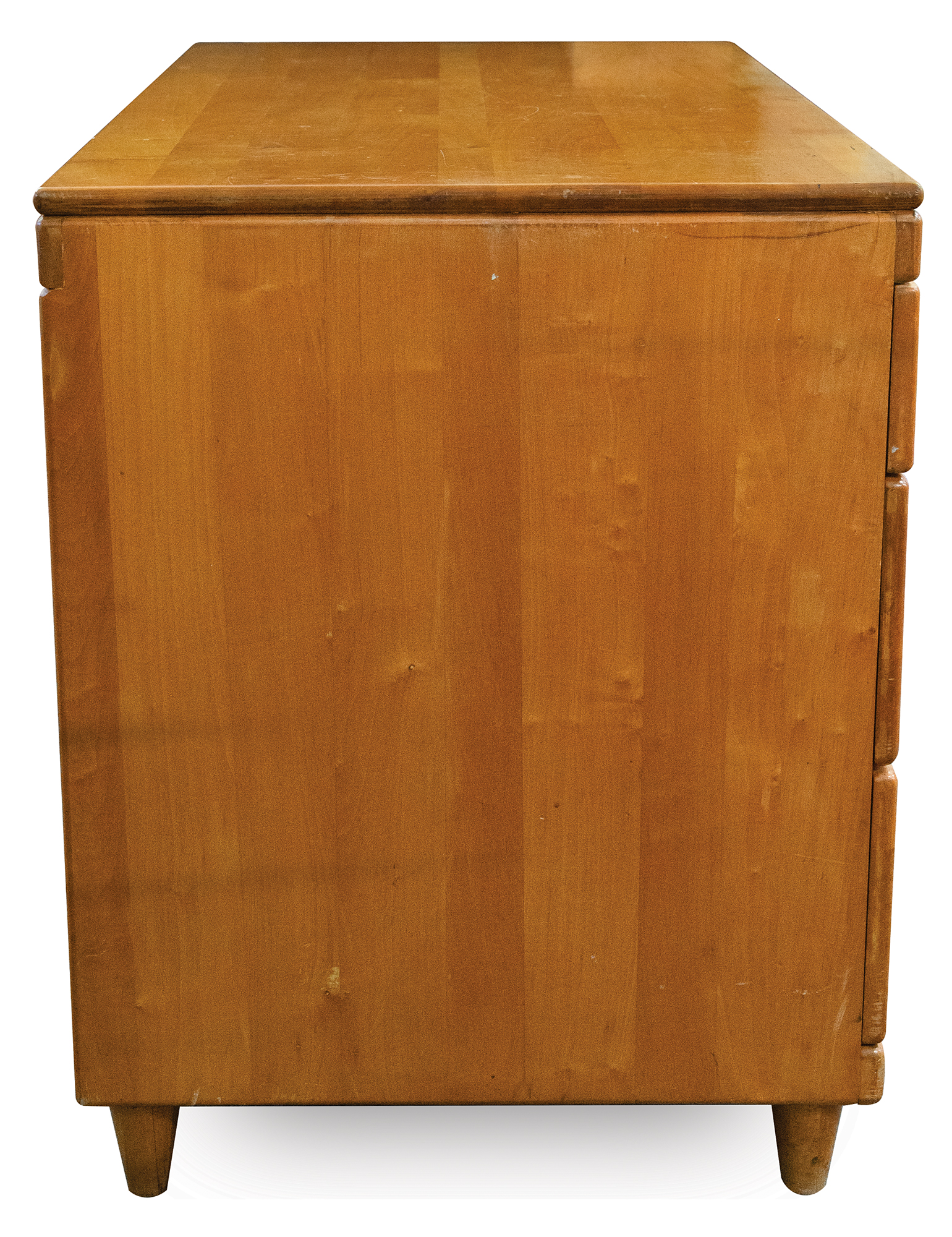
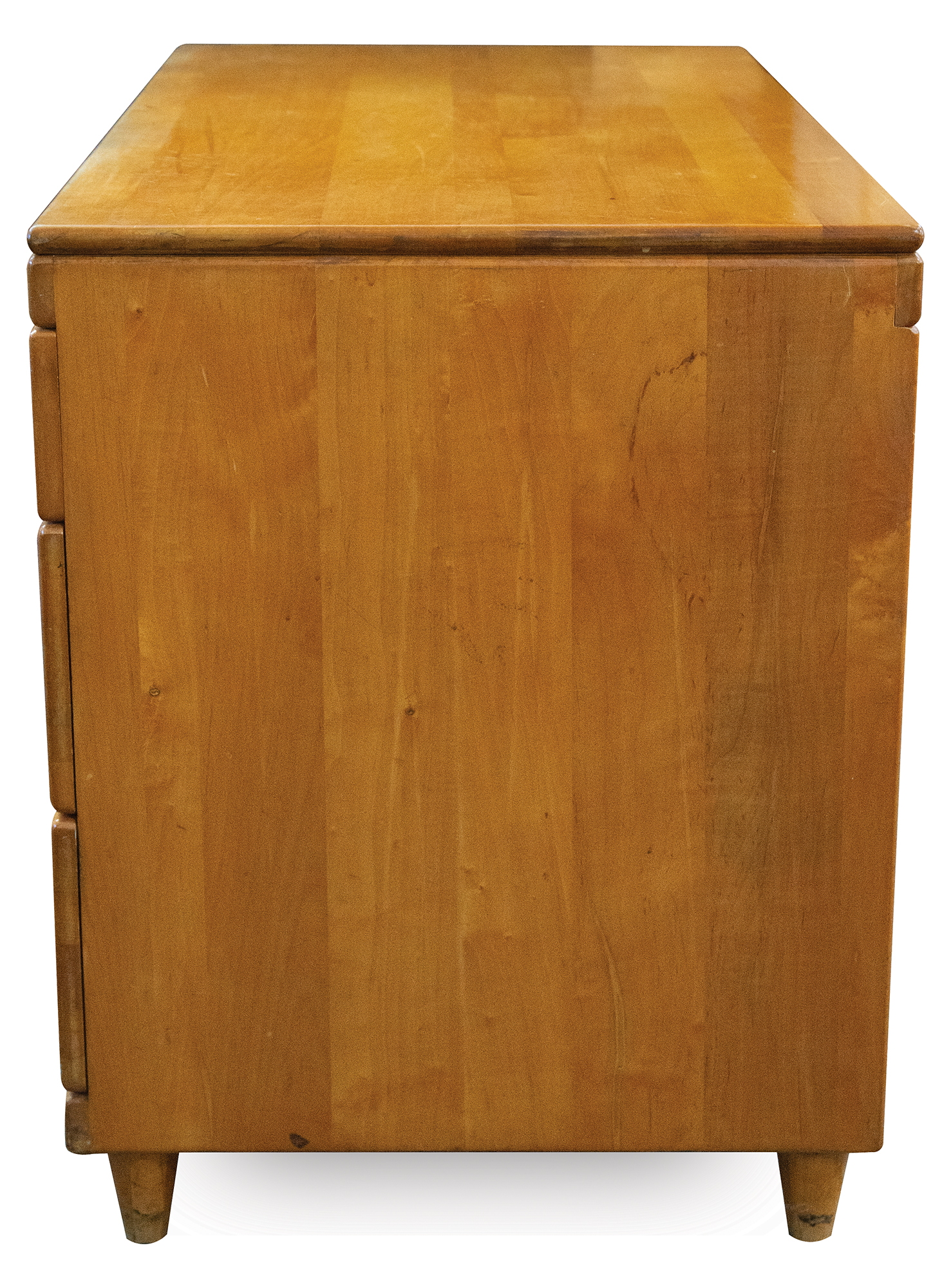
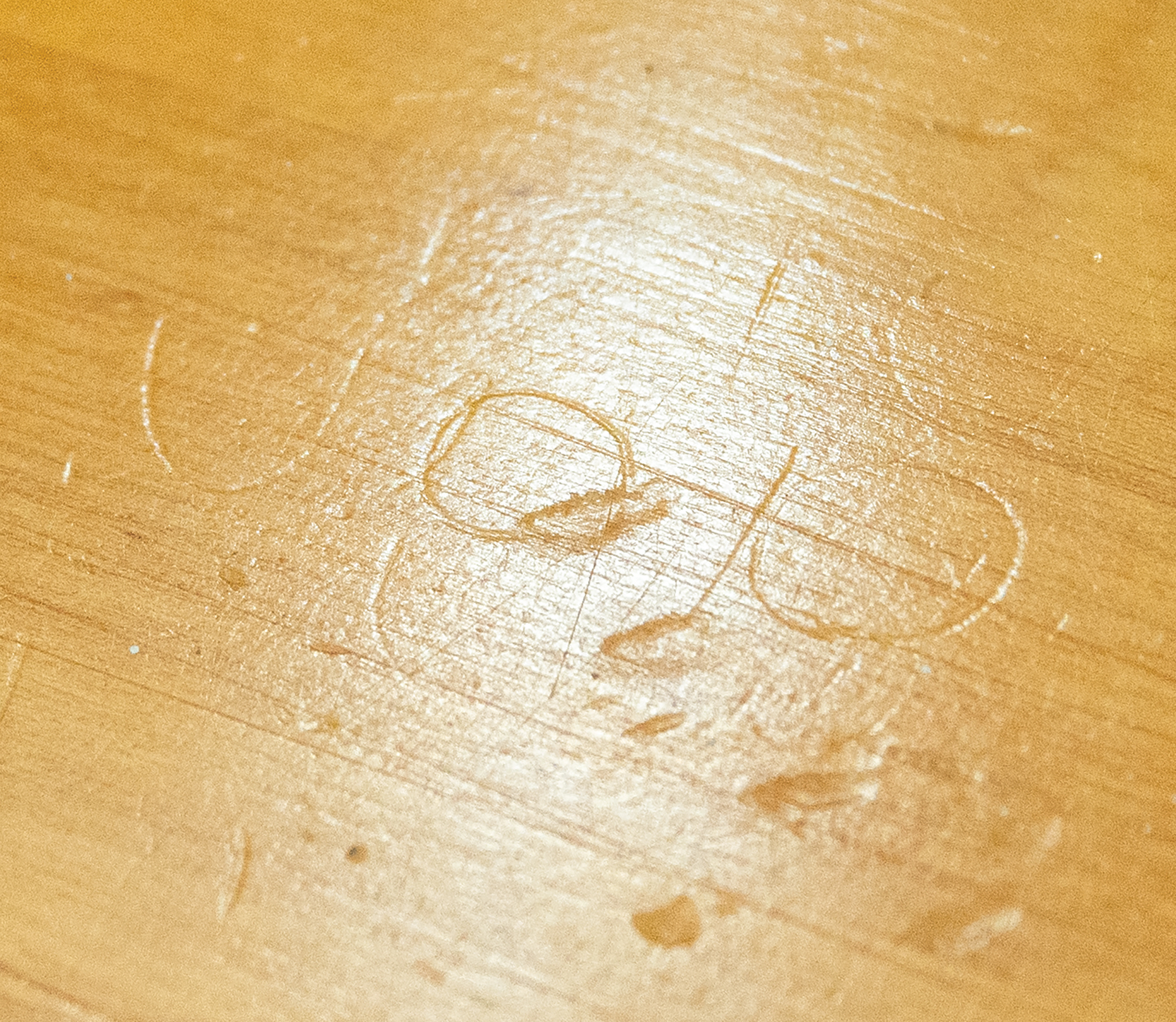
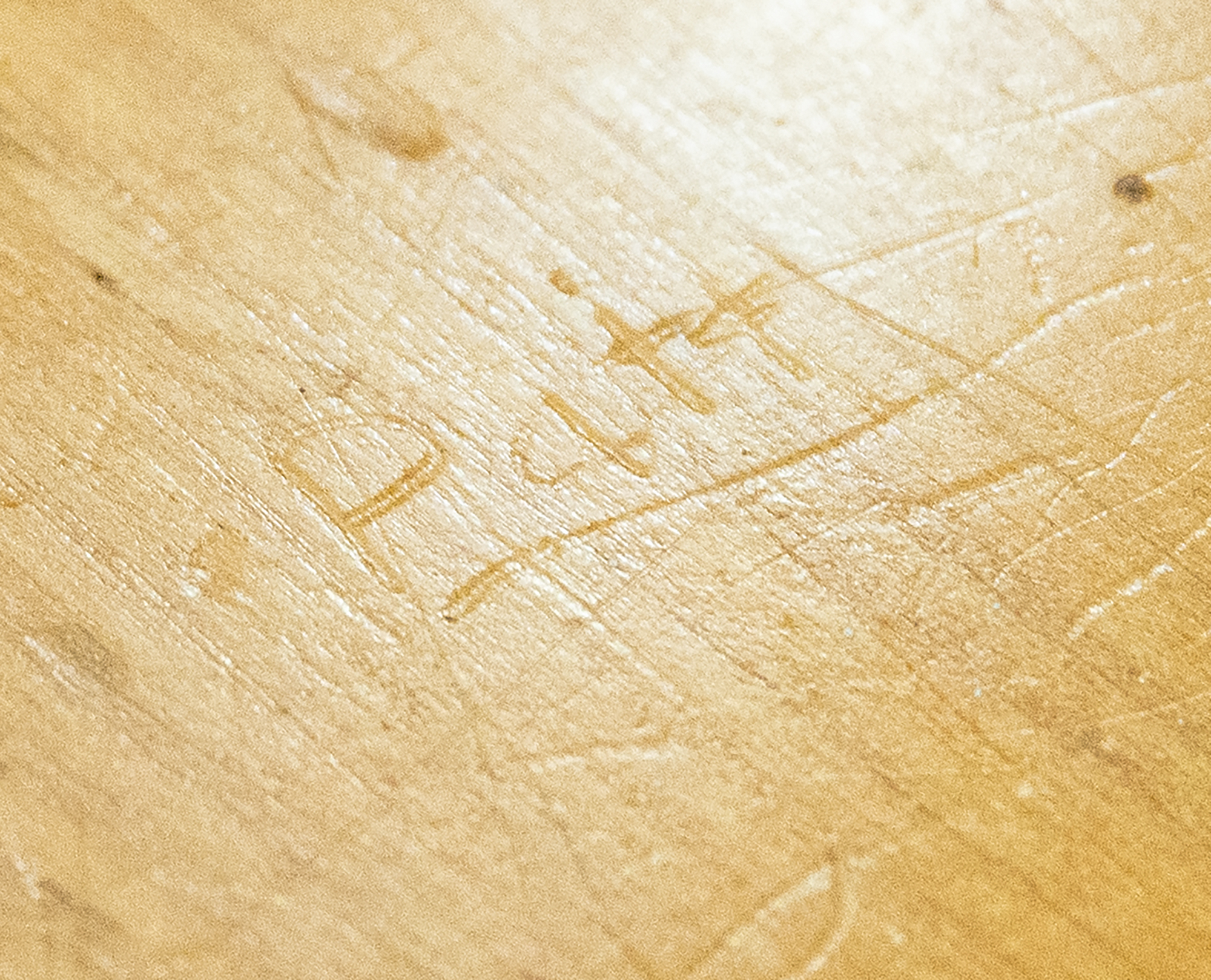
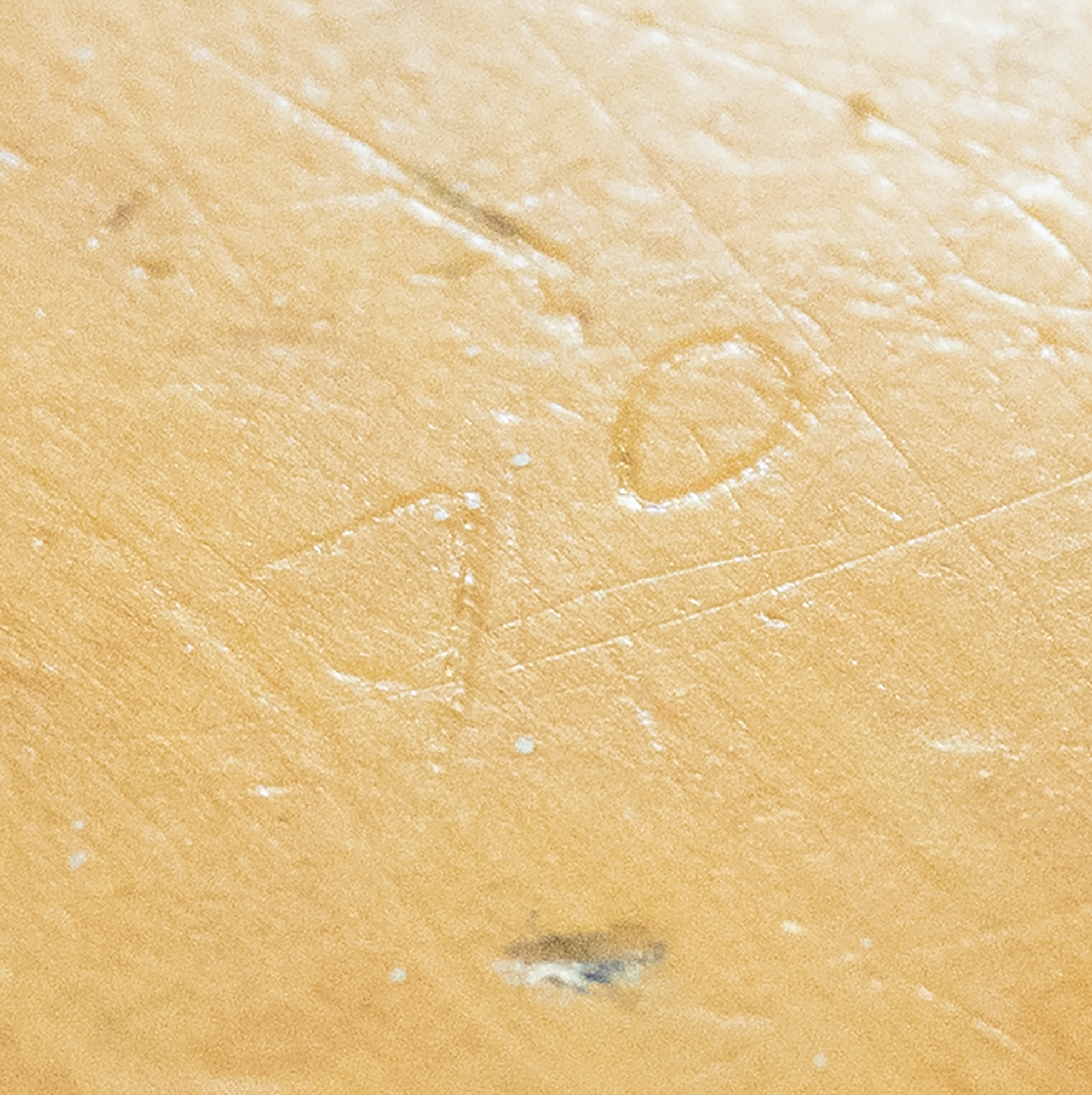
The desk itself is a mid-century modern design featuring clean lines, integrated recessed drawer pulls, and sturdy tapered legs. Its symmetrical double-pedestal construction offers six spacious drawers, all in a matching light honey finish that highlights the natural wood grain. The desktop exhibits signs of age, wear, and youthful impulse within the Jobs household, with a few carvings incised into the wood—one being the name of his sister, Patricia.
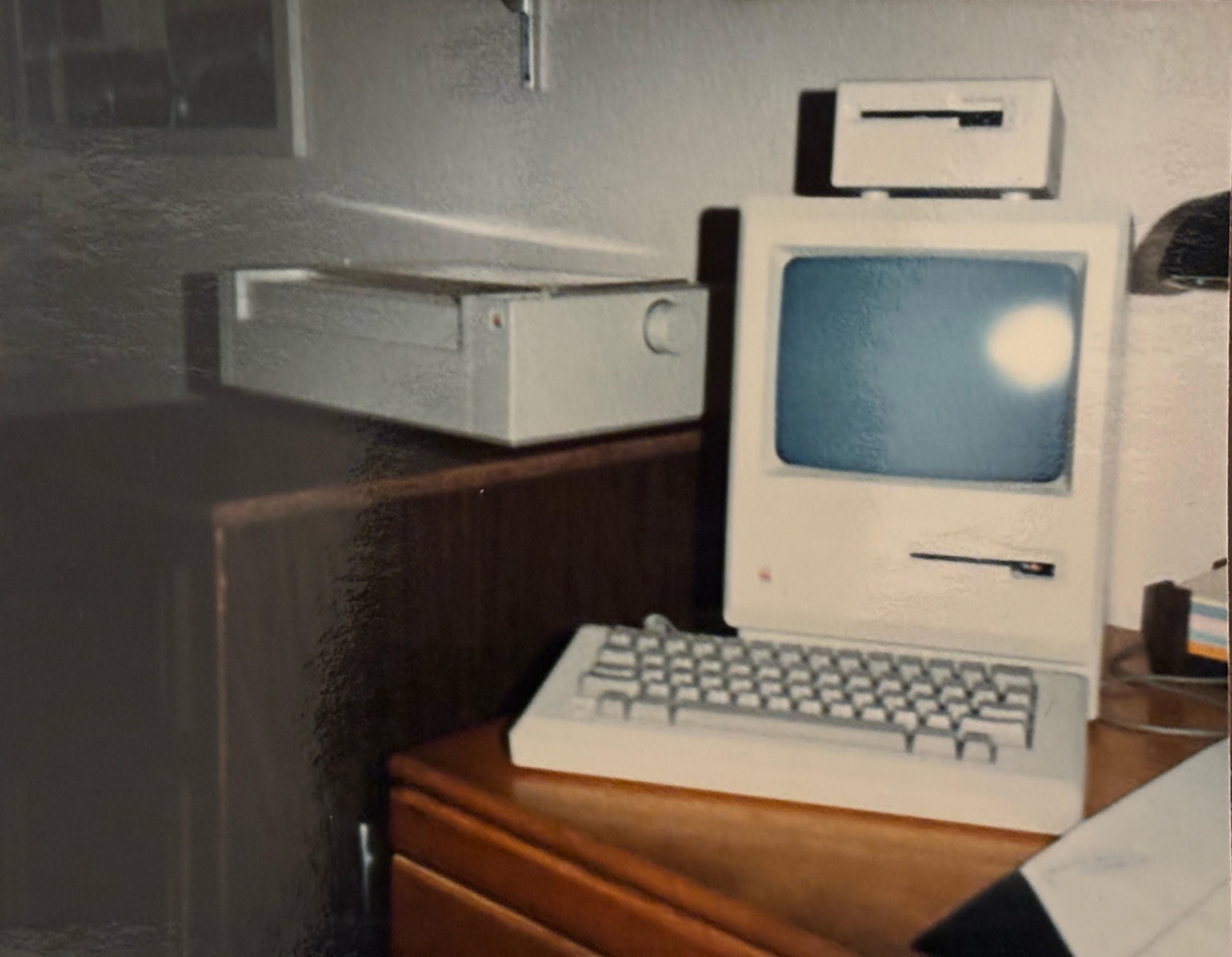
This desk comes from the personal collection of John Chovanec, the stepbrother of Steve Jobs. One afternoon at the Jobs family’s Los Altos home, famed as the site of the ‘Apple Garage,’ Steve led John into his childhood bedroom, walked over to this desk, and powered up the Macintosh he had given to his father, Paul R. Jobs. For 45 minutes, Steve walked through the computer’s capabilities and explained challenges they faced during development. John recalls thinking, “How am I privately sitting with Steve Jobs in his childhood bedroom, demonstrating the Mac on his childhood desk… To me this was like sitting down with Willie Mays or Joe Montana in the house they grew up in.”
When Paul Jobs passed away in 1993, Steve served as executor of the estate. John remembers: “Paul had given my mom a life estate to live at the Apple house… After Paul’s funeral we were in the dining room when my mom told Steve she felt funny living there… Steve took charge and explained that his dad wanted this for her and I quote: ‘You need to live here until you drop.’”
In the aftermath, Steve Jobs visited the Apple house several times to help organize and dispose of his father’s belongings. Steve’s childhood bedroom still contained the desk on which he had studied and dreamed throughout his youth, filled with papers from his teenage years and early twenties. Though John and his mother encouraged Steve to keep the desk and its contents, Steve declined, explaining that although the desk held “a lot of memories,” he had no use for it. When John asked if he could have it, Steve Jobs told his stepbrother, “Take it.”
Provenance: from the personal collection of John Chovanec, stepbrother of Steve Jobs.

