Sold For $4,234
*Includes Buyers Premium
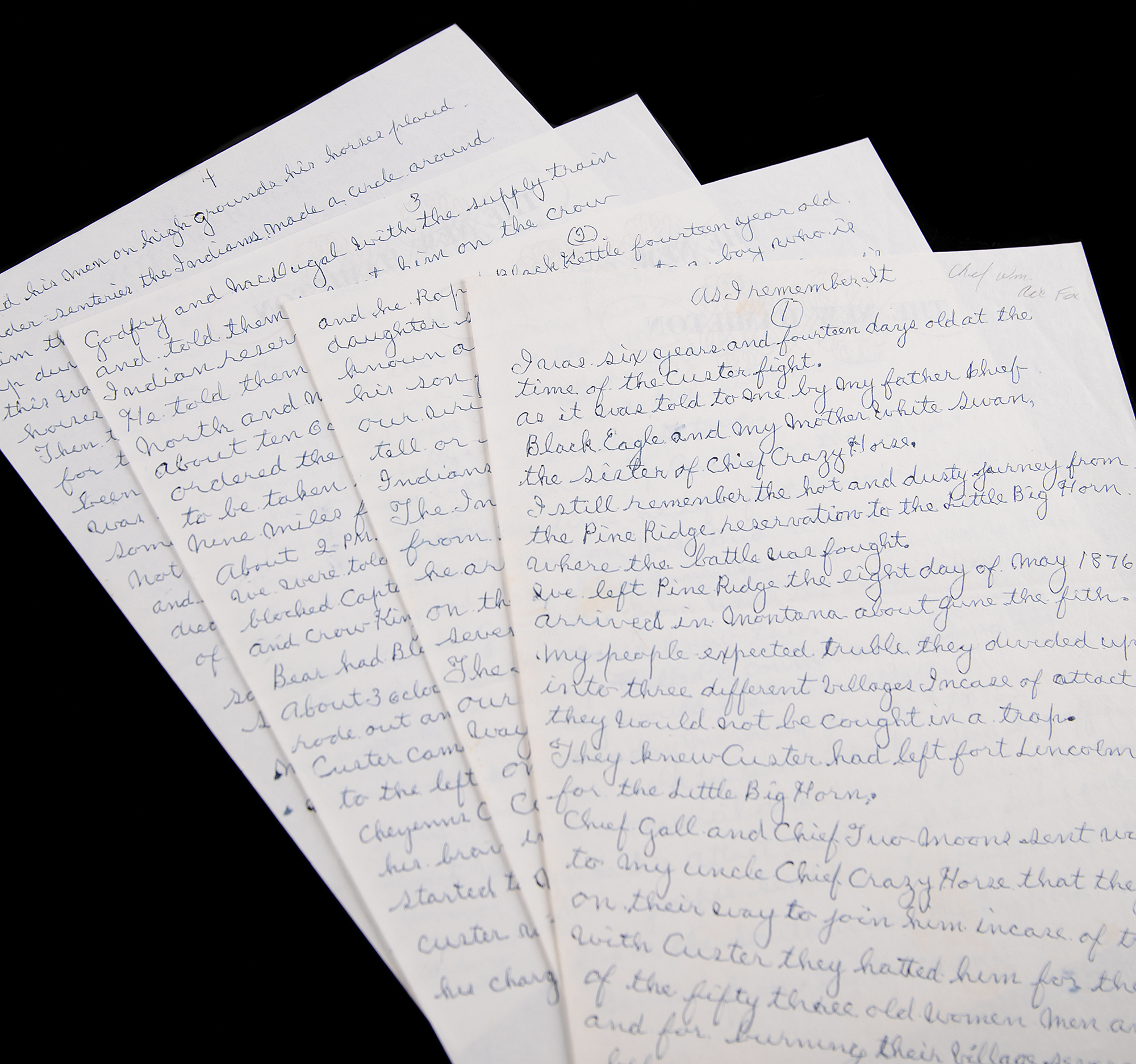
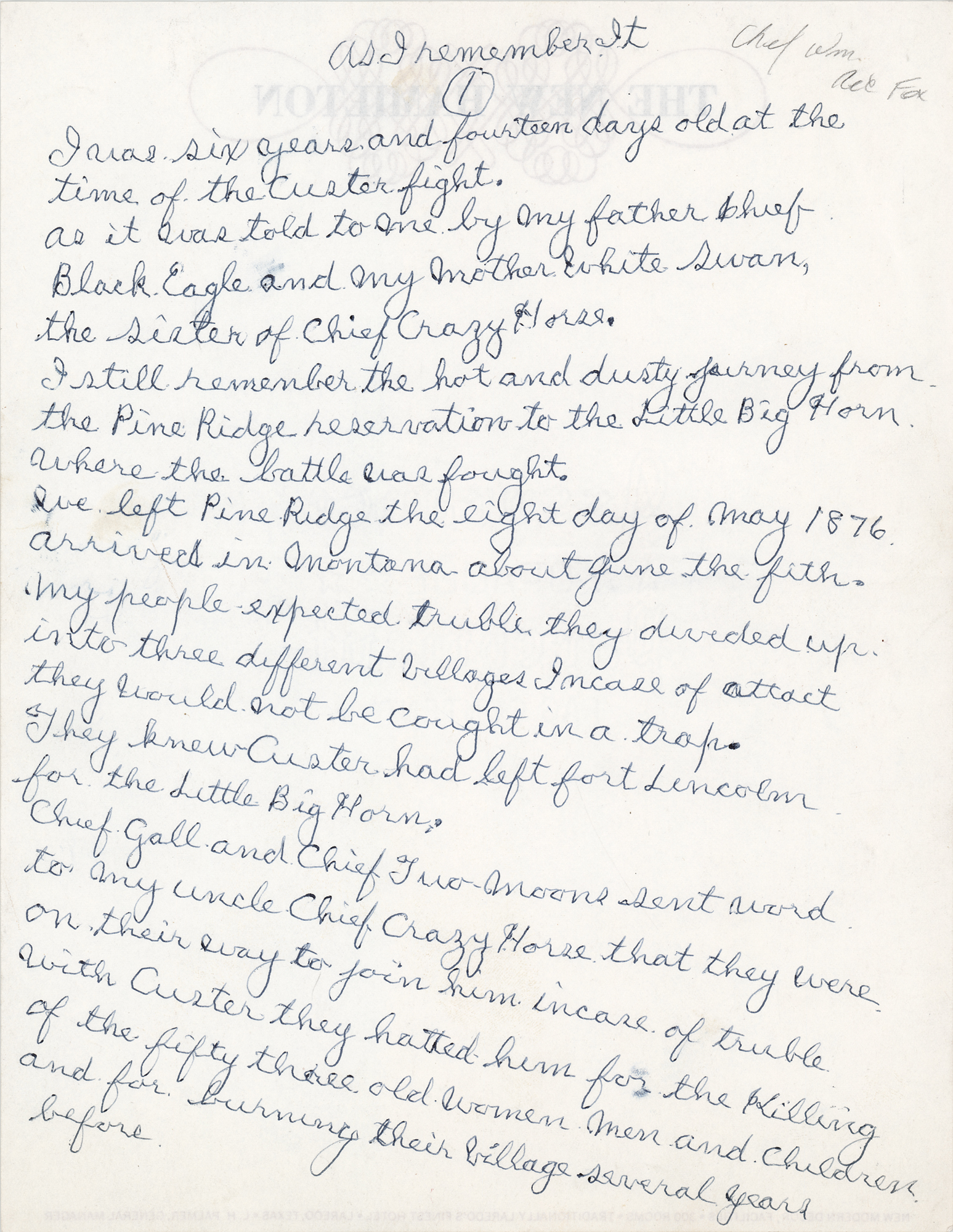
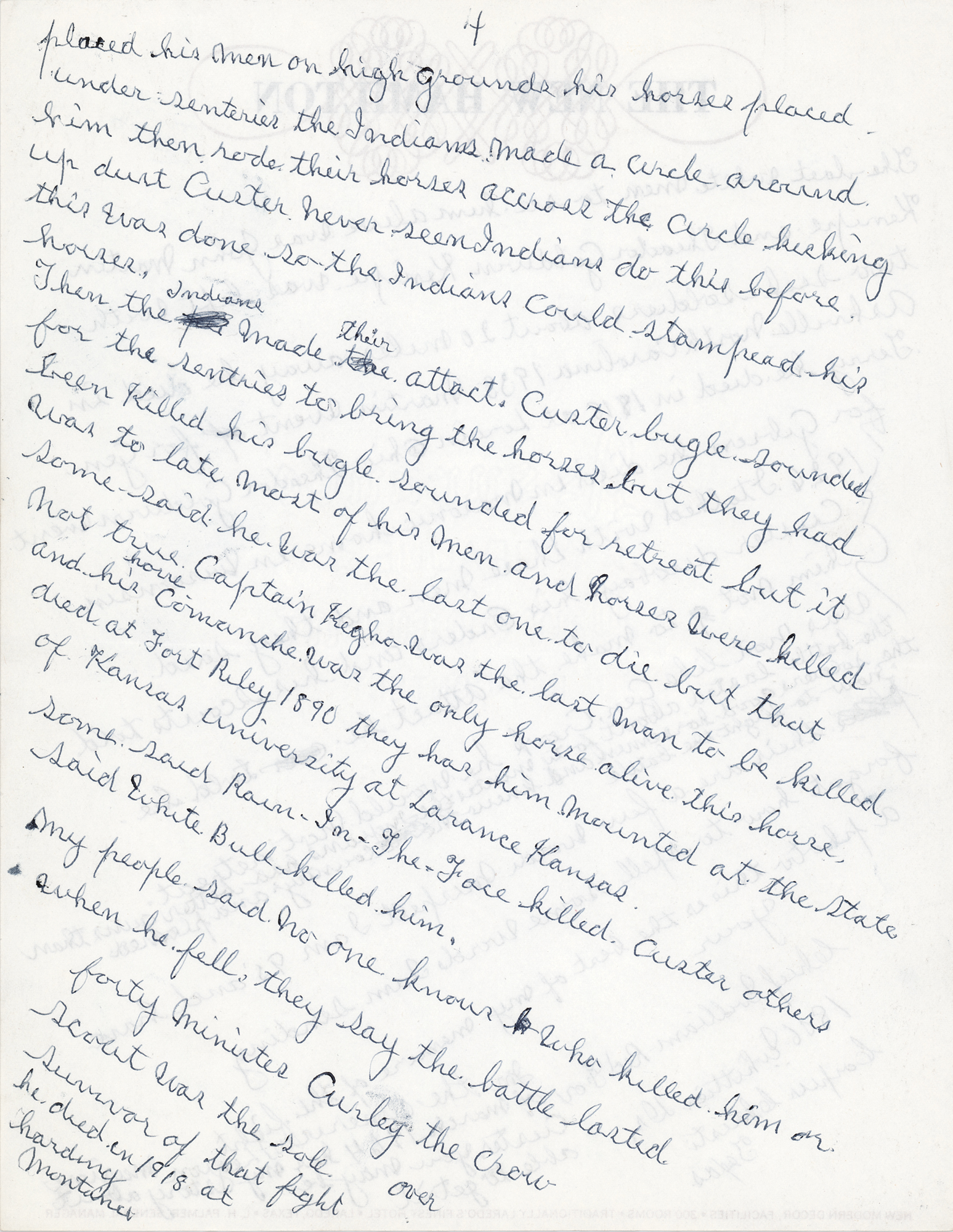
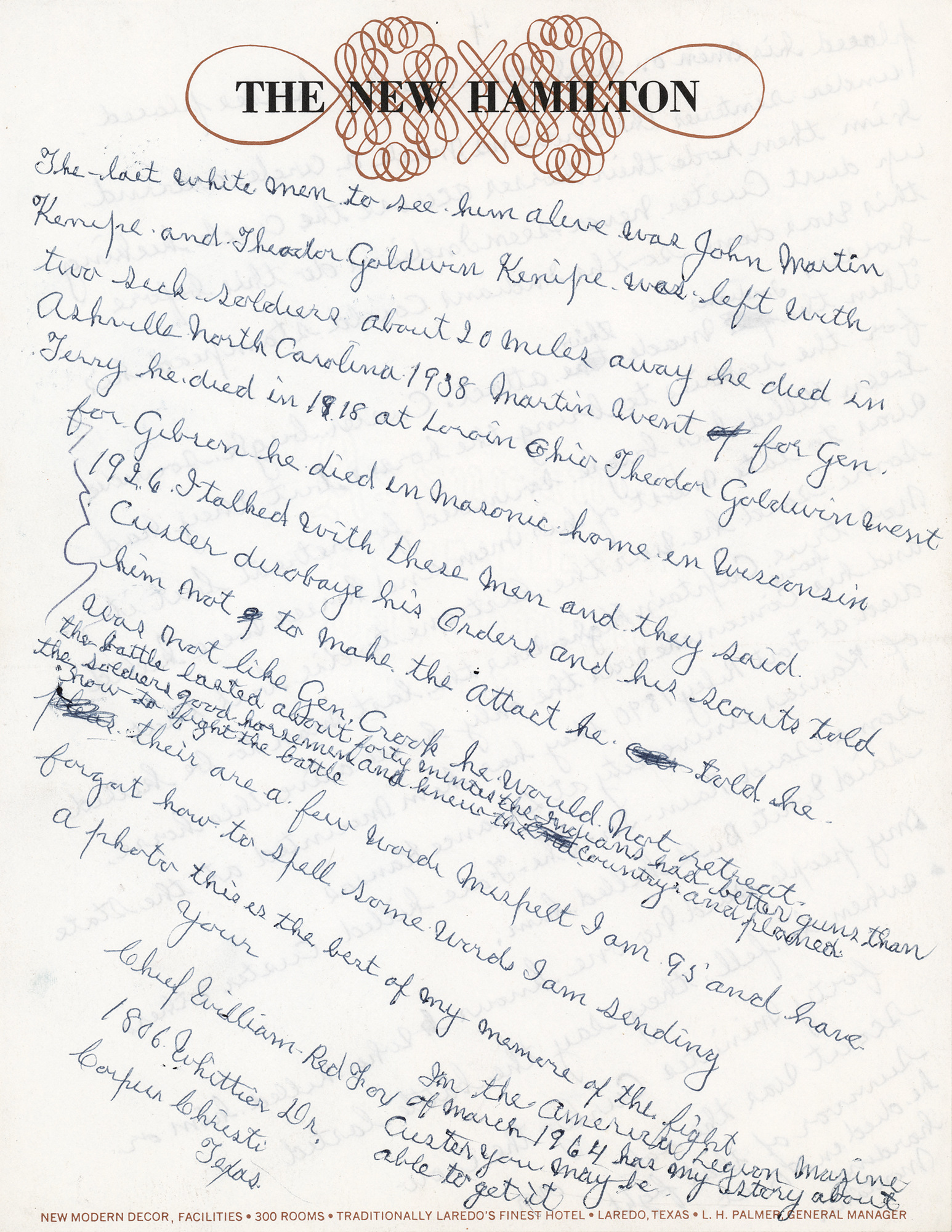
Oglala Lakota Sioux performer, actor, and Sioux Indian rights advocate (1870–1976). AMS signed "Chief William Red Fox," five pages on four sheets, The New Hamilton letterhead, 8.5 x 11, no date but circa 1960s–70s. Significant handwritten account of Custer's Last Stand by Chief William Red Fox, entitled "As I Remember It." In part: "I was six years and fourteen days old at the time of the Custer fight. As it was told to me by my father Chief Black Eagle and my mother White Swan, the sister of Chief Crazy Horse. I still remember the hot and dusty journey from the Pine Ridge Reservation to the Little Big Horn where the battle was fought. We left Pine Ridge the eight day of May 1876. Arrived in Montana about June the fifth.
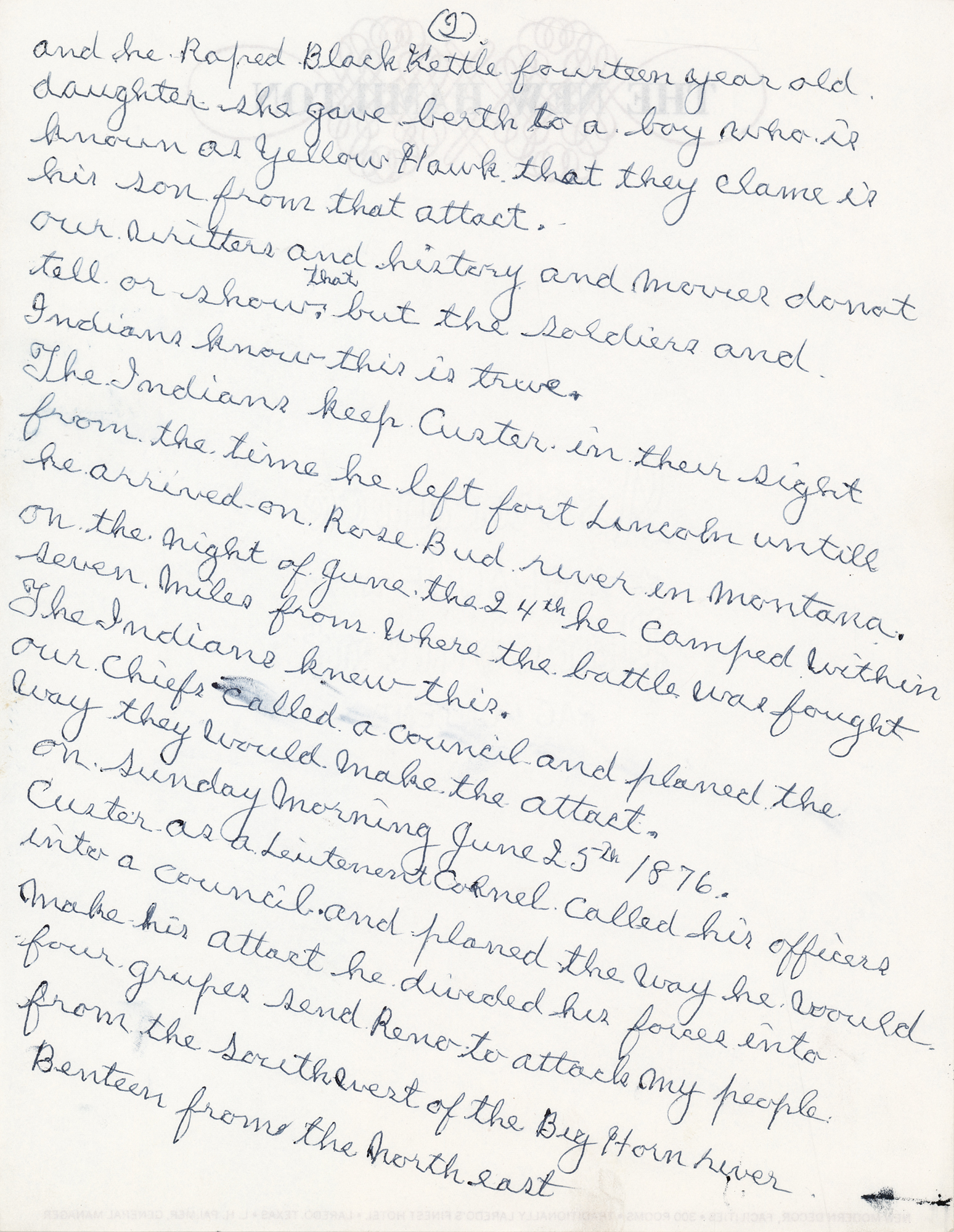
My people expected truble they divided up into three different villages. In case of attact they would not be caught in a trap. They knew Custer had left fort Lincoln for the Little Big Horn. Chief Gall and Chief Two-Moons sent word to my uncle Chief Crazy Horse that they were on their way to join him in case of truble with Custer they hatted him for the killing of the fifty three old women men and children and for burning their village several years before [referring to the battle of Washita River, Nov. 27, 1868] and he Raped Black Kettle fourteen year old daughter she gave berth to a boy who is known as Yellow Hawk that they claim is his son from that attact….
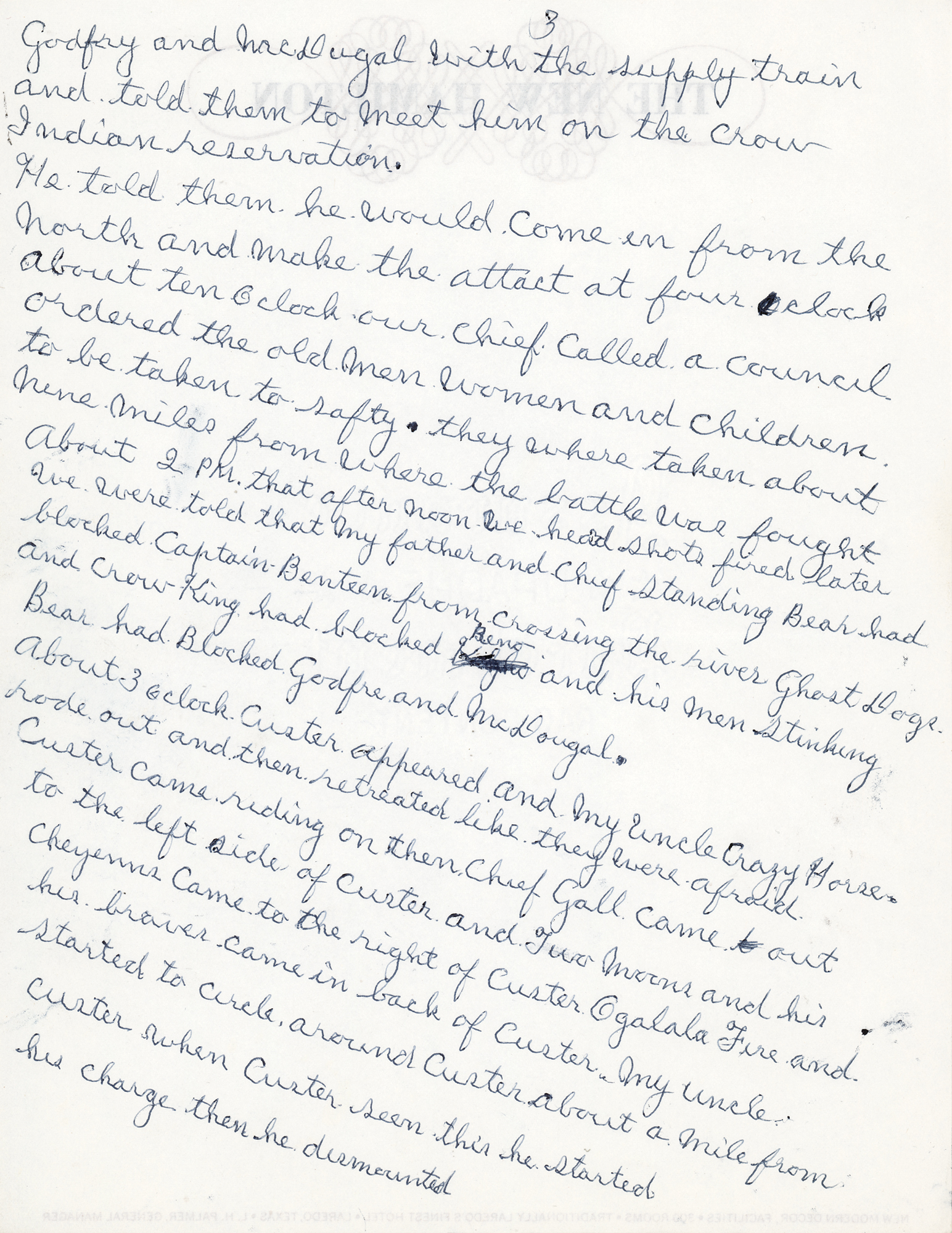
On Sunday morning June 25th 1876 Custer…divided his forces into four grupes send Reno to attack my people from the southwest of the Big Horn River. Benteen from the northeast. Godfry and McDugal with the supply train….He told them he would…make the attact at four oclock….About 2 PM…we heard shots fired later we were told that my father and Chief Standing Bear had blocked Captain Benteen from crossing the river. Ghost Dogs, and Crow King had blocked Reno and his men Stinking Bear had Blocked Godfre and McDougal.
About 3 oclock Custer appeared and my uncle Crazy Horse rode out and then retreated like they were afraid. Custer came riding on then. Chief Gall came out to the left side of Custer and Two Moons and his Cheyenns came to the right of Custer. When Custer seen this he started his charge then he dismounted, placed his men on high grounds his horses placed under senteries the Indians made a curcle around him then rode their horses accross the circle kicking up durt [to] stampead his horses. Then the Indians made their attact. Custer bugle sounded for the sentries to bring the horses but they had been killed his bugle sounded for retreat but…most of his men and horses were killed. some said he was the last one to die but that not true. Captain Kegho was the last man to be killed and his horse Comanche was the only horse alive….my people said no one knows who killed [Custer] or when he fell. they say the battle lasted forty minutes….the Indians had better guns than the soldiers good horsemen and knew the country and planed how to fight the battle."
Red Fox also reports that, years later, he spoke to the last white men to see Custer alive, John Martin Kenipe and Theadore Goldwin Kenipe, who had been left 20 miles away with some sick soldiers, and they told him that Custer had disobeyed orders and gone against the advice of his scouts, saying "he was not like Gen. Crook he would not retreat." Eight days earlier, on June 17, 1876, Crook had been forced to retreat when surprised by Crazy Horse and 500 warriors.
The Collection of Dr. Joseph Matheu.

