Sold For $4,038
*Includes Buyers Premium
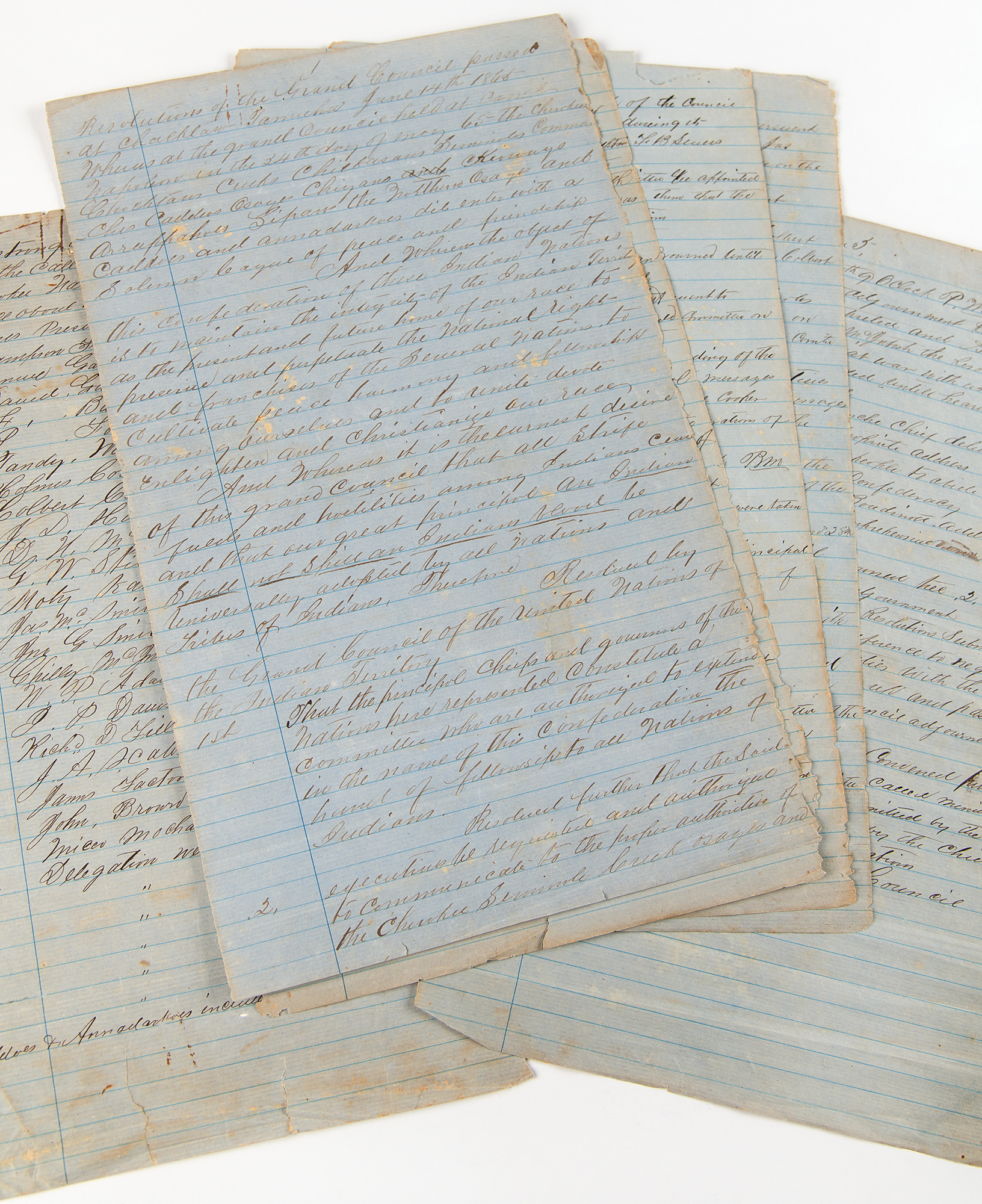
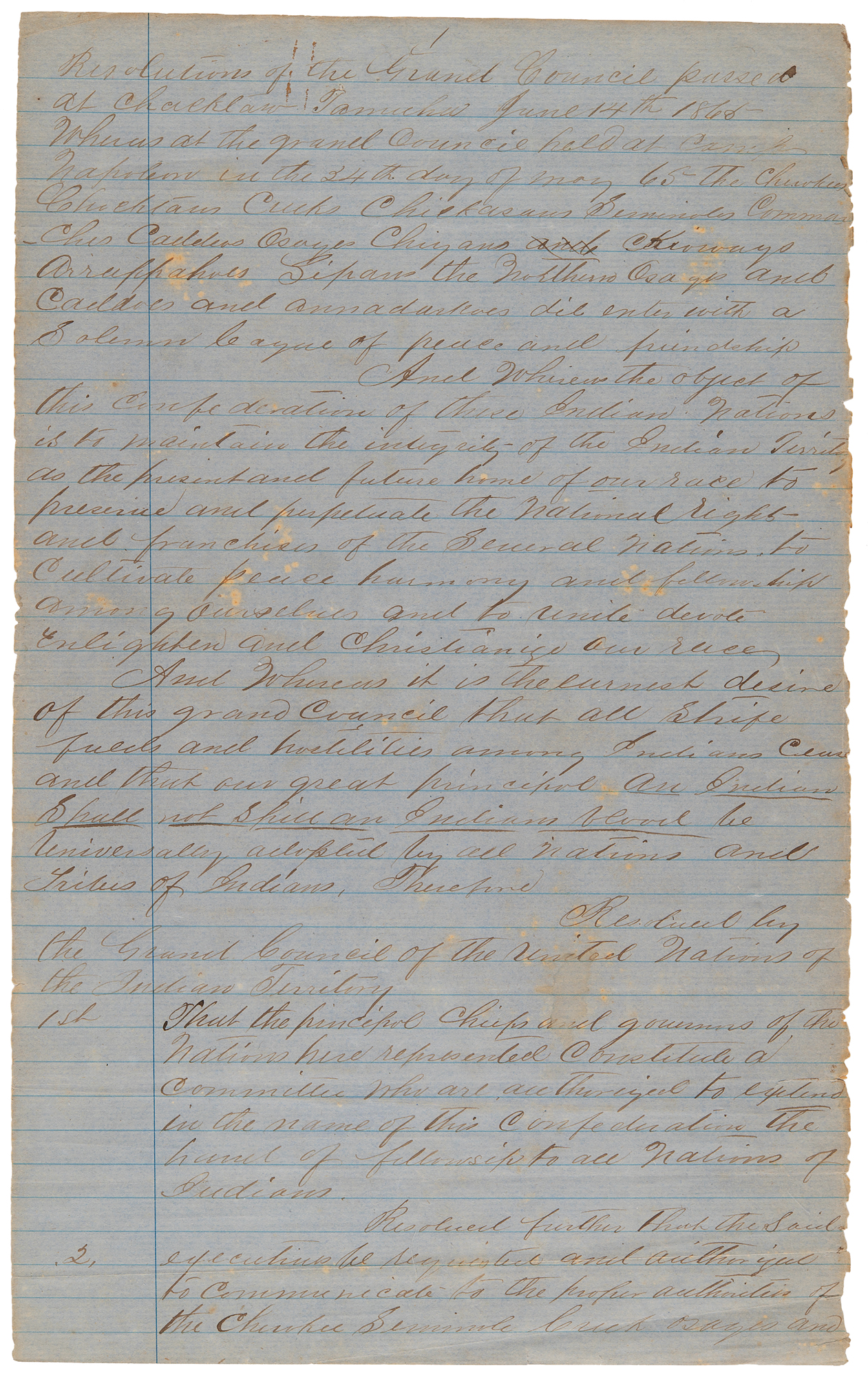
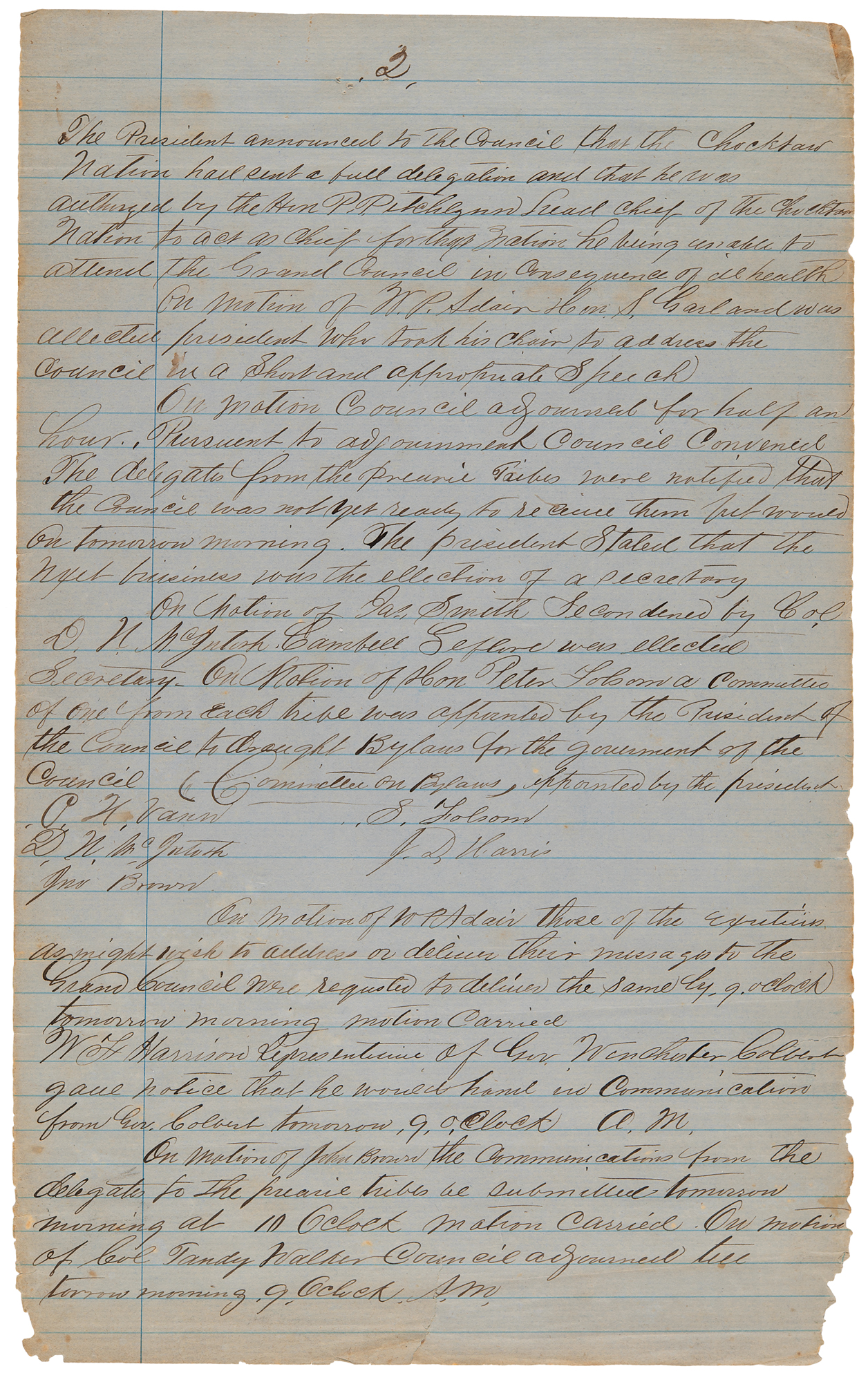
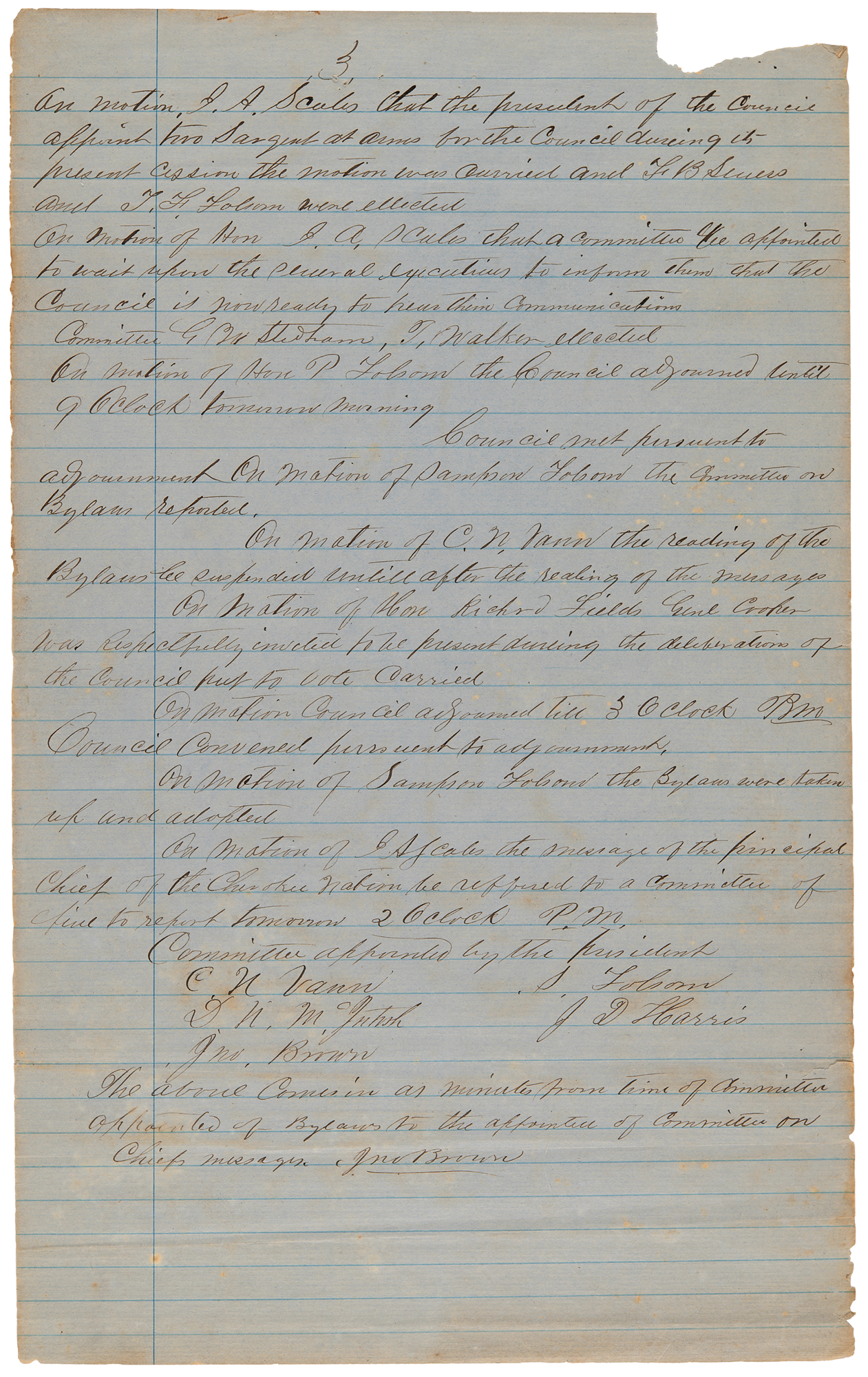
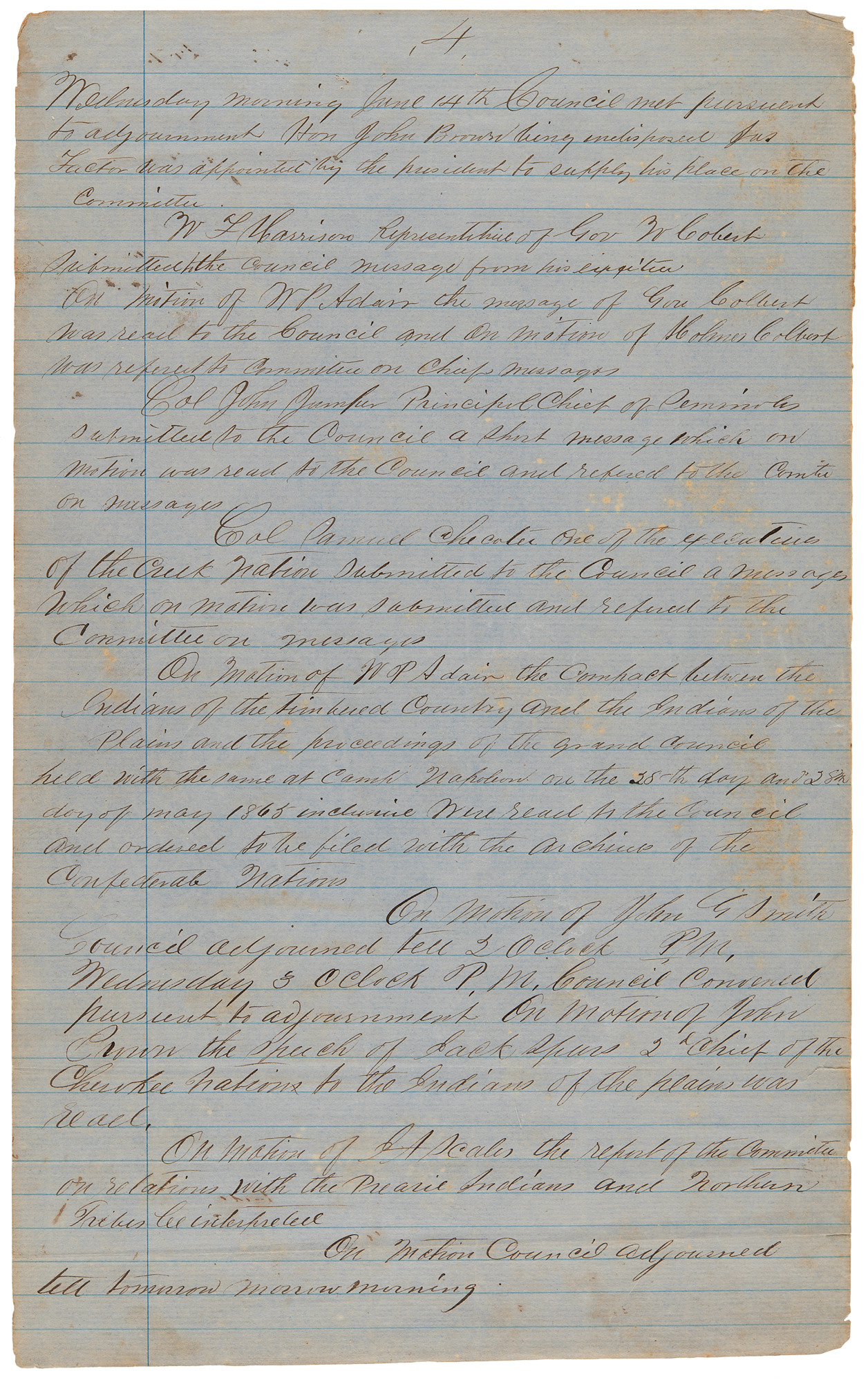
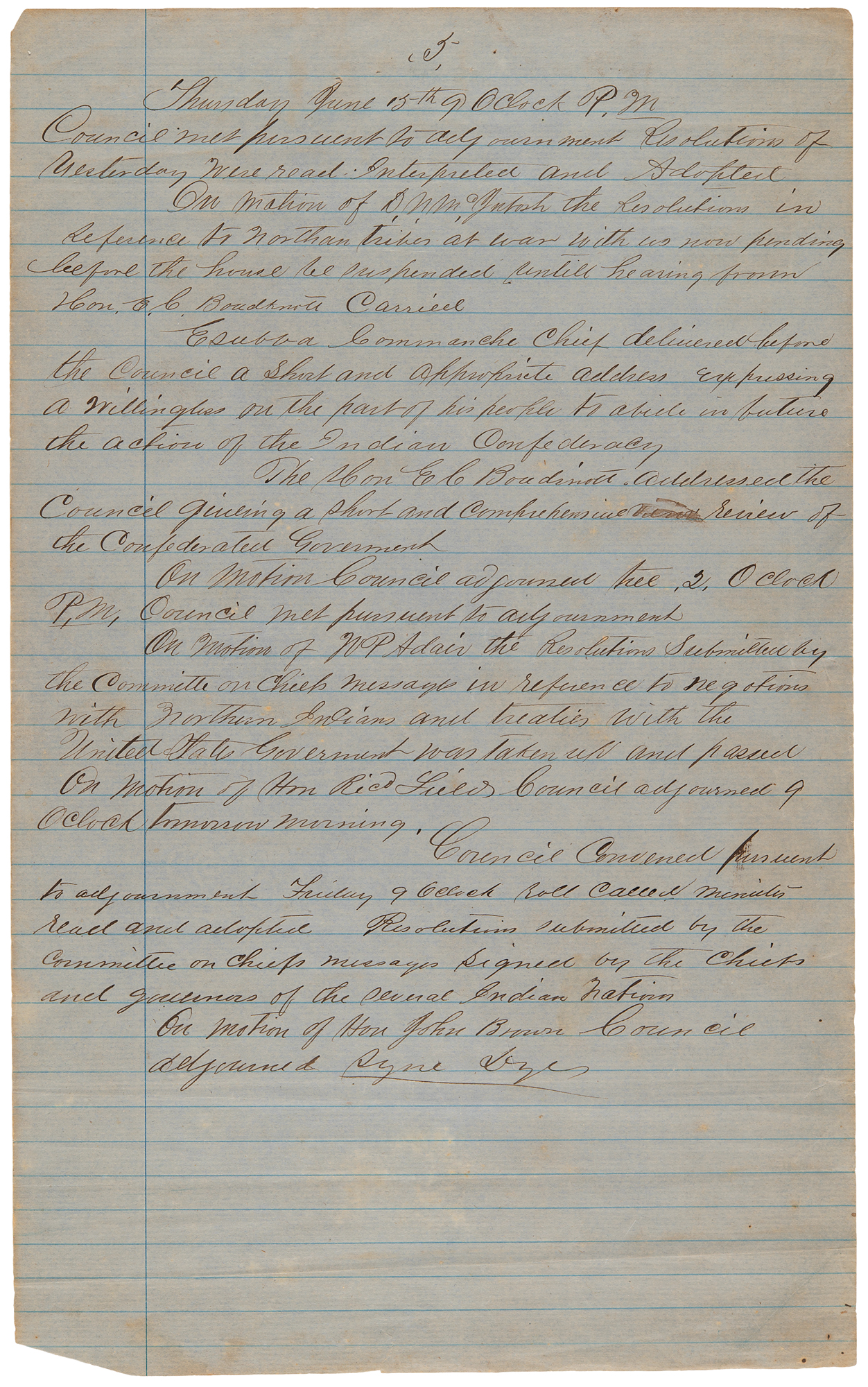
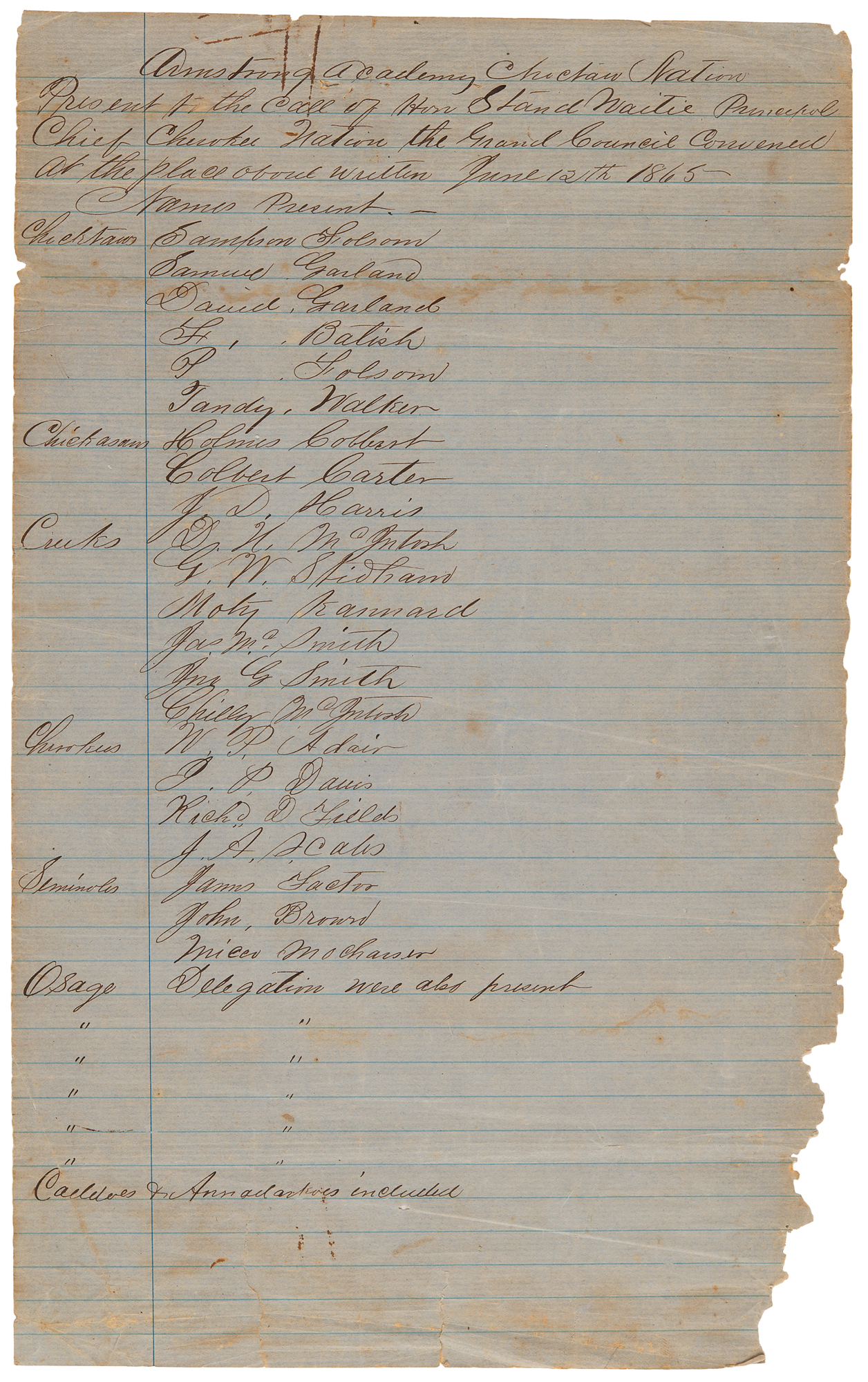
Manuscript resolutions and meeting minutes, six pages, 8 x 13, June 14, 1865. Six manuscript pages from the "Grand Council" convened at "Armstrong Academy, Choctaw Nation, Present to the call of Hon. Stand Watie, President," including one page of partial resolutions calling for the creation of a 'United Nations of the Indian Territories,' four pages of meeting minutes, and an attendance list.
The resolutions, in part: "The Cherokees, Chocktaws, Creeks, Chickasaws, Seminoles, Commanches, Caddoes, Osages, Chigans, Chioways, Arrappahoes, Sipans, the Northern Osages and Caddoes and Annadarkoes did enter with a solemn league of peace and friendship. And whereas the object of this confederation of these Indian Nations is to maintain the integrity of the Indian territory as the present and future home of our our race; to preserve and perpetuate the National Rights and Franchises of Several Nations; to cultivate peace, harmony, and fellowship ourselves; and to unite, devote, enlighten and christianize our race. And whereas it is the earnest desire of this Grand Council that all strifes, feuds, and hostilities among Indians cease, and that our great principal, 'An Indian Shall not Spill an Indians Blood,' be universally adopted by all nations and tribes of Indians. Therefore: Resolved by the general council of the United Nations of Indian Territories; That the principal chiefs and governors of the nations constitute a committee who are authorized to extend the hand of fellowship to all Nations of Indians. Resolved further that the said executives be requested and authorized to communicate to the proper authorities of the Cherokee, Seminole, and…"
In very good to fine condition, with scattered light stains, and some minor edge wear.
Brig. Gen. Stand Watie, who presided over this 'Grand Council,' was born December 12, 1806, near what is now Rome, Georgia, the son of a full-blood Cherokee father and a half-blood Cherokee mother. At 12 years of age, he was sent to a mission school where he learned to speak English and received a fair education. He returned home to become a farmer but also became involved in Indian politics. At the outbreak of the Civil War the Cherokee sought to remain neutral, but eventually made a treaty of alliance with the Confederacy. Watie raised the first Cherokee regiment of volunteers, which was named the 'Cherokee Mounted Rifles,' and was made its colonel by the Confederate government. In May 1864, he was promoted to the rank of brigadier general. During the war he was an active raider and cavalry leader, and took part in many engagements in Indian Territory. He was one of the last Confederate officers to surrender, not giving up his sword until June 23, 1865, following the 'Camp Napoleon Council'—a meeting of Native American tribes that resulted in an intertribal compact designed to bring peace among tribes. At Armstrong Academy, the Choctaws and Chickasaws joined in signing the agreement. After the war, Stand Watie was chosen Principal Chief by the southern wing of his tribe and went to Washington as a member of the Southern Delegation of the Cherokee. He died September 7, 1871.

