

Sold For $853
*Includes Buyers Premium
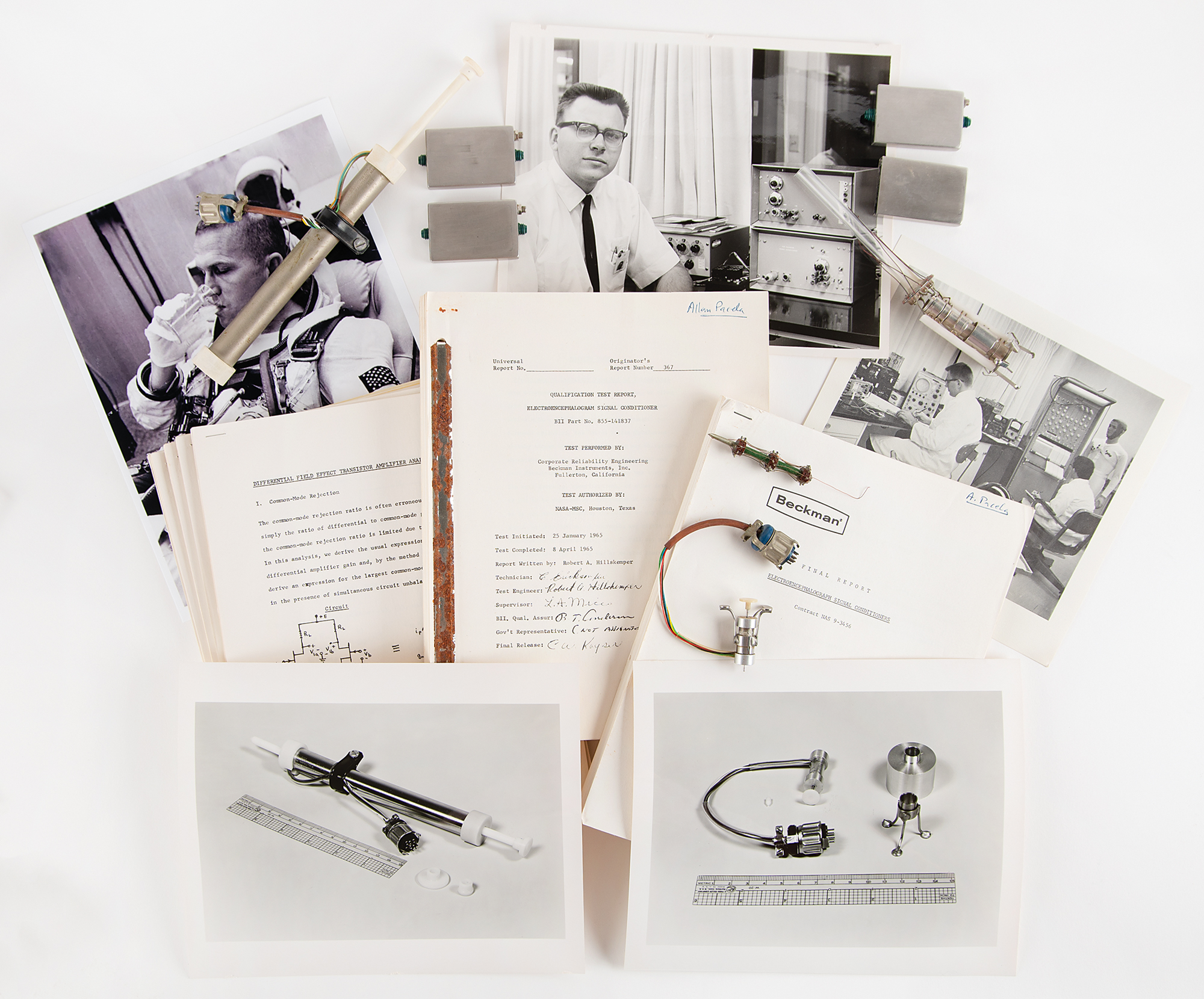
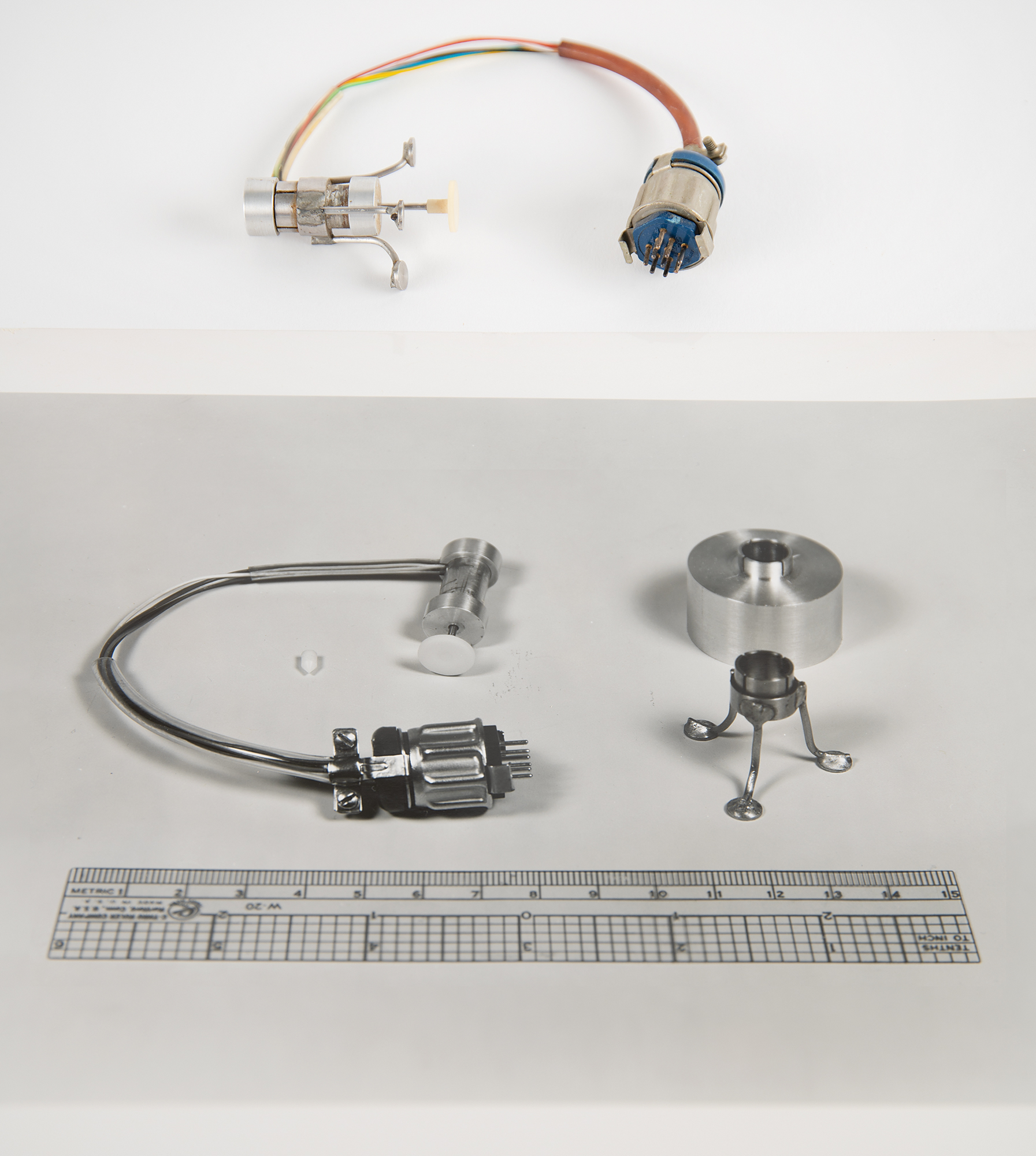
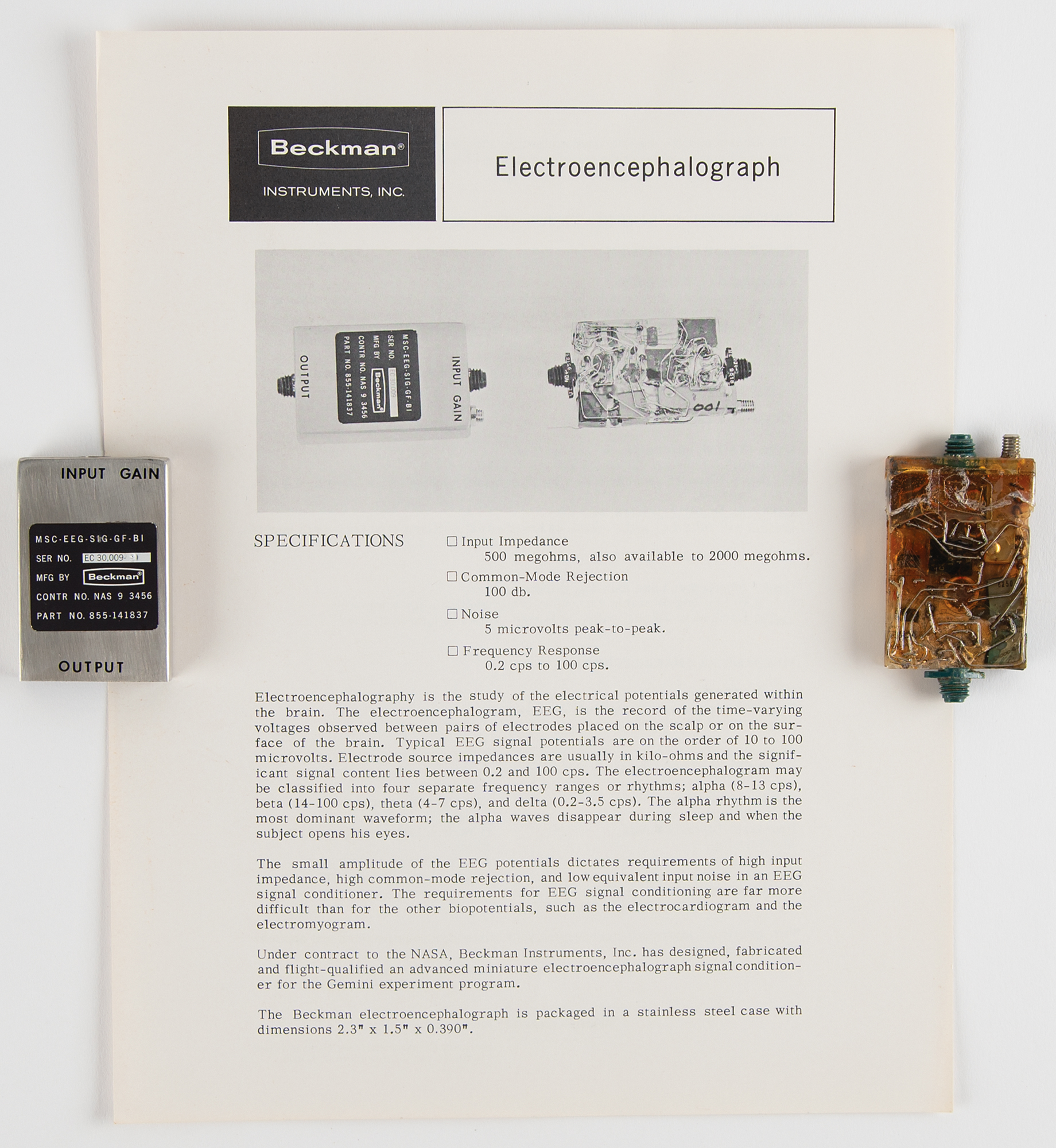
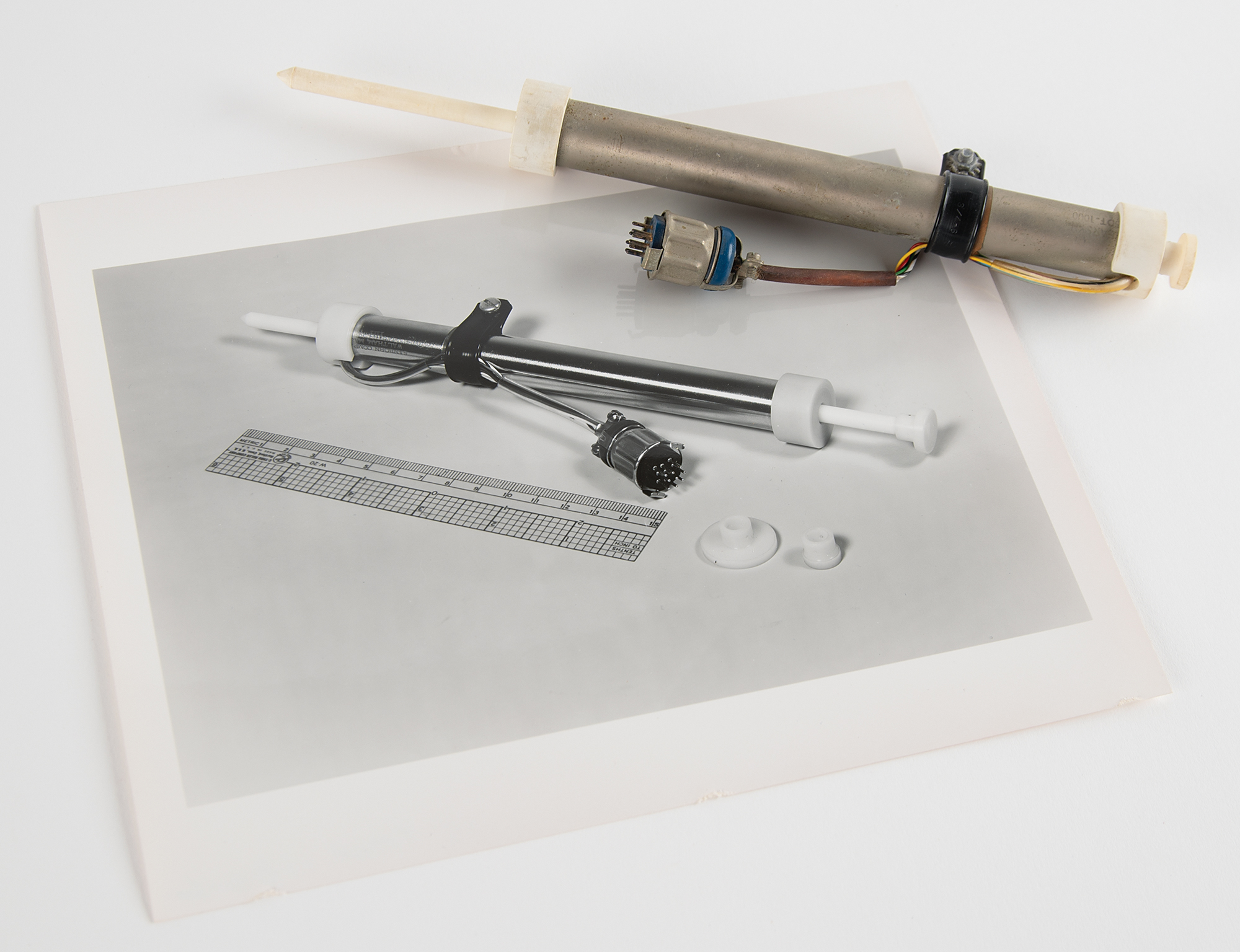
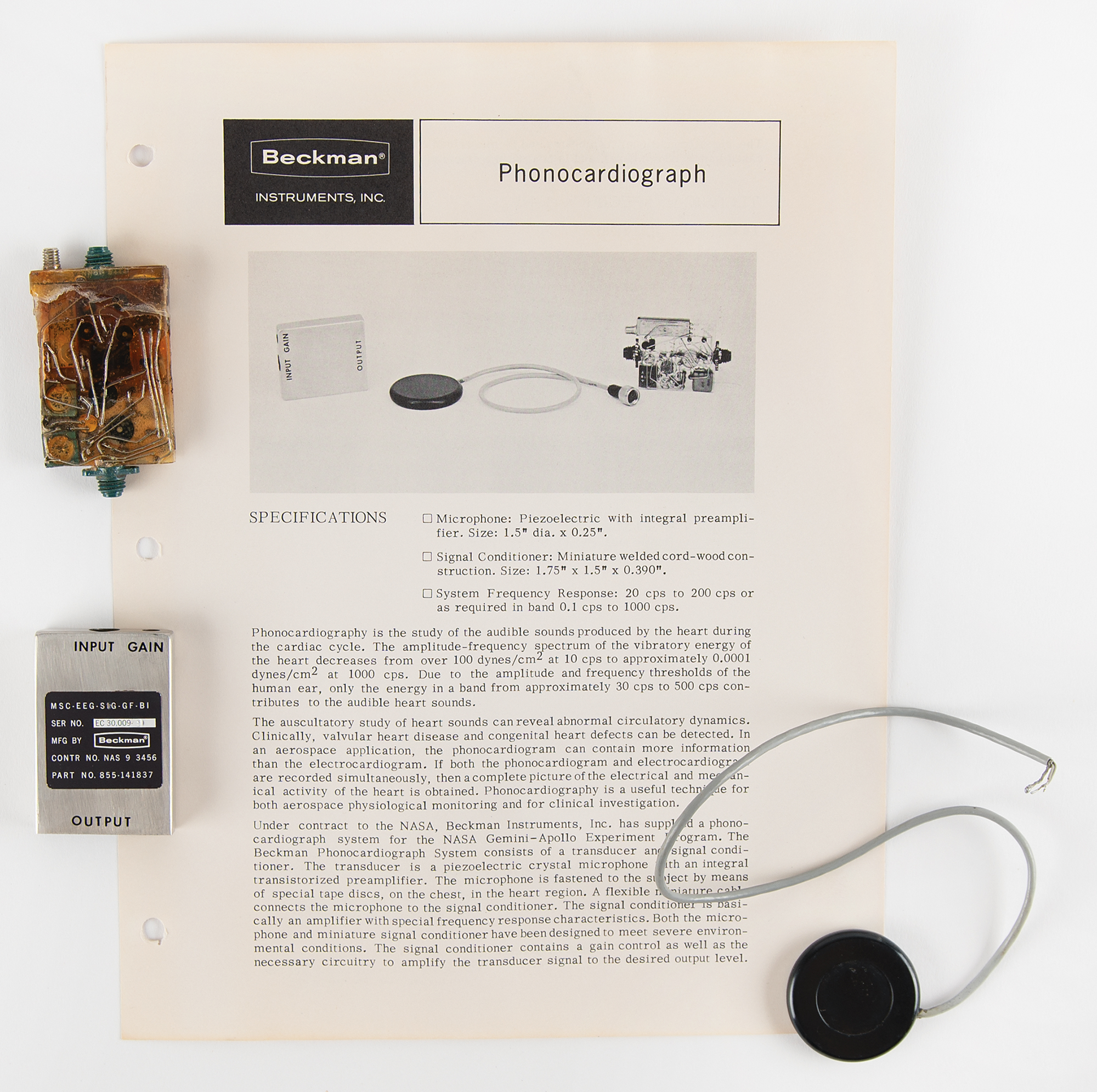
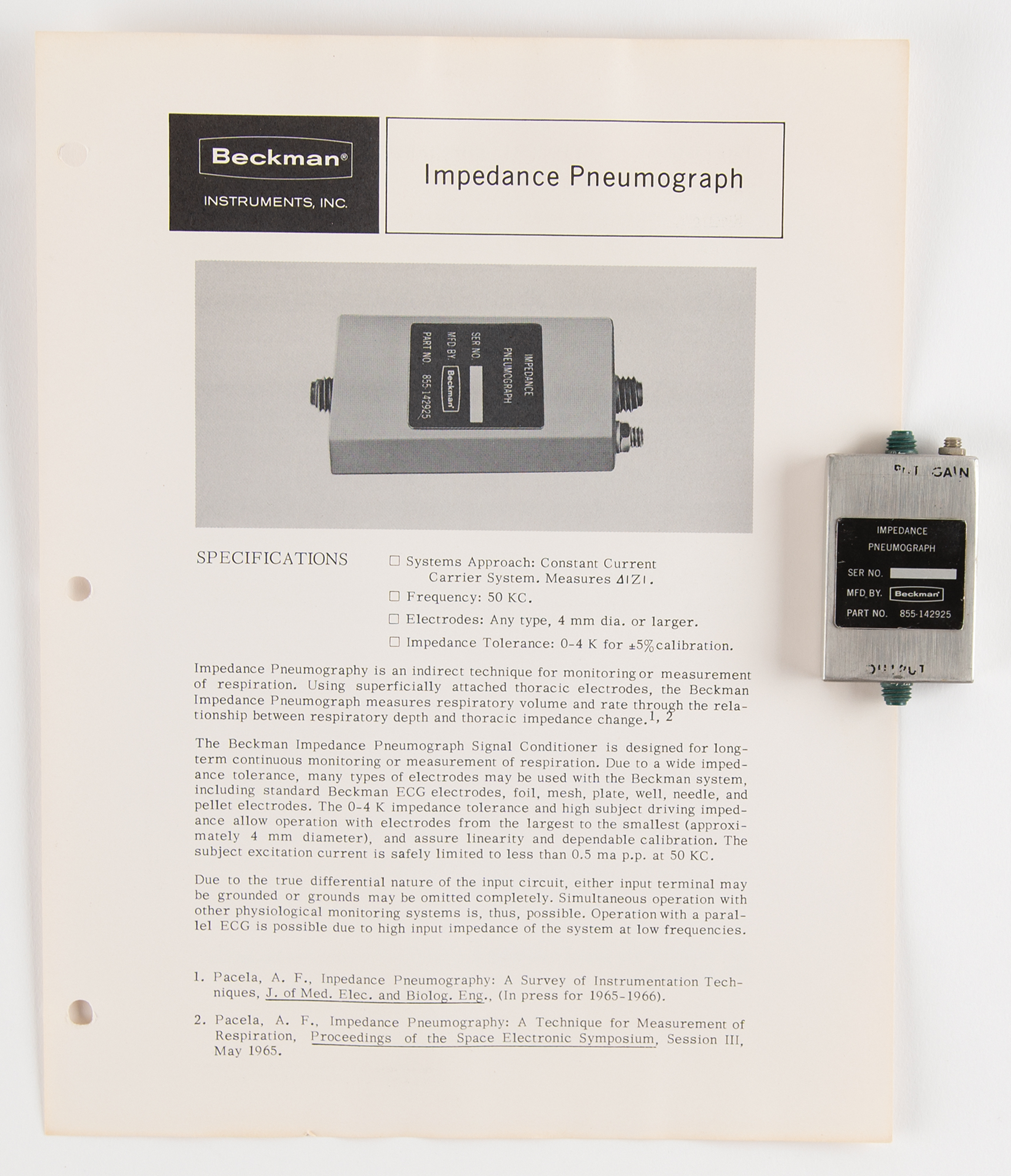
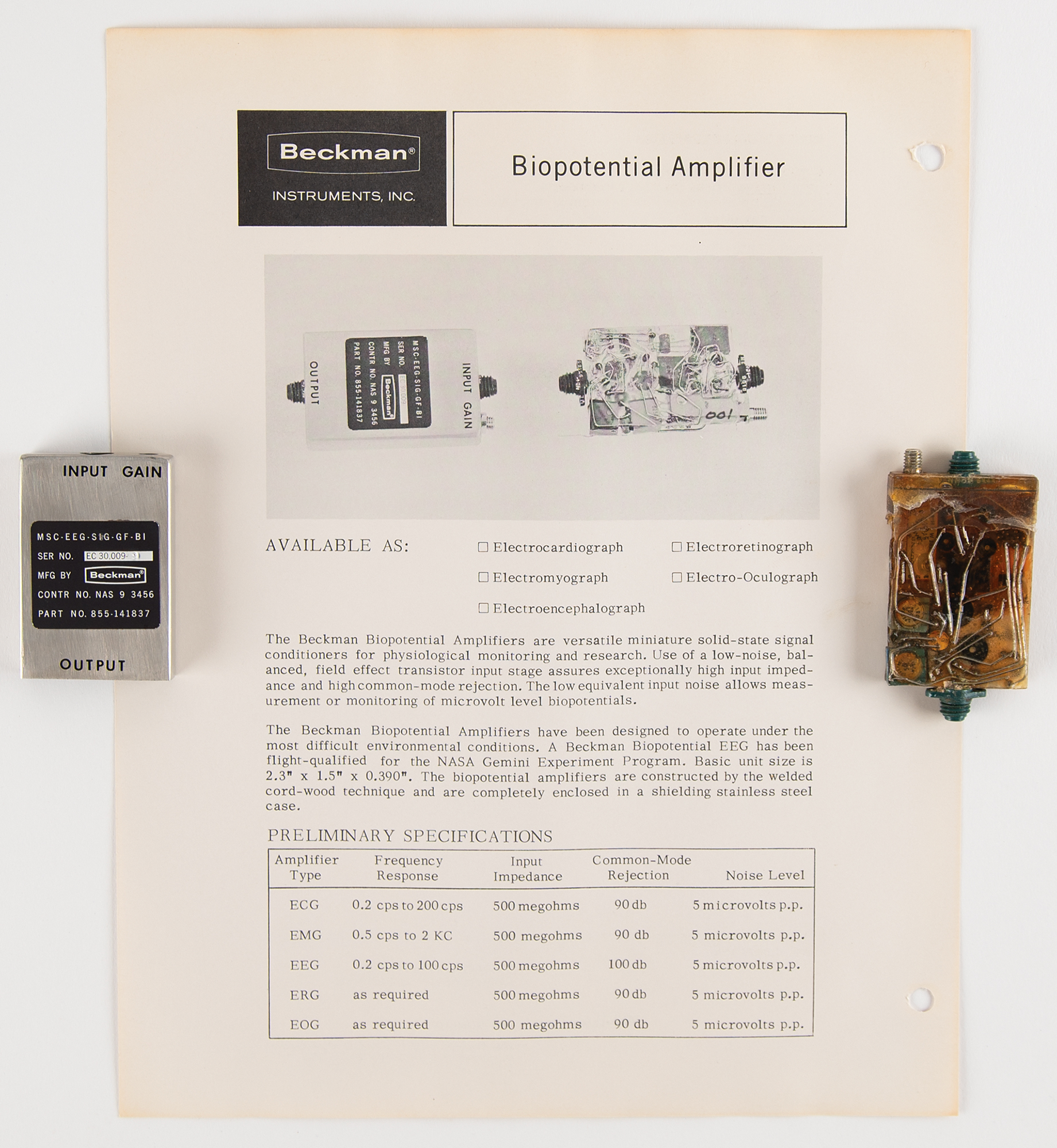
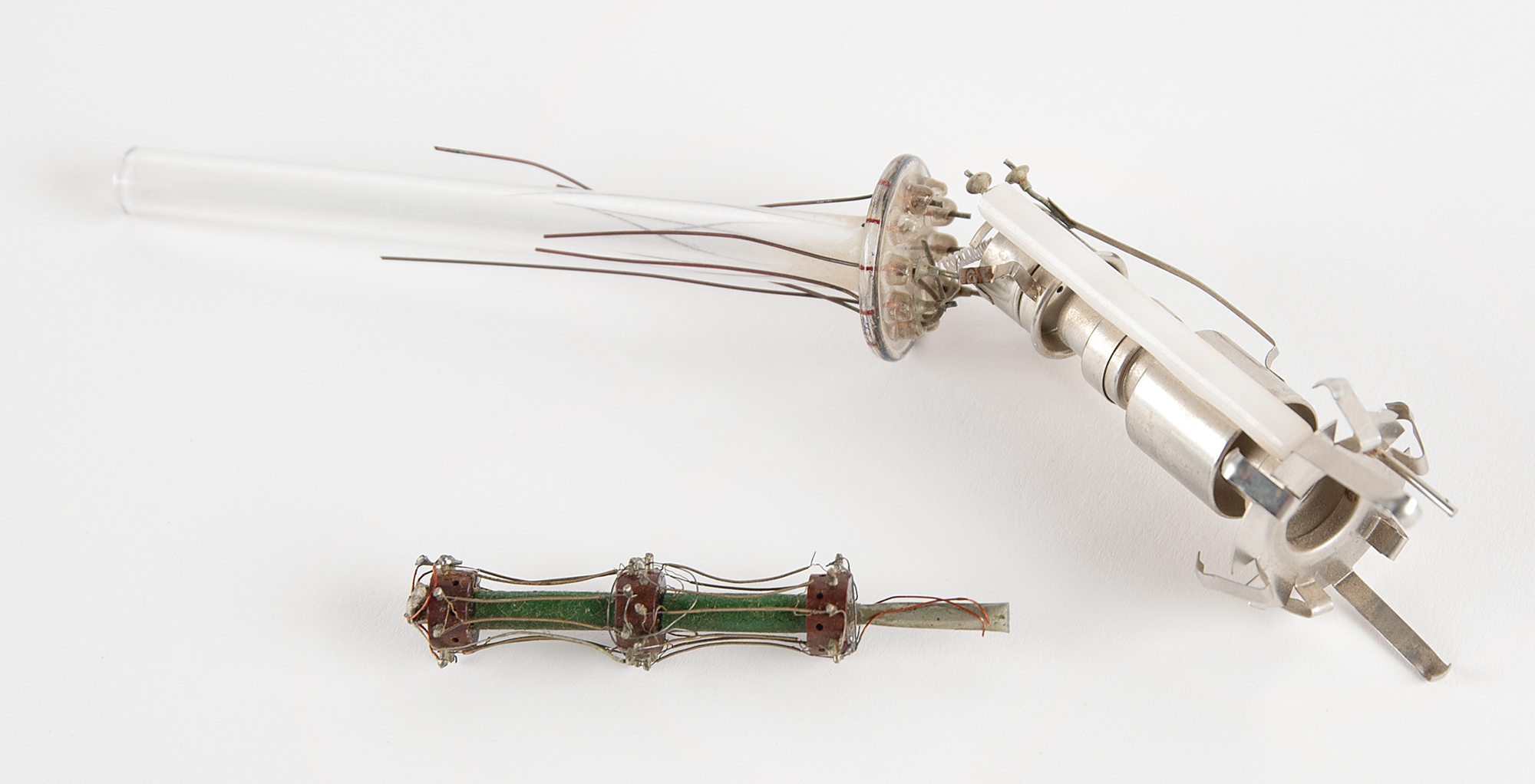
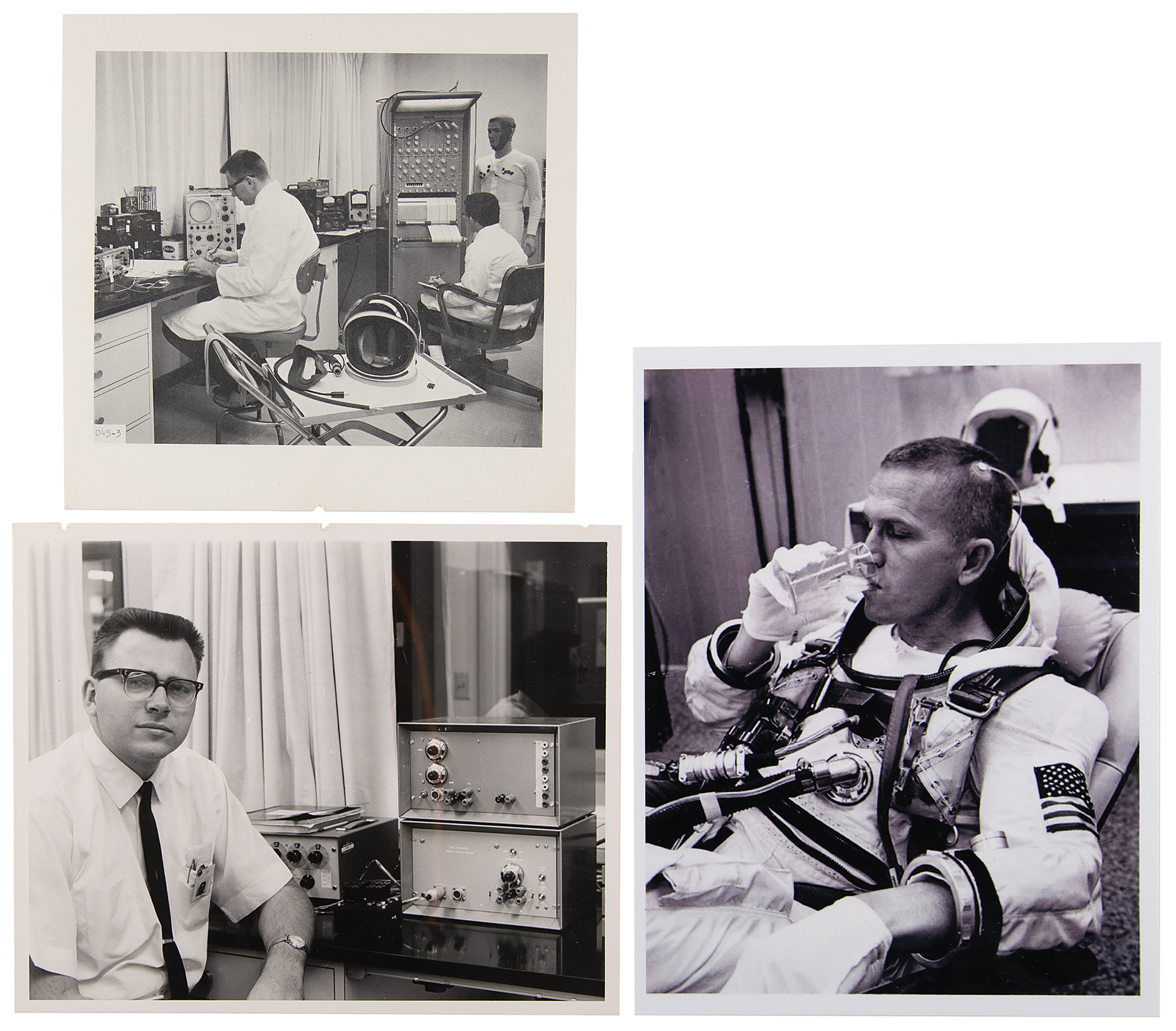
Fascinating collection of electroencephalography (EEG) and phonocardiography (PCG) hardware developed by Beckman Instruments for NASA’s Gemini program, deriving from the collection of Allan F. Pacela, manager of physiological instrumentation of Beckman’s Space Engineering Department. The lot includes three Beckman Biopotential Amplifier EEG units, with one example uncased to reveal the welded cord-wood construction technique, and a similar-looking Impedance Pneumograph unit, each measuring 1.5˝ x 2.5˝; a pair of PCG phono transducers, 1.5˝, which include seven unused metal Beckman part labels; a stack of 24 unused ‘Phono Sig Cond’ Beckman part labels; and four unidentified components, ostensibly for an EEG sensor level. The ESC units bear matching Beckman parts labels that read: “MSC-EEG-SIG-GF-BI, EC 30,009, MFD By Beckman, Contr. No. NAS 9 3456, Part No. 855-141837,” with two bearing serial numbers “007” and “011.” In overall fine condition, with some component wear.
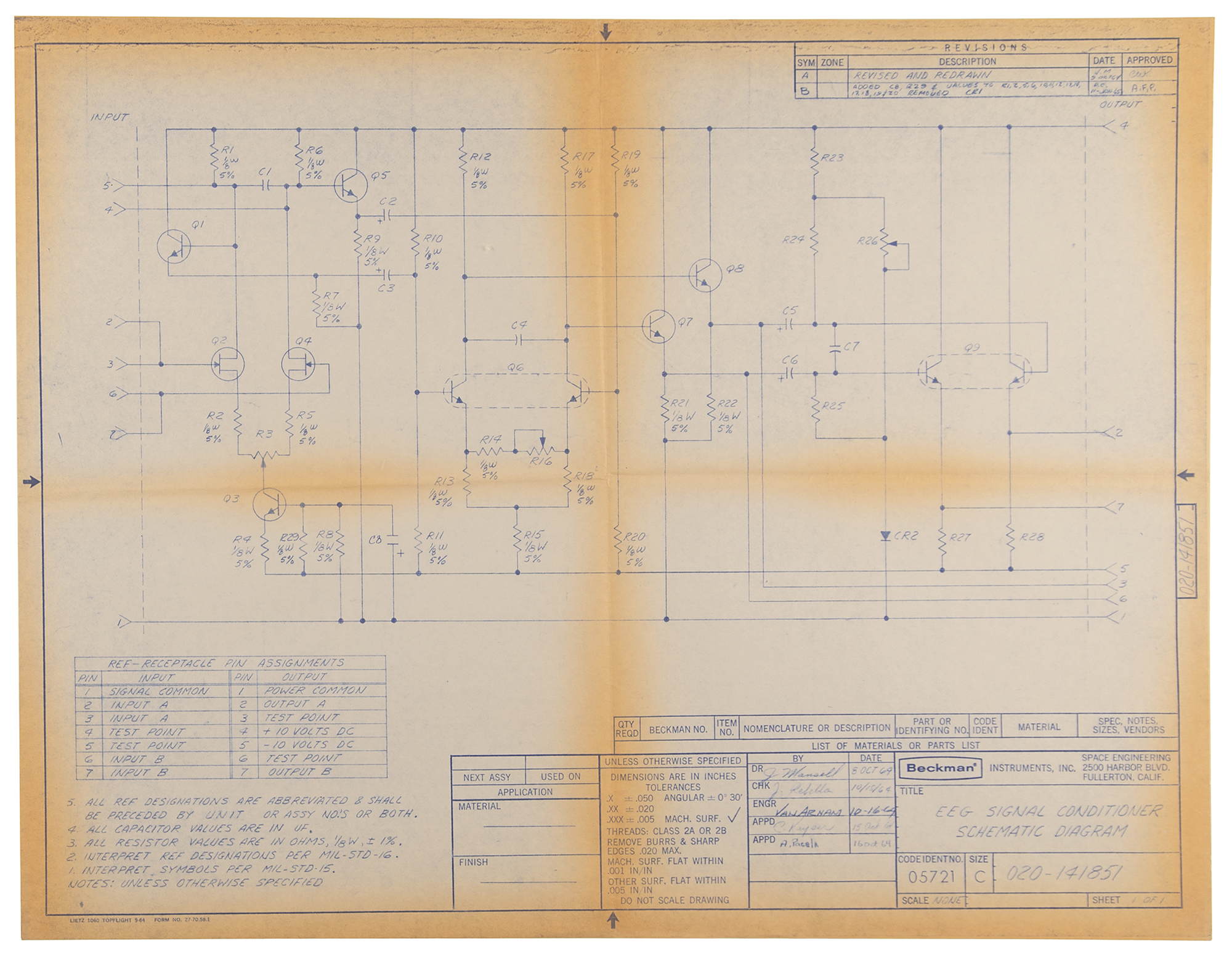
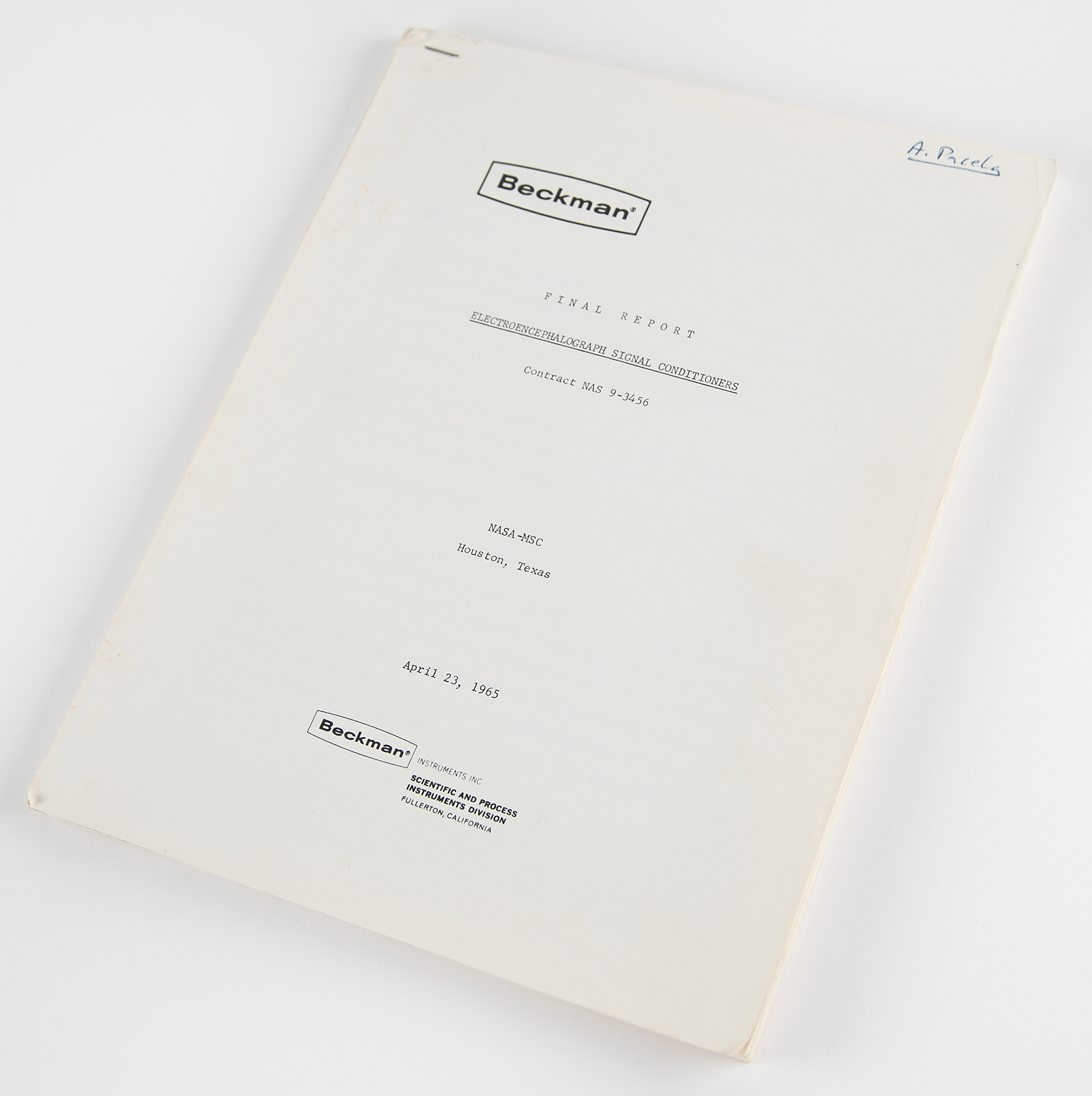
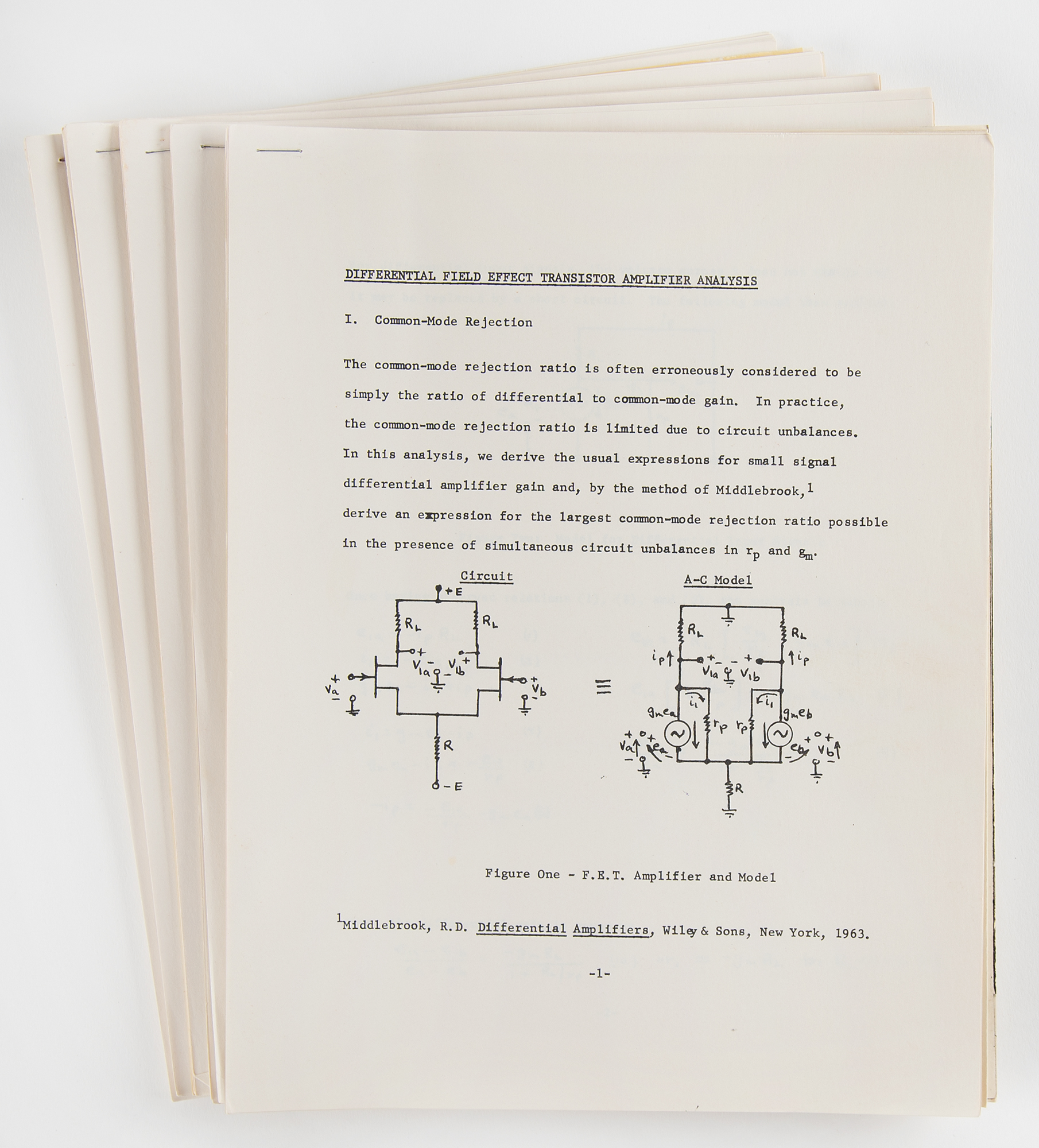
The collection is accompanied by ample documentation related to Pacela’s work on the Gemini Electroencephalograph and Phonocardiograph, including copies of Beckman’s ‘New Technology Report, Electroencephalograph Signal Conditioners,’ from February 26, 1965; Beckman Instruments specification booklets; a bracket-bound 155-page ‘Qualification Test Report, Electroencephalograph Signal Conditioner,’ with test completion date of April 8, 1965; a stapled Beckman ‘Final Report’ for Contract NAS 9-3456, ‘Electroencephalograph Signal Conditioners’; fives copies of the ‘Differential Field Effect Transistor Amplifier Analysis’ report; two Beckman Instruments blueprints from the Space Engineering Division for the ‘EEG Signal Conditioner Schematic Diagram’; and sundry handwritten testing sheets.
Electroencephalography is the study of the electrical potentials generated within the brain, and the electroencephalogram, EEG, is the record of the time-varying voltages observed between pairs of electrodes placed on the scalp or the surface of the brain. The EEG experiments were performed because specialists believed brain wave recording could detect unusual physiological changes and important behavioral patterns, such as the subject's alertness and whether his eyes were open.
The first electroencephalograph signal conditioner for the NASA bio-instrumentation program was successfully flown on the Gemini 7 mission, which carried a total of 20 experiments, a record for the Gemini program. Because Gemini 7 was the last long-duration mission, its medical experiments were integral in assessing man's capabilities for the Apollo lunar landing program. The experiment, which was originally called the ‘Inflight Electroencephalogram,’ was ultimately changed to ‘Inflight Sleep Analysis,’ and was designed for use by Command Pilot Frank Borman, whose brainwaves were tracked throughout the roughly two-week session. At one point, however, Borman accidentally pulled off one of the EEG electrodes. He and Pilot James Lovell attempted to replace the electrode but were unsuccessful.

